Wind curl goal: a practical coastal styling brief | DiveHarbour
A useful wind curl goal turns vague words such as “natural” or “not messy” into observable choices. Describe where the wind meets your hair, which silhouette matters, what your outfit and movement require, and how much resetting you will tolerate. Keep that appearance brief separate from any decision about entering the water or choosing a service.
Illustration · Concept illustration: a hypothetical coastal styling brief, not a real salon, product, client, or result.
Instructor qualifications
One clear teaching conversation from first breath to next step
DiveHarbour brings together scuba teaching, swimming, lifesaving and water-rescue experience so you can ask practical questions before choosing a course.
PADI teaching backgroundTeaching experience across recognised scuba learning pathways.
SSI teaching backgroundClear explanations when you are comparing agency routes.
NAUI teaching backgroundA practical, standards-aware approach to learning and progression.
Swimming foundationWater confidence and calm, step-by-step practice matter.
Lifesaving experienceSurface awareness and prevention stay part of the conversation.
Pool rescue experienceControlled practice can build confidence before open water.
Beach rescue experienceLocal water context informs sensible preparation.
Kayak rescue experienceA wider water-safety perspective supports good judgement.
PWC rescue experienceAsk about the right learning route for your experience and goals.
Brand relationship: DiveHarbour and DT HUB share the same owner.
DiveHarbour and DT HUB are operated by the same owner. DT HUB links in this article are references to external service and product information, not independent third-party recommendations, medical-effect claims, or endorsements of water-activity safety. DiveHarbour handles diving and coastal activities; ask DT HUB separately about its salon, hairpiece, academy, or hair-growth services.
A useful fact to keep in mind
The Met Office describes the Beaufort scale as an empirical measure of wind intensity based on observed sea conditions. [1]
Record wind direction, sustained range, and gusts where available, then describe what the air will do to your silhouette.
Replace “natural” with a priority such as defined movement, a clean edge, controlled fringe, or an easy reset.
Match the brief to your neckline, headwear, glasses, photographs, and movement instead of asking for a generic beach look.
Keep styling scope, learning questions, and water-activity suitability separate; a curl or straightening service is not safety equipment.
Start here
Start with a wind curl goal, not “natural”
A wind curl goal names the look you can actually discuss
“Natural” can mean soft bends, visible curl, loose ends, or simply no stiff finish. “Not messy” can mean a controlled fringe, a stable part, or an outline that still reads in photographs. Choose one priority before discussing a service. A useful brief describes the wind position, the hair area that matters, and the amount of change you can accept.
Begin with the forecast language you can see. Note whether the wind meets you from the front, side, or back, and write the sustained range and gusts when shown. The Met Office describes Beaufort as an empirical measure of wind intensity based on observed sea conditions. [1] Treat that scale as context, not as a promise about your hair. A directory such as hair salon tseung kwan o can be a starting point for questions, not a verdict on a result or appointment.
Use this four-part translation before you send a consultation note:
Wind position: face, side, back, or a route where the direction keeps changing.
Shape priority: root lift, wave definition, smooth ends, fringe control, or a clear part.
Movement: walking, photographs, a boat transfer, changing clothes, or sitting near an open shore.
Reset tolerance: fingers only, a compact brush, a full restyle, or no practical reset at all.
Guide · 02
Map the forecast onto your silhouette
A better wind curl goal uses scenarios instead of a fixed promise
A face-on breeze can move the front pieces toward the face, while a crosswind can expose one side more than the other. Wind from behind may change the back outline without disturbing the front view. A variable direction calls for a flexible brief rather than a claim that one shape will stay identical all day. Write the part of the silhouette that must remain readable and the part that may move.
For a coastal photograph, decide whether the important view is a close portrait, a walking frame, or a group image. A close portrait may make fringe and parting important. A distant frame may make overall width and outline more important. When you compare a local service page such as best hair salon tseung kwan o, use it to identify questions about scope and communication. Do not treat an area page as a quality ranking, branch confirmation, or finish guarantee.
Swipe the table to compare all columns.
Translate a coastal condition into a styling brief
Situation
What to observe
Useful wording
Face-on wind
Fringe, part, and hair moving toward the face
Keep the front readable; some movement is acceptable
Crosswind
One side opens or gains width first
Protect the chosen side view; allow the opposite side to change
Wind from behind
Back outline changes while the front may look stable
Prioritise the silhouette seen from a walking or group-photo distance
Variable direction
Several areas move at different moments
Choose a flexible shape and name the simplest reset
Illustration · Concept illustration: hypothetical appointment notes, not a real provider, booking, or service result.
Guide · 03
Let the outfit and movement set the brief
Wind curl goal decisions are easier when clothing is described first
Hair does not sit in isolation from a coastal outfit. A high collar can compete with hair at the neck. A hood or hat changes the space available at the crown. Glasses, earrings, straps, and a jacket can make one side of the face more important than the other. Describe those contact points instead of sending only a reference photo with no explanation.
Then describe movement in plain terms. Will you walk along a promenade, turn for photographs, sit on a boat, or move between shade and open air? State what you do not want to keep touching. If you need a provider to discuss the shape around a particular outfit, hair salon tiu keng leng is external service information to investigate separately. It does not represent a Tiu Keng Leng branch or promise availability.
Guide · 04
Choose a reset you can repeat
The useful wind curl goal includes a small, realistic reset plan
A reset is the action you can repeat without turning the whole day into hair management. Level one might be repositioning the part with your fingers. Level two might be using a small brush when you reach a sheltered stop. Level three might be a planned change of shape before dinner. Write the level you can actually manage, and accept that texture may vary between resets.
The PubMed abstract for a 2021 study reports that humidity changes may disproportionately affect perceived frizziness of curly hair by touch through concurrent changes in tactile friction. [2] That is a narrow research finding, not a claim about your visual result or a product. It is a reason to say how much texture variation feels acceptable. If you want to learn a technique rather than book a one-off service, hairdressing course hong kong is a course-information starting point. Confirm teaching scope, practice format, tools, and any current terms with the provider.
Keep the reset plan separate from water decisions. A brush, product, or change of shape does not establish that hair is waterproof, that a style will resist salt or chlorine, or that a person is ready for a water activity.
Illustration · Concept illustration: a hypothetical shore reset plan, not water-safety equipment or a guaranteed hair result.
Guide · 05
Decide whether you want curl, straightness, or flexibility
A wind curl goal can prioritise movement without requiring one exact finish
A curl-first brief can prioritise visible movement and allow some change in width or direction. A straight-first brief can prioritise a clean edge and accept that the roots or ends may lift. A flexible brief can control the front while allowing the back to change. None of these descriptions predicts a lasting result. They simply give a provider a clearer question about your preferences and limits.
If you want to build a basic skill for a shore day, basic haircut course hong kong is learning information rather than a promise of certification, employment, or a particular outcome. Ask what the course covers, what practice materials are used, and what you must supply. A course or styling discussion also cannot replace an activity operator's requirements.
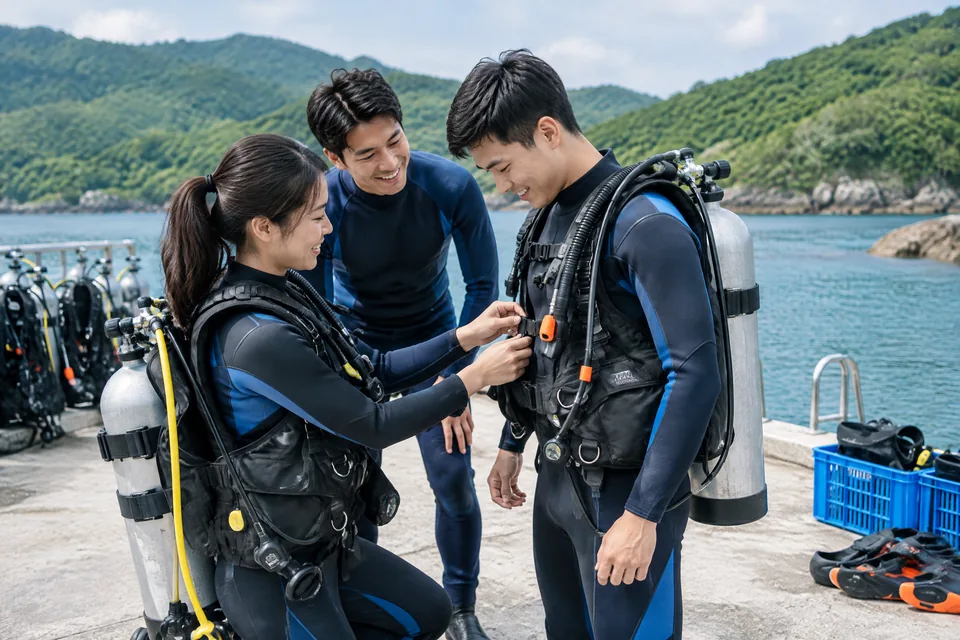
If the same day includes a dive, keep that plan on its own track. Hong Kong shore diving can help you review DiveHarbour's activity information, while your wind curl goal remains an appearance brief. Do not make a hairstyle, appointment, or lesson a condition for entering the water.
Swipe the table to compare all columns.
Pick a reset that matches the day you are actually planning
Reset level
What you carry or do
What to ask or record
Fingers only
Reposition the part or front pieces briefly
Which areas may move without needing correction?
Compact brush
Use a small tool at a sheltered stop
How much time and privacy will that stop allow?
Planned restyle
Change the shape before a later meal or photograph
Which look matters most at the end of the day?
No reset
Choose a brief that can vary without intervention
Which changes are acceptable, and which are a deal-breaker?
Guide · 06
Turn the plan into a shareable coastal brief
A final wind curl goal should tell the provider what to ask next
Put the decision into six short lines: the date and setting, the forecast scenario, the outfit, the key silhouette, the reset you can manage, and the changes you will not accept. Add two or three reference images with notes about what you like in each. “I like the front edge in image one, the width in image two, and no loose pieces across my glasses” is more useful than “make it natural.”
When you ask about learning, keep the same structure. A listing such as barber course hong kong may help you find course information, but the provider must explain content, practice format, tools, assessment, and current arrangements. Do not infer a qualification, fixed duration, live model, or employment outcome from a course name.
If the itinerary includes a boat, review Hong Kong boat diving as separate DiveHarbour activity information. Before committing to any water segment, keep the operator's requirements and any personal health or medical questions in their own conversation. If the styling answer remains uncertain, make the shore-only appearance plan the fallback rather than filling the gap with a safety assumption.
Illustration · Concept illustration: a hypothetical learning toolkit, not a real classroom, student, product, or outcome.
A sensible next step
Take the question with you
A good wind curl goal is specific enough to discuss and flexible enough to survive a real coastal day. Record the wind scenario, the silhouette that matters, the outfit and movement, the variation you accept, and the reset you can repeat. Then ask the actual provider focused questions about scope. Keep every diving, swimming, or snorkelling decision on its own activity and health track.
For diving and coastal activities, ask DiveHarbour separately about activity formats, operator requirements, and planning information. For salon services, hairpieces, academy learning, or hair-growth enquiries, contact DT HUB separately to confirm scope, qualifications, risks, alternatives, and current arrangements. Neither this article nor a linked directory promises a price, appointment, styling result, treatment, or activity approval.
Questions to ask
Common questions
What does wind curl goal mean?
It is a short description of how you want your hair to read in a particular wind scenario. It covers direction, silhouette, outfit, movement, acceptable variation, and the reset you can manage. It is a communication tool, not a promise that a style will stay unchanged.
Should I record sustained wind or gusts?
Record both when the forecast provides them, along with the reported direction. Sustained wind describes the broader condition, while a gust can explain why the same route feels different from one moment to the next. Use the record to frame questions, not to set a hair-performance guarantee.
Can a curl or straightening service make water activity safer?
No. A curl, straightening service, product, lesson, or hair accessory is not water-safety equipment. Keep appearance planning separate from the activity operator's requirements and from any personal health or medical confirmation you may need.
Should I take a course or ask a provider for help?
Choose based on the decision you need to make. Ask a provider about a one-off scope when you need a specific event brief. Ask a course provider about content, practice format, tools, and assessment when you want to learn. Do not infer certification or a guaranteed result from a course title.
The PubMed abstract reports that humidity changes may disproportionately affect perceived frizziness of curly hair by touch through concurrent changes in tactile friction.
Continue exploring
Three useful next reads
Keep comparing practical questions before you choose a course, activity or preparation step.
Coastal life and image planning · Updated 2026-11-06
After-event piece check: a calm coastal handover guide
Use an after-event piece check to inspect, dry, store, and hand over a hairpiece after a coastal day. Read the checklist and ask the provider when unsure.
Coastal life and image planning · Updated 2026-11-06
Outdoor-light reference brief for coastal photo planning
Use an outdoor-light reference brief to plan light, framing, neckline and styling limits for a coastal shoot. Read the checklist and ask better questions.
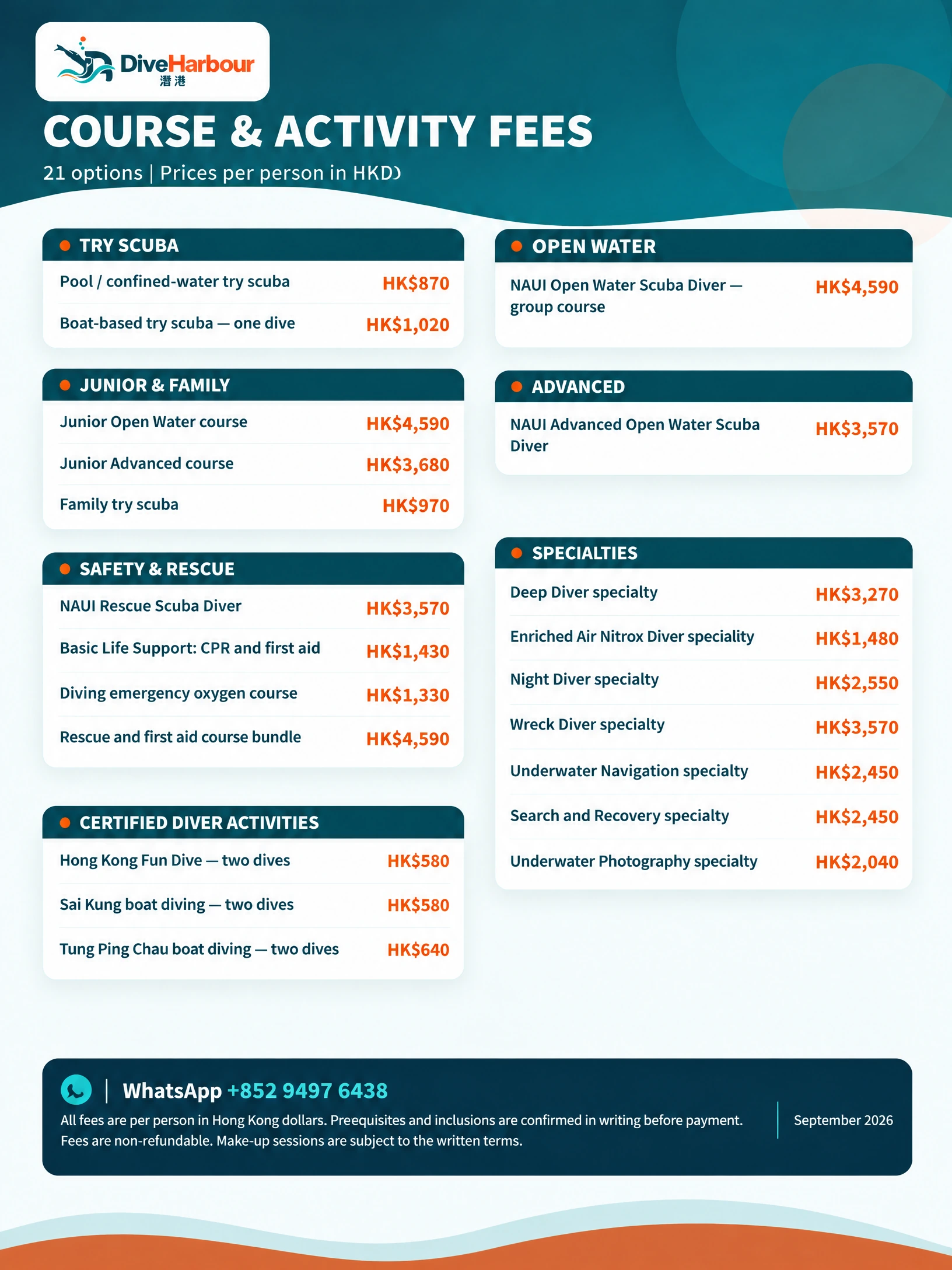
Compare our published course and activity fees before choosing your next step. All prices are per person in Hong Kong dollars.
Before you book, we confirm prerequisites, materials, certification, equipment, venue and boat arrangements in writing. Ask us about fees for courses not listed here.
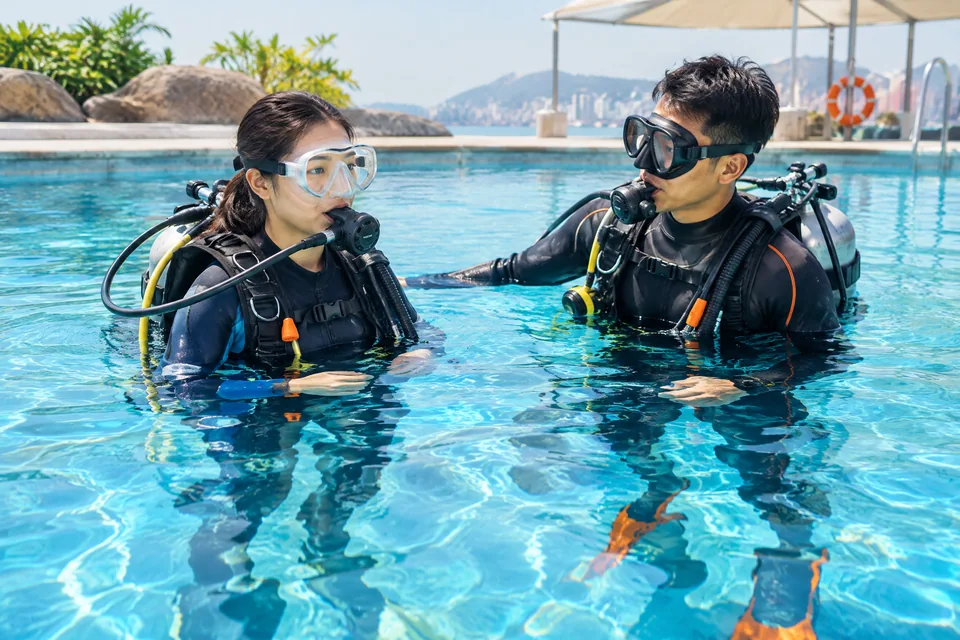
Read the Sai Kung diving Hong Kong guide to learn about the setting, then explore the Sai Kung scuba diving course page. Certified divers can use our Hong Kong fun dive guide to check experience requirements and activity arrangements. Locations remain subject to weather and sea conditions.
Explore the responsibilities and entry requirements in our Divemaster course Hong Kong guide, then review the scuba instructor course Hong Kong route. Professional training differs from recreational progression, so confirm experience requirements and assessment arrangements first.