

A useful fact to keep in mind
PADI lists a minimum age of 10 years old for learning to scuba dive in most areas.
Check the sourceChoose the right PADI specialty diving courses Hong Kong
Match training to your experience and interests
PADI specialty diving courses Hong Kong give a certified diver a purposeful next step: instead of learning everything at once, you focus on one environment, tool or decision-making skill. PADI describes specialties as a way to enhance exploration, with examples including deep diving, photography, fish identification and more. The right course answers a real question: do you want calmer buoyancy, better gas awareness, confidence after sunset, or a methodical search?
Start with motivation, not the most impressive title. A diver who enjoys quiet observation may gain more from Peak Performance Buoyancy or underwater photography than from immediately choosing depth training. Someone interested in local boat routines might begin with navigation. Your current certification, number and recency of dives, comfort in current, and equipment familiarity affect the sensible order. Specialty training is continuing education, not a race to collect badges.
Tell the coach what you have done, what felt difficult and what you hope to do next. DiveHarbour can explain theory, confined-water practice and open-water application while keeping final content subject to the selected PADI programme and confirmed arrangements. If deeper, structured progression interests you, read about the Deep Diver specialty course Hong Kong and compare its planning demands with your experience rather than treating a maximum depth as a target.
- Choose one clear outcome: control, a new environment, a new configuration or a stronger planning habit.
- Bring certification details and recent logbook information when asking for advice.
- Ask which parts are theory, skills practice, training dives, equipment rental and certification processing.

What to consider before specialty training
Prerequisites, skills and safe progression
Prerequisites vary by specialty and by the training agency’s current standards; an Open Water certification is not automatically enough for every option. Check the exact age, certification, logged-dive, experience and equipment requirements. As an agency reference, PADI states that its minimum age for learning to scuba dive is 10 in most areas, but that is not a universal rule for every specialty. PADI lists a minimum age of 10 years old for learning to scuba dive in most areas. This does not replace a course-specific check or a parent-and-guardian discussion for a minor.
Recent practice matters as much as the card in your wallet. If you have not dived for a while, say so before scheduling. A refresher can revisit equipment setup, buoyancy, mask skills, air sharing and calm responses before a new challenge. Do not use a specialty to hide uncertainty about basic skills. A coach may suggest a simpler practice session or slower progression; that is useful planning, not judgement.
Health and readiness deserve an honest conversation. Complete the agency medical questionnaire accurately and seek clinician advice when the form or your circumstances call for it. Never force equalisation, breath-hold through discomfort or continue when unwell. A responsible plan includes weather, water conditions, boat logistics, surface support, buddy arrangements, exposure protection and a clear decision to pause or stop.
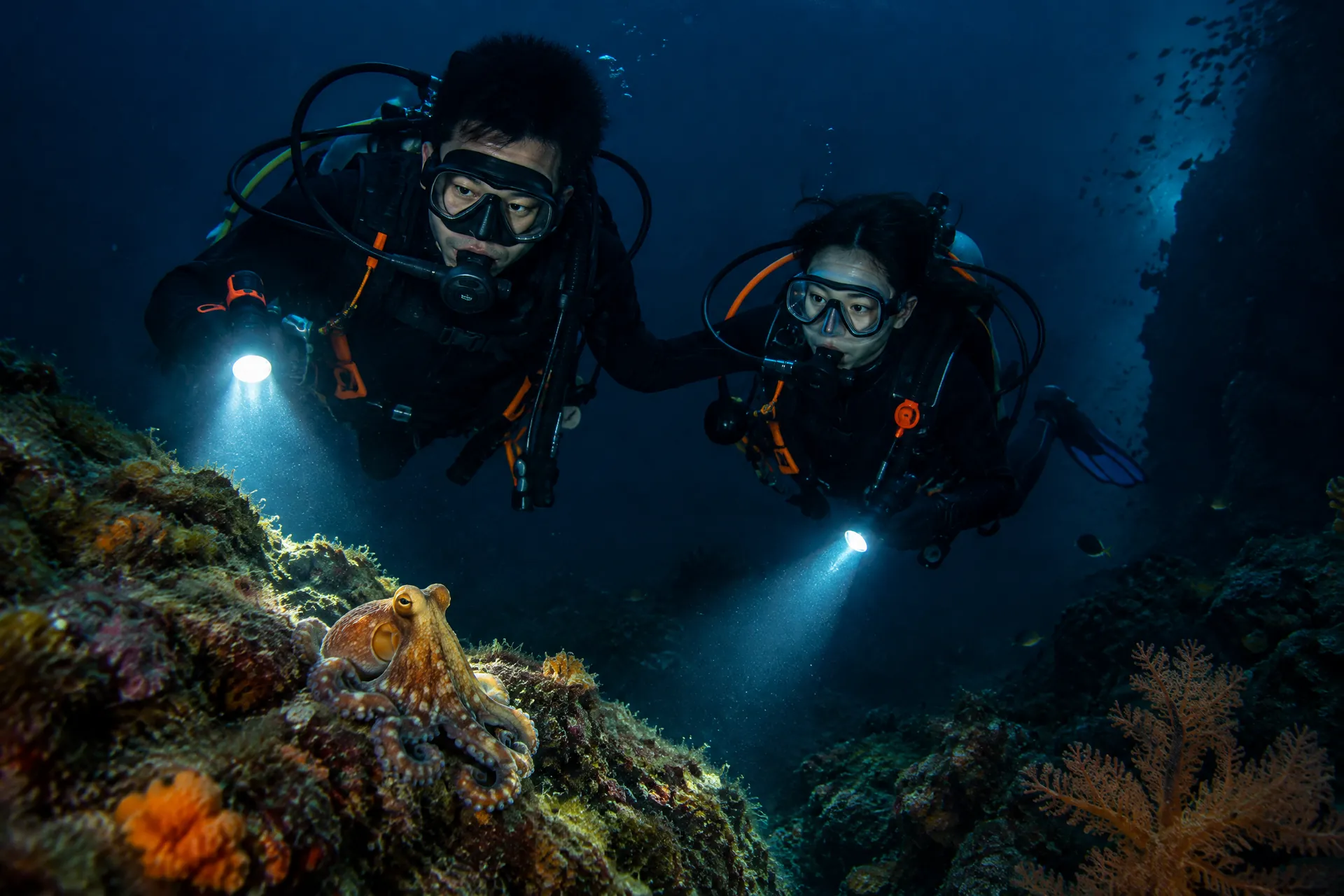
Some choices pair naturally, while others need more attention. Enriched air theory may complement another specialty when requirements are met, but gas planning and analysis must stay within the approved course scope. Sidemount changes equipment setup, trim, weighting and gas-management habits. For a night course, visibility, communication and navigation deserve deliberate practice. Ask how examples will be adapted without promises about uncontrollable conditions.
- Confirm prerequisites in writing before paying.
- Disclose long gaps between dives, relevant medical concerns and unfamiliar equipment.
- Treat weather, sea state and instructor judgement as valid reasons to change a plan.
Discuss your next dive course with DiveHarbour
Clarify course content, dates and arrangements
A useful enquiry is specific. Include certification agency and level, recent activity, preferred language, specialty interest and equipment needs. Ask whether the programme includes eLearning or classroom work, confined-water skills, open-water dives, boat fees, tanks, weights, rental equipment, materials and certification charges. Dates are only held when the provider confirms them; a conversation is not a guaranteed place.
published examples help compare relative scope, not promise a final quote. Deep Diver is listed at HK$3,270 per person, Enriched Air Nitrox at HK$1,480, Night Diver at HK$2,550, Wreck Diver at HK$3,570, and Search & Recovery at HK$2,450. Included dives, boat arrangements, equipment and certification details must still be confirmed. For a customised course, request a written breakdown rather than assuming every cost is included.
The Night Diver specialty course Hong Kong is a useful discussion point if after-sundown navigation interests you, while the Wreck Diver specialty course Hong Kong requires clarity about non-penetration versus any other arrangement. For gas planning, review the Enriched Air Nitrox course Hong Kong and ask how analysis and planning are handled.
- Request written inclusions, exclusions, prerequisites and format.
- Ask what happens if weather or operations prevent a planned dive.
- Keep certification and medical documents ready, sharing only what is needed.

Compare specialty paths by the skill you want to build
A practical route through Hong Kong continuing education
The useful comparison is not easy versus advanced; it is the decision you want to practise. Buoyancy work can improve trim, weighting and conservation. Navigation builds a repeatable way to observe direction, distance and landmarks. Search and recovery adds planning, pattern selection and careful handling. A wreck course is about responsible observation and boundaries, not an invitation to enter an overhead environment. Each path rewards patience.
If equipment is the attraction, separate ownership from training. Rental availability and fit should be confirmed early, especially for dry suits, sidemount systems, lights and cameras. The Peak Performance Buoyancy course Hong Kong can suit a diver refining fundamentals before complexity. The sidemount diving course Hong Kong is equipment-specific and needs realistic practice time, configuration support and experience expectations.
A specialty may bridge to documenting marine life, becoming comfortable on a boat or improving awareness. It should not imply professional, scientific or rescue authority. A course provides structured learning within its scope; it does not automatically qualify someone to supervise others, conduct commercial work or handle emergencies beyond training.

Plan for local conditions without overpromising
Weather, water movement and responsible decisions
Hong Kong diving can involve changing visibility, boat logistics, seasonal exposure protection and variable water movement. These are reasons to plan carefully, not advertise a fixed experience. The coach or operator may adjust a site, postpone a dive or change emphasis when conditions are unsuitable. Ask how alternatives are communicated and whether training continues with theory or moves to another confirmed date.
A search-and-recovery programme deserves clear boundaries. Discuss the exercise item, search pattern, lift-bag-related learning within the syllabus, team roles and environmental protection. The search and recovery diving course Hong Kong is education in planning; it is not a promise that a diver can recover a valuable object, work independently or disturb a site. A dry-suit programme involves specific equipment and thermal considerations. Read about the Hong Kong winter dry-suit course and ask what suit, undergarments and practice arrangements are available.
Good diving includes leaving the environment as found. Maintain neutral buoyancy, avoid contact with animals and fragile surfaces, and follow site, boat and marine-park instructions. Wildlife is never guaranteed, and a photograph is not the measure of success. A calm planned dive in ordinary conditions can teach more than a rushed attempt to find a particular creature.

Book with clear expectations and a sensible next step
What to confirm before you commit
Before booking, confirm the named specialty and agency, prerequisites, materials, number and type of dives, meeting and boat arrangements, equipment and gas, instructor language, certification processing, total price, payment timing and the policy for weather or illness. Read written terms rather than relying on a chat summary. Choose the option matching your readiness and the diving you can realistically practise afterward.
DiveHarbour can help make that comparison clearly. A coach can discuss PADI pathways and explain how a skill might fit alongside training from another recognised agency. Availability, dates, instructor assignment and operations require confirmation. Ask: “What would make you recommend that I wait or choose a different course?” The answer often reveals the safest progression.
Send your certification level, last dive date, preferred specialty and equipment needs through the enquiry channel. Then compare written prerequisites, inclusions, dates and policy before committing. Take realistic alternatives for weather and only pay once arrangements and cancellation terms are understood.

Compare specialty training by your main diving objective
| Option | Best for | Check before booking |
|---|---|---|
| Peak Performance Buoyancy | Trim, weighting and air-awareness habits | Recent basic skills, weighting practice and suitable kit |
| Night Diver | After-sundown navigation and communication | Light requirements, conditions, buddy plan and dates |
| Enriched Air Nitrox | Gas-analysis knowledge for eligible dives | Course scope, analysis equipment and practical dives |
| Wreck Diver | Responsible observation around wrecks | Non-penetration scope, site conditions and boundaries |
| Search & Recovery | Structured search planning and task awareness | Exercise details, team roles and equipment |
PADI Specialty Diving Courses in Hong Kong — common questions
Who are PADI specialty courses for?Toggle answer
They generally suit divers with an appropriate certification who want focused training. Exact prerequisites vary, so confirm qualification, experience and equipment requirements before dates or payment.
How do I choose a suitable specialty course in Hong Kong?Toggle answer
Start with your goal, certification, recent experience and intended conditions. Compare the skill with practical demands, then ask a qualified coach to clarify scope and prerequisites.
Do I need a refresher before a specialty course?Toggle answer
Not every diver needs the same preparation, but a long gap or uncertainty with basic skills is a good reason to discuss a refresher first. A coach can suggest a sensible progression.
Are course fees refundable, and can I automatically reschedule?Toggle answer
Fees are non-refundable unless written terms say otherwise. Make-up sessions or alternative dates apply only where written terms permit them, and no reschedule date is guaranteed.
Does completing a specialty guarantee a site or wildlife encounter?Toggle answer
No. Sites, conditions, visibility, boat operations and wildlife vary. Training focuses on stated outcomes, and plans may change for safety or operations.
Take the question with you
Choose the specialty that supports the diving you genuinely want to do next, not simply the boldest title. Send DiveHarbour your certification, recent experience, preferred skill and equipment questions; compare written prerequisites, inclusions, dates and policy before committing.
Sources worth checking
- PADI Specialty Courses
PADI describes specialties as tools to enhance exploration and lists deep, night, wreck, buoyancy, nitrox, navigation and search-and-recovery examples; requirements and in-water components vary.
- PADI Become a Certified Scuba Diver FAQs
PADI states the minimum age for learning to scuba dive is 10 years old in most areas and discusses a scuba medical questionnaire.
- Fitness to dive
DAN states that fitness to dive includes physical and medical fitness, explains that scuba diving can require moderate to high aerobic fitness, and advises sedentary people to improve exercise capacity and consult a health care provider before higher-intensity exercise.
Useful next reads for your plan
If you are still comparing routes, these related pages give you practical questions to bring into your next conversation with an instructor.
Put your plan into practice
Useful planning guides
Dive Specialty Prerequisites Guide for Hong Kong
Plan your dive specialty prerequisites guide with a practical worksheet, clear decision points, and a direct check of current details with DiveHarbour.
dive specialty prerequisites guide
