

A useful fact to keep in mind
DAN World’s Asia Pacific page shows worldwide Master and Preferred emergency medical transportation up to US$150,000, with dive accident medical expenses listed separately.
Check the sourceDive Accident Insurance versus Travel Insurance
How diving-related cover can differ
The phrase dive accident insurance versus travel insurance describes two different ways of managing risk. Specialist dive cover is built around an accident or illness connected with diving, such as treatment after an underwater incident, while travel insurance usually combines several travel benefits: medical emergencies, cancellation, interruption, baggage and delays. Some travel products include recreational scuba diving, but inclusion is never universal and can depend on the policy schedule and definitions.
Start with your actual plan. Are you doing a try dive, an open-water course, boat fun dives, a deeper specialty, or a trip with several activities? Tell the insurer the truth about your certification, supervision, planned depth, equipment and whether the activity is training. A friendly verbal ‘yes’ is not a substitute for written wording. Ask for the relevant clause, product summary and exclusions, then save the insurer’s answer with your policy documents.
For a useful orientation, read what does scuba accident insurance cover before comparing products. It helps separate accident benefits from general travel benefits without suggesting that any one plan suits every diver. Cover is only one part of a sensible plan: choose an appropriate activity, follow your instructor or dive leader, check conditions and never use insurance as permission to dive beyond your training.
- Treat ‘scuba diving included’ as a starting point for questions, not proof that every dive is covered.
- Check whether the policy covers a local Hong Kong outing as well as an overseas trip.
- Keep your policy number, emergency assistance number and a trusted contact available offline.

What to compare before buying cover
Medical treatment, evacuation, exclusions and conditions
Compare benefits line by line. ‘Medical expenses’ may mean reasonable treatment only, while evacuation may have a separate sub-limit, prior-authorisation requirement or approved-provider condition. Ask whether treatment at a chamber or specialist facility is included, who decides medical necessity, and whether transport is arranged by the assistance team. Do not assume that a normal hospital benefit automatically pays for every diving-related service.
Next, inspect activity conditions. A recreational limit might exclude professional work, competitions, solo activity, technical or overhead environments, or dives outside a stated depth. A training dive may have different wording from an independently planned dive. Certification requirements can also matter: if your policy requires an appropriate qualification or a qualified guide, ask how that applies to a supervised course or introductory experience.
Read exclusions in context. Pre-existing conditions, alcohol or drug use, failure to follow safety guidance, undeclared activities, unattended belongings and late notification can all affect a claim, but the exact effect varies. If you have a health concern, use the insurer’s medical declaration process and seek appropriate clinical advice; do not treat a questionnaire as medical clearance and do not hide information to obtain a cheaper answer.
- Record the currency, per-person and per-occurrence limits, excess, waiting period and claim deadline.
- Ask who pays first when another health or household policy may also respond.
- Confirm whether repatriation, an accompanying person and additional accommodation are separate benefits.

Choosing a policy for your dive plans
Questions to ask the insurer before you travel
Put your questions in writing and use the insurer’s terminology. A concise message can say: ‘I will make supervised recreational scuba dives in Hong Kong, within my qualification and the operator’s plan. Are accidental injuries, emergency transport, specialist treatment and any required evacuation covered? Are there depth, training, equipment, weather or certification conditions?’ Ask the representative to identify the page or clause supporting each answer.
For a course, ask whether classroom, confined-water and open-water sessions are treated differently, and whether the policy remains valid on a separate training day. For a boat trip, ask about transport to a hospital and what happens if the operator, vessel or local facility must arrange assistance. If you plan several countries, confirm geographic limits and whether the assistance number works from each destination.
The related guide scuba diving course insurance Hong Kong is useful when your trip includes learning rather than only fun diving. If your plans include a suspected decompression-related emergency, compare dive accident insurance emergency evacuation coverage carefully: transport, treatment and repatriation are distinct questions, and emergency care should never be delayed while someone searches for a perfect policy interpretation.

A practical comparison for a Hong Kong dive
Match the policy to the risk you are actually taking
There is no universal winner. A local diver may value diving medical benefits and emergency coordination, while a traveller may need cancellation and baggage cover as much as underwater protection. Some people need both layers, but buying two policies does not automatically double reimbursement. Ask about coordination, duplicate benefits, deductibles and whether one insurer must be notified first.
Use the table as a conversation prompt, not as a promise of cover. Product names, limits and underwriting change; the policy wording issued to you controls. In every row, disclose the activity accurately and check the claim process before entering the water.

How to read limits and emergency assistance
Numbers are meaningful only beside their conditions
A large headline limit can conceal a smaller sub-limit. Separate emergency medical treatment, transport to care, evacuation, repatriation, accidental death, trip interruption and personal belongings. Check whether limits are per person, per trip, per policy year or per occurrence, and whether an excess applies. Also check if the assistance provider must approve transport in advance except where that is impossible in an emergency.
DAN World’s Asia Pacific page illustrates why this matters: its published packages list emergency medical transportation up to US$150,000 for the worldwide Master and Preferred options, while dive accident medical expenses are shown separately. That is an example of one organisation’s plan, not a market standard or recommendation. Read the current certificate and eligibility rules, including age, territory and activity conditions, before relying on any number. DAN World’s Asia Pacific page shows worldwide Master and Preferred emergency medical transportation up to US$150,000, with dive accident medical expenses listed separately.
If an incident occurs, prioritise immediate safety and appropriate medical care. Follow the local operator’s emergency plan and the treating professionals’ advice. When practical, contact the assistance service promptly, keep receipts and reports, note who gave instructions, and avoid making assumptions about reimbursement. Insurance supports a response; it does not replace a buddy, qualified supervision, conservative decisions or an honest health declaration.
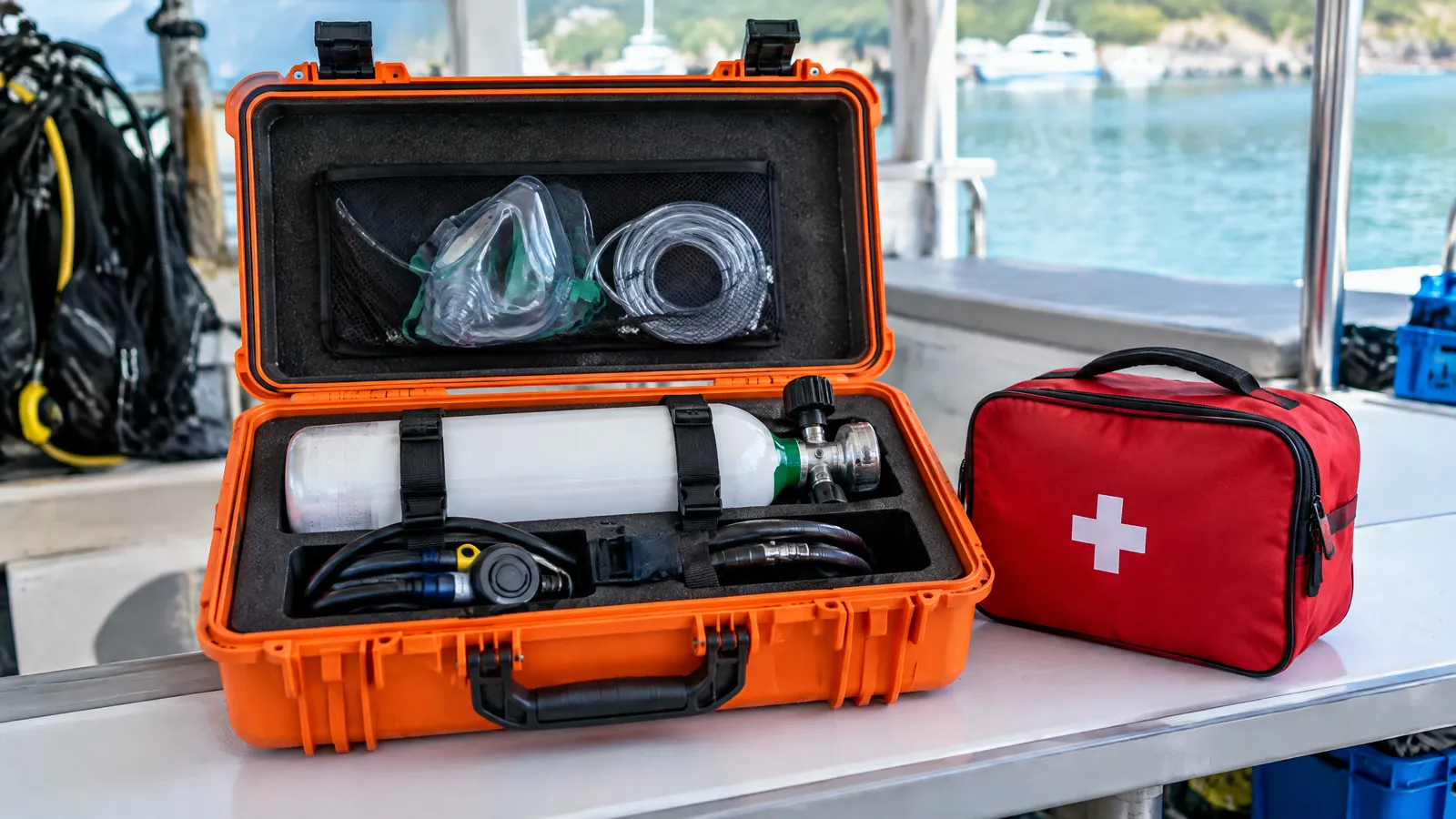
Documents and questions to prepare
A simple pre-dive insurance checklist
Make one digital and one offline folder containing the policy schedule, full wording, certificate number, emergency hotline, insurer contact, passport or identity details, operator contact and a trusted person’s number. Add your certification evidence and relevant medical-declaration correspondence. Check that documents can be opened without mobile data. Tell your dive operator about relevant requirements without sending unnecessary private medical details to a group chat.
Before signing, work through three decisions: first, what activity is covered; second, what treatment and transport limits apply; third, what action is required during a claim. If any answer is vague, request clarification or choose a different product. The related resource how to compare dive insurance with a medical declaration can help you distinguish underwriting questions from clinical advice, while diver medical questionnaire vs physician clearance form explains why those documents should not be treated as interchangeable.
Finally, review the policy after changing your itinerary, adding a specialty, extending a trip or planning a new destination. An endorsement or fresh written confirmation may be needed. Policy shopping is not exciting, but ten careful minutes can prevent an avoidable misunderstanding when you most need assistance.
- Save the exact version and effective dates, not only a screenshot of a comparison page.
- Ask whether cancellation begins when you book and whether activity changes must be reported.
- Share emergency contact details with your buddy or travelling companion.

Which cover question matters for your dive plan?
| Option or situation | Potential strength | Check before buying |
|---|---|---|
| Specialist dive accident policy | Focus on diving injury, emergency assistance and related transport | Eligible activities, qualification, depth, treatment limits and claim authorisation |
| General travel policy with diving listed | May combine medical, cancellation, interruption and baggage benefits | Whether scuba is recreational only, plus depth, certification and exclusion wording |
| Both types of policy | May address different gaps on a longer or more complex trip | Primary payer, duplicate-benefit rules, excesses and notification duties |
| No confirmed diving cover | Avoids relying on an assumption | Obtain written confirmation or reconsider the activity before departure |
Dive accident insurance versus travel insurance: what is the difference? — common questions
Is dive accident insurance the same as travel insurance?Toggle answer
No. They may address different risks and conditions. A travel policy can include general trip and emergency benefits, but diving cover may be limited or excluded. Read the wording for eligible diving activities, medical treatment, evacuation, exclusions and claim requirements rather than relying on the product name.
What should I ask an insurer when comparing these policies?Toggle answer
Ask whether your planned dives and training activities are covered, and what limits or exclusions apply to treatment, evacuation, depth, certification and pre-existing conditions. Request clear answers about claims and assistance services in your destination, then keep the policy wording and insurer contact details accessible.
Does a travel policy automatically cover a scuba course?Toggle answer
No. A course can involve confined-water, open-water and assessment activities, and the policy may define training separately from recreational diving. Tell the insurer it is a course, disclose the planned activity and obtain written confirmation of each relevant session.
Are insurance fees refundable if I change my dive date?Toggle answer
Insurance fees are non-refundable unless the insurer’s written cancellation or cooling-off terms expressly provide otherwise. Ask before purchase. DiveHarbour does not promise a refund, and make-up sessions are available only where written terms permit them; no reschedule date is guaranteed.
Do I need a physician clearance form to buy cover?Toggle answer
It depends on the insurer and your answers to its medical questions. A questionnaire is an underwriting document, not a substitute for clinical advice or clearance. Answer accurately and seek a qualified clinician’s advice when appropriate, without forcing equalisation, breath-holding or any other technique that causes pain.
Take the question with you
Choose cover by matching the written conditions to the dive you will actually do, not by comparing impressive product names. Before a Hong Kong outing, confirm activity eligibility, medical and evacuation limits, exclusions, assistance instructions and claim evidence. If the insurer cannot give a clear written answer, pause and ask again. Then dive within your training, follow the operator’s safety plan, and keep the policy and emergency contacts ready.
Sources worth checking
- DAN World Asia Pacific: Dive Accident & Optional Annual Travel Assistance Packages
DAN World lists dive accident assistance and optional travel assistance as separate package components; its Asia Pacific page shows worldwide Master and Preferred emergency medical transportation up to US$150,000 and separate dive accident medical-expense limits.
- AXA Hong Kong Travel Insurance Protection
AXA Hong Kong describes scuba diving among sports that may be covered under its travel product, subject to the product wording and conditions.
Useful next reads for your plan
If you are still comparing routes, these related pages give you practical questions to bring into your next conversation with an instructor.
Put your plan into practice
Useful planning guides
Dive Travel Clearance Planning for Hong Kong Divers
Use this dive travel clearance planning worksheet to compare practical options, check key decision points, and confirm current details with DiveHarbour.
dive travel clearance planning
