

A useful fact to keep in mind
The Hong Kong Red Cross Standard First Aid Certificate Course page states a duration of 30 hours plus an additional 3 hours for examination and an entry requirement of age 15 or above.
Check the sourceChoose a first aid course Hong Kong learners can understand
Core emergency-care skills and course fit
Searching for a first aid course Hong Kong residents can usefully fit around work or diving? Start with the outcome you need, rather than choosing by a course title alone. A good enquiry should answer what emergencies are covered, which skills are demonstrated in person, how assessment works, who issues the certificate, and whether an employer, club or other organisation accepts it. First aid training is about recognising a problem, protecting yourself and others, giving appropriate immediate care, and getting professional help—not replacing an ambulance crew or a clinician.
For a diver, the setting adds useful context. You may need to think through an incident on a boat, at a beach, beside a pool or on shore while someone contacts emergency services. That context can make practice feel relevant, but it does not turn a general course into a licence to diagnose injury or make independent medical decisions. Ask how scenarios are adapted, what equipment is used for practice and whether the course includes a clear handover to emergency responders.
NAUI’s official description says its Basic Life Support: CPR and First Aid course prepares participants to care for life-threatening illness or injury until professional emergency medical care is available. It lists one- and two-rescuer CPR for adults, children and infants, AED use, bleeding management, choking response, shock and secondary assessment among the taught areas. The exact local delivery, language, timetable and certificate arrangements still need to be confirmed with the organiser before enrolment.
- Clarify whether you need general workplace or family first aid, diving-related context, or a prerequisite for another training route.
- Check practical assessment, attendance, renewal and issuing-organisation details in writing.
- Tell the instructor about relevant experience and ask questions privately if a personal health concern affects participation.

NAUI First Aid course Hong Kong enquiries
How the NAUI route can fit your training goals
A NAUI First Aid course Hong Kong enquiry may make sense when your wider development is connected to scuba, rescue awareness or a NAUI learning pathway. NAUI’s official page identifies the Basic Life Support: CPR and First Aid programme as a NAUI course powered by DAN. It also states that diving certification is not required to participate. That means a beginner or non-diver can ask about the course, while a diver can consider whether its content fits a planned rescue or leadership progression.
Do not assume that every first-aid course carrying a familiar agency name has identical content. Ask for the current course title, standard, learning materials, practical stations, assessment method and issuing body. If your next course has a first-aid prerequisite, confirm the accepted certificate and its currency with that course provider. A first-aid card may demonstrate training, but it is not proof that somebody is medically fit to dive, work at sea or undertake a particular job.
NAUI’s published prerequisite page says there is no minimum age to participate in this course, while noting that some regions may impose age rules for emergency oxygen or AED use and that instructors must check local regulations. Treat that as a course-level statement, not a universal Hong Kong legal rule. For a young participant, a workplace requirement or another provider may apply a different minimum age, consent process or equipment limitation.
- Request the current NAUI/DAN course name and confirm whether the planned certificate is the one your next activity accepts.
- Ask whether CPR, AED, choking, bleeding and secondary-assessment practice are included in your specific class.
- Separate training scope from medical advice: a clinician should address individual health, medication or fitness questions.
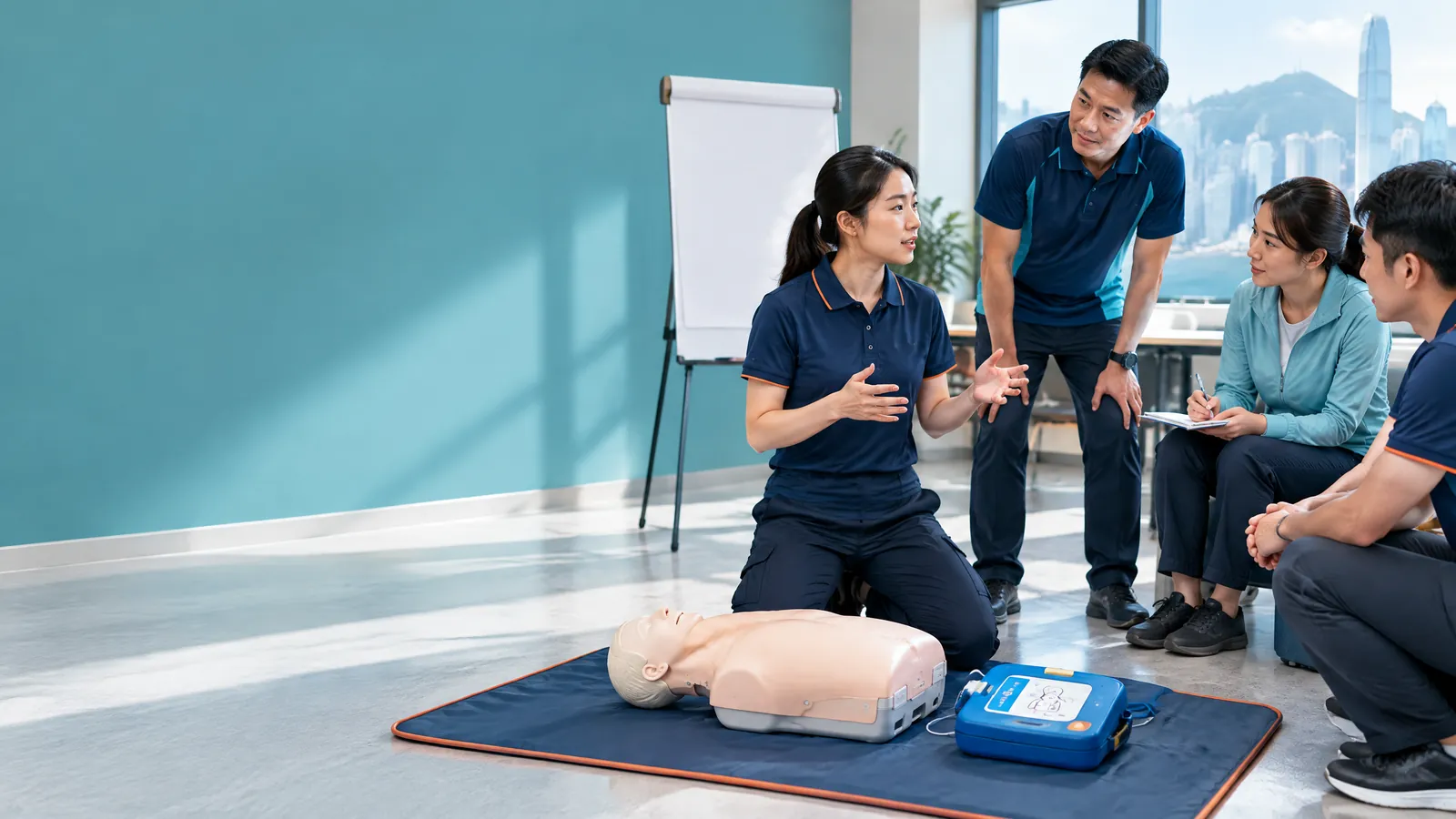
Discuss the right first-aid training next step
Clear scope, questions and safety considerations
Before messaging DiveHarbour, write down the situation in which you expect to use the skills. Is this for household confidence, a workplace file, a dive assistant pathway, a rescue course, or simply a sensible refresh? Then note any previous CPR or first-aid training, the certificate date, preferred language and any deadline. These details let the team explain available options without pretending that one course is right for every learner.
If you are comparing a general first-aid course with a diving-focused option, look for the bridge between classroom knowledge and a realistic emergency plan. You should understand how to call for help, keep a scene safe, communicate with a buddy or boat crew, and hand over information clearly. Training should not encourage risky rescues, breath-holding contests, forced water entry or improvised treatment beyond your competence. In a real emergency, follow local emergency-service advice and your training, and seek professional care.
For a refresher or a linked scuba pathway, you may also want to review the CPR course Hong Kong overview. If your longer-term aim involves teaching first aid, the EFR Instructor course Hong Kong page is a separate professional-training conversation; completing a learner course does not automatically make someone an instructor.

Compare course routes before you enrol
A practical checklist for Hong Kong learners
The most useful comparison is not simply ‘short’ versus ‘long’. Consider recognition, practice time, assessment and how closely the scenarios match your reason for learning. For example, the Hong Kong Red Cross Standard First Aid Certificate Course page describes a 30-hour course plus an additional three hours for examination, with an entry age of 15 or above and instruction in Cantonese, Putonghua or English. It separately states its own HKSAR Government recognition and certificate conditions. The Hong Kong Red Cross Standard First Aid Certificate Course page states a duration of 30 hours plus an additional 3 hours for examination and an entry requirement of age 15 or above. That is a useful reminder to compare the issuing organisation and requirement, rather than treating all first-aid certificates as interchangeable.
NAUI’s published course information is more directly connected to diving-agency education and says diving certification is not required. A NAUI route may therefore suit someone who wants a dive-relevant framework or plans to discuss it alongside rescue training. It may not satisfy an employer or regulator that specifically asks for a Hong Kong-recognised certificate. Always check the wording of the requirement with the organisation that will receive your certificate.
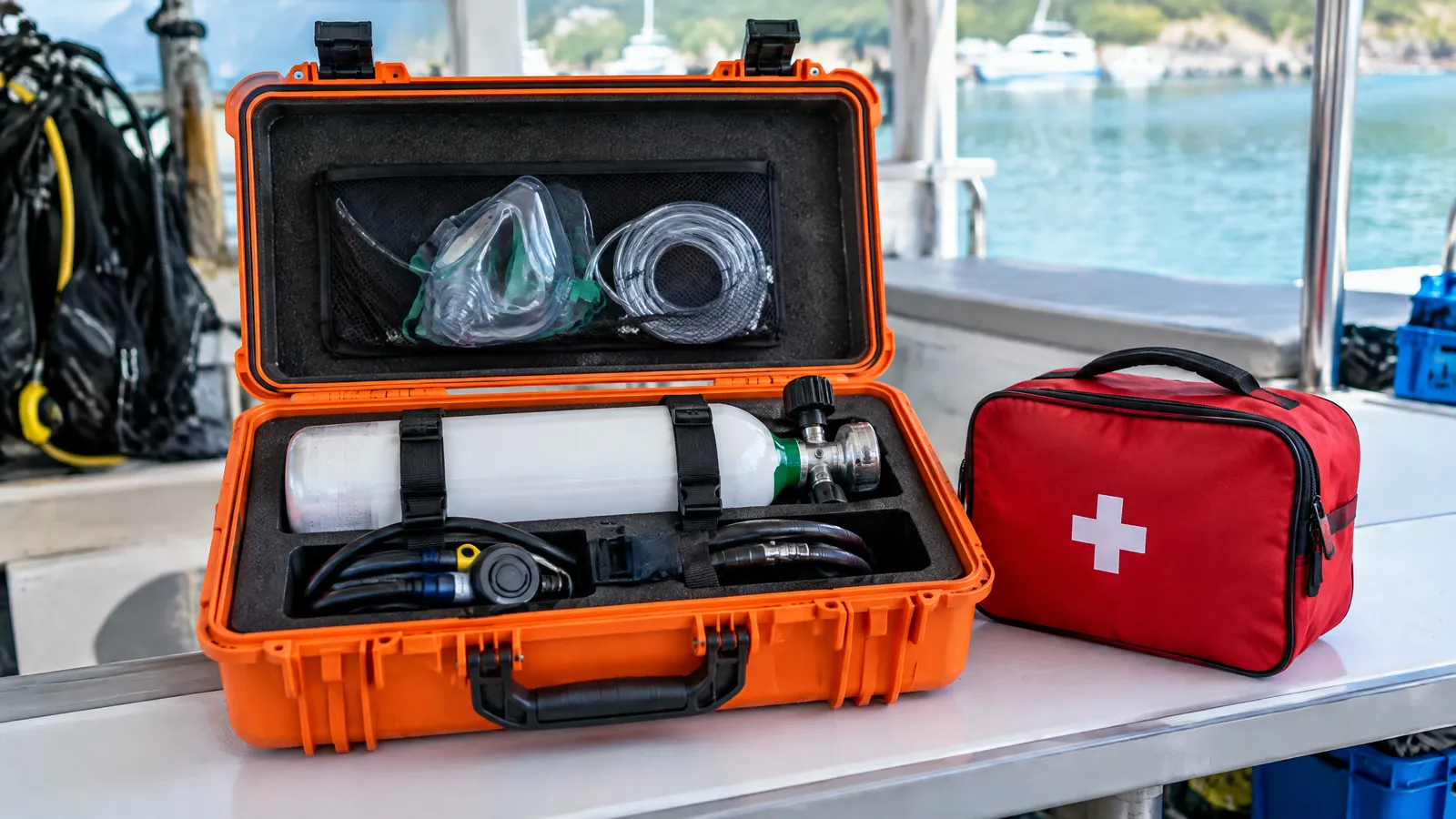
Connect first aid with responsible dive progression
Prerequisites, boundaries and useful follow-on questions
First aid is one part of a wider safety system. A diver should also understand buddy communication, equipment checks, conservative decision-making, weather and sea conditions, and when to stop an activity. If your objective is rescue capability, the NAUI Rescue Scuba Diver course Hong Kong information can help you ask how first aid fits alongside in-water problem-solving. Rescue training is not a substitute for CPR practice, and a CPR course is not a substitute for rescue-diver training.
Some learners ask specifically about oxygen or emergency-response content. The EFR CPR and first-aid course Hong Kong page is a useful comparison point, but confirm the actual syllabus and certificate before deciding. If you are reading about a pathway towards assistant teaching, the first aid certification before a dive assistant instructor course guide may help you prepare questions about prerequisites. Neither page should be read as a guarantee of acceptance by every agency or employer.
Use training as preparation, not a promise of control over an unpredictable incident. A calm response may involve alerting emergency services, directing a bystander, using only equipment you are trained to use, monitoring the person and recording useful observations. Do not delay professional care while searching for a perfect technique, and do not attempt an intervention that places you or the casualty at greater risk.

Booking questions, fees and course policies
Get the details in writing before confirming
Course dates, language, venue, instructor, materials and price can change, so ask for a current written quotation. Confirm what is included: teaching, practical equipment, manual, assessment, certificate, venue and any travel or boat-related arrangement. DiveHarbour can explain the available first aid and NAUI routes, but the final suitability decision should reflect the requirement set by your employer, club, school or next course.
Ask what happens if you miss a session or do not complete an assessment. Unless written terms say otherwise, fees are non-refundable and a make-up session is not guaranteed. Any transfer or replacement date depends on the published booking terms and availability; do not assume that a missed class automatically moves to another date. Keep your confirmation and certificate information so renewal or verification questions are easier later.
For a focused next step, send your intended use, prior certificate (if any), preferred language, approximate availability and the exact requirement you are trying to meet. The team can then clarify whether a general first aid course, NAUI First Aid course Hong Kong option or another route is the sensible conversation.

Compare first-aid training routes by purpose
| Route | Best for | Check before booking |
|---|---|---|
| General first aid certificate | Workplace, family or broad emergency-care learning | Issuing body, recognition requested by your organisation, attendance and assessment |
| NAUI First Aid / Basic Life Support | Diver development or a diving-agency context; non-divers may also enquire | Current NAUI/DAN syllabus, local age or equipment rules, certificate acceptance and delivery language |
| Diving first aid or oxygen-related option | Learners seeking additional diving-emergency context | Exact scope, practical stations, prerequisites and whether it replaces or complements CPR/first aid |
| Refresher or renewal | People maintaining previously learned skills | Validity date, required prior certificate, re-assessment and any written transfer terms |
First Aid and NAUI First Aid in Hong Kong — common questions
Is the NAUI First Aid course Hong Kong training a government-recognised qualification?Toggle answer
No government or occupational-law recognition is promised here. The NAUI First Aid course Hong Kong option should be understood through its stated training scope and issuing organisation. Ask DiveHarbour for current course details, then check any employer, school, regulator or club requirement independently. A Hong Kong government-recognised certificate from another provider may have different entry, examination and renewal conditions.
How do I choose between the available first-aid course options?Toggle answer
Start with your purpose, previous training and the skills you want to practise. Compare the issuer, practical assessment, language, duration, certificate wording and acceptance requirement. DiveHarbour can explain the available first aid course Hong Kong route, including relevant NAUI options, while a qualified medical professional should address personal health or fitness questions.
Do I need a diving certification before taking NAUI Basic Life Support: CPR and First Aid?Toggle answer
NAUI’s official course page says diving certification is not required. Local delivery details and any employer or follow-on-course requirement still need confirmation. If you are joining for a rescue or leadership pathway, ask which certificate and validity period the next course accepts rather than relying on the course name alone.
Does completing a first aid course make me qualified to diagnose or treat a diver?Toggle answer
No. Training develops immediate-care skills within a defined scope; it does not grant clinical authority or guarantee a particular outcome. In an emergency, protect the scene, activate local emergency services, provide care you are trained and equipped to give, monitor the person and hand over promptly. Seek professional medical advice for health, medication or fitness concerns.
Are course fees refundable, and can I automatically reschedule a missed class?Toggle answer
Unless written booking terms say otherwise, fees are non-refundable and a make-up session is not guaranteed. A transfer or replacement date depends on the stated terms and available places. Ask for the cancellation, attendance and re-assessment policy before paying, especially if your work or travel schedule may change.
Take the question with you
The right first-aid choice begins with the requirement you need to meet and the skills you genuinely want to practise. Compare the general and NAUI routes, verify certificate acceptance, and ask about language, assessment, dates and written policies. Message DiveHarbour with those details to discuss a realistic next step for first aid training in Hong Kong, and keep personal medical questions with an appropriate healthcare professional.
Sources worth checking
- NAUI Worldwide — Basic Life Support: CPR and First Aid
NAUI says the course prepares participants to provide care for life-threatening illness or injury until professional emergency medical care is available; it lists CPR, AED, bleeding, choking, shock and secondary assessment skills, and says diving certification is not required.
- Hong Kong Red Cross — Standard First Aid Certificate Course
The Hong Kong Red Cross page states its Standard First Aid course is recognised by the HKSAR Government, lasts 30 hours plus three examination hours, and has an entry requirement of age 15 or above.
Useful next reads for your plan
If you are still comparing routes, these related pages give you practical questions to bring into your next conversation with an instructor.
Put your plan into practice
Useful planning guides
Dive first aid renewal path: from refresher to instructor track
Use this dive first aid renewal path worksheet to compare practical options, check key decision points, and confirm current details with DiveHarbour.
dive first aid renewal path
