SAFE LEARNING · HAPPY EXPLORING
DiveHarbour

DiveHarbour · Practical guide

Straight wig shore routine for a windy day | DiveHarbour

A straight wig shore routine works best when the straight look is planned as an onshore style, not a promise that a wig will tolerate water, humidity, or movement. Before leaving, decide where the piece will be worn, pack a dry storage zone and a change option, then check the actual fibre and care label. After the activity, separate wet items, dry as directed, and store only when the piece is fully dry.

By DiveHarbour9 min read
Ask about diving courses or coastal trip planning Read the guide
Straight wig shore routine for a windy coastal portrait
Illustration · Concept illustration: an onshore straight silhouette beside a coastal setting.

Instructor qualifications

One clear teaching conversation from first breath to next step

DiveHarbour brings together scuba teaching, swimming, lifesaving and water-rescue experience so you can ask practical questions before choosing a course.

  • PADI teaching backgroundTeaching experience across recognised scuba learning pathways.
  • SSI teaching backgroundClear explanations when you are comparing agency routes.
  • NAUI teaching backgroundA practical, standards-aware approach to learning and progression.
  • Swimming foundationWater confidence and calm, step-by-step practice matter.
  • Lifesaving experienceSurface awareness and prevention stay part of the conversation.
  • Pool rescue experienceControlled practice can build confidence before open water.
  • Beach rescue experienceLocal water context informs sensible preparation.
  • Kayak rescue experienceA wider water-safety perspective supports good judgement.
  • PWC rescue experienceAsk about the right learning route for your experience and goals.

Brand relationship: DiveHarbour and OWNSTRAND share the same owner.

DiveHarbour and OWNSTRAND are operated by the same owner. OWNSTRAND links are external product and selection references, not independent recommendations, medical advice, or water-activity safety approval.

A useful fact to keep in mind

The American Cancer Society advises patting excess water out, waiting until a wig is thoroughly dry before brushing or combing, and allowing it to dry at room temperature.

Check the source
Key takeaways

Four points to carry forward

  • Treat straightness as a shore styling goal, not a water-use claim.
  • Pack a dry zone, a separate wet zone, and a private change option.
  • Check fibre, base, heat, washing, and storage instructions before the day.
  • Dry fully before brushing, folding, storing, or planning the next wear.
Start here

Straight wig shore routine: define the onshore look

A straight wig shore routine begins with a style brief, not a performance promise

Start by writing one simple sentence about the day: for example, a straight silhouette for a shore walk, a portrait, or a meal after the activity. This keeps the decision on appearance and logistics. It also prevents a straight finish from being treated as evidence that a wig or hairpiece can handle spray, immersion, wind loading, or repeated movement.

A useful brief names the time you expect to wear the piece, the places where you may remove it, and the point at which you would change into another look. Include whether the activity includes swimming or diving. If it does, plan a shore alternative unless the actual product instructions and the activity operator have separately confirmed what is appropriate. The coastal straightening goal guide can help separate a straight-look goal from a water-activity decision.

Straight and wavy are style descriptions, not interchangeable product specifications. If you want to compare a straighter fall with a softer texture, use wavy wigs only as a category reference. Check the individual fibre, length, density, base, and care instructions instead of assuming that one style behaves like another.

  • Write the onshore occasion and the desired straight silhouette.
  • Mark the first private place where a change could happen.
  • Decide which items must stay dry throughout the day.
  • Record the product label questions you still need answered.

Swipe the table to compare all columns.

Before leaving: a practical straight-style shore checklist
Planning pointQuestion to answerAction
Wear locationWill the piece stay on shore only?Write the shore segment and the change point.
Dry zoneWhich items must remain dry?Pack the piece, clean towel, and approved care items separately.
Wet zoneWhat may carry moisture back?Use a separate bag for towels, clothing, and activity gear.
LabelWhich fibre and base does this piece have?Photograph or carry the care instructions before leaving.
BackupWhere can the look change privately?Choose a facility or end point before the day begins.
The goal is a manageable shore-day sequence. It is not a claim that any piece resists humidity, water, or movement.
Guide · 02

Before leaving: build the dry-zone plan

The straight wig shore routine needs a planned change point

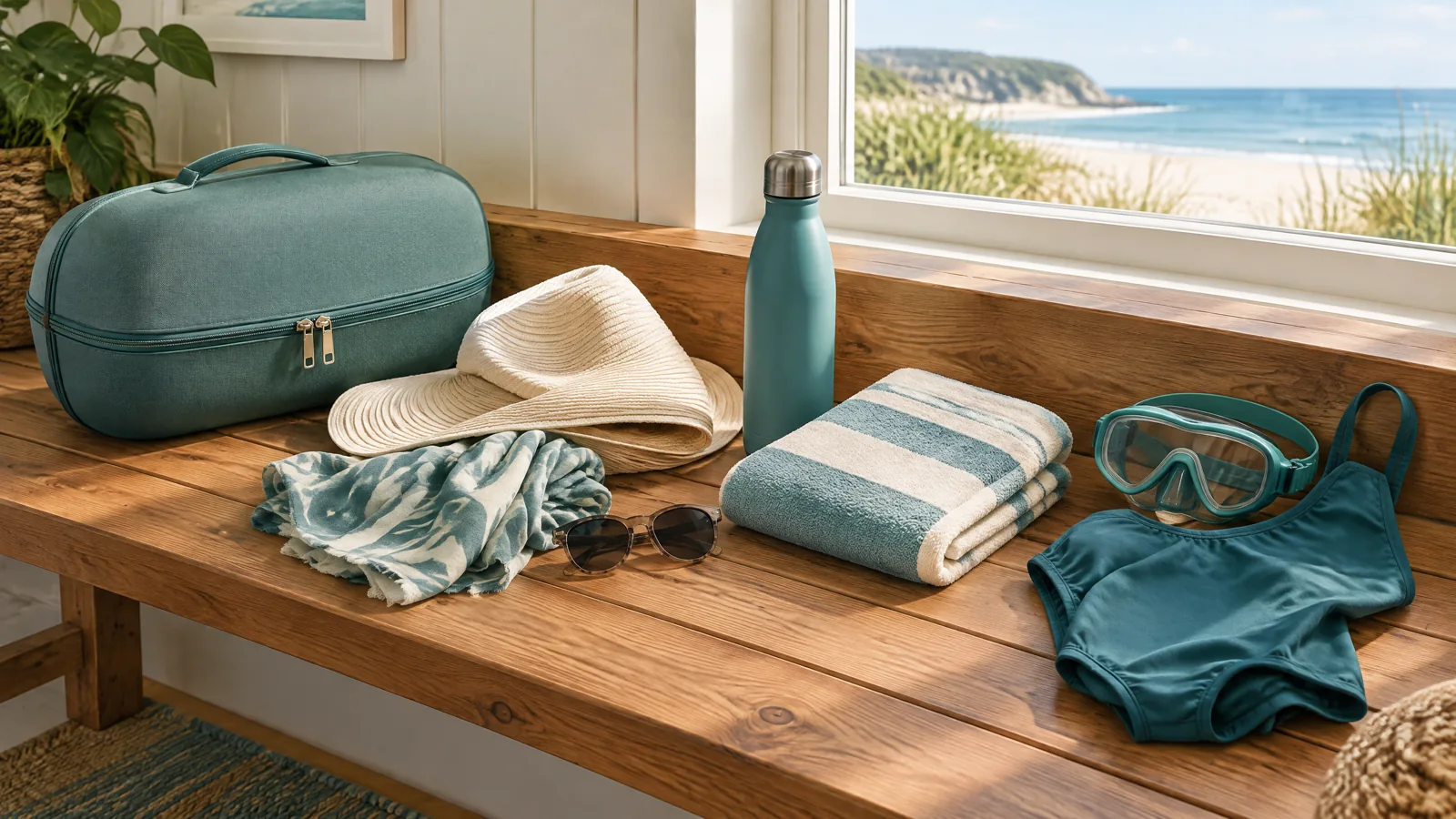
Use two clearly separated packing zones. One zone holds the piece, a clean towel, any label-approved care items, and the container or stand you will use later. The other holds towels, swimwear, or other items that may become wet. A sealed wet bag can protect the dry zone from damp clothing, but it does not make the wig itself waterproof.

Choose a change point before you leave home rather than deciding while tired or exposed. It could be a private room, a booked facility, or the place where your shore plan ends. Pack a simple alternative for the time after the activity. A change is a logistics choice, not proof that the original piece failed or that another attachment method should be improvised.

For product-specific questions, custom wig consultation Hong Kong may be used as an OWNSTRAND enquiry reference. The only confirmed OWNSTRAND shop is Unit 2103, 50 Hoi Yuen Road, Kwun Tong, Hong Kong. This does not promise stock, timing, availability, or a service for every piece.

Straight wig shore routine dry and wet packing zones
Illustration · Concept illustration: dry and wet items separated for a shore day.
Guide · 03

At the shore: separate styling from activity decisions

Keep a straight silhouette on shore, and make water decisions separately

At the meeting point, check the piece before putting it on. Look for tangles, dampness, loose packaging, or a care note you have not yet understood. Keep the inspection gentle. Do not add adhesive, clips, ties, or other modifications because the day is windy, and do not alter a mask, helmet, buoyancy device, or other safety equipment to accommodate a hairstyle.

If the planned activity involves swimming, diving, or getting deliberately wet, treat the product question and the activity question as two separate decisions. Follow the actual product instructions and the responsible operator's requirements. When either is unclear, leave the piece in the dry zone and choose the shore alternative. DiveHarbour activity enquiries concern the activity, not OWNSTRAND orders.

For portraits, walks, or a shore meal, keep the routine modest. Smooth the visible lengths only as the product instructions allow, avoid trying to make every strand identical, and pause before adding a new product. A straight look can be an aesthetic target for one part of the day, while a different low-maintenance option may be more practical after a change.

Guide · 04

After the activity: dry, inspect, then store

A straight wig shore routine ends with a controlled drying sequence

When you remove the piece, keep it away from wet towels and place it in the dry zone. If it has been exposed to moisture, do not hide it immediately in a closed case. First follow the piece's own instructions. The American Cancer Society advises patting out excess water, waiting until a wig is thoroughly dry before brushing or combing, and allowing it to dry at room temperature. [1]

The same guidance says a wig stand is suitable for short-term storage, such as overnight or a few days, and that care products should be formulated for wigs. These are useful planning principles, not a universal instruction for every base or fibre. If the label names a different support, drying position, or product, use that direction instead.

For synthetic fibre, Jon Renau's care guide says to towel-pat gently, air-dry on a plastic or wire wig stand, and avoid blow-drying and heat styling. [2] That is a synthetic-specific manufacturer instruction. It should not be transferred to human hair, blended fibre, or an unknown piece without checking the relevant label.

Once dry, inspect the cap, hair direction, ends, and storage container. If the piece is still damp, smells unusual, or has visible residue, stop before brushing or sealing it away. Ask the product provider what the next care step is rather than using household shampoo, heat, or a new styling treatment by guesswork.

Swipe the table to compare all columns.

After the activity: choose the next handling step
What you findImmediate handlingDo not assume
Piece is dry and label is clearInspect gently and use approved storage.Do not infer water or movement resistance.
Piece is dampFollow the label and dry in the approved way.Do not seal it in a closed case while damp.
Fibre is unknownPause and ask the provider for instructions.Do not apply heat or household products.
Piece has residue or tanglesKeep it separate and seek product-specific care.Do not scrub, pull, or improvise an attachment change.
Next activity is wetPlan a shore alternative or a separate change.Do not treat a dry routine as activity clearance.
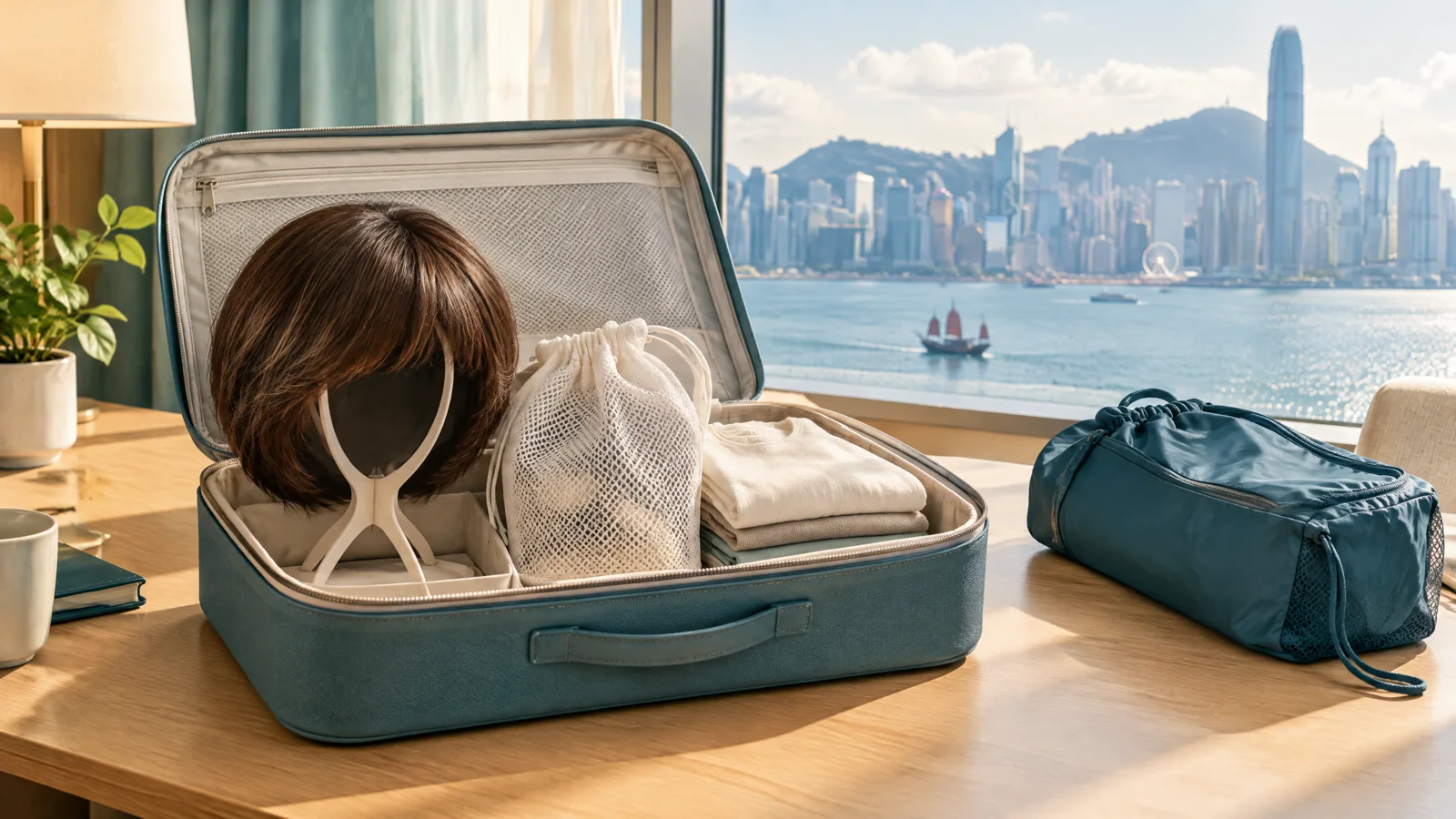
Straight wig shore routine drying and storage sequence
Illustration · Concept illustration: a travel case and drying area, not a product test.
Guide · 05

Care-label checks for a straight finish

Use the label to decide how the straight shape may be refreshed

Read the care label before the shore day, not after a problem appears. Record whether the piece is synthetic, human hair, or a blend; whether the base is a full wig, topper, or another hairpiece; and which products, water temperatures, tools, and drying methods are named. A straight style does not identify the fibre or the construction.

Heat-friendly is not the same as heat-safe for every tool, temperature, or section of a piece. Standard synthetic fibre may have a different rule from heat-friendly fibre, while processed alternative human hair may have its own drying and styling method. Even two pieces made from a similar fibre can have different base instructions, so keep the label with the travel kit.

A topper and a full wig also create different coverage and handling questions. Use hair topper vs wig as a comparison reference, then identify the actual piece, base, and label before planning a straight shore routine.

Use a small written checklist: fibre, base, washing, drying, brushing, heat, storage, and provider contact. If an instruction is missing, unclear, or written for a different model, pause the refresh. A consultation can clarify product-specific questions, but it does not turn a general article into fitting, treatment, activity, or medical clearance.

For a longer straight piece, work from the ends only when the care directions permit brushing. The American Cancer Society specifically describes starting at the ends for long straight wigs before styling. [1] In a shore routine, that advice belongs after the piece is dry and clean enough to handle, not while it is damp or mixed with wet activity gear.


Guide · 06

Pack for tomorrow and choose the next look

The final step in a straight wig shore routine is a realistic reset

After drying and inspection, place the piece on its approved stand or in its approved container. Keep it out of direct heat and away from the wet zone. Do not compress a shape that still needs to finish drying. If you are staying away overnight, leave a note with the care instructions and the next decision point so that nobody handles the piece with the wrong brush or tool.

If the day included swimming or another wet activity, separate the hairpiece plan from post-activity hair care. You can use a post-swim conditioning plan to organise the human-hair routine, but that internal guide is not permission to wear an unapproved piece in water. Keep any treatment or activity questions with the appropriate product provider or qualified professional.

Before the next outing, review what actually made the day difficult: the straight shape, the length, the changing location, the drying time, or the lack of a spare look. Change one planning variable at a time. You might choose a shorter onshore style, move the portrait earlier, or carry a separate option for the meal. Do not solve a logistics problem by modifying safety gear.

A good routine leaves you with three clear records: where the piece was worn, how it was separated and dried, and which label questions remain. That record helps you ask a focused product enquiry without claiming a result. It also gives DiveHarbour a focused activity enquiry when you need to discuss the shore plan itself.

Straight wig shore routine care-label discussion
Illustration · Concept illustration: discussing fit and care questions in a private setting.
A sensible next step

Take the question with you

Plan the straight silhouette as one shore segment, then protect the rest of the day with a dry zone, a private change point, and a care-label checklist. After the activity, separate wet items, dry the piece exactly as directed, and store it only when fully dry. If the label or activity requirements are unclear, pause and ask the relevant provider rather than improvising.

For DiveHarbour, ask about the shore activity, route, and changing logistics. For OWNSTRAND, use the linked pages to ask product-specific selection or care questions; OWNSTRAND does not provide DiveHarbour activity clearance.

Questions to ask

Common questions

Can I wear a straight wig while swimming or diving?

Do not assume that you can. Check the actual product instructions and the activity operator's requirements. If either is unclear, keep the piece in the dry zone and choose a shore alternative.

Should I brush a wig immediately after a damp shore day?

Not automatically. Follow the care label. The American Cancer Society says to pat out excess water and wait until the wig is thoroughly dry before brushing or combing.

Can I use a hairdryer to restore a straight shape?

Only if the specific piece is labelled for that method. Synthetic-fibre instructions may prohibit blow-drying, while another material may have different directions. Never infer heat tolerance from a straight appearance.

Is a topper the same as a full wig for a shore routine?

No. A topper and a full wig have different coverage, bases, and handling questions. Identify the actual piece first, then ask the provider about its care and your planned onshore use.

Further reading

Official sources worth checking

Continue exploring

Keep comparing practical questions before you choose a course, activity or preparation step.

Coastal life and hairpieces · Updated 2026-11-06

Windy Hairline Photos: Plan Light, Parting and Angles

Plan windy hairline photos with a shore brief for light, parting, wind and angles. Compare frames before your event and ask clear consultation questions.

windy hairline photos

Coastal life and hairpieces · Updated 2026-11-06

Post-Swim Shore Change: From Water to a Shore Meal

Plan a post-swim shore change with a private handover, careful drying, storage, and restyling sequence. Read the practical guide before your shore meal.

post-swim shore change

Coastal life and hairpieces · Updated 2026-11-06

Shore-Day Hair Kit: Separate Dry and Wet Gear for the Coast

Build a shore-day hair kit that separates the hairpiece, dry clothes, towels, and activity gear. Follow this transition plan and check its care sheet.

shore-day hair kit
Your next step

Ask about diving courses or coastal trip planning

Message DiveHarbour on WhatsApp to discuss diving courses or coastal trip planning, along with your experience and preferred dates.

Ask about diving courses or coastal trip planning
English price list for 21 DiveHarbour courses and activities, with fees per person in Hong Kong dollars
Tap the price list to view it at full size.

Plan your next dive

Course fees, clearly set out

Compare our published course and activity fees before choosing your next step. All prices are per person in Hong Kong dollars.

Before you book, we confirm prerequisites, materials, certification, equipment, venue and boat arrangements in writing. Ask us about fees for courses not listed here.

All fees are non-refundable. Make-up sessions are subject to the written terms.

Read all course fees
DiveHarbour course and activity fees per person in Hong Kong dollars
Course / activityPer person
Pool / confined-water try scubaHK$870
Boat-based try scuba — one diveHK$1,020
NAUI Open Water Scuba Diver — group courseHK$4,590
Junior Open Water courseHK$4,590
Junior Advanced courseHK$3,680
Family try scubaHK$970
NAUI Advanced Open Water Scuba DiverHK$3,570
NAUI Rescue Scuba DiverHK$3,570
Basic Life Support: CPR and first aidHK$1,430
Diving emergency oxygen courseHK$1,330
Rescue and first aid course bundleHK$4,590
Deep Diver specialtyHK$3,270
Enriched Air Nitrox Diver specialtyHK$1,480
Night Diver specialtyHK$2,550
Wreck Diver specialtyHK$3,570
Underwater Navigation specialtyHK$2,450
Search and Recovery specialtyHK$2,450
Underwater Photography specialtyHK$2,040
Hong Kong Fun Dive — two divesHK$580
Sai Kung boat diving — two divesHK$580
Tung Ping Chau boat diving — two divesHK$640