SAFE LEARNING · HAPPY EXPLORING
DiveHarbour

DiveHarbour · Practical guide

Wavy Wig Wind Choice: Pick Wave and Length for Shore Photos

A useful wavy wig wind choice starts with the portrait brief, not a promise that one pattern will stay unchanged. Choose wave scale and length by exposure, outfit shape, camera distance, and the time you can give to a dry refresh. Check gust information, keep the piece separate from damp activity items, and follow its own fibre and base instructions after the shore session.

By DiveHarbour10 min read
Ask about diving courses or coastal trip planning Read the guide
Wavy wig wind choice for a coastal portrait, concept illustration
Illustration · Concept illustration: a shore portrait planning scene, not a real customer or product result.

Instructor qualifications

One clear teaching conversation from first breath to next step

DiveHarbour brings together scuba teaching, swimming, lifesaving and water-rescue experience so you can ask practical questions before choosing a course.

  • PADI teaching backgroundTeaching experience across recognised scuba learning pathways.
  • SSI teaching backgroundClear explanations when you are comparing agency routes.
  • NAUI teaching backgroundA practical, standards-aware approach to learning and progression.
  • Swimming foundationWater confidence and calm, step-by-step practice matter.
  • Lifesaving experienceSurface awareness and prevention stay part of the conversation.
  • Pool rescue experienceControlled practice can build confidence before open water.
  • Beach rescue experienceLocal water context informs sensible preparation.
  • Kayak rescue experienceA wider water-safety perspective supports good judgement.
  • PWC rescue experienceAsk about the right learning route for your experience and goals.

Brand relationship: DiveHarbour and OWNSTRAND share the same owner.

DiveHarbour and OWNSTRAND have the same owner. OWNSTRAND links in this article are external product and selection references, not independent third-party recommendations, medical advice, or a DiveHarbour activity-safety endorsement. DiveHarbour activity enquiries and OWNSTRAND hairpiece enquiries are handled separately.

A useful fact to keep in mind

The Hong Kong Observatory distinguishes a gust from sustained wind: a gust is an abrupt surge or direction change, so a general windy label may not describe what a portrait setup will experience.

Check the source
Key takeaways

Four points to carry forward

  • Choose a wave pattern for the portrait distance and outfit, then allow for wind direction to change.
  • Treat length as a logistics decision: more movement can also mean more detangling, storage, and refresh work.
  • Use the actual fibre, base, and care label to plan the post-event refresh; do not transfer instructions between styles.
  • Pack the portrait piece separately from damp items and keep a shore-only alternative if the weather becomes unsuitable.
Start here

Wavy wig wind choice: start with the shore brief

A wavy wig wind choice is a planning decision, not a fixed finish

Start by writing down the photograph you actually need. Is it a close portrait, a walking frame, a group photograph, or a sequence that moves between shade and an exposed promenade? The answer changes how much texture can move before it changes the visual balance. A wave that reads clearly in a close frame may look almost straight from a distance, while a tighter pattern may become busier beside a structured collar. Choose for the image and the day, not for a product photograph alone.

Coastal wind is not one steady force. The Hong Kong Observatory explains that a gust can be an abrupt surge in speed or a sharp direction change, and that gust speed can differ substantially from sustained wind [1]. For planning, check the forecast wording and warnings, then imagine the hair moving in more than one direction. That keeps the decision realistic without claiming that any length or wave will behave in a guaranteed way.

Set a simple priority order before comparing styles: first, the portrait mood; second, how much movement suits the outfit; third, the time available for a dry refresh; and fourth, how discreetly the piece can be stored between locations. If the photograph is only one part of a longer shore day, a slightly simpler texture may be more practical than the most elaborate pattern. Your best choice is the one whose compromises you understand before leaving home.

  • Name the camera distance and the number of planned portrait settings.
  • Mark exposed, sheltered, and indoor locations on the route.
  • Describe the outfit neckline, collar, hat, and fabric movement.
  • Reserve a realistic window for separation, drying, and gentle rechecking.

Swipe the table to compare all columns.

A practical first-pass matrix for the shore portrait brief
QuestionWhat to noteHow it changes the choice
Where will the photo happen?Sheltered, open, moving, or mixed locationsChoose a plan that can move to a calmer setting without a last-minute styling experiment.
How will the wave read?Close portrait, full figure, or group frameBroad texture may read differently from defined texture at each distance.
What happens afterward?Immediate dinner, travel, change of clothes, or storageSelect a length and refresh routine that fits the real transition.
A forecast can inform the plan, but it cannot promise a particular wave result. Build a portrait option that still works if the wind changes direction.
Guide · 02

Match wave scale to texture, clothing, and camera distance

Compare a soft wave, defined wave, and curl without treating labels as interchangeable

A soft wave usually gives the eye a broad line rather than a repeated coil. That can sit comfortably with a plain dress, an open shirt, or a relaxed portrait where movement is part of the scene. A more defined wave creates visible bends that may read well in a closer frame, but those bends also make displacement easier to notice when the wind turns. This is not a quality ranking. It is a question of how much texture your photograph and outfit can carry at the same time.

Do not use “wavy” and “curly” as interchangeable descriptions. Curl size, density, direction, and the base construction all change the questions you should ask. If a defined curl is part of the brief, review curly wigs as a style category, then confirm the actual piece details rather than assuming every curl follows the same care or shaping rules. The link is a product-selection reference, not a promise of a particular result.

Use the clothing as a visual counterweight. A high-detail print may pair more calmly with a broader wave, while a simple outfit may leave room for stronger texture. Consider the neckline too: hair that finishes near the shoulder can meet a collar or strap and look different from the same pattern over a bare shoulder. Take reference photos in similar light, but treat them as discussion material. Wind, camera angle, and the individual piece can change the final appearance.

Ask which terms describe the fibre and which describe the finished styling. They are not the same specification.
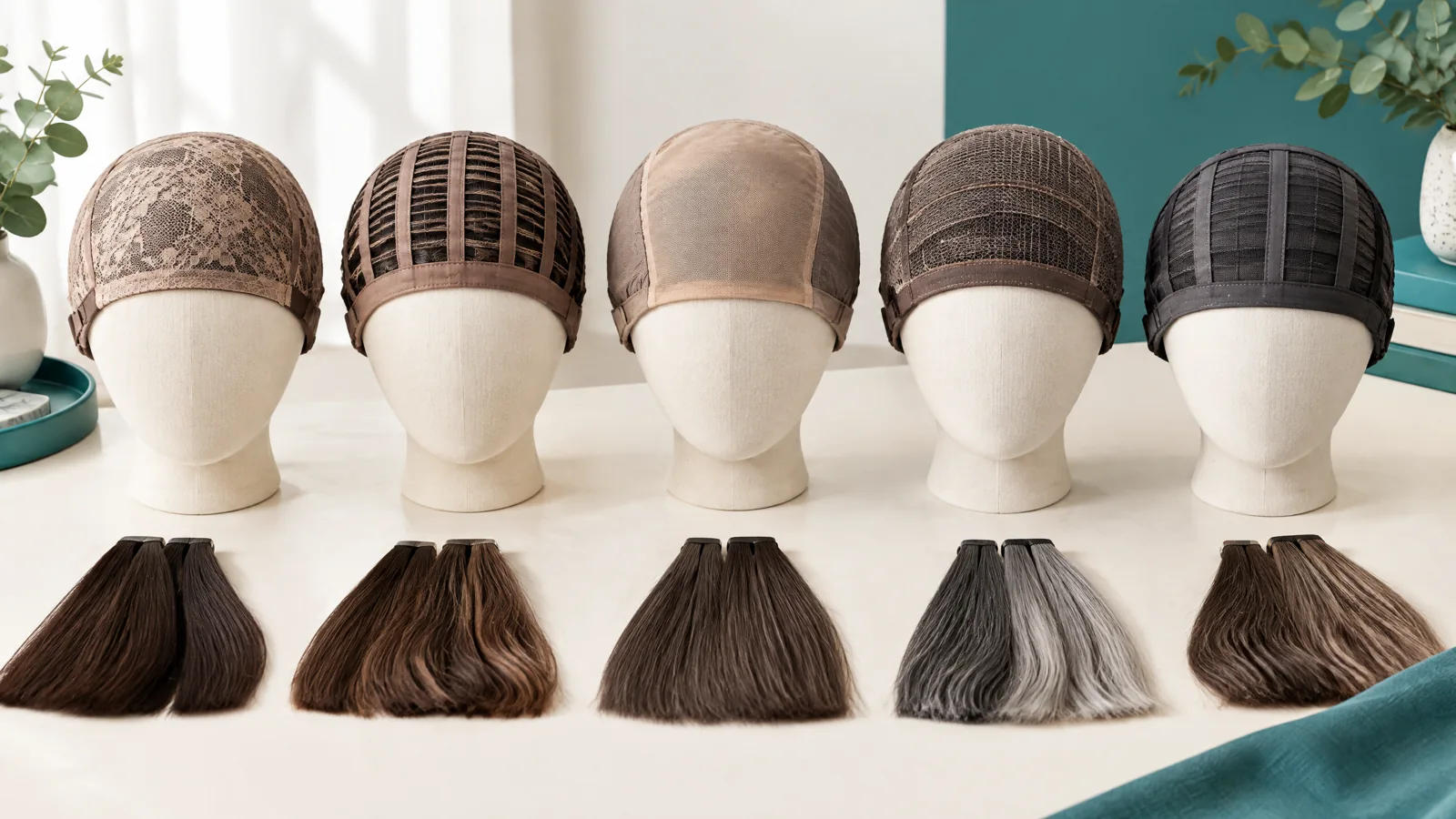
Wavy wig wind choice and cap construction comparison, concept illustration
Illustration · Concept illustration: comparing hairpiece construction questions, not a product comparison photograph.
Guide · 03

Let length set the portrait and refresh workload

Wavy wig wind choice includes movement, storage, and the next location

Shorter waves often reduce the amount of hair that can cross a shoulder, collar, or bag strap during a moving portrait. They can also make the outline easier to review between shots. Medium lengths create more visible swing and can connect naturally with a relaxed outfit, but they need a clearer plan for sitting, changing layers, and keeping the ends from being crushed in a small case. Longer lengths can create a dramatic line, yet they ask for more space, gentler handling, and more time if the ends need attention after the session.

Before selecting a length, describe the whole day to the fitting or selection team. A question about custom wig fitting Hong Kong may be relevant when you need to discuss how a chosen shape sits, where the ends fall, and what your portrait clothing will do around it. It is still necessary to confirm the actual service scope and product instructions directly. A fitting discussion is not a guarantee that a style will remain unchanged in wind.

Use your available refresh time as a hard design constraint. If you have only a brief stop before dinner, avoid planning a complicated change that depends on heat, wet handling, or an unfamiliar tool. If you have a private room and more time, you can ask more detailed questions about detangling, drying, and storage. The decision should be made before the event, because improvising beside a windy shoreline is a poor substitute for knowing the care label.

  • Short: prioritise a clean outline and quick visual checks between frames.
  • Medium: plan how the ends meet collars, straps, and seated poses.
  • Long: reserve space, support, and extra care for the ends during storage.
  • Any length: confirm the actual fibre and base instructions before packing tools.
Guide · 04

Plan for gusts, outfit changes, and shore transitions

A coastal portrait needs a location plan as much as a style plan

Choose the first portrait location with the wind in mind, but do not assume it will remain the same. A wall, covered walkway, or sheltered garden can give you a calmer comparison point before an exposed viewpoint. If the Observatory has issued gust-related advice, treat that as a reason to reconsider open areas and secure loose personal items, not as a styling challenge to overcome [1]. The portrait plan should yield to the conditions. Hair is not a reason to stay in an unsafe place.

A glueless wig describes a construction or wearing approach, not a universal promise about stability, comfort, or suitability for every activity. Ask what the specific piece requires, how it should be handled, and whether the intended shore setting changes the provider's advice. Do not add adhesive, clips, ties, or improvised modifications to solve a wind problem. If the planned conditions are unsuitable, move the portrait or use a shore alternative.

Your outfit plan should include a reset point. A jacket, scarf, or change of top can alter the way the wave meets the shoulders, so take one reference image after the change rather than relying on memory. Keep the portrait piece in a clean, separate container when it is not being worn. Do not place it beside wet towels or activity equipment. The goal is a controlled transition between locations, not a claim that the piece can accompany every part of a coastal day.

Swipe the table to compare all columns.

Length and transition questions to settle before the event
Length directionUseful portrait questionLogistics question
ShortWill the outline stay clear beside the collar or neckline?Can I inspect and store it quickly between settings?
MediumWhere will the ends fall in walking and seated frames?What support and space do the ends need during a reset?
LongDoes the movement suit the outfit without becoming the only subject?Can I protect the ends and follow the full care routine afterward?
If a wind warning changes the setting, change the photo plan. Do not change the hairpiece or safety equipment to force the original setting.
Wavy wig wind choice fitting discussion for a shore photo, concept illustration
Illustration · Concept illustration: a private selection discussion, not a real OWNSTRAND fitting or customer result.
Guide · 05

Build a fibre-specific after-event refresh

The label decides what happens after the shore portrait

Separate the portrait piece from damp clothing as soon as the session ends. Let the outside of the storage container stay clean and dry, and do not seal a piece away while it is visibly damp unless the product instructions specifically address that situation. The National Alopecia Areata Foundation gives different general care guidance for human-hair and synthetic wigs, including different heat, drying, and handling considerations [2]. Treat that distinction as a prompt to read your own instructions, not as permission to copy a routine from another style.

For synthetic fibre, NAAF advises handling by the cap rather than the fibres, avoiding heat unless the label says the piece is heat-friendly, using cool water when washing, air drying, detangling once dry, and storing away from heat and sunlight [2]. For human hair, its general guidance includes storage on a stand or mannequin and heat protectant when styling [2]. These are general educational boundaries. The actual product instructions remain the controlling source, especially when the base, fibre blend, or finish is unclear.

A refresh can be as limited as a visual check, a gentle separation of the ends when dry, and a protected rest on an appropriate support. It does not have to become a full wash on the same day. For a related shore routine, see coastal wavy haircut upkeep before choosing tools.

Avoid rubbing, pulling, or applying a new product simply because the wind changed the shape. If tangling, base damage, or an unfamiliar label creates doubt, stop and ask the product provider. Do not force a bonded or attached piece off, and do not invent a removal routine from a general article.

  • Keep the piece in its own clean area, away from damp towels and used activity items.
  • Read the fibre, heat, drying, and storage instructions before using a tool.
  • Handle the cap or base as directed and avoid pulling through wind-tangled hair.
  • If the instructions are unclear, pause the refresh and ask the product provider.
Guide · 06

Turn the choice into a calm photo-day workflow

Use a short brief so the wave, length, outfit, and logistics stay aligned

A practical brief can fit on one phone note. Record the date, portrait locations, exposure level, outfit changes, preferred camera distance, chosen texture, chosen length, fibre label, base label, storage method, and the latest point at which you can change the plan. Add one sentence describing what you will do if gusts increase: move indoors, use a sheltered angle, postpone the portrait, or continue without the hairpiece. Writing this before the event removes pressure from the shoreline.

If the photograph follows another shore activity, keep the responsibilities separate. DiveHarbour can answer questions about a DiveHarbour activity, meeting arrangements, and activity suitability through its own enquiry route. It does not place, fit, or manage an OWNSTRAND hairpiece order. For hairpiece selection, use the product information and direct provider enquiry route, and do not treat an activity booking as evidence that a particular style is appropriate for water or equipment use.

The final decision can be simple: choose the pattern that supports the portrait, the length that fits your storage and refresh window, and the plan that still works when wind direction changes. A quieter wave or shorter length is not a failure if it leaves room for the outfit, the camera, and an unhurried transition. For a men’s portrait or shorter layered look, compare the styling logic in coastal men's wave styling as an internal planning reference, not as a fixed result.

Before leaving, check the weather information again, pack the piece separately, and carry only tools allowed by the actual care instructions. At the shore, take a test frame before committing to the main location. Afterward, separate, inspect, and store the piece according to its label. This sequence protects your decision-making without pretending that a product can remove the uncertainty of weather.

The most reliable shore plan is reversible: you can change the location, outfit layer, or portrait timing without forcing a product beyond its instructions.
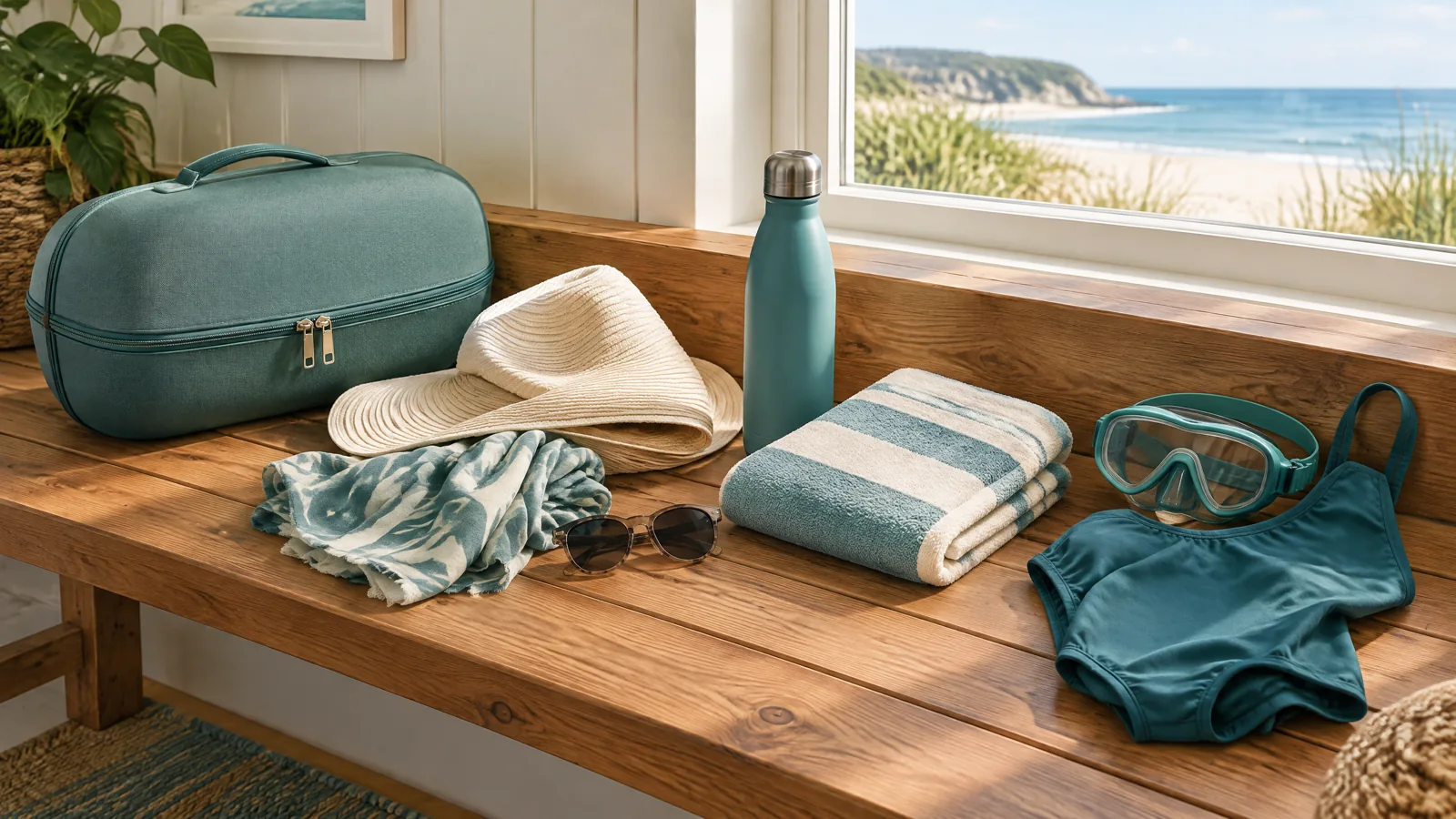
Wavy wig wind choice shore-day refresh kit, concept illustration
Illustration · Concept illustration: separating a portrait piece from damp activity items, not a real customer kit.
A sensible next step

Take the question with you

Make the choice reversible. Pick the wave that supports the portrait, the length that fits your outfit and storage plan, and the refresh routine that matches the actual fibre and base instructions. Check gust information before leaving, take a test frame in the first location, and move the portrait rather than improvising a product or equipment modification when conditions change.

For a DiveHarbour activity enquiry, contact DiveHarbour about the shore or coastal activity itself, including suitability and arrangements. For an OWNSTRAND hairpiece enquiry, use the relevant OWNSTRAND product information to ask about the specific style, fibre, base, fitting, and care instructions. The two enquiries are separate.

Questions to ask

Common questions

What is the first step in a wavy wig wind choice?

Write the portrait brief first: camera distance, outfit, locations, likely gust exposure, and the time available for a dry refresh. Then compare wave scale and length against that brief.

Is a tighter curl automatically better for a windy shore portrait?

No. A tighter pattern may read differently from a broad wave, but the best choice depends on the outfit, camera distance, direction changes, and the actual piece. No fixed result should be promised.

Should I brush or heat-style the piece as soon as I leave the shore?

Not automatically. Separate it from damp items, read the fibre and base instructions, and wait for the permitted handling conditions. Synthetic, human-hair, and heat-friendly instructions are not interchangeable.

Can I use this article to decide whether to wear a hairpiece in water?

No. This is a shore-portrait planning guide. Handle any water activity separately under the actual product instructions and the qualified activity operator’s requirements, and choose a shore alternative when uncertain.

Further reading

Official sources worth checking

  • [1] Beware of Gusts

    The Hong Kong Observatory states that a gust is an abrupt surge in wind speed or a drastic change in wind direction, and explains that gust speed may differ substantially from sustained wind.

  • [2] Wigs and Toppers: Buying, Caring for and Wearing Wigs & Toppers

    NAAF advises that synthetic wigs should be handled by the cap rather than the fibres, that heat should be avoided unless labelled heat-friendly, and that synthetic pieces should be air dried, detangled once dry, and stored away from heat and sunlight.

Continue exploring

Keep comparing practical questions before you choose a course, activity or preparation step.

Coastal life and hairpieces · Updated 2026-11-06

Humid Short Wig Routine: A Shore-Day Care Checklist

Plan a humid short wig routine for a Hong Kong shore half-day: check fibre labels, refresh gently, and choose a dry-land fallback.

humid short wig routine

Coastal life and hairpieces · Updated 2026-11-06

Thinning-Part Piece Size: Shore Portrait Coverage Guide

Learn how to estimate thinning-part piece size for a shore portrait, compare topper and full-wig coverage, and plan a calm event-day fitting enquiry.

thinning-part piece size

Coastal life and hairpieces · Updated 2026-11-06

Tseung Kwan O wig route: plan online checks before a shore day

Use this Tseung Kwan O wig route to compare online questions with a Kwun Tong viewing, check short styles and fibre labels before a shore day. Read more.

Tseung Kwan O wig route
Your next step

Ask about diving courses or coastal trip planning

Message DiveHarbour on WhatsApp to discuss diving courses or coastal trip planning, along with your experience and preferred dates.

Ask about diving courses or coastal trip planning
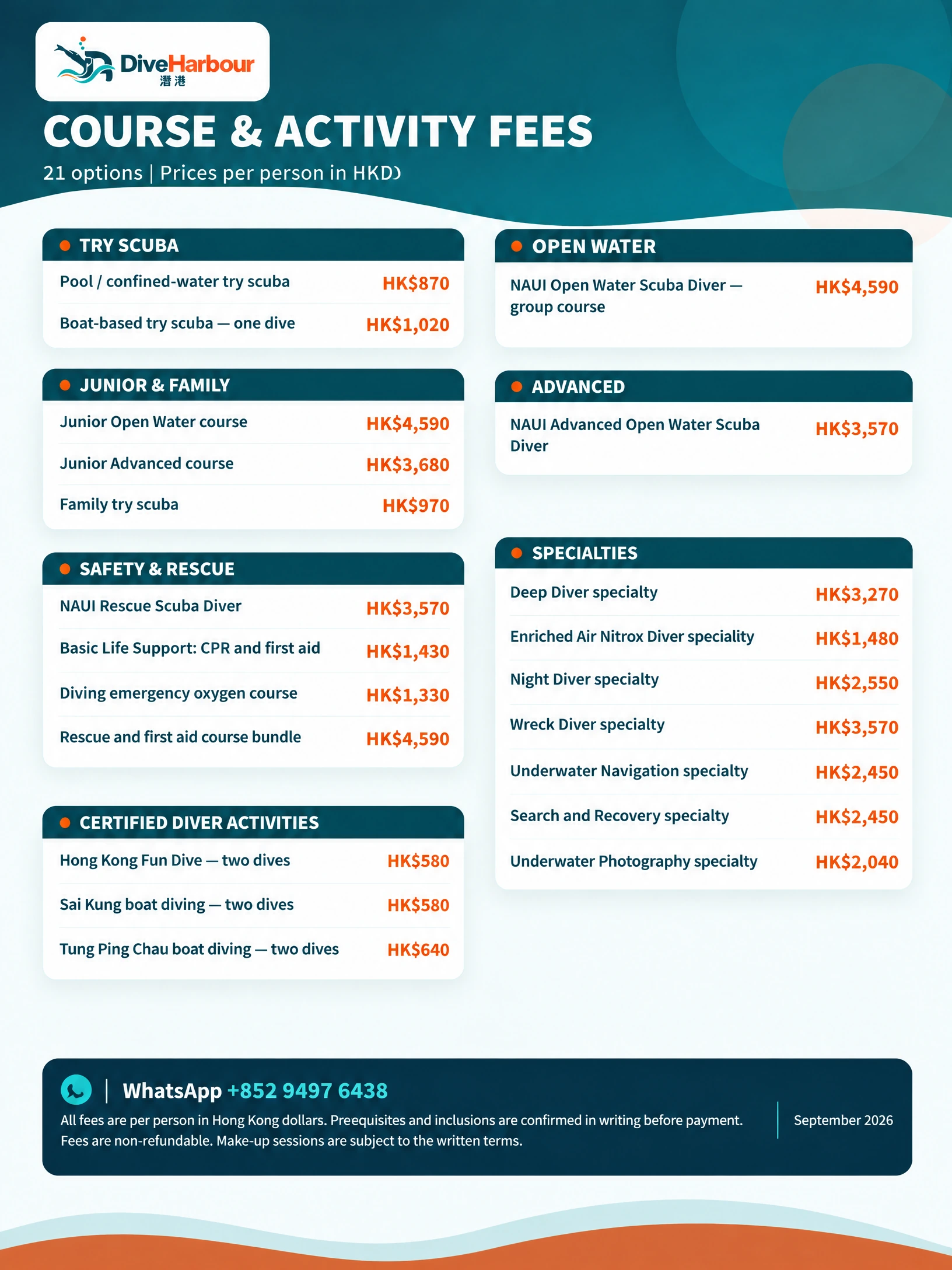
English price list for 21 DiveHarbour courses and activities, with fees per person in Hong Kong dollars
Tap the price list to view it at full size.

Plan your next dive

Course fees, clearly set out

Compare our published course and activity fees before choosing your next step. All prices are per person in Hong Kong dollars.

Before you book, we confirm prerequisites, materials, certification, equipment, venue and boat arrangements in writing. Ask us about fees for courses not listed here.

All fees are non-refundable. Make-up sessions are subject to the written terms.

Read all course fees
DiveHarbour course and activity fees per person in Hong Kong dollars
Course / activityPer person
Pool / confined-water try scubaHK$870
Boat-based try scuba — one diveHK$1,020
NAUI Open Water Scuba Diver — group courseHK$4,590
Junior Open Water courseHK$4,590
Junior Advanced courseHK$3,680
Family try scubaHK$970
NAUI Advanced Open Water Scuba DiverHK$3,570
NAUI Rescue Scuba DiverHK$3,570
Basic Life Support: CPR and first aidHK$1,430
Diving emergency oxygen courseHK$1,330
Rescue and first aid course bundleHK$4,590
Deep Diver specialtyHK$3,270
Enriched Air Nitrox Diver specialtyHK$1,480
Night Diver specialtyHK$2,550
Wreck Diver specialtyHK$3,570
Underwater Navigation specialtyHK$2,450
Search and Recovery specialtyHK$2,450
Underwater Photography specialtyHK$2,040
Hong Kong Fun Dive — two divesHK$580
Sai Kung boat diving — two divesHK$580
Tung Ping Chau boat diving — two divesHK$640