Event hair timeline: a calm coastal plan | DiveHarbour
A useful event hair timeline starts with the first moment that cannot move, then works backward through a trial, feedback, final styling, travel, dressing, and photography. Keep provider time separate from transport and venue access. Use a written backup for weather, late arrivals, scope changes, or a simpler look. For coastal plans, treat hair appearance, shore logistics, and any water-activity decision as separate conversations.
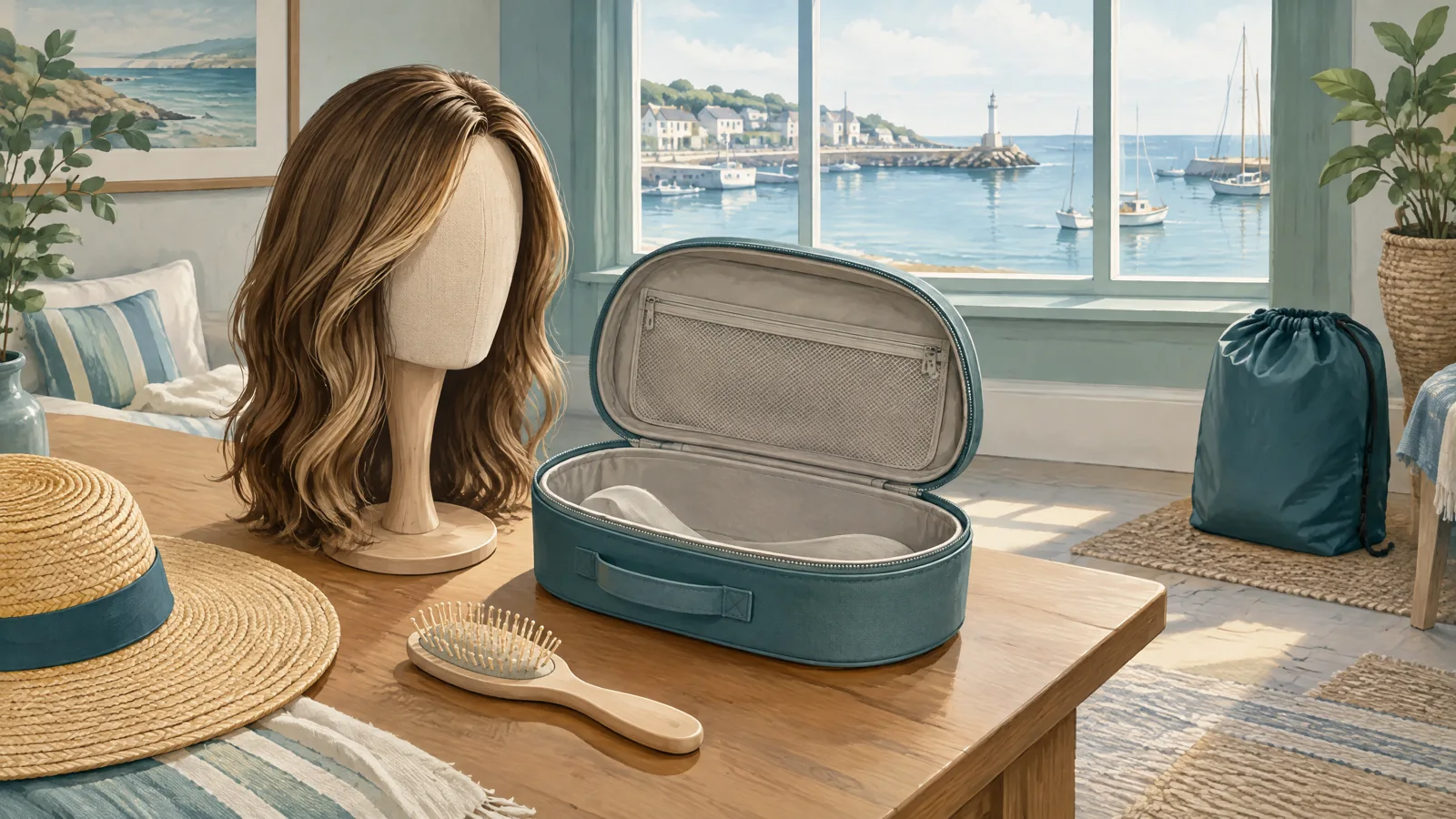
Illustration · Concept illustration of planning notes; not a real venue, provider, client, or result.
Instructor qualifications
One clear teaching conversation from first breath to next step
DiveHarbour brings together scuba teaching, swimming, lifesaving and water-rescue experience so you can ask practical questions before choosing a course.
PADI teaching backgroundTeaching experience across recognised scuba learning pathways.
SSI teaching backgroundClear explanations when you are comparing agency routes.
NAUI teaching backgroundA practical, standards-aware approach to learning and progression.
Swimming foundationWater confidence and calm, step-by-step practice matter.
Lifesaving experienceSurface awareness and prevention stay part of the conversation.
Pool rescue experienceControlled practice can build confidence before open water.
Beach rescue experienceLocal water context informs sensible preparation.
Kayak rescue experienceA wider water-safety perspective supports good judgement.
PWC rescue experienceAsk about the right learning route for your experience and goals.
Brand relationship: DiveHarbour and DT HUB share the same owner.
DiveHarbour and DT HUB are operated by the same owner. DT HUB links in this article are references to external service and product information, not independent third-party recommendations, medical-effect claims, or endorsements of water-activity safety. DiveHarbour handles diving and coastal activities; DT HUB handles its own salon, hairpiece, academy, and hair-growth enquiries, which should be checked separately.
A useful fact to keep in mind
The Knot reports that professionals recommend a trial early enough to reflect the final vision while leaving time for changes or a second trial, and it recommends taking photos and giving feedback after the test.
Work backward from the ceremony, first portrait, dinner seating, or other fixed moment.
Schedule the trial early enough to review photos, wear the look, and request changes.
Separate styling time from dressing, photography, transport, venue access, and meals.
Write a simpler fallback and a named decision-maker before the event morning.
Start here
Start your event hair timeline with the moment that cannot move
Your event hair timeline begins with the first public-facing moment
Do not begin with a hairstyle name or a salon slot. Begin with the first moment that has a real consequence: the ceremony entrance, the first graduation portrait, the call time for a group photograph, or dinner seating. Record its location, the latest acceptable arrival, and whether you need to be camera-ready before moving between spaces. A coastal dinner may have a sunset portrait before guests sit down, while a wedding may have a first look before the ceremony. Those moments create different finish times.
Next, separate the look into decisions rather than one large request. Note the outfit neckline, headwear or jewellery, the amount of movement expected, and whether you prefer a deliberate change or an easy reset. If straightening is part of the discussion, hair straightening hong kong is a service-information page to review with the provider, not a fixed-duration promise. Ask what preparation, hair condition, and finish they need before you place it on the calendar.
Fixed moment: ceremony, first portrait, call time, or dinner seating.
Appearance brief: neckline, accessories, movement, and preferred level of change.
Logistics: venue access, dressing location, transport, and who confirms changes.
Fallback: the simplest acceptable look if the planned sequence no longer fits.
Swipe the table to compare all columns.
Countdown planning table for a wedding, graduation shoot, or coastal dinner
Planning window
Main decision
What to record
Owner
Several months to weeks out
Choose the look direction and book a trial
Event setting, outfit, accessories, first photo, and questions
Reader and chosen provider
After the trial
Keep, change, or request a second test
Photos, movement notes, preparation, and agreed finish
Reader confirms feedback
Two weeks to several days out
Confirm final scope and access
Address, arrival route, supplies, weather option, and fallback
Reader plus venue contact
Event morning
Protect the first fixed moment
Start order, buffer, touch-up point, and change authority
Named day-of coordinator
A timeline is a decision order, not a promise that every appointment will finish at a particular minute.
Guide · 02
Build the brief before booking a trial
Use the event hair timeline to turn inspiration into testable questions
For a wedding, professional guidance commonly places a hair and makeup trial one to three months before the day, while other guidance describes a wider three-to-six-month window for preparation. The useful principle is not a universal number: book early enough to compare the look with your outfit, season, and event setting, then leave room for feedback or a second trial. The same logic works for a graduation shoot or coastal dinner, adjusted to how much change you may need. [1]
Prepare a compact file before the trial. Include two or three inspiration images, one image of a look you have actually enjoyed wearing, outfit and accessory photos, the event address, the first photography time, and a sentence describing what you do not want. If a smoothing or finishing service is under consideration, keratin treatment hong kong can be a starting point for questions about scope and preparation. Do not treat a catalogue label as a recommendation for your hair.
Illustration · Concept illustration of an event brief; not a real salon, product, client, or before-and-after result.
Guide · 03
Make trial feedback usable
The trial is a rehearsal for communication, not only a preview
At the trial, ask the provider to state what they are testing, what you should bring, how your hair should arrive, and which parts can be changed on the day. Take notes in plain language: where the part sits, how much face framing feels comfortable, whether the style works with the neckline, and what you want reduced or added. Take photos soon after the trial and, if practical, after wearing the look for a while. Different light and camera angles may reveal a useful adjustment. [1]
Give feedback before the appointment ends, then send one short written recap rather than a stream of new ideas. Mark each item as keep, change, or ask. Confirm the final look, accessories, preparation instructions, who supplies what, and what happens if the event moves indoors. If your plan includes a conditioning or finishing appointment, deep hair treatment kwun tong is reference material for a separate scope conversation; it does not establish suitability, effect, or timing for your event.
Guide · 04
Work backward from travel and access
Put the buffer where coastal logistics can actually use it
After the trial, draft the day in reverse. Start with the first fixed moment, subtract dressing time, final touch-ups, photographs, and the journey from the styling location. Then add a visible arrival allowance for traffic, finding the entrance, lifts, venue check-in, weather-related detours, and settling the room. Keep styling time, transport time, and venue-access time as separate rows. A provider’s estimated service duration is not the same thing as the time between leaving a chair and appearing at the event.
For an outdoor or waterfront plan, ask questions that change the order rather than assuming the setting will cooperate. Who decides whether a portrait moves under cover? Is there a private place to change? Can the provider enter the venue, and when? Where can accessories stay between photographs? If you are comparing a scalp-focused service, head spa hong kong is a page to use for scope questions with its provider, not a reason to compress your event buffer or infer a personal health outcome.
Illustration · Concept illustration of a shore-side change plan; not a real event, service, client, or outcome.
Guide · 05
Design a flexible event morning
Keep the event hair timeline firm on priorities and flexible on order
A wedding-day schedule should allow for unexpected delays, different hair needs, photographs, and the responsibilities of people who must help elsewhere. Guidance from wedding specialists gives broad estimates for bridal hair and makeup, but it also stresses that the number of people, artists, style complexity, and pre-event photographs change the calculation. Use those estimates only as prompts to ask for a provider-specific plan. Keep the person with the least flexibility ready for their slot, and avoid making every other person wait in a rigid chain. [2]
Decide in advance which steps can move. Perhaps the guest portraits can happen after a quick touch-up, the accessory can be added at the venue, or the look can become a clean low-tension style rather than a full redesign. Write one named person who can approve that change. A Kwun Tong service label such as head spa kwun tong still requires a direct check of location, scope, preparation, and availability; it should never be treated as proof of a same-day appointment or a fixed finish time.
Swipe the table to compare all columns.
Day-of sequence guardrails for a coastal event
Moment
Ask or confirm
If the plan slips
Before styling
Is the room open, accessible, and ready for the provider?
Move to the confirmed backup room or simplify the setup.
During styling
Which step is essential for the agreed look?
Protect that step and drop optional extras first.
Before leaving
Where are touch-ups, accessories, and the next photo?
Use the nearest confirmed location rather than improvising on the route.
At the venue
Has weather, lighting, or access changed the brief?
Use the named decision-maker and the simpler look, if needed.
Guide · 06
Close the loop without mixing decisions
Finish the event hair timeline with hand-off notes and separate activity checks
The day before, send one confirmed note to everyone who needs it: arrival address, access instructions, start order, outfit sequence, accessory list, payment or cancellation questions, emergency contact, and the fallback look. On the morning, keep the note visible and update only the decisions that have genuinely changed. After the event, record what worked in wind, shade, indoor light, movement, and photographs. This turns a one-off experience into better information for your next shore dinner or celebration without claiming that any product is weatherproof or permanently protective.
If your wider itinerary includes a DiveHarbour activity, keep that booking and its meeting logistics separate from a hair appointment. Review the Hong Kong scuba course meeting point for the relevant location information, then check the Hong Kong scuba diving course schedule directly for dates and arrangements. Hair styling does not approve water participation, and a coastal event plan does not replace any provider’s activity, health, or equipment questions. If those details are not confirmed, keep the styling plan shore-based.
Illustration · Concept illustration of event storage and hand-off; not a real product, venue, client, or service result.
A sensible next step
Take the question with you
A calm event hair timeline is built by protecting the first fixed moment, testing the look while change is still possible, and giving travel, access, photography, and weather their own space. Before you confirm anything, send the same written brief to the provider and venue, name the person who can simplify the plan, and keep any water-activity decisions in their separate lane.
For salon or hair-related information, ask DT HUB directly about its current scope, preparation requirements, location, availability, and applicable terms; this article does not promise a booking, same-day service, price, duration, or result. For diving or coastal activity planning, contact DiveHarbour through its relevant activity information and confirm dates, meeting arrangements, and any personal participation questions separately.
Questions to ask
Common questions
How early should I arrange a hair trial for a wedding?
Use the trial window as a planning range, not a rule. Wedding guidance commonly places it one to three months before the day, while other guidance uses three to six months. Choose the earlier end when you need feedback, a second trial, a major change, or time to coordinate dress and accessories.
Should the trial happen before I choose my outfit?
It is more useful after the main outfit, neckline, accessories, and first photography plan are known. Bring photos even if the outfit is not physically available. Those details help the discussion focus on proportion, movement, and the level of formality you actually need.
How much buffer should I put between styling and a coastal event?
There is no universal number. List transport, venue access, dressing, photographs, meals, and possible weather changes separately, then ask the provider and venue to review the whole sequence. A buffer should be visible on the schedule and protected from optional tasks.
Can a hair timeline decide whether I can join a water activity?
No. A styling plan covers appearance and logistics only. Any diving, swimming, or other water-activity decision must be checked separately with the relevant activity provider and, where applicable, an appropriate health professional. Keep the hair plan shore-based until those separate questions are confirmed.
Coastal life and image planning · Updated 2026-11-06
Outdoor-light reference brief for coastal photo planning
Use an outdoor-light reference brief to plan light, framing, neckline and styling limits for a coastal shoot. Read the checklist and ask better questions.
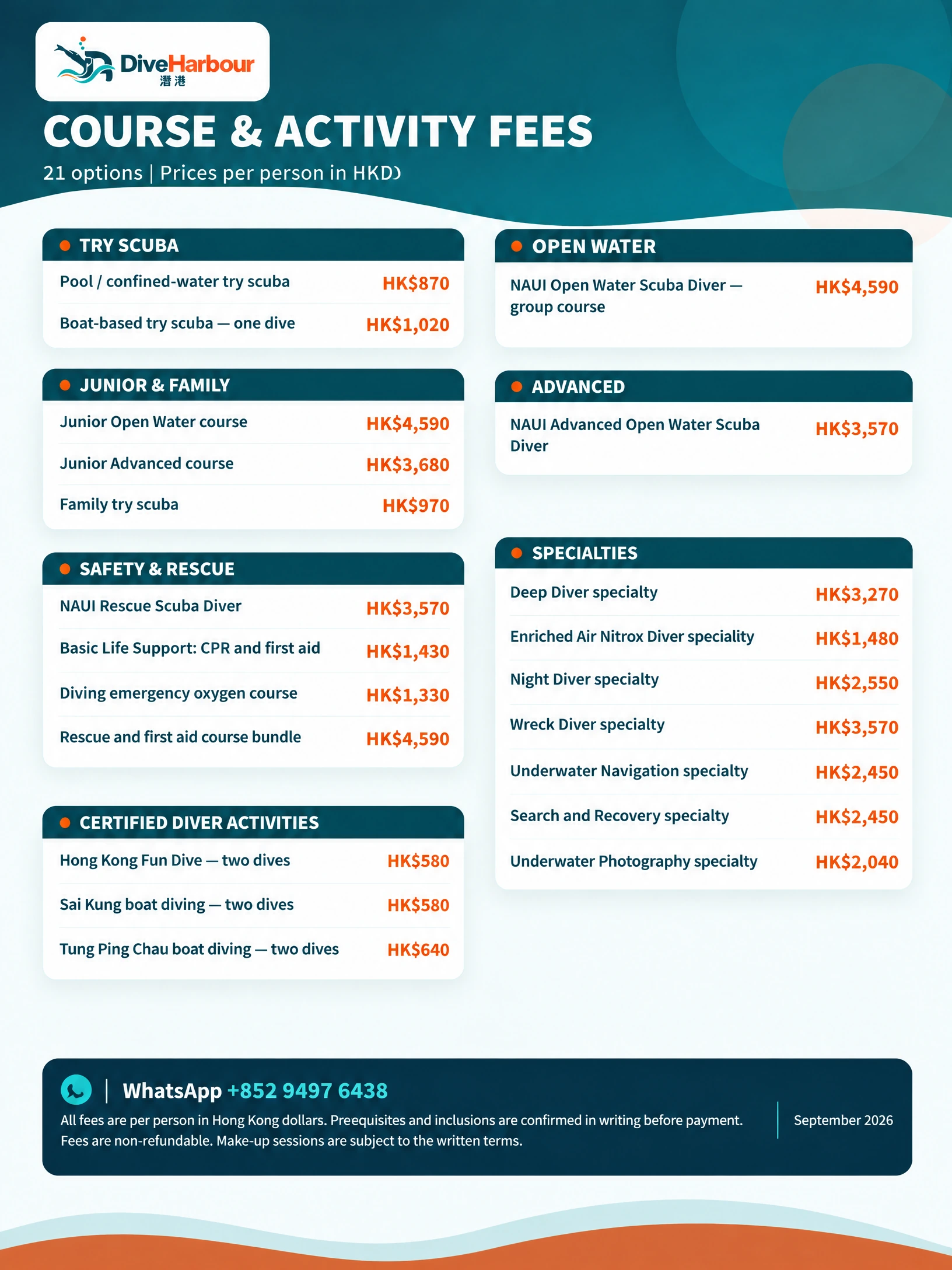
Compare our published course and activity fees before choosing your next step. All prices are per person in Hong Kong dollars.
Before you book, we confirm prerequisites, materials, certification, equipment, venue and boat arrangements in writing. Ask us about fees for courses not listed here.
Read the Sai Kung diving Hong Kong guide to learn about the setting, then explore the Sai Kung scuba diving course page. Certified divers can use our Hong Kong fun dive guide to check experience requirements and activity arrangements. Locations remain subject to weather and sea conditions.
Explore the responsibilities and entry requirements in our Divemaster course Hong Kong guide, then review the scuba instructor course Hong Kong route. Professional training differs from recreational progression, so confirm experience requirements and assessment arrangements first.