Medical-salon boundary: a coastal hair decision guide
Keep three decisions separate: an appearance choice, a general consultation, and a medical evaluation. Record what changed after a coastal day without diagnosing yourself, ask a qualified provider focused questions, and let your care team decide whether diving or another water activity is appropriate before booking or entering the water.
Illustration · Concept illustration of a coastal appointment note; not a real DT HUB salon, medical setting, product, client, student, or before-and-after result.
Instructor qualifications
One clear teaching conversation from first breath to next step
DiveHarbour brings together scuba teaching, swimming, lifesaving and water-rescue experience so you can ask practical questions before choosing a course.
PADI teaching backgroundTeaching experience across recognised scuba learning pathways.
SSI teaching backgroundClear explanations when you are comparing agency routes.
NAUI teaching backgroundA practical, standards-aware approach to learning and progression.
Swimming foundationWater confidence and calm, step-by-step practice matter.
Lifesaving experienceSurface awareness and prevention stay part of the conversation.
Pool rescue experienceControlled practice can build confidence before open water.
Beach rescue experienceLocal water context informs sensible preparation.
Kayak rescue experienceA wider water-safety perspective supports good judgement.
PWC rescue experienceAsk about the right learning route for your experience and goals.
Brand relationship: DiveHarbour and DT HUB share the same owner.
DiveHarbour and DT HUB are operated by the same owner. DT HUB links in this article are references to external service or product information, not independent third-party recommendations, medical-effect claims, or endorsements of water-activity safety. DiveHarbour handles diving and coastal activities; DT HUB handles its own salon, hairpiece, academy, and hair-growth enquiries, which must be checked separately.
A useful fact to keep in mind
The American Academy of Dermatology says a dermatologist starts hair-loss assessment by asking how long it has existed and whether it began quickly, then examining the scalp; blood testing or a scalp biopsy may be needed when certain causes are suspected.
Name the decision first: appearance, general consultation, or medical evaluation.
Record onset, speed of change, visible symptoms, products, and dated photos without assigning a cause.
Move sudden, patchy, painful, red, or otherwise worrying changes to qualified medical assessment.
Treat water-activity clearance as a separate decision owned by the relevant care team and diving process.
Start here
Start with the decision, not the directory
A coastal appearance question can be useful without becoming a diagnosis
A humid shore day can make several concerns arrive together. You may want a different look for a harbour photograph, notice more shedding while washing, or wonder whether a scalp service belongs in the same plan as a dive. Those are different decisions. Begin by writing one sentence: “I am choosing an appearance,” “I am preparing questions,” or “I need medical evaluation.” That sentence prevents a service directory from quietly becoming your diagnosis.
If the immediate need is an appearance option for a dry, shore-based event, a tsim sha tsui wig shop page can be treated only as a location or service-information starting point. Confirm what the provider actually offers, what information it needs, and any costs or conditions directly with that provider. A wig or styling choice may change how you look; it does not explain a scalp change or establish that an item is suitable for water activity.
Use the same discipline when the coastline is part of a larger day. Separate the dry-land photograph, the meal, the boat transfer, and any planned immersion on your calendar. A look that is comfortable for a café or promenade is not automatically compatible with a mask, hood, buoyancy equipment, heat, spray, or water. Do not modify equipment or add attachment methods to make an appearance plan fit; ask the relevant provider and activity team instead.
Guide · 02
Map the medical-salon boundary
The medical-salon boundary is a three-lane decision table
The most useful boundary is not “salon versus doctor” as a judgement about people. It is a boundary between the question being asked and the evidence needed to answer it. Appearance questions describe a preferred outline, colour, coverage, comfort, or privacy need. General consultation questions organise observations and ask what a provider can and cannot do. Medical evaluation asks what may be happening and whether assessment or care is needed.
A directory can help you find a conversation, but it cannot replace a history, examination, or professional decision. The American Academy of Dermatology explains that hair-loss assessment starts with finding the cause and may involve questions about timing, a scalp examination, and additional tests when indicated. [1] That is why a photo, a service label, or a short description should be treated as preparation material rather than a conclusion.
Before contacting anyone, put the question into one lane and keep the other two visible. A consultation about colour or coverage can proceed as an appearance conversation while you separately arrange medical assessment for a worrying change. A medical appointment can consider health information without promising an appearance result. Neither lane can clear you for diving.
Appearance: describe the look, setting, clothing, privacy needs, and how much change you can accept.
General consultation: ask what the provider does, who performs it, what information is needed, and what limits or risks should be discussed.
Medical evaluation: bring a neutral timeline and symptoms to a qualified health professional; do not self-label the cause.
Activity clearance: use the applicable diving or water-activity screening process and the care team responsible for your health.
Swipe the table to compare all columns.
Use the lane that matches the question you are actually trying to answer.
Timeline, products, questions, service limits, sensitivity concerns
The relevant provider for process and scope
The cause of a health change or personal medical suitability
Medical evaluation
Onset, speed, symptoms, affected areas, history, current care
Qualified health professional or care team
A guaranteed appearance result or automatic activity approval
Activity clearance
Current health information and the applicable screening documents
The responsible medical and diving professionals
Permission inferred from a salon visit, directory, wig, or photo
Illustration · Concept illustration of colour planning for a shore setting; not a real DT HUB salon, medical setting, product, client, student, or before-and-after result.
Guide · 03
Build a neutral coastal record
Record what you can observe before asking what it means
A short record is more useful than a dramatic description. Note the date of the shore day, when you first noticed a change, whether it appeared suddenly or gradually, where it is visible, and whether anything else happened at the same time. Add products or procedures used recently, washing or styling changes, and any discomfort. Use plain observations such as “more hair on the brush” or “one new area looks thinner,” not “the sea caused this.”
For an appearance-only conversation, save a few unfiltered photographs under similar light and angles. Include a front view, both sides, the crown if relevant, and one image showing the clothing or neckline for the planned dry-land setting. Date the files and note whether hair was wet, dry, tied, or freshly styled. Photos help communicate a brief; they cannot confirm a condition or predict a result.
If your question is about colour rather than a symptom, a misty hair colour service page may help you identify vocabulary for a provider conversation. Treat the page as service information, not as proof that a particular shade, process, or timing is right for your hair. Ask about scope, preparation, maintenance, sensitivities, and what is excluded before making a decision.
Guide · 04
Know when the question needs medical assessment
A salon brief cannot answer a health question
Escalate the question when the change is sudden, patchy, painful, red, inflamed, or otherwise concerning, or when it is causing significant worry. This does not identify a cause. It simply means that a qualified medical professional is the appropriate person to assess the change. Do not use a scalp photograph, a head-spa label, or a directory result to decide that a symptom is harmless.
The AAD notes that a dermatologist asks how long hair loss has been present and whether it began quickly, examines the scalp and other affected areas, and may request blood testing or a scalp biopsy when the history suggests it. [1] That process is different from choosing a colour or covering an area for a photograph. If you are already under medical care, bring the record and ask your own team how the appearance plan should fit around it.
A hair dye kwun tong page can be a starting point for a dry-land service enquiry, but it is not a medical assessment. Ask the provider about ingredients, patch-testing or sensitivity procedures where applicable, and when to stop and seek health advice. Do not assume a natural or plant-labelled product cannot cause a reaction, and do not use dye, scalp care, or a concealer as a substitute for evaluation.
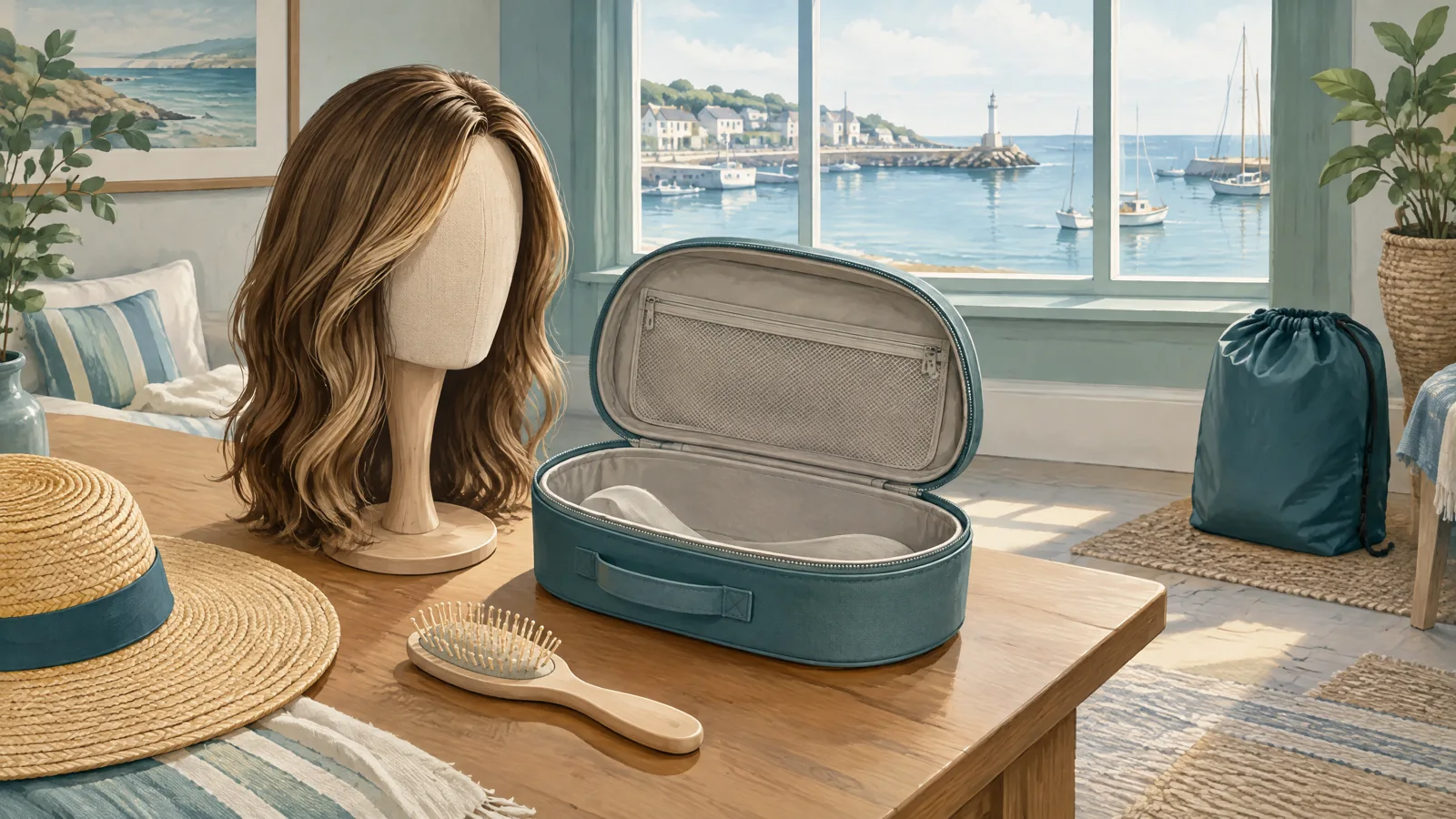
Illustration · Concept illustration of dry-land hairpiece storage; not a real DT HUB salon, medical setting, product, client, student, or before-and-after result.
Guide · 05
Keep diving clearance in its own lane
A coastal plan needs activity questions as well as appearance questions
A person can make an appearance plan and still need a separate activity decision. If you have a current condition, symptoms, a recent procedure, ongoing medical treatment, or a change that concerns you, ask the relevant medical team whether you may take part in the planned activity. A salon provider cannot clear you for diving, and a diving professional cannot diagnose a scalp condition from a service conversation.
The Undersea & Hyperbaric Medical Society describes a three-part recreational diving screening system: a participant questionnaire, a physician evaluation form when approval is necessary, and physician-facing guidance. Its purpose includes identifying people who need medical evaluation and helping physicians decide whether a candidate can take part in the anticipated activity. [2] Follow the current applicable process rather than inferring clearance from feeling well, wearing a particular hairpiece, or completing a cosmetic appointment.
If your planning question is financial or administrative, read do I need scuba diving insurance in Hong Kong as a DiveHarbour information route, then check the actual policy terms. Insurance is not medical clearance, and a declaration is not the same thing as a salon intake. Keep those documents, decisions, and responsible professionals clearly labelled so one answer is not mistaken for another.
For a more specific document check, how to compare dive insurance with a medical declaration can help you organise the questions you need to ask. It still cannot decide whether your personal health or current treatment permits an activity. If the answer is uncertain, choose a shore-only plan until the appropriate team has addressed the activity question.
Swipe the table to compare all columns.
A simple sequence for a coastal day with both appearance and water-related plans.
Step
Write down
Check with
Pause or switch plan when
1. Set the scene
Dry-land event, water segment, timing, clothing, privacy
Event or activity organiser
The itinerary forces an appearance choice to fit unverified equipment or conditions
2. Record observations
Dates, speed of change, symptoms, products, consistent photos
Qualified health professional if concerning
The change is sudden, patchy, painful, red, or otherwise worrying
3. Ask service questions
Scope, provider role, ingredients, sensitivity process, fees or conditions
Salon or hairpiece provider
The answer sounds like a diagnosis or a promise of medical effect
4. Confirm activity status
Questionnaire, physician form if required, policy and operator requirements
Care team and diving professionals
Clearance is unresolved or someone suggests a cosmetic service is enough
Guide · 06
Turn the boundary into a workable shore plan
Make the medical-salon boundary visible in your booking notes
A good booking note does not tell a provider what diagnosis to write. It states the setting, the desired appearance, the relevant observations, and the questions that still need an answer. For example, a hypothetical guest might write: “Dry-land sunset photos on Saturday; prefers a natural outline; has noticed a new area of shedding since Monday; wants to know what information you need and what you do not assess.” That note keeps the appearance request and health concern side by side without merging them.
If you are considering korean hair colour for a coastal dinner, describe the dinner as a dry-land setting and ask about the service scope, preparation, sensitivity process, and aftercare. Do not describe the colour as protection from salt, sun, or water. If the day also includes diving or swimming, plan the appearance separately and let the activity team address equipment and health requirements.
On the day itself, keep an exit route. Carry the dated record, the provider’s instructions, and the contact details for the person handling your medical or activity question. If symptoms change, the appearance appointment becomes uncomfortable, or the activity status is unresolved, pause the optional appearance or water segment rather than improvising. A shore walk, meal, or photograph can remain the plan while the unanswered question is handled by the right person.
This approach is especially useful when privacy matters. You can ask for an appearance consultation without disclosing more health information than the provider needs, while giving a qualified medical professional the complete history relevant to assessment. Clear boundaries reduce pressure to purchase a service simply because a page uses medical-sounding wording.
Illustration · Concept illustration of a shore-day change checklist; not a real DT HUB salon, medical setting, product, client, student, or before-and-after result.
A sensible next step
Take the question with you
The safest coastal decision is often the clearest one: choose an appearance option for appearance, use a neutral record to prepare a consultation, and move health concerns to qualified medical assessment. Keep diving or other water-activity clearance in its own process. If any part remains unresolved, preserve the shore-based part of the day and postpone the optional segment rather than guessing.
For DiveHarbour, ask about diving, shore activities, and the applicable participant or medical-screening process through the activity team. For DT HUB, contact its own salon, hairpiece, academy, or hair-growth service provider about scope, provider role, costs, conditions, and privacy. The two services are separate, and this article does not recommend a treatment or clear anyone for an activity.
Questions to ask
Common questions
Can a salon scalp consultation tell me why my hair is changing?
No. It may help you describe an appearance goal or understand a provider’s stated service scope, but it does not replace qualified medical assessment. Record timing and symptoms neutrally, and seek medical advice for sudden, patchy, painful, red, or otherwise concerning changes.
Should I choose a wig or colour before seeking medical advice?
You can make a separate dry-land appearance choice if it is comfortable and appropriate for you, but do not let that choice delay evaluation of a worrying change. A wig or colour can address appearance; it does not establish a cause or decide what care is needed.
Does a scalp service or hairpiece clear me for scuba diving?
No. Appearance services and hairpieces do not provide diving clearance. Use the current activity screening process, disclose relevant health information, and follow the decision of the qualified medical and diving professionals responsible for your case.
What should I bring to a first consultation after a coastal day?
Bring dated notes about onset, speed of change, visible symptoms, recent products or procedures, and consistent photographs. Also write your appearance goal and activity question separately. Ask what the provider can assess, what it cannot assess, and which questions belong with a medical or diving professional.
The page states that dermatologists ask how long hair loss has existed and whether it began quickly, examine the scalp, and may use blood tests or a scalp biopsy when disease, deficiency, hormone imbalance, or infection is suspected.
The UHMS page describes the three-part system and says it identifies participants who need medical evaluation and assists physicians in deciding whether a candidate can take part in the anticipated activity.
Continue exploring
Three useful next reads
Keep comparing practical questions before you choose a course, activity or preparation step.
Coastal life and image planning · Updated 2026-11-06
Scalp consult file: record coastal-day changes clearly
Build a scalp consult file after a coastal day: record timing, changes, products, and questions. Read the checklist and ask a qualified provider.
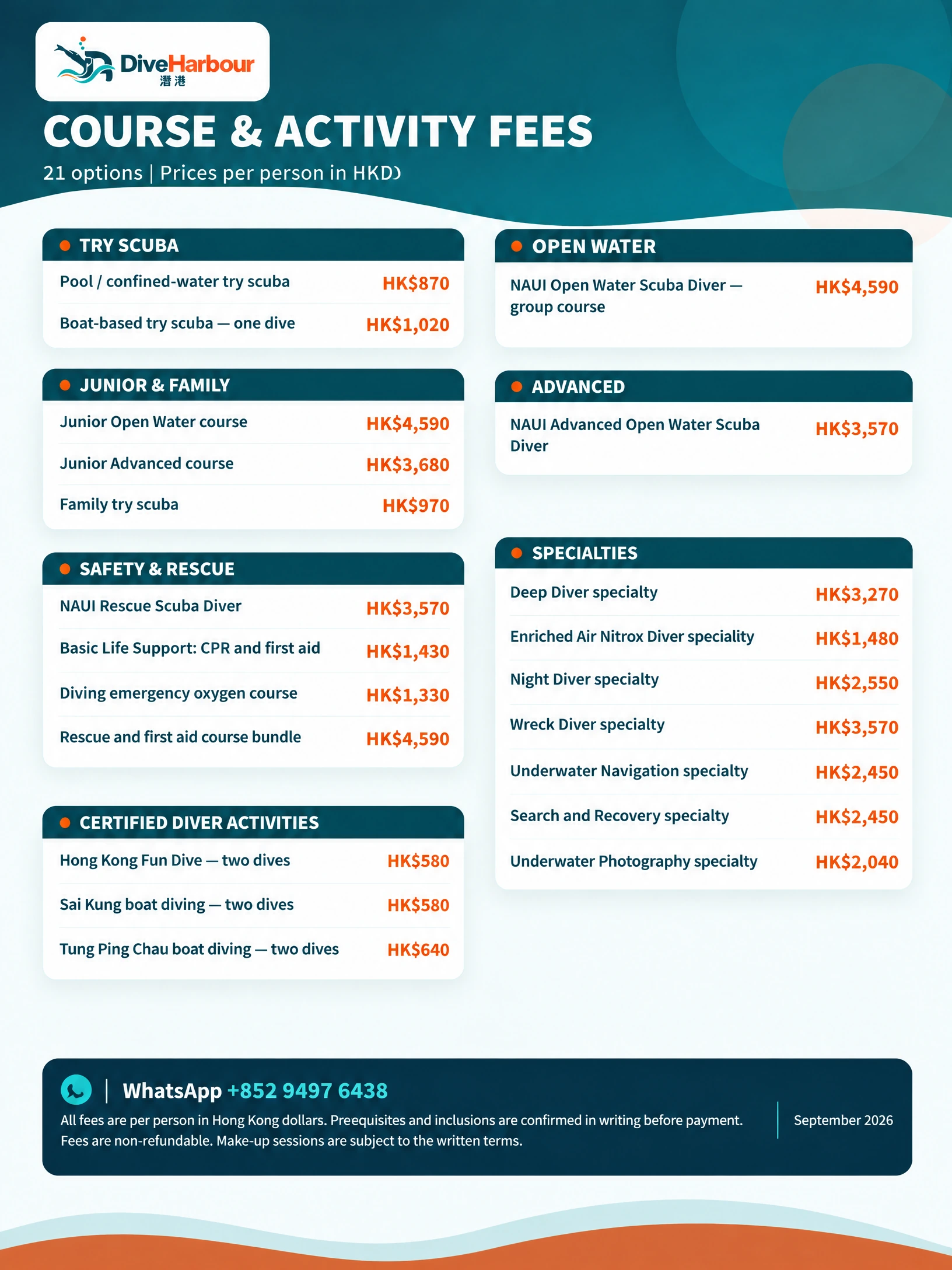
Compare our published course and activity fees before choosing your next step. All prices are per person in Hong Kong dollars.
Before you book, we confirm prerequisites, materials, certification, equipment, venue and boat arrangements in writing. Ask us about fees for courses not listed here.
Read the Sai Kung diving Hong Kong guide to learn about the setting, then explore the Sai Kung scuba diving course page. Certified divers can use our Hong Kong fun dive guide to check experience requirements and activity arrangements. Locations remain subject to weather and sea conditions.
Explore the responsibilities and entry requirements in our Divemaster course Hong Kong guide, then review the scuba instructor course Hong Kong route. Professional training differs from recreational progression, so confirm experience requirements and assessment arrangements first.