

A useful fact to keep in mind
NAUI's official Advanced Open Water Scuba Diver page describes a 6-dive continuing-education course, including night or limited visibility, navigation and deep dives.
Check the sourceAdvanced diver training Hong Kong: choose your next step
Match training to your experience, interests and dive plans
The most useful advanced course is not necessarily the deepest, newest or most heavily advertised one. It is the course that matches what you can currently do comfortably and what you want to do next. A diver returning after a long break may benefit from a refresher and buoyancy practice before adding a new speciality. Someone who dives regularly from a boat may be ready to compare navigation, deep-diving or night-diving goals. Start with an honest conversation about your certification, logged dives, recent conditions, comfort in current and the equipment you normally use.
In Hong Kong, training plans also need to respect the difference between sheltered-water preparation and open-water conditions. Visibility, surge, thermoclines, boat procedures and site access can affect how a session feels, even when the syllabus is familiar. A qualified coach can explain which parts are classroom or digital learning, which skills are practised in confined water, and which dives require suitable sea conditions. The aim is steady judgement, not collecting a badge before you are ready.
If you have not dived for months or feel rusty with mask skills, buoyancy or basic equipment checks, say so when you enquire. A short skills review can make the later training more productive. If you are considering an Advanced Open Water Diver course Hong Kong, ask what is included, what is optional and how your previous certification will be assessed. The answer should be specific to your agency, instructor and intended programme rather than a blanket promise.
- Bring your certification details, approximate recent dive count and any relevant speciality cards to the initial discussion.
- Explain whether your goal is confidence, a particular environment, better planning, or a future travel itinerary.
- Treat fitness, medical forms and equipment suitability as part of planning; they are not a substitute for instructor assessment.

Course pathways beyond Open Water
Compare deeper, specialty and skills-focused options
An advanced programme can be broad or focused. A broad programme lets you sample several activities and discover what deserves further study. A focused specialty spends more time on one purpose, such as planning a deeper recreational dive, finding your way with a compass and natural references, or managing the different visual and team considerations of a night dive. Neither approach is automatically better. Choose breadth when you are still exploring; choose depth when you already have a clear diving objective.
Agency terminology matters. SSI describes its Advanced Open Water Diver programme as five specialty experiences, including Deep Diving and Navigation, with one open-water training dive per specialty after a briefing. NAUI's official Advanced Open Water Scuba Diver page describes a six-dive continuing-education course, including night or limited visibility, navigation and deep dives, and requires an equivalent entry-level certification. These are examples of agency standards, not a universal recipe for every course sold in Hong Kong. Confirm the exact syllabus and certification outcome before paying. NAUI's official Advanced Open Water Scuba Diver page describes a 6-dive continuing-education course, including night or limited visibility, navigation and deep dives.
For a named pathway, compare the NAUI Advanced Open Water course Hong Kong and SSI Advanced Open Water course Hong Kong pages, then ask how the practical arrangements differ. If one skill is your priority, a Deep Diver specialty course Hong Kong or Night Diver specialty course Hong Kong may be more transparent than choosing a broad label without checking its contents.
- Broad sampler: useful when you want to test several interests before committing to full specialty training.
- Single specialty: useful when a travel plan or local diving objective calls for one defined skill set.
- Refresher first: sensible when recent practice, confidence or equipment familiarity is limited.

Plan advanced training with DiveHarbour
Discuss prerequisites, agency syllabus and practical arrangements
A good enquiry gives the coach enough context to make a useful recommendation. Share your agency and certification level, when you last dived, whether you have logged deeper or low-light dives, and whether you are comfortable assembling and checking your equipment. Mention ear, respiratory, mobility or other health concerns privately and early; do not self-diagnose or assume a course is suitable. Where an agency requires a medical statement or physician approval, follow that agency's process and obtain professional advice rather than asking an instructor to clear you.
Then clarify the practical details: number and type of dives, learning materials, equipment, cylinders, boat or site costs, certification processing, meeting point, weather contingency and what happens if an instructor determines that a skill needs more practice. Ask for these points in writing. Training is a coached learning experience, not a guarantee that every participant will complete every skill on a chosen date. Conditions can change, and a responsible instructor may adjust a plan to protect learning quality and diver safety.
DiveHarbour's lead coach has teaching experience across PADI, SSI and NAUI, alongside swimming, lifesaving, pool, beach, kayak and personal-watercraft rescue qualifications. That broad background can help you compare agency pathways, but it does not replace the standards of the agency issuing your certification or a clinician's advice. You can discuss the appropriate route, then decide whether the proposed syllabus and written terms suit your goals.
- Ask who provides certification, what agency standard applies and whether a screening or evaluation dive is planned.
- Confirm what gear is supplied and whether personal computers, lights, exposure protection or other items are recommended.
- Request the cancellation, weather and make-up terms before confirming a place.

What to practise before an advanced course
Build calm, repeatable habits rather than chasing depth
You do not need to arrive as a perfect diver, but arriving prepared makes feedback easier to use. Review your pre-dive checks, buddy communication, controlled descents and ascents, trim, buoyancy and air-awareness. Practise looking at your instruments without losing contact with your buddy or drifting into the reef. If you use a dive computer, read its manufacturer guidance and learn its displays on land. Advanced training should add decision-making, not encourage you to ignore a computer, instructor briefing or changing conditions.
Navigation work benefits from patience. Before entering the water, agree on the route, reference points, turn pressure, lost-buddy response and exit plan. A compass is only one part of navigation; natural features, depth, timing and team communication also matter. For night work, the briefing should cover light signals, spacing, entry and exit arrangements, and how the group will respond if visibility deteriorates. These are planning conversations to have with your instructor, not procedures to improvise alone.
If deeper recreational diving is your interest, focus on gas planning, buoyancy, task loading and conservative turn decisions. A deeper site is not a test of bravery. The course's stated maximum, the agency standard, your certification and the actual conditions all set boundaries. Never extend a training dive simply because the water looks calm at the surface. Your coach should explain the limits and stop criteria before the session begins.
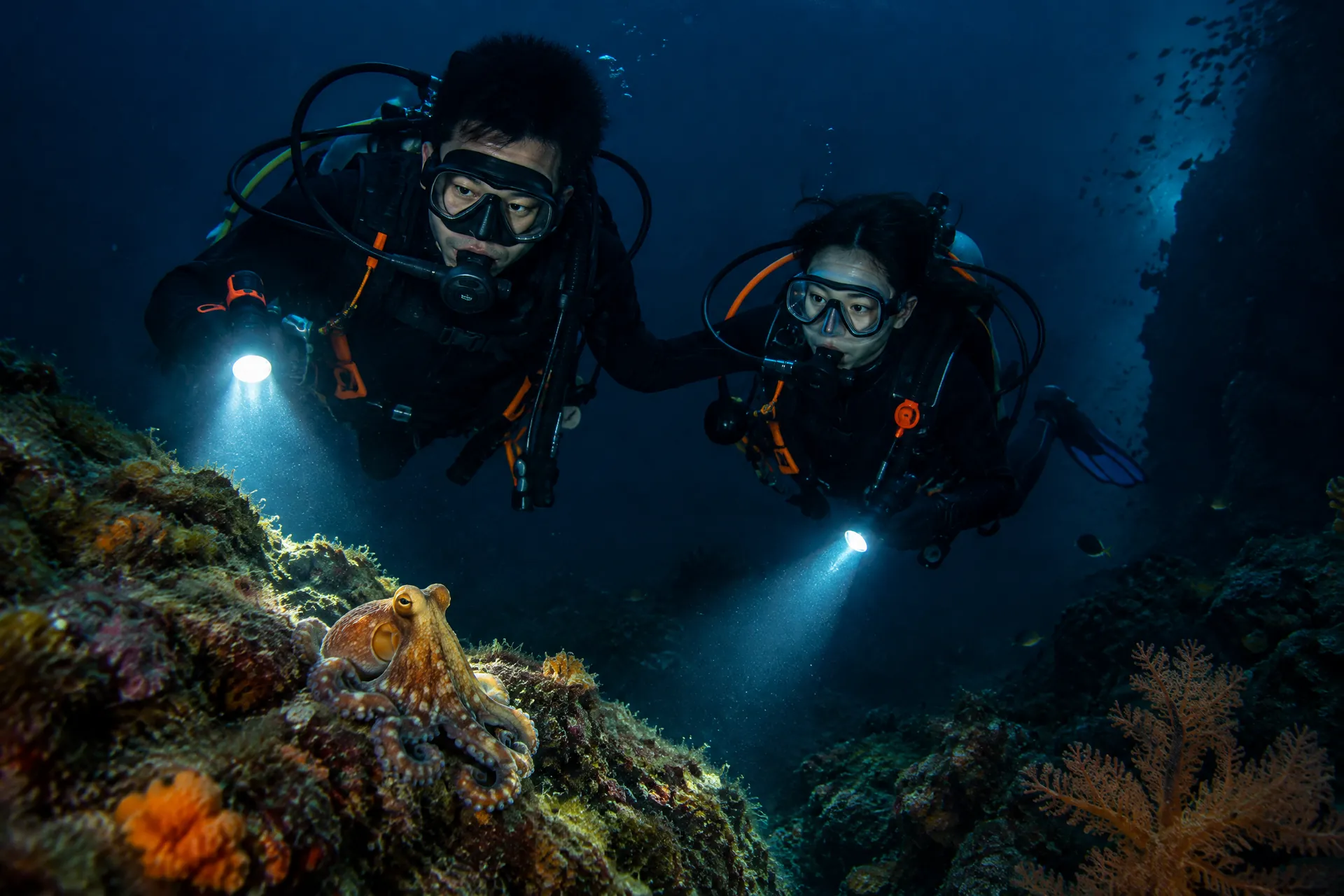
Compare advanced training formats and costs
Use the written inclusions to compare like with like
The price of a course is only meaningful alongside its inclusions. published DiveHarbour pricing lists the NAUI Advanced Open Water Scuba Diver course at HK$3,570 per person; training dives, boat fees, equipment and certification arrangements are to be confirmed before registration. A speciality can have a different number of dives and logistics, so do not assume a cheaper headline means an equivalent learning experience. Ask whether materials, tanks, weights, transport, boat fees and certification processing are included or charged separately.
Use this comparison as a conversation starter, not as a promise of dates or availability. The best format depends on your experience, learning preference, travel plans and the agency's prerequisites. If you are unsure, compare these three booking formats before choosing: a broad sampler, one focused specialty, or a refresher followed by advanced training. A written quote should identify the selected agency, course title, expected sessions and any conditions that can change the plan.
Keep a small buffer in your itinerary. Sea conditions, equipment fit and skill readiness can all affect timing. A sensible plan leaves room for a slower practice session rather than pressuring a diver to finish on a fixed holiday deadline. Ask how the instructor handles a missed session and whether a make-up is available under the written terms; never rely on an informal assumption that every delay can be moved to any date.

Make an informed enquiry
Turn your goals into a practical next step
Before messaging, write down four details: your current certification, your last dive, the skill or environment you want to explore, and your preferred timeframe. Include whether you already own a computer, mask, exposure suit or light, but do not buy equipment solely because a course page shows it. The coach can explain what is required, what can be hired and what should be checked for fit. If you are travelling to Hong Kong, mention your arrival and departure constraints so the team can discuss realistic sequencing without promising a completion date.
A useful reply should leave you knowing the proposed agency pathway, prerequisites, practical sessions, likely equipment arrangement and written fee terms. If any answer is vague, ask a follow-up before sending payment. You are welcome to compare options without committing immediately. Once the pathway is agreed, revise the plan if your confidence, health or the weather changes. Good advanced training is a gradual extension of sound habits, with the freedom to pause when the conditions are not right.
Message DiveHarbour with your certification and recent-diving summary to discuss advanced diver training Hong Kong. The next step is not automatically the deepest course; it is the option whose syllabus, supervision, conditions and terms you understand and can approach calmly.

Choosing a practical advanced-training format
| Format | Best for | Check before booking |
|---|---|---|
| Broad advanced sampler | Divers exploring several interests | Agency, selected activities, number of dives and certification outcome |
| Focused specialty | A clear goal such as deep or night diving | Prerequisites, maximum training limits, equipment and site conditions |
| Refresher then advanced | Divers with a long gap or reduced confidence | Skills review, additional practice needs and how sessions are scheduled |
Advanced diver training in Hong Kong — common questions
What can advanced diver training in Hong Kong include?Toggle answer
It may include deeper-diving or other specialty-focused development, depending on the agency syllabus and the programme available. The right choice depends on your certification, recent experience, interests and intended diving, so confirm the exact content and prerequisites with a qualified instructor.
Do I need to complete a fixed sequence of advanced courses?Toggle answer
No fixed sequence suits every diver. Training agencies set their own prerequisites and course outcomes, while your confidence, recent diving and goals also matter. Discuss the options with DiveHarbour before choosing a pathway, and make sure the practical plan and written terms are clear.
Is the advanced-course fee refundable if I change my mind?Toggle answer
Fees are non-refundable unless the applicable written terms expressly say otherwise. Read the quotation or booking terms before paying, including any weather, medical or instructor-readiness provisions, and ask questions while you still have time to make an informed decision.
Can I automatically reschedule a missed training session?Toggle answer
Only where the written terms permit a make-up session. A new date is not guaranteed, because instructor availability, sea conditions, equipment and agency requirements may affect the options. Ask for the applicable process before confirming your place.
Take the question with you
Send your certification level, recent-dive history and preferred training focus to DiveHarbour for a careful comparison of agency pathways. Confirm prerequisites, inclusions, conditions and written booking terms before committing, then choose the course that builds useful capability at a pace you can manage.
Sources worth checking
- NAUI Advanced Open Water Scuba Diver
NAUI describes a six-dive continuing-education course including night or limited visibility, navigation and deep dives beyond 18 metres within recreational limits; it lists equivalent entry-level certification as a prerequisite.
- SSI Advanced Open Water Diver
SSI describes five specialty experiences, including Deep Diving and Navigation, with five open-water sessions and Open Water Diver certification as a prerequisite on its course page.
Useful next reads for your plan
If you are still comparing routes, these related pages give you practical questions to bring into your next conversation with an instructor.
Put your plan into practice
Useful planning guides
Advanced diver route planner for Hong Kong
Use this advanced diver route planner worksheet to compare practical options, check key decision points, and confirm current details with DiveHarbour.
advanced diver route planner
