

A useful fact to keep in mind
Hoi Ha Wan Marine Park covers about 260 hectares, according to Hong Kong’s Agriculture, Fisheries and Conservation Department.
Check the sourcePlanning Hong Kong outlying-islands diving
Match the site area to experience, conditions and the day’s plan
Outlying-island diving is best treated as a decision about conditions rather than a hunt for one famous pin on a map. A site can feel sheltered from shore yet become uncomfortable during a changing tide, wind shift or boat transfer. Before choosing, share your certification level, the date of your last dive, recent comfort with entries and exits, and whether you are travelling with a new or experienced buddy. That information helps a dive professional discuss a realistic plan instead of selling a fixed view of the sea.
The phrase Hong Kong outlying-islands diving covers very different experiences: a short, structured shore session; a boat trip with two planned dives; or a private route that gives a group more control over timing and pace. None is automatically the safest or most scenic. Ask where you will assemble, how long the transfer takes, what happens if the sea state changes, and whether the group can turn a dive early without pressure. A conservative plan is a mark of good local guiding, not a disappointing substitute for adventure.
For newly certified divers or anyone returning after a long break, a refresher can make an island day more enjoyable. Rehearse mask, buoyancy, air-sharing and controlled ascents in a suitable setting before adding boat movement, current or unfamiliar navigation. Experienced divers may still benefit from a briefing on local traffic, moorings, bottom composition and entry points. If your comfort is uncertain, discuss a Hong Kong fun dive or a shorter supported option rather than choosing a demanding site by reputation alone.
- Confirm certification and recent-dive history before discussing a site.
- Treat wind, tide, visibility and boat access as same-day decisions.
- Agree the buddy plan, turnaround point and exit method during the briefing.

Understanding coral dive sites in Hong Kong
Look for responsible enjoyment of marine habitats
Coral dive sites in Hong Kong are living habitats, not underwater scenery designed for touching. Hoi Ha Wan Marine Park covers about 260 hectares, according to Hong Kong’s Agriculture, Fisheries and Conservation Department. The department describes it as a sheltered bay and highlights its coral-community diversity. That official context is useful: a site may be ecologically valuable even when water clarity, colour and animal sightings vary from one day to the next. Plan to observe patterns, shelter and small life rather than expecting a guaranteed photograph or species list.
A good coral briefing covers more than ‘do not touch’. Secure gauges, cameras and clips so nothing drags; keep fins high and avoid hovering directly above delicate growth; use a stable trim and make small, patient movements. Never stand on coral to adjust equipment, and do not collect shells, fragments or marine life. AFCD specifically says divers and swimmers must not stand on fragile corals and advises visitors to follow the Marine Parks Visitors Code and the code for scuba divers and snorkellers. Read the local rules again when a site is inside a protected area.
You can prepare with the Hong Kong coral diving no-touch guidelines before departure. If surge or visibility makes a close approach awkward, increase distance and let the habitat come to you. A guide may change the route, shorten a photo stop or skip a fragile patch; that protects the site and gives the group a better margin. Do not interpret a changed route as a promise that another site will have better coral, turtles or fish.
- Keep hands, knees, fins and dangling equipment away from the seabed.
- Observe marine life without chasing, feeding, lifting or handling it.
- Follow protected-area signs, mooring instructions and the guide’s current briefing.

Choosing a suitable outlying-islands dive
Discuss access, practical arrangements and current conditions before you go
Start the enquiry with your people and logistics, not only a place name. Tell the operator how many divers are in the group, their certification and experience, preferred language, equipment needs and tolerance for boat motion. Ask about meeting point, estimated transfer, ladder or shore entry, toilets, storage, surface interval and what is included. A site that works beautifully for a confident pair may be a poor fit for a family group, a first boat diver or someone managing seasickness.
Shore access can keep the day simple, but the walk, rocks, surge and exit may be the limiting factors. Boat diving can open more coastline and reduce a long shore approach, while adding weather, boarding and transfer considerations. For a group that values privacy or needs a flexible pace, compare a private charter boat diving Hong Kong enquiry with a shared trip. If you prefer land-based planning, ask about Sai Kung shore diving and how the proposed entry matches your confidence and equipment.
Pricing should be read as a plan, not a promise of a particular site. published examples include HK$580 per person for a two-dive Hong Kong Fun Dive and HK$640 per person for a two-dive Tung Ping Chau boat dive; route, boat schedule, group size, equipment and weather arrangements should be confirmed before payment. For a different island or private request, ask for an itemised quotation rather than assuming a listed shared-trip price applies.
- Request inclusions, exclusions and cancellation terms in writing.
- Ask what weather or sea-state decision point is used and who makes it.
- Bring only equipment you can secure and use comfortably in the planned entry.

A practical way to compare island routes
Use the briefing to turn a broad destination into a sensible plan
Once you have shared your experience, compare the actual day rather than choosing the most distant island. A calm, familiar entry with attentive supervision may deliver more relaxed observation than a demanding transfer to a celebrated site. Ask whether the route is suitable for your certification and whether a buddy can remain together throughout. If a diver is rusty, a short practice and conservative first dive can be more valuable than adding depth or distance.
For groups considering Sai Kung, the distinction between a general Sai Kung diving Hong Kong overview and a specific booking matters. A page can describe a region, but the operator still needs to confirm the launch point, route, site conditions and boat plan for your date. Keep a backup idea—such as a sheltered site or a shore alternative—without assuming it will be available. Flexibility protects enjoyment when visibility or wind does not cooperate.
A simple pre-departure message can prevent misunderstandings: list diver names and certification, last dive date, sizes, medical or mobility questions for a clinician, preferred pace, seasickness concerns and the exact package you understood. Ask for the meeting time, return estimate, emergency contact process and whether marine-park restrictions affect the route. You are not committing to a site by asking; you are making the eventual decision more informed.

Safety, buddy skills and changing conditions
Keep the plan conservative without losing the sense of discovery
Open water is dynamic around Hong Kong’s islands. Current, boat traffic, surge, thermoclines and reduced visibility can change the workload even on a familiar route. Stay with the buddy and guide, use agreed hand signals, monitor air and comfort, and speak up early if you feel cold, anxious, seasick or disoriented. ‘No’ is a complete reason to pause or end a dive. A guide may adjust depth, direction or duration to keep the group together; follow that decision rather than trying to recover a planned photograph.
Do not use a coral site as a place to test a skill you have not practised. Buoyancy, mask clearing, navigation and controlled ascents should be appropriate to your training and current competence. If you have a health concern, answer screening questions honestly and seek advice from a qualified medical professional; a dive operator cannot provide medical clearance. The lead coach’s teaching and water-rescue background can support a clear briefing, but it does not replace your certification agency’s requirements or a clinician’s judgement.
After the dive, note what worked: entry, weighting, trim, navigation, communication and surface comfort. That record makes the next enquiry more useful. It also helps a professional suggest whether a refresher, a gentler shore dive or a more structured boat day is the sensible next step.
- Agree hand signals, separation procedure and turnaround pressure before entry.
- End the dive for discomfort or a buddy concern—never wait for a problem to become urgent.
- Follow the guide’s plan and local boat or marine-park instructions.

What to book and what to confirm
Make the next message specific, then leave room for a responsible change
A useful enquiry is short but complete. Include your preferred date range, number of divers, certification, recent experience, shore or boat preference, equipment requirements and whether coral conservation is a priority. Ask for two suitable route options, not a guarantee of visibility or wildlife. Request the confirmed meeting point, inclusions, additional rental charges, duration, weather policy and minimum information needed before the booking is accepted.
If your group is new to open water, ask whether a pool or confined-water introduction should come first. If everyone is certified but rusty, ask about a refresher rather than pretending the last qualification date tells the whole story. Families should discuss age, supervision and health requirements in advance. For advanced divers, describe the skills you actually use comfortably; an advanced certification alone does not make every site or condition appropriate.
The best outcome is a plan that can change responsibly. A postponed or relocated dive may be the correct result when conditions, access or conservation rules do not support the original idea. Keep the confirmation and written policy, arrive rested, and bring a buddy mindset: the goal is a safe, observant day that leaves the coast in good condition for the next visitor.
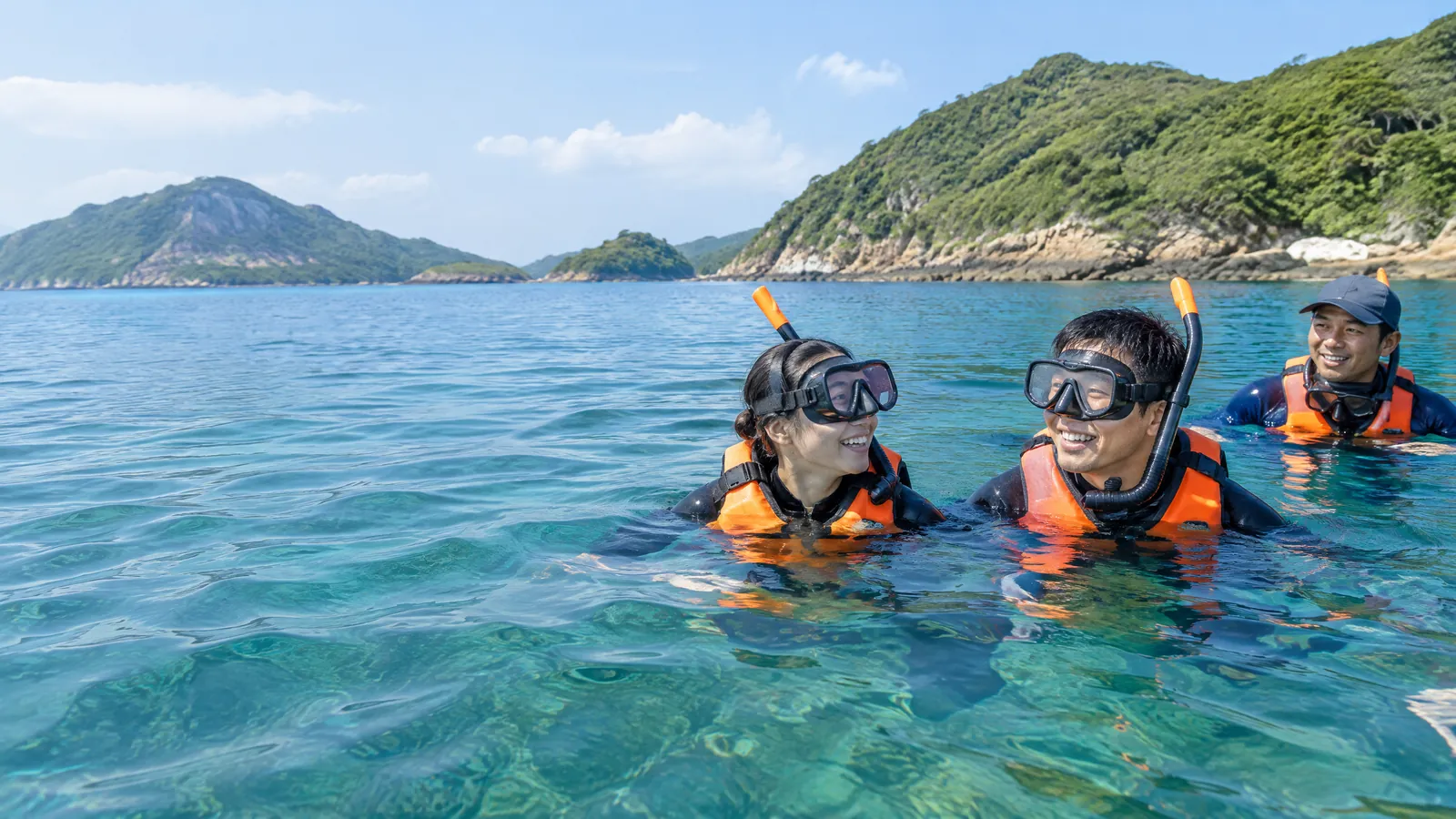
Compare common ways to approach an outlying-islands dive
| Option | Best for | Check before booking |
|---|---|---|
| Guided shore dive | Divers who prefer simpler logistics or a shorter transfer | Entry and exit surface, walking distance, tide, equipment carry and shelter |
| Shared boat day | Certified divers who want two planned dives and broader access | Meeting pier, boat time, sea-state call, inclusions and group size |
| Private charter | A group needing flexible pacing, privacy or a tailored route | Charter scope, weather decision, route limits, fuel/boat fees and guide support |
Hong Kong outlying-islands diving and coral dive sites — common questions
Are outlying-islands dive sites suitable for every diver?Toggle answer
Not necessarily. Suitability depends on certification, recent experience, comfort in open water, conditions and the planned access method. A qualified dive professional can discuss your experience and help identify an appropriate site and level of support before the dive.
How should I protect coral while diving in Hong Kong?Toggle answer
Maintain good buoyancy, keep fins and equipment clear of the seabed, and do not touch, stand on or collect coral or marine life. Follow the guide’s briefing and any applicable site rules, since conditions and local requirements can vary.
Can I choose a specific island and expect the same visibility or wildlife?Toggle answer
No. Visibility, current, weather, water movement and marine life are variable. Give your preferred area, then ask for a suitable alternative and let the professional make a same-day condition decision.
Are dive fees refundable if weather changes the plan?Toggle answer
Fees are non-refundable unless the written booking terms say otherwise. Ask how weather, access or operator cancellation is handled before paying, and keep the written confirmation. Make-up sessions or date changes are available only where the written terms permit them; no reschedule date is guaranteed.
What should I tell DiveHarbour before asking for a route?Toggle answer
Share certification, last dive, group size, preferred shore or boat access, equipment needs, seasickness concerns and date range. That allows a practical comparison rather than a generic site recommendation.
Take the question with you
Ready to explore? Message DiveHarbour with your experience, group details and preferred dates, then ask for two condition-aware options for Hong Kong outlying-islands diving. Confirm access, inclusions, conservation expectations and written terms before paying. A flexible plan—guided by current conditions and respectful buoyancy—will give you the best chance of enjoying coral habitats without treating a changing sea like a guaranteed itinerary.
Sources worth checking
- Hoi Ha Wan Marine Park — Agriculture, Fisheries and Conservation Department
AFCD states that Hoi Ha Wan Marine Park covers about 260 hectares, has diverse marine life and coral communities, and that divers and swimmers must not stand on fragile corals.
- Marine Parks Visitors Code — Agriculture, Fisheries and Conservation Department
The AFCD visitor code provides conduct guidance for visitors in Hong Kong Marine Parks, including responsible behaviour around marine habitats.
Useful next reads for your plan
If you are still comparing routes, these related pages give you practical questions to bring into your next conversation with an instructor.
Put your plan into practice
Useful planning guides
Hong Kong dive site conditions: a practical matching guide
Use this Hong Kong dive site conditions worksheet to compare practical options, check key decision points, and confirm current details with DiveHarbour.
Hong Kong dive site conditions
