

A useful fact to keep in mind
NAUI’s official Introduction to Scuba description lists a maximum optional open-water depth of 12 m (40 ft) when the instructor conducts all confined-water work.
Check the sourceCorporate scuba team building Hong Kong
A shared challenge for your team
Good team building is not simply an unusual afternoon out. It gives people a clear shared task, a fair way to participate and enough space to talk about what they noticed afterwards. Scuba can create that setting: colleagues prepare together, listen carefully to a professional briefing, practise calm communication and experience a new environment at a sensible pace. The purpose is connection and reflection, not pressure to prove who is bravest.
A corporate scuba team building Hong Kong enquiry should therefore begin with the people, not a pre-selected package. Tell us the approximate headcount, age range, swimming confidence, previous certification, preferred dates, transport expectations and whether anyone may need an alternative to in-water participation. A mixed group can still share the day through briefing, surface support, observation, photography, conservation discussion and a structured debrief. Nobody should feel compelled to enter the water.
Before confirming a format, the instructor needs honest information about relevant health considerations, comfort in the water and previous experience. A participant questionnaire is a conversation starter rather than a diagnosis; if someone is unsure about fitness to dive, they should seek appropriate medical advice. Conditions, weather, water movement and boat logistics can change the plan, so a responsible enquiry leaves room for a practical alternative rather than promising a fixed outcome.
- Define one social objective and one learning objective, such as clearer buddy communication and a short post-dive reflection.
- Nominate one organiser to collect consent, dietary or access notes, emergency contacts and the final attendance list.
- Ask how non-divers, nervous participants or late withdrawals can take part without being singled out.

Corporate scuba experience day Hong Kong
A considered format for mixed experience levels
A corporate scuba experience day Hong Kong can be introductory, skills-focused or built around already-certified divers. Those are different experiences and should not be blended casually. Beginners need a patient orientation, equipment familiarisation and closely supervised practice. Certified divers may want a guided fun dive, refresher or a team task that does not exceed their current training and recent experience. A small planning conversation helps avoid a day where confident divers are bored and first-timers feel rushed.
For an introductory group, a confined-water session may be the most inclusive starting point. It keeps the environment controlled and allows the team to learn basic breathing, buoyancy awareness, hand signals and how to pause. An optional open-water element should only be considered after the required preparation, with the instructor retaining the final say. NAUI’s official Introduction to Scuba page describes its programme as a supervised, non-certification experience; it states that confined-water participation starts at age 8, open-water participation at age 10, no certification is required, and novice swimming ability must be demonstrated. These are that programme’s requirements, not a universal rule for every agency or venue.
NAUI’s official Introduction to Scuba description lists a maximum optional open-water depth of 12 m (40 ft) when the instructor conducts all confined-water work. The number is not a target for a corporate event. It illustrates why depth, location and supervision belong in the instructor’s risk assessment rather than in a marketing promise. A company may prefer a short pool experience, while another group may choose a longer day with certified participants and a separate non-diving workshop.
Use corporate Discover Scuba Diving Hong Kong when the main question is whether a beginner-friendly introductory route fits your team. If the group wants a broader lesson pathway, compare group scuba diving lessons Hong Kong and ask how the teaching plan, ratios, equipment and assessment would work for your actual headcount.
- Introductory: prioritise comfort, simple skills and a calm first impression.
- Certified: check certification level, recent dives, equipment familiarity and the proposed site before booking.
- Mixed: separate water activities where needed, then reunite everyone for briefing, lunch and debrief.

Marine-conservation dive team building Hong Kong
Team connection with respect for the marine environment
A marine-conservation dive team building Hong Kong theme can turn curiosity into more thoughtful behaviour, but it should be honest about scale. One group session cannot restore a habitat, certify an ecological survey or guarantee a wildlife encounter. It can encourage participants to notice buoyancy, avoid contact, keep equipment streamlined, reduce litter and discuss how recreational choices affect coastal places. For beginners, the conservation message is often most useful when attached to simple, observable habits.
A practical format might include a short pre-water talk about local marine life and responsible observation, a supervised activity with no touching or collecting, and a debrief where the team records three things it noticed and three actions it can take at work or at home. Certified divers can discuss navigation, trim and respectful photography; non-divers can join the briefing, shoreline observation or a litter-awareness exercise if the venue and conditions make that appropriate. The objective is attention and care, not a staged rescue or a promise of a particular species.
Choose language carefully in company communications. Say ‘illustrative marine-conservation activity’ rather than implying scientific monitoring unless a qualified project has been specifically arranged. Weather, visibility, tides and access may change what is possible. The strongest takeaway is transferable: teams plan better when they understand boundaries, communicate early and leave a shared environment in better condition than they found it.
- Set a no-touch, no-collection expectation and brief participants on responsible wildlife observation.
- Use a simple observation card or debrief prompt instead of promising sightings or conservation results.
- Ask whether the company wants a follow-up sustainability conversation after the water activity.

Designing the day around people and outcomes
A useful brief for DiveHarbour
The best enquiry is specific enough to plan and open enough to adapt. Start with the business reason: welcoming new colleagues, improving cross-team communication, celebrating a milestone or creating a wellbeing day. Then describe the practical reality. How many people are expected? Are they comfortable swimmers, certified divers, complete beginners or a mixture? Does anyone require an accessible route, a quiet waiting area or a non-water role? A transparent answer lets DiveHarbour suggest a safe structure instead of forcing everyone into the same activity.
Build in generous transitions. Participants need time to arrive, change, listen, ask questions and reset between activities. A group can lose the value of the day if the timetable is so tight that people rush equipment checks or skip the debrief. Consider small pods with one organiser per pod, a buddy-style check-in, and a shared meeting point for the opening and closing conversation. The organiser should also have a weather contingency, transport plan and clear message for anyone whose participation changes on the day.
If two colleagues want a quieter shared activity, private scuba diving experience for two Hong Kong may be a useful comparison, while a family-inclusive company event can be considered alongside family scuba diving experience Hong Kong. These are not automatic substitutes for a corporate plan; they simply help clarify whether your objective is team-wide participation, a smaller experience or a broader social day.

Choosing a realistic corporate format
Compare the commitment before you confirm
The table below is a conversation tool, not a promise of availability. The final format depends on participant information, instructor assessment, venue, weather, boat arrangements and the terms confirmed in writing. A company should also decide whether it is paying for every attendee, only water participants, or a shared event budget that includes non-diving roles. Pricing and inclusions should be confirmed for the exact date and group rather than inferred from another course page.
If younger relatives are invited to an otherwise corporate day, family scuba certification Hong Kong is a separate training question with its own age, consent and prerequisite considerations. Keep employment expectations separate from certification: a recreational activity is not a qualification for work, rescue or professional diving.

Safety, communication and the next enquiry step
Make the plan easy to understand
A clear safety culture is part of the team-building outcome. Explain that participants may stop, pause or choose a surface role without embarrassment. Ask the professional how signals, buddy support, equipment problems, separation, weather changes and emergency escalation will be briefed; do not turn a marketing page into a substitute for that briefing. Never encourage anyone to conceal a health concern or to force equal participation for the sake of a photograph.
For your first message, include the date window, headcount range, experience mix, age range, desired theme, language needs, transport preference and any known constraints. Mention whether you want an introductory experience, certified-diver activity, conservation discussion or a combination with a non-water workshop. DiveHarbour can then explain what is realistic, what information is still needed and which parts remain subject to conditions.
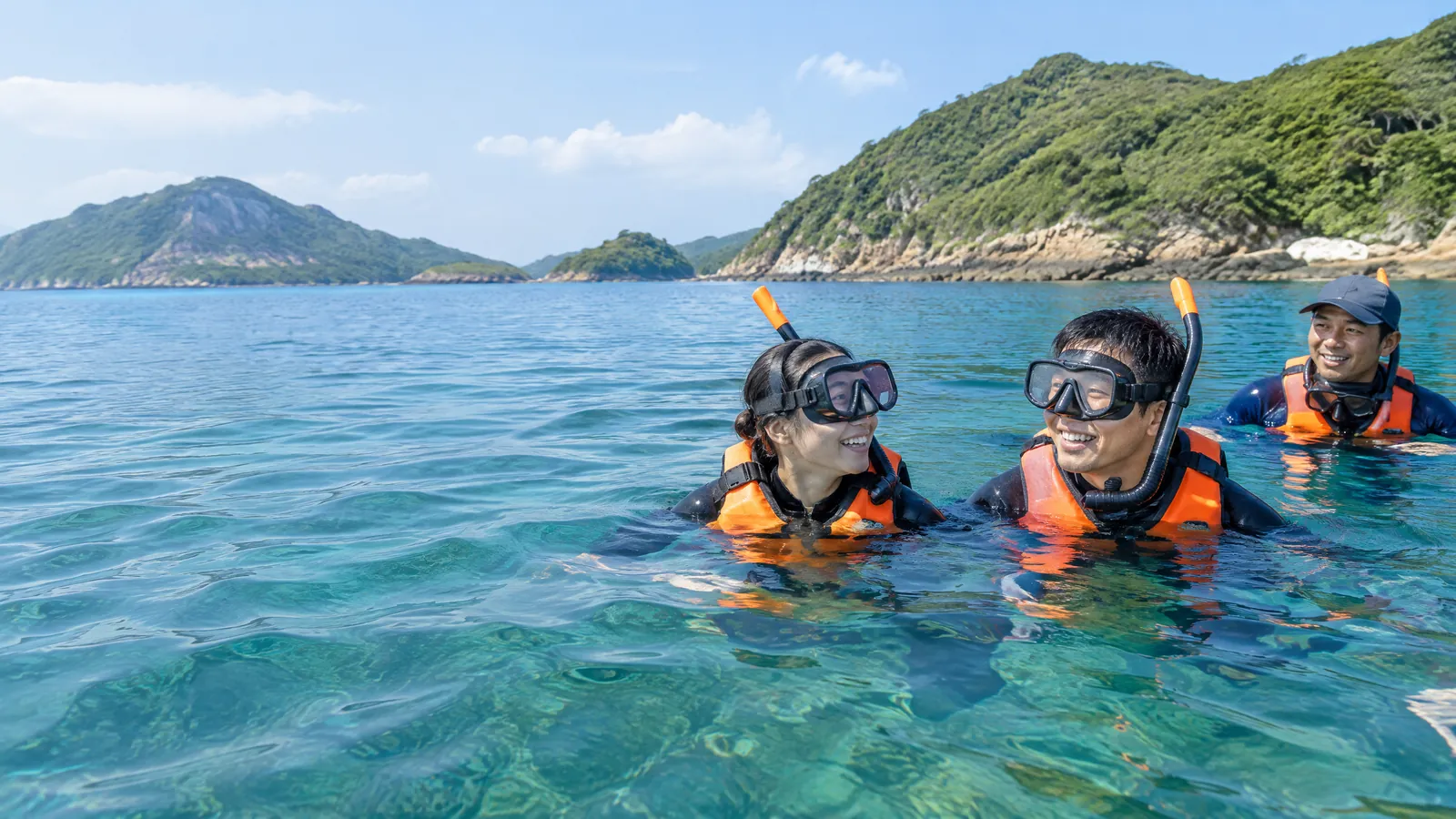
Corporate group formats to compare before enquiry
| Option | Best for | Check |
|---|---|---|
| Confined-water introduction | Mostly beginners who want a controlled first experience | Age, swimming ability, health screening, supervision and venue capacity |
| Introductory session plus optional open water | A group ready for a longer day after basic skills practice | Instructor assessment, conditions, depth boundary, transport and non-diver plan |
| Certified-diver guided activity | Colleagues with suitable certification and recent experience | Certification level, logged experience, equipment, site and weather contingency |
| Conservation-themed mixed day | Teams seeking an environmental learning objective | No-touch brief, realistic activity scope, accessible observation role and debrief |
| Water activity with parallel social programme | Mixed comfort levels or teams wanting everyone involved | Alternative roles, timing, meeting points, catering and clear consent process |
Corporate scuba team building in Hong Kong — common questions
Do participants need previous scuba certification?Toggle answer
Not necessarily. The suitable format depends on experience, comfort in the water, swimming ability and the activity selected. Participants should share relevant experience and health information honestly so the instructor can discuss an appropriate, safety-led option before the event.
Can you tailor a corporate group enquiry around our objectives?Toggle answer
Yes. Tell DiveHarbour your group size, preferred timing, experience range and whether you want an introductory, skills-focused or marine-conservation theme. The team can explain realistic scope, requirements and next steps without promising an unsuitable format.
What if some colleagues do not want to enter the water?Toggle answer
Plan for that from the start. Depending on the venue and conditions, non-divers may join the briefing, observation, conservation discussion, photography or debrief. Ask for the exact available roles in writing and never make participation in the water a test of team commitment.
Are corporate booking fees refundable?Toggle answer
Fees are non-refundable unless the written booking terms say otherwise. Ask for the payment, cancellation and weather clauses before paying, including what happens if the group size changes or a participant withdraws.
Can a missed session automatically be rescheduled?Toggle answer
No automatic make-up session or replacement date should be assumed. Make-up sessions are available only where the written terms permit them; any alternative date, conditions and extra costs must be confirmed rather than guaranteed.
Take the question with you
Send DiveHarbour a concise brief with your headcount, experience mix, date window, objective and preferred balance of water and non-water activities. The team can then discuss a suitable Hong Kong format, the information required for each participant and the written terms to review before confirmation. A well-designed day gives people a shared memory while respecting individual choice, professional judgement and the marine environment.
Sources worth checking
- NAUI Introduction to Scuba (Introductory Experience-ISO 11121)
NAUI describes this as a supervised, non-certification introductory course; it lists minimum age 8 for confined water, 10 for open water, no certification prerequisite and a requirement to demonstrate novice swimming ability.
Useful next reads for your plan
If you are still comparing routes, these related pages give you practical questions to bring into your next conversation with an instructor.
Put your plan into practice
Useful planning guides
Group dive programme planning for schools, companies and friends
Use this group dive programme planning worksheet to compare practical options, check key decision points, and confirm current details with DiveHarbour.
group dive programme planning
