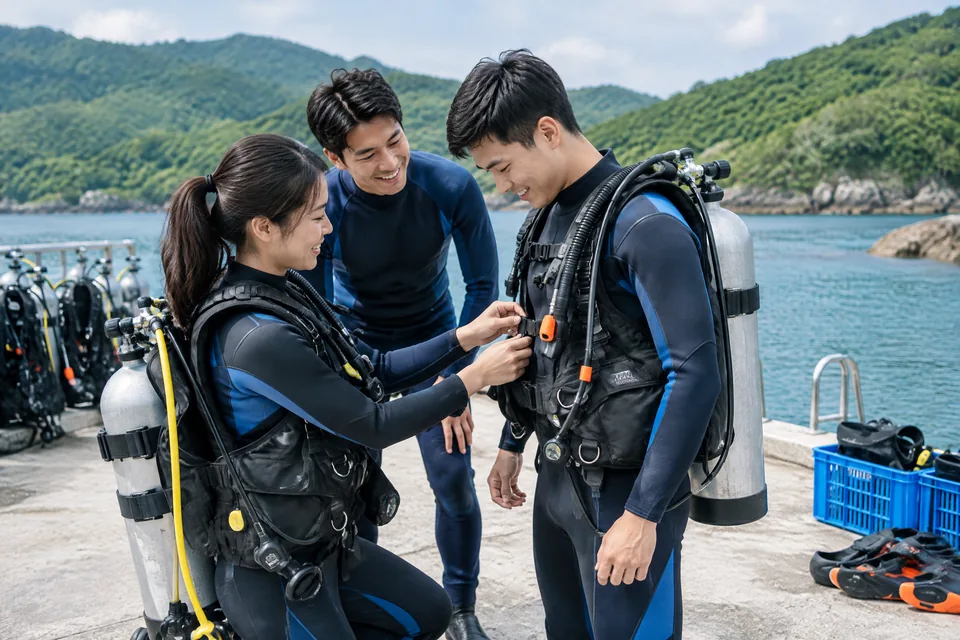
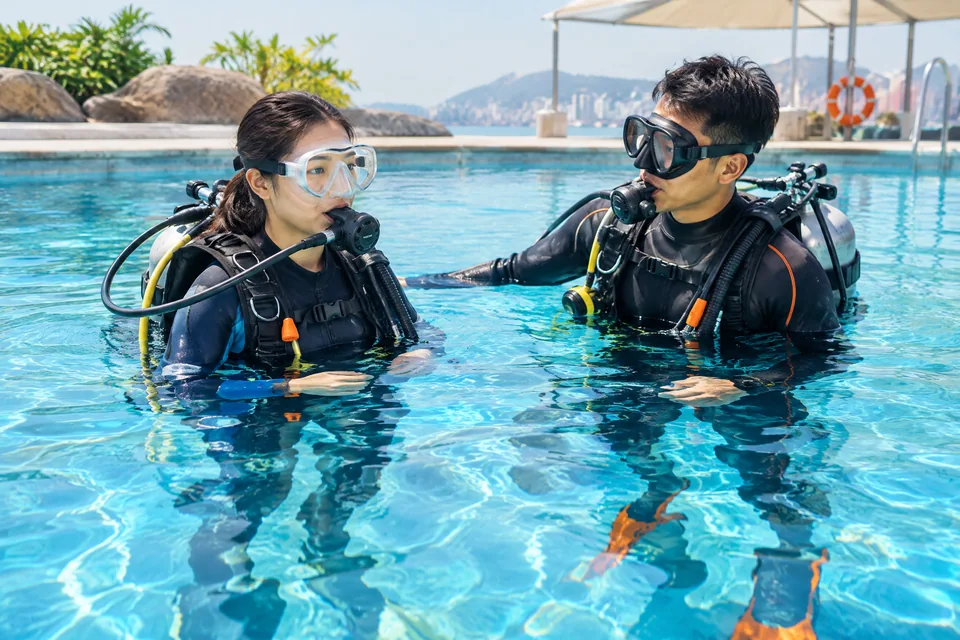
SAFE LEARNING · HAPPY EXPLORING
DiveHarbour

DiveHarbour · Practical guide

Outdoor-light hair colour: a coastal consultation guide

Outdoor-light hair colour is best planned as a comparison brief, not a promise about a finished shade. Record how your preferred tone reads in open daylight, indoors, and in an unfiltered camera frame. Then describe the colour, your event setting, current hair history, and acceptable compromises before asking a provider to confirm what can actually be assessed and included.

By DiveHarbour9 min read
Ask about diving courses or coastal trip planning Read the guide
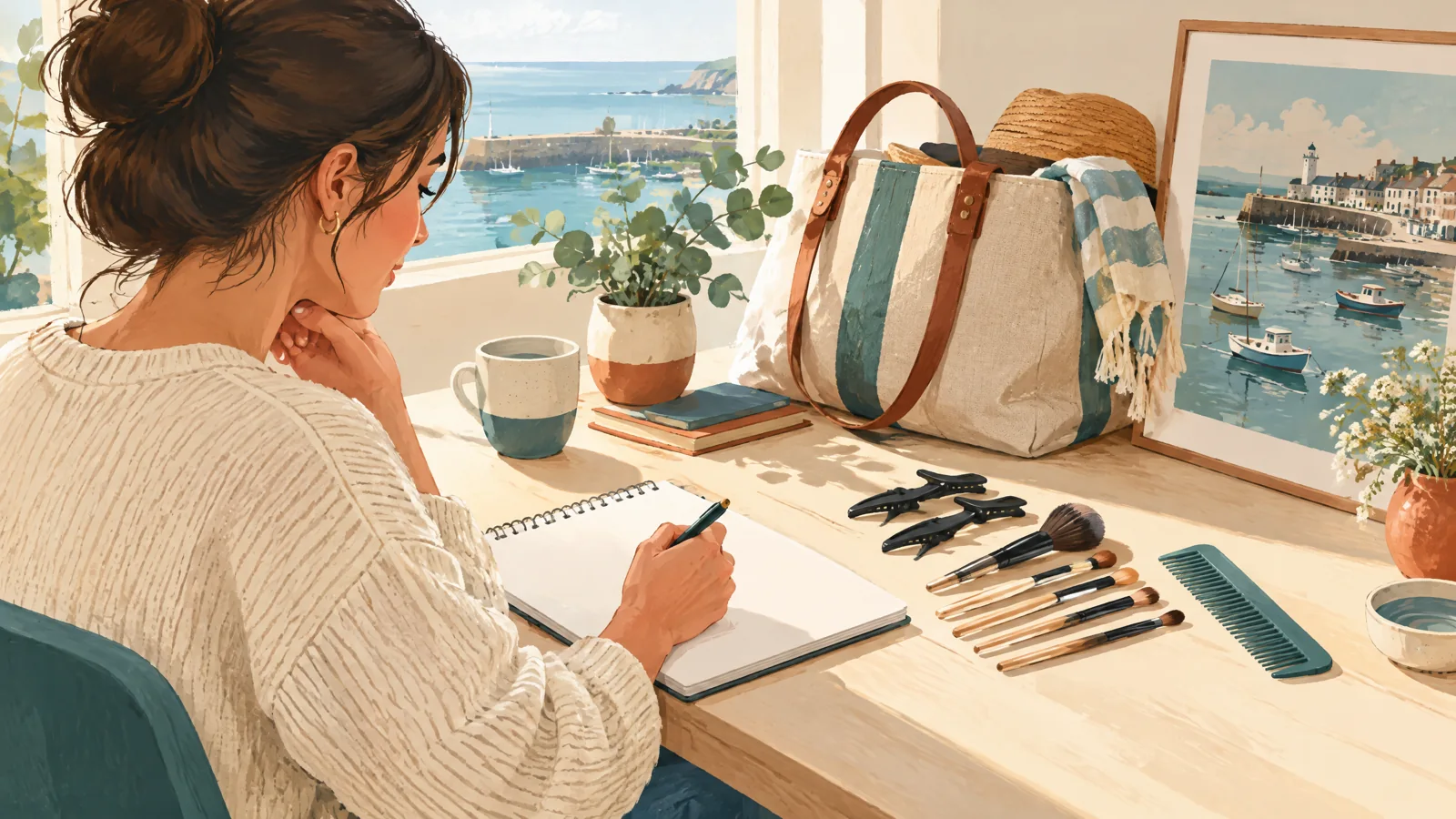
outdoor-light hair colour references arranged beside a coastal photo plan, concept illustration
Illustration · Concept illustration of organising a coastal colour reference; not a real DT HUB store, medical setting, product, client, student, or before-and-after result.

Instructor qualifications

One clear teaching conversation from first breath to next step

DiveHarbour brings together scuba teaching, swimming, lifesaving and water-rescue experience so you can ask practical questions before choosing a course.

  • PADI teaching backgroundTeaching experience across recognised scuba learning pathways.
  • SSI teaching backgroundClear explanations when you are comparing agency routes.
  • NAUI teaching backgroundA practical, standards-aware approach to learning and progression.
  • Swimming foundationWater confidence and calm, step-by-step practice matter.
  • Lifesaving experienceSurface awareness and prevention stay part of the conversation.
  • Pool rescue experienceControlled practice can build confidence before open water.
  • Beach rescue experienceLocal water context informs sensible preparation.
  • Kayak rescue experienceA wider water-safety perspective supports good judgement.
  • PWC rescue experienceAsk about the right learning route for your experience and goals.

Brand relationship: DiveHarbour and DT HUB share the same owner.

DiveHarbour and DT HUB are operated by the same owner. DT HUB links in this article are references to external service and product information, not independent third-party recommendations, medical-effect claims, or endorsements of water-activity safety. DiveHarbour handles diving and coastal activities; DT HUB salon, hairpiece, academy, and hair-growth services must be checked with the relevant provider separately.

A useful fact to keep in mind

NIST explains that the way colours of objects appear under a particular light is called colour rendering, so a colour reference should be labelled with its lighting context rather than treated as context-free proof.

Check the source
Key takeaways

Four points to carry forward

  • Photograph one reference in open daylight and another indoors, and label the light rather than assuming the images are directly comparable.
  • Describe the tone, depth, warmth, and unwanted cast you notice instead of relying on a trend name or a filtered inspiration image.
  • Tell the provider about previous colour, timing, outfit, and photo setting, then ask what is included and what still needs assessment.
  • Keep colour appearance, product handling, and any swimming or diving decision separate; a photo brief cannot confirm activity suitability.
Start here

Outdoor-light hair colour starts with a real-world brief

Name the shore setting before naming a shade

A colour board under salon lighting is only one view of a future look. Begin with the moment that matters: a bright promenade portrait, a shaded pier, an overcast walk, or a sunset dinner. Note whether your hair will be beside pale stone, dark clothing, reflective water, or greenery. The background can change what you notice first, so write down the visual priority before choosing a swatch or saved image.

Separate three things in your notes: the tone you like, the depth you can accept, and the cast you want to avoid. For example, “soft neutral brown, not noticeably orange, still visible beside a navy jacket” is more useful than “coastal brunette”. Add whether you want the colour to look quiet in a group photo or clearly different in a close portrait. This turns a mood into a question a provider can answer.

If you are browsing scalp treatment kwun tong information while preparing a visit, treat that page as a service-information starting point, not as a conclusion about what your hair or scalp needs. Ask what the listed service covers, what information should be shared first, and whether a colour discussion is a separate matter. The linked provider must confirm its own scope, conditions, and any relevant precautions.

  • Setting: write the exact shore or waterfront scene and whether it is open, shaded, or mixed light.
  • Priority: say whether tone, brightness, contrast, or a natural-looking transition matters most.
  • Avoidance: record the cast, level of contrast, or visual change that you do not want to see.
  • Context: include the outfit, jewellery, event time, and the camera distance likely to be used.
Start with a sentence you can test: “In an open-air portrait, I want a softly warm brown that does not read orange beside my blue shirt.”
Guide · 02

Read daylight and indoor light as separate evidence

Outdoor-light hair colour is a lighting question before it is a trend question

Light changes the way a colour is perceived. NIST describes the appearance of colours under a particular light as colour rendering and notes that warm and cool illumination can create different effects, especially around skin. [1] That does not mean one setting is more truthful for every person. It means your brief should say where you saw the reference and what changed when you moved it.

Create a small comparison set rather than taking dozens of near-identical selfies. Use one image in open shade, one in direct but comfortable daylight, and one indoors under the light where you normally get ready. Keep the camera distance and hair position similar. Write the date, place, weather, and whether nearby walls or clothing may have reflected colour onto your face or hair.

A phrase such as scalp care hong kong can appear during general preparation research, but it does not answer a colour-matching question. If you contact a provider, send the lighting notes with your references and ask whether the discussion is about appearance, preparation, or a separate service. Do not infer a diagnosis from a service label or from how hair looks in one difficult light.

Swipe the table to compare all columns.

Lighting comparison sheet for a coastal colour brief
Reference conditionWhat to recordQuestion it helps answerCommon mistake to avoid
Open daylightOpen or shaded, weather, background, and time of dayWhich tone and depth should guide the outdoor photo?Calling every outdoor frame ‘sunlight’ when the subject is in shade
Indoor preparation lightRoom, window position, bulbs, and nearby wall or clothing coloursWhat changes when the same preference is seen where I get ready?Comparing a warm room with a cool window as if they were one light
Camera referencePhone, distance, filter status, and white-balance or auto settingCould the photograph be adding a cast that my eyes did not notice?Treating a filtered or edited image as a neutral swatch
Label every reference with light, location, and camera condition. A labelled ordinary photo is often more useful than an impressive but heavily edited image.
Daylight and indoor-light notes for an outdoor-light hair colour consultation, concept illustration
Illustration · Concept illustration of comparing light conditions before a consultation; not a real DT HUB store, medical setting, product, client, student, or before-and-after result.
Guide · 03

Control the camera variable in your reference photos

White balance can change the record without changing your hair

A phone or camera does not simply copy what your eyes saw. Adobe explains that white balance affects all colours in a photograph, with different light sources producing blue, yellow, orange, or green casts. [2] Its practical guidance is to match the camera to the light source, keep lighting consistent, and use a neutral reference when precision matters. For a hair consultation, the goal is not laboratory accuracy; it is an honest, repeatable record.

For a useful set, turn off beauty filters and avoid automatic edits that dramatically shift warmth or saturation. If your phone offers a fixed white-balance or “pro” setting, keep it consistent across the set; if not, write down that the camera was on automatic. Include a plain neutral object near the hair only when it does not obscure the colour. Do not correct one image until it matches another, because that can hide the original difference you meant to discuss.

When a page such as scalp detox hong kong appears in a search for general hair preparation, keep its service wording separate from your camera workflow. Ask the relevant provider what is being assessed, whether a colour consultation is included, and what should be checked in person. A camera can support communication; it cannot establish a formula, predict longevity, or replace the provider’s own assessment.

  • Use the same phone, distance, and framing for each comparison image.
  • Turn off filters and note whether automatic white balance or exposure was used.
  • Keep mixed light out of the frame where possible, such as a window beside a warm bulb.
  • Send original files or clearly labelled versions, not screenshots whose colour has been altered by an app.
The key question is not “Which photo is correct?” It is “Which lighting and camera conditions should guide the conversation about my preference?”
Guide · 04

Translate a visual preference into provider questions

Give the colour conversation enough history to be useful

A provider needs more than a colour name to understand a coastal plan. Record your current base as you see it, any previous colour or lightening you remember, and whether the reference is meant for everyday wear or one particular event. Include the event date only as planning context, not as a request for a guaranteed appointment or fixed result. Ask which parts of the request can be discussed from photos and which require an in-person check.

Use questions that expose assumptions: “What does this reference mean on my current base?” “Which part of the tone is most likely to read differently outdoors?” “What preparation is included?” “What information about previous colour matters?” “If the outfit changes from pale linen to black, which preference should remain the priority?” The answers may lead you to simplify the request, change the timing, or keep the reference as inspiration rather than a commitment.

If you encounter scalp diagnosis hong kong, do not treat the label as a diagnosis or as a recommendation for your colour plan. Ask the provider what the service means in its own information, who answers questions, what qualifications are relevant, and what risks or alternatives should be discussed. If you have pain, redness, sudden patchy loss, or another health concern, seek an appropriate qualified medical assessment rather than relying on a salon label.

Send the same short brief to the provider that you would use to explain the look to a friend: setting, tone, unwanted cast, history, photos, and questions.
Testing hair colour references from several coastal camera views, concept illustration
Illustration · Concept illustration of checking colour references from different views; not a real DT HUB store, medical setting, product, client, student, or before-and-after result.
Guide · 05

Match colour planning to the outfit and camera distance

A coastal event has more than one visual checkpoint

The colour that feels balanced in a close portrait may feel too quiet in a wide group image. Make a simple event map: arrival or daytime walk, the main photo, the meal or ceremony, and the final image under artificial light. For each checkpoint, note the outfit colour, neckline, jewellery, background, and whether the camera is close or several steps away. This is not a promise that a colour will look identical; it is a way to decide which view deserves priority.

Wedding and formal-event references often combine hair, makeup, clothing, and photography. If you are reading bridal makeup kwun tong, use it only to ask the relevant provider what its own makeup or styling information includes. Keep hair-colour questions distinct: explain whether you want the face to look softly framed, whether jewellery should remain prominent, and whether the colour should be noticeable in a wider shot. Do not assume a formal-service label includes colour planning.

Use a table or note with one row per checkpoint. Mark a preference as “must keep”, “nice if possible”, or “acceptable to change”. If the outdoor setting is the priority, say so plainly. If the indoor dinner matters more, say that instead. This avoids asking one colour decision to solve every light source, outfit, camera distance, and personal preference at the same time.

  • Main image: identify the light, outfit, distance, and feature that should lead the frame.
  • Secondary image: record what may change, such as warmth, contrast, or visible dimension.
  • Indoor checkpoint: note the artificial light and whether the same outfit will still be worn.
  • Priority rule: choose which checkpoint wins if the references cannot all be treated equally.

Swipe the table to compare all columns.

Decision order before sending a colour consultation
StepWrite downThen askWhy it comes here
1. Define the sceneMain shore setting, outfit, event segment, and camera distanceWhich moment should be the priority?A shade has no useful context without the scene
2. Compare referencesDaylight, indoor light, camera condition, and unwanted castWhich differences are lighting changes rather than colour preferences?It separates observation from assumption
3. Add history and limitsPrevious colour, current base, timing, and acceptable changesWhat needs in-person assessment before scope is confirmed?It gives the provider relevant constraints
4. Separate activitiesProduct handling, equipment questions, and personal clearance routeWho is responsible for each answer?Appearance information cannot approve water activity
A good brief accepts trade-offs. It says which scene matters most instead of asking for one shade to behave like every reference at once.
Guide · 06

Close the brief with timing and shore boundaries

Outdoor-light hair colour is an appearance decision, not activity clearance

Before agreeing to any colour plan, ask the provider to confirm scope, preparation, timing assumptions, and what may change after an in-person assessment. A page such as wedding makeup hong kong is not a quotation, appointment promise, or independent endorsement. If the event is formal, ask separately whether hair, makeup, testing, changes, and the final styling are handled by the same provider or require separate confirmation.

Keep product handling and water activity in a different note. Hair colour, styling, and any hairpiece are appearance choices; they do not establish resistance to seawater, chlorine, sun, or wind, and they do not confirm compatibility with a mask, helmet, or other safety equipment. Do not add adhesive, tie-ons, or modifications to equipment based on a photo plan. If an activity is not separately confirmed, keep the colour plan on shore.

DiveHarbour’s best time to dive in Hong Kong information is for planning its own diving activities, not for deciding how a colour product behaves. Treat activity dates, weather questions, and participation decisions as a separate conversation with the activity provider. Any personal health or activity clearance belongs with the appropriate qualified professional, not with a salon or a colour reference.

Likewise, Hong Kong diving water temperature can help you review DiveHarbour activity information, but it cannot answer a hair-colour, cosmetic-product, or equipment-compatibility question. Keep two checklists: one for the provider handling the appearance request, and one for the coastal activity. This simple separation prevents a polished photograph from being mistaken for a safety decision.

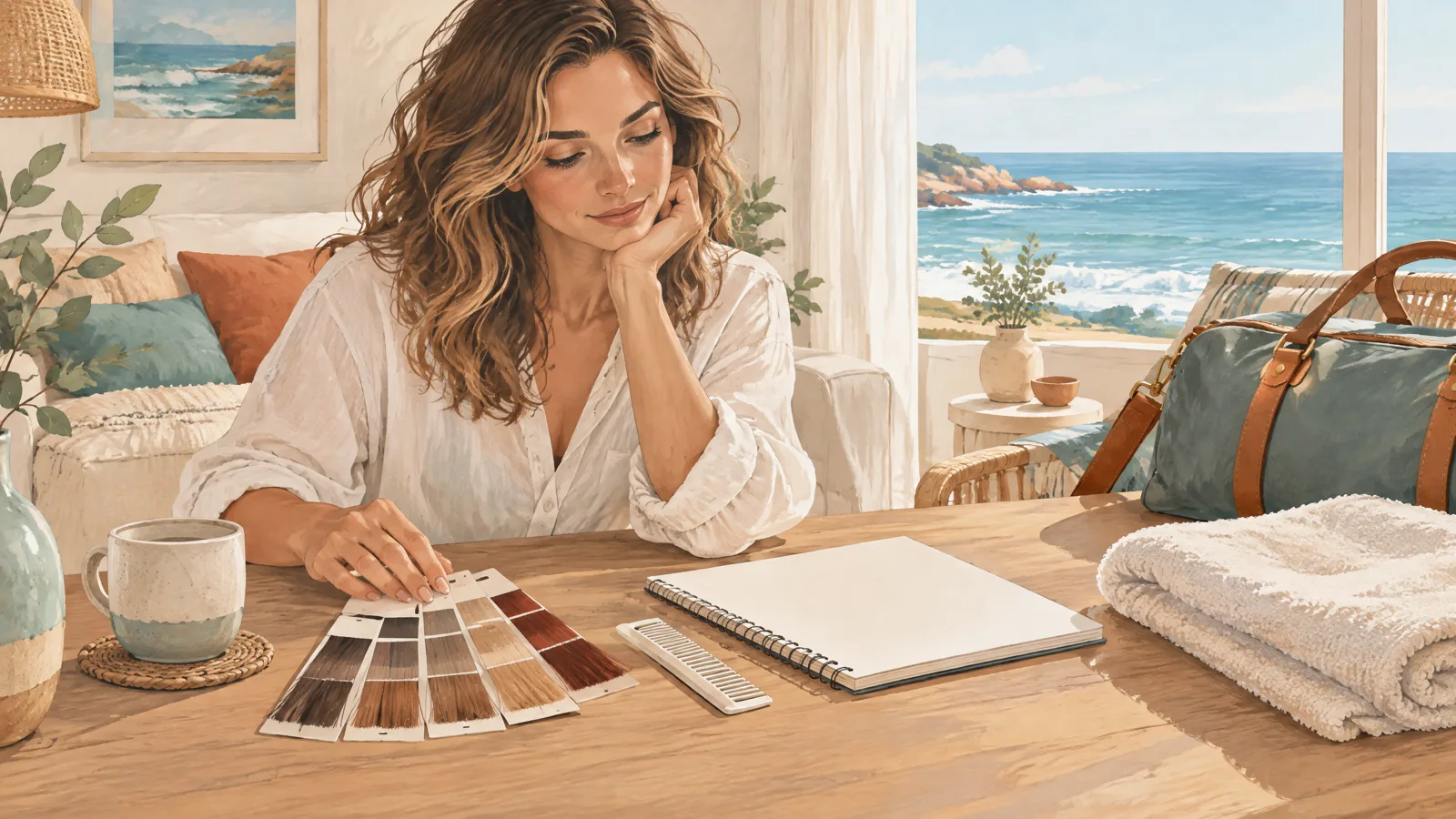
Finish with three confirmations: what the colour discussion covers, what the activity provider covers, and which questions still need a qualified professional.
Separating outdoor-light hair colour notes from shore activity planning, concept illustration
Illustration · Concept illustration of keeping appearance notes separate from activity planning; not a real DT HUB store, medical setting, product, client, student, or before-and-after result.
A sensible next step

Take the question with you

A useful outdoor-light hair colour brief is a small comparison document. Record the shore scene, outfit, daylight and indoor conditions, camera white balance, current hair history, and the trade-off that matters most. Send those notes with a few unfiltered references, then ask the provider to confirm scope and what still needs assessment. Keep all water-activity and personal health questions outside the colour decision.

For a planned coastal photo or dinner, send the finished brief to the relevant styling provider and request clear answers about scope, preparation, timing assumptions, and changes. DiveHarbour can answer questions about its own diving and coastal activities separately; DT HUB service, product, academy, and hair-growth information must be checked with DT HUB directly and is not a DiveHarbour activity or medical recommendation.

Questions to ask

Common questions

Why can the same hair colour look different outdoors and indoors?

Different illumination changes how your eyes perceive colour, and nearby surfaces can add reflected tones. NIST describes this as colour rendering. Record the light source and setting beside each reference instead of treating one image as the universal truth.

Should I use my phone photos to choose an exact hair colour?

Use phone photos to communicate a preference, not to select an exact formula. White balance, automatic processing, filters, mixed light, and exposure can change every colour in the image. Share labelled originals and ask what still needs in-person assessment.

What should I tell a provider before asking about outdoor-light hair colour?

Share the main setting, outfit, preferred tone and depth, unwanted cast, current hair history, reference-light conditions, event timing, and acceptable compromises. Ask what is included, what preparation is assumed, and which details cannot be confirmed from photos alone.

Does a coastal colour plan tell me whether I can swim or dive afterward?

No. Colour appearance, product handling, equipment compatibility, and personal activity decisions are separate questions. Ask the relevant activity provider and any appropriate qualified professional, and keep the plan on shore until those questions are confirmed.

Further reading

Official sources worth checking

Continue exploring

Keep comparing practical questions before you choose a course, activity or preparation step.

Coastal life and image planning · Updated 2026-11-06

Multi-event style order for a coastal day | DiveHarbour

Plan a multi-event style order for swim, lunch, photos and dinner. Use reset windows, provider questions and weather backups before you book or ask.

multi-event style order

Coastal life and image planning · Updated 2026-11-06

Outdoor-light reference brief for coastal photo planning

Use an outdoor-light reference brief to plan light, framing, neckline and styling limits for a coastal shoot. Read the checklist and ask better questions.

outdoor-light reference brief

Coastal life and image planning · Updated 2026-11-06

Shore styling tool choice: build a compact shore-day kit

Use shore styling tool choice to sort essential tools, power limits, cleaning needs, and backup options before a coastal day. Read the practical guide.

shore styling tool choice
Your next step

Ask about diving courses or coastal trip planning

Message DiveHarbour on WhatsApp to discuss diving courses or coastal trip planning, along with your experience and preferred dates.

Ask about diving courses or coastal trip planning
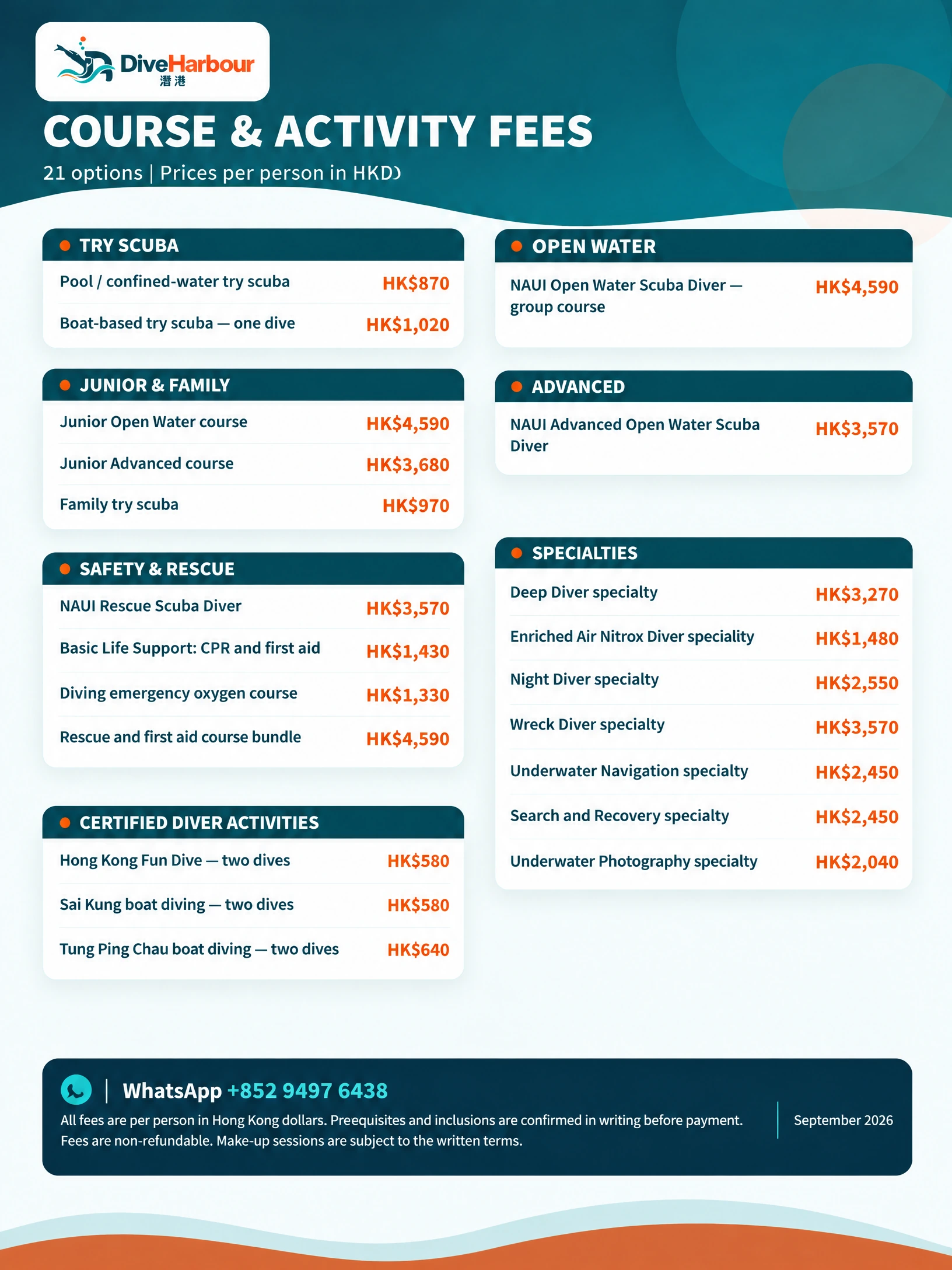
English price list for 21 DiveHarbour courses and activities, with fees per person in Hong Kong dollars
Tap the price list to view it at full size.

Plan your next dive

Course fees, clearly set out

Compare our published course and activity fees before choosing your next step. All prices are per person in Hong Kong dollars.

Before you book, we confirm prerequisites, materials, certification, equipment, venue and boat arrangements in writing. Ask us about fees for courses not listed here.

All fees are non-refundable. Make-up sessions are subject to the written terms.

Read all course fees
DiveHarbour course and activity fees per person in Hong Kong dollars
Course / activityPer person
Pool / confined-water try scubaHK$870
Boat-based try scuba — one diveHK$1,020
NAUI Open Water Scuba Diver — group courseHK$4,590
Junior Open Water courseHK$4,590
Junior Advanced courseHK$3,680
Family try scubaHK$970
NAUI Advanced Open Water Scuba DiverHK$3,570
NAUI Rescue Scuba DiverHK$3,570
Basic Life Support: CPR and first aidHK$1,430
Diving emergency oxygen courseHK$1,330
Rescue and first aid course bundleHK$4,590
Deep Diver specialtyHK$3,270
Enriched Air Nitrox Diver specialtyHK$1,480
Night Diver specialtyHK$2,550
Wreck Diver specialtyHK$3,570
Underwater Navigation specialtyHK$2,450
Search and Recovery specialtyHK$2,450
Underwater Photography specialtyHK$2,040
Hong Kong Fun Dive — two divesHK$580
Sai Kung boat diving — two divesHK$580
Tung Ping Chau boat diving — two divesHK$640