

A useful fact to keep in mind
The official description identifies 8 core skill areas in the Primary Care course.
Check the sourceEFR Primary and Secondary Care course Hong Kong
CPR and first-aid skills for practical emergency response
The EFR Primary and Secondary Care course is built around a simple priority: recognise a serious problem, protect yourself and others, provide appropriate immediate care, and activate professional help. Primary Care focuses on life-threatening situations, including assessment, barrier use, CPR, serious bleeding, shock, spinal injury and choking responses. Secondary Care then develops a more measured approach for injuries or illness that are not immediately life-threatening, including a secondary assessment and continuing care while waiting for emergency services. The exact syllabus, delivery format and certification record should be confirmed before booking.
This is useful beyond a dive boat. A diver may need to respond on a pier, in a workplace, at home, on a hike or during a sports activity. Good training is not about pretending to diagnose every condition; it is about making sensible observations, communicating clearly, using available equipment appropriately and handing over information to professional responders. Hong Kong participants should also understand local emergency arrangements and follow the instructor's current guidance rather than relying on an old card or memory.
The official Emergency First Response course description says Primary Care combines knowledge development, skill development and realistic scenario practice. It lists CPR, scene assessment, barrier use, serious bleeding, shock, spinal injury and conscious or unconscious choking management, with AED and emergency oxygen identified as recommended skills. The official description identifies 8 core skill areas in the Primary Care course. That detail helps explain why a practical class is different from watching a video or downloading a checklist. You practise the sequence, receive feedback and learn where your personal confidence still needs work.
- Bring any previous CPR, first-aid or EFR records, even if they are from another training organisation.
- Tell the instructor whether your priority is family readiness, workplace response, dive support or a refresher.
- Ask which skills are assessed, which equipment is used and what certificate or record is issued.

EFR CPR first aid renewal Hong Kong
When a refresher may suit your previous training
People often search for EFR CPR first aid renewal Hong Kong after a card has expired, a workplace asks for current evidence, or they realise that several years have passed since they practised on a manikin. A renewal conversation should start with the date, agency, course title and scope of your previous training. A CPR-only record may not cover the Secondary Care topics you now need; conversely, a broad first-aid course may not match a particular employer, club or dive-operation requirement. DiveHarbour can help you identify the question to put to the instructor, but the receiving organisation decides what evidence it accepts.
A refresher is also sensible after a long period without hands-on practice, even if a certificate has not technically expired. Skills such as compressions, choking response, bleeding control and AED operation are best revisited in a supervised setting. A calm participant is more likely to call for help early, give a clear handover and avoid unsafe improvisation. Training does not make someone a clinician, and it cannot guarantee a particular outcome; its value is preparation for the first minutes before professional care arrives.
Do not assume that every renewal includes children, infants, AED use, oxygen, marine-life injuries or neurological assessment. Those topics can be separate or optional depending on the programme. If your work involves children, ask specifically about the relevant population. If your reason for training is scuba-related, explain whether you need ordinary CPR and first aid, dive-injury oxygen training, rescue-diver preparation or a combination. This prevents paying for a course that is accurate but not the evidence your activity requires.
- Use your last training date as a prompt for review, not as a substitute for checking current course requirements.
- Ask whether the course covers adults only or also children and infants.
- Tell the provider about language, accessibility or physical-practice considerations before the session.
Emergency First Response course Hong Kong
Confirm the right course and current arrangements
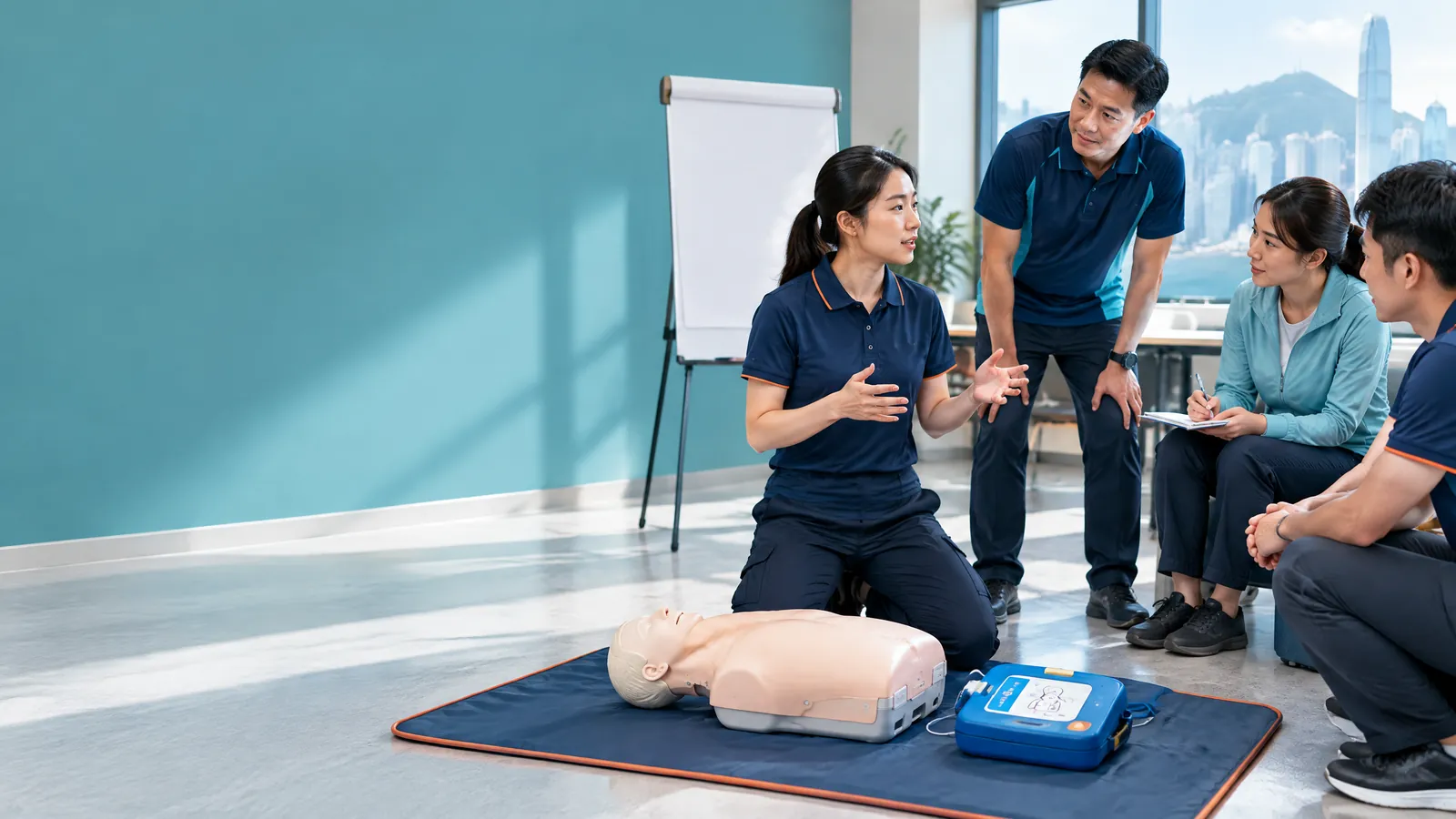
An Emergency First Response course Hong Kong may be a good fit for a diver who wants practical CPR and first-aid skills, but the right choice depends on the intended use. Ask whether you need Primary and Secondary Care together, a basic life-support course, an emergency oxygen course, or a rescue programme that assumes current first-aid knowledge. The course name alone is not enough: compare the learning outcomes, assessment method, prerequisites, certificate wording, language, venue and equipment supplied.
For context, the official DAN first-aid course page says its BLS course is open to anyone, including non-divers, and describes CPR, AED use, bleeding management, choking assistance, shock response and secondary assessment. It separately describes Emergency Oxygen for Scuba Diving Injuries and notes that current BLS or another nationally recognised full CPR training is a prerequisite for that DAN oxygen course. This is a useful example of why one agency's prerequisite should not automatically be applied to every EFR course; confirm the current requirement for the exact programme you are considering.
DiveHarbour's qualified instructor can discuss your previous training and intended role, but course participation is not medical clearance. If you have a condition that affects strenuous practice, kneeling, compressions or lifting, seek suitable advice from your clinician and tell the provider what accommodation you may need. In an actual emergency, contact local emergency services promptly and follow dispatcher and professional instructions. A course teaches a framework; it does not replace emergency services, diagnosis or hospital care.
Choose training by the response you expect to give
A practical comparison before you enquire
Start with the situation in which you are most likely to be the first capable person present. Someone caring for family may prioritise broad CPR and first aid. A diver supporting a boat group may need to understand the boundary between general first aid and dive-injury oxygen training. A person planning to lead other responders may need a more advanced pathway and an employer-approved certificate. The table below is a conversation starter, not a promise that any single option meets a third party's policy.
Before choosing, check whether the session is hands-on, how scenarios are supervised, whether the instructor can explain the assessment, and what happens if you cannot attend. Ask for the full fee and inclusions in writing. DiveHarbour can clarify current arrangements and whether a related course would be a more efficient fit, including the EFR CPR and first-aid course Hong Kong overview.

How EFR fits with dive safety and rescue planning
Keep CPR, oxygen and rescue roles distinct
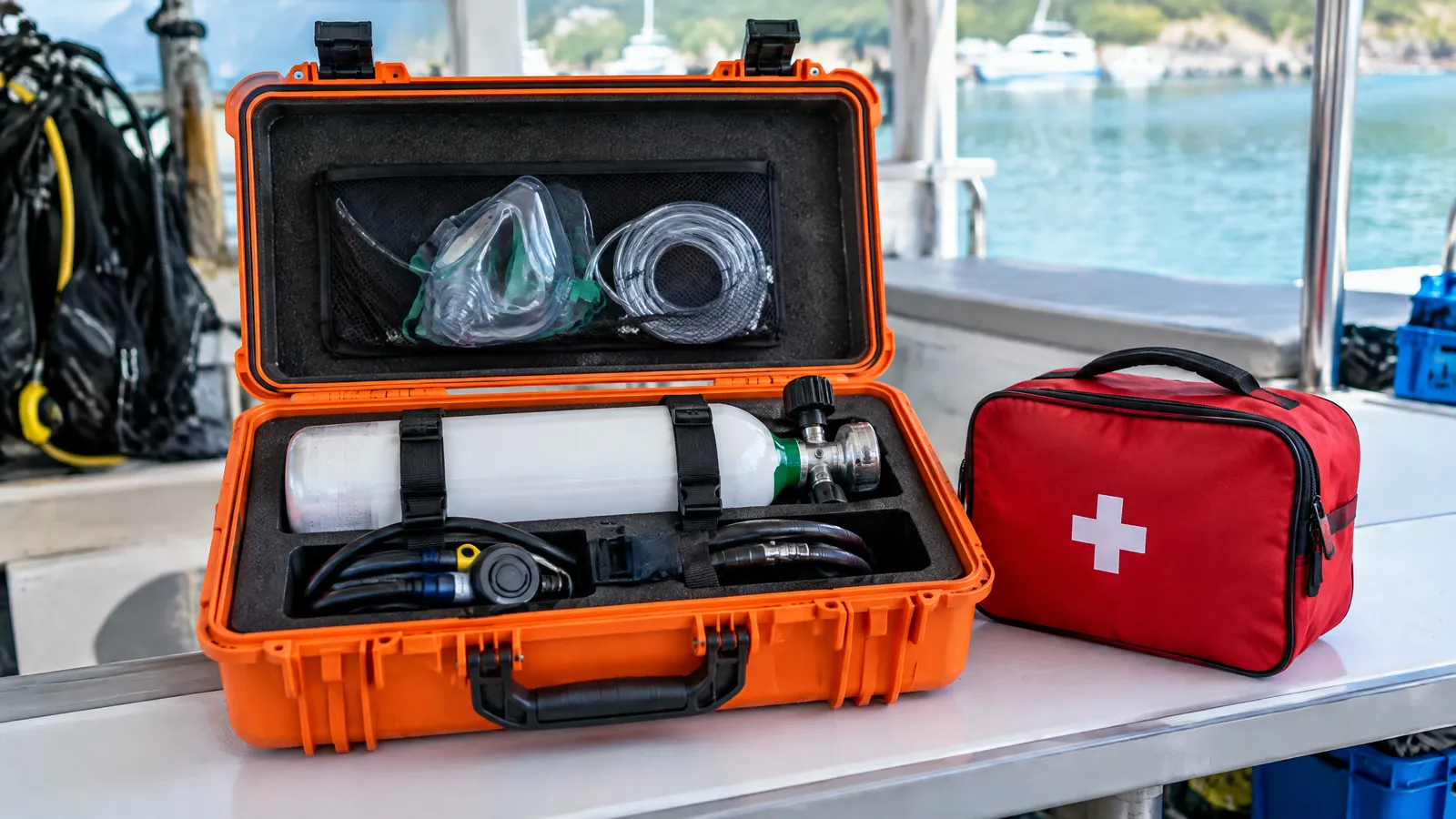
CPR and first aid are foundational response skills, but they do not automatically qualify someone to administer every intervention or lead a dive rescue. Emergency oxygen for scuba-diving injuries is a separate subject with its own equipment, recognition topics and prerequisites in some programmes. The official DAN page describes oxygen as preferred first aid for scuba-diving injuries and says early administration can improve outcomes; that is a reason to seek dedicated training, not a reason to improvise from an EFR card. For the separate Emergency Oxygen for Scuba Diving Injuries course Hong Kong, ask about scope, current prerequisites and equipment practice.
Likewise, rescue-diver training adds prevention, diver assistance, search considerations and incident management around the water. It does not replace CPR practice. If you are comparing the NAUI Rescue Scuba Diver course Hong Kong, explain whether your first-aid record is current and which agency's evidence you hold. Someone planning to teach first aid has a different pathway again: the first aid instructor course Hong Kong should be assessed against the teaching role, prerequisites and issuing organisation rather than assumed to follow automatically from a provider course.
For a general refresher, keep the focus on actions you can perform safely: identify hazards, call for help, use barriers, assess responsiveness and breathing as taught, provide CPR when appropriate, manage visible bleeding and monitor the person until professionals take over. Do not force a response, administer medication outside your training, or treat this page as a substitute for emergency dispatch instructions.

Booking questions, evidence and after-course practice
Turn a short enquiry into a useful next step
Send DiveHarbour your previous course name, approximate completion date, agency, reason for renewal and intended setting. If an employer, boat operator or club has supplied a requirement, copy the exact wording rather than paraphrasing it. Ask about the teaching language, practical components, approximate duration, venue access, certificate process and what is included in the current price. Course availability and arrangements can change, so wait for written confirmation before making travel plans.
After training, keep the course record somewhere accessible and share relevant information with the person who may coordinate your group. Revisit the basic sequence periodically using current training materials, and practise communication as well as physical skills: who calls for help, who meets responders, who brings the first-aid kit and who records observations? If you dive with others, agree on a simple emergency plan before entering the water. The related Basic Life Support CPR and First Aid course Hong Kong page may help you compare a broader basic-life-support route with EFR Primary and Secondary Care.
There is no need to choose by a search phrase or by the most dramatic-sounding title. Choose the scope that matches your real responsibility, confirm the evidence a third party accepts, and practise within your training. That approach makes a renewal useful at home, at work and around Hong Kong's waters without confusing education with medical authority.

Compare the response-training direction before asking for current arrangements
| Training direction | Best fit | Confirm before booking |
|---|---|---|
| Primary and Secondary Care | People wanting CPR plus broader first-aid practice | Topics, scenario practice, assessment and certificate wording |
| Basic life support or CPR refresher | A person or workplace needing core life-support skills | Adult, child and infant scope, AED content and accepted evidence |
| Emergency oxygen or dive rescue pathway | Divers with a role around dive incidents | Separate prerequisites, equipment skills, rescue scope and issuing agency |
EFR Primary and Secondary Care course Hong Kong — common questions
What does Primary and Secondary Care cover?Toggle answer
Primary Care centres on immediate life-support responses such as scene assessment, CPR, serious bleeding, shock, spinal injury and choking. Secondary Care covers first-aid responses and assessment for conditions that are not immediately life-threatening. The exact course arrangement should be confirmed against your previous training and intended use.
Is EFR renewal the same as emergency oxygen training?Toggle answer
No. EFR CPR first aid renewal Hong Kong refers to reviewing CPR and first-aid skills. Emergency oxygen is a separate subject, so an EFR refresher should not be treated as an oxygen refresher or as proof of oxygen-training experience. Ask about the dedicated course if that is your intended role.
Do I need to be a diver to take this course?Toggle answer
Not necessarily. Primary and Secondary Care can be useful for non-divers, families, workplaces and outdoor groups as well as divers. However, an employer, club or dive operator may require a particular certificate or additional training, so confirm its acceptance before enrolling.
Can I cancel for a refund or move to another session?Toggle answer
Ask for the current written booking terms before paying. Course fees are non-refundable unless the written terms state otherwise. Make-up sessions are available only where the written terms permit them; a new date is not guaranteed, and absence or late cancellation may affect your options.
Does completing EFR provide medical clearance or a government qualification?Toggle answer
No. It is educational emergency-response training and does not diagnose you, provide individual medical clearance or replace local emergency services. If you have health concerns about practical training, consult an appropriate clinician and discuss reasonable arrangements with the provider.
Take the question with you
The most useful next step is to message DiveHarbour with your last first-aid or EFR course, the reason you want renewal, and the setting in which you may respond. Ask the instructor to compare Primary and Secondary Care with any CPR, oxygen or rescue requirement you have been given. Once scope, evidence, current arrangements and written booking terms are clear, you can choose training with realistic expectations and keep practising the skills that matter most.
Sources worth checking
- Emergency First Response Primary Care (CPR) Course
The official course description lists scene assessment, barrier use, primary assessment, CPR, serious bleeding, shock, spinal injury and conscious or unconscious choking management, with AED and emergency oxygen as recommended skills.
- DAN First Aid Courses
DAN describes BLS as open to anyone and separately describes Emergency Oxygen for Scuba Diving Injuries, noting current BLS or another nationally recognised full CPR training as a prerequisite for that DAN oxygen course.
Useful next reads for your plan
If you are still comparing routes, these related pages give you practical questions to bring into your next conversation with an instructor.
Put your plan into practice
Useful planning guides
Emergency oxygen training path for Hong Kong divers
Use this emergency oxygen training path worksheet to compare practical options, check key decision points, and confirm current details with DiveHarbour.
emergency oxygen training path
