SAFE LEARNING · HAPPY EXPLORING
DiveHarbour

DiveHarbour · Practical guide

Breath Hold Activity Safety Plan for Hong Kong

A breath-hold outing needs more than masks, fins and a beautiful forecast. This practical plan helps a Hong Kong group choose surface snorkelling or supervised freediving, assign the right watcher, set conservative limits, check water conditions, and create a clear stop plan. Use the two completed worksheets before asking an operator about a Sai Kung activity, and treat formal instruction as the route for developing rescue skills.

By DiveHarbour9 min read
Ask about a course Read the guide
Illustration of a breath hold activity safety plan for Hong Kong water activities
Illustration · planning a supervised breath-hold activity before entering the water.

Instructor qualifications

One clear teaching conversation from first breath to next step

DiveHarbour brings together scuba teaching, swimming, lifesaving and water-rescue experience so you can ask practical questions before choosing a course.

  • PADI teaching backgroundTeaching experience across recognised scuba learning pathways.
  • SSI teaching backgroundClear explanations when you are comparing agency routes.
  • NAUI teaching backgroundA practical, standards-aware approach to learning and progression.
  • Swimming foundationWater confidence and calm, step-by-step practice matter.
  • Lifesaving experienceSurface awareness and prevention stay part of the conversation.
  • Pool rescue experienceControlled practice can build confidence before open water.
  • Beach rescue experienceLocal water context informs sensible preparation.
  • Kayak rescue experienceA wider water-safety perspective supports good judgement.
  • PWC rescue experienceAsk about the right learning route for your experience and goals.

A useful fact to keep in mind

Decision tool: this plan uses three non-negotiable gates—direct supervision, conservative personal limits, and a clear stop or exit plan—before any breath-hold descent.

Start here

What does a breath hold activity safety plan cover?

How does a breath hold activity safety plan choose the activity?

A breath-hold activity safety plan begins with an honest activity choice. Surface snorkelling means breathing normally while looking down. Freediving adds deliberate breath-hold descents, depth, and recovery demands. These are not interchangeable versions of one outing. Comfortable swimming does not prove readiness for freediving.

For a gentle introduction, review a Hong Kong snorkeling experience and ask what remains on the surface. A Sai Kung snorkeling tour may suit a mixed group when everyone can return to the boat or shore. Ask separately about the proposed site and conditions.

For a snorkeling day trip Hong Kong enquiry, confirm supervision, flotation, water time, and weather decisions. Use a separate decision for anyone requesting repeated descents or longer breath holds. Read Sai Kung snorkeling vs freediving before treating the two activities as equal.

Do not ask only, ‘How long can I hold my breath?’ Ask what this group can do comfortably. Require trained supervision and a simple exit.

For a broader comparison, read freediving vs snorkeling safety and note the difference between surface breathing and breath-hold descents. A first plan should protect the least confident participant, not turn a sightseeing session into unplanned training.

Tell the operator about children, nervous swimmers, motion sickness, medical questions, and prior breath-hold practice. The operator can then describe a suitable format without promising a particular site or outcome.

  • Choose surface snorkelling when the group wants relaxed observation and normal breathing.
  • Choose structured freediving only when appropriate instruction and direct supervision are confirmed.
  • Do not add breath-hold descents spontaneously during a sightseeing outing.
  • Make the least confident participant the limit for pace and water conditions.
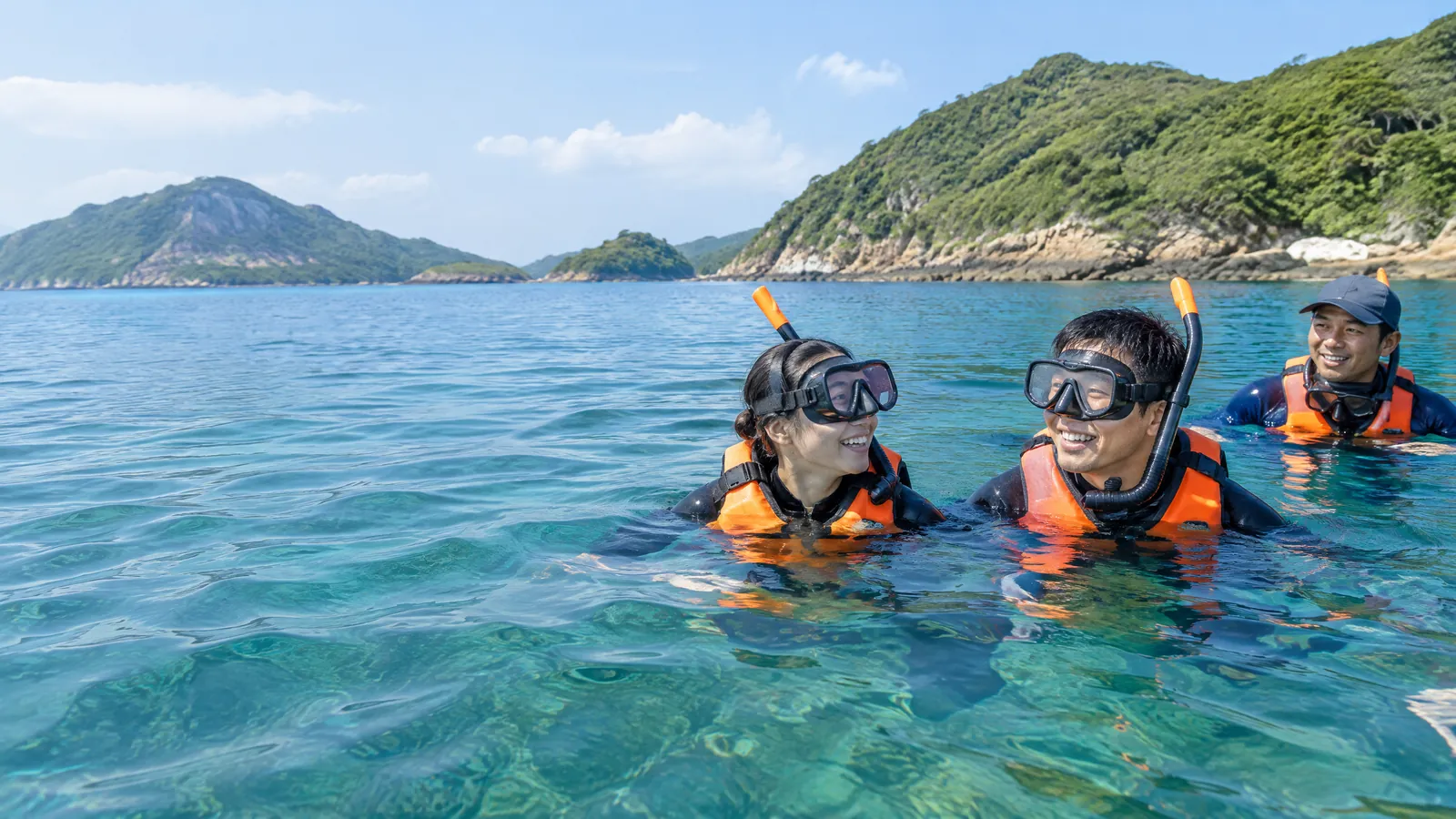
Illustration of surface snorkelling preparation for a Hong Kong activity
Illustration · surface snorkelling preparation with a conservative return plan.
Guide · 02

How should you assign supervision before entering the water?

Give every person a named role and a stop signal

Supervision is a task, not a vague promise that someone will be nearby. For surface snorkelling, name a lead guide and identify who watches slower swimmers. For freediving, each breath-hold needs a capable buddy or safety diver. That person watches the diver directly and stays close enough to intervene.

DAN says never to breath-hold dive alone. It also warns against hyperventilating before a dive. A lookout on a boat is not automatically a freediving safety. The watcher needs suitable training, attention, and a clear rescue role. Agree who is watching before anyone descends.

Write one stop signal for discomfort and one signal for a return. Keep them simple. A raised hand, repeated tap, or spoken instruction can work at the surface. Underwater signals require practice. Never rely on a phone, camera, or distant whistle as the only communication method.

The buddy plan must include recovery time. One person dives while the other watches. The watcher does not dive at the same time. Rotate only after the diver has recovered and both people agree. If the buddy is tired, cold, distracted, or uncertain, stop the activity.

Swipe the table to compare all columns.

Completed supervision worksheet for a breath-hold outing
Planning questionExample entry to confirmStop gate
Who is the direct watcher?Named trained buddy or instructor for each breath-hold diverNo named watcher means no descent
Who watches surface swimmers?Guide watches the slowest swimmer and the boat or shore boundaryNo clear coverage means stay together
What ends the activity?Any pain, panic, cold, fatigue, lost contact, or changing conditionsAny participant may call stop
How is help activated?Agreed route to guide, boat crew, shore staff, or emergency servicesDo not improvise during an incident
When can roles rotate?Only after the diver has recovered and both buddies agreeNo simultaneous breath-hold dives
Guide · 03

What breathing and personal limits should you set?

Use training limits instead of a dramatic time target

Breath-hold safety is not a contest. Do not set a public target for seconds, distance, or depth. A target can pressure someone to ignore early warning signs. The correct limit depends on training, conditions, weighting, recovery, and the buddy’s ability to assist. Stay well inside the least experienced diver’s current skills.

DAN explains that hyperventilation lowers carbon dioxide and can delay the urge to breathe. That can allow dangerous hypoxia to develop before a diver recognises the problem. Breathe normally before the final inhalation. Do not use rapid breathing or long forced exhalations to extend a hold.

Use a conservative surface interval after every breath-hold. Recover fully before talking, swimming hard, or preparing for another descent. End the session when breathing feels unusual, concentration drops, or recovery takes longer. A diver who feels unwell should signal, reach support, and leave the water.

Weighting and equipment also need a trained review. Do not borrow unfamiliar weights and guess the amount. Do not dive with a camera, fins, line, or mask that changes your movement without practice. Ask an instructor to check the setup. Personal medical questions belong with a qualified physician.

  • No hyperventilation, forced breathing, or breath-hold challenge.
  • No descent beyond the trained limit or the buddy’s rescue capability.
  • Recover at the surface before any role change or second attempt.
  • Stop for pain, panic, unusual breathing, confusion, cold, or fatigue.
Illustration of a guide planning supervision and stop signals for breath-hold activity
Illustration · a guide reviewing roles, conditions, and stop signals.
Guide · 04

How do you check a Hong Kong site and forecast?

Treat the meeting point and water conditions as safety controls

A good plan names the proposed entry and exit, not just ‘Sai Kung’. Ask how the group reaches the water, where the boat waits, and how a tired swimmer returns. Confirm the expected water time, shade, drinking water, toilets, and a place to warm up. These practical details affect judgment and stamina.

Hong Kong’s LCSD says swimmers should know their ability and avoid swimming alone. It also says to stay out during thunderstorms and not rely on swimming aids. Its rules say not to swim in the dark. Apply those principles to snorkelling. A float can support visibility, but it does not replace supervision or swimming ability.

Check the forecast and the operator’s go or no-go process on the day. Ask how wind, waves, current, rain, visibility, water temperature, and boat traffic change the plan. Do not pressure the crew to launch because transport has already been arranged. A cancellation can be the correct safety decision.

Check water-quality notices when using a managed beach or shore entry. GovHK explains that heavy rain can worsen beach water quality and advises avoiding swimming for up to three days afterward. It also directs the public to current gradings and forecasts. A private cove or boat site still needs a current local assessment.

Guide · 05

When is formal freediving training the safer next step?

Separate an introduction from rescue competence

A supervised snorkelling outing can answer whether you enjoy the water. It does not teach you to rescue a blackout, manage a line, or plan a depth session. If your goal is repeated descents, choose instruction rather than copying a video. The instructor should explain prerequisites, scope, equipment, rescue practice, and assessment.

For a focused skills route, compare freediving rescue training Hong Kong with your actual role. Ask about a freediving safety and rescue course Hong Kong. Confirm who may attend and what practical sessions cover. Ask which current qualifications are expected. Course scope must be confirmed directly.

An agency pathway may suit someone who wants structured progression. Ask about SSI Freediver certification Hong Kong when certification is the goal. The SSI Freediver course Hong Kong route still depends on instructor assessment, schedule, conditions, and applicable requirements. Do not assume a course card makes every future dive suitable.

Training is also a chance to practise stopping. A responsible instructor should welcome questions and explain when conditions are unsuitable. Certification does not remove judgment. Keep using direct buddy supervision, conservative limits, and a pre-dive briefing after training. Use a qualified physician for individual health clearance.

Swipe the table to compare all columns.

Decision worksheet: choose the next step from the group’s real goal
Group situationMost suitable next enquiryDecision gate before booking
Mixed ability group seeking scenerySurface snorkelling with guide, flotation, and a clear return planEveryone can follow signals and exit comfortably
Confident swimmer curious about one descentAsk for an instructor-led introduction, not an unsupervised challengeDirect watcher, briefing, and conservative scope are confirmed
Participant wants repeated depth practiceDiscuss a recognised freediving course and prerequisitesInstructor explains rescue skills, limits, and assessment
Buddy wants to assist other freediversDiscuss dedicated safety and rescue trainingThe course matches the intended role and current ability
Weather, health, or confidence is uncertainPause the booking and seek operator or medical guidanceNo one is pressured to enter the water
Illustration of water safety rescue training relevant to freediving supervision
Illustration · water-safety practice; it does not depict a specific course or incident.
Guide · 06

What should you send before booking a breath-hold activity?

Turn the plan into a short handover message

Send the operator one accurate message rather than several vague questions. State the group size, ages, swimming ability, breath-hold experience, and preferred date. Say whether you want surface snorkelling, an introductory descent, or formal training. Mention pregnancy, medical questions, seasickness, or accessibility needs privately and honestly.

Ask for the proposed meeting point, entry or boat arrangement, and expected water time. Confirm the guide-to-participant ratio, equipment, flotation, and emergency plan. Ask how weather decisions are made. Request the cancellation wording, payment channel, and rescheduling terms in writing. Confirm fees and availability for your date.

Use the completed worksheet below during the reply. Do not mark a row complete because an advertisement uses reassuring language. Mark it complete only when the operator gives a clear answer. Keep the message and reply together. That record helps the group make a calm decision later.

If the answer changes from surface snorkelling to breath-hold training, restart the safety review. Reassign the direct watcher. Recheck the conditions and equipment. Confirm the training level. A small change in format can change supervision and rescue needs.


  • Group size, ages, swimming ability, and recent water experience.
  • Activity requested, preferred date, language, accessibility, and health questions.
  • Meeting point, site or boat plan, equipment, flotation, and guide coverage.
  • Weather decision, emergency route, payment terms, cancellation, and rescheduling wording.
A sensible next step

Take the question with you

A breath-hold activity safety plan is a decision tool, not a promise that conditions will cooperate. Choose surface snorkelling or structured freediving first. Then assign direct supervision, set conservative limits, check weather and water quality, and agree the stop plan. Message DiveHarbour on WhatsApp at https://wa.me/85294976438 with the completed handover. Ask for the current arrangement and written terms before payment. Stop if the plan becomes unclear.

Questions to ask

Common questions

Is snorkelling safer than freediving for every person?

They have different risks. Surface snorkelling avoids deliberate breath-hold descents, but it still requires swimming ability, supervision, and suitable conditions. Freediving adds breath-hold, depth, and rescue demands. Choose the format that matches the least experienced participant, and confirm the operator’s plan before entering the water.

Can I practise freediving during a Hong Kong snorkelling trip?

Do not assume that it is included. Ask the operator whether the confirmed activity provides appropriate instruction, direct supervision, and a defined safety scope. If not, remain at the surface. Choose a dedicated freediving course for structured breath-hold practice.

Why is hyperventilating dangerous before a breath hold?

Hyperventilation can lower carbon dioxide and delay the normal urge to breathe. A diver may then become dangerously hypoxic before recognising the warning. Follow formal training, breathe normally, use conservative limits, and never dive alone.

What should happen if weather changes after booking?

Ask for the written weather and cancellation terms before payment. The operator may cancel, alter, or postpone an activity when conditions are unsuitable, but no replacement date should be assumed. Contact the operator promptly and follow the confirmed policy.

Do I need a freediving certificate to ask about an activity?

You can enquire without inventing experience or a qualification. Tell the operator your actual swimming and breath-hold background. A supervised introduction, surface snorkelling, or formal course may be appropriate. Suitability, prerequisites, and availability must be confirmed directly.

Further reading

Official sources worth checking

  • DAN Freediving Safety Awareness

    DAN states that breath-hold divers should never dive alone, should avoid hyperventilation, and should use briefings covering risks, breath control, rescue, and resuscitation.

  • DAN Freediving Safety

    DAN describes direct buddy contact, training, appropriate weighting, staying within personal limits, and the need for a trained buddy or safety diver.

  • Hong Kong LCSD General Rules on Water Safety

    LCSD advises swimmers to know their ability, avoid swimming alone, stay out during thunderstorms, avoid relying on swimming aids, and avoid swimming in darkness.

  • GovHK Beach Water Quality

    GovHK explains current beach grading and forecasting, warns that heavy rain can worsen water quality, and advises avoiding swimming for up to three days after heavy rain.

Continue exploring

Keep comparing practical questions before you choose a course, activity or preparation step.

Freediving & Snorkelling · Updated 2026-09-26

AIDA 2 vs AIDA 3 freediving: choosing your next level

Compare “AIDA 2 vs AIDA 3 freediving”, “freediving safety and rescue course progression” and “which freediving course level should I take”; ask DiveHarbour about fit, safety and next steps.

AIDA 2 vs AIDA 3 freediving

Freediving & Snorkelling · Updated 2026-09-26

Freediving vs Snorkelling Safety in Sai Kung

Compare freediving vs snorkeling safety and Sai Kung snorkeling vs freediving, with clear guidance on breathing, buddies, depth and choosing a suitable water activity.

freediving vs snorkeling safety

Freediving & Snorkelling · Updated 2026-09-26

AIDA 2 Freediving Course to 20 Metres in Hong Kong

Explore the AIDA 2 freediving course 20 metres Hong Kong, with structured pool and depth training, safety skills and a clear route to enquire with DiveHarbour.

AIDA 2 freediving course 20 metres Hong Kong
Your next step

Ask about diving courses

Message DiveHarbour on WhatsApp with your group size, swimming and breath-hold experience, preferred date, and whether you want surface snorkelling or structured freediving. Ask for the proposed site, supervision plan, equipment, weather decision, emergency arrangements, current price, and written terms before payment.

Ask about diving courses
English price list for 21 DiveHarbour courses and activities, with fees per person in Hong Kong dollars
Tap the price list to view it at full size.

Plan your next dive

Course fees, clearly set out

Compare our published course and activity fees before choosing your next step. All prices are per person in Hong Kong dollars.

Before you book, we confirm prerequisites, materials, certification, equipment, venue and boat arrangements in writing. Ask us about fees for courses not listed here.

All fees are non-refundable. Make-up sessions are subject to the written terms.

Read all course fees
DiveHarbour course and activity fees per person in Hong Kong dollars
Course / activityPer person
Pool / confined-water try scubaHK$870
Boat-based try scuba — one diveHK$1,020
NAUI Open Water Scuba Diver — group courseHK$4,590
Junior Open Water courseHK$4,590
Junior Advanced courseHK$3,680
Family try scubaHK$970
NAUI Advanced Open Water Scuba DiverHK$3,570
NAUI Rescue Scuba DiverHK$3,570
Basic Life Support: CPR and first aidHK$1,430
Diving emergency oxygen courseHK$1,330
Rescue and first aid course bundleHK$4,590
Deep Diver specialtyHK$3,270
Enriched Air Nitrox Diver specialtyHK$1,480
Night Diver specialtyHK$2,550
Wreck Diver specialtyHK$3,570
Underwater Navigation specialtyHK$2,450
Search and Recovery specialtyHK$2,450
Underwater Photography specialtyHK$2,040
Hong Kong Fun Dive — two divesHK$580
Sai Kung boat diving — two divesHK$580
Tung Ping Chau boat diving — two divesHK$640