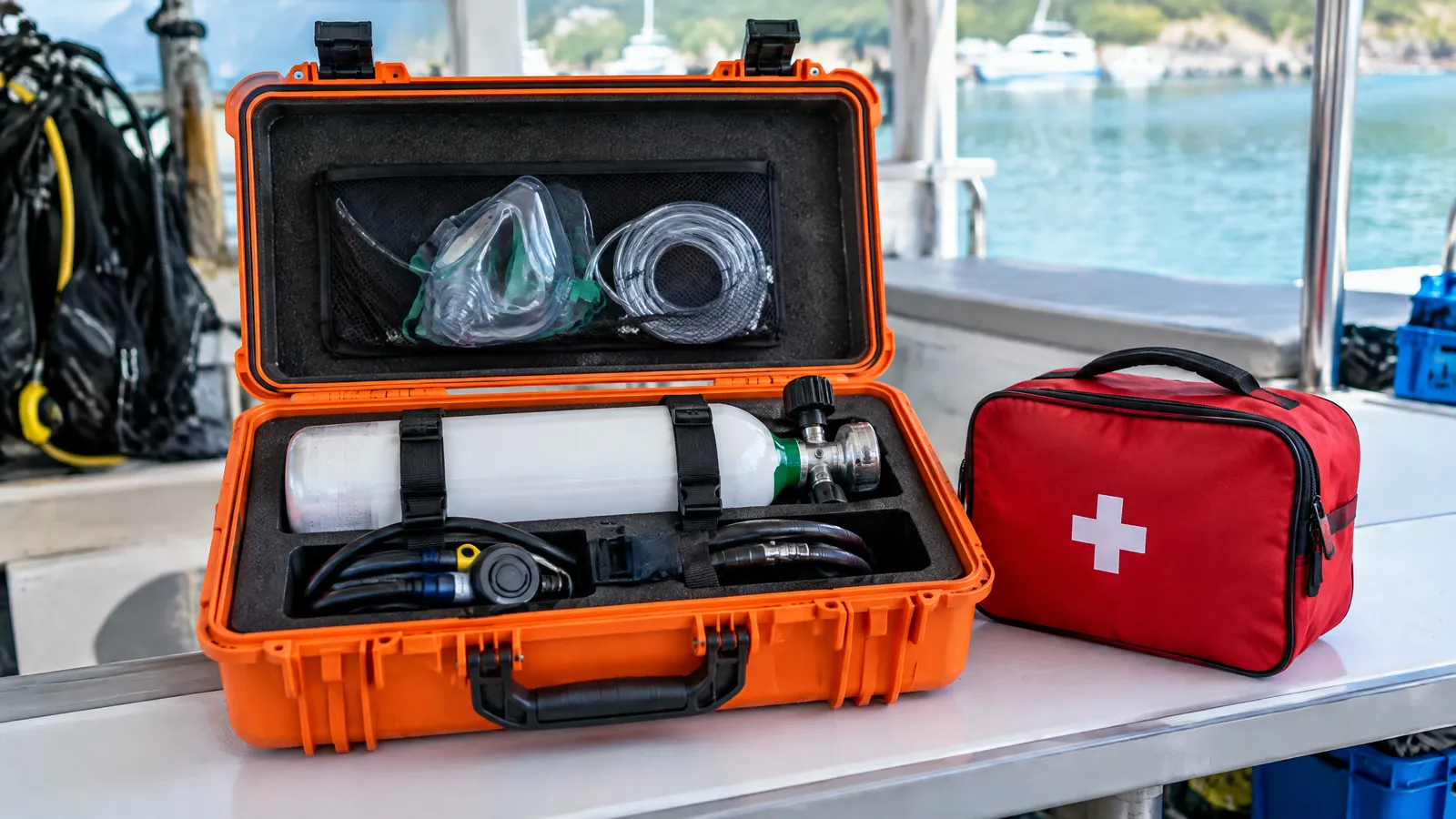
Emergency oxygen training path for Hong Kong divers
An emergency oxygen training path should match your role, current first-aid skills and diving responsibilities. Start with hands-on primary and secondary care. Add dive-specific emergency oxygen training when your role may involve a diving incident. Then practise a clear response plan with equipment, communications and professional-care escalation. This guide provides a three-gate decision tool, a comparison table and a completed enquiry worksheet. It does not replace emergency services, medical advice or formal instructor-led training.
Illustration · mapping an emergency oxygen training path.
Instructor qualifications
One clear teaching conversation from first breath to next step
DiveHarbour brings together scuba teaching, swimming, lifesaving and water-rescue experience so you can ask practical questions before choosing a course.
PADI teaching backgroundTeaching experience across recognised scuba learning pathways.
SSI teaching backgroundClear explanations when you are comparing agency routes.
NAUI teaching backgroundA practical, standards-aware approach to learning and progression.
Swimming foundationWater confidence and calm, step-by-step practice matter.
Lifesaving experienceSurface awareness and prevention stay part of the conversation.
Pool rescue experienceControlled practice can build confidence before open water.
Beach rescue experienceLocal water context informs sensible preparation.
Kayak rescue experienceA wider water-safety perspective supports good judgement.
PWC rescue experienceAsk about the right learning route for your experience and goals.
A useful fact to keep in mind
Decision tool: this article uses three gates—baseline care, dive-specific oxygen and role fit—to structure an emergency oxygen training path.
Start here
What should an emergency oxygen training path include?
How does an emergency oxygen training path differ from one course?
Think in gates, not labels. Gate one builds general life-support and first-aid capability. Gate two adds oxygen skills for suspected dive injuries. Gate three checks whether your training fits your actual role.
An EFR CPR and first-aid course Hong Kong enquiry can start the discussion. Ask which organisation issues the certificate. Ask whether training includes practical skill assessment. Ask how long the certificate remains current for your next diving course.
Emergency oxygen is not a replacement for CPR or first aid. It is also not diagnosis. A trained responder still activates local emergency services. The responder follows current training, protects the airway and monitors breathing.
DAN describes BLS, Emergency Oxygen for Scuba Diving Injuries and Diving First Aid as different course options. That structure supports a pathway approach. Your provider may use another agency or naming system. Confirm the local scope in writing.
Start with hands-on primary and secondary care skills.
Add oxygen training when your role involves dive incidents.
Check prerequisites, currency rules and practical assessment.
Plan communications and professional-care escalation.
Never treat a certificate as personal medical clearance.
Illustration · instructor briefing before practical response training.
Guide · 02
When should primary and secondary care come first?
What does EFR primary and secondary care actually cover?
Primary care addresses life-threatening emergencies. PADI describes CPR, spinal-injury response and recognition of serious conditions. These skills support the first minutes before professional care arrives.
Secondary care addresses injuries or illness that are not immediately life-threatening. PADI includes bandaging, splinting, burn care and basic assessment. Scenario practice helps you remember the sequence under pressure.
Read the EFR Primary and Secondary Care course Hong Kong page before comparing providers. Then ask about class time, language, manikin practice and assessment. Online theory alone may not meet a diving prerequisite.
A renewal question needs its own check. The EFR CPR first aid renewal Hong Kong option may suit someone with an expiring record. Confirm whether your intended agency accepts the refresher. Do not assume every renewal transfers to every course.
The phrase Emergency First Response course Hong Kong can describe a broader route. Ask which modules are included. Ask whether adult, child or AED content changes the certificate scope.
Check whether the course includes both primary and secondary care.
Ask for in-person practice and a skills assessment.
Bring the issuing organisation and completion date.
Confirm the receiving course's currency requirement.
Choose a refresher when practice has lapsed.
Guide · 03
When does dive-specific oxygen training make sense?
Who benefits from an Emergency Oxygen Provider course?
Dive-specific oxygen training adds a different layer. DAN explains how to recognise decompression-illness signs. It teaches oxygen first aid for an injured diver. It also emphasises early response and professional-care escalation.
Use the Emergency Oxygen Provider course Hong Kong page to ask about the local format. Ask who will use the unit. Ask where it will be stored. Ask who checks the cylinder and delivery devices.
The Emergency Oxygen for Scuba Diving Injuries course Hong Kong route is focused. NAUI states that current DAN BLS, CPR and first-aid training, or another nationally recognised full CPR qualification, is a prerequisite. Verify the current local rule.
DAN warns that oxygen use belongs within basic life support. It must not delay CPR. It also warns that oxygen equipment can cause serious harm when handled improperly. Formal training matters.
Oxygen training can support divers, guides, boat crews and shore teams. It does not authorise diagnosis. It does not replace an ambulance, emergency department or hyperbaric consultation.
Learn recognition, equipment choice and delivery within course scope.
Confirm a current BLS or CPR prerequisite.
Identify the person responsible for the oxygen kit.
Keep local emergency contacts with the equipment.
Escalate suspected injury to professional medical care.
How can a diver compare EFR and oxygen steps without overtraining?
Your role should drive the sequence. A recreational diver may need current CPR and first aid. A boat crew member may also need dive-specific oxygen practice. A professional candidate may need evidence that meets an agency deadline.
Do not choose by course title alone. Compare prerequisites, hands-on content, certificate currency and team responsibilities. Ask whether the instructor can document the exact modules completed.
A Rescue Diver candidate should check the receiving agency first. PADI says Rescue Diver, Divemaster and Instructor candidates need current EFR Primary and Secondary Care training. PADI also says online-only training does not meet that prerequisite.
A guide who already has primary and secondary care may need the oxygen gate next. A new diver may need baseline care first. A dive centre may want several trained people. The best route depends on coverage, not status.
Recreational diver: maintain general CPR and first aid.
Boat crew: add oxygen equipment and incident practice.
Rescue candidate: match the receiving agency's currency rule.
Dive leader: document roles, contacts and handover steps.
Team manager: check coverage across every operating shift.
Swipe the table to compare all columns.
Role-based pathway comparison for an enquiry
Role
Start here
Decision gate before booking
Certified recreational diver
Primary and secondary care
Will this remain current for planned trips?
Boat crew or guide
Primary and secondary care, then oxygen
Who checks the kit and calls emergency services?
Rescue or professional candidate
Agency-required CPR and first aid
Does the certificate meet the receiving agency's currency rule?
Dive-centre manager
Role map for all staff
Are trained responders available on each operating day?
Returning responder
Refresher or renewal review
Has the instructor confirmed accepted prior training?
Guide · 05
How should you compare price, evidence and practical coverage?
What should a Hong Kong training quote show?
Compare the complete training output, not only the fee. Ask whether the quote includes manuals, certification, equipment practice, instructor time and reassessment. Ask whether a cylinder or delivery device is used during practice.
The approved reference list gives HK$1,430 per person for Basic Life Support: CPR and First Aid. It gives HK$1,330 per person for diving emergency oxygen training. These are planning references. Confirm current inclusions before registration.
The list notes that course names, skills, manuals and certificates should be confirmed before enrolment. That caveat matters. A low headline price may exclude materials or a separate practical component.
Use the worksheet below during a WhatsApp enquiry. Write the answer, not a promise. Record the issuing organisation. Record the date and the next prerequisite. Then compare two quotes on the same basis.
Record the per-person price and every included item.
Ask whether hands-on equipment practice is included.
Confirm certificate title, issuer and validity window.
Ask about missed sessions, rescheduling and written terms.
Keep the quote beside your progression plan.
Swipe the table to compare all columns.
Completed illustrative enquiry worksheet
Question to send
Example answer to record
Decision
Which course comes first?
BLS: CPR and First Aid, HK$1,430 reference.
Book baseline care if no current record.
What follows baseline care?
Emergency oxygen, HK$1,330 reference; local scope confirmed.
Add oxygen when the role supports dive incidents.
What certificate is issued?
Named agency, course title and completion date supplied.
Check acceptance with the next course.
What practical work is included?
Manikin, bandaging and oxygen-device practice listed.
Prefer a quote with hands-on work.
What happens if I miss the date?
Written attendance and rescheduling terms supplied.
Do not assume a replacement date.
Illustration · team planning and handover discussion.
Guide · 06
How do you turn training into a usable response plan?
What should you prepare after choosing your next step?
Training becomes useful when the team can act together. Put the emergency number beside the oxygen kit. Add the boat location and the nearest practical landing point. Name the person who contacts emergency services.
Ask the instructor to explain the handover. Record the diver's symptoms, time, last dive and first response. Keep the information clear. Do not delay professional help while completing paperwork.
DAN advises calling local emergency services first after a dive accident. It also says oxygen first aid is not definitive care. The responder should keep monitoring airway, breathing and circulation.
Use a refresher when skills feel stale. Use a new course when your role has changed. Use medical advice for your own health or fitness questions. A provider can explain training. A qualified physician handles personal medical clearance.
For a current Hong Kong route, send DiveHarbour your certificates, role, preferred dates and group size. Ask for the exact course scope, current price and written booking terms. Fees are non-refundable unless written terms state otherwise.
Post local emergency contacts with the response equipment.
Assign one person to call and one to assist.
Practise clear symptom and dive-history handover.
Check oxygen equipment only within your training scope.
Review the plan after every exercise or incident.
A sensible next step
Take the question with you
A useful emergency oxygen training path starts with hands-on primary and secondary care. It adds dive-specific oxygen skills when your role requires them. It finishes with clear team roles, equipment checks and professional-care escalation. Compare the certificate, practice and currency rules before comparing price. For a current Hong Kong option, message DiveHarbour on WhatsApp at https://wa.me/85294976438 with your training history and intended role.
Questions to ask
Common questions
Should I take CPR and first aid before emergency oxygen training?
Usually, yes. DAN and NAUI list current BLS, CPR and first-aid training as a prerequisite for their emergency oxygen course. Confirm the local requirement before booking.
Is EFR Primary and Secondary Care the same as emergency oxygen training?
No. EFR covers general life-support and first-aid skills. Emergency oxygen training focuses on oxygen first aid and suspected diving injuries. They can form a pathway.
Does an oxygen certificate let me diagnose a diving injury?
No. Training supports recognition and first aid. It does not provide diagnosis or definitive treatment. Activate emergency services and follow current professional guidance.
How often should I renew CPR or first-aid training?
Ask the receiving agency and instructor. PADI recommends refreshing EFR skills every year and requires current training for some professional pathways. Local acceptance must be confirmed.
What should I include in a DiveHarbour enquiry?
Include your current certificates, issuing organisations, completion dates, diving role, preferred language, group size and preferred dates. Ask for scope, price and written terms.
DAN distinguishes Basic Life Support: CPR and First Aid, Emergency Oxygen for Scuba Diving Injuries and Diving First Aid. It states that current BLS, CPR and first-aid training is a prerequisite for its emergency oxygen course.
PADI describes primary care as response to life-threatening emergencies and secondary care as care for injuries or illness that are not immediately life-threatening. It also explains refresher and professional-course currency requirements.
NAUI says its course is powered by DAN, teaches emergency oxygen first aid and recognition of decompression illness, and lists current full CPR training as a prerequisite.
DAN says emergency oxygen first aid is important before professional medical and hyperbaric care, must not delay CPR, and is not a substitute for definitive care or formal training.
Continue exploring
Three useful next reads
Keep comparing practical questions before you choose a course, activity or preparation step.
Rescue & First Aid · Updated 2026-09-26
Rescue Diver prerequisites in Hong Kong
Rescue Diver prerequisites and PADI Rescue Diver prerequisites Hong Kong explained: check certification, first aid and medical requirements before enquiring with DiveHarbour.
Rescue Diver fitness preparation for confident scenarios
Rescue Diver fitness preparation and a Rescue Diver scenario checklist help you assess readiness, practise calmly and discuss training with DiveHarbour in Hong Kong.
First Aid Preparation for the Assistant Instructor Path
Understand first aid certification before a dive assistant instructor course and how to prepare for a first aid instructor course, without confusing first aid training with instructor credentials.
Compare our published course and activity fees before choosing your next step. All prices are per person in Hong Kong dollars.
Before you book, we confirm prerequisites, materials, certification, equipment, venue and boat arrangements in writing. Ask us about fees for courses not listed here.