

A useful fact to keep in mind
The official SSI recreational sidemount outline lists 5 academic sessions, 1 confined-water session and 3 open-water sessions, with a maximum training depth of 30 m / 100 ft or the diver’s certification depth, whichever is deeper.
Check the sourceChoosing a sidemount diving course Hong Kong divers can discuss
What sidemount changes in your diving setup
Sidemount changes where your cylinders sit and, with it, the way you enter the water, organise your gas and hold your body in the water. Instead of carrying one tank directly along your back, cylinders are clipped beside the torso. This can make the kit feel less awkward on a boat ladder or shore entry, but it also creates more attachment points, hoses and checks to understand. The aim is not simply to look different: it is to build a balanced system that you can operate calmly with a buddy.
A good conversation starts with your normal diving rather than a shopping list. Tell the instructor how many dives you have, what exposure protection you use, whether you usually dive from boats or shore, and which part of back-mounted equipment you hope to change. Some divers are drawn to easier movement on land; others want better access to valves, a more streamlined profile or a configuration that can be adjusted as gas is consumed. Each benefit depends on correct sizing, weighting, cylinder rigging and practice.
The equipment is usually assembled as a system: harness, buoyancy device, regulators, cylinder clips, bungees, weights and suitable cylinders. Small changes in cylinder diameter, valve position or hose routing can alter trim. Before booking, ask which items are supplied, which personal items you should bring, and whether you will practise with one cylinder before progressing to two. A clear equipment plan is more useful than assuming every sidemount set-up feels the same.
- Describe your recent diving and comfort level honestly; sidemount is a configuration skill, not a shortcut around buoyancy practice.
- Confirm the recreational boundary, included equipment, cylinder type, session format and instructor-supervised practice before paying.

A recreational sidemount diving course Hong Kong divers can consider
Recreational skills, comfort and practical scope
A recreational programme should concentrate on controlled, repeatable skills: assembling and checking the rig, entering and exiting safely, clipping and unclipping cylinders, maintaining a stable trim, monitoring both gas supplies and communicating with a buddy. You should have time to pause, adjust and repeat rather than being pushed through a complicated configuration. The exact syllabus and certification prerequisites vary by training agency, so ask which agency standard applies to the course you are considering.
SSI publishes a recreational sidemount programme with Open Water Diver certification as a prerequisite, and lists a maximum training depth of 30 m / 100 ft or the diver’s certification depth, whichever is deeper. That is an agency-specific published standard, not a universal permission for every sidemount diver or every local dive. The instructor should confirm the applicable certification depth, local conditions and what is actually planned for your training. You can read the official SSI outline in the references below. The official SSI recreational sidemount outline lists 5 academic sessions, 1 confined-water session and 3 open-water sessions, with a maximum training depth of 30 m / 100 ft or the diver’s certification depth, whichever is deeper.
Training should leave you able to explain your gas plan, identify a loose or poorly positioned cylinder, and make a conservative decision when the system does not feel right. It should not be presented as technical sidemount, cave training, decompression training or a licence to enter overhead environments. Those pathways involve separate experience, equipment, procedures and supervision. If your long-term interest is technical diving, say so early so the instructor can explain which recreational skills transfer and which do not.
- The official SSI outline lists 5 academic sessions, 1 confined-water session and 3 open-water sessions; DiveHarbour will confirm the actual local format rather than implying every course is identical.
- A sidemount course does not replace a refresher if your buoyancy, mask, regulator or emergency skills are rusty.

Suitability and next steps for sidemount training
Talk through experience, equipment and goals
Sidemount can suit a certified diver who enjoys learning equipment details and is willing to make small, careful adjustments. It may be particularly interesting if a back-mounted cylinder feels uncomfortable on entries, if you want to improve streamlining, or if you value being able to see and reach your valves. It is less suitable as an impulse booking when you have not yet developed steady buoyancy, cannot comfortably clear a regulator or are hoping to solve a medical or fitness concern through equipment alone.
Start by sending your certification level, approximate logged-dive experience, last dive date, usual exposure suit, height and any equipment you already own. Mention whether you prefer pool or confined-water preparation before open water, and whether you need rental cylinders or a complete rental rig. These details help the team suggest a realistic conversation instead of promising a date or a configuration before checking availability.
If your next goal is broader confidence, compare this specialty with PADI specialty diving courses Hong Kong, where the emphasis may be a different skill set. Divers who are still building core experience might first review PADI Advanced Open Water Diver Hong Kong and discuss whether additional guided dives would make sidemount learning more comfortable.

How a sidemount session can be planned
From briefing to debrief without rushing the configuration
A sensible session begins with a briefing that names the equipment, hand signals, buddy roles, entry method and limits for the day. On land, you can check clips, hose routing, cylinder placement and weighting without the pressure of a moving boat. In confined water, the instructor can observe your trim and buoyancy while you practise one change at a time. The purpose is to make the configuration familiar before adding distance, current or task loading.
Underwater, expect frequent pauses for a quick bubble check, body-position adjustment or gas review. You may practise reaching valves, moving a cylinder slightly forward or back, and clipping it securely while maintaining awareness of your buddy. Good coaching explains why a change is needed and lets you feel the difference. If you are struggling to hold position, stop and communicate rather than compensating with hurried finning or excessive weight.
The debrief should record what worked, what needs repetition and what equipment settings to remember. Ask how the next session will build on those observations, whether the planned site is appropriate for your current control, and what you should practise on ordinary dives. A short written checklist can prevent small configuration details from being forgotten between Hong Kong diving days.
- Agree a stop signal and a simple plan for an uncomfortable or poorly fitting cylinder before entering the water.
- Treat environmental conditions, boat movement, visibility and current as reasons to adjust the plan, not tests to endure.

Choosing related training without confusing the scope
Match the specialty to the problem you actually want to solve
Sidemount is one way to improve equipment familiarity and body position, but it is not automatically the best answer to every diving goal. If you want to become more confident with direction, bearings and search patterns, compare the underwater navigation or search and recovery specialty. If depth planning is the priority, discuss the Deep Diver specialty course Hong Kong separately; depth training has its own limits and should not be folded into a sidemount promise.
Gas choice is another separate decision. An Enriched Air Nitrox course Hong Kong can address oxygen analysis, planning and the agency’s stated limits for enriched air, but it does not by itself teach sidemount rigging or trim. A sidemount configuration also does not make deeper, longer or decompression dives appropriate. Keep each objective visible so your training history remains easy to explain to future instructors and buddies.
For Hong Kong boat diving, ask practical questions about cylinder collection, storage, rinsing, loading and the space available for your harness. For shore sessions, ask about carrying the equipment to the entry and whether the route includes uneven ground. These details affect comfort and safety as much as the underwater skills.

Questions to settle before you enquire
A clear message leads to a clearer recommendation
Your enquiry does not need to be long. Include your certification agency and level, approximate number of logged dives, last dive, preferred dates, equipment needs and the result you hope to achieve. Ask whether the course is recreational, which training agency standard is used, how many in-water sessions are expected, and what costs are included. DiveHarbour can then explain the current arrangement, prerequisites and next step without treating a generic description as a confirmed booking.
If you have pain, breathlessness, an ear or sinus problem, recent surgery, or uncertainty about fitness to dive, pause and seek appropriate medical advice. An instructor can explain training requirements, but cannot diagnose you or provide medical clearance. Never force equalisation or breath-hold through pain. A conservative decision to postpone is part of competent diving, not a failure to complete a course.
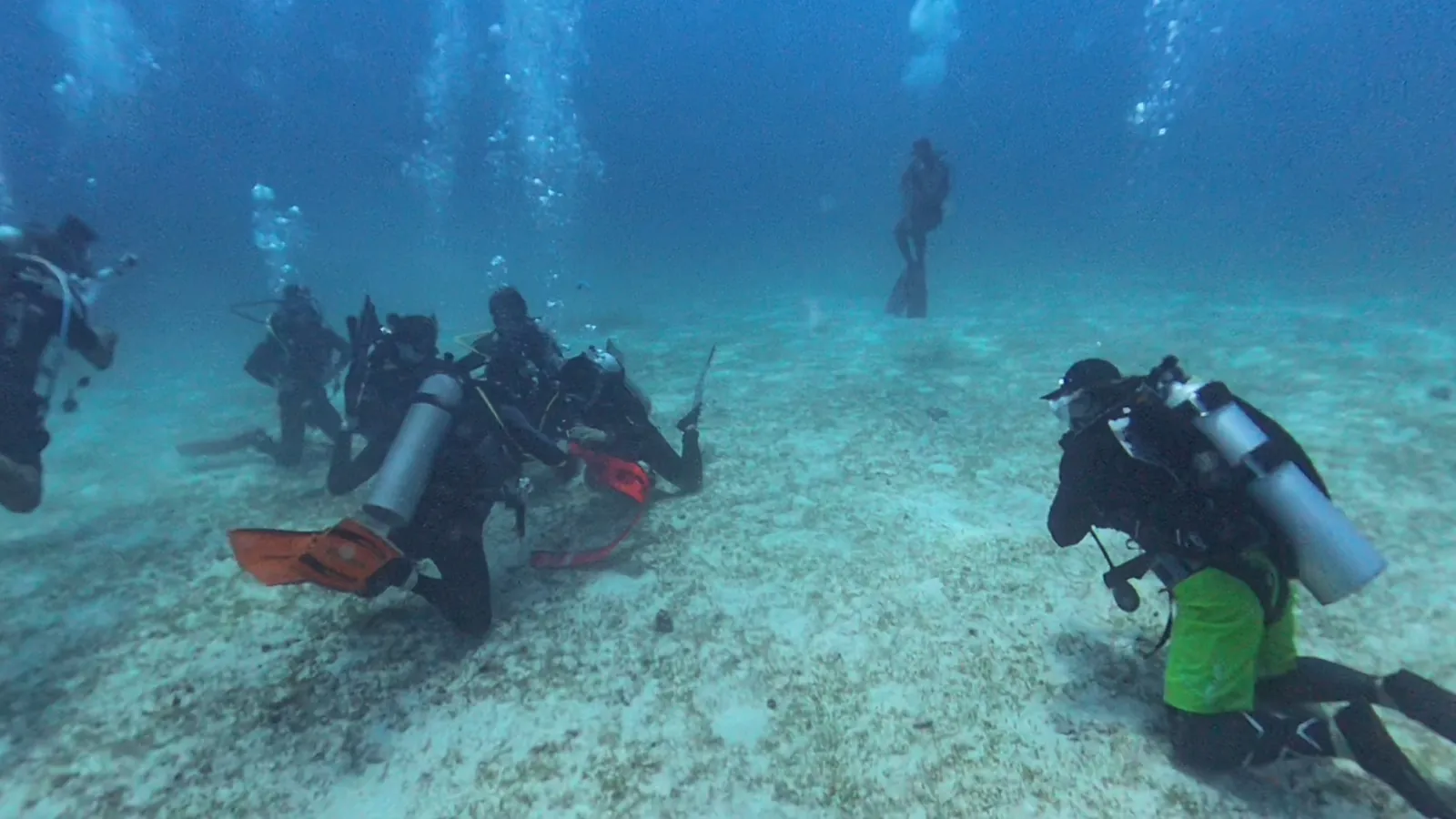
Compare the sidemount decision before booking
| Your situation | Useful next discussion | What to confirm |
|---|---|---|
| Certified diver, recent dives and curious about configuration | Introductory recreational sidemount coaching | Agency prerequisite, rig rental, cylinder plan and confined-water practice |
| Certified but rusty or uncertain with buoyancy | Refresher or guided skills session first | Whether a refresher is recommended before sidemount and how skills are assessed |
| Interested in caves, wreck penetration or decompression | Separate technical pathway consultation | Technical prerequisites, equipment, experience and strict overhead/decompression boundaries |
| Not yet certified or unable to describe a stable basic setup | Beginner or foundation training | Entry-level course requirements before a specialty configuration |
Sidemount Diving in Hong Kong — common questions
Who is a sidemount course suitable for?Toggle answer
It is generally aimed at certified divers who want to explore a different equipment configuration and are comfortable practising buoyancy, trim and gas-management skills. Your experience, equipment access and current goals should be discussed with the instructor before training is arranged.
Is recreational sidemount the same as technical sidemount diving?Toggle answer
No. Recreational sidemount training has a different scope from technical-diving programmes, equipment demands and objectives. Ask DiveHarbour to confirm the intended recreational syllabus, equipment requirements and whether the course matches your experience before enrolling.
Do I need to own sidemount equipment?Toggle answer
Not necessarily, but rental availability and fit must be confirmed in advance. Ask which harness, buoyancy device, regulators, cylinders, clips and weights are supplied, and whether you may use your own items after an instructor checks compatibility.
Can I move straight from recreational sidemount into cave or decompression diving?Toggle answer
No automatic progression should be assumed. Cave, penetration and decompression programmes require separate prerequisites, planning, equipment and supervision. A recreational course may develop useful familiarity, but it does not authorise overhead or decompression diving.
Are course fees refundable or can a missed session always be rescheduled?Toggle answer
Fees are non-refundable unless the written booking terms say otherwise. Make-up sessions are available only where those written terms permit them; a rescheduled date is not guaranteed. Read the current cancellation, weather and equipment terms before confirming payment.
Take the question with you
If sidemount appeals because of comfort, trim, valve access or a desire to learn a new configuration, send DiveHarbour your certification, recent experience and equipment needs. Ask for the recreational scope, agency standard, session format, inclusions and written booking terms. That short conversation will show whether sidemount is the right next step, whether a refresher should come first, or whether another specialty better matches your goal.
Sources worth checking
- SSI Recreational Sidemount Diving
SSI lists Open Water Diver certification as a prerequisite, a maximum training depth of 30 m / 100 ft or certification depth whichever is deeper, 5 academic sessions, 1 confined-water session and 3 open-water sessions.
- PADI Technical Diving Tec Sidemount Course
PADI describes its technical sidemount course separately and lists Advanced Open Water certification, age 18 or older and at least 30 logged dives as enrolment requirements, with equivalent agency certifications potentially accepted.
- NAUI Learn to Dive
NAUI identifies sidemount as one of the configurations available through continuing diver education, supporting discussion of configuration-specific training rather than treating it as entry-level certification.
Useful next reads for your plan
If you are still comparing routes, these related pages give you practical questions to bring into your next conversation with an instructor.
Put your plan into practice
Useful planning guides
Advanced Dive Configuration Choices for Hong Kong
Plan your advanced dive configuration choices with a practical worksheet, clear decision points, and a direct check of current details with DiveHarbour.
advanced dive configuration choices
