Scuba instructor career planning is more useful when it becomes a dated decision brief, not a promise that one course guarantees work. Audit your certification history, logged dives, rescue and first-aid currency, medical paperwork, teaching practice, schedule and budget. Then choose whether to proceed toward an Instructor Development Course, strengthen Divemaster experience first, or test an assistant-instructor route. This guide provides two practical worksheets for that decision.
Illustration · a diver reviewing the next stage of a professional career plan.
Instructor qualifications
One clear teaching conversation from first breath to next step
DiveHarbour brings together scuba teaching, swimming, lifesaving and water-rescue experience so you can ask practical questions before choosing a course.
PADI teaching backgroundTeaching experience across recognised scuba learning pathways.
SSI teaching backgroundClear explanations when you are comparing agency routes.
NAUI teaching backgroundA practical, standards-aware approach to learning and progression.
Swimming foundationWater confidence and calm, step-by-step practice matter.
Lifesaving experienceSurface awareness and prevention stay part of the conversation.
Pool rescue experienceControlled practice can build confidence before open water.
Beach rescue experienceLocal water context informs sensible preparation.
Kayak rescue experienceA wider water-safety perspective supports good judgement.
PWC rescue experienceAsk about the right learning route for your experience and goals.
A useful fact to keep in mind
Source-backed fact: PADI lists 60 logged dives to enrol in the IDC and 100 logged dives before attending the Instructor Examination.
What should scuba instructor career planning decide first?
How to make a scuba instructor career planning brief
A professional ambition becomes actionable when you can state the role, route, timing and evidence you need. Do you want to teach entry-level students, guide certified divers, work part time, or build a full-time career? Those aims can share training, but they do not require the same schedule, customer skills or local opportunities. Write the intended role before comparing course names.
Use a six-month horizon rather than an undefined dream. Put the next review date beside your certification, dive log and first-aid expiry. Add the medical statement, work commitments and savings target. This prevents a common mistake. A prerequisite document or practical-experience period may expire or remain incomplete before intensive training begins. A plan succeeds when the next decision is clear.
Name the professional role you want to test first.
Choose a target review date, not an open-ended intention.
Separate agency eligibility from employability and personal fit.
Record every document, expiry date and unresolved question.
Ask a qualified provider to confirm current rules before payment.
Illustration · instructor feedback helps turn eligibility into teaching readiness.
Guide · 02
How should you audit your Divemaster starting position?
Treat the logbook as evidence, not just a dive total
A useful audit goes beyond counting dives. Record the environments, depth ranges, navigation, rescue practice, equipment configurations, weather decisions and moments when you supported another diver. Note what you can explain calmly and what you still perform by memory or with prompting. An instructor-development programme teaches teaching systems; it is not a substitute for a weak foundation in diving judgment.
Compare your record with the PADI Divemaster career path Hong Kong. Also consider how to become a PADI instructor in Hong Kong. These references support planning, but the receiving training organisation decides whether your certification history and documents meet its current standard. Keep copies of cards, logbook pages and first-aid records.
PADI’s published instructor information says an IDC candidate needs Divemaster certification and at least six months as a certified diver. It lists at least 60 logged dives to enrol and 100 dives before the Instructor Examination. It also lists current CPR and first-aid training within 24 months. A physician-signed medical statement must be within 12 months. Treat these as checkpoints to verify, not guarantees of enrolment.
Scan or photograph certification cards and relevant training records.
Mark logged dives that demonstrate leadership, not only sightseeing.
Check CPR, first-aid and medical-document dates separately.
List skills that need supervised repetition before an IDC.
Ask the provider which agency-equivalent credentials it will accept.
Swipe the table to compare all columns.
Career-readiness gatecard for an initial instructor conversation
Gate
Evidence to bring
Ready when
Pause and ask when
Certification route
Cards, agency, issue dates and equivalencies
The provider can map your route to its current standard
A prior agency or crossover is assumed to transfer automatically
Experience
Dated logbook with varied conditions and leadership examples
You can explain decisions and limits, not only totals
The logbook is incomplete or mostly one repetitive environment
Emergency currency
CPR, first-aid, rescue and related certificates
Expiry dates cover the planned training window
A certificate is expired, unclear or not accepted by the agency
Medical paperwork
Current screening record and physician statement if required
The correct current form is complete and understood
A health answer needs professional review or has changed
Teaching evidence
Briefings, demonstrations, feedback and observed support
You can explain a skill simply and receive correction well
You rely on jargon, rushing or unsupervised improvisation
Guide · 03
Should you enter an IDC now or build experience first?
Use a decision gate instead of chasing the fastest route
Review PADI IDC requirements Hong Kong against your own documents. Ask which items are current for the planned intake. Include travel, work leave, accommodation, equipment, examination timing and any agency membership or administrative steps. A written checklist is more reliable than a remembered social-media answer.
Review PADI IDC requirements Hong Kong against your own documents, then ask which items are current for the planned intake. Include travel, work leave, accommodation, equipment, examination timing and any agency membership or administrative steps in the conversation. A written checklist is more reliable than a remembered social-media answer, especially when standards or local arrangements change.
Consider a preparatory period if you have not recently led briefings or assisted students. It may also help if you have managed a group or handled a changing plan. Practise describing skills in plain language. Give one correction at a time. Stop an activity when conditions or a diver’s readiness require it. The aim is not to look confident. It is to make safe, observable decisions under supervision.
Proceed only when every unresolved gate has an owner and date.
Delay for a defined practice block, not vague perfectionism.
Ask what an agency-equivalent credential means in this intake.
Budget time for theory review, feedback and examination preparation.
Keep safety judgment ahead of speed or social pressure.
Illustration · a planning conversation about experience, timing and role fit.
Guide · 04
How can you plan IDC time, cost and logistics realistically?
Make the course decision fit your actual working life
A professional course costs more than tuition. Build a total plan for instruction, study, transport, accommodation, equipment use, medical paperwork and first-aid currency. Include examination travel, membership and a contingency reserve. Ask what is included and what is payable separately. The approved local price list does not provide a professional IDC price. Request a current written quote instead of importing a figure from another city.
Use the PADI IDC cost Hong Kong page as a prompt for a quote conversation, not a price promise. Ask what the PADI Instructor Development Course Hong Kong arrangement includes. Confirm how teaching days are scheduled and which costs remain outside the headline amount. Record payment stages, cancellation terms and the process if an assessment date changes.
PADI’s public guidance says a complete IDC can include Assistant Instructor and Open Water Scuba Instructor components. It is followed by an Instructor Examination. That sequence affects leave and recovery. Protect study time before and after water sessions. Arrange transport with a buffer. Avoid placing a high-stakes client commitment immediately after intensive training.
Request a written quote with inclusions and exclusions.
Add travel, accommodation, documents, membership and contingency lines.
Map every training day against work, family and recovery time.
Ask who handles examination registration and date changes.
Do not pay until the route, scope and terms are clear.
Swipe the table to compare all columns.
90-day planning worksheet for deciding whether to book professional training
Days
Action
Evidence of completion
Decision gate
1–14
Collect cards, logbook, first-aid record and medical paperwork
One dated folder with missing items highlighted
Can a provider review the complete starting position?
15–35
Complete supervised dives, briefings or theory refresh as needed
Instructor feedback and updated logbook entries
Did practice address the specific readiness gap?
36–50
Request two written course conversations and compare scope
Quote, schedule, prerequisites and terms in writing
Are the offers comparable and agency-appropriate?
51–70
Reserve leave, travel, equipment and a contingency budget
Calendar hold, funds available and transport plan
Can you attend without creating unsafe pressure?
71–90
Make the proceed, delay or alternate-route decision
A one-page brief sent to the provider
What is the next action and its review date?
Guide · 05
What should you develop besides technical eligibility?
Build the teaching and service evidence a real role needs
A credential can open a conversation, but employers and students experience your communication, preparation and reliability. Practise a concise briefing, clear demonstration, respectful correction and calm debrief. Ask what a diver understood instead of assuming silence means agreement. Keep examples of feedback and the changes you made afterwards. Reflective practice is stronger evidence than a list of ambitions.
When comparing a scuba instructor course Hong Kong, ask how candidates are observed, coached and assessed. Ask about class size, water environments, equipment access, instructor-to-student contact and support after the course. A provider should be able to explain the learning process without promising a job, salary or automatic certification. Your career plan should include a way to test the day-to-day role.
Add operational skills to the plan. A working professional may brief customers, check equipment, record incidents and answer messages. They must manage time, protect a conservative turnaround and work with a boat or shore team. These habits are not glamorous, but they shape trust. If you prefer guiding to teaching, compare the responsibilities honestly. Do not treat every professional rating as interchangeable.
Practise short explanations without jargon or unnecessary speed.
Invite correction and record how you changed your practice.
Observe customer care, equipment checks and team communication.
Ask how the provider assesses teaching, not only written knowledge.
Test whether the daily role suits your temperament and schedule.
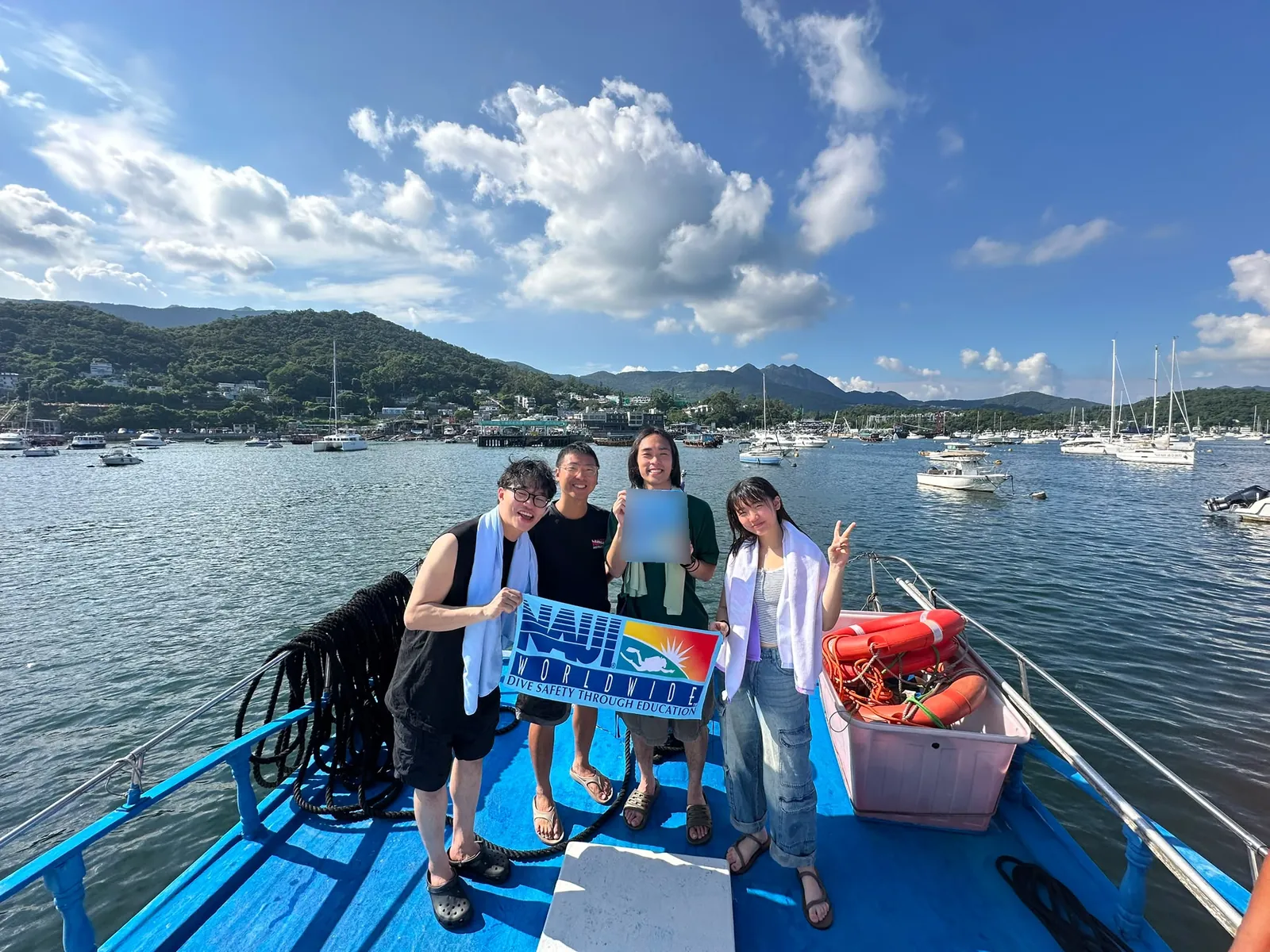
Course photograph · Actual course group photograph: professional development happens with supervised practice and feedback.
Guide · 06
How should you review the career decision before payment?
Use a written handover so your next conversation is efficient
Before committing, write a one-page handover for the training provider. Include your agency history, current rating and logged-dive summary. Add rescue and first-aid dates, medical-document status, recent teaching or leadership examples, preferred training window, budget boundary and unanswered questions. This gives the instructor something concrete to review. It also reduces the chance that an important caveat disappears in a rushed chat.
Take that handover to the provider’s scuba instructor course Hong Kong conversation. Ask for a written response to each open gate. Confirm who makes the final eligibility decision, which standards apply and what the quoted scope covers. Ask what happens if you need more preparation. A responsible “not yet” with a practice plan is more valuable than a confident but vague booking.
Revisit the brief after every major change: a new certification, long break, injury, move, job change or updated agency rule. DAN notes that fitness to dive includes physical and medical fitness. It also notes that waves or currents can make a recreational dive more demanding exercise. Seek individual medical advice when indicated. Planning cannot provide medical clearance.
Send one dated handover rather than scattered messages.
Ask the provider to label each item confirmed, pending or not applicable.
Keep the quote, terms, medical paperwork and decision together.
Reassess after health, work, location or agency changes.
Choose the next safe action, then set a review date.
A sensible next step
Take the question with you
Good scuba instructor career planning ends with a documented decision, not pressure to book. Audit your certification route, logbook, rescue and first-aid currency, medical paperwork, teaching practice, schedule and complete cost. Then choose to proceed, prepare further or test another professional route. Ask DiveHarbour to review your one-page handover and confirm current Hong Kong arrangements before you pay.
Questions to ask
Common questions
How many dives do I need before a PADI IDC?
PADI’s published course information says at least 60 logged dives are needed to enrol in the IDC, while 100 dives are required to attend the Instructor Examination. You must also meet the other current prerequisites and have your records reviewed by the training organisation.
Is a Divemaster automatically ready to become an instructor?
No. Divemaster certification is part of the route, but readiness also involves current documentation, teaching ability, professional judgment, agency requirements and practical experience. Ask an authorised provider to review your logbook and identify any specific preparation gap.
What first-aid and medical documents should I check?
PADI’s public IDC information lists CPR and first-aid training within the previous 24 months and a physician-signed medical statement within the previous 12 months. Confirm the current accepted forms and dates with your provider, and seek qualified medical advice for personal health questions.
Does completing an IDC guarantee an instructor job?
No. Training and certification do not guarantee employment, income or a particular role. Build employability separately through communication, customer care, reliable operations, local relationships and a realistic understanding of the work you want to do.
PADI states that the IDC includes Assistant Instructor and Open Water Scuba Instructor components, followed by an Instructor Examination for the full instructor rating; it lists Divemaster status, six months as a certified diver, 60 logged dives to enrol, 100 dives before the IE, CPR and first-aid training within 24 months, and a physician-signed medical statement within 12 months.
PADI’s professional pathway article lists Open Water, Advanced Open Water, Rescue Diver, Emergency First Response, Divemaster and IDC as the staged route; it explains AI and OWSI components, the IE, and the difference between minimum enrolment and IE dive totals.
PADI lists Divemaster prerequisites including Open Water, Advanced Open Water, Rescue Diver, recent CPR and first aid, at least 40 logged dives to start, medical clearance within 12 months, and 60 logged dives to earn the certification.
DAN distinguishes physical and medical fitness, explains the importance of mobility, aerobic capacity, strength, balance and flexibility, and notes that waves or currents can make recreational scuba more demanding exercise.
Continue exploring
Three useful next reads
Keep comparing practical questions before you choose a course, activity or preparation step.
Professional Training · Updated 2026-09-26
Your Divemaster-to-Instructor Path in Hong Kong
Learn how to become a scuba instructor in Hong Kong and understand the PADI Divemaster-to-Instructor path Hong Kong, from leadership experience to instructor training.
Message DiveHarbour on WhatsApp at https://wa.me/85294976438 with your certification history, logged dives, preferred training window and questions about the next professional step.
Compare our published course and activity fees before choosing your next step. All prices are per person in Hong Kong dollars.
Before you book, we confirm prerequisites, materials, certification, equipment, venue and boat arrangements in writing. Ask us about fees for courses not listed here.