Shore-Day Hair Kit: Separate Dry and Wet Gear for the Coast
A shore-day hair kit should treat the hairpiece as a dry, separately managed item. Pack it away from towels and activity gear, label each zone, and plan a private change before any water activity. Afterward, handle the piece according to its own fibre, base, and care instructions rather than assuming that a sealed bag or a custom fit makes it water-safe.
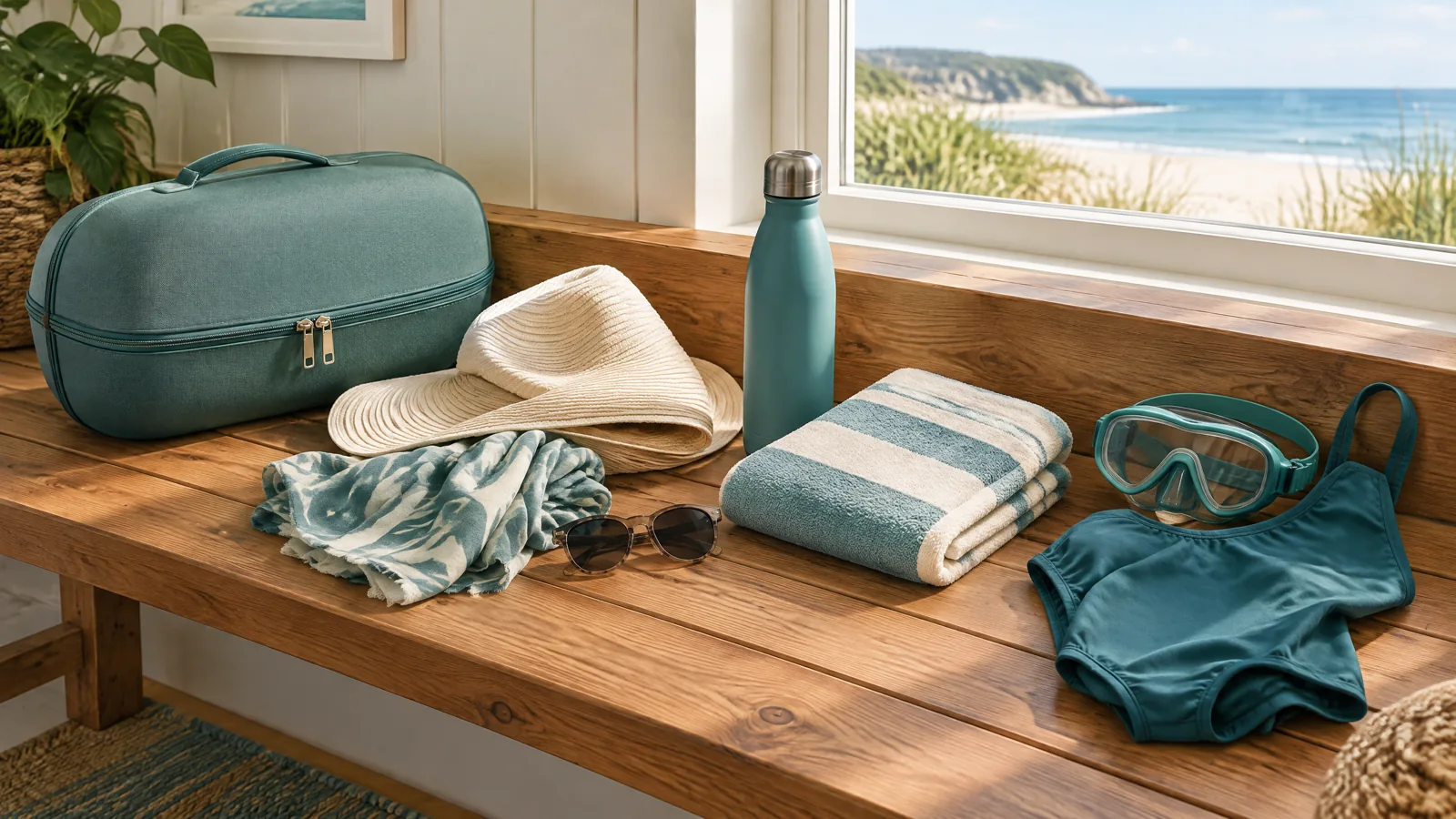
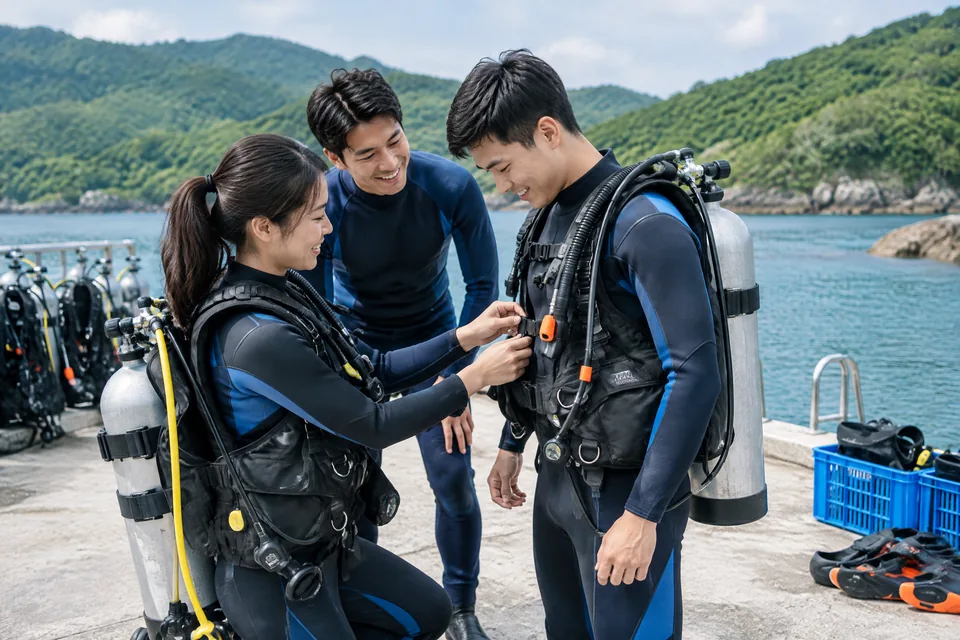
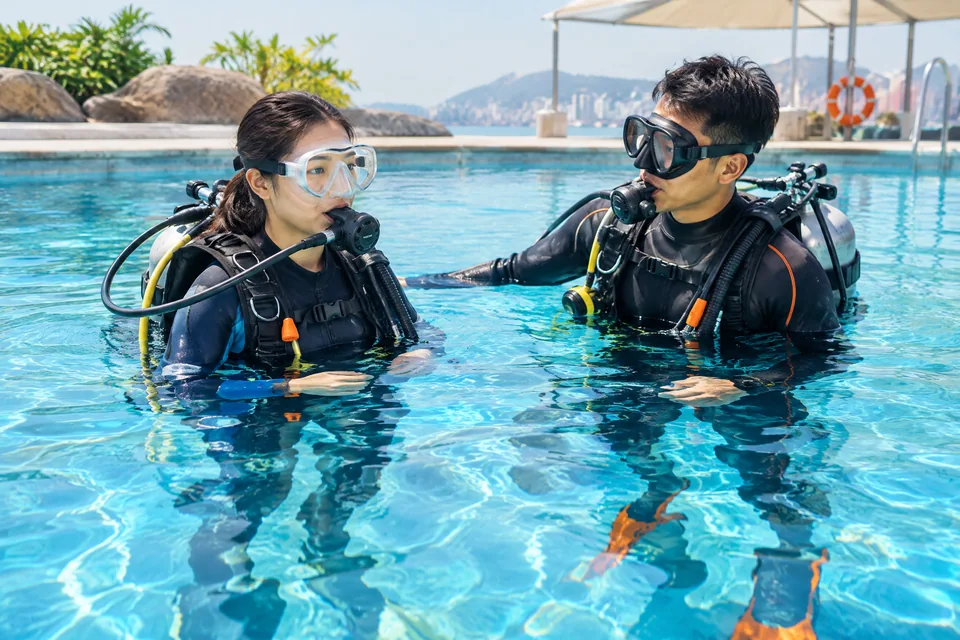
Illustration · Concept illustration: separate the hairpiece, dry clothes, towels, and activity gear.
Instructor qualifications
One clear teaching conversation from first breath to next step
DiveHarbour brings together scuba teaching, swimming, lifesaving and water-rescue experience so you can ask practical questions before choosing a course.
PADI teaching backgroundTeaching experience across recognised scuba learning pathways.
SSI teaching backgroundClear explanations when you are comparing agency routes.
NAUI teaching backgroundA practical, standards-aware approach to learning and progression.
Swimming foundationWater confidence and calm, step-by-step practice matter.
Lifesaving experienceSurface awareness and prevention stay part of the conversation.
Pool rescue experienceControlled practice can build confidence before open water.
Beach rescue experienceLocal water context informs sensible preparation.
Kayak rescue experienceA wider water-safety perspective supports good judgement.
PWC rescue experienceAsk about the right learning route for your experience and goals.
Brand relationship: DiveHarbour and OWNSTRAND share the same owner.
DiveHarbour and OWNSTRAND have the same owner. OWNSTRAND links here are external product-selection references, not independent third-party recommendations, medical advice, product-effect claims, or water-activity safety backing. DiveHarbour handles coastal activity enquiries, while OWNSTRAND handles product enquiries. This article does not treat any hairpiece as waterproof or suitable for swimming or diving.
A useful fact to keep in mind
Care instructions can differ by fibre: one manufacturer advises air-drying synthetic pieces on a stand but gives a different drying method for human hair. Follow the actual product sheet rather than a universal rule. [1]
Pack the hairpiece in a dry zone that never shares space with wet towels or swim gear.
Use labels and separate bags so a rushed change does not mix clean and damp items.
Treat the activity plan and the hairpiece plan as separate decisions; when uncertain, keep the piece ashore.
After the day, blot and dry only as the actual product instructions allow, then store it without heat or crushing.
Start here
How to build a shore-day hair kit
The shore-day hair kit starts with separation, not a waterproof promise
A coastal day can involve several changes of state: dry clothes at departure, towels and activity equipment at the shore, and damp items on the way home. The hairpiece needs its own decision path. Do not place it in the same pouch as a towel just because both are soft. Give it a clean, dry zone that can be reached without unpacking the rest of the day.
Start with four zones: a dry hairpiece zone, a dry clothing zone, an activity zone, and a transition zone. The first holds the piece and only the care items permitted by its instructions. The second holds clothes for arrival and departure. The third holds shoes, mask, fins, or other activity equipment. The fourth holds a changing layer, labels, and a bag for damp textiles.
This separation is an organisation method, not a waterproofing system. A zipped pouch may stop items from rubbing together, but it does not prove that the pouch or the hairpiece can tolerate seawater, pool water, spray, sweat, or pressure. If the activity involves entering the water, decide where the piece will remain before leaving home. When that answer is unclear, choose a shore-only plan.
Choose one dry container that is never used for wet towels.
Put a simple label on each bag: hairpiece, dry clothes, activity, or damp.
Keep the hairpiece container accessible without opening the wet-gear bag.
Tell one trusted companion where the private change and dry storage point are.
Swipe the table to compare all columns.
A practical four-zone map for a shore-day hair kit
Zone
Pack here
Keep out
Dry hairpiece
Piece, permitted care sheet, approved tools
Used towels, shoes, wet clothing, loose grit
Dry clothes
Change of clothes, privacy layer, clean socks
Damp textiles and open footwear
Activity
Shoes, mask, fins, and other planned equipment
Hairpiece and clean clothing
Transition
Labels, spare bag, and a simple change sequence
Anything that needs to stay dry and undisturbed
The safest packing assumption is simple: the hairpiece stays dry unless its provider has given product-specific instructions that say otherwise.
Guide · 02
Pack the hairpiece as a dry-only item
A shore-day hair kit needs a protected, product-specific dry zone
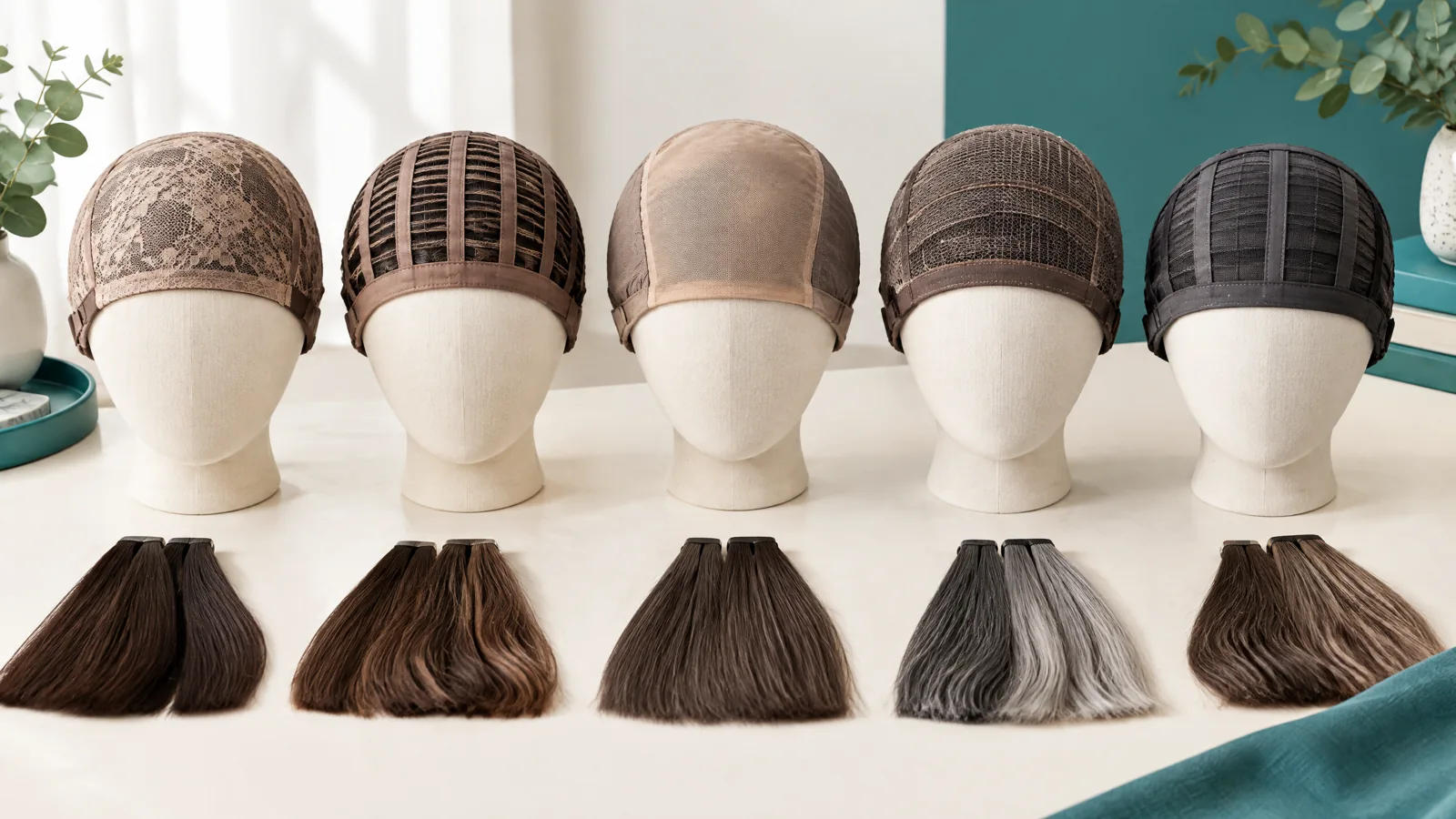
Do not pack every hairpiece in the same way. A full wig, a hair topper, a toupee, a hair system, and an extension piece can have different bases and attachment methods. A synthetic fibre is not automatically heat-friendly, and human hair is not automatically suitable for every styling method. Record the exact piece type before the day so you can find the correct care sheet later.
If you are comparing wigs Hong Kong, use the product enquiry to identify the piece, base, fibre, and stated care routine before planning a coastal transition. Ask what should happen if the item becomes damp, whether it should be placed on a stand, and which tools or products are allowed. Do not turn a general catalogue description into an in-water recommendation.
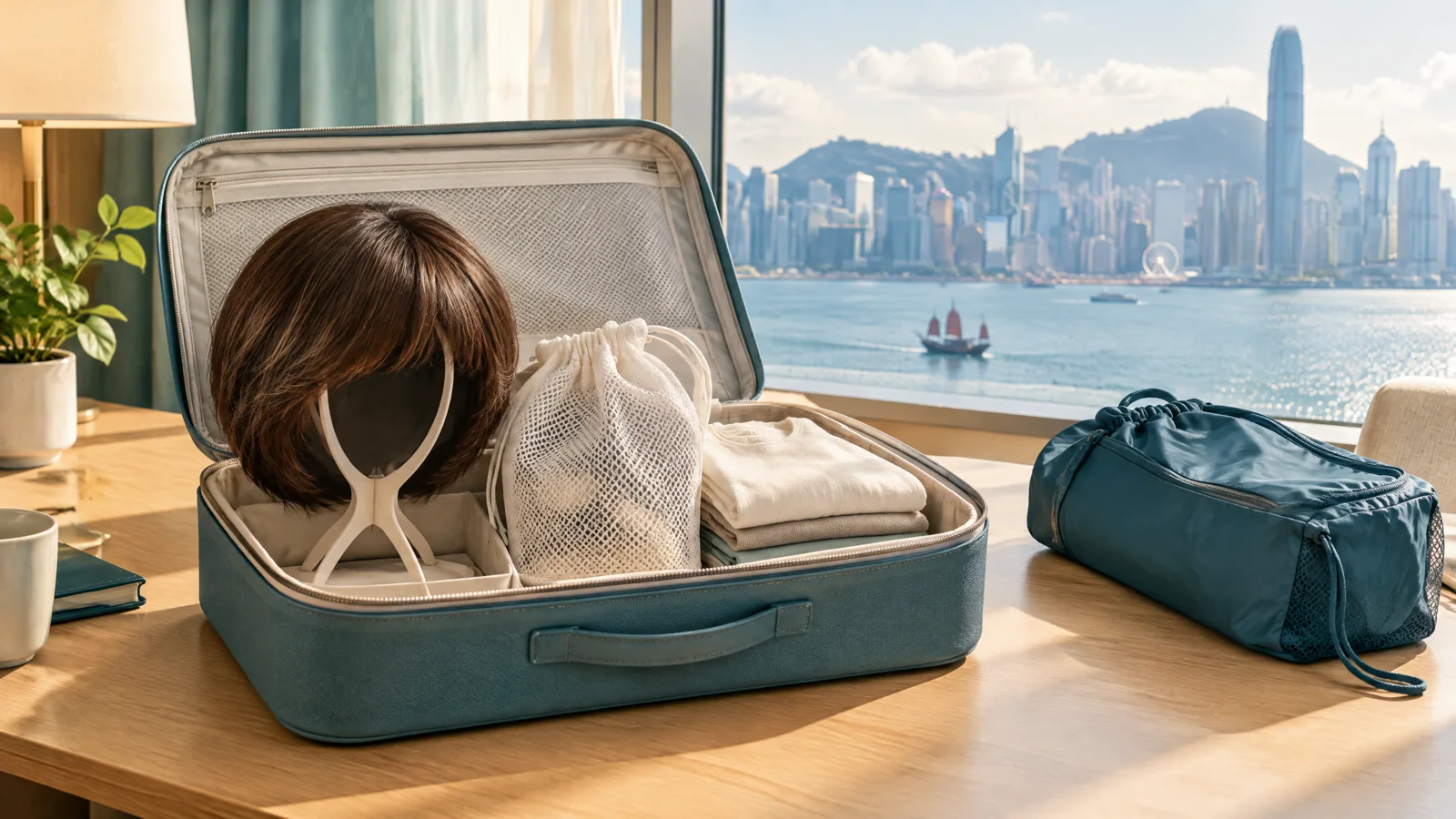
Wrap the dry container in a second ordinary travel layer only for organisation and impact protection. Do not press the piece under shoes, fins, books, or a full change of clothes. Keep combs, clips, or styling products in a small separate pouch, and use them only if the product instructions permit them. A compact kit is useful because it reduces hurried handling, not because it changes the properties of the hairpiece.
Product labels matter more than a generic packing hack. Keep the exact fibre and base information with the piece if the day includes a later change.
Illustration · a protected dry container is an organisation aid, not a waterproof claim.
Guide · 03
Separate dry clothes, towels, and activity gear
Use the shore-day hair kit to control contact and confusion
Dry clothes and towels have different jobs, so they should not share one open compartment. Put the clean change in a high, dry section of the bag. Put the towel in its own washable or closed bag after use. Keep shoes and activity equipment at the bottom or outside section where grit and moisture are least likely to reach clothing. These zones make the return journey easier to manage. For a wider loadout comparison, see shore dive versus boat dive packing list Hong Kong when the day includes boat logistics.
Plan the order of handling before you arrive. The person changing should be able to reach the dry clothes without touching a used towel. The hairpiece should be handled only after hands are clean and dry, and it should not be placed on a bench, rock, or vehicle seat that may be wet. If privacy is limited, keep the piece secured in its dry container until a suitable private place is available.
A small written sequence can prevent mistakes when several people are packing together: activity equipment first, towel second, damp clothing third, clean clothing fourth, and hairpiece last. Reverse the order only when the piece is safely stored. This is especially useful when transport space is tight or when a shore day becomes longer than expected.
Place clean clothing in a dry inner compartment.
Keep towels and damp items in a separate closed bag after use.
Keep grit-prone shoes and equipment away from the hairpiece container.
Put a spare lightweight cover in the transition zone for privacy, not for water protection.
The purpose of a wet bag is to contain damp textiles. It is not a reason to store the hairpiece inside it.
Guide · 04
Make the shore transition before and after activity
A shore-day hair kit works best when the change point is decided early
If the plan includes Hong Kong shore diving, treat the hairpiece as separate from the dive plan. Check the operator’s equipment and changing instructions, and tell the responsible activity professional about any practical storage concern. Do not assume that a cap, adhesive, clip, tie, or modified equipment arrangement will keep a piece secure or protect it in water.
For a product enquiry, wig shop Hong Kong can be used to ask about the piece and its care information. The only confirmed OWNSTRAND shop is Unit 2103, 50 Hoi Yuen Road, Kwun Tong, Hong Kong. Area-search pages are not branches, so do not describe another district as an OWNSTRAND shop or promise local availability.
Before changing, identify three separate surfaces: a clean place for the dry piece, a place for the used towel, and a place for activity equipment. If the piece is adhesive-based, do not force it off or improvise a removal method. Ask the product provider for handling instructions, and ask the activity professional about the activity itself. If either answer is unresolved, keep the plan on shore.
A hairpiece decision and an activity-clearance decision are different questions. One cannot be used to answer the other.
Illustration · Concept illustration: product-specific labels guide the packing decision.
Guide · 05
Return home with a clean dry-wet reset
Finish the shore-day hair kit with a deliberate unpacking order
On the return journey, keep the hairpiece in its dry container until you have a clean, suitable place to inspect it. Remove damp clothing and towels from the main bag as soon as practical, but do not place them beside the piece while sorting. If the piece was never used, avoid opening it repeatedly in humid air. If it was exposed to moisture, follow the product’s own care sheet instead of adding a new treatment.
The American Cancer Society advises short-term storage on a wig stand, using products made for wigs, and avoiding heat unless the piece is heat-resistant. It also advises patting out excess water and waiting until a synthetic wig is thoroughly dry before brushing or combing. [2] These are care boundaries, not permission to use a piece in water.
Manufacturer guidance can differ by fibre. Wig USA advises natural air drying on a stand for its synthetic hair, while its human-hair instructions use a different drying process. [1] That difference is why the kit should include the product name or care sheet, not an assumed routine. Keep the piece away from heaters, hot vehicles, direct heat, and compression while it is being handled.
Separate damp textiles before opening the hairpiece container.
Read the actual care sheet before blotting, brushing, washing, or applying a product.
Use a stand or breathable storage only when the instructions allow it.
Store the piece where it will not be crushed by the next day’s gear.
Swipe the table to compare all columns.
Transition checks from departure to return
Stage
Check
Decision
Before leaving
The piece and care sheet are in the dry zone
Pack separately before adding activity gear
At the shore
Private change point and dry surface are identified
Keep the piece ashore if instructions are unclear
After activity
Wet items are isolated before the piece is handled
Follow the piece-specific drying method
At home
The piece is inspected without heat or crushing
Store only when the care guidance permits it
Do not close a piece away merely to hide dampness. First establish what the maker says about drying, then choose storage that preserves its shape without trapping moisture.
Guide · 06
Know when to ask about a specific piece
A shore-day hair kit cannot replace product instructions or health guidance
Ask for product-specific help when the base, fibre, attachment method, or previous exposure is unclear. Useful questions include: Is this a full wig or a partial piece? What should be done after accidental dampness? May it be placed on a stand? Which brush, cleanser, or heat setting is allowed? Should it be removed before any water activity? Keep the answers with the packing list.
If a topper is the relevant option, custom hair topper Hong Kong is an enquiry route for discussing the actual coverage and care questions. A custom topper is not interchangeable with a full wig, and custom work does not itself establish water suitability, activity clearance, or a particular attachment result.
People dealing with chemotherapy-related hair changes or postpartum thinning may have personal health questions alongside appearance choices. This article only addresses packing and presentation. A healthcare team should answer medical or activity-clearance questions, while the product provider should answer piece-specific handling questions. Keep those responsibilities separate when preparing a coastal day.
When in doubt, make the shore activity the flexible part of the day, not the care instructions for the hairpiece.
Illustration · a coastal portrait scenario after a careful dry-wet transition.
A sensible next step
Take the question with you
Pack the hairpiece as a dry-only item, separate clean clothes from towels, and decide the private change point before the coastal day starts. Keep water activity and hairpiece handling as separate decisions. When care instructions or activity requirements are unresolved, leave the piece ashore and use a shore-only presentation plan.
For a Hong Kong shore-diving or coastal activity question, contact DiveHarbour about the activity plan. For fibre, base, fitting, storage, or custom hairpiece questions, contact OWNSTRAND through the relevant product link. Neither enquiry replaces the other.
Questions to ask
Common questions
Can I put the hairpiece in the same waterproof bag as my towel?
No. Keep the hairpiece in a separate dry zone. A wet bag contains damp textiles, but it does not prove that the piece is protected or suitable for water exposure.
Should I wear the piece while swimming or diving?
Do not treat this article as approval for swimming or diving with a hairpiece. Follow the product provider and activity professional, and choose a shore-only alternative when the instructions are unclear.
What if the piece becomes damp during the day?
Separate it from wet clothing, then follow its own care sheet. Blotting, air drying, heat, and brushing rules can differ by fibre and base, so do not assume one routine fits every piece.
Is a custom topper automatically better for a coastal day?
No. A custom topper addresses a particular coverage and fitting enquiry. It does not automatically establish water suitability, activity clearance, drying instructions, or a guaranteed attachment result.
Wig USA says its synthetic hair wigs or hairpieces should air dry naturally on a plastic or wire stand, while its human-hair instructions give a different drying process.
The American Cancer Society advises storing a wig on a stand for short periods, avoiding heat unless the wig is heat-resistant, and allowing a synthetic wig to dry at room temperature before brushing or combing.
Continue exploring
Three useful next reads
Keep comparing practical questions before you choose a course, activity or preparation step.
Coastal life and hairpieces · Updated 2026-11-06
Men's shore style choice: full wig or hairpiece guide
Men's shore style choice explained: compare coverage, wind, hats, portraits, and shore-day transitions, then ask the right product and activity questions.
Dry-Wet Wig Packing: A Practical Shore-Day Return Flow
Use dry-wet wig packing after a shore day: separate damp towels, label bags, ventilate textiles, and follow the piece's care sheet. Plan your return flow.
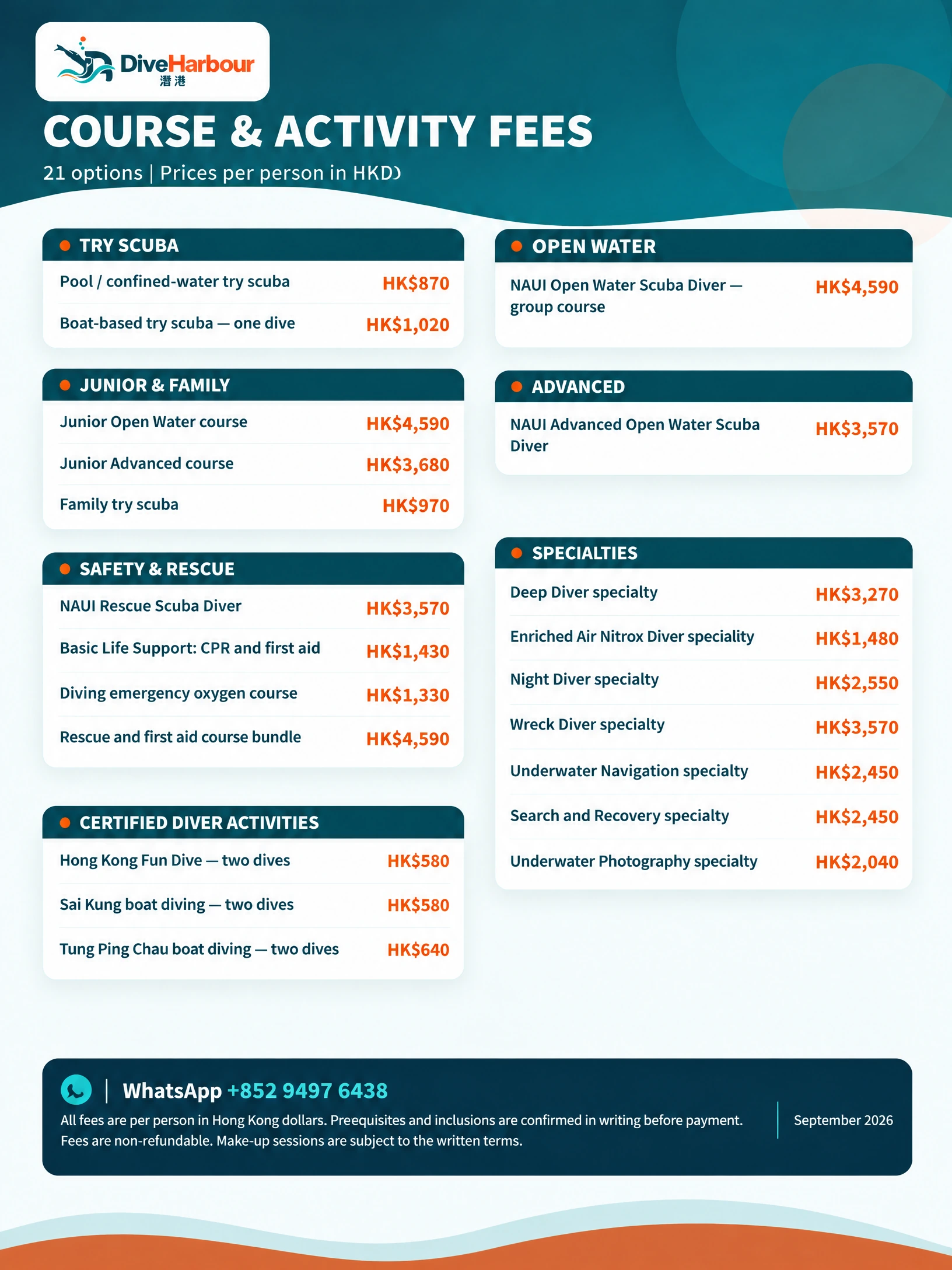
Compare our published course and activity fees before choosing your next step. All prices are per person in Hong Kong dollars.
Before you book, we confirm prerequisites, materials, certification, equipment, venue and boat arrangements in writing. Ask us about fees for courses not listed here.
Read the Sai Kung diving Hong Kong guide to learn about the setting, then explore the Sai Kung scuba diving course page. Certified divers can use our Hong Kong fun dive guide to check experience requirements and activity arrangements. Locations remain subject to weather and sea conditions.
Explore the responsibilities and entry requirements in our Divemaster course Hong Kong guide, then review the scuba instructor course Hong Kong route. Professional training differs from recreational progression, so confirm experience requirements and assessment arrangements first.