

SAFE LEARNING · HAPPY EXPLORING
DiveHarbour

DiveHarbour · Practical guide

Hood-friendly men's short haircut: plan the shore exit

The best hood-friendly men's short haircut is not a single style. Start with the hood contact points, the shape you want after rinsing, your drying tools, and the next activity. A taper can keep the outline tidy, a textured crop can make a deliberate short top, and other short hairstyles for men may reduce reset work. Bring this brief to a stylist and keep diving plans separate from hair-service promises.

By DiveHarbour8 min read
Ask about diving courses or coastal trip planning Read the guide
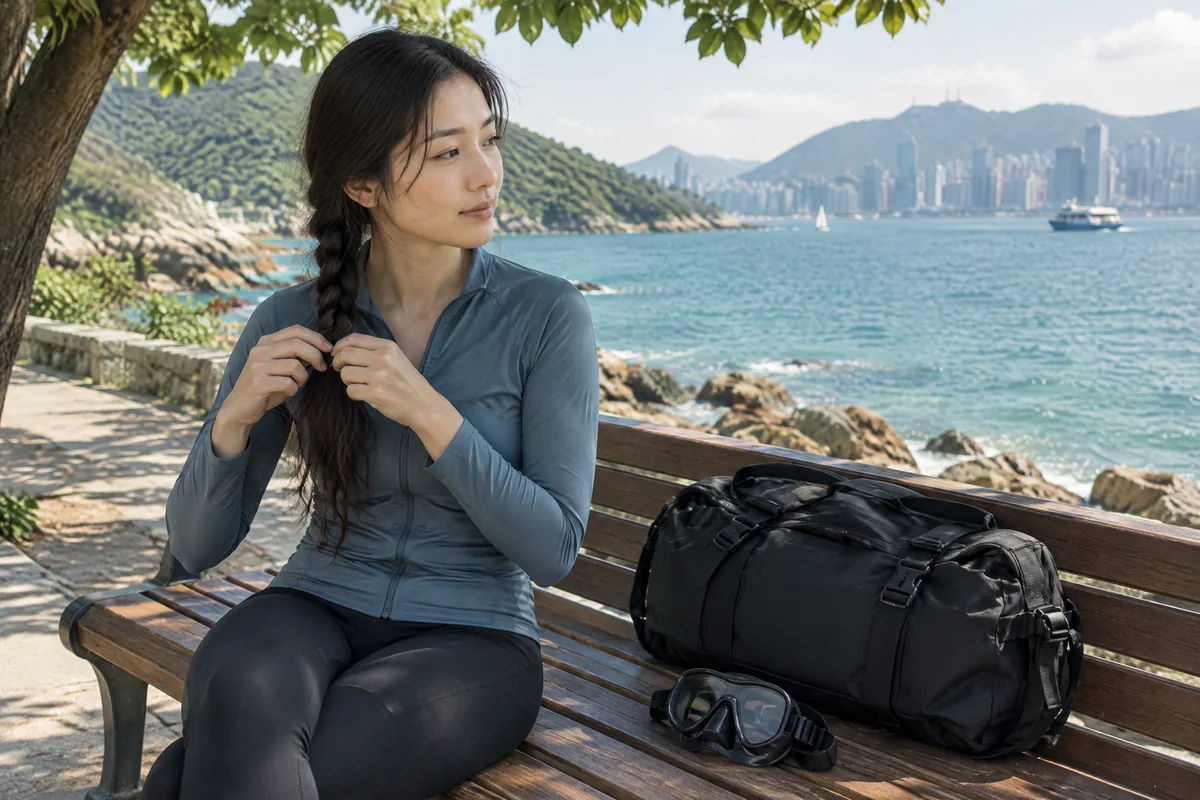
Hood-friendly men's short haircut briefing before a shore exit
Illustration · a diver notes hood contact and drying needs before a haircut consultation.

Instructor qualifications

One clear teaching conversation from first breath to next step

DiveHarbour brings together scuba teaching, swimming, lifesaving and water-rescue experience so you can ask practical questions before choosing a course.

  • PADI teaching backgroundTeaching experience across recognised scuba learning pathways.
  • SSI teaching backgroundClear explanations when you are comparing agency routes.
  • NAUI teaching backgroundA practical, standards-aware approach to learning and progression.
  • Swimming foundationWater confidence and calm, step-by-step practice matter.
  • Lifesaving experienceSurface awareness and prevention stay part of the conversation.
  • Pool rescue experienceControlled practice can build confidence before open water.
  • Beach rescue experienceLocal water context informs sensible preparation.
  • Kayak rescue experienceA wider water-safety perspective supports good judgement.
  • PWC rescue experienceAsk about the right learning route for your experience and goals.

Brand relationship: DiveHarbour and Vit So share the same owner.

This guide is compiled by DiveHarbour. The Vit So links provide external hair-service information for reference only; they are not diving-safety, medical, or service-effect guarantees.

A useful fact to keep in mind

Wet hair is delicate, so a shore reset should favour gentle handling over rough towel rubbing and excessive heat.

Check the source
Key takeaways

Four points to carry forward

  • Describe where the hood presses, not only the style name you like.
  • Choose a shape that still has a clear reset plan after rinsing.
  • Rinse promptly, blot rather than rub, and use gentle low-heat drying when needed.
  • Treat UV and diving arrangements as separate outdoor and activity decisions.
Start here

Hood-friendly men's short haircut: define the shore exit

Use the hood-friendly men's short haircut brief before naming a style

A hood does more than cover the head. Its edge can press the hairline, flatten the crown, or leave the sides sitting in a direction you did not plan. That does not mean you need the shortest possible cut. It means the consultation should begin with the shore exit: where the hood comes off, how soon you can rinse, and what you need your hair to do before the next activity. If the dive is a shoreline entry or exit, review Hong Kong shore diving separately for the activity details.

Bring three observations to the haircut conversation. Note whether pressure is strongest at the forehead, crown, temples, or nape. Describe whether you usually leave the water with a towel, a changing-room dryer, or no equipment at all. Then say whether the next stop is a meal, a ride, a meeting, or another outdoor plan. A stylist can discuss a taper haircut as a shape option, but the final decision still depends on your hair, routine, and consultation.

  • Take one side and one front photo of your hair after the hood comes off.
  • Mark the areas that feel compressed or rub against the hood edge.
  • Write down the time and tools normally available for your shore reset.
  • State the look you want when dry, rather than promising that it will stay unchanged when wet.
Guide · 02

Measure pressure, water and drying conditions

The cut works with the shore plan, not with a guessed water temperature

A thick hood, a thin hood, and a hood worn over different hair lengths can leave different pressure marks. Ask yourself whether you want the sides to disappear into a clean outline or whether you need enough top length to move after drying. Also record the water conditions and clothing you actually use. For a Hong Kong plan, Hong Kong diving water temperature is a useful place to check the wider seasonal context, but it cannot tell a stylist how your individual hair will sit.

The first shore step should be practical rather than cosmetic. The American Academy of Dermatology recommends rinsing hair immediately after swimming. It also advises gentle handling of wet hair, avoiding rough towel rubbing, and using low heat when a blow dryer is needed [1]. These points do not make a haircut protective equipment. They simply give your chosen shape a less aggressive reset routine while you move from water to dry clothes.

  • Record hood thickness, edge position, and whether you wear a liner or cap underneath.
  • Separate the time needed to rinse from the time needed to shape the hair.
  • Check whether the next venue has a mirror, towel, dryer, or only fresh water.
  • Ask the stylist which parts of the cut can be left natural after a quick blot.
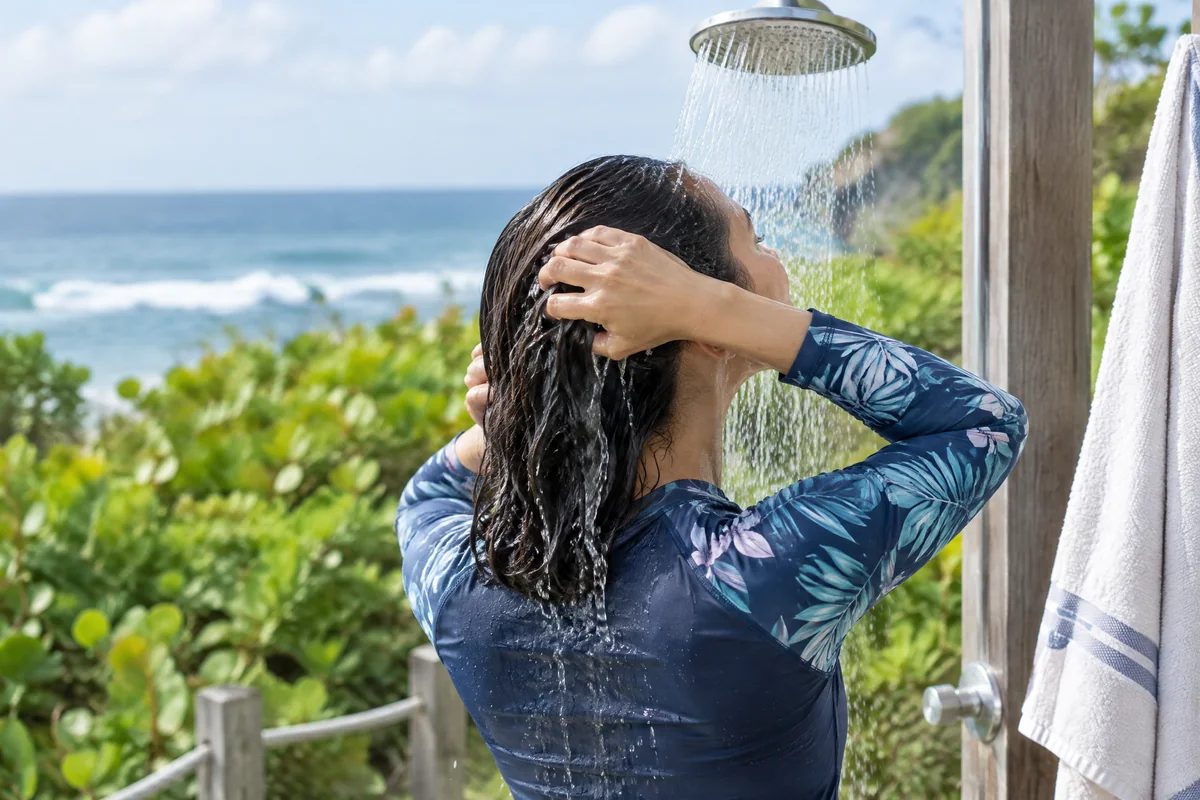
Illustration of rinsing short hair after a swim
Illustration · a post-swim fresh-water rinse is part of the shore-exit routine.
Guide · 03

Compare taper, crop and short-style directions

Match the hood-friendly men's short haircut to your reset tolerance

A taper focuses attention on a gradual change around the sides and neckline. It can suit someone who wants the perimeter to look considered while leaving a little choice on top. A textured crop focuses more on the top surface and its broken-up movement. That may appeal if you prefer a deliberate short shape rather than a smooth, pressed finish. When you discuss a textured crop haircut, ask how the top is expected to look with your natural density and after it has been flattened.

The broad phrase short hairstyles for men is useful only after you describe the reset. One short style may be quick to towel-blot but still need a part or a small amount of product. Another may be less dependent on a part but show a change in direction after the hood. Compare the options by the work you can repeat at the shore, not by the name alone. The table below keeps that conversation concrete.

  • Choose the taper discussion when the side outline matters most to you.
  • Choose the crop discussion when top texture and a short front shape matter most.
  • Use the general short-style discussion when you need to compare several lengths first.
  • Ask what the cut looks like without a brush, strong hold, or a long blow-dry.

Swipe the table to compare all columns.

Shape comparison for a hood-and-shore-exit decision
OptionWhat to describePost-hood reset questionTrade-off to discuss
TaperSide and neckline outline, plus the top lengthCan the sides look settled after a quick blot?How much top direction still needs attention?
Textured cropTop texture, front length, and natural densityCan the texture be restored without a long styling session?Will a pressed top need more deliberate separation?
Other short hairstyles for menDesired length, part, front direction, and daily toolsWhat is the simplest acceptable dry finish?Which details are easy to lose when wet or covered?
Guide · 04

Build a repeatable shore-exit reset

Turn the hood-friendly men's short haircut into a small sequence

A useful reset has a fixed order. First, remove the hood without dragging it across the hairline. Next, rinse as soon as practical. Then press water out with a towel instead of scrubbing. If you need to detangle, be gentle and use a wide-tooth comb in a way that suits your hair type. The AAD notes that wet hair is delicate and recommends gentle moisture absorption, suitable combing, and lower heat when drying [1]. Stop when the shape is presentable; do not keep pulling at it to chase a dry-salon finish.

Your stylist does not need a perfect product list to understand the problem. Say whether you want to leave the hair loose, restore a part, push the front back, or let the top fall naturally. Ask which step is essential and which step is optional on a busy shore day. If a product is suggested, ask how much movement should remain and what to do if you have only clean water and a towel. This keeps daily upkeep realistic rather than aspirational.

  • Rinse first, then blot excess water without rough back-and-forth rubbing.
  • Let the hair settle before deciding whether it truly needs combing.
  • Use a low or medium heat setting if air-drying is not practical.
  • Keep one simple dry-state instruction, such as a part or a direction, for the next activity.
Illustration of planning a hood-friendly short haircut shape
Illustration · a reader prepares photos and questions for a haircut consultation.
Guide · 05

Plan the outdoor part of the exit

A hood-friendly men's short haircut does not replace sun protection

The shore exit may continue on a beach, pier, street, or boat deck. CDC Travelers’ Health notes that UV rays reflect on water and recommends protection during outdoor activities. Its guidance includes protecting exposed areas such as the scalp, ears, neck, and face, using broad-spectrum sunscreen, reapplying after water or heavy sweating, and choosing protective clothing or a wide-brimmed hat [2]. A haircut can change coverage and comfort, but it is not sunscreen and should not be treated as a substitute for these measures.

This is also where the next activity changes the haircut brief. A relaxed lunch may allow a little natural movement. A formal appointment may make a clean neckline or a clearer front direction more important. A second outdoor activity may make a hat, shade, and a quick rinse more relevant than a highly controlled finish. If you are comparing short hairstyles for men, tell the stylist which of these situations is normal for you.

  • Pack sun protection for exposed skin instead of relying on hair length.
  • Choose a hat that does not recreate the same pressure point you are trying to solve.
  • Treat shade, sunscreen, and reapplication as outdoor-care steps, not styling steps.
  • State whether your next activity rewards natural movement or a more defined outline.

Swipe the table to compare all columns.

Shore-exit briefing checklist
MomentActionWhat to noteWhy it matters
Before the waterCheck hood fit and contact pointsForehead, crown, temples, and napeGives the stylist a specific pressure map
First shore stepRinse hair as soon as practicalFresh water access and available timeFollows the AAD swimmer-care guidance
DryingBlot and use gentle, lower-heat handlingTowel, air-dry, or dryer optionsReduces unnecessary pulling and heat
Next activityUse the simplest acceptable shape resetNatural movement or defined outlineKeeps the haircut brief realistic
Guide · 06

Turn the brief into a useful consultation

Ask for a hood-friendly men's short haircut without overpromising

A good consultation question is specific enough to answer and open enough to allow an assessment. Instead of saying that you need a waterproof haircut, explain the hood, the pressure points, the rinse routine, and the dry look you want. Ask what length difference would make the outline easier to reset, what the top would require on an ordinary day, and which part of the result depends on your own drying technique. If you want to explore short hairstyles for men, use the service page as information and confirm the details directly.

Before booking any hair service, bring recent photos, mention relevant colour or chemical-processing history, and say what you can realistically maintain. Ask whether the proposed shape is a cut-only conversation or whether another service would be discussed separately. Do not assume that a web page confirms a particular language, appointment time, price, branch, or result. The honest outcome of the meeting may be a refined brief rather than a promise that the hair will look identical after every dive.

  • Show the stylist the hood and describe how you put it on and remove it.
  • Ask for a dry-state shape, a wet-state expectation, and one quick reset method.
  • Confirm what you can maintain with your actual tools and available time.
  • Check service details directly instead of assuming availability, price, language, or outcome.
Illustration of short hair prepared for a shore-side activity
Illustration · a simple short-hair reset before the next shore-side activity.
A sensible next step

Take the question with you

Write the brief before the appointment: hood type, pressure points, rinse access, drying tools, next-activity expectations, and the dry shape you want. Then compare taper, textured crop, and other short hairstyles for men by the reset you can actually perform. That gives the consultation a useful starting point without turning a haircut into diving equipment or a care guarantee.

Questions to ask

Common questions

Is a taper automatically the best haircut for wearing a dive hood?

No. A taper is one way to discuss the side and neckline outline. The useful choice depends on where the hood presses, how you want the top to sit after rinsing, and how much daily reset you can repeat.

Can a textured crop stop a hood from flattening my hair?

No haircut can promise that a hood will not flatten hair. A textured crop can be discussed as a short top shape, but ask how its texture is expected to look after pressure, rinsing, and your normal drying method.

What should I do to short hair when I leave the water?

Rinse as soon as practical, blot rather than rub, and handle wet hair gently. If you use a dryer, choose a lower heat setting. Then restore only the one or two details needed for the next activity.

Does a short haircut protect my scalp from sun near the water?

No. Water can reflect UV, and exposed scalp, ears, face, and neck still need appropriate sun protection. Follow outdoor-care guidance for sunscreen, reapplication, shade, clothing, and hats rather than relying on hair length.

Further reading

Official sources worth checking

Continue exploring

Keep comparing practical questions before you choose a course, activity or preparation step.

Coastal life and hair care · Updated 2026-11-06

Coastal haircut plan for swimmers: what divers should ask

Plan a coastal haircut plan for swimmers with a clear brief on caps, length, drying and aftercare. Check the questions before you book.

coastal haircut plan for swimmers
Coastal life and hair care · Updated 2026-11-06

Swim-cap short hair fringe plan: manage shape after swimming

Use this swim-cap short hair fringe plan to compare lob, pixie and curtain bangs after swimming. Read the reset steps and plan your consultation.

swim-cap short hair fringe plan

Coastal life and hair care · Updated 2026-11-06

Beach hair colour tone guide: choose brown shades carefully

Use this beach hair colour tone guide to compare brown, chocolate and ash-brown goals by starting base and upkeep. Plan your consult.

beach hair colour tone guide
Your next step

Ask about diving courses or coastal trip planning

Message DiveHarbour on WhatsApp to discuss diving courses or coastal trip planning, along with your experience and preferred dates.

Ask about diving courses or coastal trip planning
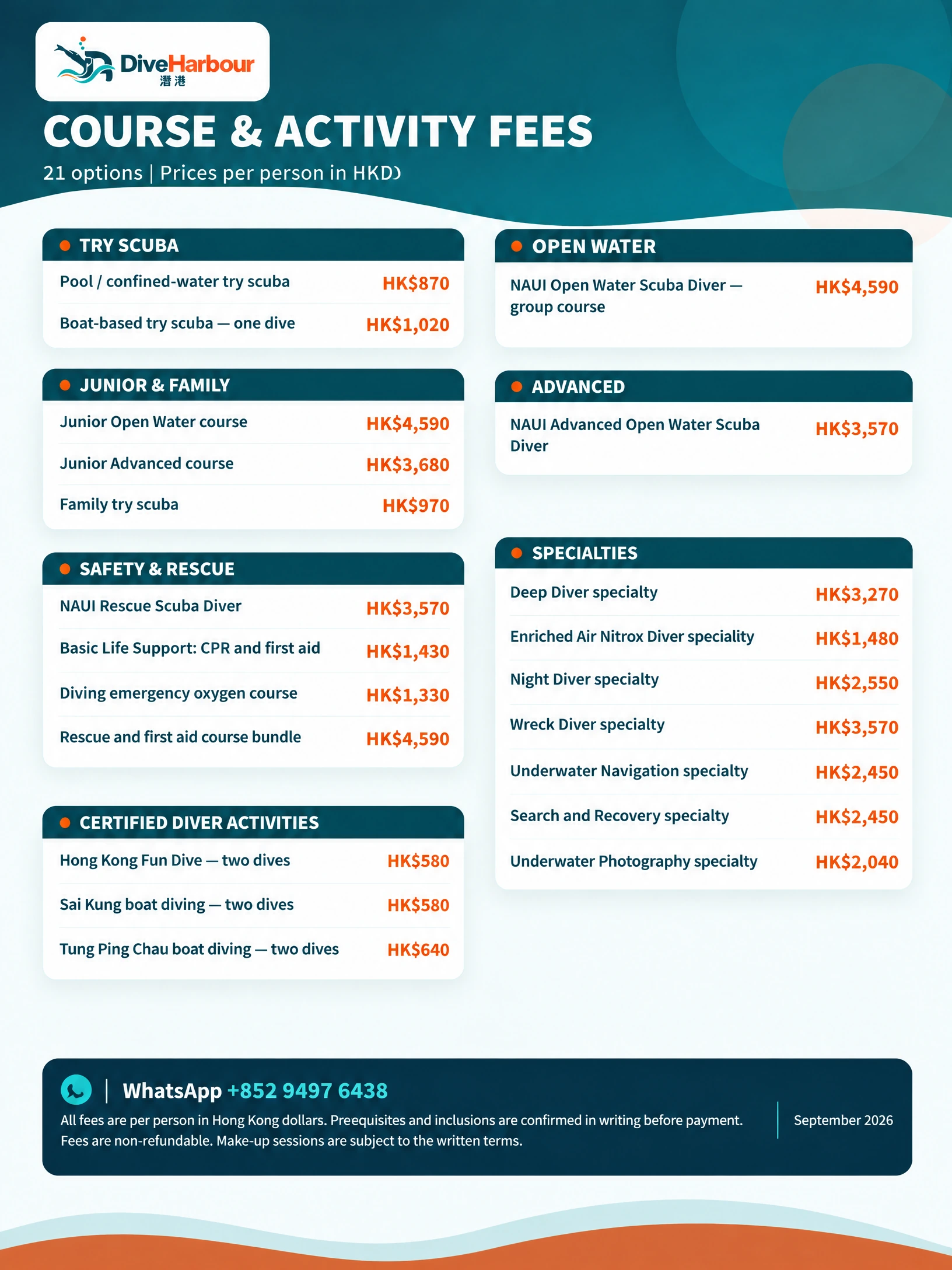
English price list for 21 DiveHarbour courses and activities, with fees per person in Hong Kong dollars
Tap the price list to view it at full size.

Plan your next dive

Course fees, clearly set out

Compare our published course and activity fees before choosing your next step. All prices are per person in Hong Kong dollars.

Before you book, we confirm prerequisites, materials, certification, equipment, venue and boat arrangements in writing. Ask us about fees for courses not listed here.

All fees are non-refundable. Make-up sessions are subject to the written terms.

Read all course fees
DiveHarbour course and activity fees per person in Hong Kong dollars
Course / activityPer person
Pool / confined-water try scubaHK$870
Boat-based try scuba — one diveHK$1,020
NAUI Open Water Scuba Diver — group courseHK$4,590
Junior Open Water courseHK$4,590
Junior Advanced courseHK$3,680
Family try scubaHK$970
NAUI Advanced Open Water Scuba DiverHK$3,570
NAUI Rescue Scuba DiverHK$3,570
Basic Life Support: CPR and first aidHK$1,430
Diving emergency oxygen courseHK$1,330
Rescue and first aid course bundleHK$4,590
Deep Diver specialtyHK$3,270
Enriched Air Nitrox Diver specialtyHK$1,480
Night Diver specialtyHK$2,550
Wreck Diver specialtyHK$3,570
Underwater Navigation specialtyHK$2,450
Search and Recovery specialtyHK$2,450
Underwater Photography specialtyHK$2,040
Hong Kong Fun Dive — two divesHK$580
Sai Kung boat diving — two divesHK$580
Tung Ping Chau boat diving — two divesHK$640