

A useful fact to keep in mind
AFCD states that Tung Ping Chau Marine Park covers about 270 hectares and was designated in November 2001.
Check the sourcePlanning a Tung Ping Chau boat dive
What to consider before travelling by boat
A day at Tung Ping Chau begins before anyone enters the water. You need to think about the boat journey, the sea state, the time available for two dives, and how comfortably each diver manages an open-water start from a vessel. Tell us whether you are newly certified, returning after a long break, or an experienced diver who wants a particular type of site. That context is more useful than simply saying you are a confident swimmer, because scuba skills, surface comfort and recent practice are different things.
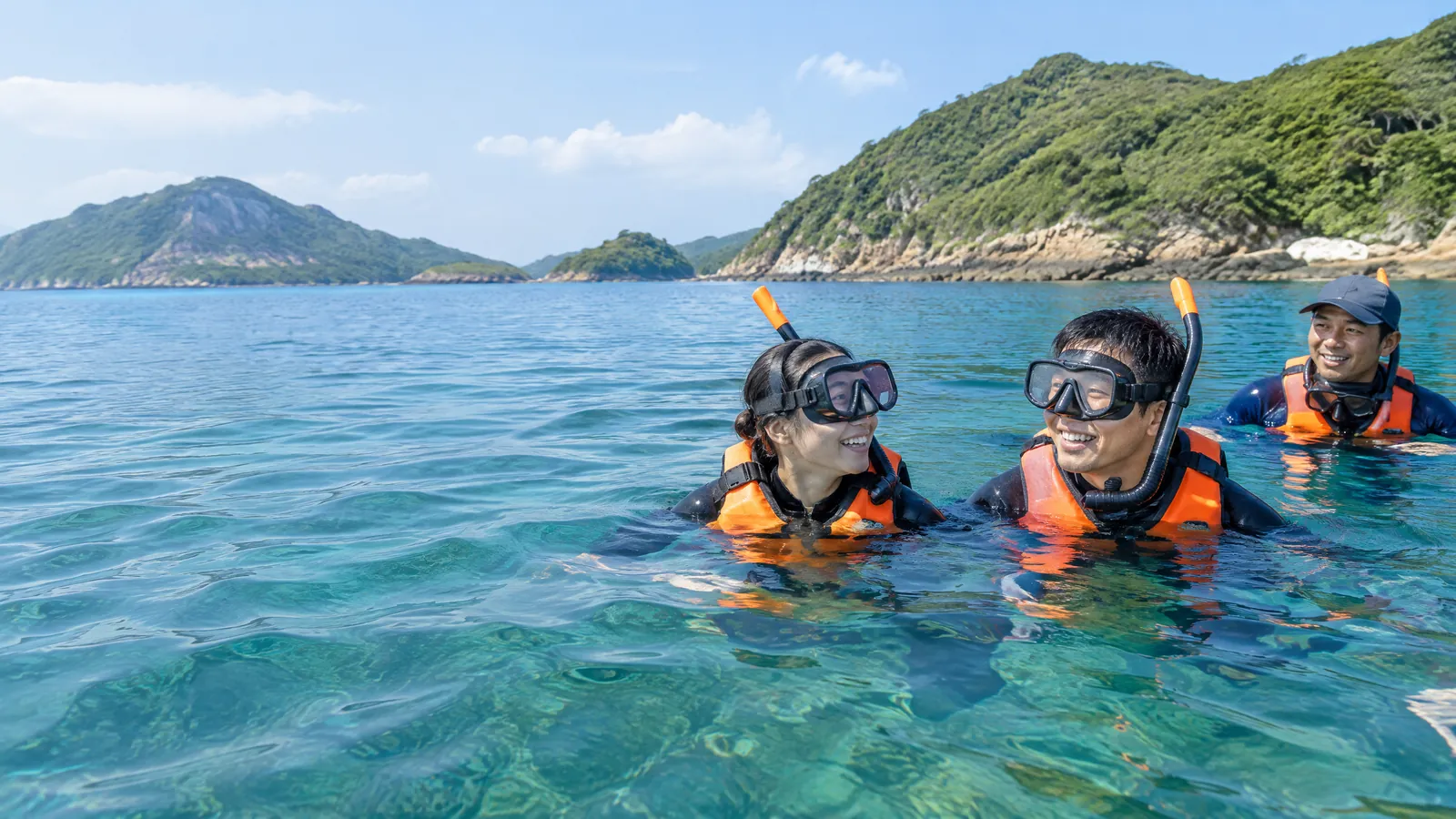
The island lies in the northeastern waters of Hong Kong, and the surrounding Tung Ping Chau Marine Park has an important coastal ecosystem. AFCD states that Tung Ping Chau Marine Park covers about 270 hectares and was designated in November 2001. Its coral communities are among the best covered and most diverse in Hong Kong. That makes a visit rewarding, but it also calls for calm, observant diving: avoid touching coral, keep your fins clear of the bottom, and leave shells, animals and rocks where they are.
A boat trip is not a guaranteed sightseeing itinerary. The skipper and dive team may change the order of sites, departure timing or whether a particular drop is used when wind, swell, visibility, current, traffic or operational constraints change. A conservative decision is a successful decision if the conditions are not suitable. Ask what the current plan is on the day and allow enough flexibility that the team can choose a safer alternative without turning the discussion into a last-minute argument.
For a practical preparation list, read what to pack for a Tung Ping Chau dive boat trip. Check your certification card, logbook or recent-dive information, personal medication, seasickness strategy and a dry bag for valuables. Pack light enough to move safely on deck, bring sun protection and water, and use a reusable bottle where practical. Keep loose items secured: a mask, camera or phone sliding across a wet deck can become a hazard as well as an expensive loss.
- Share certification level, recent diving, preferred dates and any concerns before a place is confirmed.
- Expect a flexible plan; weather and sea conditions can override a preferred site or timing.
- Treat the marine park as a living environment, not an underwater collection of souvenirs.

Choosing a Tung Ping Chau diving trip
Experience, conditions and site expectations
The right Tung Ping Chau diving trip depends on the diver, not on a label such as ‘beginner’ or ‘advanced’. A recently certified diver who has practised buoyancy and mask skills may be comfortable with a well-managed boat dive in kind conditions. Someone with many logged dives but a long gap, poor seasickness tolerance or anxiety about entries may benefit from a slower briefing and a simpler objective. We can discuss the proposed arrangement honestly and explain what information is still needed before making a suitability decision.
Do not book on the assumption that the marine park will always be clear, calm or full of large animals. Hong Kong’s coastal visibility changes with rainfall, tides, plankton, wind and local water movement. The experience can instead be about textures, rock formations, small marine life, coral communities and the rhythm of a boat day. Bring a curious mindset and avoid comparing a local dive with a tropical holiday advertisement. Wildlife sightings are never promised, and a responsible guide will prioritise the environment and the group over a dramatic photograph.
For the site-specific perspective, see Tung Ping Chau Marine Park diving and use it to understand the destination context before you compare boat arrangements.
If you are comparing this outing with Sai Kung boat diving, consider travel time, the group’s tolerance for open water, the type of conditions forecast and the reason you want to dive. Sai Kung can be a better fit for a shorter or more familiar plan on some dates; Tung Ping Chau may appeal when the island setting and marine-park environment are the main attraction. There is no universal ‘best’ site: the best choice is the one that matches the day’s conditions and the divers’ actual readiness.
Newer divers can also review best beginner dive sites in Sai Kung and Tung Ping Chau before enquiring. Use that comparison as a conversation starter rather than a promise of a particular site. A guide may adjust depth, route, buddy grouping or the number of objectives to keep the dive manageable. If you are not yet certified, ask about a suitable training or introductory option instead of treating a boat excursion as a shortcut to a qualification.
- Choose the trip around recent practice, open-water comfort and the forecast—not just a destination name.
- Set an observation goal, such as buoyancy and reef awareness, rather than expecting guaranteed wildlife.
- Tell the team early about seasickness, mobility concerns, anxiety or equipment unfamiliarity.

Practical details for a boat-diving enquiry
Safety, weather and current arrangements
When you message about a Tung Ping Chau boat dive, include your preferred dates, number of divers, certification agency and level, approximate last dive, equipment needs and whether anyone is a first-time boat diver. If a diver has a medical concern, use the relevant agency medical guidance and seek qualified clinical advice where appropriate; do not conceal a concern to preserve a booking. The lead coach has teaching experience across PADI, SSI and NAUI and a background that includes swimming, lifesaving, pool, beach, kayak and personal-watercraft rescue qualifications, but the final plan still depends on the actual conditions and information supplied.
The Hong Kong Observatory provides marine weather information and forecasts, yet a forecast is not a promise that a specific mooring or underwater site will be suitable. The boat crew and dive team will consider the forecast alongside real-time conditions and operational information. On the day, listen to the full briefing, identify entry and exit arrangements, keep your buddy contact clear, and ask questions before gearing up. If you feel unwell, cold, panicked or unable to manage the conditions, signal early and pause; continuing to please the group is not good dive etiquette.
For orientation, the published reference price for a Tung Ping Chau boat-diving package is HK$640 per person for two dives. The listed arrangement notes that route, group size, boat schedule and any possible remote-area surcharge are confirmed before registration. Treat that figure as a current reference rather than a promise that every enquiry has identical inclusions. Ask what is included for cylinders, weights, equipment, guide support, transport, food and any changes caused by weather before paying.
You can also compare the wider Hong Kong boat dive price page, then ask for the Tung Ping Chau arrangement specifically. Fees and terms should be clear in writing. A lower headline price is not automatically better if it leaves essential equipment or transport unclear, while an apparently comprehensive package may not suit a diver who brings a full personal kit.
- Confirm inclusions, meeting point, boat timing, expected number of dives and what happens if conditions change.
- Use the briefing to clarify buddy procedures, entries, exits, current expectations and equipment checks.
- Stop or sit out if you are unwell or not comfortable; tell the instructor or crew promptly.

A simple decision process for your group
Match the plan to the people on the boat
A mixed group can still have a good day when expectations are agreed in advance. Start by identifying the least experienced or least comfortable diver, then ask what would make the day enjoyable for them. One person may want photography, another may want skills practice, and another may simply want a calm first boat experience. Those aims can coexist when the guide knows them, but they should not be allowed to create pressure for a deeper, longer or more exposed dive than someone can reasonably manage.
Use three checkpoints: readiness, conditions and fallback. Readiness covers certification, recent practice, equipment familiarity and health information. Conditions cover forecast, sea state, visibility, current and the boat’s operating plan. Fallback covers an alternate site, a changed order, a shorter dive or a decision not to enter. Writing these questions in your message makes the enquiry efficient and gives the team a useful basis for advising you.

What to expect underwater and on deck
Enjoy the environment without rushing it
On deck, the day may feel busy: tanks and weights need securing, divers move around one another, and the boat may roll even when the sea looks inviting from shore. Follow crew directions, use handholds, keep the entry area clear and wait for your turn. Underwater, settle your breathing and buoyancy before chasing a subject. Good trim protects the reef, saves energy and helps a buddy stay in contact. A small, patient circuit is often more memorable than a hurried attempt to see everything.
Tung Ping Chau’s geological character and marine life give you plenty to notice without handling anything. Look for changing rock textures, sheltering crevices, fish behaviour and the way light changes with depth. Keep cameras controlled and avoid using a reef or another diver as a stabilising handhold. If surge or current makes photography frustrating, put the camera away and return to basic awareness. The island and park deserve a low-impact visit whether your dive is a first local boat outing or part of a long-running logbook.

Book thoughtfully and confirm the next step
An enquiry should make the plan clearer
Send DiveHarbour your dates, group size, certification and recent-dive details, plus the questions that matter to you. We can then discuss whether the current Tung Ping Chau arrangement fits, what equipment or support is available, and which details require confirmation from the boat operator. Do not treat a message as a confirmed departure until the date, meeting instructions, price, inclusions and terms are agreed in writing.
Payment and cancellation terms matter. Fees are non-refundable unless the written terms for your booking say otherwise. Make-up sessions or alternative dates are available only where those written terms permit them; no reschedule or replacement date is guaranteed. Weather or operations may require a change, but the applicable outcome depends on the confirmed booking terms, not an informal assumption. Ask before paying if any part of the policy is unclear.
A thoughtful enquiry is the quickest route to a better day: it lets the team plan for the actual divers, keeps expectations realistic and leaves room for a conservative weather decision. If the conditions and experience align, you can enjoy a distinctive Hong Kong boat dive while protecting the marine environment that makes Tung Ping Chau worth visiting.
Compare the main choices before confirming a Tung Ping Chau boat day
| Choice | Best for | Check before booking |
|---|---|---|
| Tung Ping Chau two-dive boat arrangement | Certified divers seeking the island and marine-park setting | Current route, boat schedule, group size, inclusions and weather plan |
| A closer Hong Kong boat-dive option | Divers with limited travel time or a mixed-experience group | Site conditions, travel logistics and whether the objective suits everyone |
| Training or introductory session first | New divers or anyone needing structured skill practice | Prerequisites, supervision, training venue and whether certification is involved |
Tung Ping Chau boat diving — common questions
Is Tung Ping Chau suitable for every diver?Toggle answer
No single site is suitable for every diver on every date. Suitability depends on certification, recent experience, comfort in open water, equipment familiarity and the conditions on the day. Share your experience and any relevant limitations when enquiring so the team can discuss whether the proposed arrangement is appropriate.
Can the route or timing change for a Tung Ping Chau boat dive?Toggle answer
Yes. Boat routes, departure timing and site selection can depend on weather, sea conditions and operational considerations. DiveHarbour will confirm the current arrangement during your enquiry; do not rely on an assumed itinerary before those details are agreed.
What does the listed HK$640 price cover?Toggle answer
The approved reference lists HK$640 per person for two dives. It also says route, group size, boat schedule and any possible remote-area surcharge are confirmed before registration. Ask for the current written inclusions, including cylinders, weights, equipment, guide support and transport, before paying.
Are fees refundable if I cannot attend?Toggle answer
Fees are non-refundable unless the written terms for your booking state otherwise. Make-up sessions or alternative dates are available only where those written terms permit them, and no reschedule date is guaranteed. Ask the team to clarify the applicable terms before payment.
What should I do if I feel unwell or uncomfortable on the day?Toggle answer
Tell the instructor or crew promptly and follow their advice. You can pause, sit out or discuss a safer alternative; do not continue simply because friends are entering the water. If you have a health concern, seek qualified clinical advice and follow the relevant training agency guidance before diving.
Take the question with you
Ready to explore? Message DiveHarbour with your dates, group size, certification, recent-dive history and equipment needs. We will help you confirm the current Tung Ping Chau boat-diving arrangement, realistic conditions, price inclusions and written booking terms so you can decide with confidence.
Sources worth checking
- Tung Ping Chau Marine Park — Agriculture, Fisheries and Conservation Department
AFCD states that Tung Ping Chau Marine Park was designated in November 2001, covers about 270 hectares, and has coral communities with some of the best coverage and species diversity in Hong Kong.
- Hong Kong Observatory — Weather Information for the Marine Community
The Hong Kong Observatory provides weather information and services for the marine community, supporting weather-aware boating decisions.
Useful next reads for your plan
If you are still comparing routes, these related pages give you practical questions to bring into your next conversation with an instructor.
Put your plan into practice
Useful planning guides
Hong Kong Boat Dive Planning: Compare the Right Trip
Use this Hong Kong boat dive planning worksheet to compare practical options, check key decision points, and confirm current details with DiveHarbour.
Hong Kong boat dive planning
