

A useful fact to keep in mind
The practical numeric rule in this article is a 4-part check: condition, fit, function and communication.
How to check a rental scuba regulator and mask
Look over condition, connections and cleanliness
A rental check should be calm, methodical and completed before you are committed to the dive. Begin in good light, with the regulator connected to the cylinder only when the rental team or instructor says it is ready. Handle the second stage by the body rather than pulling on the hose. A scratched casing is not automatically a failure, but a crack, sharp edge, split mouthpiece or hose that is deeply abraded is a reason to pause and ask for another set.
Inspect the regulator as a system. Look at the first-stage connection, hose ends, clips and gauges for damage or looseness. Follow each hose from end to end; a soft surface mark is different from a bulge, cut, exposed reinforcement or kink. Check that the mouthpiece is attached firmly and that its bite tabs are intact. You should not have to hold a loose mouthpiece in place with your teeth. Keep dust caps, vents and adjustment controls in their intended position, and ask what each control does before changing it.
Cleanliness matters because the mask, mouthpiece and snorkel-side surfaces contact your face and mouth. The operator should have a clear cleaning and disinfection process; you can still look for visible residue, mould, grit or an unpleasant odour and request cleaning if needed. Do not share a mouthpiece or put a mask on your face if its condition or hygiene is unclear. A brief question is easier than discovering a problem at the entry point.
DAN’s equipment guidance says to check a mask for cracks, tears, strap pliability, mould and the purge valve where fitted; for regulators and hoses it recommends checking for damage, leaks or free flow and performing breathing and purge tests. Those are inspection prompts, not permission to repair rental equipment yourself.
- Check both regulator stages, every hose, the mouthpiece and the attachment points.
- Look through the mask skirt and frame for cracks, tears, mould or embedded grit.
- Set aside anything that is unclear; never hide a defect because the group is waiting.

Scuba gear rental inspection checklist
Confirm fit, breathing function and secure adjustment
Use this scuba gear rental inspection checklist in the same order every time: condition, fit, function and final communication. First, place the mask gently on your face without using the strap and breathe in lightly through your nose. A comfortable skirt should hold a seal briefly without painful pressure. If hair, a hood edge or a folded skirt breaks the seal, correct it and test again. The strap should adjust smoothly and sit around the widest part of your head, not over your eyes or at an awkward angle.
Next, put the mouthpiece in place while standing or sitting safely. It should feel secure without forcing your jaw forward. Tell the team if the bite feels too large, if the second stage pulls to one side, or if the exhaust bubbles seem to hit your eyes. Ask for help adjusting the regulator hose routing rather than twisting your neck to accommodate it.
With the cylinder valve opened by an authorised member of the team, take a few normal breaths from the primary regulator in a controlled setting. Breathing should be smooth and predictable. A continuous hiss, unusual resistance, water entering the mouth, a sudden free flow or a gauge reading that behaves unexpectedly calls for an immediate stop. Use the purge button only as demonstrated; it is a function check, not a substitute for breathing normally. The alternate air source also needs to be accessible and explained during the buddy check.
Do not turn a rental inspection into an unsupervised repair. A regulator may breathe acceptably on land and still need qualified servicing. The useful outcome is a clear go/no-go decision: either the team confirms the equipment is suitable and you understand its controls, or it is exchanged and tested again.
- A good fit is comfortable, stable and adjustable without excessive force.
- Test normal breathing and purge function only under the provider’s supervision.
- Tell your buddy which regulator is primary, where the alternate air source is, and how your mask strap is adjusted.

When a rental item needs attention
Pause and ask the rental team about anything unclear
Some warning signs are obvious: a split skirt, missing buckle, loose mouthpiece, exposed hose braid, cracked plastic or a regulator that will not breathe normally. Others are less dramatic. A mask that seals only when held down, a strap that slips, a hose rubbing hard against a tank valve, or a mouthpiece that makes your jaw ache can all become distractions underwater. Discomfort is useful information; you do not need to prove that an item is technically broken before requesting a better fit.
If the team offers a replacement, repeat the full check rather than assuming the new item is fine. Compare the replacement mask at your face, confirm the strap and skirt, and make another controlled breathing check. If a problem cannot be resolved, postpone the dive or choose a different activity. A dive plan is never improved by rushing a doubtful setup.
For Hong Kong divers, clarify where and when the gear will be handed over, whether the equipment is a complete set, and what you are expected to bring. The page on scuba gear rental terms and equipment checklist Hong Kong is a useful place to organise those questions before meeting the boat or shore team. If you are comparing providers, start with scuba gear rental in Hong Kong and ask specifically about sizing, cleaning and exchange arrangements rather than choosing on price alone.

Mask fit, vision and contact lenses
Solve vision questions before you arrive at the water
Vision problems can make a perfectly functioning rental mask feel unusable. If you wear contacts, read the practical guidance on soft contact lenses for scuba diving and discuss your own situation with an eye-care professional when appropriate. Do not change a prescription, use an unfamiliar product or tolerate eye irritation simply to keep a booking. Your ability to read a gauge, recognise hand signals and orientate yourself is part of a comfortable equipment decision.
A prescription mask may be a better long-term solution than borrowing a standard mask that leaves you squinting. Before buying or reserving one, review how to verify your prescription for a dive mask and compare the practical trade-offs in how to choose a prescription scuba mask. A prescription lens can improve clarity, but it does not remove the need to inspect the skirt, buckle, purge valve, strap and overall fit.
For a rental mask, test your normal visual tasks while stationary: look at a buddy’s hand signal, read a clearly visible gauge and check whether the skirt remains sealed when you turn your head gently. Avoid pressing the frame hard against your face, as that can create a temporary seal that will not hold in the water. Tell the instructor if you cannot see comfortably; adjustments should be made before entry.

A simple handover routine for Hong Kong dives
Make the check repeatable when the site is busy
Boat decks and shore entries can be noisy, wet and crowded, so agree on a short handover routine. Keep your mask in a protected place until it is time to fit it, and avoid putting the regulator mouthpiece directly on an unclean surface. Ask who is responsible for opening the cylinder and completing the final buddy check. Once assembled, keep hoses routed so they do not snag on rails, clips or another diver’s equipment.
Use three verbal confirmations: ‘This is my primary regulator’, ‘This is my alternate’, and ‘This mask fits and is clean.’ Then confirm that you know how to release the mask strap, clear a small amount of water as taught, and signal a problem. These are orientation reminders, not a replacement for training. If you are newly certified or returning after a long gap, tell the professional leading the dive and consider a refresher instead of pretending the setup feels familiar.
Before leaving the meeting point, take a moment to check the rest of the set: BCD inflator connection, cylinder attachment, weight-release method and computer strap. This article focuses on regulator and mask checks, but an apparently good pair cannot compensate for a poorly secured cylinder or an unfamiliar release. Keep the final decision with the qualified dive team and your own honest comfort level.

What to record and what to ask before booking
Turn one inspection into a better rental decision
If you rent regularly, note the mask size that worked, the mouthpiece style, any hose-routing preference and whether you needed corrective lenses. This small record helps a Hong Kong operator prepare a more suitable set next time, while still leaving room for a fresh inspection. Ask whether equipment is inspected between users, how damaged items are removed from circulation, and whether a different size is available on the day. Clear answers show you how the provider manages uncertainty.
A short pre-booking message can include your certification level, approximate height and size, vision needs, recent diving experience and any comfort concern. It should not replace the in-person check. Weather, boat loading and equipment availability can change, so confirm the final arrangement before travel. Do not assume a photograph of a set proves its condition or that a familiar brand guarantees a correct fit.
The practical numeric rule in this article is a 4-part check: condition, fit, function and communication. Complete all four before entering the water. If even one is unresolved, pause and ask for help, an exchange or a different plan. That simple structure keeps the inspection useful without encouraging a diver to diagnose or service equipment beyond their training.
- Save the provider’s contact details and ask how to report a defect before the dive.
- Bring your own mask only if it is in good condition and you know how it fits.
- Treat any leak, free flow, damaged mouthpiece or poor seal as a stop-and-check signal.
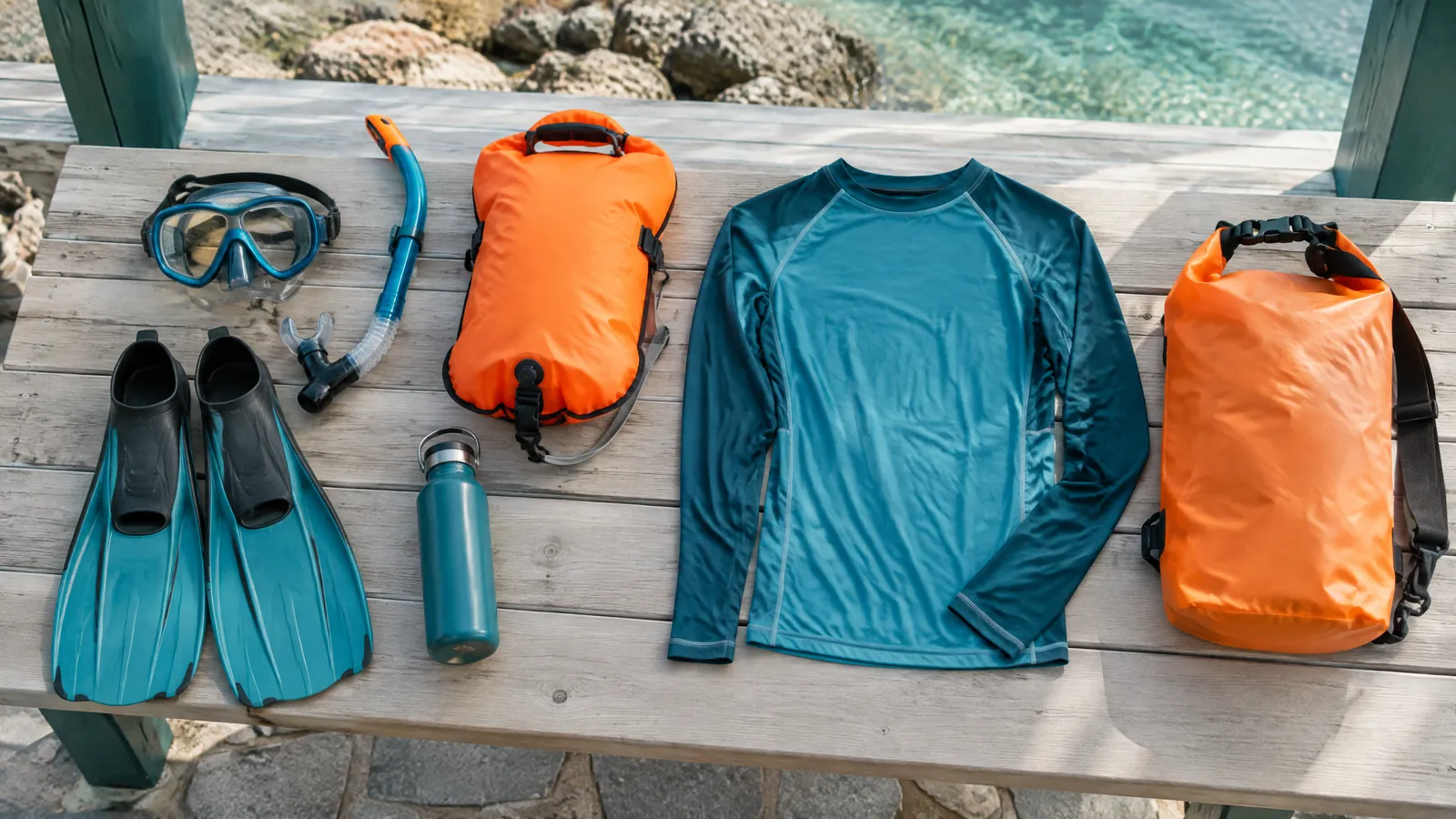
Three practical ways to check rental regulator and mask equipment
| Check stage | What you do | Ask the team when |
|---|---|---|
| Condition and hygiene | Inspect skirt, strap, frame, mouthpiece, hoses and visible cleanliness | You see cracks, mould, residue, cuts or a loose connection |
| Fit and adjustment | Test mask seal, strap position and comfortable mouthpiece placement | The mask leaks, slips, pinches or the hose pulls your jaw |
| Function and handover | Complete supervised breathing, purge and buddy checks | There is a hiss, free flow, leak, unusual resistance or confusion |
| Final decision | Confirm the set is suitable before entering the water | Any concern remains unresolved after adjustment or exchange |
How to check a rental scuba regulator and mask — common questions
What should I check first on a rental regulator and mask?Toggle answer
Start with visible condition and cleanliness. Look for damage, loose connections, a worn mouthpiece, cracked mask parts or a strap that will not adjust securely. Confirm the regulator and mask fit comfortably, then ask the rental team about anything that does not look or feel right.
Can a rental equipment check replace professional servicing?Toggle answer
No. A user check can identify obvious damage, poor fit or a problem during a controlled function check, but it is not a substitute for professional servicing. Stop using questionable equipment and ask the rental provider to assess it before diving.
What if I need a different size or the equipment is defective on the day?Toggle answer
Tell the rental team before entering the water and request an adjustment, replacement or a different plan. Do not force a mask to seal or continue with a regulator that leaks or free-flows. Fees are non-refundable unless the written booking terms say otherwise; make-up sessions or rescheduling are available only where those written terms permit them, and no date is guaranteed.
Should I use contact lenses with a rental mask?Toggle answer
That depends on your own vision and medical advice. Read the linked contact-lens guidance, avoid experimenting on the day, and make sure you can see gauges and signals comfortably. Ask about a prescription mask if standard lenses are not suitable.
Take the question with you
A good rental check is not a race or a technical repair session. Inspect the regulator and mask, confirm comfort and supervised function, communicate every uncertainty, and choose an exchange or postponement when the set is not right. Before your next Hong Kong dive, send the operator your sizing and vision questions, then repeat the four-part check—condition, fit, function and communication—at handover.
Sources worth checking
- Diving Equipment: Refresh Your Equipment
DAN advises checking masks for cracks, tears, strap pliability, mould and purge-valve condition, and checking regulators and hoses for damage, leaks or free flow with breathing and purge tests.
Useful next reads for your plan
If you are still comparing routes, these related pages give you practical questions to bring into your next conversation with an instructor.
Put your plan into practice
Useful planning guides
Hong Kong dive gear rental checks: a handover worksheet
Use this Hong Kong dive gear rental checks worksheet to compare practical options, check key decision points, and confirm current details with DiveHarbour.
Hong Kong dive gear rental checks
