Multi-event style order for a coastal day | DiveHarbour
Put the day's fixed moments first, then plan how the appearance can change between them. A useful multi-event style order records the activity sequence, photo or outfit priorities, realistic reset windows, and a fallback if weather or timing changes. Ask each provider what can be adjusted, what needs a fresh appointment, and which questions must be answered before you commit.
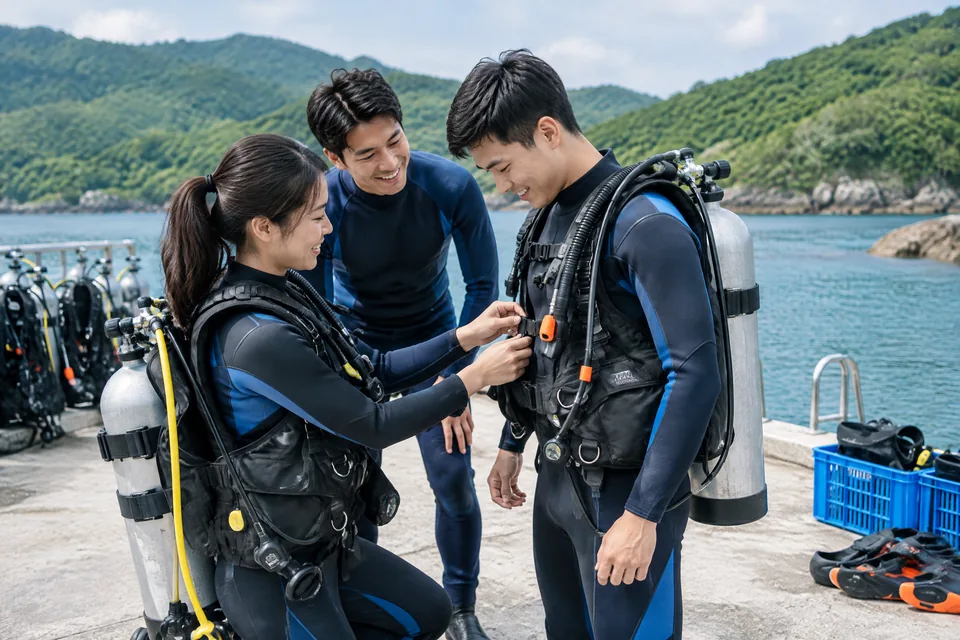
Illustration · Concept illustration of a coastal event sequence; not a real DT HUB venue, medical setting, product, client, or result.
Instructor qualifications
One clear teaching conversation from first breath to next step
DiveHarbour brings together scuba teaching, swimming, lifesaving and water-rescue experience so you can ask practical questions before choosing a course.
PADI teaching backgroundTeaching experience across recognised scuba learning pathways.
SSI teaching backgroundClear explanations when you are comparing agency routes.
NAUI teaching backgroundA practical, standards-aware approach to learning and progression.
Swimming foundationWater confidence and calm, step-by-step practice matter.
Lifesaving experienceSurface awareness and prevention stay part of the conversation.
Pool rescue experienceControlled practice can build confidence before open water.
Beach rescue experienceLocal water context informs sensible preparation.
Kayak rescue experienceA wider water-safety perspective supports good judgement.
PWC rescue experienceAsk about the right learning route for your experience and goals.
Brand relationship: DiveHarbour and DT HUB share the same owner.
DiveHarbour and DT HUB are operated by the same owner. DT HUB links in this article are external service and product information references, not independent third-party recommendations, medical-effect claims, or endorsements of water-activity safety. DiveHarbour handles diving and shore activities; DT HUB's salon, hairpiece, academy, and hair-growth services require separate enquiries.
A useful fact to keep in mind
The National Weather Service Event Ready Guide says an outdoor-event plan should consider hazards, shelter or evacuation options, alerting, and the time needed to move people to safety.
List every event in time order before choosing a look.
Protect the least flexible photo, outfit, or travel constraint first.
Turn reset time and fallback choices into written provider questions.
Keep activity planning, personal clearance, and appearance decisions separate.
Start here
Multi-event style order starts with the day
A multi-event style order is a sequence, not one permanent look
When a coastal day moves from a swim to lunch, photos, and dinner, begin with the clock rather than a hairstyle. Write each block in order, including travel, changing, meals, and any time when the group must be ready. Then mark the appearance requirement for each block. The first look may be the most practical, while the last look may be the most polished. Neither is automatically the priority. The right order is the one that protects the least flexible moment without making every earlier block carry an unrealistic promise.
Use three tests for every appearance request. First, when will it be seen? Second, how much real time exists to change, dry, travel, or consult someone? Third, how much change is acceptable if the day moves? A request that sounds small can become a major constraint when it sits between water, a crowded venue, and a fixed dinner booking. Treat the reset window as part of the design, not as spare time that will somehow appear later.
If one block includes Hong Kong shore diving, keep the activity plan and the appearance plan in separate notes. DiveHarbour can be asked about its own activity arrangements, while a hair or product provider should be asked about appearance scope. One decision does not approve the other. The National Weather Service's event guide similarly starts with hazards, shelter options, alerts, and the time needed to move people, which is a useful reminder to plan the whole sequence rather than only the most attractive photograph [1].
List the activity, venue, travel, meal, photo, and dinner blocks.
Circle the block with the least tolerance for delay or change.
Write the desired appearance in observable terms, such as outline, parting, or formality.
Add a reset question beside every transition instead of assuming it is automatic.
Name the person who will confirm changes on the day.
A sequence is useful only when it can still work after a late arrival, a changed venue, or an interrupted outdoor block.
Guide · 02
Rank the first appearance before choosing the reset
Choose the least reversible priority in your multi-event style order
The first priority is usually the requirement that is hardest to recreate later. That may be a group photograph with a particular neckline, a timed dinner entrance, or a child's patience at a family portrait. It may also be a simple, low-maintenance starting point when the earlier activity is the part that cannot move. Do not rank a look by how dramatic it sounds. Rank it by whether the moment, outfit, people, and available support will still exist after the next transition.
If you are comparing a best hair salon kwun tong, bring the whole event order rather than asking for a generic all-day result. Ask what information the provider needs about the earliest activity, the later outfit, and the time available between them. A comparison page is a starting point for questions, not proof of a particular outcome, schedule, location, or availability. Keep the decision tied to your actual day.
Swipe the table to compare all columns.
Coastal-day look priority worksheet
Event block
Write the appearance goal
Reset question
Fallback decision
Swim or shore activity
What must be comfortable and uncomplicated before entry or departure?
Where can the group change or pause afterwards?
Keep the next look simple or move it later.
Lunch or travel
What should look presentable without becoming the main priority?
How long is the real route, including queues and changing?
Use the preferred starting look if the gap shrinks.
Photos
Which outfit, angle, accessory, or group detail is fixed?
Who confirms the brief and what happens if people arrive late?
Protect the key frame and simplify everything around it.
Dinner
What level of polish is enough for the final setting?
Can the group accept a shorter reset or a later arrival?
Choose the neat, achievable version rather than adding steps.
Illustration · Concept illustration of a between-event reset; not a real DT HUB venue, product, client, or result.
Guide · 03
Treat reset time as part of the look
A good multi-event style order leaves a decision window
Reset time is more than minutes in a calendar. It includes moving away from the activity, changing clothes, finding a private space, checking the new outfit, and deciding whether the next appearance still makes sense. It may also include a conversation with a provider if the actual condition differs from the original brief. Build the window from the real route and venue rules. A tight gap is not a styling challenge to solve with optimism; it is a reason to simplify the next request.
Someone looking at a barber kwun tong page can ask which parts of a brief are fixed and which can be reconsidered after the earlier event. The useful question is not whether a product or finish will withstand every condition. Ask instead what the provider can assess, what would require a new appointment, and what is outside the service. That keeps a grooming conversation honest and avoids turning a service label into an activity guarantee.
Guide · 04
Make the photo and dinner brief answerable
Place the most specific outfit constraint after the activity block
Photos and dinner often expose details that were easy to ignore earlier. A collar may need clear space, a hat may be removed, an accessory may change the balance, or several people may need to look coordinated without looking identical. Note the camera distance, clothing shape, preferred side, and anything you do not want changed. Avoid vague requests such as 'make it last all day'. Describe what should remain recognisable and what may be adjusted if the transition takes longer than planned.
If a child's portrait is part of the day, a kids haircut kwun tong page is only a possible source of service information. Ask separately about the child's comfort, the adult who will confirm changes, the time available, and the exact scope of the appointment. A child should not be treated as a styling prop or as a prerequisite for a water activity. If the portrait plan changes, the simpler and calmer version may be the better event decision.
Give the final provider brief one clear priority sentence. For example, this hypothetical note could say: 'The family photo at 4:30 is fixed; lunch can be casual; dinner should look neat but can be simpler if the photo runs late.' That sentence helps a provider respond to the actual trade-off. It also gives the group permission to stop chasing a version that no longer fits the time, comfort, venue, or weather.
Illustration · Concept illustration of an outfit-led event brief; not a real DT HUB venue, product, client, or result.
Guide · 05
Write the provider brief in event order
Use a multi-event style order note that another person can answer
A good brief lets someone answer without guessing what happens before or after the appointment. Start with the date and event sequence. Add the time that the group must be ready, the clothing or photo constraint, the expected reset window, and the change you can accept. Then ask for the provider's scope in plain language. You are not asking for a promise that one look will work in every setting. You are asking which part of the plan is realistic to discuss and what information is missing.
A practical note can use four lines: 'Earlier block', 'fixed later moment', 'available reset window', and 'fallback if delayed'. Add any private-space, accessibility, child, or group-coordination need that affects the handover. If a provider cannot answer one part, record that as an open question instead of filling the gap with a guess. This makes it easier to compare replies without turning a personal consultation into a catalogue of services.
Heat is another reason to keep the brief flexible. UK government guidance for mass gatherings in England advises organisers to identify hot weather in risk assessments, provide drinking water, plan shade, consider cooler times, and communicate changes when extreme heat is forecast [2]. The page is not a Hong Kong activity rule, but its planning principle is transferable: ask who monitors conditions, where people can pause, and which event block can move before the day becomes uncomfortable.
A kwun tong salon page may be useful when checking a provider's stated scope, but a local-area label should not be read as a promise of a branch in every nearby district. Confirm where the service takes place, what the appointment covers, and whether a mid-day change is within scope. Do not reserve the final priority until those answers fit the sequence and the person responsible for the booking has them in writing.
Swipe the table to compare all columns.
Questions to place in a provider brief
Brief field
What to record
Why it affects the order
Who confirms it
Earlier activity
The activity type, finish time, and any separate provider instruction
It defines what can reasonably happen before the next look
Activity organiser or responsible participant
Fixed later moment
Photo time, outfit detail, venue rule, or dinner arrival
It identifies the least flexible requirement
Host, photographer, or booking owner
Reset window
Travel, changing, privacy, waiting, and decision time
It prevents an imaginary appointment from being treated as available time
Person coordinating the day
Fallback
The simpler look, postponed step, or no-change option
It prevents last-minute pressure when weather or timing shifts
The named decision owner
Guide · 06
Set change rules before the day
Your multi-event style order needs a stop-and-replan point
A plan is calmer when it already says what happens after a delay. Choose one person to check the schedule, communicate with the group, and decide whether the preferred, simpler, or postponed appearance applies. Do not make that person responsible for approving an activity or a medical question. Their role is only to keep the event brief current. If an activity provider, venue, or personal professional gives a separate instruction, follow that instruction rather than trying to solve the conflict with styling advice.
If your outdoor block depends on timing, review best time to dive in Hong Kong as a separate planning resource, then confirm current details with the relevant activity provider. The link does not decide whether a particular person should enter the water or whether a hairstyle or product is compatible with it. Keep an explicit no-change option: stay on shore, keep the event dry, move the photo, or postpone the dinner look when the responsible provider says the schedule no longer works.
Before leaving, send the final brief to everyone who needs it. Include the event order, the fixed moment, the reset window, the fallback, and the person who can change the plan. On the day, check the next block instead of trying to rescue the whole itinerary at once. That small discipline protects time, comfort, and consent. It also lets the appearance remain useful even when the coastal day becomes a different day from the one you first imagined.
For a group member considering mens haircut hong kong, record the same reset rules as everyone else. A person who wants a quick change may have a different tolerance from someone whose appearance must match a formal dinner photograph. Write the group decision as a range: preferred version, acceptable simpler version, and stop point. The aim is not identical hair. It is a shared expectation about what happens when the schedule becomes shorter.
Illustration · Concept illustration of a timing and fallback toolkit; not a real DT HUB venue, product, client, or result.
A sensible next step
Take the question with you
Before you book or ask anyone for a look, make a four-line event note: earlier activity, fixed later moment, real reset window, and fallback. Send the same note to the people who control the activity, venue, photographs, and appearance service. When the answers conflict, protect comfort and the fixed event rather than adding more styling steps.
For a DiveHarbour shore or diving activity, ask DiveHarbour separately about the activity's schedule, conditions, and participation requirements. For a DT HUB salon, hairpiece, academy, or hair-growth consultation, use DT HUB's own information and confirm scope, location, charges, and suitability directly with that provider. Neither side's information replaces the other's decision.
Questions to ask
Common questions
What should come first when the day includes a swim, lunch, photos, and dinner?
Put the events in actual time order, then protect the moment that is hardest to recreate. This may be a fixed photo, a venue arrival, a child's comfort, or a travel constraint. The most elaborate look is not automatically the first priority.
How much reset time should I leave between coastal events?
There is no universal number. Count the real route, changing, privacy, queues, meals, and the time needed to decide whether a change is still worthwhile. Ask the provider what can be adjusted in that window instead of assuming a full reset is available.
Can one provider guarantee that my appearance will work through the whole day?
Do not treat a service page or consultation as a guarantee of performance across water, weather, travel, or different venues. Ask what is within scope, what needs a fresh appointment, and what simpler fallback the provider can discuss.
Does a multi-event style order confirm that I can take part in a water activity?
No. Appearance planning is separate from activity rules, personal medical clearance, equipment decisions, and weather calls. Confirm those matters with the responsible activity provider and, where relevant, your own qualified healthcare professional.
The guidance advises organisers to identify hot weather as a risk, provide water, plan shade, consider cooler times, and communicate changes when extreme heat is forecast.
Continue exploring
Three useful next reads
Keep comparing practical questions before you choose a course, activity or preparation step.
Coastal life and image planning · Updated 2026-11-06
Outdoor-light reference brief for coastal photo planning
Use an outdoor-light reference brief to plan light, framing, neckline and styling limits for a coastal shoot. Read the checklist and ask better questions.
Coastal life and image planning · Updated 2026-11-06
Wind curl goal: a practical coastal styling brief | DiveHarbour
Build a wind curl goal for coastal days by describing wind, silhouette, outfit, and reset time. Read the practical brief before asking a styling provider.
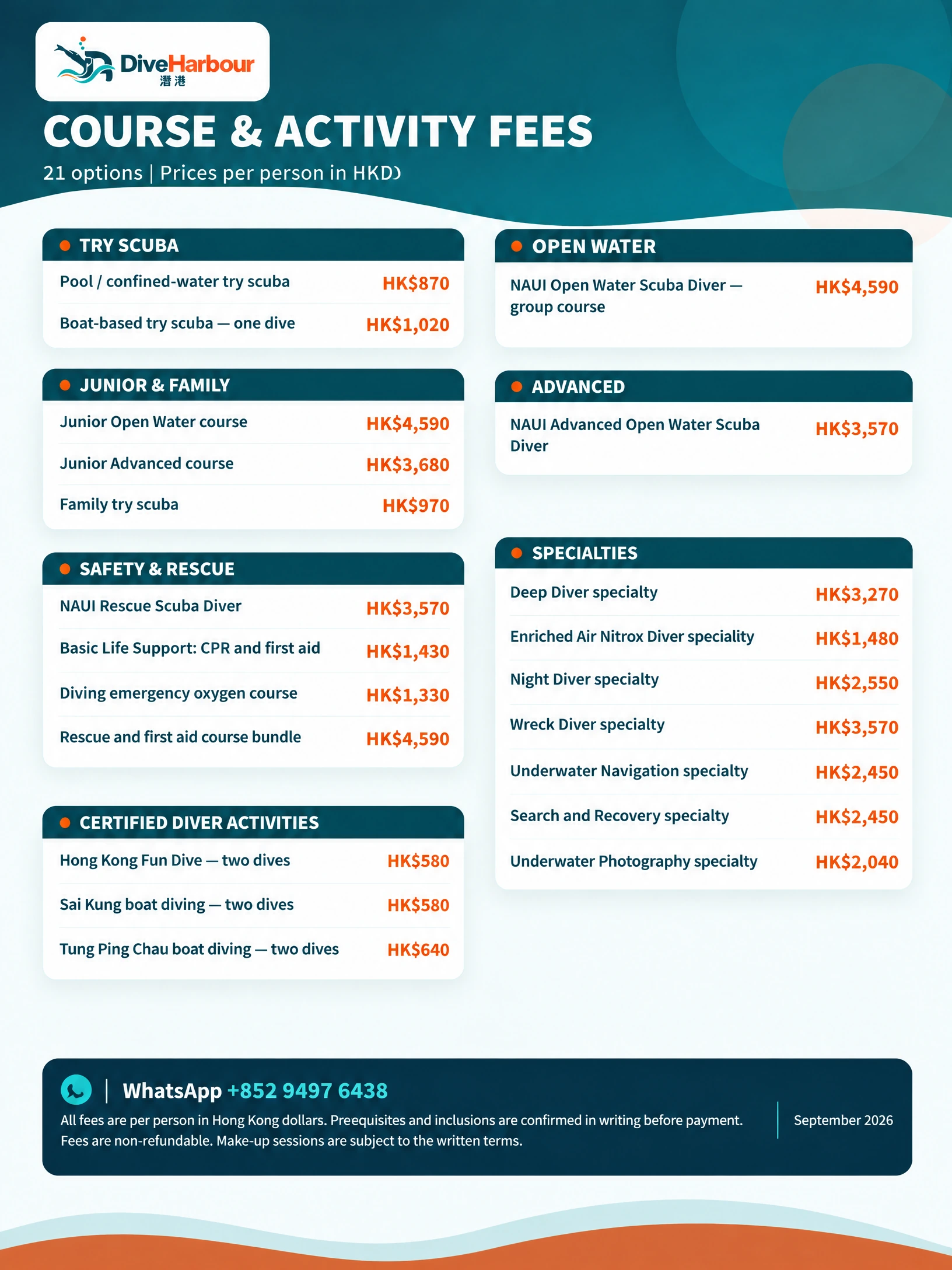
Compare our published course and activity fees before choosing your next step. All prices are per person in Hong Kong dollars.
Before you book, we confirm prerequisites, materials, certification, equipment, venue and boat arrangements in writing. Ask us about fees for courses not listed here.
Read the Sai Kung diving Hong Kong guide to learn about the setting, then explore the Sai Kung scuba diving course page. Certified divers can use our Hong Kong fun dive guide to check experience requirements and activity arrangements. Locations remain subject to weather and sea conditions.
Explore the responsibilities and entry requirements in our Divemaster course Hong Kong guide, then review the scuba instructor course Hong Kong route. Professional training differs from recreational progression, so confirm experience requirements and assessment arrangements first.