

A useful fact to keep in mind
The American Heart Association explains that conventional CPR for trained responders uses a 30:2 compression-to-breath ratio.
Check the sourceEFR CPR and first-aid course Hong Kong
Practical emergency response skills for divers and non-divers
An EFR CPR and first-aid course Hong Kong is useful when you want a calm, structured response rather than a collection of disconnected tips. It can suit recreational divers, boat crew, parents, outdoor leaders, gym staff and anyone who may be first on scene. The learning is practical: identify an immediate danger, check responsiveness and breathing, activate local emergency services, provide appropriate care and communicate a clear handover. It does not turn a participant into a doctor or promise a particular outcome.
DAN’s official first-aid course information says its Basic Life Support: CPR and First Aid course is open to anyone, including non-divers, and covers CPR, AED use, bleeding, choking, shock and secondary assessment. That broad scope is a useful way to understand why basic life support belongs alongside dive training. You practise with training equipment and an instructor, ask questions about realistic scenarios, and learn the boundaries of what a trained lay responder should do while waiting for professional help.
The phrase EFR CPR first aid renewal Hong Kong can describe a focused review, but first check what your previous course actually covered. A renewal or refresher is not automatically the same as a new provider course, and course cards, agency requirements and validity arrangements can differ. Bring the name of your prior qualification, approximate completion date and intended use when you enquire. That lets DiveHarbour clarify whether you need primary care, secondary care, a combined course or a separate oxygen module.
- Choose a course with hands-on practice, not only an online explanation.
- Tell the instructor about your dive leadership, family, workplace or watersports context so examples are relevant.
- Plan how you would call for help and give your location in Hong Kong before an emergency occurs.

Emergency Oxygen Provider course Hong Kong
Understand when oxygen training belongs in your emergency plan
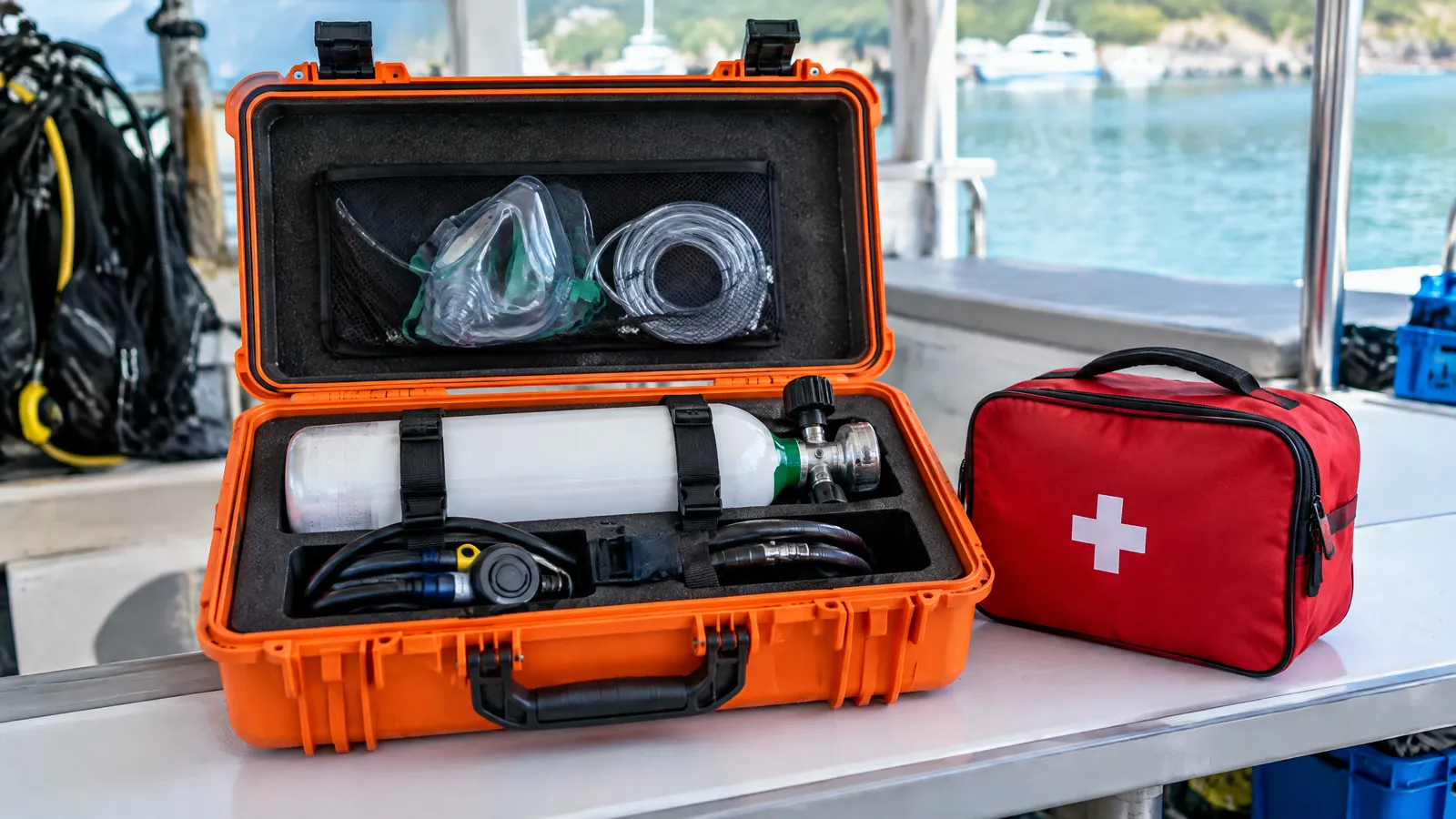
An Emergency Oxygen Provider course Hong Kong has a narrower, diving-focused purpose than general CPR and first aid. It helps a participant recognise signs and symptoms that may be consistent with a scuba-diving injury, understand the role of emergency oxygen first aid, and use the equipment covered by the course under supervision. It is not a diagnosis course, a replacement for emergency medical services or permission to make treatment decisions beyond your training.
DAN describes its Emergency Oxygen for Scuba Diving Injuries course as teaching recognition of decompression illness signs and symptoms and the administration of emergency oxygen first aid. DAN also notes that current CPR training is a prerequisite for that course in its programme. This is a helpful example of an agency-specific rule: do not assume every provider, agency or local arrangement uses identical prerequisites. Ask which CPR evidence is accepted, whether a current card is needed, and what equipment practice is included before paying.
For a diving-specific pathway, read the separate Emergency Oxygen for Scuba Diving Injuries course Hong Kong page as well. It is better to separate oxygen-provider learning from EFR primary and secondary care than to treat one certificate as proof of all emergency skills. In a real incident, keep the scene safe, contact emergency services promptly and follow your trained procedure; oxygen training should support, never delay, professional assessment and evacuation.
If you are deciding between general CPR and oxygen training, consider your likely role. A non-diver who wants family or workplace readiness may need basic life support and first aid first. A diver, boat operator or dive leader who already holds accepted CPR training may have a stronger reason to add oxygen-provider education. A combined plan can be sensible, but the correct order depends on your existing qualification and the course provider’s stated prerequisites.
- Ask whether the course includes mask and delivery-system practice and what equipment is supplied on the day.
- Treat suspected diving illness as an emergency: call for professional help and follow the local response plan.
- Do not improvise oxygen use, diagnose decompression illness or delay evacuation because a course was completed.
EFR CPR first-aid refresher Hong Kong
Refresh confidence without confusing refresher training with oxygen training
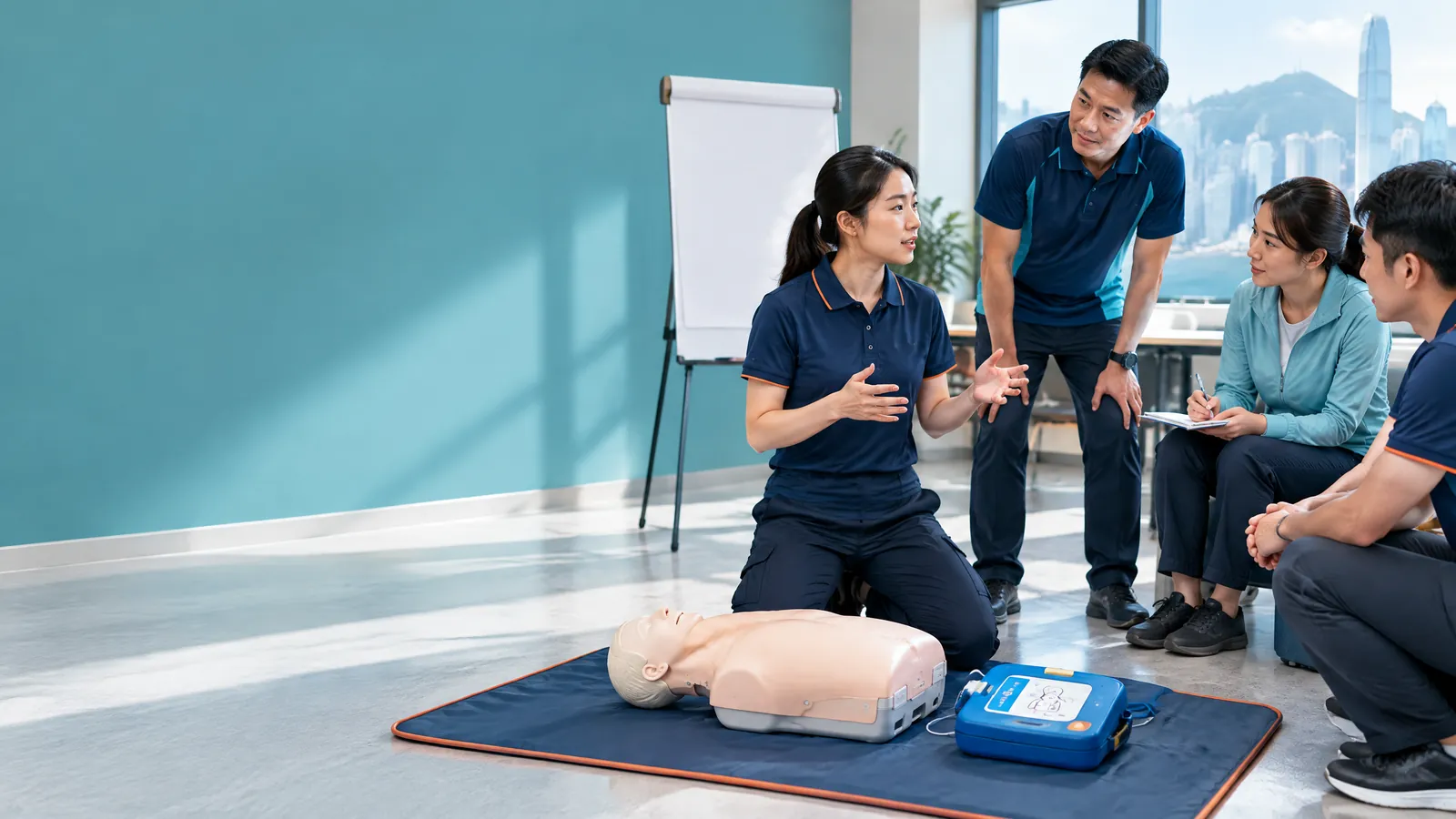
An EFR CPR first-aid refresher Hong Kong is worthwhile when you remember the ideas but feel slower or less certain with the hands-on sequence. Skills fade when they are not used. A refresher gives you a chance to rehearse scene safety, assessment, compressions, rescue breaths where appropriate, AED awareness, bleeding control and other first-aid responses in a supervised setting. It also exposes gaps that are easy to miss when you simply reread a manual.
A refresher is not a shortcut around prerequisites. Tell the training provider whether your previous course was primary care only, a combined CPR and first-aid programme, a workplace qualification or a diving-specific oxygen course. The instructor can then explain whether a review is suitable, whether an updated provider course is needed, and what evidence will be recorded. If your certificate is missing or the date is uncertain, say so rather than guessing.
A useful review should include feedback, not just a slide presentation. You can ask how skills are assessed, whether there is enough practice time for each learner, what language the materials use and how completion is documented. For a diver, connect the class to your buddy, boat and shore-support plan; for a non-diver, connect it to home, work or community settings. The goal is a realistic response framework, not confidence that exceeds your training.
Which course fits your role and previous training?
Compare the learning objective before comparing dates
Start with the decision you need to make. If you have never learned CPR, basic life support and first aid may be the logical foundation. If you already hold accepted CPR training and regularly support divers, emergency oxygen education may fill a specific gap. If you have a previous EFR-style qualification but have not practised recently, request a refresher assessment. These are related choices, not interchangeable labels.
The table below is a conversation starter rather than a promise of eligibility. The final course title, assessment method, certificate and accepted prerequisites should be confirmed in writing. If your objective is professional teaching, that is a different pathway: see the CPR and first aid instructor course Hong Kong information rather than assuming a provider certificate authorises you to teach.

How emergency training supports dive safety
Build a response plan before you need one
A course becomes more useful when it connects to a simple team plan. Before a shore or boat activity, agree who watches the diver, who calls for help, who brings the first-aid kit or oxygen unit, and who meets responders. Check mobile coverage, departure and return information, weather or sea conditions, and the exact location that rescuers should receive. Training cannot remove risk, but it can reduce hesitation and improve communication.
The American Heart Association explains that conventional CPR for trained responders uses a 30:2 compression-to-breath ratio. Its public guidance also describes hands-only CPR for an adult sudden collapse. This is a sourced training fact, not a reason to practise a procedure from a webpage alone: follow the method taught in your course, current local guidance and the emergency dispatcher’s instructions. Children, infants and unusual circumstances may require different instruction.
Do not confuse emergency training with a medical fitness decision. If a health condition, medication, recent illness or pregnancy affects whether you can participate, seek individual advice from a qualified clinician and tell the provider what participation involves. During an actual emergency, protect yourself, call for professional help and stay within your training.

Booking questions, equipment and next steps
Make the enquiry specific so the recommendation is useful
When messaging DiveHarbour, include four details: your previous CPR or first-aid training, whether you need a new course or refresher, whether you want diving-related oxygen training, and how you expect to use the skills. Also ask about language, practical equipment, assessment, course completion evidence, location, duration and the current fee. The published listing shows Basic Life Support: CPR and First Aid at HK$1,430 per person and the diving emergency oxygen course at HK$1,330 per person; confirm what those listings include before booking because arrangements can change.
If your broader goal is becoming more capable around divers, the Rescue Diver course Hong Kong page covers in-water rescue education, while Rescue Diver prerequisites explains the separate entry considerations. First-aid and oxygen training complement rescue training; neither automatically replaces the other. A clear enquiry prevents you from booking a course that sounds similar but does not meet your intended role.
Finally, ask for the written payment and cancellation terms. Fees are non-refundable unless the written terms say otherwise, and make-up sessions are available only where those written terms permit them; a new date is never guaranteed. If you are unsure, pause and clarify before payment.
- Send your prior qualification name and date, not just the word ‘EFR’.
- Confirm the provider, certificate or completion record and accepted prerequisite evidence.
- Keep your emergency plan and training current rather than waiting for a real incident.

Compare the emergency-training route with your immediate need
| Option | Best for | Check |
|---|---|---|
| CPR and first aid | New learners, families, divers and non-divers | Hands-on CPR, AED and first-aid scope; accepted completion record |
| Emergency oxygen | Divers or support teams adding diving-specific oxygen skills | Current CPR prerequisite, equipment practice and response boundaries |
| EFR refresher | People revisiting previously learned primary or secondary care | Prior course details, assessment format and whether renewal is appropriate |
| Rescue Diver plus first aid | Divers building in-water rescue and emergency-response capability | Separate dive prerequisites, water skills and first-aid evidence |
EFR CPR and Emergency Oxygen Training in Hong Kong — common questions
Is this training only for scuba professionals?Toggle answer
Not necessarily. CPR and first-aid training can be relevant to divers, instructors, boat crew, families, outdoor leaders and other people who want a structured response framework. Emergency oxygen is more diving-focused, but the appropriate choice depends on your previous training, intended role and current needs. Ask before choosing.
Is an EFR refresher the same as an oxygen refresher?Toggle answer
No. An EFR CPR and first-aid refresher reviews emergency-response skills, whereas emergency oxygen training addresses a separate subject. Tell us what you have previously completed so we can clarify which training is relevant rather than treating one as proof of the other.
Do I need CPR training before emergency oxygen training?Toggle answer
Often there is a CPR prerequisite, but the exact rule belongs to the course provider and agency. DAN, for example, states that current CPR training is a prerequisite for its Emergency Oxygen for Scuba Diving Injuries course. Confirm which qualification and validity period are accepted for the Hong Kong arrangement you are considering.
Are course fees refundable, and can I make up a missed session?Toggle answer
Fees are non-refundable unless the written booking terms state otherwise. Make-up sessions are available only where those written terms permit them, and a replacement date is not guaranteed. Ask for the current terms before payment, especially if travel, work or health may affect attendance.
Can this course diagnose a diving injury or replace a doctor?Toggle answer
No. Training helps you recognise an emergency, provide the actions taught and communicate with professional responders. It does not provide medical diagnosis or individual medical clearance. Call emergency services promptly and seek qualified clinical advice for personal health questions.
Take the question with you
The best next step is to send DiveHarbour your previous CPR or first-aid qualification, whether you want a new course or refresher, and whether your intended use involves scuba-diving emergencies. We can then help you compare EFR, emergency oxygen and related rescue options, confirm prerequisites, and check the current written fee and attendance terms before you commit.
Sources worth checking
- DAN First Aid Courses
DAN states that its Basic Life Support: CPR and First Aid course is open to anyone, and that its Emergency Oxygen for Scuba Diving Injuries course covers recognition of decompression illness signs and symptoms and emergency oxygen first aid; it lists current CPR training as a prerequisite for EO2.
- American Heart Association: What is CPR?
The AHA states that conventional CPR for trained responders uses 30 chest compressions to 2 breaths and describes hands-only CPR for a witnessed sudden adult collapse.
Useful next reads for your plan
If you are still comparing routes, these related pages give you practical questions to bring into your next conversation with an instructor.
Put your plan into practice
Useful planning guides
Emergency oxygen training path for Hong Kong divers
Use this emergency oxygen training path worksheet to compare practical options, check key decision points, and confirm current details with DiveHarbour.
emergency oxygen training path
