

A useful fact to keep in mind
The Undersea and Hyperbaric Medical Society (UHMS) describes a 3-part recreational diving medical screening system: a participant questionnaire, a physician’s evaluation form when approval is necessary, and guidance for physicians.
Check the sourceHow to compare dive insurance with a medical declaration
Separate policy conditions from medical screening questions
It is easy to put both documents in the same mental folder because they may ask about asthma, medication, previous operations or recent illness. They are not interchangeable. A medical declaration is a health-screening document used to identify whether you may need professional medical advice before diving. Insurance is a contract: it explains what events are covered, where cover applies, what you must disclose, and which exclusions or conditions may affect a claim. One does not automatically satisfy the other.
Start with the practical question each document answers. The declaration asks, in effect, ‘Is there information here that needs a diving-suitability discussion?’ The policy asks, ‘If a covered incident occurs, what assistance or reimbursement is available, and under what terms?’ Compare the insurer’s definitions of diving, depth, training, equipment, rescue and emergency treatment with your planned activity. A holiday policy may include some recreational diving yet exclude professional work, technical profiles, solo activity or a failure to follow recognised safety requirements. Never infer cover from a short marketing summary.
The Undersea and Hyperbaric Medical Society (UHMS) describes a 3-part recreational diving medical screening system: a participant questionnaire, a physician’s evaluation form when approval is necessary, and guidance for physicians. That structure is a useful explanation of roles, but your instructor, training agency, insurer and doctor may apply their own current requirements. Read the actual form supplied for your course and ask the insurer how medical disclosure affects eligibility or claims. If a question is unclear, do not change an answer simply to avoid a referral. You can first review how to complete a scuba diving medical questionnaire for a plain-language preparation checklist.
- List the activity honestly: course, guided shore dive, boat dive, depth range, location and whether it is recreational or specialised.
- Read definitions, exclusions, notification duties and emergency-assistance instructions in the full policy, not only the purchase page.
- Keep a copy of the submitted declaration, policy schedule and insurer contact details; do not rely on memory after an incident.

Update diver medical information before a dive course
Gather relevant changes and discuss uncertainty early
Before a course, make a simple timeline from your last completed form to the planned start date. Include new diagnoses, hospital or emergency visits, operations, injuries, changes in fitness, prescribed or non-prescribed medicines, and symptoms that have not yet been explained. Also note a pregnancy or possible pregnancy, because diving decisions require individual professional advice. A change does not mean you cannot dive; it means the old answer may no longer describe your current situation.
The most useful preparation is factual rather than dramatic. Write the date of a procedure, the name and dose of a medicine, the date symptoms stopped, and the clinician who advised you. Bring relevant records only if your doctor or the form requests them, and protect your personal health information when sending documents by email or messaging app. The dive centre can explain what it needs for enrolment, while a qualified doctor decides medical questions within the appropriate clinical context.
If a questionnaire directs you to seek a physician’s evaluation, allow time for that appointment before reserving boats or committing to a course date. A doctor may need to understand the demands of diving and the exact activity, so take the current form and course description. The diver medical physician's evaluation form is a helpful reference to the type of document that may be requested; it is not a substitute for an appointment or an automatic clearance. For Hong Kong divers, the scuba diving medical questionnaire Hong Kong guide can help you identify which version and language to confirm with your provider.
Tell the instructor about a change before entering the water, even if you believe it is minor. Instructors can adjust the learning conversation, refer you to the appropriate professional and explain whether the training agency needs a new declaration. They should not diagnose or promise that an insurer will accept a claim. Keep the discussion private and specific: ‘My medication changed last month; which current form should I complete?’ is more useful than a vague reassurance that you are fine.
- Prepare a one-page change list: condition or symptom, date, treatment, current status and clinician contact if relevant.
- Submit the current form requested by the course; do not reuse a photograph or old scan without checking its validity.
- Ask two separate questions: what the dive centre needs for training, and what the insurer requires for disclosure or cover.

When to update a diver medical questionnaire
Use current information and seek qualified medical advice
There is no universal calendar rule that makes every diver repeat the same form every year. The safer trigger is a material change or a question in the current form that is no longer answered accurately. Complete the questionnaire again when your training provider asks, when the wording says to confirm there has been no change, or when a new health event makes an earlier declaration incomplete. Ask the provider how they define a current form rather than guessing from a form found online.
Use the same approach after a significant illness, operation, unexplained blackout, new breathing or heart symptom, medication change, or injury affecting movement, balance or hearing. Do not use a questionnaire to self-diagnose, and do not deliberately omit a symptom because you expect it to resolve. If you are waiting for tests or a diagnosis, pause the booking conversation and ask a qualified doctor and the dive centre what information is needed before diving.
Pressure, anxiety or ear discomfort deserves careful handling in the moment. If you cannot equalise comfortably, stop and tell the instructor or buddy; read what to do if you cannot equalize during a dive for a conservative stop-rule explanation. Do not force equalisation, hold your breath to ‘push through’, or follow internet treatment instructions. A medical article can provide general education only; a clinician who understands your health and diving context is the right person for personal advice.

A practical document comparison before booking
Check the same scenario against both documents
Do the comparison with one realistic scenario rather than scanning for reassuring words. For example, if you are joining a beginner course from Hong Kong, identify whether the activity is training, whether boat transport is involved, the planned maximum depth, and who organises emergency assistance. Then check the policy’s definition of recreational diving and the course’s medical paperwork. If the declaration leads to a physician review, factor in appointment time and do not book a date that depends on an unconfirmed clearance.
Use these three document steps in order: gather, compare and confirm. Gather the current questionnaire, policy wording, schedule, emergency contact and course details. Compare health disclosure duties separately from cover limits. Confirm ambiguous points in writing with the insurer and the dive centre. Written answers are easier to revisit than a verbal assurance and may show exactly which assumption still needs a doctor’s input.
Remember that travel insurance is not automatically dive accident insurance. The relevant comparison is explained in dive accident insurance versus travel insurance: look at diving definitions, medical evacuation, treatment, personal liability, equipment, exclusions and claim procedures. A low premium is not useful if the activity you plan is outside the policy definition or if a notification condition is missed.

What to ask the insurer, doctor and dive centre
Keep responsibility clear between the three conversations
Ask the insurer focused contract questions: Is this course and boat activity within the definition of diving? Is there a depth, qualification, supervision or location condition? Must a medical condition or medication change be notified before purchase or before the dive? What emergency number should a diver or operator call? Ask where the answer appears in the wording, and save the policy version and date.
Ask your doctor focused health questions: Does my current condition or treatment require a diving assessment? What information about the planned depth, exertion, environment or rescue demands is relevant? Does the doctor want the current participant questionnaire or physician form? A doctor’s advice is individual; a generic online ‘fit to dive’ checklist cannot replace it.
Ask the dive centre focused training questions: Which questionnaire and revision are required? What is the latest date to submit it? Who reviews a referral, and what happens if the form is incomplete? How will a change be recorded before an open-water session? Good answers help you plan without pressuring you to disclose more personal detail than necessary.
- Request written clarification whenever an answer affects eligibility, timing, cover or a claim.
- Use the current activity description when asking a doctor or insurer; ‘diving’ can mean different risk levels in different documents.
- If a health concern is unresolved, choose postponement and professional advice over a last-minute self-clearance.
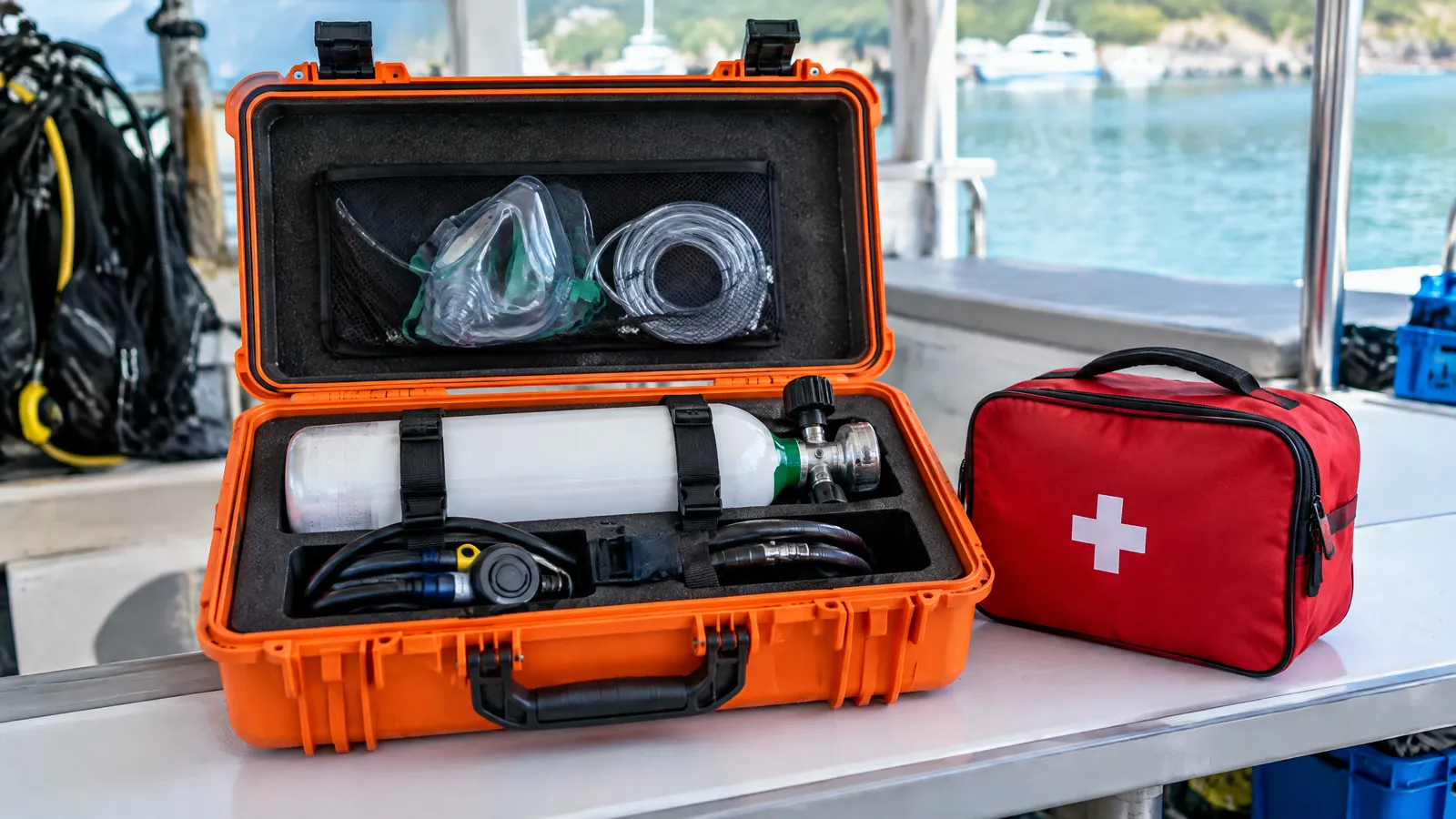
A calm final review before entering the water
Honest information supports better decisions
On the day, check that your health feels consistent with the information you submitted and that you understand the plan, supervision and emergency contact. A declaration is not a guarantee of fitness, and insurance is not a guarantee that every incident will be paid. If something has changed since submission, tell the instructor before the session and contact the insurer if the policy requires notification. The safest choice may be to stop, obtain advice and reschedule under the written terms.
A short review also prevents document confusion. Keep your policy number and assistance contact accessible, know who is responsible for the course paperwork, and make sure your buddy or instructor knows how to raise a concern without embarrassment. Never feel obliged to conceal symptoms to protect a booking. Diving is more enjoyable when health decisions are transparent, conservative and made by the person qualified to make them.

Which document answers which question?
| Document | Best for | What to check |
|---|---|---|
| Medical participant questionnaire | Initial or continuing-diver health screening | Answer current questions honestly; follow any physician-referral instruction. |
| Physician evaluation form | A clinician’s assessment when the screening process requires approval | Take the current form and accurate activity details; it is not an insurer’s coverage decision. |
| Dive insurance policy | Cover, exclusions and assistance after a covered event | Definitions, medical disclosure, depth or qualification limits, notification and claims procedure. |
| Course enrolment record | Training provider’s operational requirements | Form revision, submission deadline, supervision plan and what happens after a health change. |
How to compare dive insurance with a medical declaration — common questions
Does dive insurance replace a medical declaration?Toggle answer
No. Dive insurance and a medical declaration serve different purposes. Insurance documents set out cover, exclusions and conditions, while a declaration records health information relevant to diving. Read both carefully and ask the insurer or a qualified doctor about questions you cannot interpret confidently.
What should I do if my health changes before a course?Toggle answer
Update the information requested by the course or questionnaire and tell the dive centre about the change before diving. Do not self-clear a medical concern. A qualified doctor can advise on your individual circumstances, while the insurer can explain any policy notification requirements.
How often should I complete a diver medical questionnaire?Toggle answer
Follow the current form and your training provider’s instructions rather than assuming a universal expiry period. Complete or update it when the wording requires confirmation, when your provider asks, or when a health event, medication change or new symptom makes the earlier information inaccurate.
Are insurance fees refundable if I decide not to dive after a medical referral?Toggle answer
Do not assume they are refundable. Insurance and course fees are generally non-refundable unless the applicable written terms say otherwise. Ask the insurer and dive centre about cancellation, transfer or postponement conditions before paying; a make-up session or new date is available only where the written terms permit it, with no guaranteed reschedule date.
Can a dive centre decide that I am medically fit?Toggle answer
A dive centre can explain training requirements and pause participation, but it should not replace a qualified doctor’s individual medical advice. If the screening process requests a physician’s evaluation, obtain that evaluation and provide the current documentation before entering the water.
Take the question with you
Before your next course, gather the current questionnaire, full insurance wording and exact activity details. Mark every health or medication change, ask a qualified doctor about anything uncertain, and obtain written answers from the insurer and dive centre where their responsibilities overlap. This simple separation—health screening for diving decisions, insurance wording for contractual cover—helps you book with clearer expectations and gives the instructor the information needed for a safer plan.
Sources worth checking
- UHMS Recreational Diving Medical Screening System
UHMS describes a 3-part system consisting of the Diver Medical Participant Questionnaire, a Diver Medical Physician’s Evaluation Form when physician approval is necessary, and Diving Medical Guidance for physicians.
- UHMS Diver Medical Participant Questionnaire (2026 English form)
The official participant questionnaire is presented as a screening document that can indicate whether a diver should seek a physician’s evaluation.
Useful next reads for your plan
If you are still comparing routes, these related pages give you practical questions to bring into your next conversation with an instructor.
Put your plan into practice
Useful planning guides
Diver medical paperwork guide for Hong Kong divers
Use this diver medical paperwork guide worksheet to compare practical options, check key decision points, and confirm current details with DiveHarbour.
diver medical paperwork guide
