Hairpiece backup route for Hong Kong shore events guide
A useful hairpiece backup route treats a shore day as separate decisions: the look you want on land, the point where you may change, the private place and person for a handoff, and the fallback if materials, fixing, equipment or activity conditions are not confirmed. Pack information rather than assumptions, keep water activity separate from appearance planning, and make the shore-only option easy to choose without embarrassment.
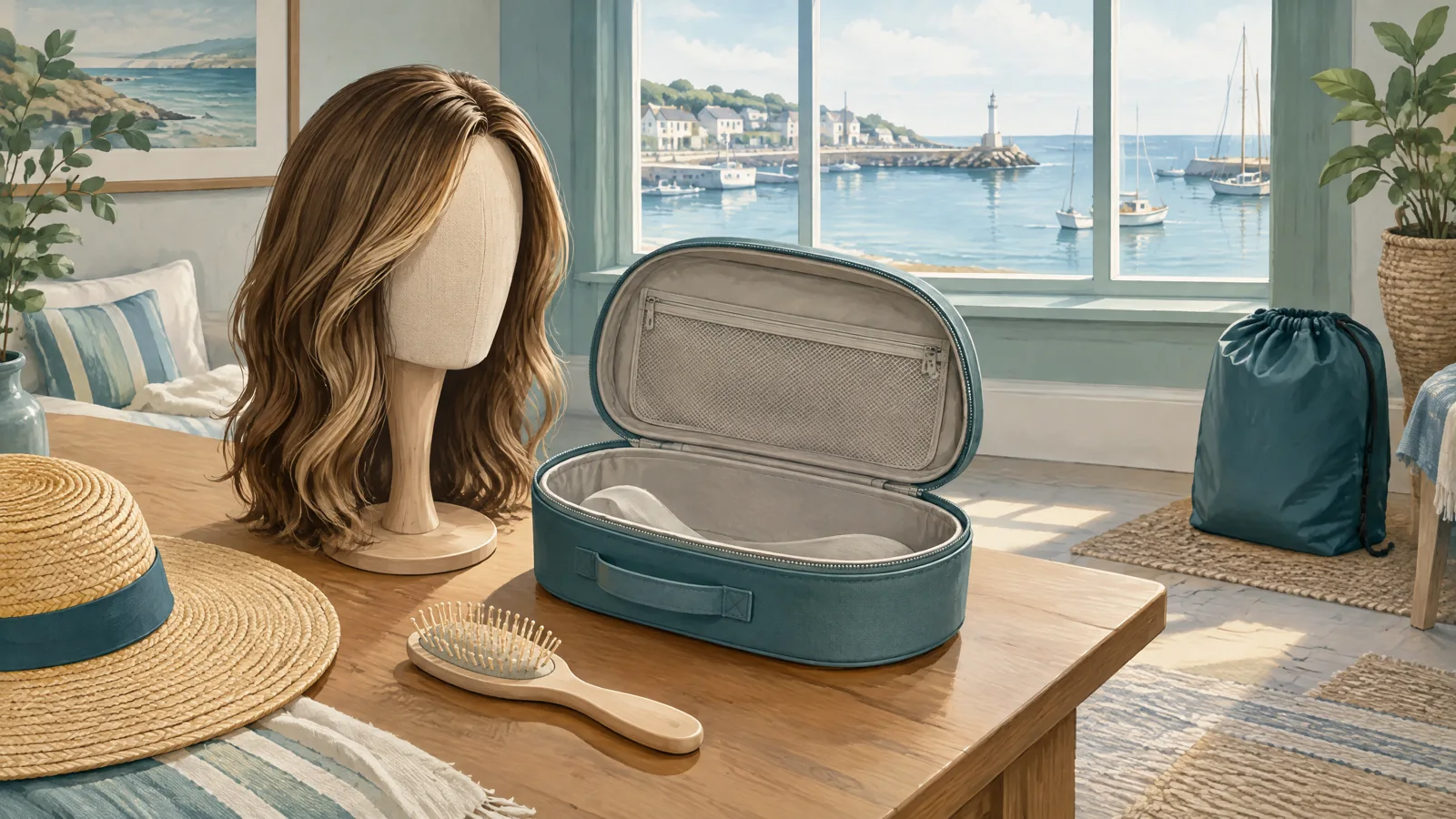
Illustration · Concept illustration of a shore-event change plan; not a DT HUB shop, medical setting, product, client, student, or before-and-after result.
Instructor qualifications
One clear teaching conversation from first breath to next step
DiveHarbour brings together scuba teaching, swimming, lifesaving and water-rescue experience so you can ask practical questions before choosing a course.
PADI teaching backgroundTeaching experience across recognised scuba learning pathways.
SSI teaching backgroundClear explanations when you are comparing agency routes.
NAUI teaching backgroundA practical, standards-aware approach to learning and progression.
Swimming foundationWater confidence and calm, step-by-step practice matter.
Lifesaving experienceSurface awareness and prevention stay part of the conversation.
Pool rescue experienceControlled practice can build confidence before open water.
Beach rescue experienceLocal water context informs sensible preparation.
Kayak rescue experienceA wider water-safety perspective supports good judgement.
PWC rescue experienceAsk about the right learning route for your experience and goals.
Brand relationship: DiveHarbour and DT HUB share the same owner.
DiveHarbour and DT HUB are operated by the same owner. DT HUB links here are external service or product information references, not independent recommendations, medical-effect claims, or water-activity safety endorsements. DiveHarbour handles diving and shore activities; DT HUB salon, hairpiece, academy, and hair-growth services require separate enquiries.
A useful fact to keep in mind
CancerCare advises that synthetic wigs should be blotted rather than twisted or wrung, not brushed while wet, and dried away from direct sunlight.
Divide the day into arrival, photos or dinner, any change point, and the final pack-away stage.
Carry the piece details, care label, fit notes, and privacy preference instead of relying on memory.
Ask the relevant provider about material, fixing, heat, cleaning, and equipment boundaries before the event.
If any water-use or equipment question remains unanswered, switch calmly to the shore-only look.
Start here
Build a hairpiece backup route before the shore day
Why a hairpiece backup route starts with event segments
A backup route is more useful than simply carrying a second item. Start by writing the shore day as a sequence: arrival, the first land-based look, photographs or lunch, a private change point, and the journey home. For each segment, name the appearance goal and the person who can help if the plan changes. The American Cancer Society advises following the directions supplied with a wig and considering fit, style, and care requirements as separate choices [1]. That approach keeps a visual preference from becoming an untested assumption about heat, fixing, water, or equipment.
Decide what must remain private before you choose the route. You might want only one trusted companion to know that a hairpiece is being carried, or you may prefer a neutral pouch and a simple phrase such as “I need a shore reset.” Record that preference beside the event plan. If a family photograph needs a natural-hair alternative for a child or another participant, kids haircut hong kong is a service label to discuss with the provider, not a reason to change the hairpiece plan at the last minute.
Arrival look: decide whether the piece is worn, carried, or left out of the first photographs.
Change point: identify a private indoor or sheltered place and the person responsible for the handoff.
Information: keep material, care-label, fit, and fixing notes together with the item.
Fallback: choose the simplest shore-only look if an activity or equipment question is unresolved.
Swipe the table to compare all columns.
Hairpiece backup route by shore-event stage
Stage
Decision
Carry or record
If unresolved
Arrival
Wear the planned land look or keep the piece packed
Piece, clean container, care card
Use the simplest private land look
Photos or dinner
Confirm outfit, light, and preferred silhouette
Reference image and privacy preference
Keep the look unchanged
Change point
Decide whether a reset is practical and private
Named helper and time window
Postpone the change
Water-related segment
Separate activity procedures from appearance choices
Activity questions and equipment notes
Choose shore-only styling
The backup is a decision route, not a promise that one hairpiece will suit every part of a coastal day.
Guide · 02
Map the look around real event transitions
Rank appearance changes by time, privacy, and reset effort
Next, mark the moments when a change is actually practical. A quick move between a taxi, venue, pier, and changing room can make a complicated reset unrealistic. Give the most important land-based look the best preparation, then make the second look deliberately simple. Note whether the change needs a mirror, a clean surface, another person, or a few quiet minutes. A route that depends on an unconfirmed room or hurried handling is not a reliable backup; move that change to a later private stop instead.
If your alternative is to use your own hair rather than a hairpiece, treat the service name as a question for the provider. For example, fade haircut hong kong may describe a type of cut, but it does not tell you whether the cut fits your outfit, timing, existing hair, or privacy needs. Ask what the label covers, what information is needed, and whether the provider can discuss a shore-event brief. Do not build the day around an assumed duration or outcome.
Illustration · Concept illustration of appointment notes and privacy choices; not a DT HUB shop, medical setting, product, client, student, or before-and-after result.
Guide · 03
Prepare one compact information card
Give a provider the facts needed for a hairpiece backup route
A short information card reduces repeated explanations when your appearance plan changes. Write the piece type or material if known, the care-label wording, how it normally fits, which areas you do not want touched, and whether you want a private discussion. Add the event segment, outfit neckline, preferred silhouette, and the latest time a change can happen. If you are unsure about a detail, write “please confirm” rather than guessing. The American Cancer Society also recommends checking fit instructions and using natural light when comparing colour references [1].
If the look may involve a change to natural hair, a provider page labelled japanese straight perm can be one starting point for questions about scope. It should not be read as a recommendation for your event or as evidence that a chemical or heat-based service will suit a particular piece. Ask whether the discussion concerns your own hair, the hairpiece, or both, and keep those decisions separate from any water-activity decision.
Keep the card factual: material, fit, care, privacy, timing, and questions. Leave diagnosis, treatment, and activity clearance to the appropriate professionals.
Guide · 04
Plan a private handoff and a gentle reset
Make carrying, storing, and checking the piece less stressful
Choose one clean, clearly identified container and decide who opens it. The container should protect the piece from crushing and from contact with wet clothing, sunscreen, food, or sand. Add the care card and a note about your privacy preference. The American Cancer Society says a wig can be kept on a wig stand for short periods when it is not being worn, and advises using products made for wigs [1]. For a shore day, treat that as a general care prompt, then follow the specific label for your material rather than improvising.
CancerCare’s synthetic-wig fact sheet advises cool or cold water, gentle handling, blotting instead of twisting or wringing, no brushing while wet, and drying away from direct sunlight [2]. Those details are relevant only when the piece is synthetic and the label permits washing. They are not instructions to rinse a piece with seawater or to clean it during an activity.
If the material, fixing, or drying method is uncertain, keep the item packed and ask the provider after the event. An image makeover hong kong label may help you describe an overall appearance enquiry, but it cannot answer those care boundaries by itself.
Build privacy into the handoff rather than treating it as an emergency. Tell your helper where the card is, what language to use when asking for a room, and whether photographs are allowed. If a provider needs images or measurements, ask how they will be used and stored before sending them. A pause is reasonable when a request feels too personal, the available space is not private, or the item would have to be handled by someone you did not choose.
A calm handoff has three parts: the item, the information card, and permission to stop when a detail is unclear.
Illustration · Concept illustration of a clean storage and handoff setup; not a DT HUB shop, medical setting, product, client, student, or before-and-after result.
Guide · 05
Keep water activity and appearance decisions separate
A shore-only fallback protects the rest of the day’s choices
Do not treat a hairpiece as waterproof, secure in water, or automatically compatible with a mask, helmet, buoyancy equipment, or other safety equipment. Do not add glue, tie it to equipment, force it off, or modify equipment to accommodate it. A provider who understands the piece can explain its own care and fixing scope; an activity provider must address activity procedures and equipment. Those are different conversations. Until both conversations are answered for your circumstances, the responsible route is to keep the hairpiece for land-based moments and choose a shore-only appearance during water-related segments.
If the itinerary includes Hong Kong shore diving, use that page only to understand the activity context and the questions to ask the activity provider. It does not confirm that a hairpiece can be worn during the activity. Write down the exact segment that involves water, the equipment involved, and the point at which you will remove appearance decisions from the activity plan. The hairpiece can then return to the itinerary only for a separately planned land-based moment.
The same separation applies to a trip involving Hong Kong outlying-islands diving. Travel, transfers, weather, changing areas, and equipment logistics can alter the privacy and storage plan. Do not assume that a scenic location provides a suitable place to change or store a piece. Decide in advance who holds the item, how it stays protected, and what you will do if the planned private stop is unavailable. If those details fail, the shore-only fallback should be immediate and ordinary, not a last-minute negotiation.
Swipe the table to compare all columns.
Questions to close before carrying a backup piece
Question
Who should answer
What to write down
Route if unanswered
What is the material and care limit?
Piece provider or manufacturer
Label wording and prohibited handling
Keep packed and do not improvise
Where can a private handoff happen?
Venue or event organiser
Room, access, and helper plan
Use the shore-only look
What does the activity involve?
Activity provider
Segment, equipment, and procedure
Keep appearance separate
What happens after a change?
Your helper and provider
Storage, return, and next question
Stop handling and ask later
Appearance planning never overrides an activity provider’s procedures or a person’s own medical and equipment requirements.
Guide · 06
Run the route, then record what changed
Turn one shore day into better questions for the next plan
On the day, use the route in order rather than making several changes at once. Confirm the segment, check the information card, ask who is handling the piece, and decide whether the planned look is still practical. If weather, crowding, heat, or privacy changes, choose the simpler land-based option. You do not need to prove that a difficult plan can work. A backup route has done its job when it lets you stop without losing the rest of the event.
Afterward, record observable facts: where the piece was stored, whether it was exposed to heat or direct sun, which products touched it, whether the fit felt different, and which question remained unanswered. Do not turn that record into a diagnosis or an effectiveness claim. If the item was washed, follow the applicable label and the provider’s instructions; CancerCare specifically cautions against twisting or wringing synthetic wigs and against brushing them while wet [2]. A factual note makes the next enquiry shorter and safer to interpret.
Finally, review the route with one question: what would make the shore-only plan the first choice next time? It may be an unavailable private space, an unclear material label, a change in outfit, or an activity segment that leaves no suitable handoff. Update only that part. Keeping one dependable fallback is more useful than adding more products, more changes, or more unverified promises to the bag. If you later ask about natural-hair options, straight therapy hong kong is only a provider label to clarify, not a promise about timing or results.
Illustration · Concept illustration of coastal appearance planning; not a DT HUB shop, medical setting, product, client, student, or before-and-after result.
A sensible next step
Take the question with you
The practical goal is not to make one hairpiece work everywhere. It is to know which look belongs to each shore segment, who can handle a private handoff, what information must be confirmed, and when the shore-only option takes over. Write those decisions before leaving home, keep the care label with the piece, and treat every unresolved material, fixing, equipment, or activity question as a reason to pause rather than improvise.
For diving or other shore-activity details, ask DiveHarbour about the activity itself, its procedures, and its equipment questions. For hairpiece fitting, styling, storage, or product scope, ask DT HUB separately and describe your event segment and privacy needs. Neither service division should be treated as a substitute for the other, and a hairpiece remains an appearance choice rather than medical treatment.
Questions to ask
Common questions
Is a hairpiece backup route the same as carrying a second wig?
No. The backup may be a second land-based look, a simpler way to wear the same piece, or a decision to leave the piece packed. The important part is defining the event segment, private handoff, information card, and stop point before the shore day. It is a planning method, not a claim that any particular piece suits every setting.
Can I wear a hairpiece while swimming, snorkelling, or diving?
Do not assume that you can. A hairpiece is not automatically waterproof, secure in water, or compatible with safety equipment. Ask the piece provider about its material and fixing, and ask the activity provider about its procedures and equipment. If either answer is missing, keep the appearance plan shore-only.
How should I handle a synthetic piece after a humid shore day?
Start with the care label and provider instructions. CancerCare describes cool or cold water, gentle handling, blotting rather than wringing, no brushing while wet, and drying away from direct sunlight for synthetic wigs [2]. Do not rinse with seawater or add heat based on a general tip. If the material is unclear, leave it packed and ask first.
What should I do if the planned private change space is unavailable?
Use the pre-written shore-only fallback rather than improvising in public or rushing the handoff. Keep the piece protected, tell your chosen helper that the route has changed, and record the missing space for the next plan. A successful backup route makes stopping straightforward and preserves your privacy.
The page advises following supplied directions, storing a wig on a stand for short periods, avoiding heat unless the wig is heat-resistant, and using cool water with gentle handling when washing.
The fact sheet says to use cool water, rinse until suds are gone, blot rather than twist or wring, avoid brushing while wet, and avoid direct sunlight while drying.
Continue exploring
Three useful next reads
Keep comparing practical questions before you choose a course, activity or preparation step.
Coastal life and image planning · Updated 2026-11-06
Outdoor-light reference brief for coastal photo planning
Use an outdoor-light reference brief to plan light, framing, neckline and styling limits for a coastal shoot. Read the checklist and ask better questions.
Coastal life and image planning · Updated 2026-11-06
Wind curl goal: a practical coastal styling brief | DiveHarbour
Build a wind curl goal for coastal days by describing wind, silhouette, outfit, and reset time. Read the practical brief before asking a styling provider.
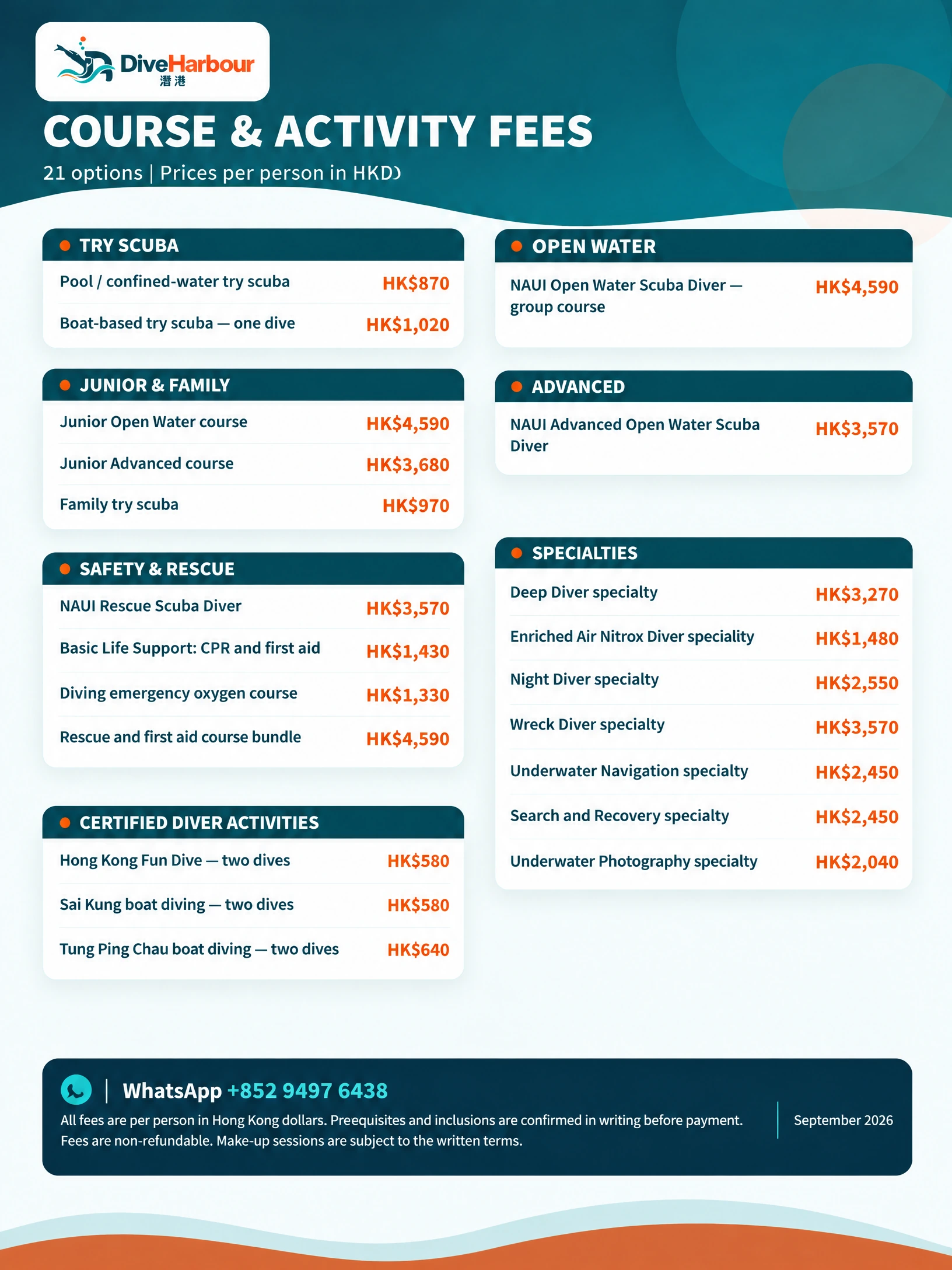
Compare our published course and activity fees before choosing your next step. All prices are per person in Hong Kong dollars.
Before you book, we confirm prerequisites, materials, certification, equipment, venue and boat arrangements in writing. Ask us about fees for courses not listed here.
Read the Sai Kung diving Hong Kong guide to learn about the setting, then explore the Sai Kung scuba diving course page. Certified divers can use our Hong Kong fun dive guide to check experience requirements and activity arrangements. Locations remain subject to weather and sea conditions.
Explore the responsibilities and entry requirements in our Divemaster course Hong Kong guide, then review the scuba instructor course Hong Kong route. Professional training differs from recreational progression, so confirm experience requirements and assessment arrangements first.