

A useful fact to keep in mind
SSI lists five open-water sessions for its Advanced Open Water Diver programme, with an Open Water Diver certification prerequisite and a maximum training depth of 30 m/100 ft.
Check the sourceWhat to do after Advanced Open Water
Build confidence through suitable, supervised diving
Finishing Advanced Open Water is a useful point to pause and notice what you actually enjoyed. Did you feel relaxed while holding position, or were you concentrating on basic buoyancy? Did navigation feel satisfying, or did you prefer observing marine life? Your answers matter more than choosing the most impressive-sounding next certificate. A diver who has recently completed the five-dive Advanced Open Water course Hong Kong may benefit from several calm, well-matched fun dives before adding new task loading.
Review your logbook with an instructor rather than treating the qualification as a promise that every environment will feel easy. Consider water movement, visibility, temperature, entry style, boat routine, depth and the equipment you used. If you have not dived for a while, a refresher can help re-establish equipment checks, buoyancy, mask skills and calm responses. Training should be progressive: a new setting, a new skill or extra depth can each add workload, so combining several unfamiliar factors deserves careful discussion.
A good next dive has a clear purpose. You might practise trim and buoyancy while carrying only normal recreational equipment, repeat navigation in familiar conditions, or join a guided shallow reef dive to improve observation without rushing. Stay within your certification, your personal comfort and the instructor or operator's plan. Do not use an Advanced Open Water card as a reason to push through anxiety, poor visibility, strong current or unfamiliar equipment. Confidence grows from repeatable decisions, not from one dramatic dive.
- Bring your logbook, recent dive dates and any questions about conditions to the planning conversation.
- Choose one main learning objective for a dive and agree on a conservative abort or turnaround plan.
- If health, medication or fitness has changed, complete the relevant medical paperwork and seek clinical advice where required.

Choose your next diving direction
Compare fun dives, specialty training and personal goals
The best next step usually follows a goal. If you want more relaxed local diving, book guided or buddy fun dives and use them to improve consistency. If you want a defined skill set, compare specialty courses by the problems they teach you to solve, not only by the badge. The NAUI Advanced Open Water course Hong Kong route and the SSI Advanced Open Water course Hong Kong route may use different standards and course structures, so ask what is included, what prerequisites apply and how performance is assessed.
Specialties can make a broad interest more practical. Navigation can help you plan a route and communicate better with a buddy. A night course introduces low-light briefing, signalling and team discipline. Enriched air training is primarily knowledge and gas-analysis work, while underwater photography adds buoyancy and task-loading considerations. A deep course should be chosen for the planning and limits it teaches, never as a race to a number. PADI describes specialty choices including deep, wreck, navigation, night and photography; that menu is a useful prompt, not a universal prescription for every agency or diver.
Think about where you expect to dive in the next year. A diver who mostly visits Hong Kong sites may value buoyancy, navigation, boat procedures and local environmental awareness. Someone preparing for a trip might need a refresher and a realistic equipment check rather than a last-minute advanced course. Someone who enjoys helping teammates may be ready to ask about rescue training, provided prerequisite first-aid training and water skills are current. The right programme is the one whose conditions, pace and instructor support match your present ability.
- Ask whether the course is certification, continuing education, a guided experience or a non-certification refresher.
- Confirm training dives, maximum training depth, equipment, boat or site fees, materials and certification arrangements in writing.
- Choose a specialty because it supports a specific activity you will practise afterwards.

Plan a practical next step
Discuss experience, interests and conditions with a qualified instructor
A short consultation can turn a vague question into a sensible plan. Share your certification agency, number and recency of dives, typical depth, any difficult moments, equipment familiarity and the conditions you hope to meet. A qualified instructor can then suggest whether you should repeat a skill, join a guided dive, take a specialty or wait until your experience is broader. DiveHarbour's lead coach holds PADI, SSI and NAUI teaching qualifications together with swimming, lifesaving, pool, beach, kayak and personal-watercraft rescue qualifications; the relevant course instructor will still confirm the standards and suitability for your chosen programme.
Use the conversation to clarify the practical details that are easy to overlook. Is the course run in a pool, from a shore entry or on a boat? Are cylinder, weights, exposure protection and other equipment included? How are weather and sea conditions handled? What happens if you cannot demonstrate a skill on the day? These questions are not awkward; they help you choose a course that is enjoyable and appropriately paced. Ask for the written terms before paying, especially where dates, deposits or minimum numbers are involved.
A sensible progression can be staged over several outings: first review and equipment check, then one or two guided dives, then a specialty that addresses your goal. Keep notes on air use, buoyancy, navigation decisions and what you would like to practise next. This creates a feedback loop rather than collecting qualifications without applying them. If your objective changes, update the plan; diving is a recreational skill that develops through deliberate, enjoyable repetition.
- Send a concise logbook summary and name the environment you want to dive in, rather than asking only for the 'most advanced' option.
- Confirm buddy arrangements, instructor ratios, emergency planning and the expected physical demands.
- Leave enough time between training and travel to absorb the skills and plan conservatively.

Match a course to the skill you want to use
A simple decision framework for Hong Kong divers
Use the following comparison as a starting point. It is deliberately about outcomes rather than status. A guided fun dive may be the most useful choice when you want to practise existing skills; a specialty is more appropriate when you want structured knowledge, coaching and assessment. If you are considering the PADI specialty diving courses Hong Kong, compare the exact course standard with the equivalent option from your agency and ask whether the training environment resembles your future diving.
Before booking, identify the skill you will use on the next three dives. Navigation is valuable only if you will plan and follow routes. Photography is rewarding when you are ready to manage a camera without losing contact with your buddy. Deep training requires disciplined planning and gas management, and should not be treated as permission to exceed other limits. The Deep Diver specialty course Hong Kong can be discussed as one option, while a refresher or buoyancy practice may be a better foundation for some divers.

Check readiness, safety and real-world logistics
Make the next dive enjoyable without rushing progression
Readiness is more than holding a certification card. Consider whether you can assemble and check your equipment, communicate a plan, maintain buddy awareness and respond calmly to a problem without improvising beyond your training. If you are tired, unwell, anxious or unfamiliar with a new configuration, tell the instructor before entering the water. Medical questionnaires and agency requirements vary; where a form asks for a physician's approval, follow that process rather than guessing.
Official standards also differ. NAUI's Advanced Open Water Scuba Diver page describes a continuing-education course for certified divers, including six dives and training in night or limited visibility, navigation and deep diving beyond 18 metres within recreational limits. SSI lists five open-water sessions for its Advanced Open Water Diver programme, with an Open Water Diver certification prerequisite and a maximum training depth of 30 m/100 ft. These are examples of agency-specific requirements, not a rule that every Advanced Open Water diver should follow the same depth or number of dives.
- Check certification prerequisite, minimum age, depth limits and required logged experience with the issuing agency and instructor.
- Confirm weather, visibility, current and boat logistics close to the day; a change of plan can be the safest plan.
- Never let a prepaid booking pressure you into diving when you are not fit, comfortable or properly briefed.
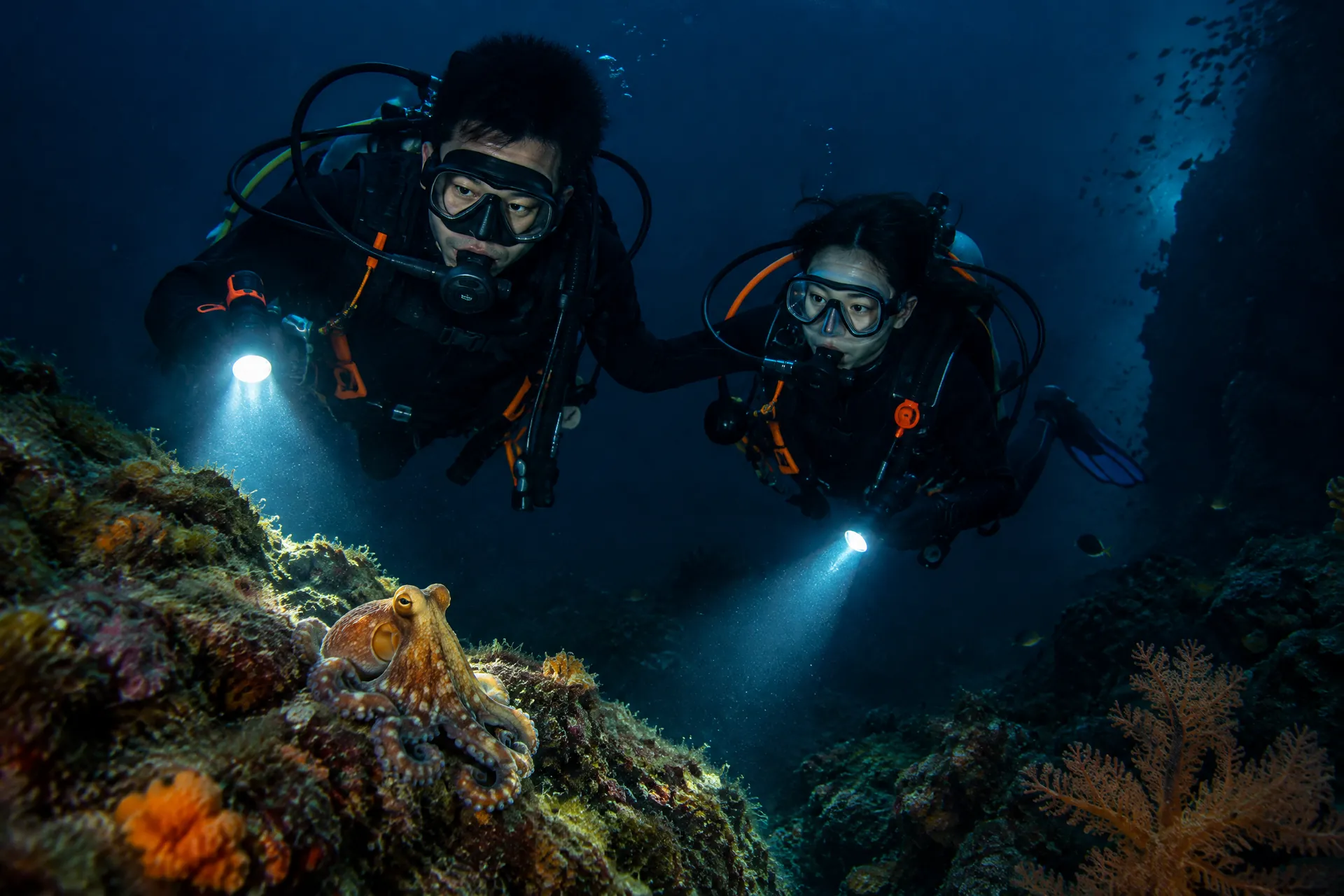
Build a longer-term diving pathway
Apply each new skill before adding another
After Advanced Open Water, you can remain a recreational diver and still make meaningful progress. Keep a balanced logbook, revisit foundational buoyancy and practise the specialties that genuinely interest you. Rescue training can improve awareness of stress and team response, but it is not a substitute for current first aid or a promise that every emergency will be manageable. Professional pathways require a separate conversation about experience, fitness, leadership, agency standards and the time you can commit; they should never be sold as a guaranteed job or internship.
A useful annual review asks three questions: what did I enjoy, what did I find difficult, and what will I practise next? The answer might be two guided boat dives, a navigation workshop or a conservative trip plan rather than another certificate. Keep equipment servicing and exposure protection in the plan, and budget for transport, boat fees, materials and possible rental items, not only tuition. A patient progression gives you more choices and helps your instructor see how your skills behave outside a single assessment day.
When you are ready, message DiveHarbour with your agency, recent logbook highlights, preferred dates and the type of diving you hope to do. The team can explain the available Hong Kong options, distinguish a guided dive from a certification course and help you decide what information to confirm before booking.

Ways to choose your next step after Advanced Open Water
| Option | Best for | Check |
|---|---|---|
| Guided or buddy fun dives | Building comfort and applying existing skills | Recent experience, site conditions, buddy plan and equipment |
| Specialty training | A defined goal such as navigation, night or photography | Agency standard, prerequisites, training dives and assessment |
| Refresher or skills session | Divers returning after a break or feeling rusty | In-water skills covered, instructor support and equipment fit |
| Rescue or longer-term pathway | Divers ready for more team responsibility or future planning | Current first aid, logged experience, fitness and realistic commitment |
What to do after Advanced Open Water — common questions
What can I do after completing Advanced Open Water?Toggle answer
You can continue with suitable guided or fun dives, take a specialty, complete a refresher, discuss rescue training or explore a longer-term recreational or professional direction. The best choice depends on your recent dives, confidence, interests and the conditions you plan to meet.
Do I need to choose a specialty course after Advanced Open Water?Toggle answer
No. A specialty is one possible next step, not a universal requirement. You may prefer to gain more experience first, practise buoyancy or navigation, or join guided dives. Ask an instructor to compare options against your actual goals.
Is deep diving automatically the next level after Advanced Open Water?Toggle answer
No. Deep training is appropriate only when its prerequisites, limits, conditions and your readiness align. A diver who is still working on buoyancy, buddy awareness or equipment familiarity may benefit more from guided practice or a refresher first.
Are course fees refundable or can I always reschedule?Toggle answer
Fees are non-refundable unless the written booking terms say otherwise. Make-up sessions or date changes are available only where those written terms permit them; they are not guaranteed. Confirm cancellation, weather, minimum-number and rescheduling terms before payment.
What should I send when asking for advice about my next dive?Toggle answer
Share your certification agency and level, approximate recent dive history, last dive date, interests, preferred environment, equipment needs and any concerns. That gives the instructor enough context to suggest a proportionate next step rather than simply the most advanced-looking course.
Take the question with you
There is no prize for rushing beyond Advanced Open Water. Choose the next dive or course that you can explain clearly, practise safely and enjoy repeatedly. Review your logbook, compare the written course details and ask DiveHarbour to discuss your experience and goals before you commit. A well-matched next step will make your diving more capable, more relaxed and more rewarding in Hong Kong and beyond.
Sources worth checking
- NAUI Advanced Open Water Scuba Diver
NAUI describes this as continuing education for certified divers and specifies six dives, including night or limited visibility, navigation and deep diving beyond 18 metres within recreational limits.
- SSI Advanced Open Water Diver
SSI lists Open Water Diver certification as a prerequisite, five open-water sessions and a maximum training depth of 30 m/100 ft for this programme.
- PADI Specialty Courses
PADI presents specialty choices such as deep, wreck, navigation, night and photography, and explains that Advanced Open Water includes two core specialty dives and three chosen specialty dives.
Useful next reads for your plan
If you are still comparing routes, these related pages give you practical questions to bring into your next conversation with an instructor.
Put your plan into practice
Useful planning guides
Master Diver Progression Plan after Advanced Open Water
Use this Master Diver progression plan worksheet to compare practical options, check key decision points, and confirm current details with DiveHarbour.
Master Diver progression plan
