
SAFE LEARNING · HAPPY EXPLORING
DiveHarbour

DiveHarbour · Practical guide

Dive-trip highlight placement: plan colour around the hood

The right dive-trip highlight placement depends on what your hood covers, how much lightness you want, your recent colour history and how you will style after rinsing. Compare full-head highlights, babylights and balayage by density and visibility. Treat trip timing as an individual hair-condition discussion, not a fixed swimming clearance.

By DiveHarbour10 min read
Ask about diving courses or coastal trip planning Read the guide
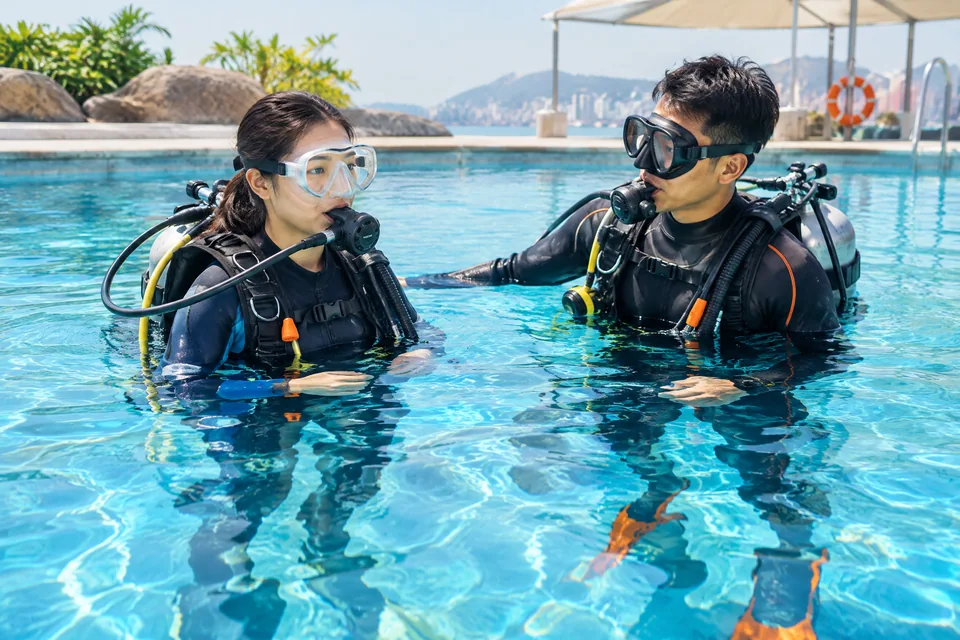
Dive-trip highlight placement planned around a diving hood
Illustration · Illustration — a diver preparing hair and hood details before a coastal trip.

Instructor qualifications

One clear teaching conversation from first breath to next step

DiveHarbour brings together scuba teaching, swimming, lifesaving and water-rescue experience so you can ask practical questions before choosing a course.

  • PADI teaching backgroundTeaching experience across recognised scuba learning pathways.
  • SSI teaching backgroundClear explanations when you are comparing agency routes.
  • NAUI teaching backgroundA practical, standards-aware approach to learning and progression.
  • Swimming foundationWater confidence and calm, step-by-step practice matter.
  • Lifesaving experienceSurface awareness and prevention stay part of the conversation.
  • Pool rescue experienceControlled practice can build confidence before open water.
  • Beach rescue experienceLocal water context informs sensible preparation.
  • Kayak rescue experienceA wider water-safety perspective supports good judgement.
  • PWC rescue experienceAsk about the right learning route for your experience and goals.

Brand relationship: DiveHarbour and Vit So share the same owner.

This guide is compiled by DiveHarbour. The Vit So links provide external hair-service information for reference; they are not diving-safety, medical, or service-effect guarantees.

A useful fact to keep in mind

Water and sand are reflective surfaces that increase UV levels, so a shore day can add exposure beyond the time spent underwater.

Check the source
Key takeaways

Four points to carry forward

  • Map the hood edge, parting and post-dive hairstyle before choosing where lighter pieces should sit.
  • Use full-head highlights for broad brightness, babylights for finer contrast, and balayage when a softer painted transition fits your styling plan.
  • Record previous bleach, colour, heat and sun exposure so a colour professional can assess the hair instead of guessing from the trip date.
  • Build a rinse, dry and restyle routine around the trip; do not treat any highlight pattern as protection from water, UV or friction.
Start here

Start with dive-trip highlight placement, not a package

Use dive-trip highlight placement to map visibility, pressure and upkeep

A hood changes the useful question. Instead of asking for the brightest possible colour, note which hair remains visible while the hood is on, which pieces appear when it comes off, and whether you will wear a low tie or loose style afterward. Your parting, fringe, temples and ends may need different levels of brightness. A simple phone photo in your usual hood can make that conversation clearer.

Before deciding on a service label, describe the trip in practical terms. Will you make repeated entries, rinse between dives, spend time in strong sun, or go directly to a meal or shore activity? The answers do not approve or reject a colour service. They show how much compression, wet handling and restyling the finished hair must tolerate. For local planning, review Hong Kong shore diving and note the actual equipment and shore routine you expect.

  • Photograph the hood edge, parting and hairline from the front and both sides.
  • Mark the pieces you want visible with the hood on, off, or only after a parting change.
  • Write down whether the post-dive look is a braid, tie, loose hair, cap or quick air-dry.
  • Separate a colour goal from a water-safety question; they need different advice.
Illustrative scenario: a diver who wants brightness only around the face may need a different map from a diver who wants lightness to show through a low ponytail.
Guide · 02

Compare density before you compare names

Full-head highlights, fine pieces and painted transitions answer different visibility goals

Full-head highlights create a wider distribution of lighter pieces. That can make the colour read clearly after the hood comes off, but it also means more of the head needs to be considered when you plan a parting, tie or wet reset. Ask where the brightness will begin near the crown, temples and nape. The point is not that full coverage is better; it is that the maintenance and visual change are broader.

Finer pieces can be useful when you want a quieter change or a less obvious regrowth line, but “fine” does not automatically mean invisible. Density, spacing and the base colour still control contrast. If you are reviewing hair highlights, take a reference photo that shows your normal parting and tell the service provider how often the hood presses the same areas. Ask what will remain visible after the hair is rinsed and separated.

Balayage is another design direction rather than a universal solution. A painted transition may look softer through the lengths, yet the result still depends on where the lightness is placed and how you wear the hair. If that is the option you are considering, review balayage as service information and ask which sections would be most exposed to the hood, sun and repeated wet handling.

  • Choose broad brightness, fine contrast or a softer transition as the first decision.
  • Ask for the planned density at the crown, sides, nape and visible ends.
  • Check how a changed parting or ponytail will redistribute the lighter pieces.
  • Request a clear explanation of what the chosen name includes before confirming details.

Swipe the table to compare all columns.

Compare highlight directions by visibility and hood-related upkeep
DirectionWhere brightness usually readsHood and styling questionUseful consultation prompt
Full-head highlightsAcross a wider set of sections, including areas revealed by a changed partingWill the broader lightness still feel manageable after repeated compression and rinsing?Show the planned density at the crown, sides, nape and ends.
BabylightsThrough finer, more closely controlled pieces with contrast set by spacing and base colourWill fine pieces remain visible in the tie or become too subtle after the hood comes off?Ask how fine the pieces are and where they will be concentrated.
BalayageUsually through a softer transition in selected lengths or face-framing areasWill the painted transition suit the way you wear the hair when wet or gathered?Ask which zones are painted and how the parting changes visibility.
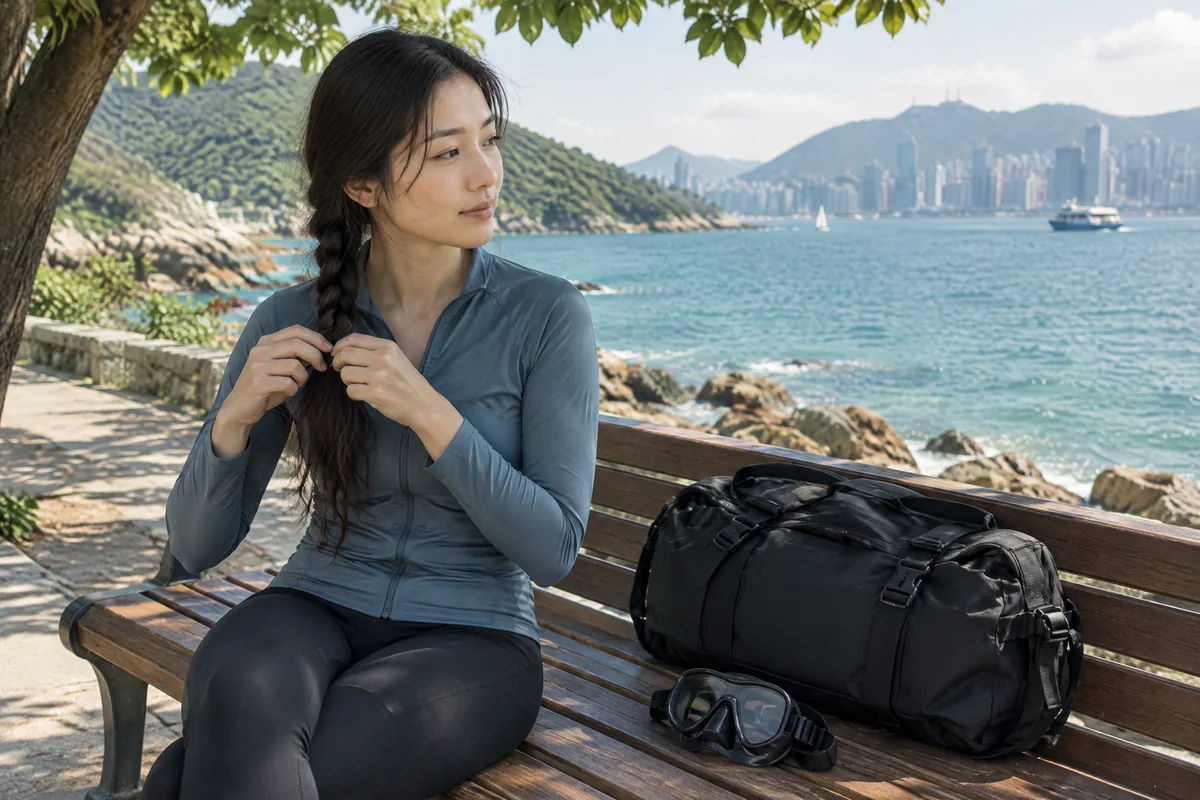
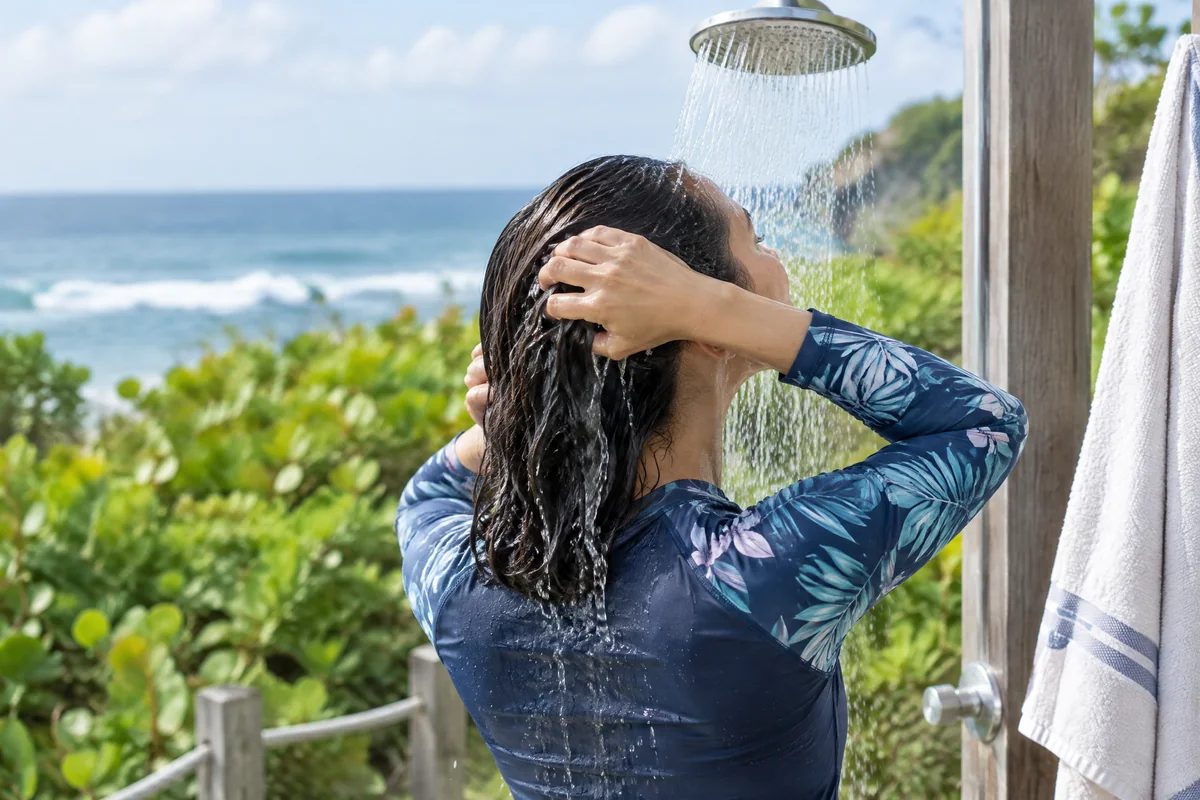
Post-swim rinse for hair after dive-trip highlight placement
Illustration · Illustration — a clean-water rinse as part of a post-swim hair routine.
Guide · 03

Let hair condition set the conversation

A hood routine is useful context, not a chemical processing timetable

Bring a short colour history to any consultation. Include old bleach or highlights, permanent colour, toner, smoothing or perm work, frequent heat, and periods of heavy sun or swimming. Also describe breakage, roughness, tangling and how the ends behave when wet. A colour professional can then assess the current hair and discuss whether the desired brightness, density or placement needs adjustment. Do not let a trip date substitute for that assessment.

The American Academy of Dermatology notes that lighter hair is more susceptible to UV damage and that chlorine can affect protective lipids and protein bonds in hair [1]. It also advises people with regular professional blond or highlighted colour to avoid colouring before a sun- and pool-filled vacation [1]. This is general care guidance, not a universal number of days to wait after highlights. If you are considering full head highlights, ask specifically how your recent history and planned exposure change the discussion.

There is no responsible way to promise that one pattern will prevent dryness, fading, tangling or breakage. If the ends already feel compromised, ask whether the planned amount of lightening should be reduced, delayed or reassessed. A useful consultation can end with a clear “not yet” or a narrower plan. That is more informative than treating a fixed package as automatically suitable for every diver.

  • List the date and type of your last colour, bleach, toner, perm or smoothing service.
  • Show the hair dry and, if useful, describe how it stretches, tangles or feels when wet.
  • Ask what signs would make the professional reduce the planned lightness or density.
  • Do not infer a safe chemical interval from the number of days before departure.
The trip schedule can inform the consultation, but it cannot replace an individual hair-condition assessment.
Guide · 04

Place the colour around the hood’s contact zones

Make dive-trip highlight placement work with compression, partings and the exit routine

Think in zones rather than a single halo. The front hairline and temples may be visible when the hood is removed but compressed while it is worn. The crown may be hidden under the hood and then separate unevenly after a rinse. The nape can disappear in a low tie or become prominent when hair is loose. Ask to see how the proposed pattern reads in each position, not only in a salon parting.

If you prefer a delicate result, babylights can be part of that discussion. The useful questions are about spacing, face-framing visibility, crown exposure and what happens when the hair is gathered. A fine pattern can still need careful aftercare if it involves lightening. Compare the visual goal with the effort you can give the hair after each dive, rather than assuming smaller pieces remove the need for care.

Use a simple movement test before finalising placement. Change your parting, put the hair into the planned tie, place the hood on and off, then view the sides and back. This does not predict the final colour. It helps you explain which areas should be deliberately visible, deliberately quiet or easy to hide when you want a lower-maintenance day.

  • Check front, temple, crown and nape zones separately.
  • Test the parting and tie you will actually use after a dive.
  • Ask whether the hood edge will rub, flatten or conceal the intended pieces.
  • Keep a lower-contrast option for areas you do not want to monitor closely.
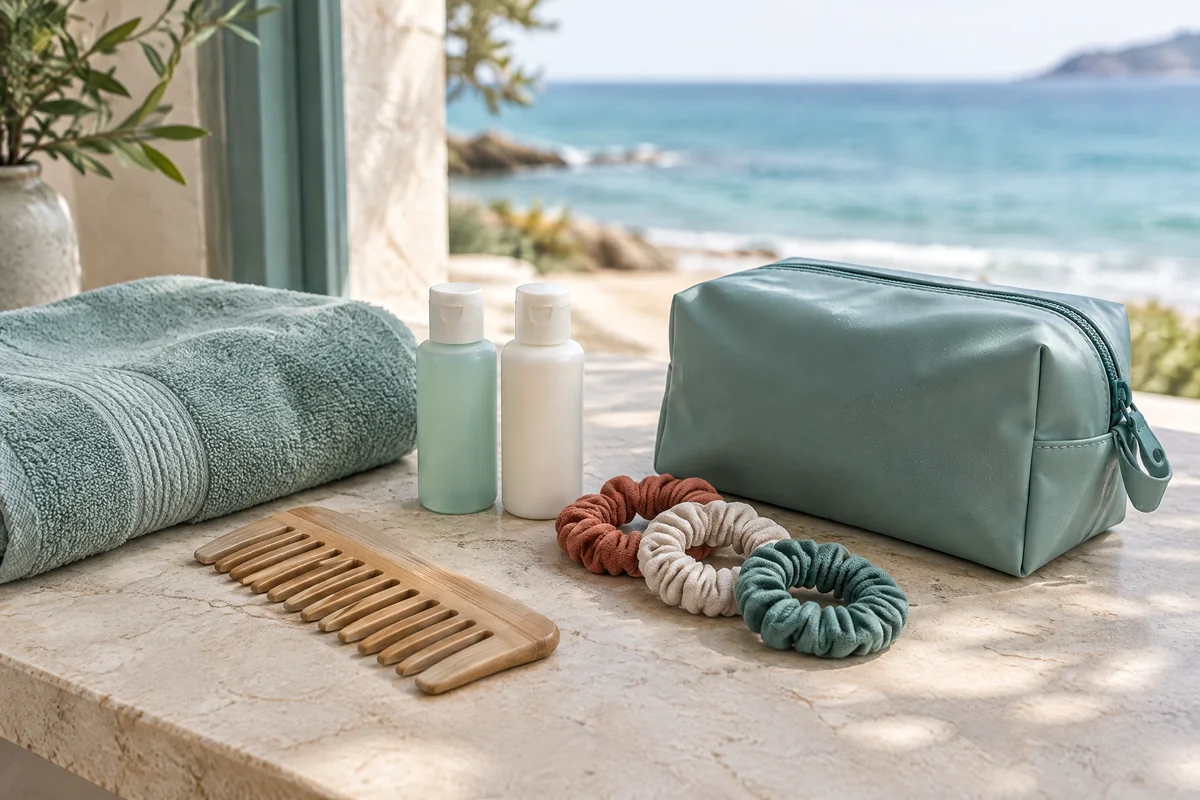
Hair-care kit for dive-trip highlight placement and hood days
Illustration · Illustration — travel hair-care items arranged for a coastal activity day.
Guide · 05

Plan the post-trip reset before booking

Rinsing, drying and styling are part of the colour decision

A good placement is one you can manage when tired, wet and short on time. Decide where you will rinse, whether you can wash soon after the session, and how you will dry without pulling through tangles. The American Academy of Dermatology recommends rinsing hair immediately after swimming, then washing with a swimmers’ shampoo and following with a deep conditioner [1]. That is practical care guidance, not a promise that any product will prevent colour change or repair damage.

For outdoor exposure, remember that water and sand can increase UV levels. The World Health Organization recommends protection when the UV index is 3 or above and advises shade, protective clothing and a broad-brimmed hat [2]. A dive hood addresses equipment and comfort needs, but it should not be treated as a complete hair or skin sun-protection plan. Check Hong Kong diving water temperature as part of your equipment and exposure planning, then keep colour questions separate.

Build the reset around your real route. If you go from shore to dinner, pack what you can use to rinse, detangle gently and create a simple style. If you have several dives, decide which days need a full wash and which only allow a clean-water rinse. Avoid inventing a salon timetable from a weather forecast; ask the service provider how to interpret your own hair history and chosen process.

  • Pack a clean-water rinse plan, wide-tooth comb or other gentle detangling tool.
  • Choose a post-dive style that does not depend on perfect volume at the crown.
  • Use shade, a hat or protective clothing for outdoor exposure when appropriate.
  • Separate general swimming care from advice about a specific colour process.

Swipe the table to compare all columns.

A practical decision path for colour around a dive trip
Trip stateCheck firstAction to takeDo not assume
Before bookingRecent chemical history, breakage, roughness and the hood photoRequest an individual assessment and describe the desired densityThe trip date alone determines suitability
Before the first diveRinse access, headwear fit, sun exposure and the post-dive stylePack the care items you can realistically use and review the water planA highlight pattern protects hair from water, UV or friction
Between divesWhether the hair is tangled, dry, coated or difficult to separateRinse promptly, detangle gently and use the simplest workable styleMore product or more brushing always improves the result
After the tripHow the colour, ends and styling routine actually feelRecord what you would change before any future colour discussionA generic waiting period applies to every head of hair
Key fact: water and sand are reflective surfaces that increase UV levels, so a shore day can add exposure beyond the time spent underwater [2].
Guide · 06

Turn the comparison into a clear consultation

Ask for a plan you can understand before you choose hair highlights

Bring three references: the colour you want, the way you normally wear your hair, and the hood or headwear routine that may change the result’s visibility. Then ask the professional to describe the proposed zones, density, maintenance questions and known limitations in plain language. If you are comparing highlight services, use the same brief for every option so you are comparing placement rather than different assumptions.

A useful question is, “What would you change if my priority were easy post-dive styling rather than maximum brightness?” Another is, “Which parts of my history make this plan less predictable?” You can also ask whether the discussion is about a full-head pattern, finer pieces or a painted transition, and what the service page does not specify. Vit So’s documented service address is 252 Hollywood Road, Sheung Wan, Hong Kong; confirm service details, assessment requirements and availability directly rather than assuming them from a page.

Make the final decision in two stages. First select the placement and density that fit your visual goal. Then confirm the hair-condition and aftercare discussion. If those two answers conflict, preserve hair condition and simplify the plan. A softer or smaller change can still be a useful result when it matches the hood, the trip and the time you realistically have after swimming.

  • Bring a hood photo, current-hair photo and one realistic post-dive styling reference.
  • Ask for placement, density, maintenance and limitations as separate answers.
  • Confirm the documented service location and any appointment or package details directly.
  • Choose a simpler plan when the desired brightness conflicts with the current hair condition.
Consultation planning for dive-trip highlight placement
Illustration · Illustration — an unbranded consultation planning scene, not a salon or client photograph.
A sensible next step

Take the question with you

Choose the placement that matches your visible zones, current hair condition and realistic post-dive routine. Save the hood photo and colour history, compare density before service names, and ask the provider to explain limitations rather than promising a fixed result. Reassess what worked after the trip before planning another lightening service.

Questions to ask

Common questions

Should I choose full-head highlights before a dive trip?

Not from the trip date alone. Full-head highlights distribute brightness more broadly, so discuss your recent chemical history, current hair condition, hood contact and post-dive routine with a colour professional. AAD guidance cautions about highlighted hair before sun- and pool-filled vacations, but it does not create a universal waiting period.

Are babylights automatically easier for divers?

No. Babylights describe finer pieces, not a guarantee of lower maintenance or better water tolerance. Spacing, contrast, placement and your base colour still matter. Ask where the pieces will show after the hood comes off and how the planned lightening fits your hair condition.

Is balayage a better choice around a hood?

It can be a design option when a softer painted transition suits your preferred styling, but it is not automatically safer or more durable around water and UV. Compare the proposed zones, density and aftercare with the way you wear your hair wet, tied or loose.

How should I handle highlighted hair after diving?

Plan a prompt clean-water rinse and a gentle reset that you can actually complete. AAD recommends rinsing after swimming, washing with swimmers’ shampoo and following with a deep conditioner. Use shade and protective clothing for outdoor exposure when appropriate, and seek individual advice for your specific colour history.

Further reading

Official sources worth checking

  • [1] Must-try summer hair care

    The American Academy of Dermatology says lighter hair is more susceptible to UV damage, chlorine can affect protective lipids and protein bonds, and highlighted-colour users should avoid colouring before a sun- and pool-filled vacation.

  • [2] Ultraviolet radiation

    The World Health Organization states that reflective surfaces such as water and sand increase UV levels and recommends sun protection when the UV index reaches 3 or above.

Continue exploring

Keep comparing practical questions before you choose a course, activity or preparation step.

Coastal life and hair care · Updated 2026-11-06

Coastal haircut plan for swimmers: what divers should ask

Plan a coastal haircut plan for swimmers with a clear brief on caps, length, drying and aftercare. Check the questions before you book.

coastal haircut plan for swimmers
Coastal life and hair care · Updated 2026-11-06

Swim-cap short hair fringe plan: manage shape after swimming

Use this swim-cap short hair fringe plan to compare lob, pixie and curtain bangs after swimming. Read the reset steps and plan your consultation.

swim-cap short hair fringe plan

Coastal life and hair care · Updated 2026-11-06

Hood-friendly men's short haircut: plan the shore exit

Plan a hood-friendly men's short haircut for a calmer shore exit. Compare taper, textured crop and upkeep, then check your brief.

hood-friendly men's short haircut
Your next step

Ask about diving courses or coastal trip planning

Message DiveHarbour on WhatsApp to discuss diving courses or coastal trip planning, along with your experience and preferred dates.

Ask about diving courses or coastal trip planning
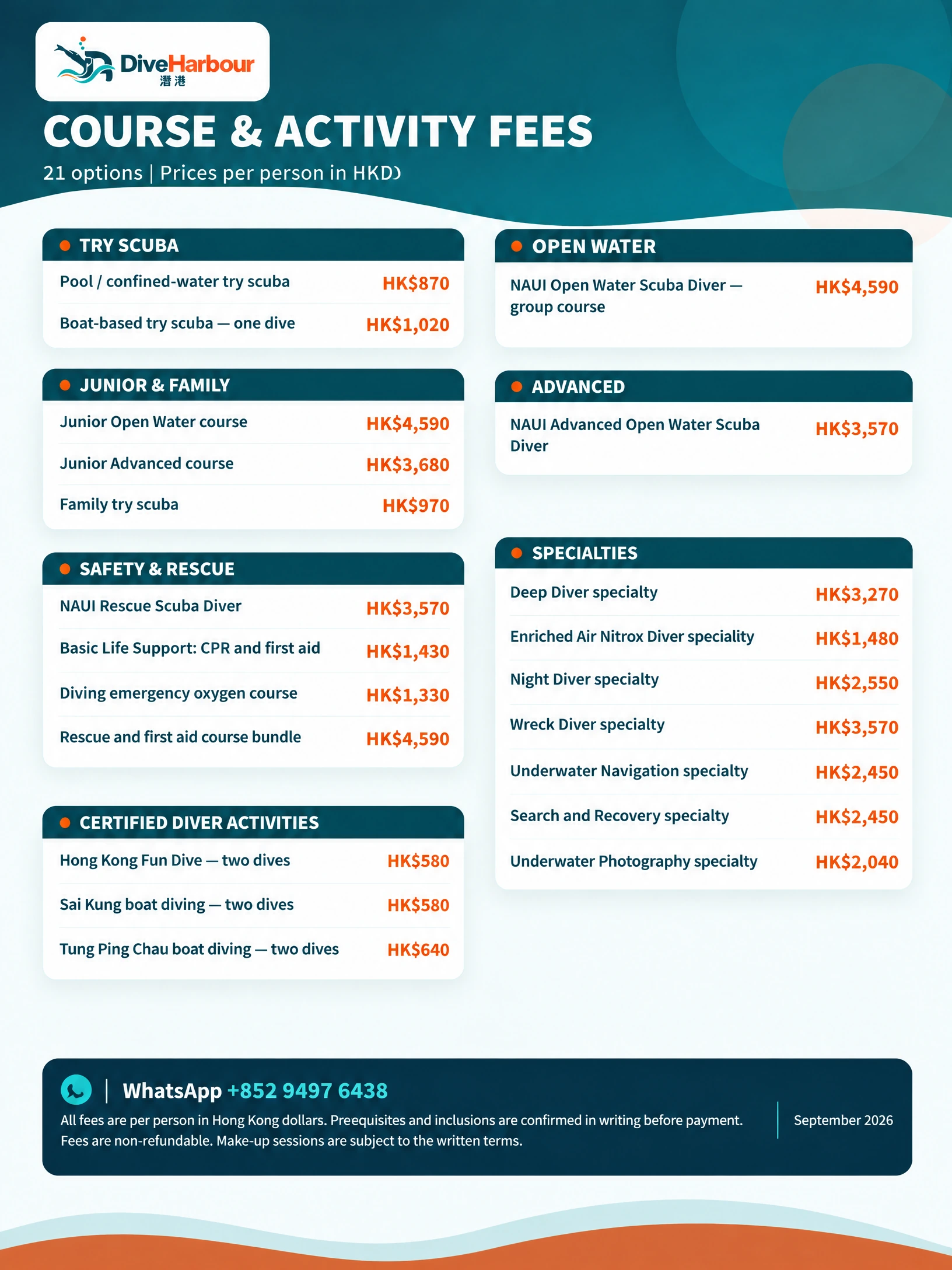
English price list for 21 DiveHarbour courses and activities, with fees per person in Hong Kong dollars
Tap the price list to view it at full size.

Plan your next dive

Course fees, clearly set out

Compare our published course and activity fees before choosing your next step. All prices are per person in Hong Kong dollars.

Before you book, we confirm prerequisites, materials, certification, equipment, venue and boat arrangements in writing. Ask us about fees for courses not listed here.

All fees are non-refundable. Make-up sessions are subject to the written terms.

Read all course fees
DiveHarbour course and activity fees per person in Hong Kong dollars
Course / activityPer person
Pool / confined-water try scubaHK$870
Boat-based try scuba — one diveHK$1,020
NAUI Open Water Scuba Diver — group courseHK$4,590
Junior Open Water courseHK$4,590
Junior Advanced courseHK$3,680
Family try scubaHK$970
NAUI Advanced Open Water Scuba DiverHK$3,570
NAUI Rescue Scuba DiverHK$3,570
Basic Life Support: CPR and first aidHK$1,430
Diving emergency oxygen courseHK$1,330
Rescue and first aid course bundleHK$4,590
Deep Diver specialtyHK$3,270
Enriched Air Nitrox Diver specialtyHK$1,480
Night Diver specialtyHK$2,550
Wreck Diver specialtyHK$3,570
Underwater Navigation specialtyHK$2,450
Search and Recovery specialtyHK$2,450
Underwater Photography specialtyHK$2,040
Hong Kong Fun Dive — two divesHK$580
Sai Kung boat diving — two divesHK$580
Tung Ping Chau boat diving — two divesHK$640