
SAFE LEARNING · HAPPY EXPLORING
DiveHarbour

DiveHarbour · Practical guide

Post-swim conditioning plan: discuss hair condition clearly

A useful post-swim conditioning plan starts with observations, not a treatment name. Record whether the change is dryness, tangling, roughness, breakage, colour change or scalp discomfort. Note your rinse routine and recent colour, bleach, perm or straightening. Then ask a salon to explain the cosmetic service, home care and limits. Persistent or severe scalp symptoms belong with a healthcare professional.

By DiveHarbour8 min read
Ask about diving courses or coastal trip planning Read the guide
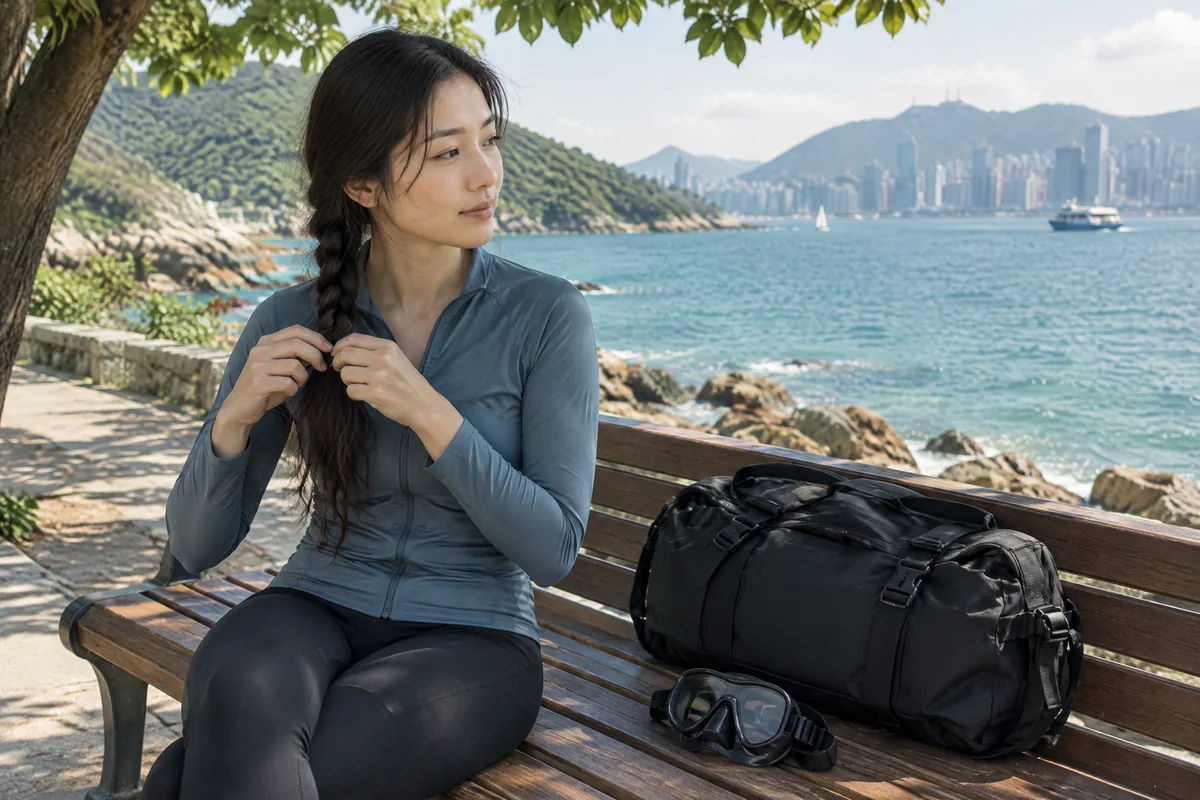
Post-swim conditioning plan illustration showing coastal hair preparation
Illustration · a non-branded coastal hair-preparation scenario.

Instructor qualifications

One clear teaching conversation from first breath to next step

DiveHarbour brings together scuba teaching, swimming, lifesaving and water-rescue experience so you can ask practical questions before choosing a course.

  • PADI teaching backgroundTeaching experience across recognised scuba learning pathways.
  • SSI teaching backgroundClear explanations when you are comparing agency routes.
  • NAUI teaching backgroundA practical, standards-aware approach to learning and progression.
  • Swimming foundationWater confidence and calm, step-by-step practice matter.
  • Lifesaving experienceSurface awareness and prevention stay part of the conversation.
  • Pool rescue experienceControlled practice can build confidence before open water.
  • Beach rescue experienceLocal water context informs sensible preparation.
  • Kayak rescue experienceA wider water-safety perspective supports good judgement.
  • PWC rescue experienceAsk about the right learning route for your experience and goals.

Brand relationship: DiveHarbour and Vit So share the same owner.

This guide is compiled by DiveHarbour. The Vit So links provide external hair-service information for reference; they are not medical advice, diving-safety advice, expert endorsement, or a guarantee of service results.

A useful fact to keep in mind

The AAD recommends rinsing and washing hair after swimming, then following with a deep conditioner to help restore moisture.

Check the source
Key takeaways

Four points to carry forward

  • Describe what you can observe after swimming before choosing a service label.
  • Bring your rinse, shampoo, drying and styling routine to the consultation.
  • Mention colour, bleach, perm or straightening history and any change in timing.
  • Treat persistent, recurrent or severe scalp symptoms as a healthcare question, not a salon diagnosis.
Start here

Start your post-swim conditioning plan with observations

Use a post-swim conditioning plan to make a useful record

A frequent swimmer may notice that hair feels different without knowing what to ask for. Start with the moment you notice it. Is the hair rough when wet, dry at the ends, harder to detangle, less flexible, or more difficult to style? Write down whether the change appears after pool laps, sea swimming, a long sunny day, or several activities together. If diving is part of the routine, describe the headwear and the steps before and after your Hong Kong shore diving day.

This record is not a diagnosis. It is a way to separate a repeatable observation from an assumption about cause. Compare a normal wash day with a swim day. Note how soon you rinse, whether you shampoo, how you dry, and whether you use heat or leave-in products. Also note if the issue is on the hair length or on the scalp. That distinction helps a service provider ask better questions before discussing a cosmetic option.

  • Write down the water setting: pool, sea, lake, or more than one.
  • Describe feel and appearance with plain words such as rough, tangled, dull, dry, or frizzy.
  • Record your first rinse, shampoo, conditioner, and drying steps.
  • Separate hair-length concerns from itching, rash, pain, or other scalp symptoms.
The aim is a clear consultation brief, not a self-diagnosis.
Guide · 02

Decide what your hair treatment question actually asks

Use the service label only after you define the goal

The phrase hair treatment can cover different cosmetic aims. You might want a softer feel, easier combing, a different finish, or help choosing a routine. Those are not the same request. Say what you want to notice after washing and styling, then ask what the service includes. Ask whether the plan is designed for the current condition, how home care fits, and what the provider cannot promise.

Keep the language practical. A salon service works with the visible and tactile condition of the hair, while a medical professional assesses disease, inflammation, infection, injury, or unexplained changes. Do not use a cosmetic consultation to explain a spreading rash, painful scalp, open sore, sudden marked shedding, or symptoms that keep returning. The CDC lists skin rashes and other swimming-related illnesses and advises contacting a healthcare provider if you become sick after swimming [2].

  • State the desired change: softer feel, less tangling, easier styling, or a different finish.
  • Ask what the service steps are and which parts happen at home.
  • Ask what result is realistic for your present hair condition.
  • Stop the cosmetic discussion and seek medical advice for persistent or concerning symptoms.

Swipe the table to compare all columns.

Observation-to-question guide for a first consultation
What you noticeWhat to recordQuestion to ask
Rough or dry lengthsWhere it starts and how it feels after conditionerIs the discussion about conditioning, dry-hair care, styling, or trimming?
Tangles after swimmingWet-hair handling, detangling tools, and drying methodWhich home steps are realistic after my next swim?
Dull or changed colourRecent sun, pool, sea, colour, or bleach historyWhat can be assessed cosmetically, and what is not guaranteed?
Scalp itching, rash, pain, or soresOnset, recurrence, and any illness after swimmingShould I seek medical advice before discussing a salon service?
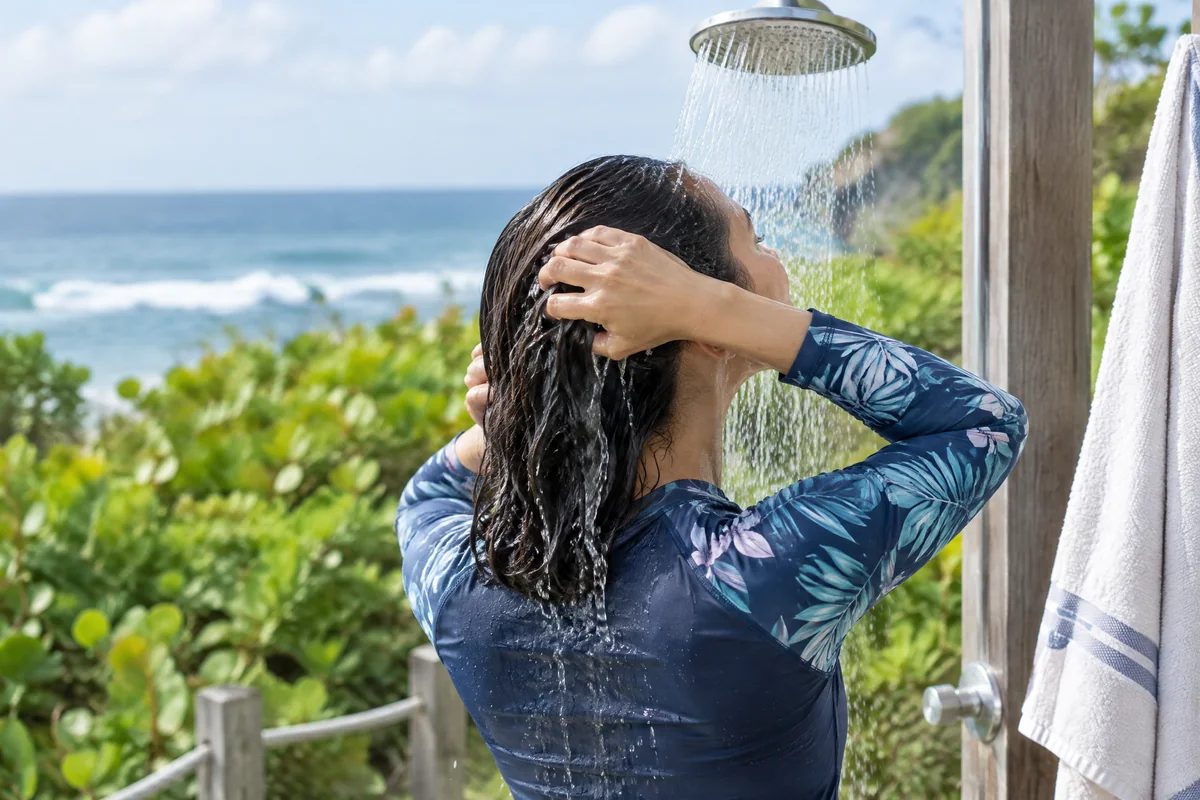
Fresh-water rinse after swimming illustration
Illustration · a non-branded post-swim fresh-water rinse.
Guide · 03

Compare a conditioning treatment with your home routine

A conditioning question should include what happens between swims

A conditioning treatment question is clearer when it includes your regular wash routine. Tell the provider how often you swim, what you do immediately after leaving the water, and whether you usually use conditioner or a leave-in product. Mention if your hair is fine, dense, curly, straight, long, short, or frequently tied back. These details describe handling and styling limits. They do not prove that one service is suitable for everyone.

The AAD advises rinsing and washing hair after swimming, then following with a deep conditioner to help restore moisture [1]. It also discusses a swim cap and a pre-swim oil or leave-in conditioner as options for pool exposure [1]. Use that general guidance to review your routine, not to treat it as a guarantee. Ask whether a proposed conditioning step fits your hair, products, water exposure, and ability to repeat it at home.

  • Bring the names or photos of products you use before and after swimming.
  • Explain whether you can rinse immediately or must travel before washing.
  • Ask how much detangling, drying, or heat styling the routine expects.
  • Confirm how to change the routine if the hair feels coated, heavy, or still rough.
Guide · 04

When is a dry hair treatment question the better starting point?

Describe dryness without turning it into a promise of repair

If the main observation is a dry feel, a rough surface, frizz, or ends that catch on the comb, you may start with a dry hair treatment question. Explain where the feeling appears and whether it changes after conditioner. Say if the problem is new, gradual, or limited to older ends. Ask the provider to distinguish a moisture-focused cosmetic service from a styling change or a trim. The useful decision is the one that matches your observation and routine.

Sun and pool exposure can add stress to hair. The AAD explains that UV damage can affect hair proteins and may show as dry, brittle, or frizzy hair. It also explains that chlorine can dissolve protective hair lipids and break protein bonds, increasing susceptibility to split ends and breakage [1]. These facts support shade, a hat, a swim cap, and post-swim cleansing as care questions. They do not show that a salon service can permanently reverse every change.

  • Mark whether dryness is at the roots, mid-lengths, ends, or all over.
  • Note whether the hair snaps, sheds, or only feels less smooth when handled.
  • Ask whether the proposed service is cosmetic conditioning, styling, trimming, or another category.
  • Avoid claims that a treatment can make hair immune to sun, chlorine, salt, or future processing.
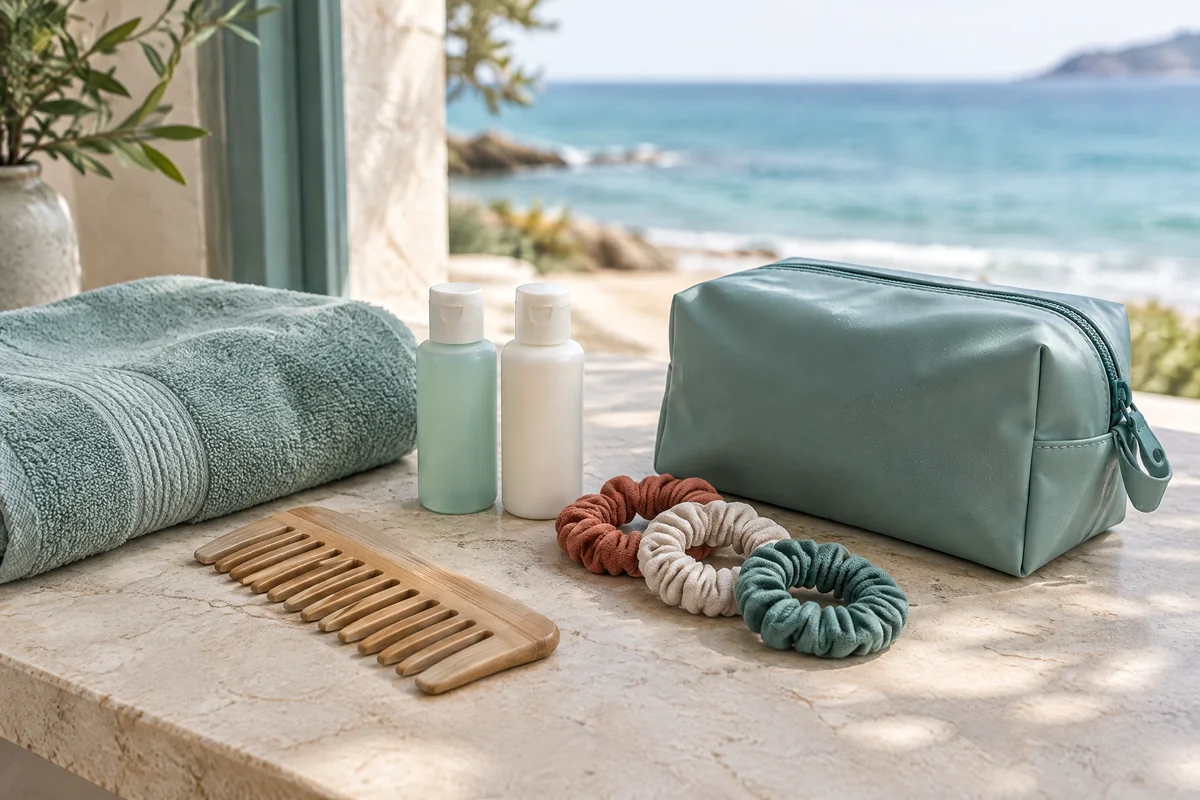
Coastal hair-care kit illustration for a post-swim routine
Illustration · a non-branded coastal hair-care kit.
Guide · 05

Build a post-swim conditioning plan for home care

Make the routine specific enough to follow after the next swim

A good home-care discussion follows the order of your day. Before pool exposure, ask whether a swim cap is practical for you. After swimming, plan a fresh-water rinse as soon as you can, then ask what type of cleansing and conditioning suits your hair. Dry by blotting or handling gently rather than treating wet hair as a chance to test its limits. If a product makes the hair heavy or irritates the scalp, record that response instead of adding more products automatically.

The AAD recommends rinsing and washing after swimming and following with deep conditioner to help restore moisture [1]. The CDC also recommends practical swimming hygiene and says to contact a healthcare provider if you get sick after swimming [2]. That boundary matters. A salon can discuss cosmetic hair feel and manageability. It should not diagnose an illness, prescribe treatment, or tell you that a beauty service replaces medical care.

  • Keep a small post-swim kit with clean water access, conditioner, a wide-tooth comb, and a gentle towel.
  • Rinse first and detangle in sections, starting at the ends when the hair is manageable.
  • Use shade, a hat, or a swim cap when practical during extended outdoor activity.
  • Record what helped and what made the hair feel coated, stiff, or uncomfortable.

Swipe the table to compare all columns.

A practical brief to send before asking about a service
TopicIncludeWhy it matters
Water exposurePool, sea, lake, frequency, headwear, and time outdoorsIt gives context without claiming a single cause.
Home careRinse, shampoo, conditioner, drying, heat, and productsIt shows what can be changed between appointments.
Prior processingColour, bleach, perm, straightening, extensions, or recent stylingIt helps the provider assess the current hair rather than guess.
Desired outcomeFeel, manageability, finish, shape, or routine you wantIt keeps the consultation focused on a cosmetic goal.
Guide · 06

Take your post-swim conditioning plan into a consultation

Ask for an assessment, not a guaranteed outcome

Before you book, prepare a short timeline. Include the last colour, bleach, perm, straightening, extension, or intensive styling work. Add your swim frequency, headwear, sun exposure, home routine, and the change you want to discuss. A provider can then assess the current hair and explain whether the conversation belongs under general treatment, conditioning, dry-hair care, styling, or a different service. Individual assessment matters, especially when prior processing and frequent swimming overlap.

Do not use a calendar as proof that a treatment is ready for water. Ask the service provider what aftercare they give, what activities or products they want you to discuss, and who to contact if your hair or scalp reacts. If your swimming plans depend on local conditions, review the best time to dive in Hong Kong separately from hair care. Dive planning and cosmetic consultation are related to your day, but one does not certify the other.

  • Send a concise note with your observations, routine, and prior processing history.
  • Bring recent photos in ordinary light and explain what happened before each photo.
  • Ask about service contents, home aftercare, limits, and follow-up questions.
  • Choose whether to proceed only after the explanation matches your goal and comfort level.
The best question is often: “What can you assess today, and what should I handle elsewhere?”
Hair consultation planning illustration for a post-swim conditioning plan
Illustration · a non-branded hair consultation planning scene.
A sensible next step

Take the question with you

Use your next swim as an observation point. Record the water setting, post-swim routine, hair-length changes, scalp symptoms, and prior processing. Then take that brief to a provider and ask which cosmetic category fits, what home care involves, and what is outside the service boundary. Keep medical symptoms with a healthcare professional.

Questions to ask

Common questions

Should I ask for hair treatment, conditioning treatment, or dry hair treatment?

Start with the observation and desired change, not the label. Use hair treatment for a broad cosmetic-care question, conditioning treatment when moisture and manageability are central, and dry hair treatment when dryness, roughness, or frizz is the main concern. Ask the provider to explain the actual steps and limits.

Does swimming prove that my hair is damaged?

No. Swimming is context, not a diagnosis. Pool chemicals, sun, handling, prior processing, and your home routine can all be relevant. Record what you notice after each type of swim and ask for an assessment. Do not turn a general care guide into a guaranteed cause or outcome.

What should I do after a pool swim before discussing a service?

Rinse your hair with fresh water as soon as practical, then follow a cleansing and conditioning routine that suits your hair. A swim cap or a pre-swim barrier may be options for pool exposure. Record how your hair feels afterward. The AAD supports post-swim rinsing, washing, and conditioning as general care [1].

When is a hair concern a medical question?

A spreading rash, pain, open sore, marked sudden shedding, or persistent, recurrent, or severe scalp symptoms should not be diagnosed by a salon. Stop and seek appropriate medical advice. The CDC advises contacting a healthcare provider if you get sick after swimming [2].

Further reading

Official sources worth checking

  • [1] Must-try summer hair care

    The American Academy of Dermatology says UV can affect hair proteins and chlorine can dissolve protective hair lipids and break protein bonds; it recommends rinsing and washing after swimming and following with deep conditioner.

  • [2] Preventing Swimming-related Illnesses

    The CDC lists swimming-related illnesses including skin rashes, swimmer’s ear, and eye or lung irritation, and advises contacting a healthcare provider if you get sick after swimming.

Continue exploring

Keep comparing practical questions before you choose a course, activity or preparation step.

Coastal life and hair care · Updated 2026-11-06

Post-swim family hair routine: wash, trim and dry with ease

Plan a post-swim family hair routine with rinse, wash, trim and drying choices. Compare salon questions and check the next step.

post-swim family hair routine
Coastal life and hair care · Updated 2026-11-06

Coastal wavy haircut upkeep: keep shape after swims

Plan coastal wavy haircut upkeep around wet movement, retained length and your swim-day routine. Read the checklist before booking.

coastal wavy haircut upkeep

Coastal life and hair care · Updated 2026-11-06

Coastal men's undercut shape guide: compare wet styling

Read the coastal men's undercut shape guide: compare wet outline, side length and curl behaviour, then plan your coastal cut.

coastal men's undercut shape guide
Your next step

Ask about diving courses or coastal trip planning

Message DiveHarbour on WhatsApp to discuss diving courses or coastal trip planning, along with your experience and preferred dates.

Ask about diving courses or coastal trip planning
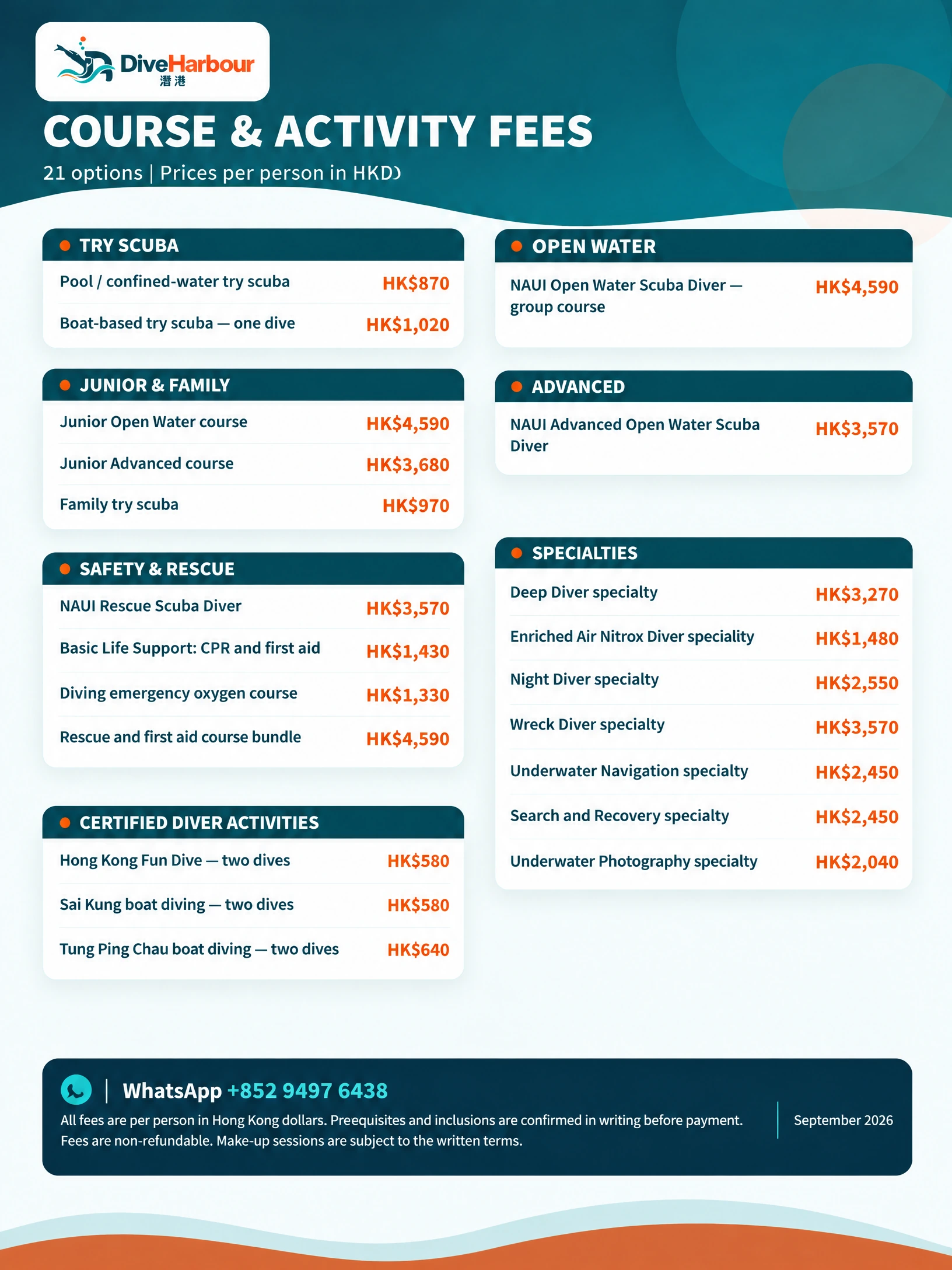
English price list for 21 DiveHarbour courses and activities, with fees per person in Hong Kong dollars
Tap the price list to view it at full size.

Plan your next dive

Course fees, clearly set out

Compare our published course and activity fees before choosing your next step. All prices are per person in Hong Kong dollars.

Before you book, we confirm prerequisites, materials, certification, equipment, venue and boat arrangements in writing. Ask us about fees for courses not listed here.

All fees are non-refundable. Make-up sessions are subject to the written terms.

Read all course fees
DiveHarbour course and activity fees per person in Hong Kong dollars
Course / activityPer person
Pool / confined-water try scubaHK$870
Boat-based try scuba — one diveHK$1,020
NAUI Open Water Scuba Diver — group courseHK$4,590
Junior Open Water courseHK$4,590
Junior Advanced courseHK$3,680
Family try scubaHK$970
NAUI Advanced Open Water Scuba DiverHK$3,570
NAUI Rescue Scuba DiverHK$3,570
Basic Life Support: CPR and first aidHK$1,430
Diving emergency oxygen courseHK$1,330
Rescue and first aid course bundleHK$4,590
Deep Diver specialtyHK$3,270
Enriched Air Nitrox Diver specialtyHK$1,480
Night Diver specialtyHK$2,550
Wreck Diver specialtyHK$3,570
Underwater Navigation specialtyHK$2,450
Search and Recovery specialtyHK$2,450
Underwater Photography specialtyHK$2,040
Hong Kong Fun Dive — two divesHK$580
Sai Kung boat diving — two divesHK$580
Tung Ping Chau boat diving — two divesHK$640