

A useful fact to keep in mind
The Agriculture, Fisheries and Conservation Department states that Hoi Ha Wan Marine Park covers about 260 hectares.
Check the sourceChoosing a Hoi Ha Wan shore dive
Suitability, experience and planning
A Hoi Ha Wan shore dive suits people who value a flexible, land-based approach and are comfortable treating the plan as condition-dependent. A certified diver may want a relaxed local outing, while a participant still building confidence may need an appropriately supervised experience rather than an independent shore dive. The useful question is not simply whether Hoi Ha Wan is beautiful; it is whether this entry, access route and water plan match your recent practice, comfort and certification.
Before asking for a date, share your certification level, most recent dive, approximate logged experience, current fitness and any equipment you will bring. Mention if you are rusty, anxious about entries, travelling with a child, or hoping to practise a particular skill. The team can then discuss whether a shore format, a refresher, or a course is more sensible. If you are new to diving, compare this outing with a Sai Kung scuba diving course rather than assuming a scenic site is a substitute for training.
A shore outing often involves more than the underwater portion: walking with equipment, negotiating a shoreline, waiting for a suitable entry and managing a kit-up area. Divers should be able to pace themselves and tell the leader early if the approach, waves or carrying load feels wrong. A buddy plan, surface contact plan and conservative turnaround agreement should be clear before anyone enters the water. No site description can guarantee visibility, wildlife or a particular depth.
- Bring proof of certification where relevant, a recent-dive summary and realistic expectations about conditions.
- Ask who is supervising, how buddies are paired, what equipment is included and what the fallback plan is.

Hoi Ha Wan shore diving from the beach
Entry conditions and site considerations
Hoi Ha Wan shore diving from the beach begins with the proposed entry point, not with an assumed map pin. Confirm where the group will meet, how far equipment must be carried, whether the shoreline is suitable on the day and how the team will manage a delayed or cancelled entry. Tides, wind, rainfall, runoff, wave action and visibility can alter the experience. A sheltered bay can still have an awkward approach or poor underwater conditions.
The shoreline setting also deserves care. Move slowly, keep regulators and masks protected from sand, and avoid rushing while carrying a cylinder. Enter and exit only where the leader has agreed; do not improvise a route around swimmers, boats, lines or shallow reef. Once afloat, keep your buddy and guide in view, maintain buoyancy control and leave generous space around the bottom. A camera is optional; a calm, controlled ascent and easy exit matter more than a photograph.
Hoi Ha Wan is a Marine Park, so local protection is part of the dive plan. The Agriculture, Fisheries and Conservation Department states that Hoi Ha Wan Marine Park covers about 260 hectares. It advises visitors to follow the Marine Parks Visitors Code and the code for scuba divers and snorkellers. Its Hoi Ha Wan guidance specifically says divers and swimmers must not stand on fragile corals. Treat that as a practical behaviour standard: do not touch, kneel on, collect or chase marine life, and secure gauges or accessories so they cannot drag across habitat. A careful briefing should also cover how to signal discomfort, where to regroup at the surface and who makes the final decision to cancel or shorten the dive.
For a broader overview, read the page on Hoi Ha Wan Marine Park diving rules before booking. Rules, access arrangements and conservation notices can change, so current instructions from the responsible team and authorities take priority over an old trip report.
- Wear suitable footwear and protect your kit during the approach; do not enter if the agreed access is unsafe.
- Keep fins, hoses, gauges and hands away from coral and other fragile habitat.

A thoughtful local dive plan
Confirming conditions before the day
A good plan is a conversation with checkpoints. First, establish whether the proposed shore entry is appropriate for the group. Next, confirm the weather and sea-state decision process, meeting instructions, equipment responsibilities and supervision. Finally, agree what happens if conditions deteriorate or a diver is not comfortable. This is more useful than receiving a generic promise that the site will be open or that a certain marine animal will appear.
Ask how the team assesses the actual day: which forecast is monitored, when the go/no-go decision is made, and how you will be contacted. Confirm whether transport, parking, changing space, cylinders, weights, exposure protection and guide support are included or separately arranged. If you have a medical concern, disclose it privately and seek appropriate clinical advice; never feel pressured to dive or to conceal symptoms. A leader can help with planning, but cannot provide medical clearance.
If your priority is a particular route, more bottom time or avoiding a long shore approach, compare a Hoi Ha Wan boat dive instead. A boat does not remove the need to check conditions, but it changes access, logistics and the way the group reaches the water. For general options, Hong Kong shore diving can help you compare other local shore sites without treating them as interchangeable.
- Use a written pre-dive checklist: people, conditions, entry, gas plan, buddy plan, exit and contingency.
- Make the decision reversible: if the entry or conditions do not feel right, pause and ask about an alternative.

What to bring and what to leave flexible
Equipment, comfort and practical logistics
Start with the essentials the team has confirmed rather than packing every item in your dive bag. Ask whether mask, fins, exposure protection, cylinder, regulator, buoyancy system, weights and surface marker are provided, rented or expected from you. A well-fitting mask and exposure protection can make a larger difference to comfort than adding accessories. If you use prescription lenses, a particular hood or an unusual size, say so early.
For the shore approach, bring water, sun protection, a towel, dry clothing, a small waterproof pouch and footwear suitable for the agreed route. Keep valuables to a minimum. Do not leave unsecured phones or wallets at an informal entry point. A simple snack can help after the dive, but avoid arriving dehydrated or fatigued. Equipment should be checked before leaving home and again during the briefing; a small leak or missing strap is easier to solve on land.
Keep the schedule flexible. A late start, surface wait, altered entry or no-dive decision may be the responsible outcome after rain or a forecast change. The purpose is a safe, enjoyable local dive, not forcing a pre-written itinerary.

Shore dive, boat dive or training?
Choose the format that solves your actual need
A shore dive is attractive when you want simpler access to the water, a local outing or a plan that can be discussed around the day’s conditions. A boat dive may be preferable when carrying kit over a shoreline is difficult or when the agreed site is better reached from the sea. Training is the right direction when you need structured practice, a recognised qualification or a reset of basic skills rather than an informal guided outing.
If you are considering a first step on Hong Kong Island, see learn scuba diving on Hong Kong Island and explain that Hoi Ha Wan is your interest; the appropriate starting point may still be pool or open-water training. Prices, inclusions and eligibility should be confirmed before payment. The approved current listing shows NAUI Open Water Scuba Diver group training at HK$4,590 per person, but that course price is not a shore-dive price and should not be assumed to include this outing.

A low-impact, respectful visit
Enjoy the bay without treating it as a backdrop
Hoi Ha Wan rewards patience. Watch where you fin, keep neutral buoyancy, and let marine life choose its distance. Avoid touching coral, feeding animals, collecting shells or souvenirs, and shining lights directly into creatures at close range. If the group pauses, hold position without planting a hand or knee on the bottom. Secure dangling equipment and use established access rather than widening a fragile shoreline path.
The best post-dive habit is to report useful observations without exaggeration: water movement, visibility, access issues or damaged habitat can help future planning. Do not promise turtles, coral colours or a particular species to a friend simply because someone saw it on another day. Leave the bay as you found it, follow the Marine Park code and let a responsible guide answer questions about changing conditions.
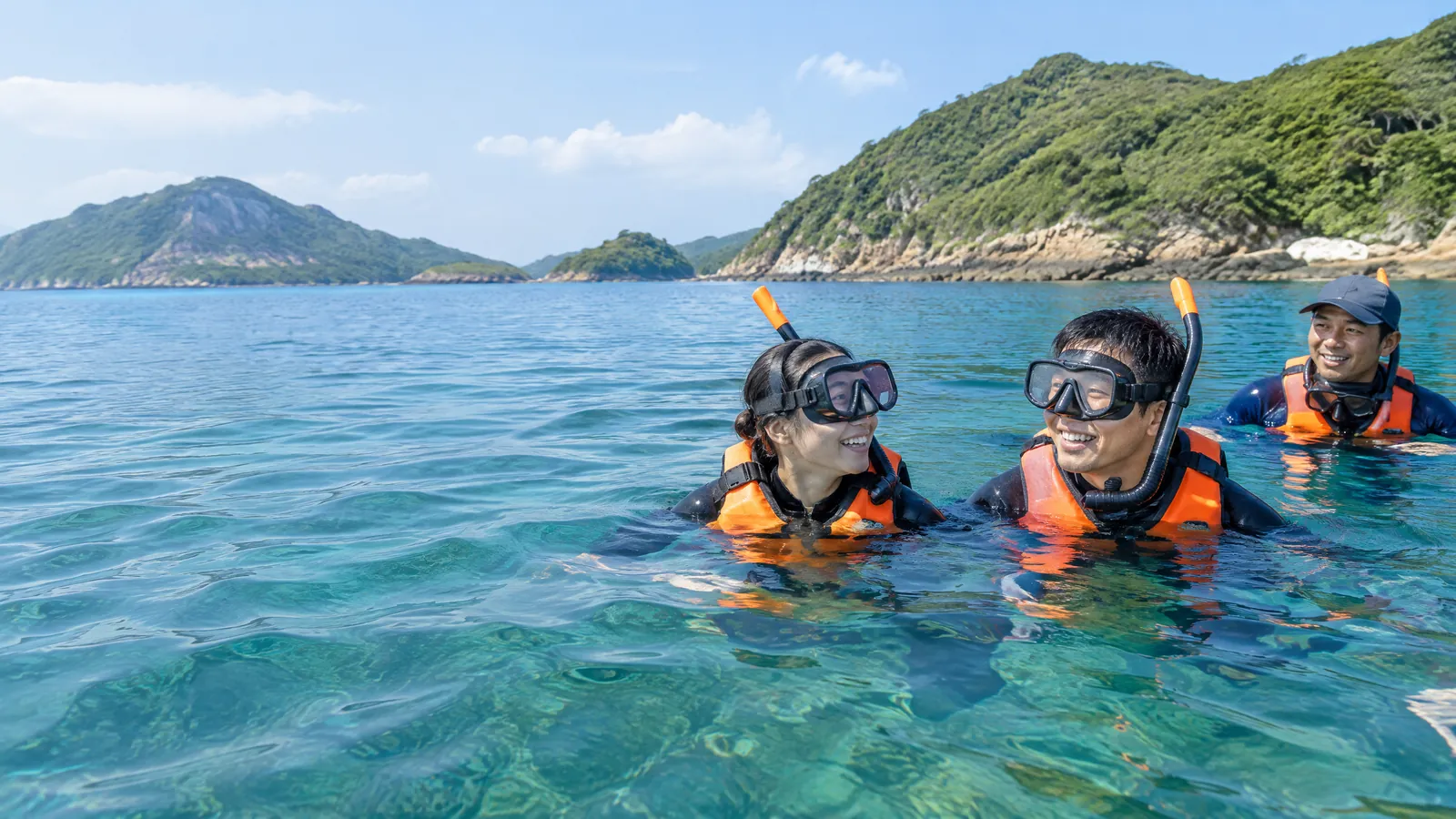
Compare the three most common ways to approach this plan
| Format | Best for | Confirm first |
|---|---|---|
| Shore dive | Divers comfortable with a land-based entry and flexible timing | Entry route, conditions, carrying distance, buddy and exit plan |
| Boat dive | People who prefer direct water access or a different site logistics | Boat availability, sea state, meeting point, fees and site plan |
| Training or refresher | New or rusty divers who need structured supervision | Certification pathway, prerequisites, skills, medical questions and inclusions |
Hoi Ha Wan shore diving — common questions
Who should consider a Hoi Ha Wan shore dive?Toggle answer
It may suit a certified diver or an appropriately supervised participant looking for a local shore-based option. Suitability depends on experience, access conditions, comfort carrying equipment and the plan agreed with the dive team; discuss your background before confirming arrangements.
What should I confirm for Hoi Ha Wan shore diving from the beach?Toggle answer
Confirm the proposed entry point, access route, weather and sea-state decision process, supervision or buddy arrangements, equipment needs, meeting details and applicable Marine Park requirements. These details can change, so ask for current guidance rather than treating a general description as a fixed promise.
Can beginners use this shore option?Toggle answer
Only if the activity is specifically arranged with suitable supervision and prerequisites. A shore dive is not automatically beginner training. If you have no recognised certification or are very rusty, ask whether a pool session, refresher or open-water course is the safer starting point.
What happens if I pay and the conditions are unsuitable?Toggle answer
Discuss the written booking terms before payment. Fees are non-refundable unless the applicable written terms say otherwise. Make-up sessions or changes are available only where those written terms permit them; no reschedule date is guaranteed. Contact the team promptly if conditions, health or access concerns arise.
Take the question with you
The next useful step is to message DiveHarbour with your certification, recent diving experience, preferred date range, equipment needs and whether you are comparing shore and boat access. Ask for the proposed entry, condition-check process, Marine Park guidance and written inclusions before confirming. A flexible plan gives you the best chance of enjoying Hoi Ha Wan while protecting the bay and keeping the decision sensible on the day.
Sources worth checking
- Hoi Ha Wan Marine Park — Agriculture, Fisheries and Conservation Department
AFCD states that Hoi Ha Wan Marine Park covers about 260 hectares, and instructs divers and swimmers not to stand on fragile corals and to follow the Marine Parks Visitors Code and the code for scuba divers and snorkellers.
Useful next reads for your plan
If you are still comparing routes, these related pages give you practical questions to bring into your next conversation with an instructor.
Put your plan into practice
Useful planning guides
Hong Kong shore dive logistics: a practical day plan
Use this Hong Kong shore dive logistics worksheet to compare practical options, check key decision points, and confirm current details with DiveHarbour.
Hong Kong shore dive logistics
