

A useful fact to keep in mind
PADI states that its Deep Diver course can prepare divers for a maximum depth of 40 metres (130 feet), subject to the agency training and limits.
Check the sourceDeep vs night vs Nitrox diving specialty: what each adds
Match depth, low-light and gas-planning interests
These three specialties solve different problems. Deep training is about planning and managing a dive when depth changes your available time, gas strategy, buoyancy and judgement. Night training changes the visual environment: you learn to communicate with lights, stay oriented and observe a site in a different way. Nitrox training is primarily a gas-planning and cylinder-analysis decision; it does not automatically make a diver more experienced or permit deeper diving.
A useful first question is not ‘which certificate sounds most advanced?’ but ‘what sort of dive would I like to repeat over the next six months?’ If you are drawn to walls, deeper boat sites or the discipline of turning a dive before a plan becomes uncomfortable, Deep may be motivating. If you enjoy small details, marine behaviour and a calm buddy routine, Night may be the better fit. If you make regular recreational dives and want to understand enriched air before booking a trip, Nitrox may be the most immediately practical.
The agencies do not all use identical course names, dives, prerequisites or limits. PADI’s official Deep Diver course description says the course covers deep-dive planning, gas management, recognising and managing narcosis, buddy contact, safety considerations and buoyancy control at depth. That describes learning outcomes, not a promise that every agency course has the same format. Read the actual syllabus and ask what is included before booking.
- Deep: planning, gas awareness, depth-related judgement and controlled buoyancy.
- Night: light signals, navigation references, buddy contact and low-light observation.
- Nitrox: oxygen analysis, exposure planning, labelling and using the mix stated on the cylinder.
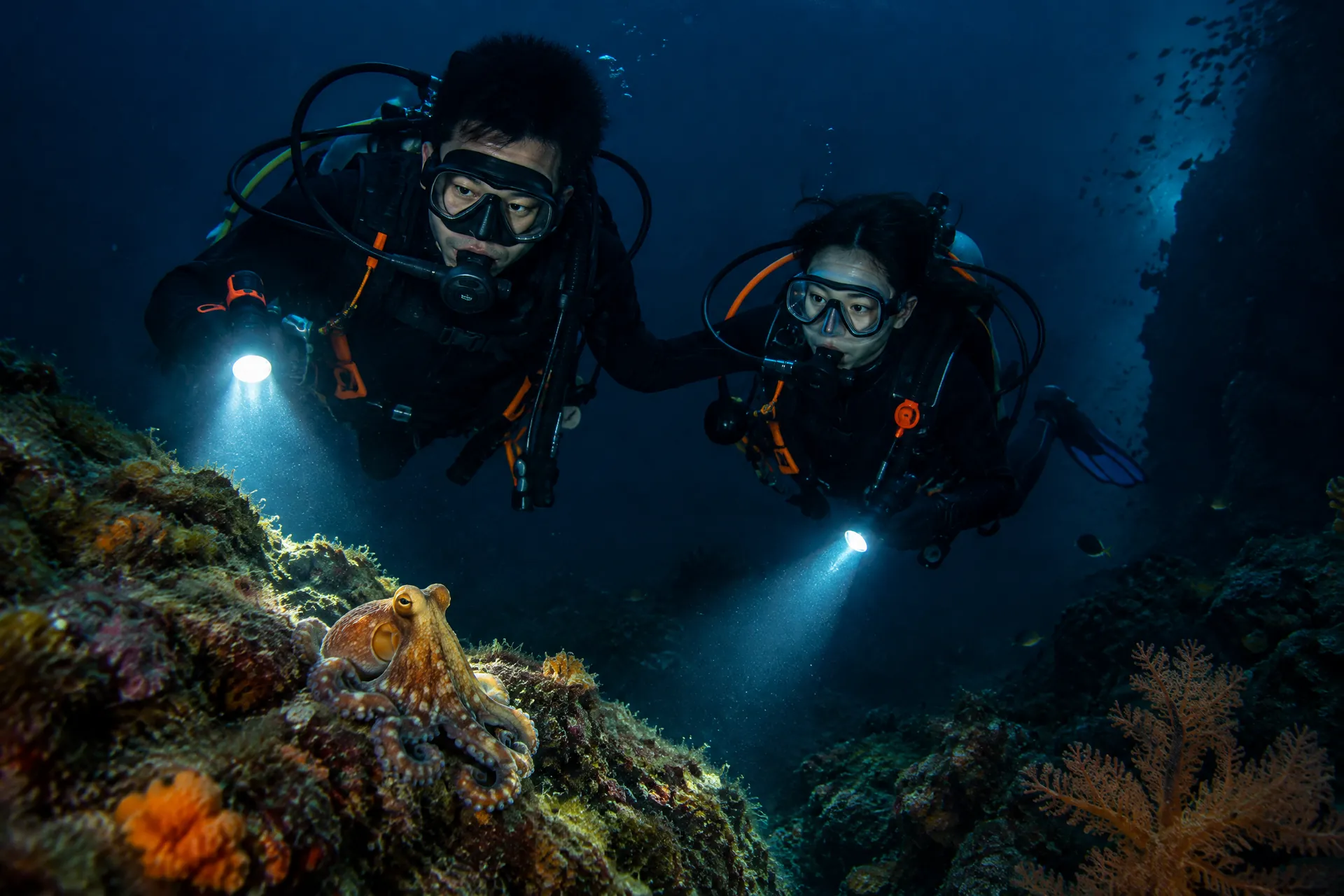
Which scuba specialty should I take after Open Water?
Choose around experience, confidence and local conditions
Start with your logbook rather than a shopping list. Note how recently you dived, how many dives were in the last year, whether you were comfortable with buoyancy and how you handled changes in visibility, current or task loading. A diver who has only just completed Open Water may benefit from ordinary fun dives or a refresher before adding a new task. A diver with a steady rhythm and clear goals may be ready for specialty training, subject to the agency’s prerequisites.
Hong Kong conditions can make the same specialty feel very different from a warm, clear holiday dive. Boat logistics, seasonal visibility, current, surface traffic, cooler water and limited daylight may affect equipment and site selection. Ask whether the practical sessions are in a pool, sheltered water or open water, and how the instructor will adapt the plan to the forecast. Conditions can change; a course should not be treated as a guarantee of a particular site or date.
Use how to choose an Advanced Open Water specialty as a broader planning companion, then make a short list of two options. For each, write one goal, one concern and one real dive you hope to do. This simple exercise often exposes the right answer: perhaps you want Night because you enjoy observing creatures, or perhaps you need a buoyancy refresher before Deep will be enjoyable.
- Recent diving: consider a refresher if your last dive was long ago or felt unsettled.
- Comfort: disclose anxiety, seasickness, equalisation concerns or poor low-light confidence early.
- Goal: choose the specialty that supports a specific kind of diving, not just another card.

Plan your next specialty with clear expectations
Discuss prerequisites, theory, practice and agency wording
Before committing, ask four practical questions. First, what certification or logged-diving experience is required by this agency and instructor? Second, what theory must be completed, and is it self-study, classroom-based or a mixture? Third, how many practical sessions are planned and what equipment is supplied? Fourth, what skills are assessed, and what happens if weather or personal readiness means a session cannot proceed? Written answers help you compare like with like.
The word ‘specialty’ does not remove the need for a conservative plan. Deep training does not authorise a diver to exceed the stated training limit, and Nitrox does not mean ‘stay underwater longer’ without considering depth, oxygen exposure, gas reserves and the actual mix. Night training does not replace daytime navigation practice or buddy discipline. Follow the agency materials, instructor briefing, local rules and the limits of your certification.
For the next stage after a specialty, see what to do after Advanced Open Water. If your interest is specifically depth, compare the Deep Diver specialty course Hong Kong page with the syllabus offered to you. The point is not to collect courses quickly; it is to build a sequence in which each skill is used and retained.
PADI states that its Deep Diver course can prepare divers for a maximum depth of 40 metres (130 feet), subject to the agency training and limits.

A practical decision framework for Hong Kong divers
Compare motivation, workload and future use
Give each option a score from one to five for interest, usefulness in your likely diving, comfort with the environment and willingness to practise. This is an editorial decision aid, not a certification rule. If Night has the strongest interest score but you feel uneasy in darkness, discuss a gradual introduction and light-handling practice. If Deep is your clear goal but buoyancy still requires frequent attention, practise first rather than treating a new course as a shortcut.
Also consider who you will dive with. A specialty is more useful when your regular buddy or dive group understands the same signals, gas choices and turnaround expectations. For Nitrox, confirm that the operator can provide the stated mix and a process for analysing and recording it. For Night, confirm primary and backup lights, signalling expectations and how the group will remain together. For Deep, confirm the site profile, ascent plan, gas strategy and what changes if visibility or current is unsuitable.
Your answer may be ‘none yet’. A couple of supervised fun dives, a pool skills session or a refresher can be the most responsible next step. When comparing other pathways, read sidemount vs wreck diving specialty prerequisites rather than assuming that every advanced option has the same entry standard.
- Choose Deep when your goal is depth-related planning and you are ready to be precise with gas and buoyancy.
- Choose Night when low-light communication and a new way of observing a familiar site genuinely appeal.
- Choose Nitrox when you want formal enriched-air knowledge and will use the gas within its stated limits.

Budget, equipment and booking checks
Confirm what the quoted course actually includes
Price is only one comparison point. Ask whether theory, certification processing, cylinders, boat fees, weights, exposure protection, lights and any gas surcharge are included. A lower headline price may exclude an item you need; a higher price may include equipment or boat arrangements. For the current approved DiveHarbour examples, Deep Diver is listed at HK$3,270, Nitrox at HK$1,480 and Night Diver at HK$2,550 per person. The exact training dives, maximum depth, gas, equipment and certification arrangements should still be confirmed before payment.
Bring your certification details, logbook and any relevant medical information to the conversation. A questionnaire is not a medical diagnosis; if you have a health concern, ask a qualified clinician whether diving is appropriate. Do not force equalisation, breath-hold through discomfort or continue a dive because a booking has been made. A responsible instructor can pause training and explain the next option without promising a particular outcome.
For the full category view, browse PADI specialty diving courses Hong Kong. If you decide to book, request a written breakdown of dates, meeting point, inclusions, equipment responsibility and cancellation terms. Fees are non-refundable where the written terms say so; make-up sessions are available only where those terms permit them, with no guaranteed reschedule date.

How to make the final choice
Turn a preference into a safe next conversation
Write down the one dive you hope this course will help you enjoy. Then send an instructor your certification level, approximate recent dive history, preferred option, main concern and the dates you can realistically train. Ask for the agency name, prerequisites, learning format, practical plan and total inclusions. This gives the instructor enough context to recommend a suitable route rather than sending a generic course description.
A good recommendation may be Deep, Night, Nitrox, another specialty or a refresher first. It should explain why the option fits your goals and what you must practise next. Keep the decision reversible where possible: you can learn theory, ask questions and postpone an open-water session if conditions or confidence are not right. Curiosity is valuable, but sound judgement is the skill that carries between every specialty.

Compare the three specialty directions before you enquire
| Option | Best for | Check before booking |
|---|---|---|
| Deep | Divers drawn to depth, walls and disciplined dive planning | Prerequisites, training limit, gas plan, site profile and buoyancy readiness |
| Night | Divers who enjoy low-light observation and buddy communication | Lights, backup plan, local conditions, signals and comfort after sunset |
| Nitrox | Divers wanting enriched-air knowledge for suitable recreational dives | Agency syllabus, mix analysis, oxygen exposure limits, cylinder availability and fees |
Which specialty should you choose after Open Water? — common questions
Is one of these specialties automatically the best choice after Open Water?Toggle answer
No. Deep, night and Nitrox specialties address different goals and procedures. Your recent diving, confidence, interests and the training agency’s prerequisites all matter, so review the syllabus and discuss the choice with a qualified instructor rather than following a fixed sequence.
What should I compare before choosing a specialty in Hong Kong?Toggle answer
Compare the agency syllabus, required theory, practical sessions, depth or gas-planning focus, supervision and local dive conditions. Ask what experience is expected, how equipment is arranged and what written terms apply before deciding on a course.
Does Nitrox let me dive deeper or stay down for any guaranteed extra time?Toggle answer
No. Nitrox training teaches how to use a stated enriched-air mix within its oxygen exposure and depth limits. It is not permission to exceed your certification, ignore gas reserves or promise a particular bottom time. The actual plan must follow the agency materials, instructor briefing and analysed cylinder.
Are course fees refundable, and can I always reschedule a missed session?Toggle answer
Fees are non-refundable where the written booking terms state this. Make-up sessions are available only where those written terms permit them; a particular replacement date is not guaranteed. Ask for the policy before paying and tell the operator promptly if you cannot attend.
What if I am not ready for a specialty after Open Water?Toggle answer
Choose a refresher, supervised fun dive or skills session first if your recent experience or confidence is limited. That is a valid progression, not a setback. A qualified instructor can review buoyancy, equipment familiarity and comfort before recommending a specialty.
Take the question with you
There is no universal winner in the deep vs night vs Nitrox diving specialty comparison. Match the course to the diving you actually want, check the agency-specific prerequisites and ask for a written practical and pricing plan. Send DiveHarbour your certification, recent experience, preferred option and concerns; the next step might be a specialty, a refresher or simply a clearer plan.
Sources worth checking
- PADI Deep Diver course: official course description
PADI states that its Deep Diver course can prepare divers for a maximum depth of 40 metres (130 feet), subject to the agency training and limits.
- SSI Enriched Air Nitrox specialty
SSI describes Enriched Air Nitrox as training for safely using nitrox mixes containing up to 40 percent oxygen; the exact programme and prerequisites should be checked with the agency.
- Divers Alert Network: Night Diving
DAN discusses night-diving equipment and safety techniques, supporting the need to plan lighting, communication and low-visibility procedures rather than treating night diving as ordinary daytime diving.
Useful next reads for your plan
If you are still comparing routes, these related pages give you practical questions to bring into your next conversation with an instructor.
Put your plan into practice
Useful planning guides
Master Diver Progression Plan after Advanced Open Water
Use this Master Diver progression plan worksheet to compare practical options, check key decision points, and confirm current details with DiveHarbour.
Master Diver progression plan
