
SAFE LEARNING · HAPPY EXPLORING
DiveHarbour

DiveHarbour · Practical guide

Swim-cap short hair fringe plan: manage shape after swimming

A swim cap changes how hair lies, but it does not decide your cut. Compare a lob, pixie and curtain fringe by cap-off outline, parting position and the drying steps you can repeat. Rinse promptly, blot rather than scrub, then reset the fringe before judging the shape. This guide turns one swim into a practical brief for a stylist and a realistic shore-exit routine.

By DiveHarbour9 min read
Ask about diving courses or coastal trip planning Read the guide
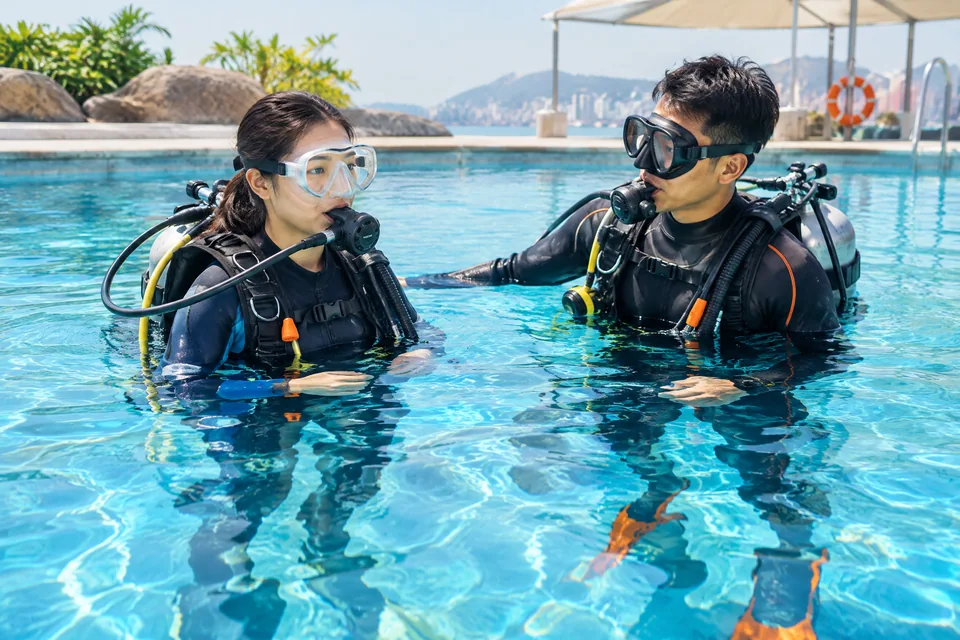
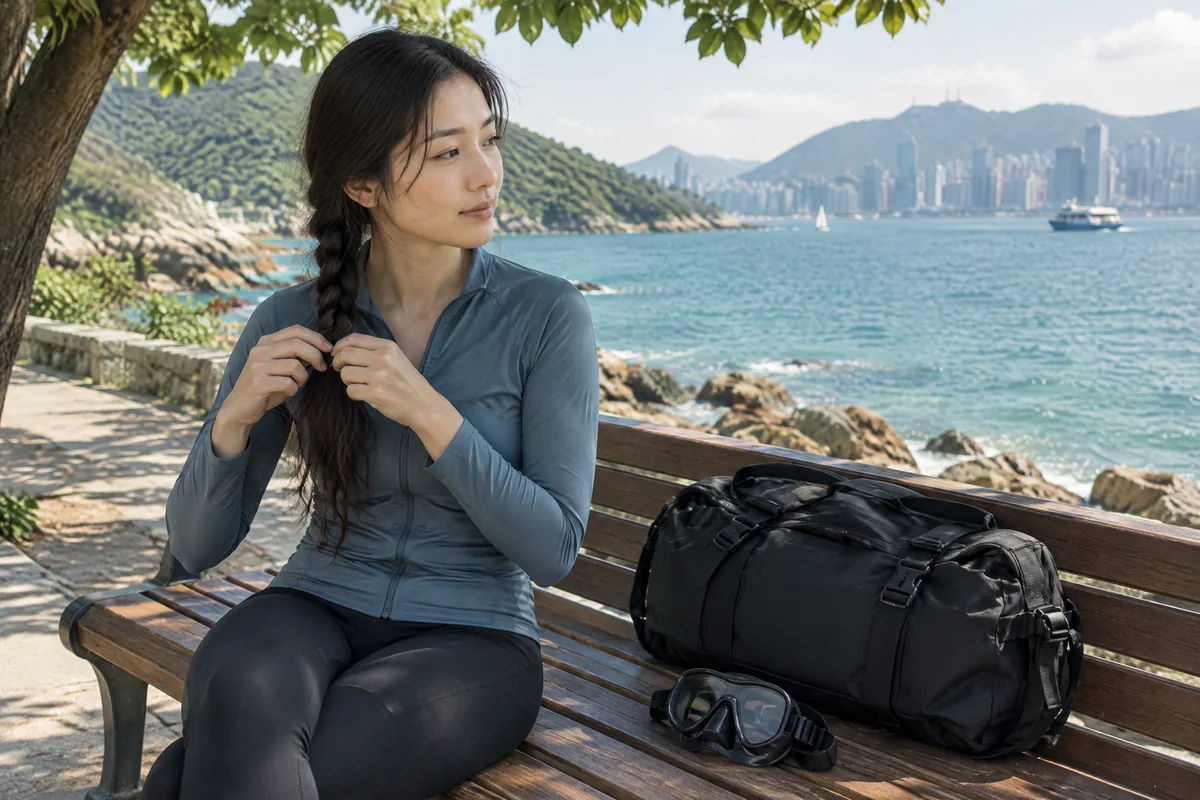
Illustration of a swim-cap short hair fringe plan before a coastal swim
Illustration · preparing short hair and a cap-off routine before a coastal activity.

Instructor qualifications

One clear teaching conversation from first breath to next step

DiveHarbour brings together scuba teaching, swimming, lifesaving and water-rescue experience so you can ask practical questions before choosing a course.

  • PADI teaching backgroundTeaching experience across recognised scuba learning pathways.
  • SSI teaching backgroundClear explanations when you are comparing agency routes.
  • NAUI teaching backgroundA practical, standards-aware approach to learning and progression.
  • Swimming foundationWater confidence and calm, step-by-step practice matter.
  • Lifesaving experienceSurface awareness and prevention stay part of the conversation.
  • Pool rescue experienceControlled practice can build confidence before open water.
  • Beach rescue experienceLocal water context informs sensible preparation.
  • Kayak rescue experienceA wider water-safety perspective supports good judgement.
  • PWC rescue experienceAsk about the right learning route for your experience and goals.

Brand relationship: DiveHarbour and Vit So share the same owner.

This guide is compiled by DiveHarbour. The Vit So links provide external hair-service information for reference; they are not diving-safety advice, medical advice, an independent endorsement, or a guarantee of service results.

A useful fact to keep in mind

The AAD recommends rinsing hair immediately after swimming and considering a swim cap for pool activities.

Check the source
Key takeaways

Four points to carry forward

  • Judge the cut after rinsing and gentle blotting, not immediately when the cap comes off.
  • Choose a lob when retained length and a simple centre or side part matter more than the shortest reset.
  • Choose a pixie only when you accept a visible crown, nape and fringe reset after each swim.
  • Treat curtain bangs as a parting decision: record where they separate when wet and how you dry both sides.
Start here

Swim-cap short hair fringe plan: start with the cap-off check

Use the swim-cap short hair fringe plan to observe, not guess

The useful moment is not the instant the cap comes off. Hair is compressed, damp and pulled toward the cap edge, so a fringe can look flatter or more separated than it will after a rinse. Treat the first look as a record of pressure points. Note the part, the direction of the fringe, the length touching your cheek, and whether the nape sticks out. These observations make a better cut conversation than a trend photo alone.

For a dive day, keep the hair decision separate from the water decision. Check the route, kit and exit arrangements through Hong Kong shore diving rather than asking a haircut to solve an equipment problem. The cut should make your own reset easier after the activity. It should not be described as a safety feature, a seal for a cap, or protection from pool chemicals.

  • Take one photo with the cap on and another after the first gentle rinse, using the same angle.
  • Mark whether the cap edge presses the fringe, temples, crown or nape most strongly.
  • Write down how much time you can spend drying before your next activity.
  • Separate appearance goals from any fit or comfort issue with the swim equipment.

Swipe the table to compare all columns.

Compare the three choices by the cap-off problem you want to solve
OptionCap-off shape checkPart or fringe focusUpkeep question
LobDoes the longer outline still tuck or sit neatly after rinsing?Can the centre or side part be rebuilt before the ends dry?Do you value flexible styling over the shortest dry-down?
PixieDo the crown, temples and nape still look intentional when damp?Which short area needs direction first?Will you reset several small zones after each swim?
Curtain bangsDo both sides move away from the face after cap pressure?Where is the natural split when wet and when dry?Can you dry the roots on both sides with your usual tools?
Illustrative scenario: if the fringe only looks uneven while compressed, wait for the rinse-and-reset check before asking for a shorter cut.
Guide · 02

Build a rinse-and-reset routine around length

A longer outline gives you more ways to move the hair after the cap

A lob gives you length to tuck behind the ears, move into a low tie, or leave down while it dries. That does not mean it will dry in one fixed shape. The useful question is whether you prefer to keep options or remove bulk. Ask for the intended outline at the jaw, shoulder or collarbone, then explain where the cap rubs. If you want a reference point for the service discussion, review the lob haircut page and ask which length is being discussed.

After the cap comes off, rinse with fresh water as soon as practical, then press water out with a towel instead of rough rubbing. The AAD recommends rinsing immediately after swimming and describes washing and conditioning as part of a post-swim care sequence [1]. For a lob, begin drying at the part and fringe, because those areas frame the face. Leave the ends until the direction is clear, rather than brushing every section into one forced shape.

  • Choose a reference length that you can describe without relying on a model's exact face or hair density.
  • Ask whether the ends are meant to sit blunt, softly tapered or lightly layered after a rinse.
  • Keep a wide-tooth comb or your usual brush available, and use only the tool you can pack.
  • Test whether ear-tucking is comfortable before treating it as your main post-cap solution.
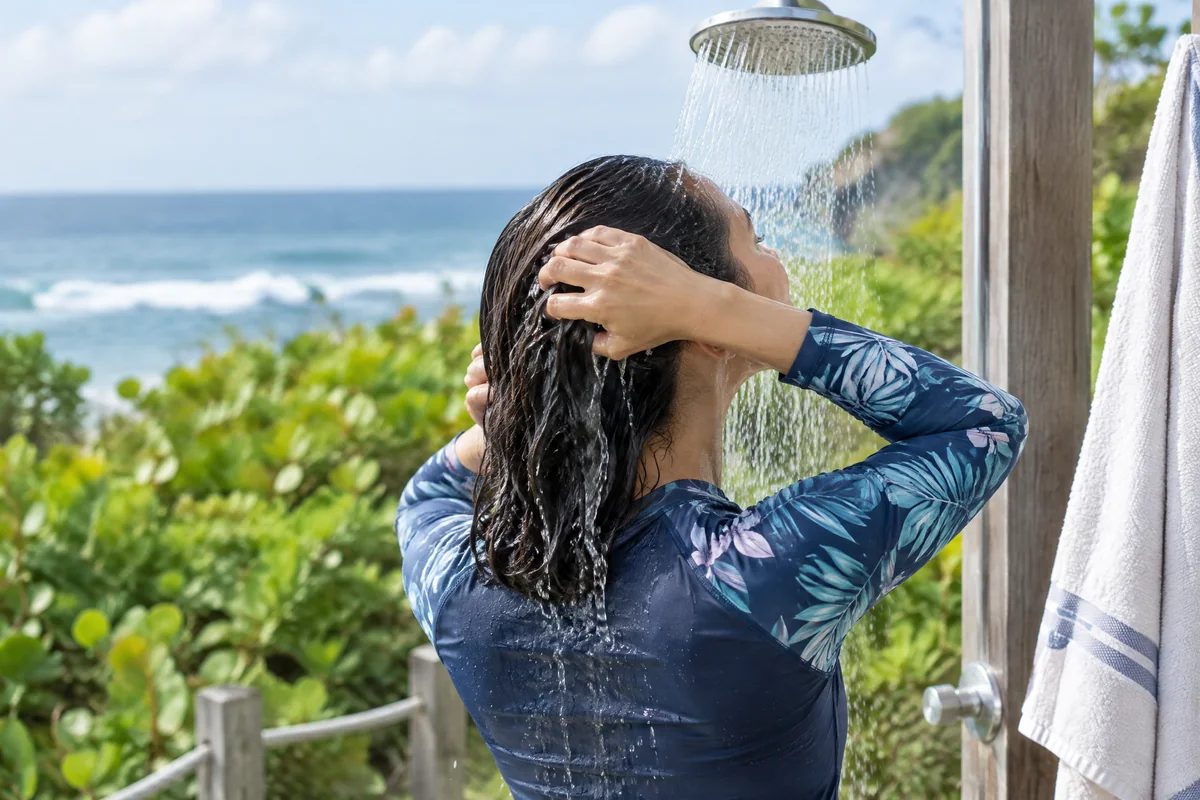
Illustration of rinsing short hair after swimming before resetting the fringe
Illustration · a fresh-water rinse is one step in the post-swim reset.
Guide · 03

Place the fringe where the cap leaves it

Curtain bangs are a parting and drying choice, not just a look

Curtain bangs usually depend on a deliberate split and two sides that move away from the centre. A swim cap can press the roots toward the forehead or shift the split to one side. Before choosing the shape, record where your hair naturally separates when wet and where it returns after a few minutes of air movement. If you are comparing terminology with a stylist, the curtain bangs reference can help you ask about centre placement, side length and the transition into the rest of the cut.

Reset the fringe while it is damp, not dripping. Make the part with your fingers, guide each side away from the face, and dry the roots in that direction before working on the ends. This is a repeatable routine, not a promise that every cap will leave the same result. If the cap always flattens one side, tell the stylist that the real goal is a part that can be rebuilt with your available tools.

  • Record whether your natural part is centred, slightly off-centre or changeable after a rinse.
  • Describe the shortest point near the eye or cheek, then describe how it should join the side length.
  • Dry both roots away from the face before deciding whether the fringe is too heavy.
  • Pack a small clip only if you already use it; a new accessory is not a reliable routine.
Check exposed skin at the part and hairline during outdoor time. Shade, a brimmed hat and sunscreen are sun-safety measures, not styling products [2].
Guide · 04

Compare upkeep before choosing the shortest option

A pixie can dry quickly, but its outline is less forgiving of direction changes

A pixie cut reduces length, yet the shorter outline can make the crown, temples, fringe and nape more visible after a cap. The question is not simply whether it dries fast. Ask whether you are comfortable resetting several small areas, checking the side outline in a mirror, and accepting that damp hair may sit differently from dry hair. The pixie cut reference is a starting point for questions about length zones, not a promise of a universal cap-friendly result.

For a pixie, use the same order every time: rinse, press out water, place the part or fringe, then dry the roots and finish the outline. Avoid judging the nape while it is still wet and stuck together. If you have a busy exit, compare the number of touch-ups you can realistically do with the flexibility of a lob. A shorter cut is a good choice only when its maintenance pattern fits your day.

  • List the areas you are willing to reset: crown, fringe, sideburns, temples and nape.
  • Ask how the outline is expected to look with no product, with your usual product, and when damp.
  • Check the back with a mirror or photograph instead of assuming the front view tells the whole story.
  • Compare the routine with a lob before choosing shortness for a single trip or event.
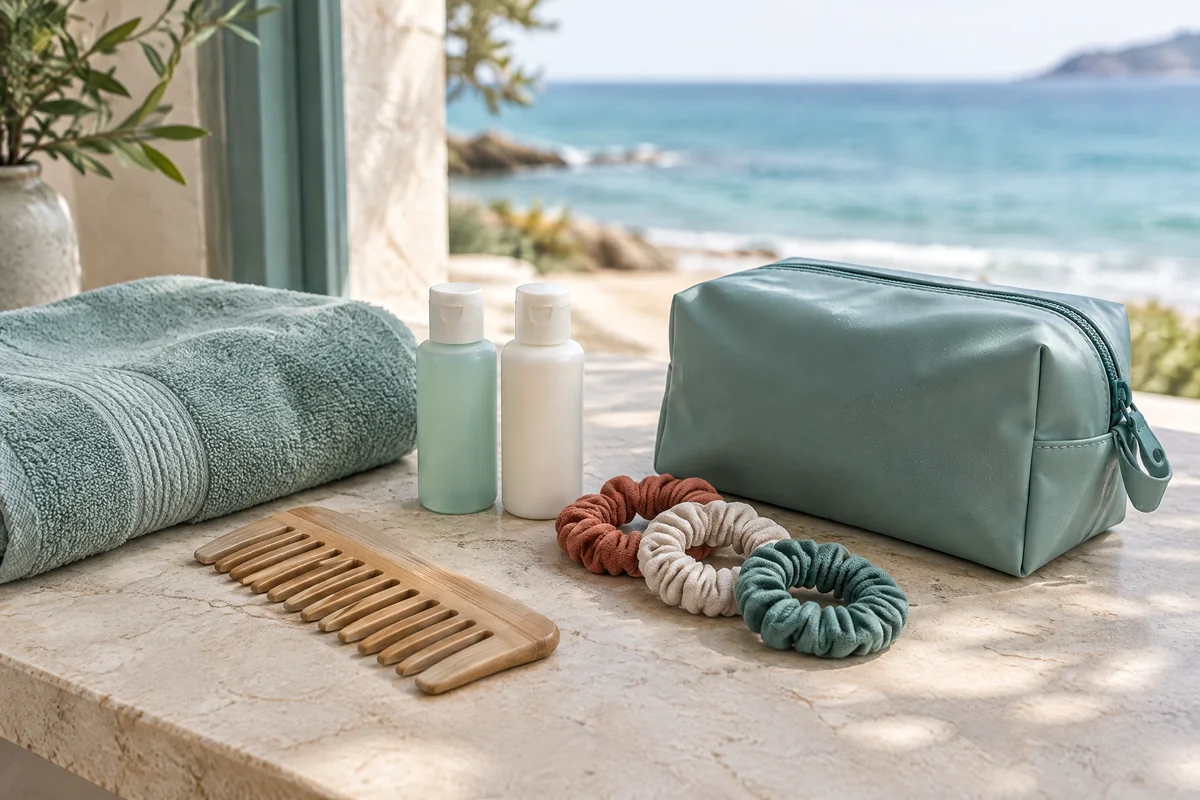
Illustration of a compact hair-care kit for a swim cap and short fringe
Illustration · a compact kit can support the routine you can actually repeat.
Guide · 05

Make drying time part of the haircut brief

Your water conditions and next stop change the practical choice

Drying time is shaped by density, texture, length, towel access, airflow and what you must do next. It is not safe to promise a fixed number of minutes from the haircut name alone. Before a dive, check the expected conditions in Hong Kong diving water temperature and pack for the whole exit. The temperature guide cannot predict your hairstyle, but it can help you think about whether you will need a hat, a warmer layer or more time before an outdoor stop.

Build the hair reset into the same sequence as your other shore tasks. Rinse, remove excess water, restore the part, dry the face-framing pieces, and then decide whether the remaining dampness matters for your next plan. The AAD also notes that hair is affected by UV exposure and recommends a wide-brimmed hat or shade outdoors [1]. For exposed skin, CDC guidance includes a brimmed hat, shade and sunscreen, with reapplication after swimming or towelling off [2].

  • Write the next activity after swimming, such as transport, lunch, a walk or another water session.
  • Pack the smallest drying kit you can actually carry: towel, comb and any familiar product.
  • Keep a hat or shade option for outdoor time instead of using hair shape as sun protection.
  • Reapply sunscreen to exposed skin after swimming or towelling, following the product directions.

Swipe the table to compare all columns.

A repeatable cap-off reset to record before changing the cut
StepWhat to doWhat to recordDecision use
Remove capLook at pressure marks and the first parting before brushing.Where the cap changed direction or flattened hair.Shows the cap effect rather than the final shape.
RinseUse fresh water as soon as practical and press out excess water.Whether the fringe separates and how the nape sits.Separates water and compression from cut design.
Reset rootsRestore the part and guide the fringe before drying the ends.Which roots need the most attention.Shows the minimum routine you can repeat.
FinishDry or air-dry according to your real next activity.What still looks acceptable without extra styling.Helps choose length and upkeep honestly.
Guide · 06

Turn the cap-off test into a consultation brief

Bring observations and questions instead of asking for a trend by name

A useful consultation starts with your routine: how often you swim, which cap you wear, where it presses, how you part the hair, and what you can do before leaving the pool or shore. Bring a dry photo and a post-rinse photo if you have them. Say whether you want retained length, a clear short outline, or a fringe that can move away from the face. Then ask what changes when the hair is damp, not only how the cut looks in a finished image.

Ask the service provider to separate cut design from hair-care advice. Useful questions include which length will still tuck away, where the fringe should be divided, what the back will look like after compression, and which steps are essential when you have limited time. If you discuss colour, perming or straightening as well, disclose recent processing and ask for an individual assessment. This article offers planning information, not a medical or chemical-treatment clearance.

  • Bring the cap or a clear description of its edge, pressure and fastening method.
  • Show the part you can reproduce with wet fingers and the part you want after drying.
  • Ask how much length must be kept for tucking, tying or changing the fringe direction.
  • Confirm what to do if the hair or scalp feels irritated, and seek medical advice for a health concern.
A good decision is the one whose cap-off routine you can repeat on an ordinary swim day, not only on a carefully styled appointment day.
Illustration of consultation planning for a lob, pixie or curtain fringe
Illustration · bring observations and questions to a hair consultation.
A sensible next step

Take the question with you

Run the cap-off check on one ordinary swim day before making a major change. Record the pressure points, natural part, fringe direction and the minimum drying steps you can repeat. Use those notes to compare a lob, pixie or curtain fringe on upkeep as well as appearance, then take the brief to a service provider for an individual discussion.

Questions to ask

Common questions

Should I judge my cut as soon as I remove the swim cap?

No. First note the pressure pattern, then rinse, press out excess water and restore your part. Judge the outline after that reset, because compressed damp hair can look different from the shape you can reproduce.

Is a lob easier than a pixie after swimming?

Neither is automatically easier. A lob may give you more ways to tuck or move the hair, while a pixie may need several short areas reset. Choose the routine you can repeat with your actual time, tools and mirror access.

How should I plan curtain bangs around a swim cap?

Record the natural split when wet, where the cap presses, and how each side moves away from your face after drying. Ask about the centre placement, side length and transition into the rest of the cut.

Does a haircut protect my hair or scalp from sun and pool water?

No. A cut is a styling choice, not protective equipment. AAD guidance supports a swim cap and prompt rinsing for pool exposure, while sun protection should include shade, suitable clothing, a brimmed hat and sunscreen for exposed skin.

Further reading

Official sources worth checking

  • [1] Must-try summer hair care

    The AAD advises considering a swim cap for pools and rinsing hair immediately after swimming, then washing and conditioning; it also suggests a wide-brimmed hat or shade for outdoor hair protection.

  • [2] Sun Safety Facts

    The CDC recommends shade, protective clothing and a hat with a brim all the way around, and says sunscreen should be reapplied after swimming, sweating or towelling off.

Continue exploring

Keep comparing practical questions before you choose a course, activity or preparation step.

Coastal life and hair care · Updated 2026-11-06

Coastal haircut plan for swimmers: what divers should ask

Plan a coastal haircut plan for swimmers with a clear brief on caps, length, drying and aftercare. Check the questions before you book.

coastal haircut plan for swimmers
Coastal life and hair care · Updated 2026-11-06

Hood-friendly men's short haircut: plan the shore exit

Plan a hood-friendly men's short haircut for a calmer shore exit. Compare taper, textured crop and upkeep, then check your brief.

hood-friendly men's short haircut

Coastal life and hair care · Updated 2026-11-06

Beach hair colour tone guide: choose brown shades carefully

Use this beach hair colour tone guide to compare brown, chocolate and ash-brown goals by starting base and upkeep. Plan your consult.

beach hair colour tone guide
Your next step

Ask about diving courses or coastal trip planning

Message DiveHarbour on WhatsApp to discuss diving courses or coastal trip planning, along with your experience and preferred dates.

Ask about diving courses or coastal trip planning
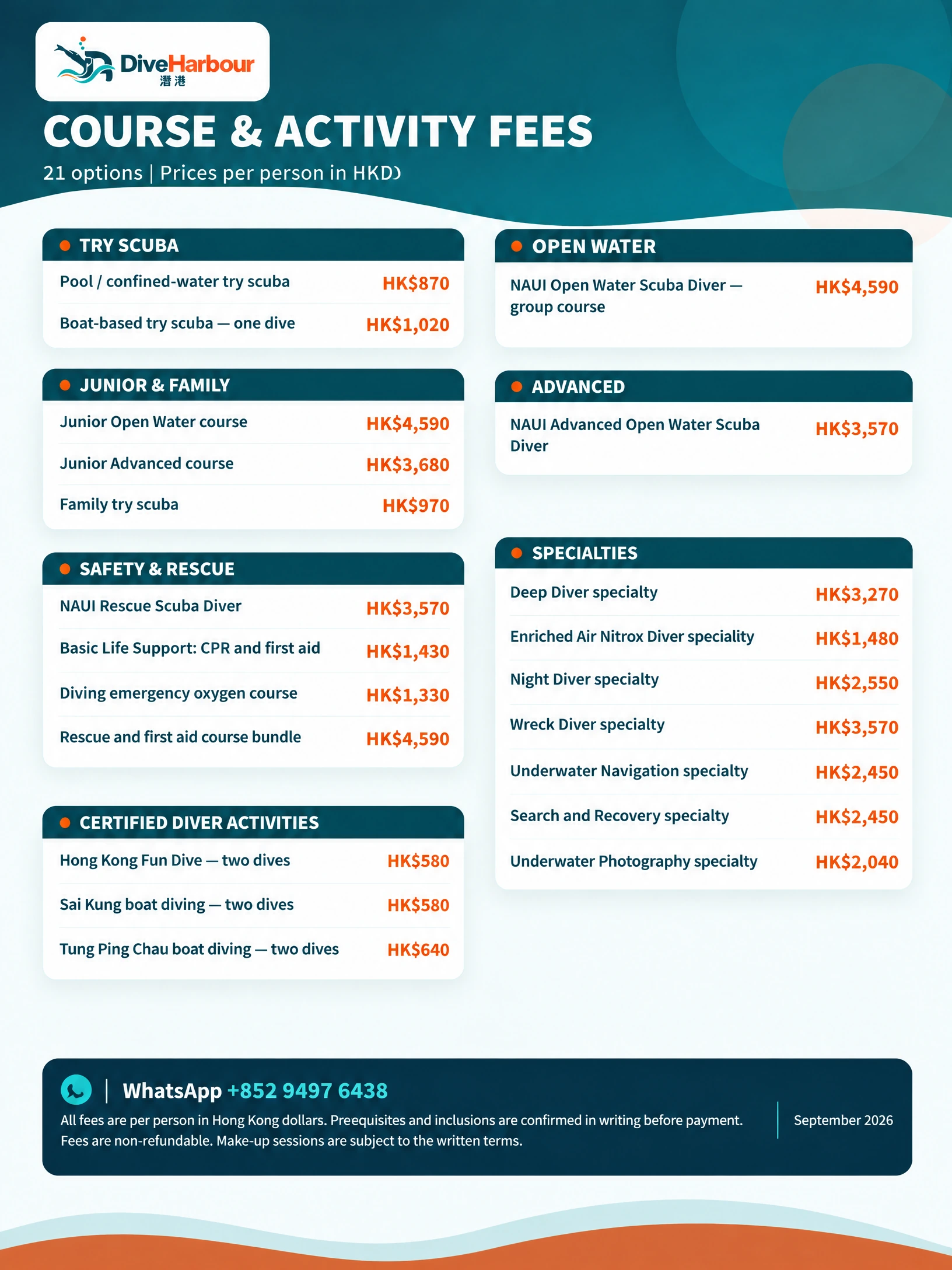
English price list for 21 DiveHarbour courses and activities, with fees per person in Hong Kong dollars
Tap the price list to view it at full size.

Plan your next dive

Course fees, clearly set out

Compare our published course and activity fees before choosing your next step. All prices are per person in Hong Kong dollars.

Before you book, we confirm prerequisites, materials, certification, equipment, venue and boat arrangements in writing. Ask us about fees for courses not listed here.

All fees are non-refundable. Make-up sessions are subject to the written terms.

Read all course fees
DiveHarbour course and activity fees per person in Hong Kong dollars
Course / activityPer person
Pool / confined-water try scubaHK$870
Boat-based try scuba — one diveHK$1,020
NAUI Open Water Scuba Diver — group courseHK$4,590
Junior Open Water courseHK$4,590
Junior Advanced courseHK$3,680
Family try scubaHK$970
NAUI Advanced Open Water Scuba DiverHK$3,570
NAUI Rescue Scuba DiverHK$3,570
Basic Life Support: CPR and first aidHK$1,430
Diving emergency oxygen courseHK$1,330
Rescue and first aid course bundleHK$4,590
Deep Diver specialtyHK$3,270
Enriched Air Nitrox Diver specialtyHK$1,480
Night Diver specialtyHK$2,550
Wreck Diver specialtyHK$3,570
Underwater Navigation specialtyHK$2,450
Search and Recovery specialtyHK$2,450
Underwater Photography specialtyHK$2,040
Hong Kong Fun Dive — two divesHK$580
Sai Kung boat diving — two divesHK$580
Tung Ping Chau boat diving — two divesHK$640