Long Wig Travel Storage for a Coastal Weekend | DiveHarbour
Long wig travel storage works best when you plan the piece as a separate, supported item rather than squeezing it into leftover luggage space. Protect the length from friction, reserve a dry place to reset it, and allow time for fibre-specific reshaping before dinner. A shore day can include a private change, but water activity decisions remain separate from hairpiece care and must follow the product instructions and activity operator.
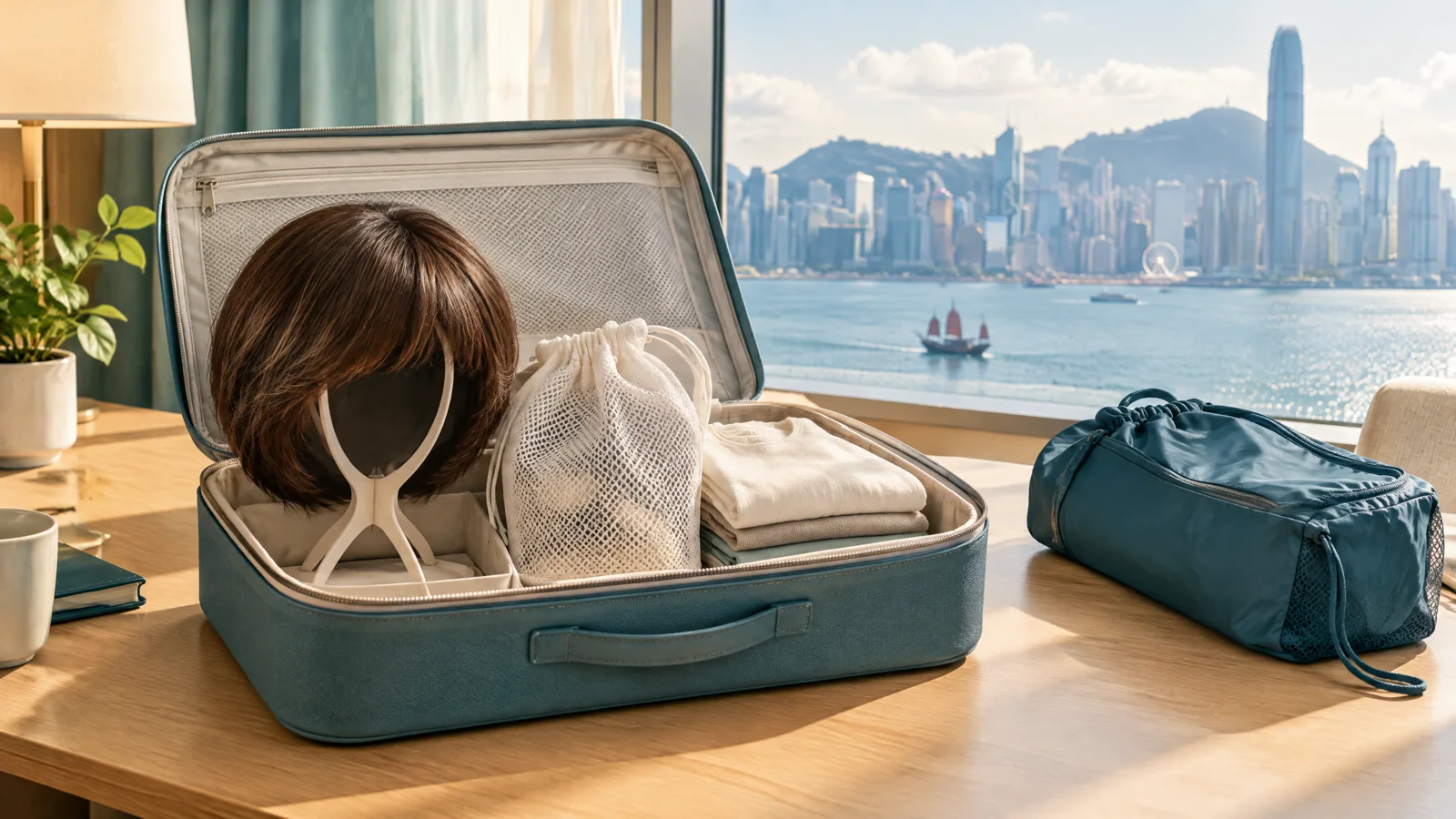
Illustration · Concept illustration: protected long-style packing for a coastal weekend.
Instructor qualifications
One clear teaching conversation from first breath to next step
DiveHarbour brings together scuba teaching, swimming, lifesaving and water-rescue experience so you can ask practical questions before choosing a course.
PADI teaching backgroundTeaching experience across recognised scuba learning pathways.
SSI teaching backgroundClear explanations when you are comparing agency routes.
NAUI teaching backgroundA practical, standards-aware approach to learning and progression.
Swimming foundationWater confidence and calm, step-by-step practice matter.
Lifesaving experienceSurface awareness and prevention stay part of the conversation.
Pool rescue experienceControlled practice can build confidence before open water.
Beach rescue experienceLocal water context informs sensible preparation.
Kayak rescue experienceA wider water-safety perspective supports good judgement.
PWC rescue experienceAsk about the right learning route for your experience and goals.
Brand relationship: DiveHarbour and OWNSTRAND share the same owner.
DiveHarbour and OWNSTRAND are operated by the same owner. OWNSTRAND links are included as external product and selection references, not as independent third-party recommendations, medical advice, or an endorsement that any hairpiece is suitable for swimming, diving, or other water activity.
A useful fact to keep in mind
The American Cancer Society advises storing a wig on a wig stand for short periods and waiting until it is thoroughly dry before brushing or combing. [1]
Treat the long style as a protected item, not spare space in a suitcase.
Separate dry storage from damp clothing and activity equipment.
Pack the care tools and schedule a fibre-specific reshaping window.
Plan a private change before dinner instead of improvising after a shore activity.
Start here
Why long wig travel storage changes a coastal weekend
Long wig travel storage starts with length, friction, and reset time
A long style takes more room than its folded base suggests. The loose length can catch on zips, bag straps, towels, and clothing. It may also need a slower reset after being compressed. Plan the wig as its own travel item before filling the rest of the bag. This simple decision prevents a common mistake: using every spare corner, then discovering that the piece has no protected place to rest at the accommodation.
Travel advice from Jon Renau recommends protecting wigs in their retail boxes where possible. It also suggests a separate bag when the original box is unavailable, with delicate lace kept flat. [2] For a long style, the useful principle is protection from friction and hurried rummaging. A box, case, or clean bag should not press the hair against wet clothing or sharp accessories.
Coastal planning adds another boundary. A hairpiece may be carried to a shore day without being treated as water equipment. Do not infer swimming or diving suitability from a style name, fibre label, cap design, or storage method. Follow the actual product instructions and the activity operator. If those instructions are unclear, choose a shore-side alternative and keep the piece stored away from the activity.
The best container is the one that protects the length, keeps the base supported, and leaves you enough time to check the style before dinner.
Guide · 02
Choose a travel shape before choosing a container
A long wig travel storage decision is really a weekend workflow decision
Start with the moments when the piece will be worn. If it is mainly for a portrait or dinner, you can carry it protected and change later. If it will be worn during long transport, friction becomes a bigger concern. Jon Renau specifically recommends short or mid-length styles for travel. Long hair can rub against a seat or catch on a carry-on strap. [2] This is a travel suggestion, not a reason to replace your planned look without checking your own priorities.
For a long style, compare volume against the length you actually need. Extra length can add packing bulk and more surface area to detangle. A simpler silhouette may leave more room for a stand, care items, or a backup outfit. Do not change the style by cutting, heating, or chemically treating it during the trip unless the maker’s instructions explicitly allow the method and you know the piece’s fibre and base.
Use a short decision sequence before departure: identify the wearing windows, note whether the style must travel in a case or box, reserve a dry reset location, and estimate the time needed before dinner. Then choose the smallest container that protects the shape. Space saved by crushing the length is not real savings if it creates a rushed reshaping job later. For humid-weather selection questions, the wig for hot humid weather page can help you compare care questions.
Mark the transport, shore, accommodation, and dinner wearing windows.
Record the fibre, base, and care instructions for this exact piece.
Reserve space for a comb, approved care products, and a clean cover.
Allow a private dry-storage and reshaping period before the evening plan.
Keep a simpler backup option if the weekend schedule is tight.
Swipe the table to compare all columns.
Coastal weekend packing choices for a long style
Weekend condition
Packing priority
Reset question
Dinner implication
Long transport or flight
Protect the length from seats, straps, and rummaging
Will the case keep the base supported without a sharp crease?
Allow an inspection and gentle reset after arrival
Shore activity before dinner
Separate the piece from damp clothes and activity gear
Where can it stay dry and private?
Change only after the activity and equipment routine
Humid coastal accommodation
Keep the container clean and avoid trapped moisture
What does this fibre’s care sheet permit?
Reserve more time if the style may need reshaping
Short visit with little spare time
Choose a simpler silhouette or backup option
Can the style be checked without heat experiments?
Avoid making dinner depend on a complex recovery
If humid weather is part of the plan, compare the care questions rather than assuming all fibres respond alike. This is a product-selection reference, not a promise of water suitability.
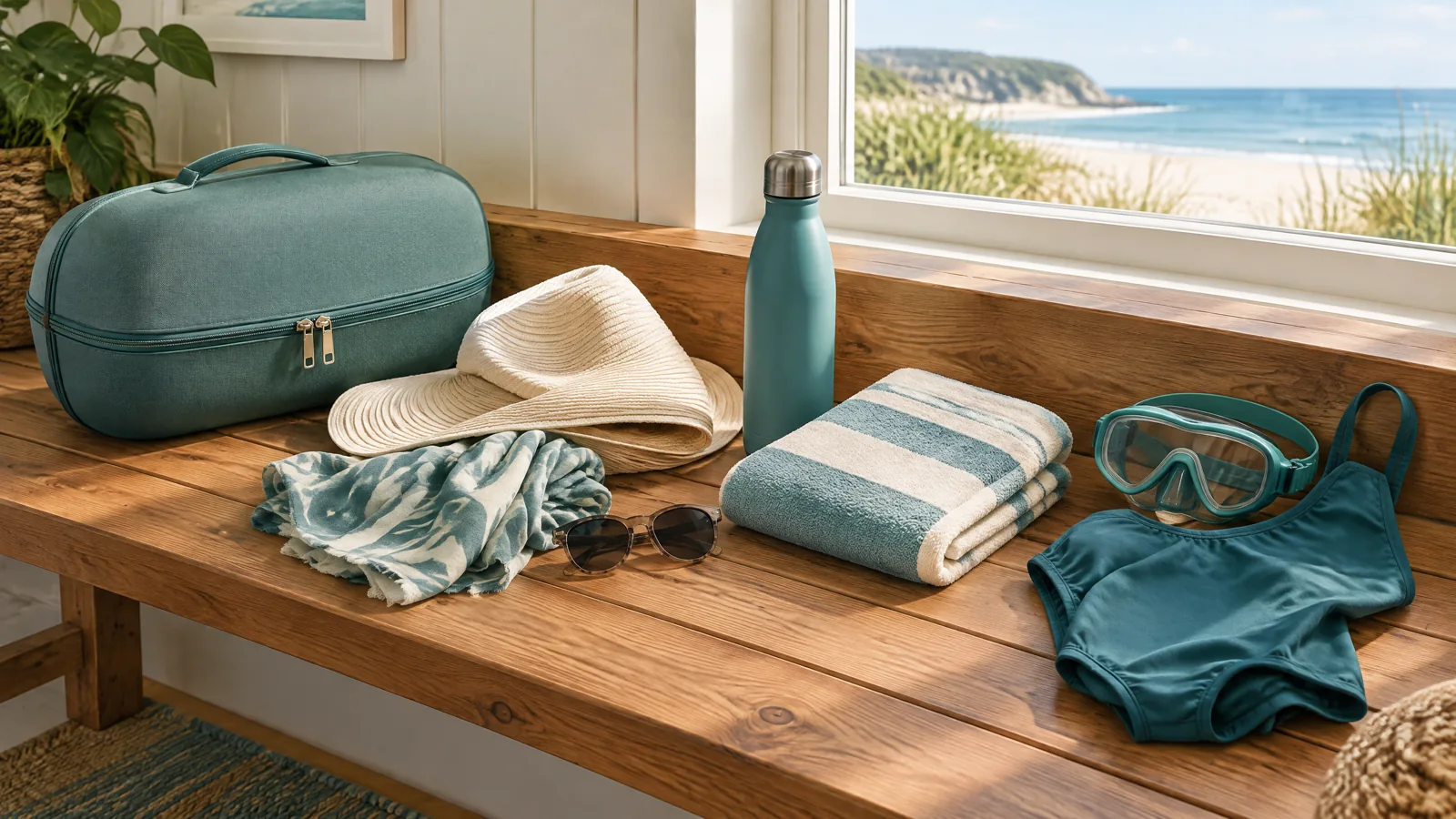
Illustration · Concept illustration: separating a dry hairpiece from shore-day equipment.
Guide · 03
Pack a long style without crushing the length
Build long wig travel storage around low-friction packing
Before packing, let the piece reach the condition required by its care sheet. Do not seal a damp base or damp hair simply because the taxi or flight is leaving. If the item needs cleaning, follow the product instructions at home rather than experimenting in a hotel bathroom. A clean, dry, gently detangled piece is easier to place into its container without adding tight bends or hidden knots.
Place the base in the centre of the box or case, then guide the length in a loose direction that follows its existing fall. Avoid folding a curl pattern into a sharp crease. If the piece has lace, keep that delicate area flat. If it has another base, use its supplied instructions instead. The materials are not interchangeable, so a packing method that suits one style may damage another.
Keep the wig away from shoes, wet swimwear, used towels, and unsealed toiletries. Put those items in their own compartments. Label the case with the style and colour if you are carrying more than one piece. When transport involves a flight after diving, leave a real buffer between activity and travel. A hairpiece change cannot substitute for activity safety planning. See the Hong Kong scuba diving itinerary with a flight buffer for the separate itinerary question.
A loose, supported fold is different from stuffing. The goal is to control contact and pressure while keeping the fibre’s natural direction.
Guide · 04
Create a dry reset at the accommodation
Long wig travel storage needs a dry, supported reset
Choose the reset location when you check in. It should be clean, dry, away from direct heat, and out of the path of towels or opened luggage. The American Cancer Society advises storing a wig on a wig stand for short periods. It says to let a washed wig dry at room temperature and not brush or comb until the piece is thoroughly dry. [1] These points make the accommodation part of the packing plan, not an afterthought.
A compact stand can help when the exact product instructions allow it. HairUWear describes its stand as useful for drying, storage, or travel, and says it folds flat and allows air circulation. [2] Treat that as a feature of that stand, not proof that every stand fits every long style. The base still needs full support, and the length must not trail across a damp counter or become trapped beneath another bag.
Fibre changes the reset routine. Jon Renau separates human hair, ordinary synthetic fibre, and heat-friendly synthetic care. Its guide gives different rules for drying and styling each type. [2] If you are comparing a labelled Remy human hair wigs option, ask for the exact care sheet for that product. Remy, human hair, and heat-friendly labels do not replace product-specific instructions.
Swipe the table to compare all columns.
A dry-reset sequence before changing for dinner
Step
What to do
What to avoid
Why it matters
1. Separate
Move the piece away from damp clothing, towels, and toiletries
Do not leave the length under another bag
Reduces contact with moisture and snagging items
2. Support
Use the stand or storage method allowed for the exact piece
Do not assume one base can use another base’s method
Keeps the cap and length in a controlled position
3. Dry
Follow the product’s drying instructions and wait for the required condition
Do not brush wet hair or add unapproved heat
Protects the fibre and prevents rushed handling
4. Inspect
Check tangles, bends, and the planned part before dressing
Do not force knots or reshape by guesswork
Leaves time to choose a backup plan
Dry first, then reshape. Do not use heat simply because the evening schedule is short.
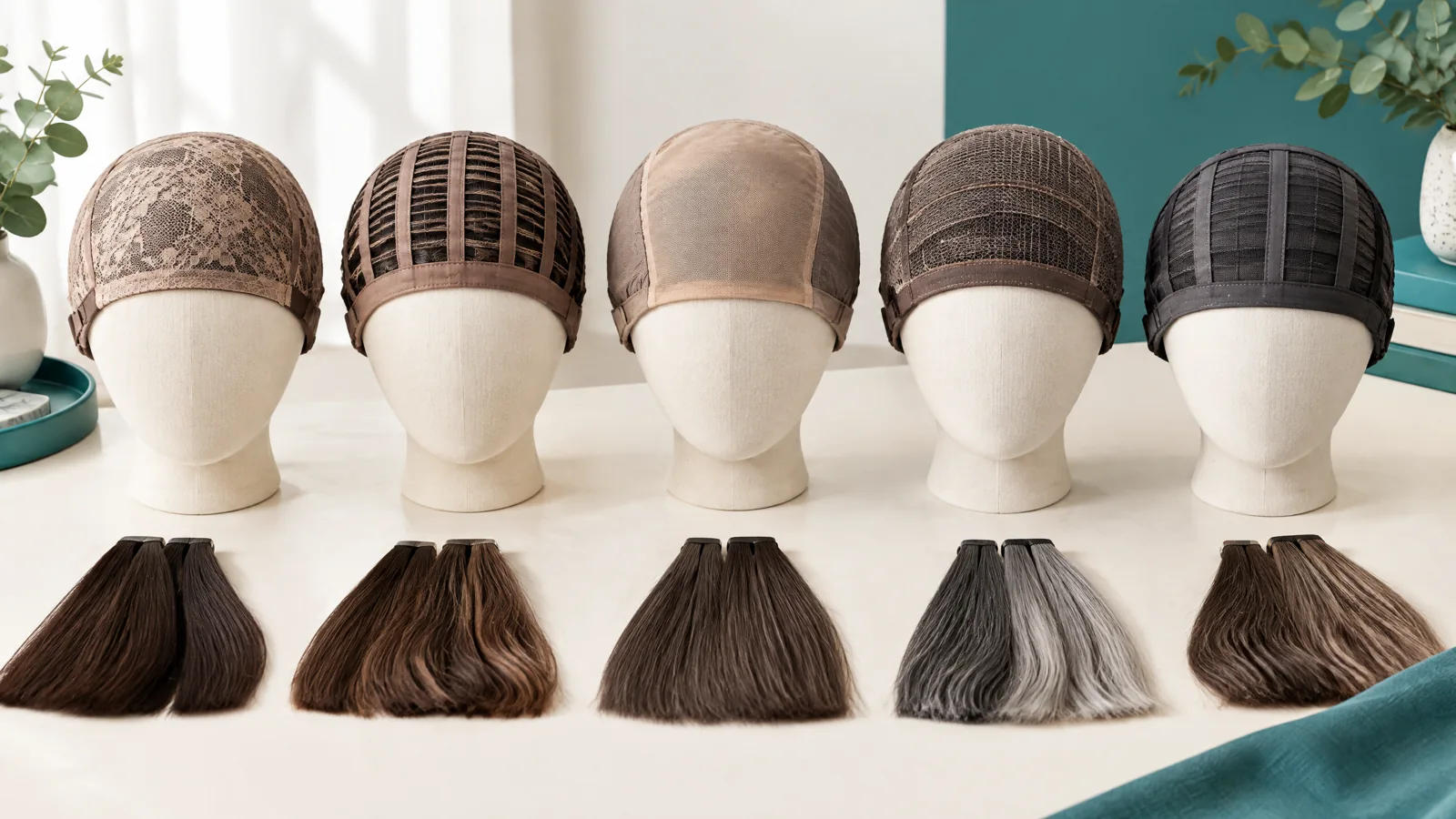
Illustration · Concept illustration: checking the exact base and care instructions.
Guide · 05
Plan the shore-to-dinner change
Long wig travel storage leaves time for a private change
A possible dinner change deserves a place on the itinerary. Finish the shore-side part of the day early enough to separate used clothing, dry the relevant items, and inspect the hairpiece without an audience. A private room is more useful than a scenic but exposed changing point. Pack the dinner outfit and hairpiece together only after both are protected from damp gear and toiletries.
Do not try to recover a long piece while it is wet or while you are rushing out the door. The American Cancer Society advises patting out excess water and waiting until the wig is thoroughly dry before brushing or combing. [1] For a synthetic style, the exact detangler and comb matter. For human hair, the maker may require a different drying and styling process. Follow the piece’s own instructions instead of copying a routine from another material.
Keep activity equipment on its own care path. The scuba gear care travel checklist can help with the separate question of cleaning, drying, and packing dive equipment. It does not decide whether a wig may be worn during an activity. Your hairpiece plan should simply provide a dry, private transition before dinner, after the activity and equipment process are complete.
The change is a logistics decision: give it a room, a clean surface, a dry storage spot, and enough unhurried time.
Guide · 06
Make the decision, then ask the right product questions
A final long wig travel storage checklist for the coast
Before you commit to a long style for the weekend, ask questions that match the real schedule. What is the approved container? Can the length be loosely folded, or should it stay supported? Which products are permitted? Does the piece need air drying, heat, steam, or professional reshaping? How should the base be protected? These are product questions, not generic assumptions about all wigs. Write the answers with the style name and fibre so you can use them when tired.
For product-specific selection questions, you can start with wigs Hong Kong. The only confirmed OWNSTRAND shop in the supplied business information is Unit 2103, 50 Hoi Yuen Road, Kwun Tong, Hong Kong. This article does not promise opening hours, stock, prices, delivery, timing, or availability. It also does not treat any area search page as proof of an additional branch. Contact the product provider directly for current details.
A sensible final choice may be the longest style that fits your storage, drying, and reshaping time without making the evening fragile. If that means choosing a simpler look or carrying a separate dinner option, it solves the actual reader problem. The goal is not to make a long wig behave like compact luggage. The goal is to let the style arrive protected, dry, and ready for a calm shore-to-dinner transition.
Confirm the exact fibre and base before packing.
Place the care sheet and approved products with the case.
Keep dry hair, damp clothing, and activity equipment in separate zones.
Reserve a supported, clean place for the arrival reset.
Leave enough time to change privately before dinner.
When the instructions conflict with the timetable, change the timetable or choose a shore-side alternative. Do not improvise with the hairpiece.
Illustration · Concept illustration: a calm shore-to-dinner styling transition.
A sensible next step
Take the question with you
For a coastal weekend, choose the long style only after you have solved its container, dry-storage, detangling, and reshaping questions. Pack it separately from damp activity items, follow the exact fibre instructions, and reserve a private change before dinner. If the schedule cannot support that care, a simpler shore-side option is the more practical decision.
Activity enquiry: Contact DiveHarbour for scuba, shore-diving, and coastal itinerary questions. DiveHarbour does not place OWNSTRAND orders. Product enquiry: Use the OWNSTRAND references above for product-specific selection questions. OWNSTRAND is not a DiveHarbour course or water-activity safety service.
Questions to ask
Common questions
Should I fold a long wig into a small suitcase compartment?
Only if the product instructions allow that packing method. Use a protected container, avoid sharp creases, and keep the base supported. A larger protected space may be better than compressing the length.
Can I brush the wig as soon as I arrive?
Check its condition first. If it is wet, wait until it is thoroughly dry. Then use only the approved comb, brush, and product for that exact fibre and base.
Is steam a universal way to reshape a long style?
No. Some manufacturer guidance discusses steam for certain synthetic travel creases, but you should follow the exact product instructions. Do not use steam or heat by guesswork.
Can I wear the wig while swimming or diving?
This article does not approve that. A hairpiece’s activity suitability must come from its product instructions and the activity operator. Choose a shore-side alternative when suitability is unclear.
Jon Renau recommends retail boxes where possible, suggests a reusable bag with lace lying flat when a box is unavailable, and recommends short or mid-length styles to reduce travel friction.
Continue exploring
Three useful next reads
Keep comparing practical questions before you choose a course, activity or preparation step.
Coastal life and hairpieces · Updated 2026-11-06
Dry-Wet Wig Packing: A Practical Shore-Day Return Flow
Use dry-wet wig packing after a shore day: separate damp towels, label bags, ventilate textiles, and follow the piece's care sheet. Plan your return flow.
Compare our published course and activity fees before choosing your next step. All prices are per person in Hong Kong dollars.
Before you book, we confirm prerequisites, materials, certification, equipment, venue and boat arrangements in writing. Ask us about fees for courses not listed here.
Read the Sai Kung diving Hong Kong guide to learn about the setting, then explore the Sai Kung scuba diving course page. Certified divers can use our Hong Kong fun dive guide to check experience requirements and activity arrangements. Locations remain subject to weather and sea conditions.
Explore the responsibilities and entry requirements in our Divemaster course Hong Kong guide, then review the scuba instructor course Hong Kong route. Professional training differs from recreational progression, so confirm experience requirements and assessment arrangements first.