SAFE LEARNING · HAPPY EXPLORING
DiveHarbour

DiveHarbour · Practical guide

Salon class decision for independent coastal styling

A useful salon class decision starts with the shore styling skill you need, then compares a one-off service, a structured class, and self-practice. Check the practice format, tools, feedback, and time before asking about availability. A class is learning information, not a promise of certification, credits, employment, or a guaranteed look. Keep salon, hairpiece, scalp, medical, and water-activity questions separate.

By DiveHarbour10 min read
Ask about diving courses or coastal trip planning Read the guide
salon class decision worksheet and coastal styling toolkit concept illustration
Illustration · Concept illustration: a coastal styling learning worksheet and toolkit; not a real DT HUB branch, medical setting, product, client, student, or before-and-after result.

Instructor qualifications

One clear teaching conversation from first breath to next step

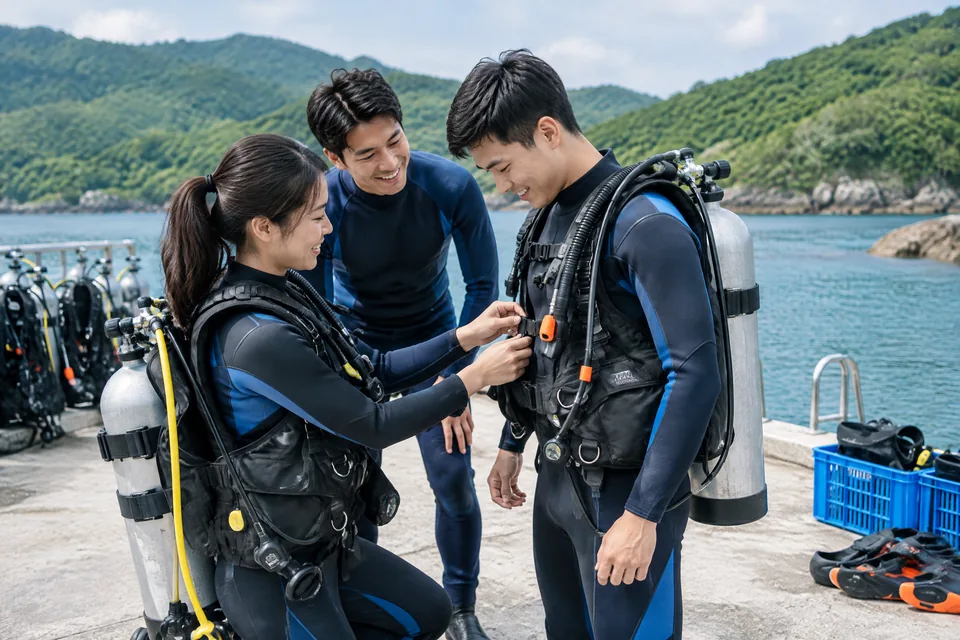
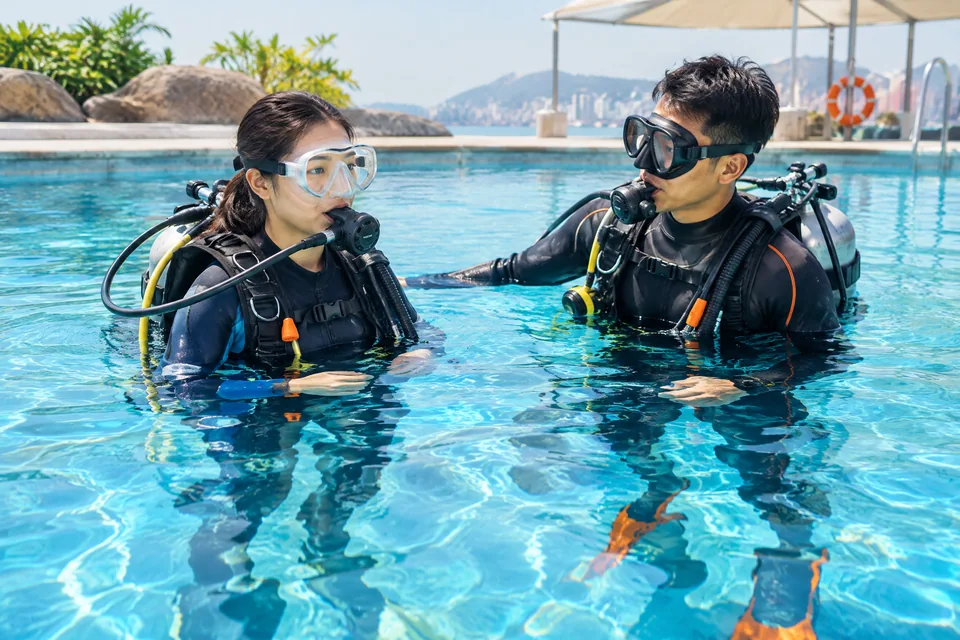
DiveHarbour brings together scuba teaching, swimming, lifesaving and water-rescue experience so you can ask practical questions before choosing a course.

  • PADI teaching backgroundTeaching experience across recognised scuba learning pathways.
  • SSI teaching backgroundClear explanations when you are comparing agency routes.
  • NAUI teaching backgroundA practical, standards-aware approach to learning and progression.
  • Swimming foundationWater confidence and calm, step-by-step practice matter.
  • Lifesaving experienceSurface awareness and prevention stay part of the conversation.
  • Pool rescue experienceControlled practice can build confidence before open water.
  • Beach rescue experienceLocal water context informs sensible preparation.
  • Kayak rescue experienceA wider water-safety perspective supports good judgement.
  • PWC rescue experienceAsk about the right learning route for your experience and goals.

Brand relationship: DiveHarbour and DT HUB share the same owner.

DiveHarbour and DT HUB are operated by the same owner. DT HUB links in this article are references to external service and product information, not independent third-party recommendations, medical-effect claims, or endorsements of water-activity safety. DiveHarbour handles diving and shore activities; DT HUB salon, hairpiece, academy, and hair-growth services require separate enquiries with the provider.

A useful fact to keep in mind

The American Psychological Association distinguishes deliberate practice from rote repetition and describes it as intentional repetition aimed at improving performance, with clear tasks and useful feedback.

Check the source
Key takeaways

Four points to carry forward

  • Name one shore styling task and the date or situation that makes it useful.
  • Choose a service for an immediate finish, a class for guided repetition, or practice for a small skill you can test safely.
  • Ask how tools, demonstrations, learner practice, feedback, and follow-up are handled.
  • Treat academy information as learning information, not a promise of certification, credits, employment, or a guaranteed result.
Start here

Salon class decision starts with the outcome

Use a salon class decision to name the skill, not just the picture

Begin with the moment you want to handle better. It might be a quick fringe adjustment before a harbour photograph, a simple tie that stays neat during a shore walk, or a repeatable way to prepare hair before an evening meal. These are different learning targets. A picture can show the desired mood, but it cannot tell you which movement, tool, or amount of practice is needed.

Write the target as an action and a limit. For example, you might want to section hair evenly, create one simple braid, or understand how to reset a parting. Add the time available and what you will not attempt. This turns an attractive reference into a question a provider can answer without assuming that you want a complex transformation.

The American Psychological Association describes deliberate practice as intentional repetition aimed at improving performance, rather than rote repetition without a goal.[1] That distinction is useful here. You are not choosing a class because its title sounds advanced. You are checking whether its exercises match the small skill you actually want to repeat.

If the immediate need is appearance rather than learning, a service may be the clearer route. If the same task will return across several shore days, guided instruction may be worth the time. If the task can be divided into simple steps, a short practice plan may come first. Keep those options open until the outcome is specific.

  • Skill: what action should become easier to repeat?
  • Context: where will the action be used, and what conditions are confirmed?
  • Standard: what visible feature matters most, and what change is acceptable?
  • Boundary: which questions belong to a stylist, activity provider, or medical professional instead?
A class name is not a learning plan. Ask what you will do, observe, repeat, and review.
Guide · 02

Choose a one-off service when the date is fixed

A finished look and a salon class decision solve different problems

A one-off service makes sense when a photograph, dinner, or hosted coastal event is close and the main requirement is a finished appearance. You can bring a short brief with the event time, outfit neckline, preferred level of change, reference images, and anything you do not want attempted. The provider can then explain its own scope and preparation questions.

A service is not automatically the best choice for learning. You may leave with an appearance you like but without knowing the sequence, tool handling, or adjustments needed to repeat it. If independence is the real goal, ask whether the provider offers teaching, observation, or a separate class. Do not assume that watching a service equals guided practice.

The phrase wig hong kong may lead to external hairpiece information when a reader is considering an appearance option for a shore-side event. It is not a recommendation, a statement about fit, a water-activity solution, or a promise about availability. Ask the relevant provider separately about materials, handling, storage, and the exact service scope.

Timing changes the choice. A fixed event leaves less room for trial and error, while a flexible routine allows practice. Choose the format that protects the priority, then record what to learn later.

Ask what information is needed in advance, what the provider supplies, which changes need discussion, and how the style should be handled afterward. Keep water-activity planning separate; a salon appointment is not activity approval.

Swipe the table to compare all columns.

Choose a format by the decision you need to make
Primary needMost relevant starting formatQuestion to ask before committing
A finished look for a near eventOne-off serviceWhat brief, preparation, and aftercare information does the provider need?
A repeatable styling movementBasic hands-on classHow much learner practice and specific feedback are included?
A small skill with flexible timingSelf-practice firstCan the task be split into short, observable steps with clear tools?
An unclear goal or changing planClarifying enquiryWhich outcome can be confirmed without assuming a service or result?
One-off styling service brief and class questions beside a coastal itinerary concept illustration
Illustration · Concept illustration: an appointment brief beside a coastal itinerary; not a real DT HUB branch, medical setting, product, client, student, or before-and-after result.
Guide · 03

Choose a class when repeatable skill matters

A salon class decision should test the learning format before the course title

A class is more relevant when you want to understand a repeatable process rather than receive one finished look. Compare the stated skill with your starting point. A useful enquiry asks whether the session begins with a demonstration, moves to learner practice, and leaves time to correct the movement. It also asks whether the task is broken into smaller parts before a complete look is attempted.

The adult-learning review in PubMed Central says learning is stronger when goals are clear, content is relevant to real life, learners participate actively, and reflection and feedback are included.[2] For a shore styling class, translate those principles into ordinary questions. What will I practise? Which part will I do myself? How will I know what to change? What should I review between sessions?

If you compare provider information, wig shop hong kong is external service information, not proof that a location suits your event or learning goal. It does not confirm a branch, price, stock, appointment, or result; verify details with the provider.

Class size and practice format matter more than a polished description. A lecture-heavy session may suit someone who only needs an overview. A smaller hands-on format may suit a learner who needs repeated attempts. Neither format is automatically better. The decision depends on whether the session gives you enough active time to test the one skill you named.

Do not confuse a salon or academy class with DiveHarbour training. If your separate goal is to learn to scuba dive in Hong Kong, use the relevant DiveHarbour information for that activity. Salon learning and scuba training have different providers, equipment, participation requirements, and boundaries.

Guide · 04

Use practice as a separate option

A salon class decision improves when practice has a small, visible target

Self-practice can be the sensible first step when the skill is small, the tools are already available, and there is no urgent event standard. Choose one movement rather than a complete transformation. For example, practise clean sectioning on a mannequin or your own hair before combining it with a tie. Keep the activity within your comfort and stop if the setup becomes confusing or uncomfortable.

The APA guidance recommends smaller skill elements, clear expectations, repeated practice, and timely descriptive feedback.[1] Write one check for each attempt: did the parting stay, did the hands change, and which step caused the delay? A note makes the next session purposeful.

The phrase best wig shop hong kong is only a starting point for external provider information, not an independent ranking or proof of suitability. Separate product questions from practice and ask the provider about limitations.

Use short sessions instead of saving everything for one long attempt. A short session lets you notice one error, change one variable, and record what happened. It also makes it easier to decide whether a class would add value. If you cannot identify the next practice step, a guided class may be more useful than buying more tools.

Practice should not become an unplanned chemical procedure or a reason to modify safety equipment. Keep product instructions, heat use, adhesives, and any water-activity equipment within the directions and responsibilities of the relevant provider. A styling experiment belongs on shore unless activity-specific guidance confirms otherwise.

  • Choose one movement, not a full look, for the first practice session.
  • Use a clean, familiar setup and note which tools were actually needed.
  • Record one observable success and one adjustment for the next attempt.
  • Stop and ask a provider when the step involves unfamiliar chemicals, equipment, or personal health concerns.
Short styling practice steps and changed shore plan concept illustration
Illustration · Concept illustration: short practice steps for a changed shore plan; not a real DT HUB branch, medical setting, product, client, student, or before-and-after result.
Guide · 05

Compare tools, feedback, and available time

The practical salon class decision is about support, not promises

Tools affect the choice in two ways: check what the class supplies and whether the method depends on a particular brush, heat device, mannequin, hairpiece, or product. Ask for the minimum setup before committing.

Feedback needs its own question. Ask whether an instructor watches the learner perform the task, names the specific adjustment, and allows another attempt. The goal is not praise or criticism. It is information that helps you connect the instruction to your own hands, hair, tools, and setting. If feedback is only general, plan for extra clarification before relying on the skill at an event.

A product enquiry such as human hair wig hong kong is separate from choosing a skills class. The linked phrase points to external product information, not a recommendation or a guarantee about appearance, maintenance, price, stock, or activity compatibility. Ask the relevant provider what the item is designed for and how it should be handled.

Time includes travel, setup, cleaning, review, and realistic follow-up practice. A near event may favour a service; several weeks may allow a class and short practice. If neither fits, simplify the target.

Make a written comparison before booking. Note the skill, hands-on format, tools, feedback, follow-up, travel, and your available practice time. Avoid filling gaps with assumptions about certificates, credits, employment, model access, fixed hours, or guaranteed learning outcomes. Those details must be confirmed by the provider, if they are offered at all.


Swipe the table to compare all columns.

A pre-enquiry check for a coastal styling learning plan
CheckWrite downIf the answer is unknown
SkillThe one action you want to repeatSimplify the goal before choosing a class
PracticeDemonstration, learner attempts, feedback, and reviewAsk the provider for the actual session format
ToolsWhat is supplied, what you bring, and what must be confirmedDo not buy or pack optional items yet
TimeEvent date, travel, setup, and realistic follow-up practiceChoose a service or lower the styling ambition
Guide · 06

Make the salon class decision with a written brief

A final salon class decision should leave clear questions and a realistic next step

Bring your comparison to the enquiry in a compact format. State the shore situation, the one skill or appearance priority, your current experience, the tools you have, the date, and the amount of practice time available. Then ask what format the provider thinks matches that brief. You are requesting scope information, not asking the provider to promise a particular result.

Use separate headings for learning, appearance, and activity. Record lesson structure and feedback; service or product handling; and DiveHarbour equipment, readiness, and participation questions. This prevents a salon label being treated as activity clearance or medical advice.

A scalp-related term such as scalp micropigmentation is a provider service label, not a lesson recommendation or a diagnosis. If you are concerned about pain, redness, sudden patchy loss, or another health change, seek a qualified medical assessment rather than using a salon directory to decide what is happening. Keep any activity question with the relevant activity or care provider.

Before you choose, apply a simple rule. Select a one-off service when the finished appearance is urgent. Select a class when guided practice and feedback are the main value. Select self-practice when the first step is small, the tools are clear, and you can review the attempt. If the decision still feels vague, reduce the target instead of adding more products, equipment, or promises.

For the separate water-activity question, Hong Kong scuba lessons for beginners is the appropriate DiveHarbour starting point for beginner lesson information. It does not make a salon class necessary, and a salon class does not replace scuba instruction. Ask each provider about its own scope, then make the coastal plan from confirmed information.

  • Write the event, skill, current experience, tools, and available practice time.
  • Ask the provider what is demonstrated, what is practised, and how feedback is given.
  • Confirm whether tools, products, follow-up, models, or fixed hours are included; assume nothing not stated.
  • Keep salon, hairpiece, scalp, medical, and water-activity decisions with the relevant provider.
The best choice is the smallest confirmed format that matches your real priority and leaves no important assumption hidden.
Salon class decision notes separating appearance, learning, and activity questions concept illustration
Illustration · Concept illustration: separate notes for learning, appearance, and activity questions; not a real DT HUB branch, medical setting, product, client, student, or before-and-after result.
A sensible next step

Take the question with you

Make the decision from the smallest useful target. Choose a service for an urgent finished look, a class for guided practice and feedback, or self-practice for a clear skill that can be split into short steps. Before asking for availability, confirm the tools, format, time, and boundaries. If any important point remains unknown, simplify the plan rather than treating a course label or product page as a promise.

For DiveHarbour, enquire separately about diving or shore activities, their equipment, timing, and participation requirements. For DT HUB, contact the relevant provider separately about salon services, hairpieces, academy information, or hair-growth enquiries. This article does not promise a result, price, appointment, credential, employment outcome, or activity clearance.

Questions to ask

Common questions

Should I book a service or take a class before a coastal event?

Choose a one-off service when the finished appearance is the urgent priority and there is little time to practise. Choose a class when learning a repeatable skill is more important. If the event is close and the goal is still unclear, simplify the look and ask the provider what it can actually confirm.

What should I ask about a basic salon or academy class?

Ask what skill is taught, how much of the session is hands-on, which tools are supplied, how feedback is given, and what practice is expected afterward. Also ask whether certificates, credits, models, fixed hours, or follow-up support exist. Do not assume any of those features from the course title.

Is practising at home enough to learn shore styling?

It can be a useful first step for a small, clearly defined task when the tools and instructions are understood. Use short sessions, observe one change at a time, and keep notes. A class may add value when you need demonstration, correction, or a safer way to break down a complex task.

Does a salon class make me ready for a water activity?

No. A salon class addresses appearance skills and learning support. It does not establish equipment compatibility, personal readiness, medical suitability, supervision, or permission for swimming, snorkelling, or diving. Ask the relevant activity provider about those separate requirements and keep unconfirmed styling arrangements on shore.

Further reading

Official sources worth checking

Continue exploring

Keep comparing practical questions before you choose a course, activity or preparation step.

Coastal life and image planning · Updated 2026-11-06

Styling learning route: a practical plan for shore days

Plan a styling learning route for shore events: choose practice, tools and help with clear limits. Read the guide and ask better questions.

styling learning route

Coastal life and image planning · Updated 2026-11-06

Outdoor-light reference brief for coastal photo planning

Use an outdoor-light reference brief to plan light, framing, neckline and styling limits for a coastal shoot. Read the checklist and ask better questions.

outdoor-light reference brief

Coastal life and image planning · Updated 2026-11-06

Multi-event style order for a coastal day | DiveHarbour

Plan a multi-event style order for swim, lunch, photos and dinner. Use reset windows, provider questions and weather backups before you book or ask.

multi-event style order
Your next step

Ask about diving courses or coastal trip planning

Message DiveHarbour on WhatsApp to discuss diving courses or coastal trip planning, along with your experience and preferred dates.

Ask about diving courses or coastal trip planning
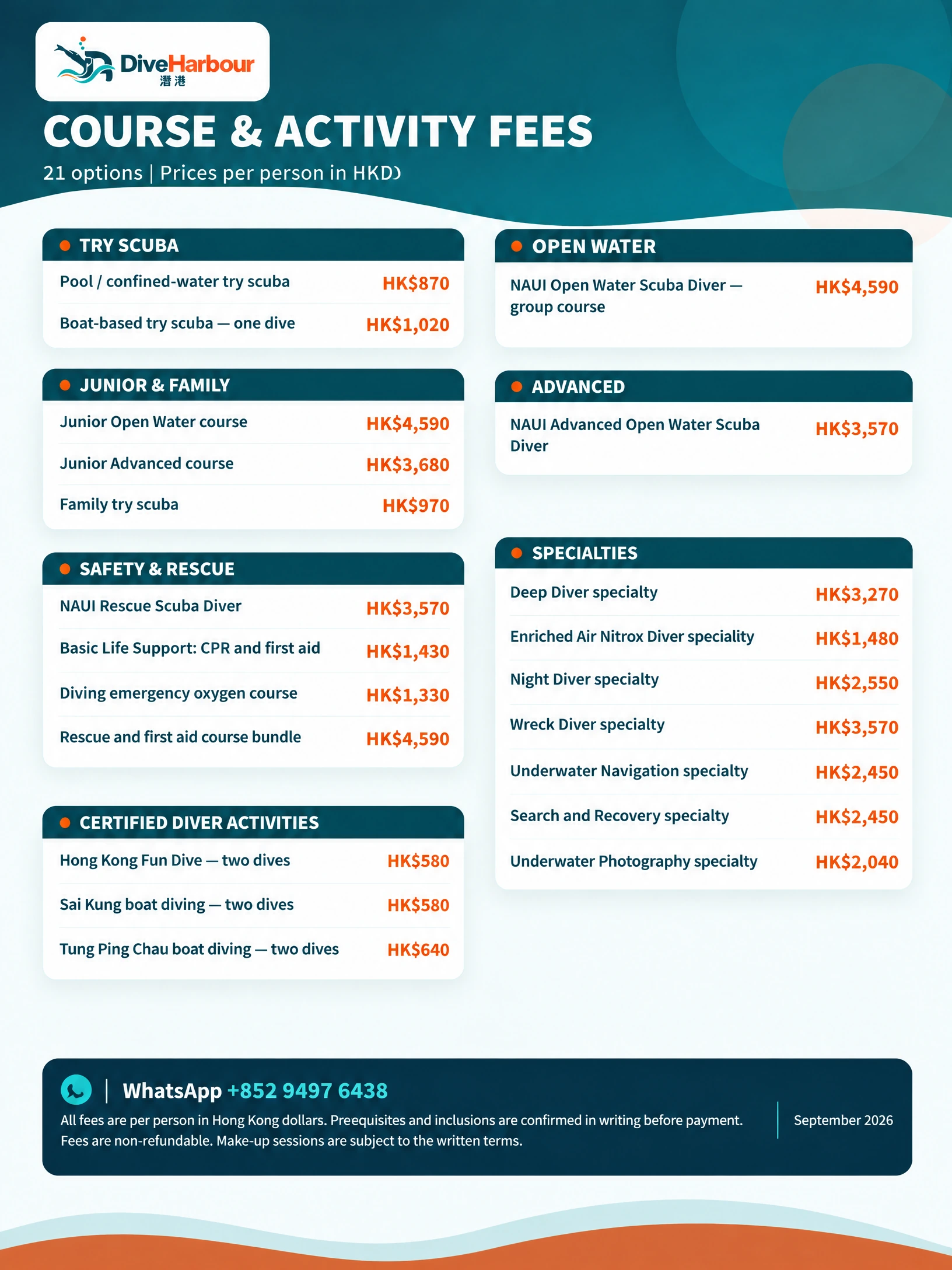
English price list for 21 DiveHarbour courses and activities, with fees per person in Hong Kong dollars
Tap the price list to view it at full size.

Plan your next dive

Course fees, clearly set out

Compare our published course and activity fees before choosing your next step. All prices are per person in Hong Kong dollars.

Before you book, we confirm prerequisites, materials, certification, equipment, venue and boat arrangements in writing. Ask us about fees for courses not listed here.

All fees are non-refundable. Make-up sessions are subject to the written terms.

Read all course fees
DiveHarbour course and activity fees per person in Hong Kong dollars
Course / activityPer person
Pool / confined-water try scubaHK$870
Boat-based try scuba — one diveHK$1,020
NAUI Open Water Scuba Diver — group courseHK$4,590
Junior Open Water courseHK$4,590
Junior Advanced courseHK$3,680
Family try scubaHK$970
NAUI Advanced Open Water Scuba DiverHK$3,570
NAUI Rescue Scuba DiverHK$3,570
Basic Life Support: CPR and first aidHK$1,430
Diving emergency oxygen courseHK$1,330
Rescue and first aid course bundleHK$4,590
Deep Diver specialtyHK$3,270
Enriched Air Nitrox Diver specialtyHK$1,480
Night Diver specialtyHK$2,550
Wreck Diver specialtyHK$3,570
Underwater Navigation specialtyHK$2,450
Search and Recovery specialtyHK$2,450
Underwater Photography specialtyHK$2,040
Hong Kong Fun Dive — two divesHK$580
Sai Kung boat diving — two divesHK$580
Tung Ping Chau boat diving — two divesHK$640