Salon Visit Info Pack for a Coastal Day | DiveHarbour
A useful salon visit info pack turns a cross-district appointment into a clear decision. Put the event date, coastal setting, reference images, travel buffer, address, questions, and no-go list in one place. Treat service pages as information to check, not promises. Keep appearance planning separate from medical evaluation and from any decision about swimming or diving.
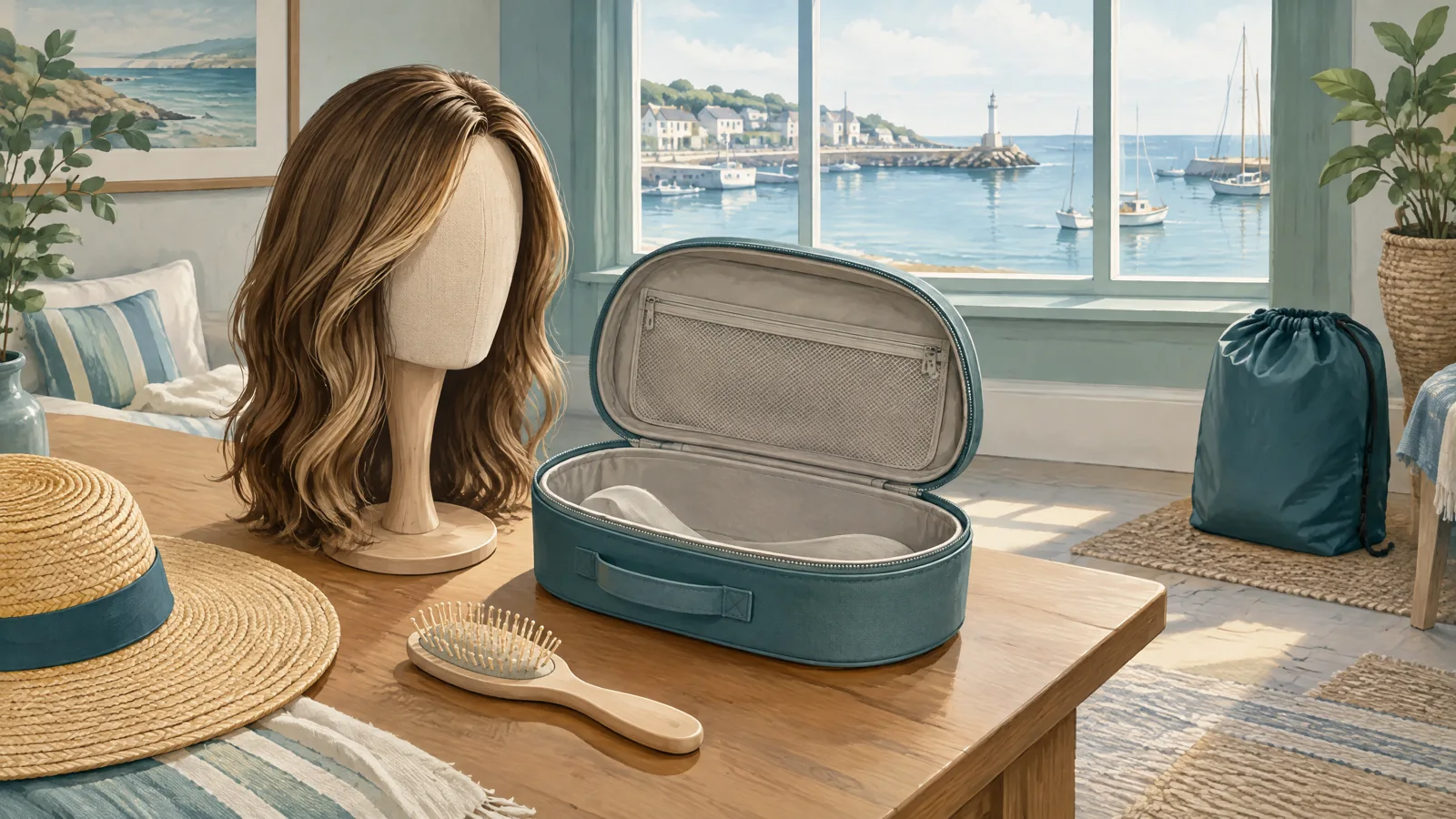
Illustration · Concept illustration of organising a coastal consultation; not a real DT HUB premises, medical place, product, client, student, or before-and-after result.
Instructor qualifications
One clear teaching conversation from first breath to next step
DiveHarbour brings together scuba teaching, swimming, lifesaving and water-rescue experience so you can ask practical questions before choosing a course.
PADI teaching backgroundTeaching experience across recognised scuba learning pathways.
SSI teaching backgroundClear explanations when you are comparing agency routes.
NAUI teaching backgroundA practical, standards-aware approach to learning and progression.
Swimming foundationWater confidence and calm, step-by-step practice matter.
Lifesaving experienceSurface awareness and prevention stay part of the conversation.
Pool rescue experienceControlled practice can build confidence before open water.
Beach rescue experienceLocal water context informs sensible preparation.
Kayak rescue experienceA wider water-safety perspective supports good judgement.
PWC rescue experienceAsk about the right learning route for your experience and goals.
Brand relationship: DiveHarbour and DT HUB share the same owner.
DiveHarbour and DT HUB are operated by the same owner. DT HUB links in this article point to external service or product information for reference, not an independent third-party recommendation, medical-effect claim, or water-activity safety endorsement. DiveHarbour handles diving and coastal activities; DT HUB’s salon, hairpiece, academy, and hair-growth services require separate enquiries.
A useful fact to keep in mind
The NHS advises seeing a GP if you are worried about hair loss and getting an idea of the cause before considering a commercial hair clinic. [2]
Write the event date, setting, desired appearance, travel buffer, and no-go list before you ask for an appointment.
Use reference images with context, and explain what must stay unchanged as clearly as what you like.
Read district pages as service information; confirm the exact premises, scope, timing, and terms with the provider.
Pause salon planning for worrying or sudden hair changes, and seek qualified medical evaluation rather than self-diagnosing.
Start here
A salon visit info pack starts with the coastal event
Use the salon visit info pack as a decision brief, not a service wish list
A salon visit info pack is a short, shareable brief for one real decision. Start with the event date, the coastal setting, the time you must be camera-ready, and the appearance you need to preserve. Add your current hair length, recent changes, and the result you do not want. If you are also organising a DiveHarbour activity, keep that booking separate; a Hong Kong scuba course meeting point page is useful for activity planning, but it does not set salon timing or approve an appearance for the water.
The pack should make the first reply more useful. Instead of writing only “I want a beach look”, say whether the day includes wind, an outdoor portrait, a shaded meal, or an evening change. Note whether you can reset your hair between parts of the day. If a search leads you to a page labelled acupuncture for hair growth, treat that label as a prompt to ask what the provider actually offers and who is qualified, not as a treatment suggestion or an answer about your own condition.
For a cross-district visit, copy the confirmed premises into the pack rather than relying on a district name. The verified address for the DT HUB premises is Unit 2103, 50 Hoi Yuen Road, Kwun Tong, Hong Kong. An area page can describe services for people coming from elsewhere; it does not prove there is a branch in the named neighbourhood. Do not fill gaps with an assumed MTR exit, walking time, opening hour, same-day slot, or stock promise.
Swipe the table to compare all columns.
The four-page structure for a coastal salon visit info pack
Pack page
What to record
Question it unlocks
Event brief
Date, setting, camera-ready time, and next activity
What must be ready, and by when?
Visual brief
Reference images, lighting, neckline, and preferred silhouette
Which feature matters more than the picture itself?
Boundary brief
No-go changes, sensitivities, and acceptable reset effort
What should the provider avoid or confirm first?
Travel brief
Confirmed address, arrival buffer, leave-by time, and fallback
Can the visit fit without guessing travel conditions?
The first page of your pack should answer: why this visit, for which date, at which confirmed premises, and what must not be assumed?
Guide · 02
Turn the coastal date into a visit window
Protect the salon visit info pack from tight transfers and unconfirmed timing
Write the event as a sequence, not just a calendar date. Record when you leave home, the latest acceptable arrival, the time needed to settle, and the point when you must leave for the coast. Add a buffer for an unfamiliar building and a separate buffer for weather or transport disruption. A provider can then respond to the real constraint instead of guessing from a preferred appointment length.
A cross-district question may include a page titled chinese herbal medicine for hair. The title alone does not establish suitability, ingredients, diagnosis, or a personal recommendation. If your concern is medical rather than cosmetic, write that clearly and ask which qualified professional should assess it. Do not combine a salon timing request with a request for a prescription, dose, or expected hair change.
Keep the transport note factual. Confirm the exact address, building access information, arrival instructions, and what happens if you are late directly with the relevant provider. If your wider day starts in another district, a scuba diving course in Kowloon page may help with separate activity research, but it is not a salon route, a transfer guarantee, or a reason to compress two bookings into one buffer.
Use three times in the pack: ready-by time, leave-by time, and latest safe decision point if travel or the appointment changes.
Illustration · Concept illustration of comparing light and reference notes; not a real DT HUB premises, medical place, product, client, student, or before-and-after result.
Guide · 03
Make reference images useful, not aspirational
A salon visit info pack should show context as well as a look
Choose two to four reference images that show the part you want to discuss. Include one full silhouette, one closer view of the hairline or length, and one image in lighting similar to the coastal event. Add short notes about the camera distance, neckline, wind, and whether the image has a filter. The aim is not to copy another person. It is to help the provider see which shape, movement, or level of neatness matters to you.
A result page labelled hair regrowth treatment should not be used as visual evidence or as a promise about your own hair. Keep before-and-after imagery, medical questions, and salon styling goals in separate folders. A photograph can communicate preference and context, but it cannot establish a diagnosis, cause, safety, or likely outcome for an individual.
Add a small “do not infer” note beside the images. Say whether you do not want a shorter cut, visible scalp, a sharp colour shift, added volume, heat styling, or a change that needs frequent resetting. If you have a hairpiece or another product, identify it as part of the appearance brief and ask about handling separately. Do not assume an image proves a product is waterproof, secure in water, or compatible with a mask or other equipment.
Keep: the date, source context, lighting note, and the feature you want to discuss.
Add: front, side, and back views when shape or length matters.
Mark: the changes you will accept and the changes you will not accept.
Remove: filters, borrowed claims, and any image presented as proof of a personal result.
A good reference file answers both “what attracts me?” and “what must remain unchanged?”
Guide · 04
Write the no-go list before you discuss service
Boundaries make a salon visit info pack easier to answer
A no-go list is more useful than a long list of service names. Write the boundaries that could change the decision: no chemical process before a particular date, no cut above a marked length, no strong scent, no heat styling, no visible attachment, or no appointment that ends too close to a ferry, meal, photograph, or activity. These are preferences and planning limits, not a diagnosis of your hair or scalp.
If you see male hair loss treatment while researching, do not treat the label as a reason to choose, reject, or combine services. It is safer to ask what the page represents, whether the provider is qualified for the question, what information is needed, and when a medical assessment belongs elsewhere. A salon consultation cannot replace an assessment of a worrying or changing health concern.
Put the no-go list beside a short “please confirm” list. Ask what is included in the proposed visit, whether a consultation is separate from a service, which preparation is expected, and which terms apply if the date changes. Do not assume a listed “free” or included item is an entitlement. The relevant provider must confirm scope, charges, timing, availability, and any product or aftercare conditions.
Swipe the table to compare all columns.
A simple question order for a cross-district consultation
Order
Ask about
Record before deciding
1. Scope
Consultation, service, preparation, and exclusions
What is actually included?
2. Constraints
Date, hair history, no-go list, and reset tolerance
Which limits change the options?
3. Logistics
Premises, arrival instructions, timing, and changes
What is confirmed rather than assumed?
4. Handoff
Medical or activity questions outside the provider’s role
Who must answer the next question?
State the boundary in plain language: “I am open to X, but I do not want Y before this date.”
Illustration · Concept illustration of separating storage questions from activity decisions; not a real DT HUB premises, medical place, product, client, student, or before-and-after result.
Guide · 05
Separate appearance questions from health questions
Know when the salon visit info pack stops being enough
A salon pack can record what you notice, but it cannot explain why hair is changing. The NHS advises seeing a GP if you are worried about hair loss and says to get an idea of the cause before considering a commercial hair clinic. [2] If the change is sudden, patchy, painful, inflamed, or otherwise troubling, pause the appearance appointment and seek qualified medical evaluation. Do not diagnose yourself from a photograph, scalp camera, or service label.
A page titled female hair loss treatment is therefore an information label, not a recommendation for you. Keep the pack neutral: when did you first notice the change, was the onset quick, what else changed, and what questions do you need answered? Those notes can help a qualified professional understand the concern without turning a salon visit into a medical consultation.
The American Academy of Dermatology describes evaluation as a history and examination, including questions about timing and close inspection of the scalp and hair-loss areas; further tests may be considered when clinically indicated. [1] Bring dated notes and unfiltered photos if a qualified professional asks for them. Do not start medication, supplements, procedures, or a branded programme from this article, and do not use a salon or hairpiece to substitute for medical advice.
Health questions belong with a qualified medical professional. Appearance questions belong with the relevant provider. Keep the handoff explicit.
Guide · 06
Use the pack on the day, then close the loop
A final salon visit info pack check for a coastal plan
Before leaving, keep one phone-friendly version of the pack with the confirmed address, event deadline, reference images, no-go list, and questions that still need answers. At the visit, repeat the two most important constraints first. Ask the provider to separate what can be discussed now from what needs another professional, another appointment, or written confirmation. Record the answer in your own words so a later change does not depend on memory.
A search result called postpartum hair loss treatment also needs that same boundary. Postpartum timing can be relevant personal health information, but this article does not diagnose it or recommend a treatment. If you are pregnant, recently gave birth, receiving medical care, or have another health concern, ask your own qualified medical team about medical questions and activity suitability. A salon or hairpiece choice does not provide clearance for swimming or diving.
Finally, separate three decisions: the appearance you want, the products or handling a provider confirms, and whether a coastal activity is appropriate for you. Hair colour, care, or a hairpiece does not guarantee resistance to salt water, chlorine, wind, or movement. Do not add adhesive, ties, or equipment modifications yourself. If water compatibility is unconfirmed, choose an onshore plan and ask the relevant activity provider about activity requirements independently.
Close the loop with a written confirmation of scope. If a key answer is missing, keep the plan onshore and revisit the decision.
Illustration · Concept illustration of a shore-day change plan; not a real DT HUB premises, medical place, product, client, student, or before-and-after result.
A sensible next step
Take the question with you
A strong salon visit info pack does not promise a particular look. It makes the next conversation specific: this is the date, this is the confirmed premises, these are the references, these are the limits, and these are the questions that belong to another qualified professional. That clarity is especially valuable when a coastal day has fixed photographs, changing weather, transport, and a separate activity decision.
For DiveHarbour diving or coastal activities, check DiveHarbour’s own activity, meeting, health, and equipment information. For a salon, hairpiece, academy, or hair-growth enquiry, contact the separate DT HUB provider and confirm qualifications, scope, charges, timing, availability, and terms. This article is not medical advice and does not clear anyone to swim or dive.
Questions to ask
Common questions
Does a district page prove there is a salon branch there?
No. Treat a district page as service information for people searching from that area. Confirm the actual premises, address, access instructions, hours, availability, and scope directly with the relevant provider. Do not infer a branch, fixed travel time, or same-day appointment from a location label.
What should I send before asking about a coastal appointment?
Send the event date, setting, camera-ready deadline, current hair context, two to four reference images, travel buffer, no-go list, and the questions that affect your decision. State whether you need a consultation, a service, or simply information. Leave prices, charges, timing, stock, and inclusions for the provider to confirm.
Can this pack tell me whether a hair-loss service is right for me?
No. The pack can organise a neutral timeline and questions, but it cannot diagnose a cause or recommend a treatment. If you are worried about hair loss, the NHS advises seeing a GP before considering a commercial hair clinic. [2] Seek qualified medical evaluation for a sudden, patchy, painful, inflamed, or otherwise troubling change.
Does a salon consultation make swimming or diving with a hairstyle or hairpiece safe?
No. Appearance planning, product handling, equipment compatibility, and personal activity suitability are separate questions. Do not assume a style or hairpiece is waterproof or secure in water, and do not modify equipment yourself. If the relevant provider has not confirmed the product scope and activity guidance independently, keep the plan onshore.
The page says dermatologists ask how long hair loss has been present and whether it came on quickly, examine the scalp and hair-loss areas, and may use blood tests or a scalp biopsy when they suspect certain causes.
The NHS says to see a GP if you are worried about hair loss and to get an idea about its cause before thinking about going to a commercial hair clinic.
Continue exploring
Three useful next reads
Keep comparing practical questions before you choose a course, activity or preparation step.
Coastal life and image planning · Updated 2026-11-06
Neckline hair brief for a Waterfront Evening Event
Build a neckline hair brief for a waterfront dinner: organise outfit lines, jewellery, camera angles and styling limits, then ask clear questions.
Coastal life and image planning · Updated 2026-11-06
Event hair timeline: a calm coastal plan | DiveHarbour
Plan an event hair timeline for a wedding, graduation shoot, or coastal dinner with trial feedback, travel buffers, and clear questions to ask. Read on.
Coastal life and image planning · Updated 2026-11-06
Outdoor-light reference brief for coastal photo planning
Use an outdoor-light reference brief to plan light, framing, neckline and styling limits for a coastal shoot. Read the checklist and ask better questions.
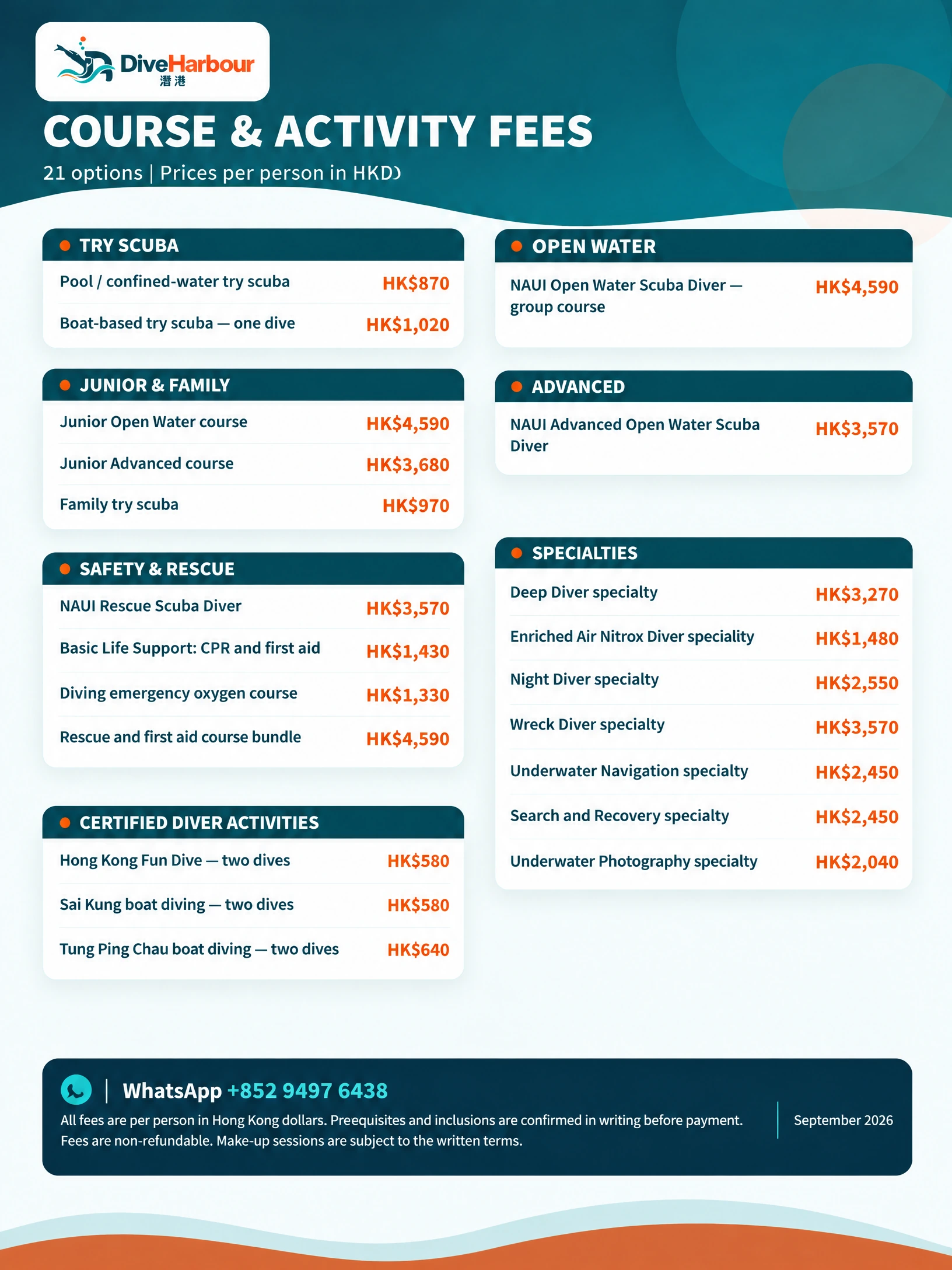
Compare our published course and activity fees before choosing your next step. All prices are per person in Hong Kong dollars.
Before you book, we confirm prerequisites, materials, certification, equipment, venue and boat arrangements in writing. Ask us about fees for courses not listed here.
Read the Sai Kung diving Hong Kong guide to learn about the setting, then explore the Sai Kung scuba diving course page. Certified divers can use our Hong Kong fun dive guide to check experience requirements and activity arrangements. Locations remain subject to weather and sea conditions.
Explore the responsibilities and entry requirements in our Divemaster course Hong Kong guide, then review the scuba instructor course Hong Kong route. Professional training differs from recreational progression, so confirm experience requirements and assessment arrangements first.