

A useful fact to keep in mind
DAN World’s Asia Pacific table lists worldwide Master and Preferred packages with emergency medical transportation up to US$150,000.
Check the sourceUnderstanding dive accident insurance emergency evacuation coverage
What emergency transport and medical assistance may involve
Dive insurance is not one universal product. A policy may be designed specifically for diving accidents, added to a travel policy, or supplied as a membership benefit with assistance services. Start by separating three questions: what event is insured, which expenses are payable, and who must authorise help. A reassuring product name is not a substitute for the certificate, schedule and exclusions.
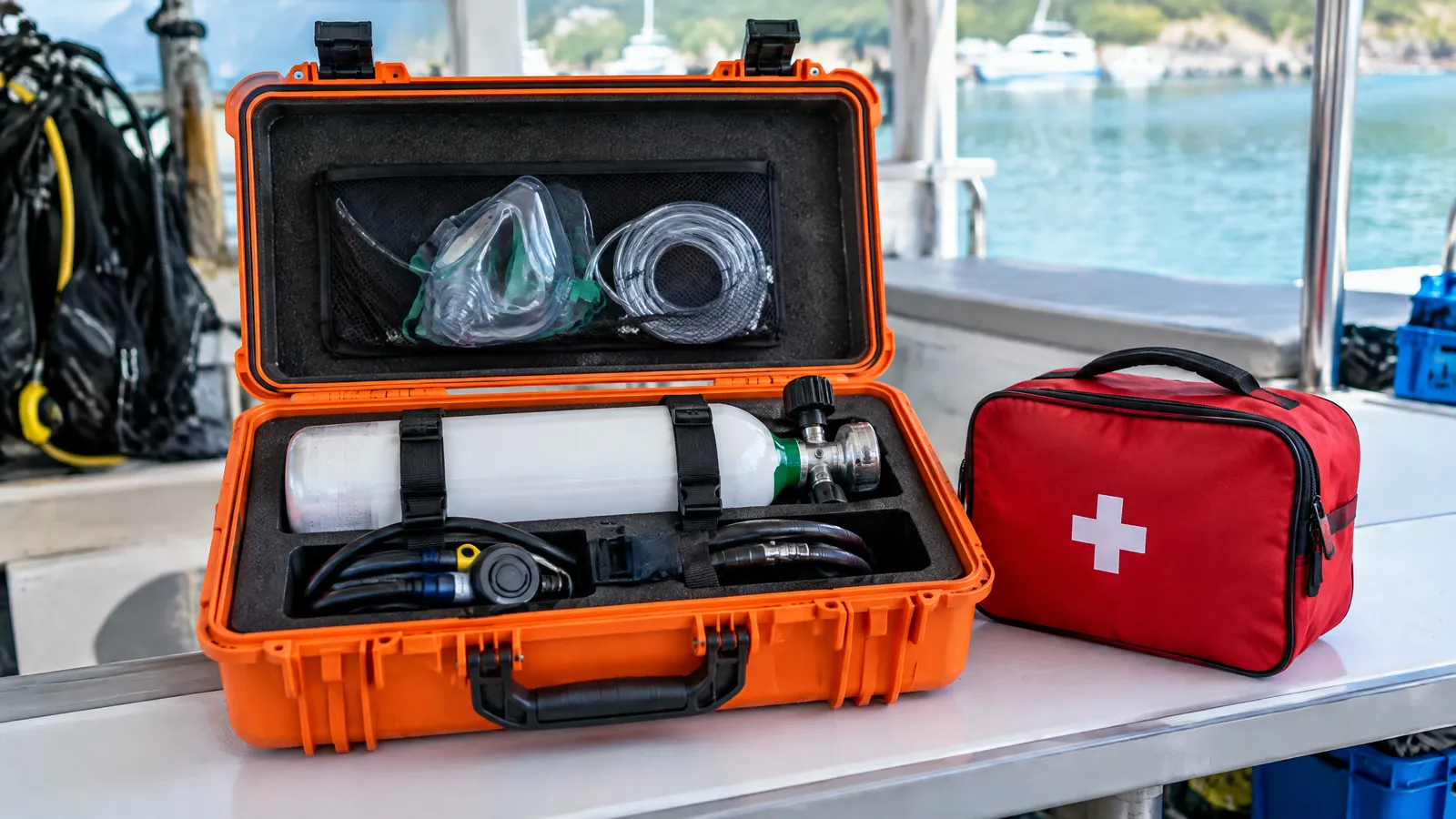
In a serious incident, costs can include assessment, hospital care, hyperbaric treatment, ground or marine ambulance, air evacuation, repatriation and extra accommodation. DAN describes dive accident insurance as potentially covering hyperbaric chamber treatment, physician and hospital charges, and emergency transportation by ground, air or marine ambulance. That is a description of its own plans, not a promise about every insurer. Check whether transport must be arranged or approved by the assistance centre before committing to a provider.
For Hong Kong divers, an offshore trip can involve different jurisdictions, operators and hospitals. Save the insurer’s 24-hour emergency number in your phone and keep the policy number with a buddy or family contact. Ask the boat operator how an emergency call is raised, where the nearest suitable medical facility is, and whether the operator has a written incident process. These are practical preparedness steps, not a replacement for professional medical advice.
If a diver feels unwell after a dive, treat the situation as a medical issue first: tell the guide or buddy, contact local emergency services, and follow qualified clinicians’ instructions. Do not delay urgent assessment while debating whether a claim will succeed. Once immediate care is underway, the insurer or assistance provider can explain notification and documentation. Keep dive times, depth records, symptoms, medical reports, receipts and transport records where safely possible.
- Confirm the policy territory: local, regional or worldwide.
- Check whether evacuation is a benefit, a service arranged by the insurer, or both.
- Record the emergency number, policy number and assistance instructions before departure.

Does travel insurance cover decompression sickness?
Read diving exclusions, limits and activity conditions
The honest answer to “does travel insurance cover decompression sickness?” is: it depends. Some travel policies include scuba diving as a non-professional sport, while others exclude diving, impose a depth limit, require a recognised qualification, or cover only an activity listed in the schedule. A general overseas medical section may also be subject to exclusions for an undeclared medical condition, alcohol, failure to follow safety rules, or a trip undertaken against medical advice.
Decompression sickness is a medical emergency, but the diagnosis does not by itself decide insurance liability. The relevant wording may ask how the dive was conducted, whether the activity was recreational or professional, whether the diver held the required certification, and whether the claim falls within medical, evacuation and repatriation limits. Read definitions as carefully as benefit headlines. If wording is unclear, obtain a written answer from the insurer before travelling.
Compare a travel policy with specialist cover rather than assuming one replaces the other. DAN World’s Asia Pacific page, for example, lists dive accident assistance packages with emergency evacuation and repatriation, a 24/7 emergency hotline and eligible accident medical expenses subject to a plan limit. It also separates optional annual travel assistance from dive accident benefits. This illustrates why “medical cover” and “dive accident cover” should be checked as separate lines.
AXA Hong Kong’s SmartTraveller Plus page says non-professional sports, including scuba diving, can be covered, while also directing customers to the product brochure and policy wording for full terms and exclusions. That is useful evidence that ordinary travel cover may include diving in some products, but it is not proof that every policy covers every depth, location or decompression illness claim. Your own insurer’s issued wording governs.
- Search the wording for scuba, diving, decompression sickness, hyperbaric, evacuation and professional activity.
- Confirm maximum depth, certification, buddy or guide conditions and whether training dives are treated differently.
- Ask whether pre-existing conditions, medication, alcohol and medical declarations affect eligibility.

Choosing cover before a Hong Kong dive
Questions to ask your insurer and dive operator
Build a short pre-dive cover check around your actual plan. Tell the insurer where you will dive, whether the trip is from Hong Kong or overseas, the planned activity, your certification level and whether you are joining training, photography, deep, wreck or night dives. A recreational policy may treat a guided shore dive differently from a technical or professional operation. If the answer is “ask the underwriter”, ask for the response in writing and retain it with the policy.
For the specialist question, read does scuba insurance cover decompression sickness alongside your own policy wording. Use the question do I need scuba diving insurance in Hong Kong as a starting point, not as a yes-or-no slogan. Hong Kong residents may have employer, public or personal medical arrangements that do not pay for overseas evacuation or a chamber. A specialist plan can still have limits and exclusions, so compare its territory, notification process, claims evidence and emergency authority with your travel policy.
If you are comparing products, the guide dive accident insurance versus travel insurance can help you map overlapping benefits. Ask whether both policies can respond, whether one is excess to the other, and which provider should be called first. Never assume two policies mean double recovery; claims coordination is controlled by their terms.
Health information deserves equal care. If you are unsure whether illness, medication or a recent procedure affects fitness to dive, speak with an appropriately qualified diving doctor. For paperwork and declarations, see how to compare dive insurance with a medical declaration. A truthful declaration is safer than trying to fit a medical history into a generic online answer. If you are currently ill, read can I scuba dive with a cold and postpone the decision until you have suitable advice.
DAN World’s Asia Pacific table lists worldwide Master and Preferred packages with emergency medical transportation up to US$150,000. Here is a useful benchmark when comparing limits: dive accident medical expense limits differ by plan. Limits are not recommendations and availability depends on residence and policy terms; they simply show why evacuation and treatment should be examined as separate figures.
- Ask for written confirmation of diving, DCS, chamber treatment and evacuation cover.
- Check a single-incident limit, annual aggregate, excess, territorial scope and currency.
- Make sure your buddy knows whom to call and where the policy documents are stored.
How to compare a policy without overestimating protection
Turn policy wording into a practical decision
Compare policies in the order an emergency unfolds. First, can the assistance centre be reached at sea or abroad? Second, will it coordinate transport to an appropriate facility? Third, are treatment and chamber expenses payable, and up to what limit? Fourth, what happens if recovery requires repatriation or an extended stay? Finally, what documents must you provide? A high medical limit with a narrow diving definition can be less useful than a modest-looking plan that clearly includes your planned activity.
Look for coordination language. “Emergency evacuation” may mean the insurer pays reasonable costs after approval; it may not mean a diver can independently book an aircraft and expect reimbursement. “Repatriation” may have a defined medical standard and destination. “24/7 assistance” may be a hotline rather than automatic acceptance of every expense. Read the claims and emergency sections together, then keep screenshots or a downloaded PDF for offline access.
Also consider non-medical disruption. A travel policy may cover cancellation, baggage or interruption, while a specialist dive policy may focus on accident treatment. Those are different risks. Do not buy a larger-looking package solely because of a headline currency figure; check exclusions, sublimits, waiting or purchase timing rules, and whether the policy is valid for your residence and itinerary.

What to do if symptoms appear after diving
Prioritise care, communication and accurate records
Unusual neurological symptoms, breathing difficulty, severe weakness, confusion, chest pain or other concerning symptoms after diving warrant urgent medical attention. Alert the buddy or guide, call local emergency services and follow the treating team’s instructions. This article cannot diagnose decompression sickness or tell you what treatment to perform. Do not attempt to self-manage a suspected emergency by delaying care, forcing a dive profile, or relying on an insurance chatbot.
When safe, provide clinicians with the dive profile, timing of symptoms, relevant health information and any surface interval details. Ask the operator or buddy to preserve the computer record if available. Contact the insurer’s assistance centre as soon as practical, but never postpone emergency services to obtain prior approval. The insurer may need the medical facility, treating doctor, receipts and transport authorisation to assess the claim.
After the immediate event, write down who was contacted, when instructions were given and what costs were incurred. Keep original invoices and copies of reports. If a claim is declined, request the specific clause and appeal route in writing. A refusal may concern an exclusion, missing declaration, limit or notification condition; understanding the reason is more useful than relying on a product label.

A simple pre-trip insurance checklist for divers
Review, share and reassess before each trip
Use the following checklist 24–48 hours before departure and again if the itinerary changes. First, download the current policy wording and emergency contacts. Second, confirm the planned location, depth and activity fit the insured definition. Third, verify that certification and medical-declaration requirements are met. Fourth, compare evacuation, repatriation, chamber and medical limits. Fifth, share the policy number and emergency process with your buddy or trusted contact. Sixth, ask the operator about local emergency procedures.
As a practical editorial count, compare these 6 cover checkpoints before booking: activity definition, depth or qualification conditions, emergency contact, treatment and chamber limits, evacuation or repatriation, and exclusions or declarations. This is a decision aid rather than a statistic or a promise of eligibility.
Policies and products change, and a quote page is not the same as a contract. Check the issue date and jurisdiction, especially when combining Hong Kong travel insurance with a specialist international membership. If your insurer cannot answer a material question clearly, choose a different product or postpone the trip until you understand the risk. The safest insurance decision is an informed one made before entering the water.

Compare the cover questions that matter before a dive
| Cover area | What to verify | Why it matters |
|---|---|---|
| Dive accident medical expenses | Diving definition, DCS or chamber wording, limit and excess | Treatment may be excluded or capped even when general travel medical cover exists |
| Emergency evacuation | 24/7 contact, authorisation, transport territory and repatriation limit | A hospital bill and a transport bill are different risks |
| Travel medical cover | Scuba activity, depth, certification, declarations and exclusions | A policy may include scuba only under stated conditions |
| Claims process | Required reports, receipts, notification timing and coordination with other cover | Good records help the insurer assess an eligible claim |
Dive insurance, emergency evacuation and decompression sickness — common questions
Does ordinary travel insurance cover a diving accident or evacuation?Toggle answer
It varies by policy. Check whether recreational scuba diving is an insured activity, whether emergency evacuation and medical treatment are included, and whether depth, certification, equipment or other exclusions apply. Only the insurer can confirm how its terms apply to your trip.
What should I check about decompression sickness cover before diving?Toggle answer
Review the policy’s diving definition, medical-expense and evacuation limits, exclusions, assistance contact process and any requirements about following recognised safety rules. Specialist diver membership or insurance may offer different protection, so compare the actual wording rather than relying on a policy headline.
Do I need both specialist dive cover and travel insurance?Toggle answer
Not automatically. They may cover different risks, such as dive accident treatment versus cancellation or baggage. Compare benefits, exclusions, excesses and coordination clauses, then ask both providers which one should be contacted during an emergency.
What if my insurer says a claim is not covered?Toggle answer
Ask for the decision and exact policy clause in writing, retain medical and dive records, and follow the insurer’s complaint or appeal route. Do not argue about coverage while urgent treatment is needed; obtain care first.
Are insurance fees refundable or can a missed dive be rescheduled?Toggle answer
Fees are non-refundable unless the applicable written terms say otherwise. Make-up sessions or rescheduling are available only where written booking terms permit them; no date or guaranteed reschedule should be assumed. Insurance does not automatically change a dive operator’s booking policy.
Take the question with you
Before your next Hong Kong or overseas dive, download the policy wording, ask the insurer to confirm your activity and DCS-related questions in writing, and share the emergency contact with your buddy. Treat any post-dive symptom as a medical priority, then notify the assistance provider and preserve accurate records. A clear comparison today is more valuable than discovering an exclusion during an emergency.
Sources worth checking
- DAN World Asia Pacific — Dive Accident & Optional Annual Travel Assistance Packages
DAN World lists 24/7 emergency hotline access, emergency evacuation and repatriation, and eligible accident medical expenses subject to a plan limit; its worldwide Master and Preferred examples list emergency medical transportation up to US$150,000.
- DAN — Dive Accident Insurance
DAN describes potential cover for hyperbaric chamber treatment, physician and hospital charges, and emergency transportation by ground, air or marine ambulance, with coverage varying by plan and policy.
- AXA Hong Kong — SmartTraveller Plus Travel Insurance
AXA Hong Kong states that most non-professional sports, including scuba diving, may be covered, while directing customers to the product brochure and policy wording for full terms and exclusions.
Useful next reads for your plan
If you are still comparing routes, these related pages give you practical questions to bring into your next conversation with an instructor.
Put your plan into practice
Useful planning guides
Dive Travel Clearance Planning for Hong Kong Divers
Use this dive travel clearance planning worksheet to compare practical options, check key decision points, and confirm current details with DiveHarbour.
dive travel clearance planning
