
SAFE LEARNING · HAPPY EXPLORING
DiveHarbour

DiveHarbour · Practical guide

Fitting Photo File: A Clear Wig Consultation Guide

A useful fitting photo file is more than a front selfie. Arrange clear front, side, parting, outfit and context images, add short notes about light and your intended setting, then ask the provider what measurements and file-sharing method they require. Keep appearance planning separate from medical assessment and from any decision about entering the water.

By DiveHarbour8 min read
Ask about diving courses or coastal trip planning Read the guide
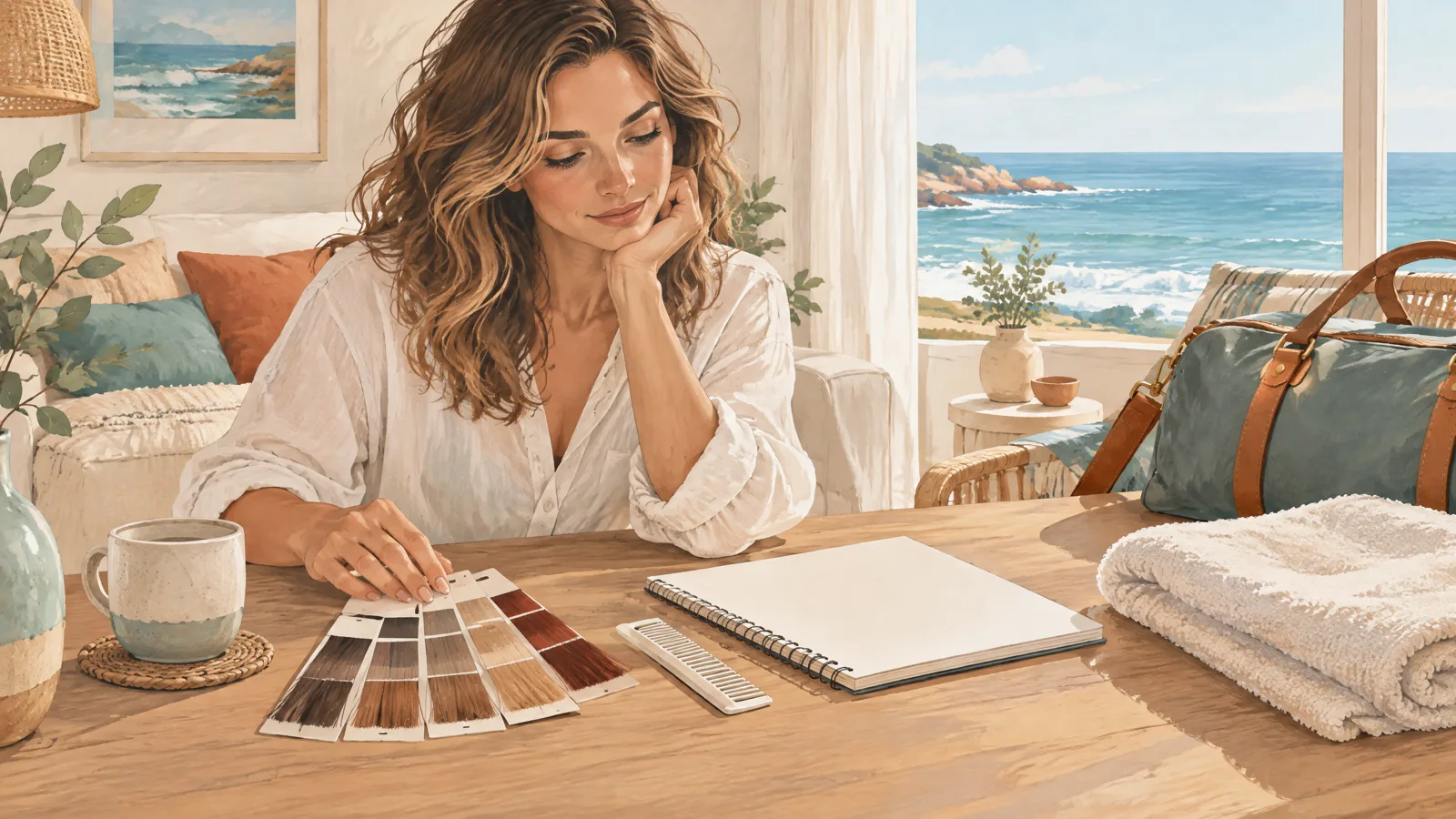
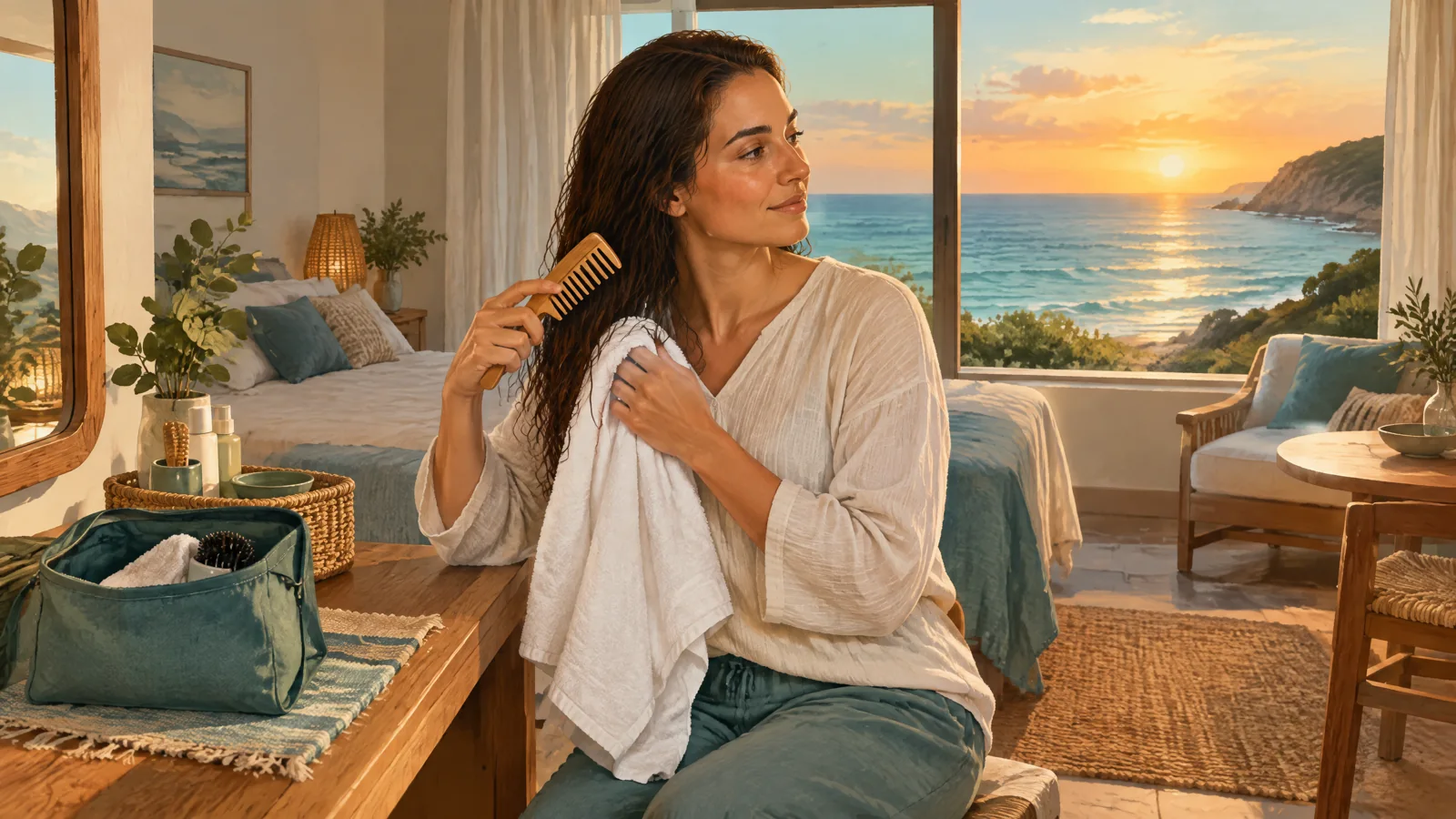
Fitting photo file notes beside a coastal outfit reference
Illustration · Concept illustration: a private preparation desk for a coastal fitting enquiry, not a real store, product, client or result.

Instructor qualifications

One clear teaching conversation from first breath to next step

DiveHarbour brings together scuba teaching, swimming, lifesaving and water-rescue experience so you can ask practical questions before choosing a course.

  • PADI teaching backgroundTeaching experience across recognised scuba learning pathways.
  • SSI teaching backgroundClear explanations when you are comparing agency routes.
  • NAUI teaching backgroundA practical, standards-aware approach to learning and progression.
  • Swimming foundationWater confidence and calm, step-by-step practice matter.
  • Lifesaving experienceSurface awareness and prevention stay part of the conversation.
  • Pool rescue experienceControlled practice can build confidence before open water.
  • Beach rescue experienceLocal water context informs sensible preparation.
  • Kayak rescue experienceA wider water-safety perspective supports good judgement.
  • PWC rescue experienceAsk about the right learning route for your experience and goals.

Brand relationship: DiveHarbour and DT HUB share the same owner.

DiveHarbour and DT HUB are operated by the same owner. The DT HUB links in this article are references to external service and product information, not independent third-party recommendations, medical claims, or water-activity safety endorsements. DiveHarbour handles scuba and coastal activities; DT HUB handles salon, hairpiece, academy, and hair-growth enquiries separately. Confirm scope, fees, privacy, and suitability with the relevant provider.

A useful fact to keep in mind

The American Academy of Dermatology advises taking multiple, well-lit pictures that clearly show the area of concern and asking the provider how and when to send the pictures and information.

Check the source
Key takeaways

Four points to carry forward

  • Start with the fitting question and the setting, then choose photos that answer it.
  • Use repeatable front, side, parting, outfit and lighting views instead of one flattering selfie.
  • Ask the provider to confirm measurements, file handling, care scope and any styling limits.
  • Keep a cosmetic fitting conversation separate from medical assessment and water-activity decisions.
Start here

Start with a fitting photo file, not the camera

A fitting photo file should make one consultation easier

Before opening your camera, write one sentence about the decision you want help with. It might be the front outline for a waterfront dinner, a parting you want to discuss, or a look that should sit comfortably with a particular collar and pair of glasses. A photo file becomes useful when every image answers part of that question. It is not a gallery of your best angles, and it should not ask a provider to infer measurements from a flattering crop.

A provider may describe its enquiry route as wig fitting hong kong. Treat that label as a starting point for a conversation about scope. Ask whether the consultation is for visual selection, fitting, styling, repair, or another service, and ask which images are actually needed. Do not send sensitive images to a new recipient until you have checked the business identity, the receiving channel, access controls, retention policy, and whether the file can be removed later.

  • Name the occasion or everyday setting you are planning for.
  • State the feature you want reviewed, such as front outline, parting or overall silhouette.
  • List what you do not want changed, including length, fringe, volume or visible edges.
  • Mark any privacy limit before taking or sharing images.
  • Leave measurements and final suitability to the provider’s confirmation.
Guide · 02

Take the core angles in a repeatable order

Front, side and parting views reveal different decisions

Take the front view first with your head level, a neutral expression and the hair arranged in the condition you want discussed. Follow with left and right profile views, then a rear or three-quarter view if the back outline matters. Keep the camera at roughly the same height and distance. Avoid an extreme close-up that hides the relationship between the hairline, ears, neck and shoulders. The American Academy of Dermatology recommends multiple, well-lit images that clearly show the area being examined. [1]

If your enquiry concerns a medical-style category, a provider may use a term such as cranial prosthesis hong kong. That wording does not decide whether the category applies to you. Use the image set to describe what you can observe, then ask what information, measurements and professional confirmation are required. A photo can show an appearance at one moment; it cannot establish a diagnosis, explain a cause, or replace an in-person assessment.

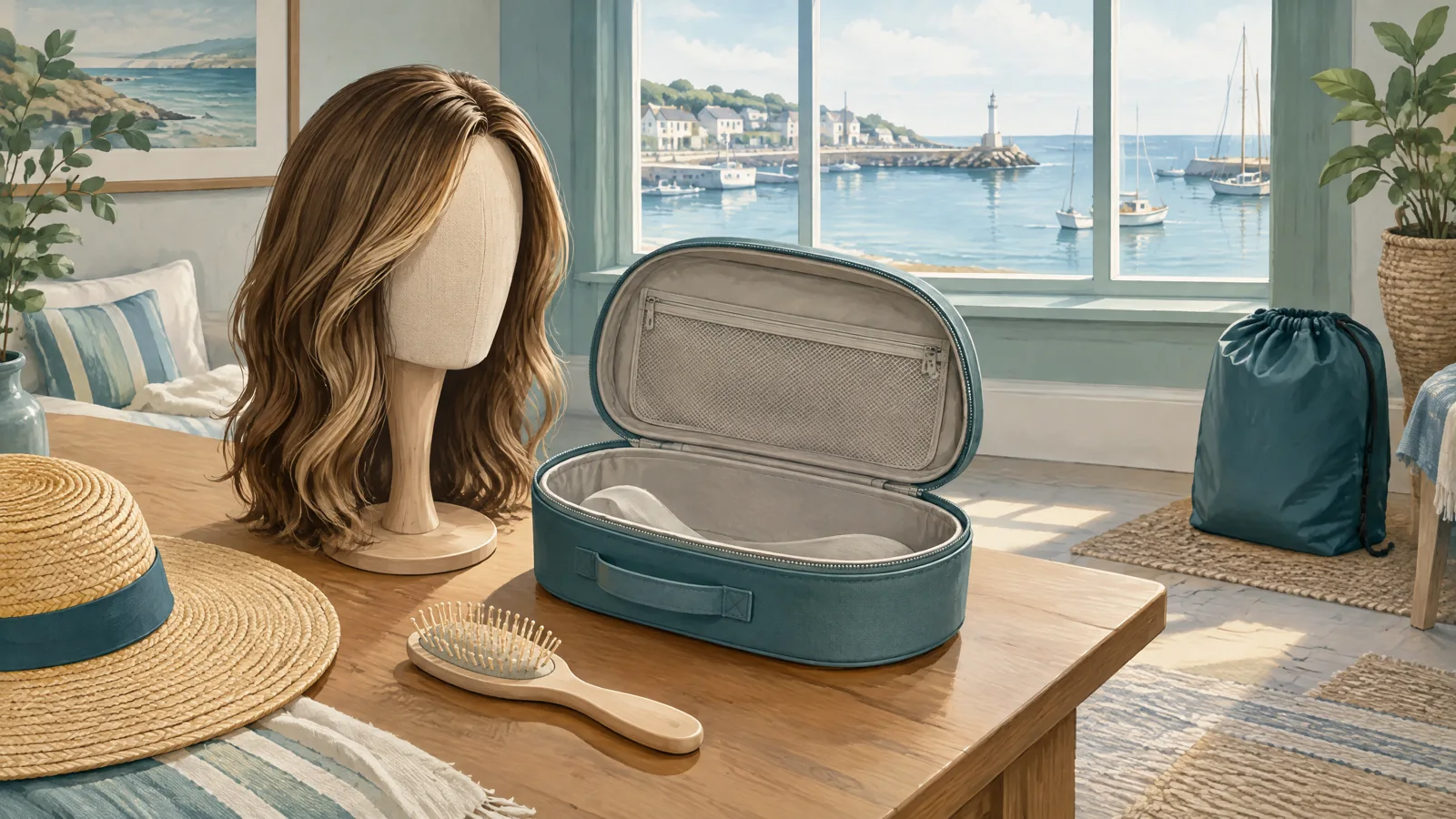
Concept illustration of organised hairpiece storage for a fitting photo file
Illustration · Concept illustration: organised storage and neutral file labels, not a real product or customer setup.
Guide · 03

Add outfit and coastal context

Show the silhouette you actually need to coordinate

Add one outfit-context image after the close views. Include the neckline, shoulder line, glasses, hat or jewellery that will genuinely appear in the planned setting. A cropped face photo cannot show whether the chosen outline feels balanced with a high collar or a light overshirt. If the event is beside the harbour, note whether the image is for a dry arrival, a shaded café, a promenade portrait or an evening meal. These are appearance contexts, not promises about how any hairpiece behaves in weather or water.

Keep activity administration in its own file. If the same day includes try scuba diving Hong Kong, the fitting photos do not replace the activity provider’s registration, equipment or health questions. Plan the visual brief around the shore moment you control, and ask the relevant activity provider separately about participation requirements. This separation prevents an outfit image from being mistaken for activity clearance or a product image from being treated as a safety check.

Swipe the table to compare all columns.

A practical sequence for a fitting photo file
Photo or noteWhat it helps showWhat to record
Neutral front viewFront outline, visible parting and relationship to the faceCamera height, distance, hair condition and date
Left and right profilesSide silhouette, ear area and how the outline reads in profileWhether the head was level and whether glasses or jewellery were worn
Three-quarter or rear viewBack shape and any feature that matters when seated or turningWhy this angle matters for the planned setting
Outfit-context viewNeckline, shoulders, accessories and overall proportionEvent type, indoor or outdoor light, and acceptable changes
Guide · 04

Record light, parting and acceptable change

A fitting photo file needs notes beside the pixels

Take at least one set in soft daylight and note the approximate setting, such as open shade, a window or indoor warm light. Do not assume that a phone display or automatic exposure represents the colour and contrast another person will see. Add the date, whether the hair was dry or arranged, and whether a filter, portrait blur or flash was used. The AAD also advises using a private space with good lighting and asking the office how to send gathered information. [1]

For the front and side views, add a short parting note: where it normally sits, whether you are willing to move it, and which edge or direction you want reviewed. Add a silhouette note too. For example, you might prefer the sides to remain close to the head but want the crown to read softly in a seated photo. Describe the preference rather than declaring that one angle is objectively correct. A provider can then explain what can be discussed from the images and what needs a fitting or measurement.

Concept illustration of coastal outfit and lighting notes for a fitting photo file
Illustration · Concept illustration: comparing clothing context and light notes, not a real consultation or guaranteed colour result.
Guide · 05

Ask about care and styling before you send

The file should lead to practical next questions

A fitting conversation often becomes clearer when you state how the item will be handled between occasions. Say whether you expect occasional harbour walks, a packed overnight trip, a dinner appointment or repeated shore photography. Ask which care instructions belong to the specific material and construction, which products are approved, and who handles adjustments. A page labelled wig styling hong kong may be relevant to an appearance discussion, but its existence does not promise a particular finish or make a water activity suitable.

Write down the boundary between appearance and handling before you agree to anything. Ask whether brushing, heat, washing, trimming or adhesive use is included in the provider’s advice, and whether an adjustment must be done by the provider. Do not improvise a fix because a photograph makes an edge or attachment look simple. A clear question is more useful than a confident assumption about material, fit or durability.

Swipe the table to compare all columns.

Questions to confirm before a provider relies on the file
QuestionWhy it mattersWho confirms it
Are these views enough to discuss the intended outline?A photo may omit depth, texture, fit and movement informationThe fitting or styling provider
Which measurements or additional views are required?The correct method and units depend on the item and service scopeThe fitting provider
Which care and styling instructions apply to this item?Material, construction and approved products may differThe provider handling the item
How are files stored, shared and deleted?Personal images need a clear and agreed hand-off processThe organisation receiving the file
Guide · 06

Confirm privacy, measurements and boundaries

Finish the fitting photo file with a safe hand-off

Before sending, rename files with neutral labels rather than names, dates of birth or medical terms. Keep the original files in a private folder and send only the views requested. Ask who can access them, how long they will be retained, whether screenshots or forwarding are permitted, and how deletion requests work. The AAD recommends asking the relevant office when and how to send photographs and information, and using the provider’s recommended method to protect personal information. [1]

If an existing piece is involved, photograph the issue without pulling, trimming, adding adhesive or trying to hide the problem. Record when you noticed it, what changed, and whether it appeared before or after an outing. A service page such as wig repair hong kong can be an enquiry starting point, not a diagnosis of the material or a guarantee that every issue can be corrected. Ask for the inspection scope, handling instructions and next step in writing.

Do not use the photo file to explain sudden or worrying hair changes. The NHS says hair loss can have different causes, advises seeing a GP if you are worried, and recommends getting an idea of the cause before considering a commercial hair clinic. [2] A fitting provider can discuss appearance and product questions, but a qualified medical professional should handle symptoms, diagnosis and treatment decisions. If you have a current treatment team, ask that team separately about any activity or timing restrictions.

For a scuba booking, the document trail is separate from appearance planning. The checklist at what documents do I need to register for a scuba course can help you organise that enquiry, but it does not assess a hairpiece or medical concern. Finish your fitting file with three written questions: what can be decided from these images, what must be checked in person, and what should I do if my appearance or scalp changes before the appointment?

Concept illustration of a shore-day change note and hair routine checklist
Illustration · Concept illustration: a shore-day appearance checklist, not a real client, activity clearance or product instruction.
A sensible next step

Take the question with you

A strong fitting photo file answers the next question without pretending to answer every question. Capture repeatable views, add the outfit and light context, set privacy limits, and mark what must be confirmed by a provider in person. If the concern is medical rather than cosmetic, pause the fitting route and seek the appropriate qualified assessment.

For a fitting, styling or repair enquiry, send only the requested images to the relevant DT HUB provider after confirming scope and privacy handling. For scuba or coastal activities, contact DiveHarbour separately about course documents, activity requirements and participation questions; neither service replaces the other.

Questions to ask

Common questions

How many images should a fitting photo file contain?

There is no universal number. Start with a neutral front view, both profiles, a rear or three-quarter view if relevant, and one outfit-context view. Then ask the provider whether more images or specific measurements are needed. Sending fewer, purposeful views is usually clearer than attaching a large personal gallery.

Should I use filters or portrait blur?

Avoid filters, portrait blur and dramatic editing when the purpose is to discuss outline, parting or colour context. Record whether flash or strong indoor lighting was used. The provider should know what the camera changed and can tell you if a repeat image is needed.

Can a photo decide whether a hairpiece is suitable for swimming or diving?

No. A fitting image is an appearance and communication aid. It does not confirm attachment performance, compatibility with masks or other safety equipment, or personal clearance for a water activity. Ask the relevant product provider and activity provider separate questions, and keep the plan shore-based unless suitability is confirmed.

What if the photos show a worrying hair or scalp change?

Do not use a fitting enquiry to diagnose the change or choose treatment. If you are worried about hair loss, seek qualified medical assessment. Tell the clinician when you noticed the change and bring neutral observations; keep cosmetic selection and medical advice as separate decisions.

Further reading

Official sources worth checking

  • [1] Telemedicine: How to prepare for your appointment

    The page states that patients should take multiple, well-lit pictures that clearly show the areas needing examination and should ask the dermatologist’s office when and how to send the pictures and information gathered.

  • [2] Hair loss

    The NHS page says hair loss can occasionally be a sign of a medical condition, advises seeing a GP if worried about hair loss, and recommends getting an idea of the cause before considering a commercial hair clinic.

Continue exploring

Keep comparing practical questions before you choose a course, activity or preparation step.

Coastal life and image planning · Updated 2026-11-06

Hairpiece activity boundary: a safer shore-day plan

Use a hairpiece activity boundary to separate appearance, product handling, equipment fit, and personal activity checks. Read the shore-day guide.

hairpiece activity boundary
Coastal life and image planning · Updated 2026-11-06

Outdoor-light reference brief for coastal photo planning

Use an outdoor-light reference brief to plan light, framing, neckline and styling limits for a coastal shoot. Read the checklist and ask better questions.

outdoor-light reference brief

Coastal life and image planning · Updated 2026-11-06

Multi-event style order for a coastal day | DiveHarbour

Plan a multi-event style order for swim, lunch, photos and dinner. Use reset windows, provider questions and weather backups before you book or ask.

multi-event style order
Your next step

Ask about diving courses or coastal trip planning

Message DiveHarbour on WhatsApp to discuss diving courses or coastal trip planning, along with your experience and preferred dates.

Ask about diving courses or coastal trip planning
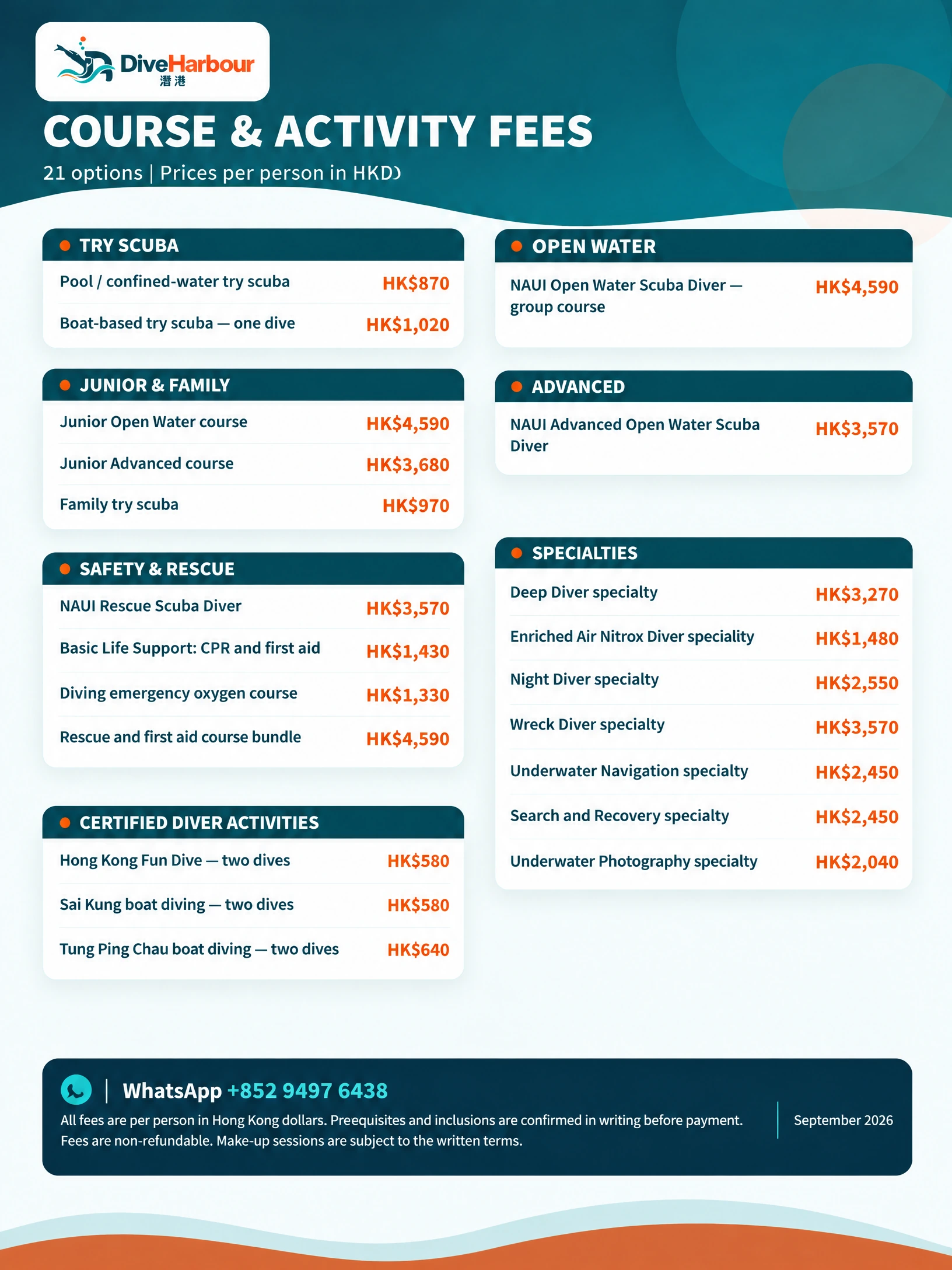
English price list for 21 DiveHarbour courses and activities, with fees per person in Hong Kong dollars
Tap the price list to view it at full size.

Plan your next dive

Course fees, clearly set out

Compare our published course and activity fees before choosing your next step. All prices are per person in Hong Kong dollars.

Before you book, we confirm prerequisites, materials, certification, equipment, venue and boat arrangements in writing. Ask us about fees for courses not listed here.

All fees are non-refundable. Make-up sessions are subject to the written terms.

Read all course fees
DiveHarbour course and activity fees per person in Hong Kong dollars
Course / activityPer person
Pool / confined-water try scubaHK$870
Boat-based try scuba — one diveHK$1,020
NAUI Open Water Scuba Diver — group courseHK$4,590
Junior Open Water courseHK$4,590
Junior Advanced courseHK$3,680
Family try scubaHK$970
NAUI Advanced Open Water Scuba DiverHK$3,570
NAUI Rescue Scuba DiverHK$3,570
Basic Life Support: CPR and first aidHK$1,430
Diving emergency oxygen courseHK$1,330
Rescue and first aid course bundleHK$4,590
Deep Diver specialtyHK$3,270
Enriched Air Nitrox Diver specialtyHK$1,480
Night Diver specialtyHK$2,550
Wreck Diver specialtyHK$3,570
Underwater Navigation specialtyHK$2,450
Search and Recovery specialtyHK$2,450
Underwater Photography specialtyHK$2,040
Hong Kong Fun Dive — two divesHK$580
Sai Kung boat diving — two divesHK$580
Tung Ping Chau boat diving — two divesHK$640