SAFE LEARNING · HAPPY EXPLORING
DiveHarbour

DiveHarbour · Practical guide

Booking Note Format for Coastal Hair Consultations | DiveHarbour

A useful booking note format turns a vague appointment request into a short, answerable brief. Start with the event, date, setting and time limit. Add observable hair changes, current care, outfit needs and your boundaries. Finish with the questions that must be answered before any booking decision. This keeps appearance planning, medical assessment and water activity decisions separate.

By DiveHarbour10 min read
Ask about diving courses or coastal trip planning Read the guide
Booking note format for a coastal hair consultation shown as a concept illustration
Illustration · Concept illustration: a fictional coastal appointment note, not a real client, clinic, salon, product, or result.

Instructor qualifications

One clear teaching conversation from first breath to next step

DiveHarbour brings together scuba teaching, swimming, lifesaving and water-rescue experience so you can ask practical questions before choosing a course.

  • PADI teaching backgroundTeaching experience across recognised scuba learning pathways.
  • SSI teaching backgroundClear explanations when you are comparing agency routes.
  • NAUI teaching backgroundA practical, standards-aware approach to learning and progression.
  • Swimming foundationWater confidence and calm, step-by-step practice matter.
  • Lifesaving experienceSurface awareness and prevention stay part of the conversation.
  • Pool rescue experienceControlled practice can build confidence before open water.
  • Beach rescue experienceLocal water context informs sensible preparation.
  • Kayak rescue experienceA wider water-safety perspective supports good judgement.
  • PWC rescue experienceAsk about the right learning route for your experience and goals.

Brand relationship: DiveHarbour and DT HUB share the same owner.

DiveHarbour and DT HUB are operated by the same owner. DT HUB links in this article point to external service and product information for reference; they are not independent recommendations, medical-effect claims, or water-activity safety endorsements. DiveHarbour handles diving and coastal activities. DT HUB salon, hairpiece, academy and hair-growth services require separate enquiry.

A useful fact to keep in mind

The American Academy of Dermatology says a hair-loss assessment may ask how long the loss has been present and whether it began quickly, then examine the scalp and other affected areas.

Check the source
Key takeaways

Four points to carry forward

  • Name the event, setting, date, time limit and reset points before describing a preferred look.
  • Record observable hair changes with dates, locations, photos and current products rather than guessing a cause.
  • Ask what the provider can assess, what requires medical care, and which costs or steps need confirmation.
  • Keep appearance planning, medical advice and water-activity clearance as separate decisions with separate decision-makers.
Start here

Why a booking note format works by the coast

Begin with the setting, not a diagnosis or a fixed look

A coastal appointment often sits inside a crowded day. You may have a photo session, dinner, wind, changing clothes, transport, or a shore activity around it. A provider cannot plan from “make it beach-ready” alone. A good booking note names the event, date, location type, outfit, preferred finish, and the latest time you must leave. It also says whether the appointment is only for appearance or includes a separate concern you want discussed.

Keep the first message factual. Say what you notice, when you noticed it, and what you want to understand. Do not label yourself from a search result or assume that salt water, stress, or a hairstyle explains a change. The American Academy of Dermatology says an assessment may ask how long hair loss has been present and whether it began quickly, then examine the scalp and other affected areas [1]. Your note should make those observations easy to find.

For example, a fictional note might say: “Waterfront dinner on 18 June; photographs from 6:30 pm; collar sits high; I prefer the face visible; I can allow 75 minutes; I noticed a small area of reduced density in April and want to know which questions belong with a qualified medical professional.” That is more useful than naming a service before the provider knows the situation.

If your first search uses the phrase alopecia areata treatment, treat it as a page label to investigate, not as a conclusion about your hair. Ask what the page represents, who provides any consultation, what is included, and what is outside the provider’s role.

  • Event: what is happening, where it is held, and which part is photographed.
  • Appearance: the shape, finish, coverage, or movement you hope to discuss.
  • Limits: departure time, outfit restrictions, sensory preferences, and changes you do not want.
  • Concern: dates, observable changes, current products, and questions requiring qualified assessment.
  • Reply request: ask the provider to confirm scope, preparation, timing, and next steps.

Swipe the table to compare all columns.

Field order for a coastal appointment note
FieldWhat to writeWhy it helps
Setting and eventWaterfront dinner, photo session, shore walk, or another specific sceneShows the appearance context without promising how hair will behave outdoors
Date and deadlineEvent date, styling date, and the time you must leaveLets the provider discuss scope and buffers instead of guessing urgency
Appearance briefOutfit, neckline, accessories, camera side, and preferred finishTurns a vague look into details that can be confirmed or revised
Observable concernFirst noticed date, location, change pattern, and current routineCreates a neutral record for questions without self-diagnosis
Reply neededScope, preparation, privacy, costs, alternatives, and who answers health questionsMakes the response actionable before any booking decision
A booking note is a sorting tool. It helps the recipient answer the right questions first; it is not a diagnosis, clearance, or guarantee.
Guide · 02

Map the event before you choose wording

A booking note format should show sequence and reset points

Write the day as a short sequence rather than one dramatic destination. Note whether styling happens before a shore walk, after a change of clothes, before photographs, or before dinner. Mark the point at which you can accept a simpler look. This tells the provider whether the priority is a polished arrival, a quick refresh, or a look that can be adjusted later. It avoids promising that a style will remain unchanged in wind, humidity, or water.

Give the time limit as a boundary, not as an assumed service duration. “I need to leave by 4:15 pm” is clearer than “How long will this take?” Add a buffer for travel and queueing without asking the provider to guarantee an exact finish. If the day includes water, keep product handling and activity suitability separate. A hair appointment cannot approve participation, modify equipment, or replace the operator’s and your own safety checks.

Use one line for the outfit. Include neckline, hat, glasses, jewellery, or anything that must remain accessible. Mention the camera side if photographs matter. A provider can then tell you which requests need a trial or a different service scope. You do not need to attach ten inspiration pictures. Two or three images with a sentence about what you like in each are easier to compare.

If your note says stress hair loss treatment, keep the wording neutral. You can write, “I noticed more shedding after a stressful period and want to record the dates and ask who should assess it.” Do not turn that label into a personal cause or a treatment request.

Coastal event and outfit planning notes shown as a concept illustration
Illustration · Concept illustration: planning an outfit and event setting, not a real service or client outcome.
Guide · 03

Describe hair condition without guessing

Use dates, locations and observations in your booking note format

A provider needs a usable snapshot, not a confident explanation. Record when you first noticed a change, whether it is continuing, and where it appears. Distinguish shedding, breakage, a change in texture, itch, tenderness, redness, or a visible patch. If you are unsure, say “I am not sure.” That small phrase prevents a cosmetic conversation from sounding like a medical conclusion.

Add recent changes that may help a qualified assessor understand context: a new product, a change in routine, a colour service, a tight style, illness, surgery, major weight change, or a major life event. This is not a cause-finding exercise. It is a chronology for questions. Include what you have already tried and whether it irritated the scalp, but do not list a product as effective or harmful without appropriate advice.

Photos can make the note more precise when taken in consistent light. Use a front view and the relevant side or parting. Add the date and avoid filters. Photos do not confirm a condition, and a single image cannot show change over time. Keep copies private and ask who will see them, how they will be stored, and whether sending them is necessary.

A page labelled scalp analysis kwun tong may help you identify questions about what a commercial analysis includes. It does not make a scalp image a diagnosis. Ask whether the person reviewing it is medically qualified, what the limits are, and when you should seek independent medical assessment.

Guide · 04

Separate appearance requests from health questions

A booking note format can contain both, but it must label them separately

Use two headings in the message: “appearance plan” and “health question.” Under appearance, describe the finish, outfit, photos, and time limit. Under health question, describe observations and ask who can assess them. This makes it harder for a cosmetic service menu to be mistaken for clinical advice. It also gives the provider a clear opportunity to say that a request is outside their scope.

The NHS advises seeing a GP if you are worried about hair loss and says to get an idea of the cause before considering a commercial hair clinic [2]. That does not mean every change is serious. It means worry is enough reason to place medical assessment before a commercial decision. If there is pain, marked redness, or a sudden patch, do not wait for a styling appointment to decide what it means; seek appropriate medical guidance.

A calm question list is more useful than a treatment wish list. Ask what information the provider needs, whether an assessment is medical or cosmetic, what qualifications apply, what risks or alternatives should be discussed with an appropriate professional, and what happens if the proposed service is not suitable. Do not ask a stylist or product page to clear you for swimming, diving, or other activity.

If you see the phrase free scalp analysis, ask what “free” covers and whether any follow-up, product, service, or consultation has a separate scope or fee. The phrase is not a promise from this article, and it is not evidence that an analysis is medically necessary.

  • Cosmetic question: what appearance change do you want to discuss?
  • Medical boundary: who is qualified to assess the concern, and what should happen first?
  • Evidence: what dates, photos, products, or prior records can you share?
  • Activity boundary: has a qualified activity professional and, where relevant, medical team confirmed participation separately?
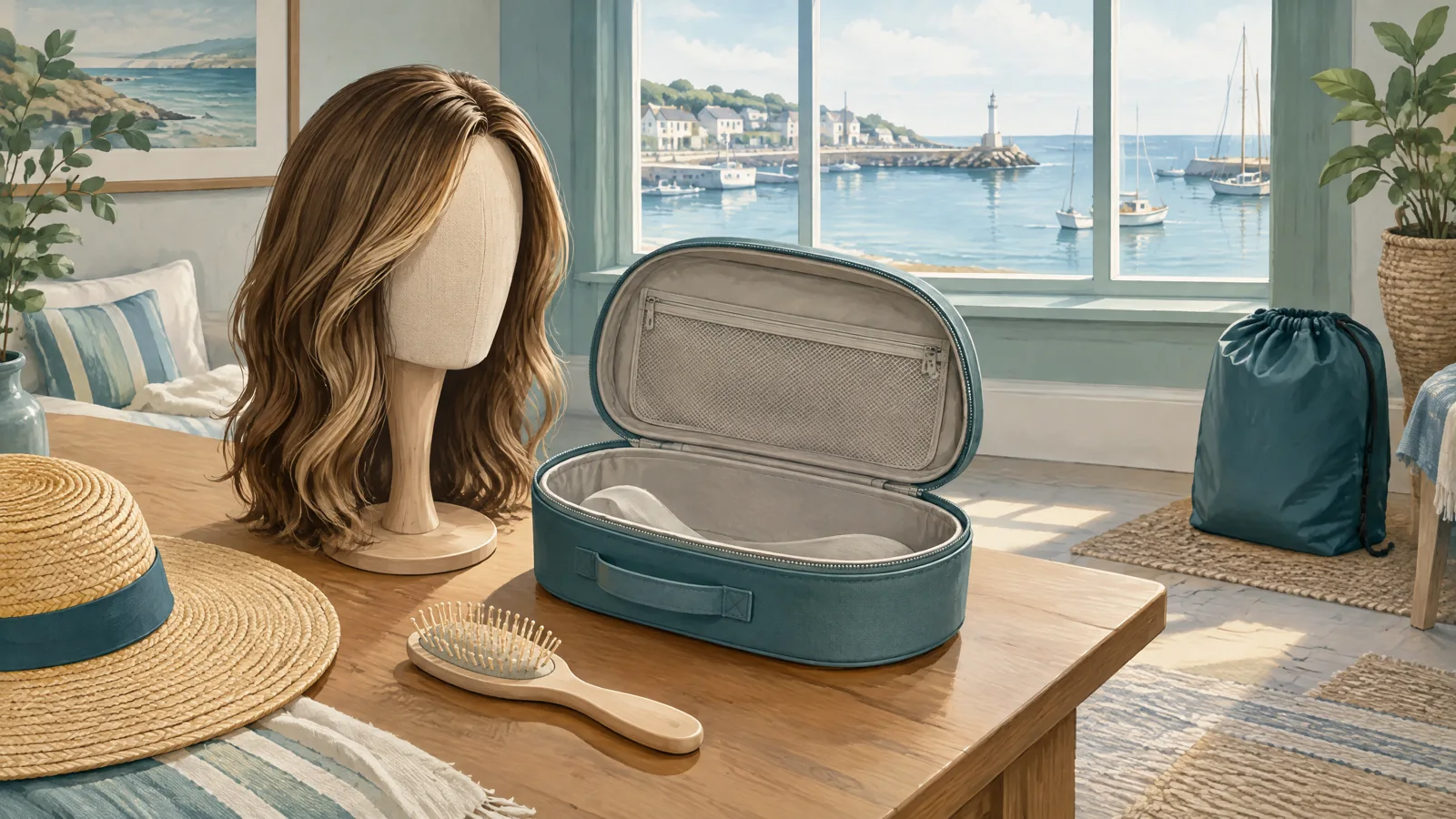
Private hair and photo records organised for a shore day as a concept illustration
Illustration · Concept illustration: private records and accessories for a shore day, not a real product or customer.
Guide · 05

Turn the note into answerable questions

Ask about scope, preparation and decisions rather than outcomes

End the message with a small set of questions. First ask whether the provider handles the requested appearance work. Then ask what must be reviewed before confirming an appointment, such as hair length, previous chemical services, sensitivities, photos, or the event sequence. Finally ask how changes, cancellation, preparation, and additional services are handled. Request written clarification when the answer affects your time, budget, or privacy.

Avoid outcome language such as “make it permanent,” “fix the thinning,” or “make it safe in water.” Ask what can be attempted, what cannot be promised, and what you should confirm elsewhere. A commercial provider may describe a catalogue item, but that description is not independent proof of medical suitability. Keep every decision tied to the person qualified to make it.

If you are comparing options, compare like with like. Ask whether the quoted scope covers consultation, preparation, the stated service, and any trial. Ask which assumptions could change the scope. Do not request invented prices, availability, delivery times, or results in the first message. The goal is a reliable reply, not the longest possible request.

The phrase hair transplant cost hong kong is a comparison prompt, not a price or procedure recommendation. If you use it while researching, ask who provides the information, what is included, which risks and alternatives require medical discussion, and whether the page is relevant to your situation.

Swipe the table to compare all columns.

Questions to separate before confirming an appointment
Question areaAsk the providerKeep separate
Service scopeWhat exactly is included, and what information is needed first?A catalogue label is not a personal recommendation
Hair concernWho can assess this concern, and what records should I bring?Diagnosis, prescriptions, and treatment choices
TimingWhat is the latest realistic departure time, and what needs a buffer?A fixed completion promise
Water activityWhat product or appearance questions remain for the relevant activity provider?Clearance, equipment modification, or safety approval
Money and privacyWhat is included, what may change, and who sees submitted photos?Invented prices, free-service assumptions, or outcome promises
Guide · 06

Use the final note as a decision record

Booking note format is a communication step, not the whole coastal plan

Before sending, shorten the note until a reader can scan it in under a minute. Put the event date, departure deadline, and main question near the top. Keep health observations in dated language. Add only the images or records that answer a stated question. Ask for a reply that separates scope, preparation, timing, costs, and any reason to seek another professional.

After the reply arrives, copy the decisions into a simple record. Write what was confirmed, what remains unknown, who must answer it, and by when. If the outfit or event changes, update the note rather than relying on a memory of a phone call. If the provider cannot answer a safety or medical question within their role, treat that as useful information, not as a reason to pressure them for certainty.

DiveHarbour’s role is separate from hair and scalp services. If your coastal plan includes a scuba course, use the course’s own information and booking process. You can book a scuba diving course in Hong Kong for a diving enquiry, while keeping any hair appointment, medical assessment, and activity suitability decision separate. A hair note does not replace course requirements or personal medical confirmation.

For a short final check, ask: “Does this note explain the setting, appearance goal, observable concern, time boundary, and exact questions?” If yes, send it to the relevant provider. If not, remove general adjectives and add one concrete fact. Clear notes create better conversations without promising a particular look, diagnosis, or result.

If you are ready to ask about a diving date rather than a hair service, you can reserve a place on a Hong Kong scuba class. That link is for DiveHarbour’s activity enquiry. DT HUB services and any medical or hair-growth consultation require separate contact with the relevant provider.


A simple shore-day change plan shown as a concept illustration
Illustration · Concept illustration: a fictional change plan for a coastal day, not a real branch, class, client, or result.
A sensible next step

Take the question with you

A strong booking note does not try to solve every question in one message. It gives the provider a clear event brief, records observable hair changes, sets a real time boundary, and marks medical or activity questions that belong elsewhere. Send the note only after you can see which answers are needed before deciding.

For hair, scalp, hairpiece, or academy information, contact the relevant DT HUB provider separately and confirm scope, qualifications, privacy, fees, and limits. For diving or coastal activity enquiries, contact DiveHarbour through its own booking process. Neither side should be treated as the other side’s medical or activity-safety approval.

Questions to ask

Common questions

What is the shortest useful booking note format?

Write the event and setting, date and departure deadline, outfit details, preferred appearance, observable hair concern with dates, and three questions about scope, preparation, and next steps. Keep medical questions labelled separately from styling requests.

Should I name a hair-loss condition in the note?

Use a condition term only as a research or question label unless a qualified professional has already assessed you. Describe what you observe, when it began, and where it appears. A label on a service page is not a diagnosis.

Can a styling appointment confirm that I can swim or dive?

No. Styling scope, product handling, equipment compatibility, activity requirements, and personal medical clearance are separate questions. Ask the relevant activity provider and, where applicable, your medical team. Do not treat a hair appointment as activity approval.

What should I ask before sending scalp photos?

Ask why the photos are needed, who will review them, how they will be stored, whether a medical assessment is required, and what the provider can and cannot conclude. Use dated, unfiltered images only when they answer a specific question.

Further reading

Official sources worth checking

Continue exploring

Keep comparing practical questions before you choose a course, activity or preparation step.

Coastal life and image planning · Updated 2026-11-06

Outdoor-light reference brief for coastal photo planning

Use an outdoor-light reference brief to plan light, framing, neckline and styling limits for a coastal shoot. Read the checklist and ask better questions.

outdoor-light reference brief

Coastal life and image planning · Updated 2026-11-06

Multi-event style order for a coastal day | DiveHarbour

Plan a multi-event style order for swim, lunch, photos and dinner. Use reset windows, provider questions and weather backups before you book or ask.

multi-event style order

Coastal life and image planning · Updated 2026-11-06

Shore styling tool choice: build a compact shore-day kit

Use shore styling tool choice to sort essential tools, power limits, cleaning needs, and backup options before a coastal day. Read the practical guide.

shore styling tool choice
Your next step

Ask about diving courses or coastal trip planning

Message DiveHarbour on WhatsApp to discuss diving courses or coastal trip planning, along with your experience and preferred dates.

Ask about diving courses or coastal trip planning
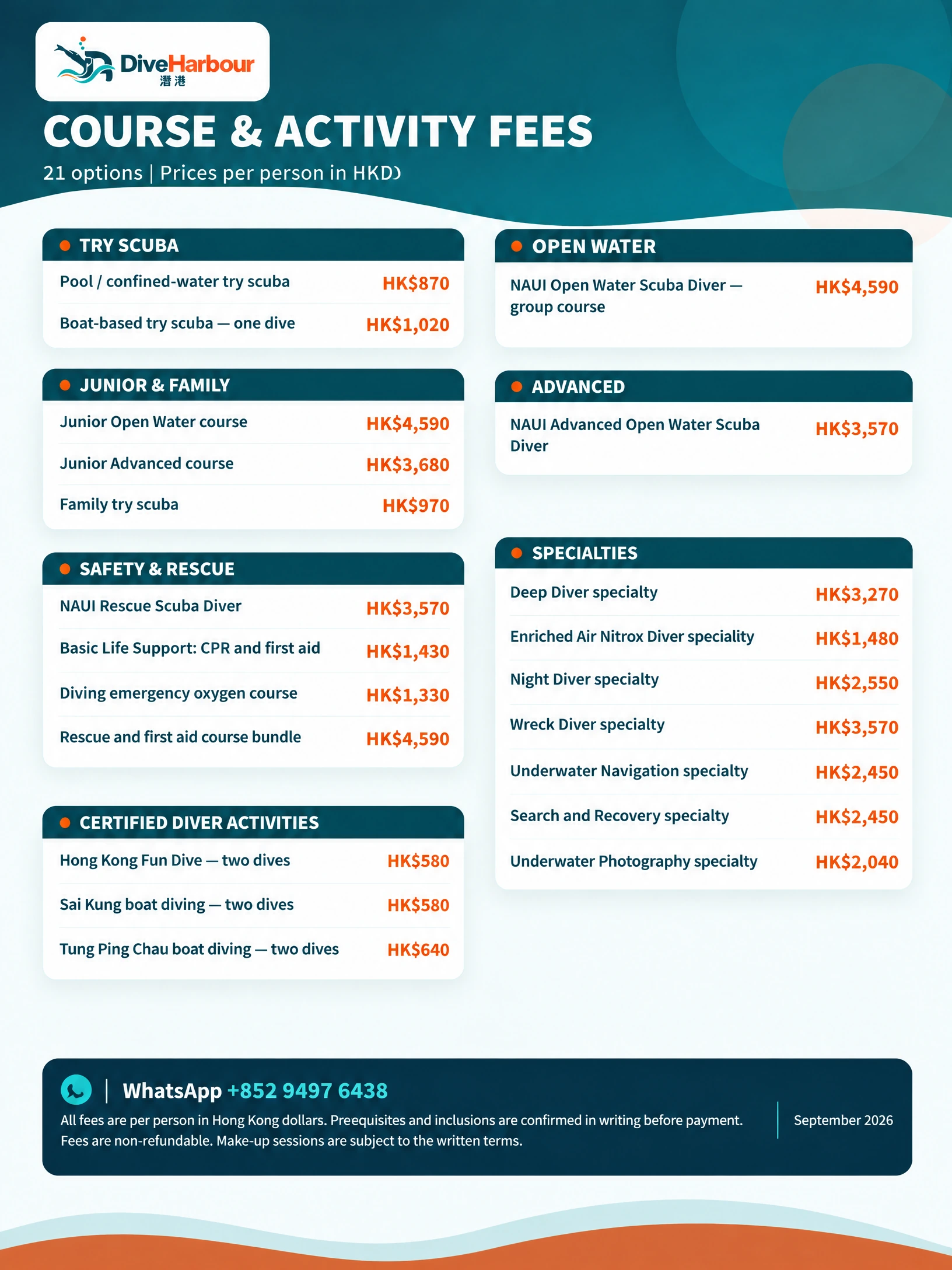
English price list for 21 DiveHarbour courses and activities, with fees per person in Hong Kong dollars
Tap the price list to view it at full size.

Plan your next dive

Course fees, clearly set out

Compare our published course and activity fees before choosing your next step. All prices are per person in Hong Kong dollars.

Before you book, we confirm prerequisites, materials, certification, equipment, venue and boat arrangements in writing. Ask us about fees for courses not listed here.

All fees are non-refundable. Make-up sessions are subject to the written terms.

Read all course fees
DiveHarbour course and activity fees per person in Hong Kong dollars
Course / activityPer person
Pool / confined-water try scubaHK$870
Boat-based try scuba — one diveHK$1,020
NAUI Open Water Scuba Diver — group courseHK$4,590
Junior Open Water courseHK$4,590
Junior Advanced courseHK$3,680
Family try scubaHK$970
NAUI Advanced Open Water Scuba DiverHK$3,570
NAUI Rescue Scuba DiverHK$3,570
Basic Life Support: CPR and first aidHK$1,430
Diving emergency oxygen courseHK$1,330
Rescue and first aid course bundleHK$4,590
Deep Diver specialtyHK$3,270
Enriched Air Nitrox Diver specialtyHK$1,480
Night Diver specialtyHK$2,550
Wreck Diver specialtyHK$3,570
Underwater Navigation specialtyHK$2,450
Search and Recovery specialtyHK$2,450
Underwater Photography specialtyHK$2,040
Hong Kong Fun Dive — two divesHK$580
Sai Kung boat diving — two divesHK$580
Tung Ping Chau boat diving — two divesHK$640