

A useful fact to keep in mind
PADI’s current article describes 2 to 4 hours of online learning and 3 required dives for its Underwater Navigator Specialty version.
Check the sourceChoose an Underwater Navigation specialty Hong Kong divers can build on
Skills for calmer, more confident route-finding
Underwater navigation is less about finding a magical heading and more about building a repeatable way to know where you are, where your buddy is and what the plan says to do next. An Underwater Navigation specialty Hong Kong divers choose can turn a confusing return leg into a measured sequence: agree an entry point, observe the site, set a reference, check time and air, then confirm the route with your buddy. That discipline is useful whether you dive from a boat, a shore entry or a sheltered training area.
Hong Kong conditions make the skill rewarding. Visibility can change with weather, tide, boat traffic, silty bottoms and busy reef features. A landmark that looks obvious on the way out may look different on the way back. Navigation practice helps you avoid wandering farther from the planned area while still leaving room for curiosity. It does not replace a guide, surface support, a dive computer, good buoyancy or conservative decisions; it gives those decisions a clearer structure.
This specialty is a sensible next step for a certified diver who follows a buddy comfortably but wants more independence in planning. It also suits a diver who loses confidence when the bottom becomes visually repetitive, or who wants to prepare for photography, deeper profiles, night conditions or new sites. If your recent diving has been limited, discuss a refresher first rather than treating a navigation class as a substitute for water confidence. The instructor can consider your certification, logged experience, comfort in current and ability to maintain a buddy connection.
Before booking, compare the agency standard, instructor-led practice, training location, equipment list and certification process. The phrase “specialty” does not guarantee identical prerequisites across organisations. DiveHarbour’s lead coach has teaching experience with PADI, SSI and NAUI, along with swimming, lifesaving, pool, beach, kayak and personal-watercraft rescue qualifications; the current course outline and agency requirements remain the deciding reference for your enrolment.
- Bring your certification details, recent-dive information and any concerns about visibility, current or compass handling to the enquiry.
- Choose a buddy who will communicate, keep pace and follow the same turn-around and reserve-air plan.
- Treat local site familiarity as a bonus, not as a reason to skip formal planning.

What an underwater navigation course Hong Kong training may cover
Planning, compass work and natural references
An underwater navigation course Hong Kong divers consider normally begins on land. You can review the site sketch, entry and exit, expected route, signals, headings, distance method, depth limits, lost-buddy response and turn-around triggers before entering the water. On the surface, the instructor can demonstrate how to hold a compass level, read a reciprocal heading, set a simple pattern and use a kick-count or elapsed-time estimate without pretending those estimates are exact measurements.
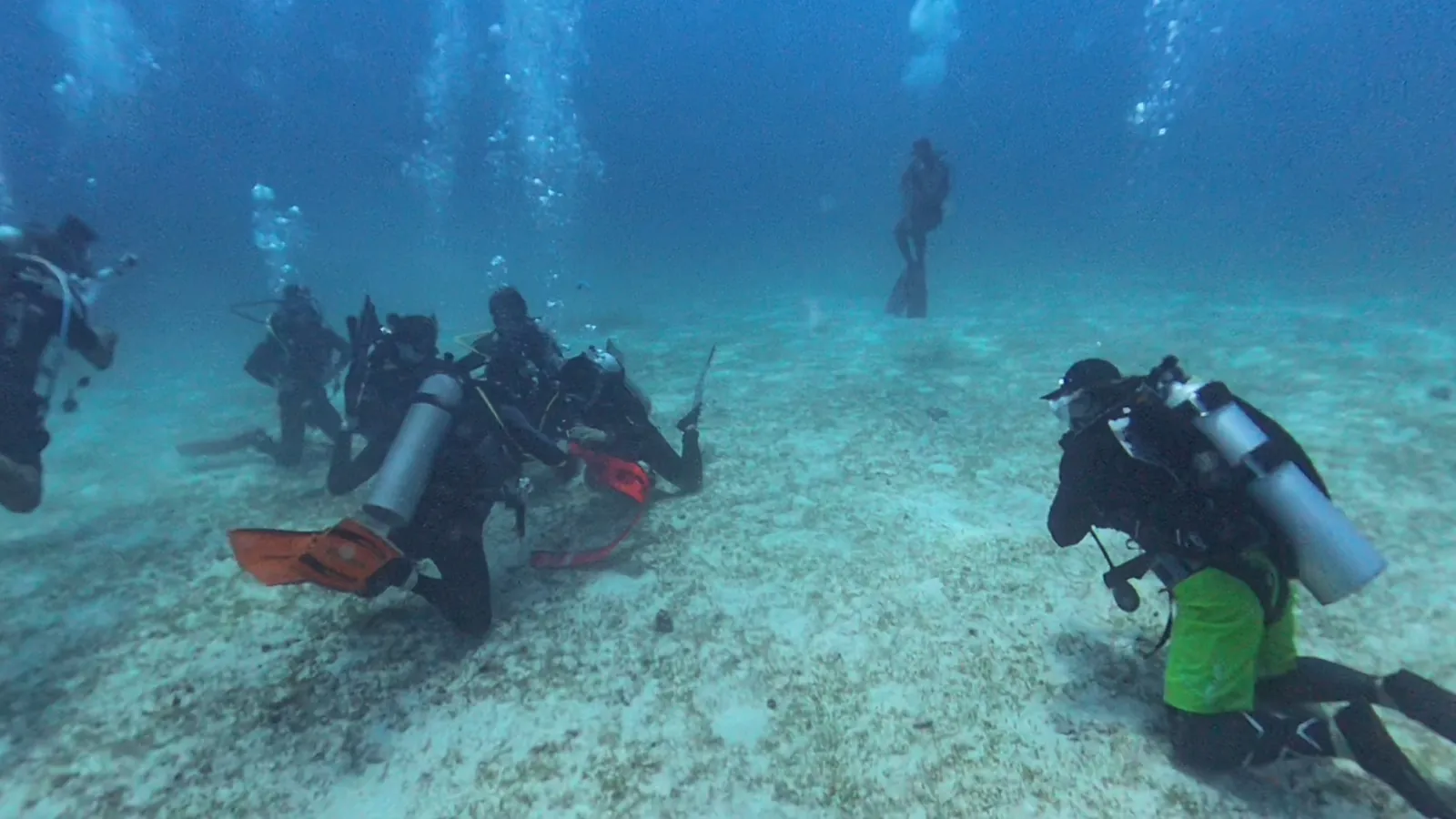
Underwater, practice should be gradual. You may first identify a large, stable feature and relate it to your heading, then swim a short planned leg while checking position and buddy spacing. Later exercises may introduce a change of direction, a square or triangle pattern, or a return to a reference point. Natural navigation adds observation: reef contours, rock shapes, sand channels, slope direction, light and the relationship between depth and the bottom. These clues complement a compass; they do not justify touching coral, entering an overhead environment or separating from your buddy.
The PADI official explanation says its Underwater Navigator course covers compass use, natural navigation, common patterns, multiple turns and distance estimation. It also describes surface practice followed by underwater application. PADI’s current article describes 2 to 4 hours of online learning and 3 required dives for its Underwater Navigator Specialty version. The article says the course is generally over 2 to 3 days. Those figures describe that PADI course information, not a universal promise: SSI, NAUI and other agencies may set different prerequisites, learning materials, dives or timing. Confirm the current standard before paying.
You do not need to memorise every possible pattern. The useful outcome is a calm process for checking a heading, matching it to a natural feature, communicating with your buddy and stopping when the plan no longer fits. If low visibility, current, congestion or anxiety makes the exercise unsuitable, a responsible instructor can pause, simplify or end the dive. A completed worksheet is never more important than a safe exit.

Prepare for your next navigation-focused dive
Discussing prerequisites, standards and suitable sessions
Start with the prerequisite conversation, not a date request. Tell DiveHarbour which agency issued your card, your highest relevant certification, approximate recent diving, last refresher and any restrictions or health questions you have. Agency rules can differ, and an instructor may recommend a refresher, a calmer site or a different progression. A course enquiry is not a medical assessment; if you have a health concern, seek appropriate clinician advice and follow the training organisation’s current medical-screening process.
Equipment should be familiar and serviceable. A compass that can be read with your normal hand position, a slate or wetnotes, timing method, exposure protection, surface marker where required and a functioning dive computer all need a place in the plan. Ask whether compass, weights, cylinders, boat arrangements and learning materials are included. Avoid buying a complicated digital instrument simply because it displays a heading: PADI’s guidance notes that a digital compass still requires heading-setting, distance judgement and periodic recalibration.
On the day, attend the briefing early enough to see the map and ask questions. Agree the entry reference, heading convention, maximum depth, planned time, minimum reserve, signals and what happens if the landmark is missing. Keep the navigation exercise secondary to buoyancy and buddy awareness. Look up from the compass regularly, maintain situational awareness, and do not follow a heading into a hazard merely because it was written down. The instructor’s live assessment and local conditions take priority over a pre-drawn route.
For a broader pathway, you can compare PADI specialty diving courses Hong Kong and see whether navigation fits your goals. A diver moving from general experience may also review the Advanced Open Water Diver course Hong Kong before selecting a standalone specialty. These pages help frame the conversation; they do not remove the need to verify current prerequisites with the issuing agency and instructor.
- Ask for the current agency name, prerequisites, number of dives, assessment approach and what happens if conditions change.
- Pack a backup plan: surface marker, whistle or other required signalling equipment, and a way to record headings.
- If you cannot maintain buoyancy while reading a compass, request a simpler exercise or refresher.

Choose a route that matches your wider diving goals
Navigation is a foundation, not a race to the next badge
Navigation can support several different interests, but the best sequence depends on your current confidence. A photographer may need to navigate without rushing a subject or damaging the bottom. A diver considering deeper water should first be comfortable with gas, time and buddy planning; navigation does not make a deep profile automatically appropriate. Someone interested in wrecks should understand the difference between observing a wreck externally and entering an overhead environment. Talk through the objective before stacking specialties for their names alone.
The neighbouring choice of sidemount vs wreck diving specialty prerequisites is useful when your real question is equipment configuration or wreck training rather than route-finding. For image-making goals, underwater photography diving course Hong Kong may be more directly relevant. If depth is the priority, read about the Deep Diver specialty course Hong Kong and compare its separate training aims. This keeps your decision honest and avoids expecting one course to deliver unrelated skills.
A navigation class is also a chance to improve communication. Agree on one signal for “confirm heading”, one for “I am unsure”, and one for “end the exercise”. Keep the buddy pair together, check each other’s position and stop to reassess instead of silently correcting a mistake. DAN’s diver-safety guidance emphasises making a plan with a buddy that reflects depth, time, activity and adaptability. Applying that principle in Hong Kong means leaving margin for current, visibility and boat or shore logistics.

Compare the practical booking details before you commit
A clear enquiry prevents avoidable surprises
The published listing for the Underwater Navigation specialty is HK$2,450 per person. Treat that as the current published reference, not an assumption that every item is included: the approved note says training dives, materials, boat fee, equipment and certification arrangements will be confirmed before enrolment. Ask for a written breakdown, the meeting point, transport expectations, cancellation terms and what changes if weather or sea conditions make the planned site unsuitable.
Use the comparison below as a short checklist. The “best fit” column is a decision aid, not a guarantee of course availability or certification outcome. The actual agency standard, instructor assessment and conditions on the day remain decisive.

Make navigation practice a safer habit after the course
Review, repeat and keep your limits visible
After training, review what actually worked. Was your kick-count consistent in that exposure suit? Did you lose the heading when changing depth? Could your buddy see your compass without crowding you? Write down one improvement for the next dive, such as slowing the pace, confirming the reciprocal heading or using a more obvious natural reference. A short refresher in a familiar setting can be more valuable than immediately attempting a demanding site.
Plan every ordinary dive with the same fundamentals: a map or briefing, entry and exit, buddy roles, maximum depth, time and reserve, lost-buddy procedure, current and weather considerations, and a clear end point. Do not use a navigation skill to justify extending a dive, surfacing late or pushing into worsening visibility. If you become disoriented, stop, breathe normally, stay with your buddy and follow the agreed conservative response; seek instructor guidance for the situation rather than improvising a risky recovery.
When you are ready, message DiveHarbour with your certification background, recent experience and goals. We can discuss the current Underwater Navigation pathway, likely preparation, equipment and practical arrangements so you can decide with useful information.
Navigation training decisions to clarify before booking
| Option | Best for | Check |
|---|---|---|
| Standalone navigation specialty | Certified divers wanting compass and natural-reference practice | Agency prerequisite, dives, included equipment and certification process |
| Refresher before navigation | Divers with a long gap or uncertain buoyancy and buddy skills | Instructor assessment, calm-water practice and separate refresher terms |
| Advanced pathway first | Divers still building broad experience or planning several specialties | Current certification level, training order, depth limits and total workload |
| Navigation plus a goal-specific specialty | Photographers, wreck observers or deeper-diving planners | Separate standards, hazards and whether each course is genuinely suitable |
Underwater Navigation Specialty in Hong Kong — common questions
Who is an underwater navigation specialty course for?Toggle answer
It is generally suited to certified divers who want to improve underwater orientation and dive planning. The appropriate level, prerequisites and recognition depend on the training organisation and its current standards, so confirm those details with the instructor before enrolling.
What should I ask before choosing navigation training in Hong Kong?Toggle answer
Ask which agency standard applies, what certification you need beforehand, how classroom and in-water practice are arranged, and what equipment or conditions are expected. Also request the written price and cancellation terms before enrolling.
How many dives or days does navigation training take?Toggle answer
There is no single universal duration. PADI’s current article describes two to four hours of online learning, three required dives and generally two to three days for its version. Other agencies or local arrangements may differ, so confirm the current outline rather than relying on a generic number.
Are course fees refundable, and can a missed session be made up?Toggle answer
Confirm the written terms before payment. Course fees are non-refundable unless the applicable written booking terms expressly say otherwise. Make-up sessions or rescheduling are available only where those written terms permit them; a new date is not guaranteed, especially when weather, sea conditions, instructor availability or minimum numbers change.
Can navigation training replace a guide or buddy?Toggle answer
No. Navigation training supports planning and orientation but does not replace a suitable buddy, instructor briefing, local site information, surface support, buoyancy control or conservative limits. Follow the current agency standard and the live safety decision of the instructor.
Take the question with you
A good navigation course gives you a process you can repeat: plan with your buddy, practise on land, use compass and natural references together, check position and limits, and turn conservatively when conditions no longer fit. Send DiveHarbour your certification level, recent-dive context and the kind of Hong Kong diving you want to do. The team can then explain the current course outline, approved HK$2,450 reference price and booking terms before you choose a suitable next step.
Sources worth checking
- PADI Underwater Navigator Course: Because GPS Doesn’t Work Underwater
PADI describes compass use, natural navigation, navigation patterns, multiple turns and distance estimation; its article states two to four hours of online learning, three required dives and generally two to three days for that PADI version.
- Divers Alert Network: Be a Great Dive Buddy
DAN advises buddies to plan together while considering pace, depth, time, activity and adaptability.
Useful next reads for your plan
If you are still comparing routes, these related pages give you practical questions to bring into your next conversation with an instructor.
Put your plan into practice
Useful planning guides
Dive Specialty Prerequisites Guide for Hong Kong
Plan your dive specialty prerequisites guide with a practical worksheet, clear decision points, and a direct check of current details with DiveHarbour.
dive specialty prerequisites guide
