

A useful fact to keep in mind
DAN reports that 99 percent of freediving blackouts happen at the surface or within 16 feet of it.
Check the sourceFreediving vs snorkeling safety: the key differences
Breathing, depth and buddy awareness are not interchangeable
The simplest distinction is how you use your breath. A snorkeller stays at the surface, looks down through a mask and breathes through a snorkel. A freediver deliberately leaves the surface on one breath, then returns before breathing again. That change makes freediving a trained breath-hold activity, not simply a more adventurous version of snorkelling. A relaxed surface swim can build water confidence, but it does not demonstrate readiness for a descent.
Freediving vs snorkeling safety therefore starts with different risk questions. A snorkeller must manage waves, currents, boat traffic, mask fit, fatigue and the temptation to swim too far from the group. A freediver must additionally manage equalisation, body position, weighting, depth, ascent, recovery breathing and an attentive buddy who can intervene. Never practise long breath-holds or repeated deep dives as a personal challenge, and never hyperventilate before entering the water; these are matters for recognised instruction.
DAN explains that 99 percent of freediving blackouts happen at the surface or within 16 feet of it. That statistic is a useful reminder that reaching the surface is not the same as being fully safe. It is also why a surface lookout who is not trained in freediving rescue is not an adequate substitute for close, capable buddy supervision. Stop immediately if you feel dizzy, unusually anxious, cold, breathless or unable to equalise comfortably. No dive is worth forcing.
DAN reports that 99 percent of freediving blackouts happen at the surface or within 16 feet of it. This is why a trained buddy and conservative limits matter even near the surface.
- Snorkelling: remain on the surface, keep a visible buddy and monitor waves, currents and boats.
- Freediving: use formal training, conservative personal limits, correct weighting and a buddy who understands the activity.
- Both: check weather and sea state, protect coral and wildlife, and exit early when conditions or comfort deteriorate.
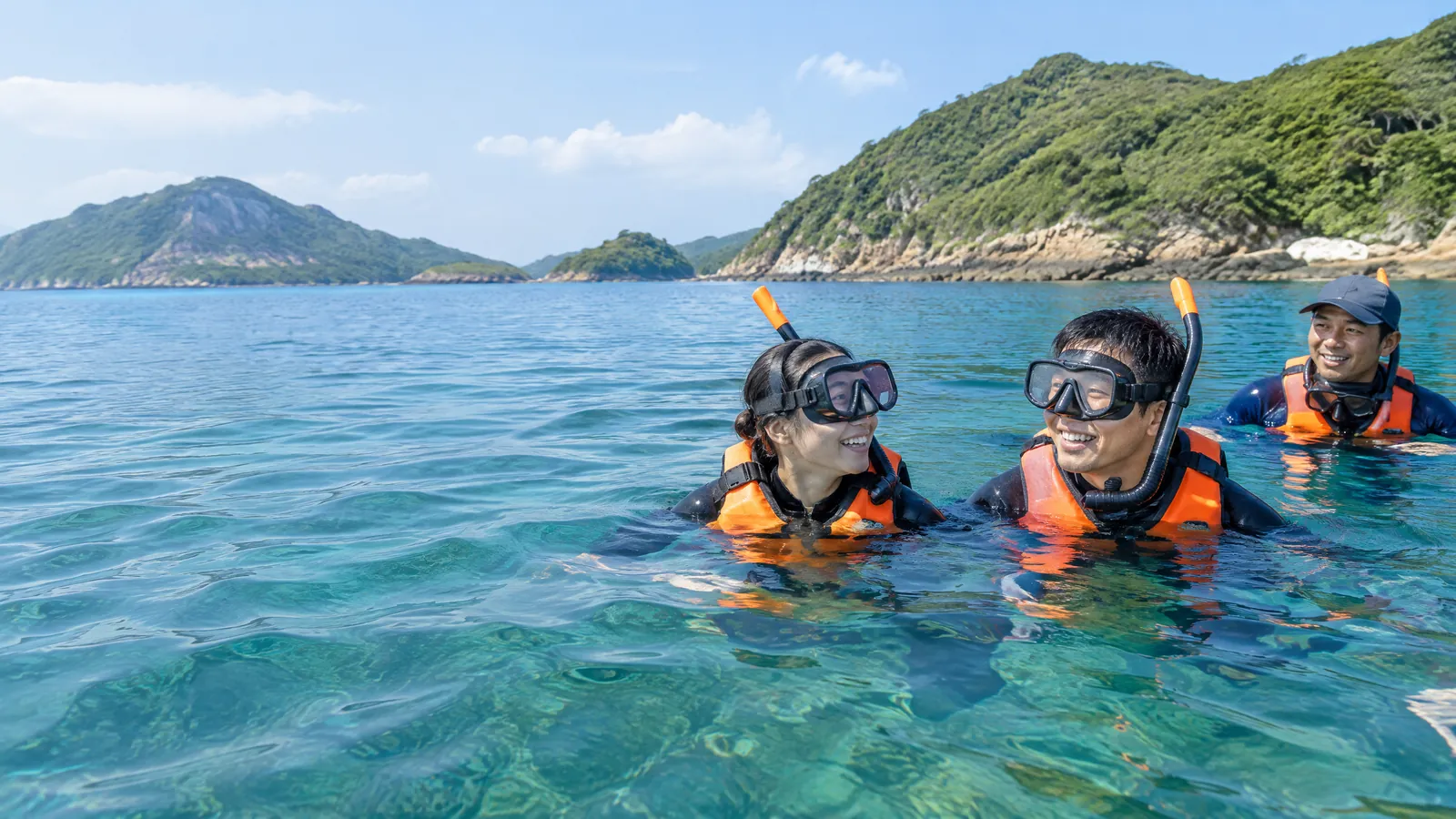
Sai Kung snorkeling vs freediving
Match the activity to conditions, experience and supervision
Sai Kung is attractive because a short boat journey can lead to beaches, rocky shorelines and clear-looking water. The Hong Kong Tourism Board describes Sharp Island as part of the Hong Kong UNESCO Global Geopark, with coral reefs and marine life, and identifies snorkelling near the island as a visitor experience. That description is helpful context, not a promise of visibility, calm water or a suitable freediving site on a particular day. Wind, rain, tide, boat traffic, jellyfish, surface chop and your own fatigue can change the decision.
For Sai Kung snorkeling vs freediving, surface snorkelling is usually the more flexible choice for a mixed group. People can float, observe from the surface and return to the boat or beach without making a breath-hold descent. It still needs a briefing: agree on boundaries, entry and exit points, signals, who remains with children or less confident swimmers, and what happens if someone becomes cold or seasick. Use a properly fitted mask and snorkel, fins only if you can control them, and a brightly visible surface marker where appropriate.
A freediving plan needs a higher threshold. Ask who is supervising each diver, whether the buddy can stay close during the critical parts of the dive, what maximum depth and number of attempts are planned, and how the group will stop. A guide on a boat is not automatically a freediving safety diver. If the answer to any of these questions is vague, choose surface snorkelling or postpone the breath-hold session. Do not let a scenic location, camera, group enthusiasm or a previous personal best set today's limit.
The Hong Kong snorkeling experience page is a sensible starting point when your priority is a guided, surface-based outing. If you are considering structured breath-hold training, read about the freediving safety and rescue course Hong Kong option and ask what level of supervision, prerequisites and site plan apply. Those are different decisions from selecting a casual snorkel trip.
- Before leaving Sai Kung: check the marine forecast, operator updates, boat arrangements and the return plan.
- At the site: complete a buddy check, agree a visible boundary and avoid swimming over coral or beneath boats.
- When conditions change: signal, regroup and leave the water; changing a plan is good judgement, not failure.

Making a safer choice for your day on the water
Keep the plan conservative and ask qualified instructors about training
Choose the activity by the least experienced or least comfortable participant, not by the strongest swimmer. For a family or first visit, surface snorkelling with an experienced guide may offer plenty to see without adding breath-hold goals. For a diver who wants to progress, a lesson in a controlled environment can cover relaxed breathing, equalisation concepts, recovery, buddy contact and emergency recognition before open-water practice. Training should make you more conservative, not encourage you to prove something on holiday.
Use a clear stop rule. A snorkeller should stop for coughing, panic, persistent mask flooding, cramps, cold or difficulty keeping the group in sight. A freediver should stop for failed equalisation, discomfort, unusual contractions, poor technique, a rushed recovery or any missed buddy contact. Do not ask a friend to coach breath-hold technique after watching online videos. Instructors should adapt the session to conditions and student comfort; you should never feel pressured to attempt a skill or depth that you have not agreed to.
Progression is personal. The freediving safety and rescue course progression article can help you think about a learning route, while the AIDA 2 freediving course 20 metres Hong Kong page shows why a named course level must be discussed with an instructor rather than assumed from a recreational snorkel. Course prerequisites, depth limits, agency standards and medical considerations should be confirmed directly before booking.

A practical pre-water safety check
Turn a general intention into a specific, shared plan
A two-minute briefing prevents many avoidable misunderstandings. Say out loud whether the group is snorkelling only or doing trained freediving, where the boundary is, and who is responsible for each person. Check masks, snorkels, fins, exposure protection, flotation and any surface marker. Confirm that everyone knows the return signal and where the boat crew or shore exit is located. Keep valuables and loose equipment secured; a dropped mask or phone is not a reason to make an unsafe solo recovery.
Assign roles rather than relying on the loudest or strongest person. One adult can supervise a child while another watches the route; a trained freediving buddy should focus on the diver instead of filming. Keep a conservative distance from rocks, channels and moorings. Do not climb onto coral, touch marine animals or chase wildlife for a photograph. If visibility is poor, use the surface plan only and avoid turning the outing into an improvised depth session.
- Brief: activity, boundaries, buddy pairs, signals, exit point and weather decision.
- Check: mask seal, breathing comfort, flotation, fins, sun protection, hydration and seasickness risk.
- Review: everyone may stop without explaining or apologising, and the group leaves together.

Compare the choices before you book
A simple decision table for different experience levels
There is no universal winner between snorkelling and freediving. The right option depends on your goal, training and the conditions you can responsibly handle. Use this table as a conversation starter with the operator, not as a substitute for a site briefing or instructor assessment.

When to progress from snorkelling to freediving
Build skills deliberately rather than chasing a number
Consider training when you can follow a buddy plan, remain calm in the water, communicate clearly and accept a conservative limit. A course should explain the difference between relaxed breathing and unsafe preparation, teach appropriate buddy procedures, and practise skills in conditions suited to the class. Ask which agency standards apply, whether the session is pool or open water, what equipment is supplied, and what happens if weather makes the planned site unsuitable. Your instructor should also discuss relevant health questions and advise when to seek medical guidance; this article cannot assess fitness to dive.
If your aim is a recognised progression, the AIDA 2 Freediver course Hong Kong page may be relevant after you have discussed prerequisites and personal limits. It is also reasonable to remain a snorkeller. Surface observation can be rewarding, and choosing not to descend is a complete, safety-focused decision. A calm day with good awareness is more valuable than a dramatic depth claim.

Which water activity best fits today's plan?
| Option | Best for | Check |
|---|---|---|
| Guided surface snorkelling | First-time visitors, families and mixed abilities | Surface boundaries, guide, flotation and sea conditions |
| Independent snorkelling with a buddy | Confident swimmers familiar with the site | Visible buddy contact, boat traffic, currents and exit route |
| Trained freediving session | Divers with recognised training and an attentive capable buddy | Agreed depth, weighting, rescue competence and conservative conditions |
| Postpone or choose shore time | Cold, tired, seasick or uncertain participants | Weather updates, transport and a better day to enter the water |
Freediving vs Snorkelling Safety in Sai Kung — common questions
Is snorkelling safer than freediving for a first-time participant?Toggle answer
Not automatically, but surface snorkelling does not involve breath-hold descents. Both activities still require water confidence, suitable conditions, awareness of currents and a sensible buddy plan. Freediving adds specific breath-hold and depth risks, so beginner training and supervision matter.
Can I freedive alone at Sai Kung?Toggle answer
Solo breath-hold diving is not a sensible beginner plan. Freediving training emphasises an attentive, capable buddy and agreed limits, while local weather, sea state and site conditions can change. Discuss your experience and intended activity with a qualified instructor before planning a session.
Can a strong swimmer start freediving by copying a snorkelling friend?Toggle answer
No. Swimming ability helps with water confidence but does not replace training in breath-hold technique, equalisation, weighting, buddy contact or rescue awareness. Begin with a recognised course or qualified instructor and keep your first open-water plan conservative.
What happens if weather makes my booked session unsafe?Toggle answer
Ask the operator about its written terms before paying. Fees are non-refundable unless the applicable booking terms say otherwise, and make-up sessions or rescheduling are available only where those written terms permit them; no new date is guaranteed.
Should I practise breath-holds before a Sai Kung trip?Toggle answer
Do not practise prolonged breath-holds or hyperventilation alone or in water. If you want to learn freediving, obtain supervised instruction that covers safe breathing, buddy procedures and personal limits. For a casual trip, remain at the surface and enjoy snorkelling without adding a depth challenge.
Take the question with you
For most first visits, choose the activity that lets everyone stay calm, visible and within a shared plan. Surface snorkelling can be an excellent Sai Kung day; trained freediving can be rewarding when the buddy, limits and conditions are genuinely appropriate. Before booking, tell the operator your experience, ask who supervises the water activity and confirm the written weather and fee terms. If any answer feels unclear, keep it simple: stay on the surface, postpone, or arrange proper training first.
Sources worth checking
- DAN: Freediving Safety
DAN reports that 99 percent of freediving blackouts happen at the surface or within 16 feet, and stresses recognised training, direct supervision and never freediving alone.
- Hong Kong Tourism Board: Sharp Island
The Hong Kong Tourism Board places Sharp Island in Sai Kung within the Hong Kong UNESCO Global Geopark and describes snorkelling near its coral reefs and marine life.
Useful next reads for your plan
If you are still comparing routes, these related pages give you practical questions to bring into your next conversation with an instructor.
Put your plan into practice
Useful planning guides
Breath Hold Activity Safety Plan for Hong Kong
Use this breath hold activity safety plan worksheet to compare practical options, check key decision points, and confirm current details with DiveHarbour.
breath hold activity safety plan
