

A useful fact to keep in mind
PADI’s current Advanced Open Water outline uses 5 dives: 2 required themes and 3 additional specialty choices.
Check the sourceHow to choose an Advanced Open Water specialty
Start with the diving experiences you want to build
The most useful starting point is not a list of impressive-sounding certificates; it is a picture of the dives you would genuinely like to make over the next year. Do you want to feel calmer with a compass, stay longer on a reef, take better photographs, explore after sunset, or prepare for deeper sites? Write down two or three outcomes in plain language. That turns “advanced” into a practical decision rather than a status label.
PADI’s current Advanced Open Water outline describes five dives in total: two required themes—deep diving and underwater navigation—and three additional specialty dives selected from available options. That structure is a helpful example, not a universal rule for every agency or instructor. SSI presents advanced training as a way to try five Specialty programmes before committing to a full programme, while NAUI course content and prerequisites should be confirmed for the specific course you choose. PADI’s current Advanced Open Water outline uses 5 dives: 2 required themes and 3 additional specialty choices.
If you are comparing agencies, read what the card or programme represents, what is actually practised in water, and whether the skills fit your next destination. A course title alone cannot tell you the likely sea conditions, group arrangement, equipment or instructor approach. You can compare the NAUI Advanced Open Water course Hong Kong with the SSI Advanced Open Water Diver Hong Kong and PADI Advanced Open Water Diver Hong Kong pages, then ask for the current course outline before paying.
- Name one enjoyment goal, one confidence goal and one practical destination goal.
- Separate a course you want to sample from a full specialty certification you want to complete.
- Ask which dives are compulsory, which are elective and what recognition each completed component receives.

Match a specialty to your experience and conditions
Consider task loading, equipment and local diving aims
Your recent diving matters as much as your original qualification. Someone who has been in the water regularly may be ready to add navigation or photography tasks; a diver returning after a long break may benefit from a refresher and buoyancy practice first. Be candid about current comfort with mask skills, buoyancy, controlled descents, surface conditions and managing a buddy plan. This is not a test of bravery. It is information an instructor needs to set a sensible learning pace.
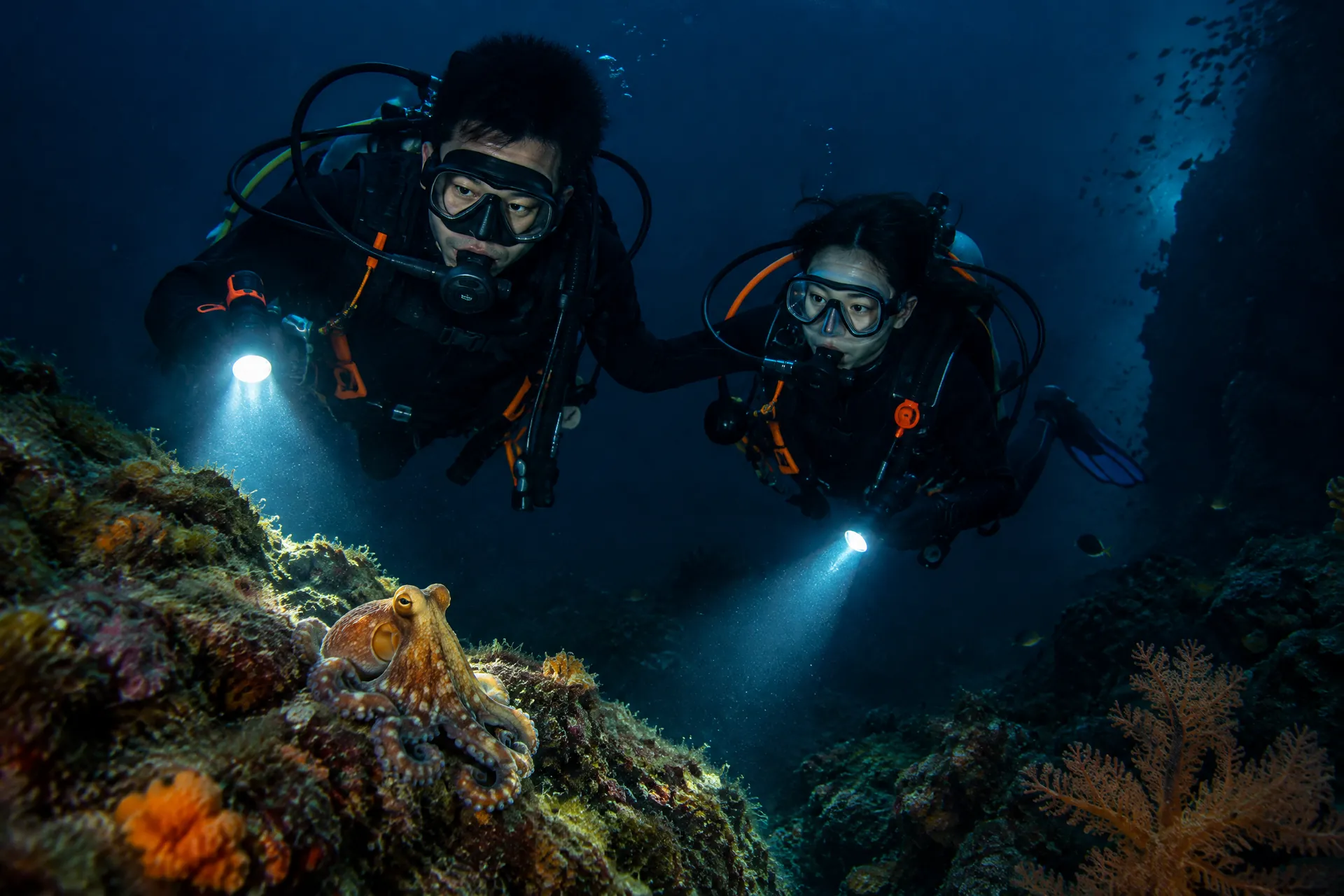
Navigation is a strong choice if you want to make better decisions about headings, natural references and returning to a planned point. It rewards calm buoyancy and attention rather than speed. Deep diving may suit a diver whose goals involve sites beyond ordinary shallow-water profiles, but it also brings additional planning, gas-management and environmental considerations; it should never be selected simply because a greater number sounds more advanced. Night diving changes what you see, how you communicate and how you manage lighting and orientation. Photography adds task loading, so stable trim and awareness of your buddy and surroundings should come before chasing a shot.
Think about Hong Kong conditions without assuming a particular site or visibility on a given day. Boat access, currents, surge, seasonal weather and site suitability can change. If your goal is to enjoy local reefs, ask whether the specialty improves observation and control in those conditions. If your goal is travel, check whether the skills and certification are commonly recognised by the operators you expect to use. For a broader choice of options, browse PADI specialty diving courses Hong Kong and compare the learning outcomes rather than collecting badges.
- List the equipment you already use confidently and the equipment you would need to learn.
- Choose one primary skill for the course; avoid stacking several new tasks when basic control is still inconsistent.
- Ask how weather, water movement and site selection could change the practical plan.

Discuss a sensible training pathway
Check prerequisites, supervision and the next practical step
Before booking, send the instructor your certification level, approximate number of recent dives, date of your last dive, medical or mobility considerations relevant to diving, and the specialty themes you are considering. The purpose is not to obtain a blanket medical verdict online; if a health question is relevant, seek appropriate clinician advice and follow the agency’s current screening process. Do not feel pressured to dive if you are unwell, uncomfortable or unable to complete the stated prerequisites.
Prerequisites vary by agency, programme and specialty. Confirm minimum age where relevant, prerequisite certification, logged-dive or experience expectations, water skills, required equipment and whether a separate first-aid qualification is expected. Ask how many classroom, confined-water and open-water sessions are planned, how skills are evaluated, and what happens if weather or sea conditions make a session unsuitable. A responsible answer may be “we need to assess that first”, not an automatic promise of a date or site.
If your question is specifically which scuba specialty should I take after Open Water, use that comparison to organise your thinking, then return to your own recent experience. An advanced programme should build repeatable judgement and comfort, not rush you through a menu. A lead coach with recognised teaching experience across agencies can explain differences, but the certification agency’s current standards and the instructor’s active teaching status remain important checks.
- Request the written inclusions: training dives, tanks, weights, equipment, boat fees, materials, certification and any exclusions.
- Ask how supervision, buddying and instructor-to-student ratios will be handled for the chosen conditions.
- Agree on a realistic next step—information call, refresher, skills assessment or course booking—only after prerequisites are clear.

Compare specialty directions before you commit
Use a decision matrix, not a popularity contest
A short comparison can reveal which option fits your actual motivation. Score each candidate from one to five for interest, relevance to your next six months of diving, confidence with the required skills and access to suitable conditions. Then note the one concern you need answered. A high-interest option with one manageable question is often more promising than a fashionable option that does not match your plans.
The table below is a planning aid, not a substitute for the agency’s standards. For example, a photographer may need to prioritise buoyancy and situational awareness before handling a camera, while a diver interested in navigation should practise simple, repeatable references before adding complicated task loading. “Best fit” means best fit for the stated goal, not guaranteed suitability or a promise of a specific marine-life encounter.
- Start with one specialty theme and revisit the next choice after you have used the new skill on ordinary dives.
- Treat a skills assessment or refresher as progress, not as a failure to qualify.
- Keep a dive log with conditions, comfort and questions; it gives the instructor better information than a certificate title alone.
Plan equipment, budget and logistics in Hong Kong
Get the inclusions and cancellation terms in writing
Specialties can change the equipment conversation. Navigation may involve a compass and slate; night diving normally requires suitable lights and a clear light-management plan; photography may involve a camera, housing and extra attention to trim. Ask whether equipment is supplied, whether you may use your own kit, and who checks compatibility and condition. Never assume a photograph on a course page means that exact equipment, boat or site will be available for your session.
Ask for a complete quotation before confirming. Approved course pricing may cover different combinations of training, certification, tanks, boat fees, equipment or materials, so compare like with like. If the exact specialty, dates or inclusions are not confirmed, an enquiry is more honest than an invented total. Also ask about meeting point, travel time, weather decisions, minimum enrolment, what to bring and when final details are issued.
For a diver who wants to build competence before choosing a narrow direction, an SSI Advanced Open Water Diver Hong Kong or comparable agency pathway may provide useful sampling. If you already know your theme, a focused NAUI Advanced Open Water course Hong Kong discussion can be more efficient. The right choice depends on your goals and confirmed prerequisites, not on a claim that one agency is automatically best.
- Confirm currency, inclusions and whether any boat, equipment or certification charges are separate.
- Read the written booking and cancellation terms before transferring money.
- Keep a weather-flexible mindset: postponement decisions should prioritise safe conditions, not a rushed timetable.

Turn your shortlist into a confident decision
Ask five questions and choose the next responsible step
Before you decide, ask: What will I be able to do more confidently after this course? Which skills will be practised in water? What must I already know or show? What conditions and equipment are expected? What is included in the price and what happens if the plan changes? Clear answers help you distinguish meaningful training from a vague promise of adventure.
Then choose a next step that matches your readiness. A recent, comfortable diver with clear goals may book a specialty consultation. A diver with rusty skills may schedule a refresher first. Someone comparing agencies may request both outlines and check recognition with the operators they expect to visit. If you are uncertain about health, ask a qualified clinician; if you are uncertain about training suitability, ask the instructor. Keep those roles distinct.
DiveHarbour can discuss your certification, recent experience, preferred conditions and intended use of the skill. Bring your questions, rather than trying to sound more experienced than you are. A careful conversation can narrow the options, identify missing prerequisites and produce a realistic plan without promising a particular site, schedule, wildlife encounter or equipment package.
- Choose the specialty that serves your next real dive goal and current ability.
- Write down the agreed prerequisites and inclusions before booking.
- Review the plan after the course and decide whether to repeat, log more dives or progress to another specialty.

A practical first comparison for choosing an advanced specialty
| Direction | Best for | Check before booking |
|---|---|---|
| Navigation | Divers who want clearer headings, natural references and better return-to-point decisions | Comfort with buoyancy, compass practice, local conditions and required equipment |
| Deep diving | Divers whose goals include appropriately planned deeper recreational sites | Agency depth limits, prerequisites, gas and task-loading expectations, site suitability |
| Night diving | Divers curious about low-light observation and different marine behaviour | Light requirements, buddy communication, weather and limited-visibility procedures |
| Underwater photography | Divers who want to make images without losing awareness and trim | Buoyancy first, camera setup, environmental care and whether camera equipment is supplied |
How to choose an Advanced Open Water specialty — common questions
Which Advanced Open Water specialty should I choose first?Toggle answer
There is no single best choice for every diver. Start with the environments and skills that interest you, then consider recent dives, confidence with added task loading and access to suitable conditions. Navigation is often a useful foundation, while photography, night or deep themes may fit a specific goal. Ask an instructor to compare prerequisites before deciding.
Do I need previous experience before choosing an Advanced Open Water specialty?Toggle answer
Your existing certification, recent dives and comfort in relevant conditions can affect which specialty is appropriate. Course prerequisites vary, so share your training history and goals with DiveHarbour. A refresher or skills assessment may be sensible before advanced training; it is not a substitute for checking the agency’s current requirements.
Can I choose a specialty from one agency and complete it with another?Toggle answer
Do not assume cross-agency credit or recognition. Ask the issuing agency, instructor and any future operator what certification or experience they require. Programme names, prerequisites, number of dives and certification outcomes can differ even when the theme sounds similar.
Are course fees refundable if I change my mind or miss a session?Toggle answer
Fees are non-refundable unless the written booking terms say otherwise. Make-up sessions are available only where the written terms permit them; a reschedule or new date is not guaranteed. Read the confirmation, weather policy and cancellation conditions before payment, and ask what happens if the operator must change the plan.
Should I take a refresher before an advanced specialty?Toggle answer
A refresher is worth discussing if your last dive was a long time ago, buoyancy feels uncertain, or basic procedures are not automatic. It can make the specialty more useful and less stressful. The instructor should assess your situation rather than prescribe the same pathway to every diver.
Take the question with you
Choose the specialty that connects your next genuine diving goal with skills you are ready to practise, then verify the agency requirements, conditions, equipment, price inclusions and written booking terms. If you are still weighing navigation, deep, night or photography training, message DiveHarbour with your certification and recent dive history. The next step may be a course discussion, a refresher or simply a better-informed shortlist.
Sources worth checking
- PADI Advanced Open Water Diver eLearning course
PADI describes two required dives—deep diving and underwater navigation—and three additional specialty dives, for five dives total; it lists examples including night, photography, nitrox, search and recovery and wreck diving.
- SSI Advanced Scuba Training
SSI describes its Advanced Open Water programme as a way to try five Specialty programmes before committing to one or more full programmes, with possible credit toward a full Specialty certification.
- Divers Alert Network: Health and Safety Resources
DAN provides health and safety information for divers, including medical and dive-safety resources that should be considered alongside professional advice.
Useful next reads for your plan
If you are still comparing routes, these related pages give you practical questions to bring into your next conversation with an instructor.
Put your plan into practice
Useful planning guides
Dive Specialty Prerequisites Guide for Hong Kong
Plan your dive specialty prerequisites guide with a practical worksheet, clear decision points, and a direct check of current details with DiveHarbour.
dive specialty prerequisites guide
