SAFE LEARNING · HAPPY EXPLORING
DiveHarbour

DiveHarbour · Practical guide

Hairpiece Repair Choice: A Coastal After-Event Guide

After a waterfront event, do not decide from one rushed glance. Photograph the piece, describe visible changes, check its own care instructions, and separate a repair question from a scalp or activity question. Then ask a qualified provider whether the construction can be handled, whether replacement should be compared, and what should remain off-limits until confirmed.

By DiveHarbour9 min read
Ask about diving courses or coastal trip planning Read the guide
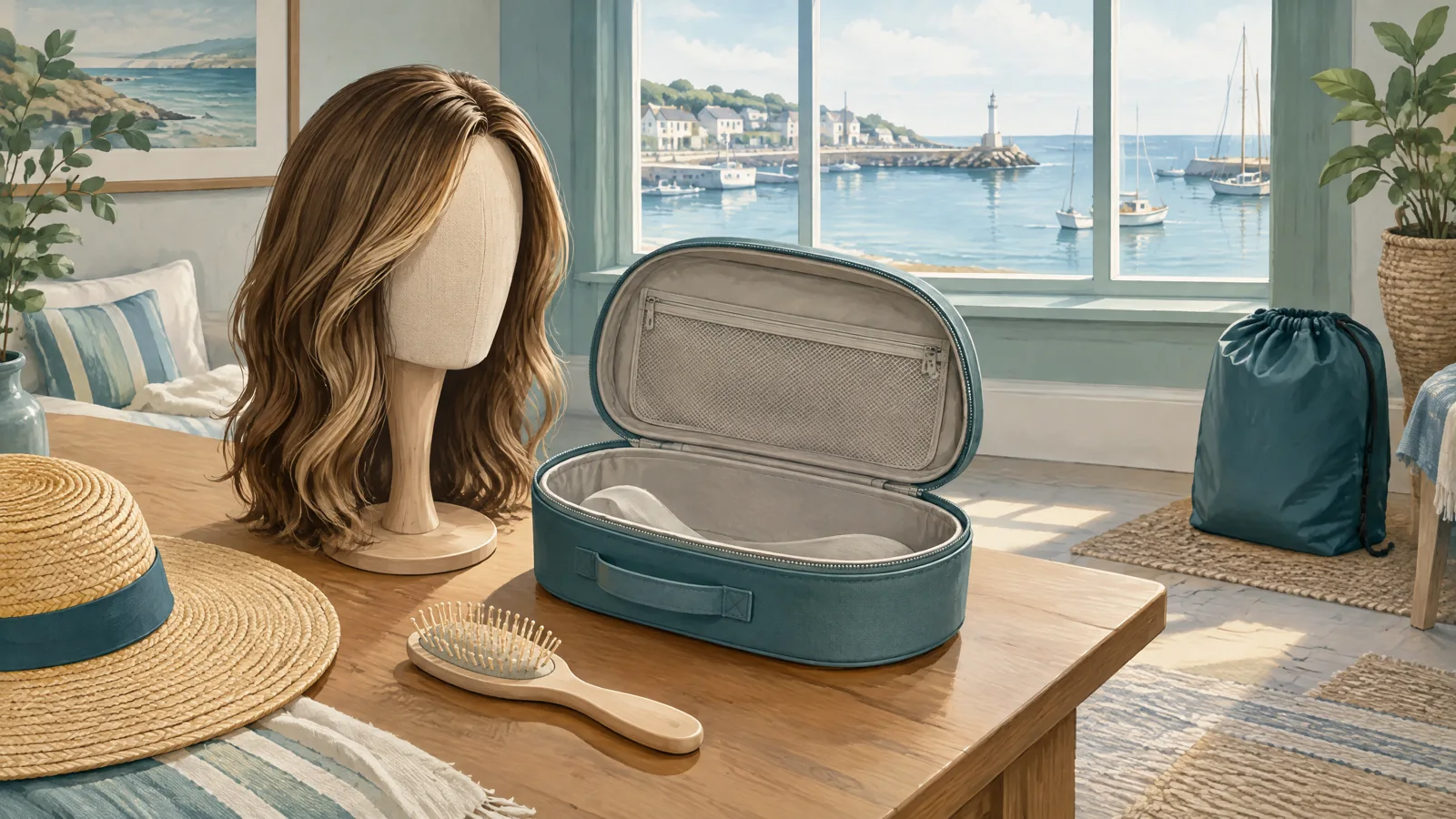
Hairpiece repair choice after a waterfront event, showing a concept storage setup
Illustration · Concept illustration of a calm post-event storage setup; not a DT HUB store, medical setting, product, client, student, or before-and-after result.

Instructor qualifications

One clear teaching conversation from first breath to next step

DiveHarbour brings together scuba teaching, swimming, lifesaving and water-rescue experience so you can ask practical questions before choosing a course.

  • PADI teaching backgroundTeaching experience across recognised scuba learning pathways.
  • SSI teaching backgroundClear explanations when you are comparing agency routes.
  • NAUI teaching backgroundA practical, standards-aware approach to learning and progression.
  • Swimming foundationWater confidence and calm, step-by-step practice matter.
  • Lifesaving experienceSurface awareness and prevention stay part of the conversation.
  • Pool rescue experienceControlled practice can build confidence before open water.
  • Beach rescue experienceLocal water context informs sensible preparation.
  • Kayak rescue experienceA wider water-safety perspective supports good judgement.
  • PWC rescue experienceAsk about the right learning route for your experience and goals.

Brand relationship: DiveHarbour and DT HUB share the same owner.

DiveHarbour and DT HUB are operated by the same owner. DT HUB links here are external service or product-information references, not independent third-party recommendations, medical-effect claims, or water-activity safety endorsements. DiveHarbour handles diving and shore activities; DT HUB salon, hairpiece, academy, and hair-growth services require separate enquiries.

A useful fact to keep in mind

The American Cancer Society advises storing a wig on a wig stand for short periods when it is not worn and using only products formulated for wigs; it also cautions against heat unless the piece is heat-resistant.

Check the source
Key takeaways

Four points to carry forward

  • Record appearance, construction, timing, and recent handling before touching or cleaning the piece.
  • Use the manufacturer or provider instructions rather than improvising heat, chemicals, adhesive, or force.
  • Compare repair and replacement by use frequency, privacy needs, time, and provider scope, not by one visual flaw.
  • Keep scalp symptoms and water-activity suitability as separate questions for the appropriate qualified person.
Start here

Start with a hairpiece repair choice after an event

Why a hairpiece repair choice needs a calm record

A waterfront day can make several things look wrong at once. Salt spray, wind, packed clothing, a camera angle, or a changed parting may alter the appearance without proving that the base is damaged. Begin with a neutral record. Note the date, event, weather exposure, how long the piece was worn, and what changed compared with the last ordinary use. Use your own words, such as lifted edge, loose strand, distorted curl, visible base, or unfamiliar scalp sensation.

Take clear photographs before brushing, washing, steaming, trimming, adding product, or attempting removal. Use the same front, side, and back views if you have older images. Add one close view of the suspected construction issue and one wider view showing the whole shape. Do not stretch a lace edge or tug a knot to make the problem easier to see. The goal is a comparison file for a provider, not a home test.

A useful equipment habit is to record what was inspected, when it was used, and what remains uncertain. That is similar in spirit to checking how often should scuba gear be serviced, but a hairpiece is not dive equipment and the two decisions must not be merged. For the hairpiece, ask what can be assessed from photographs and what requires an in-person look.

  • Date and setting: waterfront walk, lunch, photography, changing room, or another shore activity.
  • Exposure: wind, spray, rain, sand, heat, sweat, or contact with clothing and bags.
  • Observed change: appearance, base, attachment area, fibre, hair direction, or scalp sensation.
  • Recent handling: cleaning, styling, storage, trimming, adhesive use, or forceful movement.
  • Decision needed: repair assessment, replacement comparison, care question, or medical assessment.
If you cannot tell whether a change is cosmetic or structural, label it as uncertain and stop there. Uncertainty is useful information for the provider.
Guide · 02

Separate appearance changes from construction concerns

A three-layer check before choosing a route

Use three layers in your notes. The first is appearance: the parting, density, colour impression, silhouette, and whether the piece photographs differently in open light. The second is construction: a seam, cap, lace, knot, clip, comb, strand, or edge that appears displaced or altered. The third is your own scalp or skin experience. Keep each layer separate because a visual mismatch does not explain a scalp symptom, and a scalp symptom does not prove that the piece needs repair.

For appearance, compare like with like. A phone camera may change white balance, while sea glare can make a fibre look lighter. For construction, describe only what you can see without pulling or opening parts. For your scalp, record when discomfort, redness, swelling, tenderness, or a new area of hair change began. If a change is sudden, painful, inflamed, or patchy, pause the styling decision and seek appropriate medical assessment rather than treating the piece as the cause.

A care instruction is part of the evidence file. The American Cancer Society advises using products made for wigs, avoiding hairdryers or curling irons unless the piece is heat-resistant, and storing a wig on a stand for short periods when it is not worn. It also advises gentle handling, no rubbing, and waiting until the piece is dry before brushing after washing. Apply only the instructions that fit your material and provider guidance; do not assume every hairpiece has the same construction. [1]

The same boundary applies to menopausal hair loss. The wording may help you describe a search topic, but it does not establish that your change has that cause. If there is pain, marked redness, swelling, sudden patchy loss, or another worrying change, seek qualified medical evaluation. A hairpiece consultation can address appearance and construction; it should not replace that evaluation.

Swipe the table to compare all columns.

Observation log before choosing a hairpiece repair choice
What you noticeWhat to recordWhy it affects the next question
Changed shape or partingFront, side, and back photos in similar light; date and eventShows whether the change is consistent or only a camera or styling effect
Loose strand or visible baseExact location; no pulling, cutting, or openingHelps a provider judge whether inspection is needed and what material may be involved
Edge, clip, comb, or seam concernWhat moved, when you noticed it, and recent handlingSeparates a construction question from a general appearance preference
Scalp discomfort or visible changeOnset, speed, location, pain, redness, swelling, or patchinessSignals a separate health question rather than a repair verdict
Difficult post-event careProducts, heat, water, storage, and time availableHelps compare a repair route with a different routine or replacement brief
Concept illustration of recording a hairpiece change after a shore day
Illustration · Concept illustration of an observation note beside a hairpiece; not a DT HUB store, medical setting, product, client, student, or before-and-after result.
Guide · 03

Build a repair question that a provider can answer

What to send, what to ask, and what to leave alone

A repair enquiry is more useful when it asks about scope instead of demanding a result. Send the observation log, dated photographs, the piece type if known, the care label or maker information, and a short account of the waterfront use. Ask whether the issue appears cosmetic, fibre-related, attachment-related, or base-related; whether an inspection is needed; whether the proposed work changes the shape or colour; and whether the provider has a limit on work performed on a piece supplied elsewhere.

If you need an in-person discussion in the East Kowloon area, an east kowloon hair salon page may be a starting point for checking general area information. It is not proof of a nearby branch, a repair capability, a price, availability, or a turnaround time. Ask the provider directly whether hairpiece assessment is within scope, where it takes place, what information to bring, and whether the piece must remain untouched before inspection.

Do not improvise by adding adhesive, cutting a base, forcing a clip, steaming an unknown fibre, or pulling off a stubborn attachment. Those actions can remove useful evidence and may create a new problem. If an item is stuck, painful, or causing skin damage, stop and ask the relevant qualified provider how it should be handled. A repair conversation should begin with reversibility and material limits, not with a promise that every flaw can be restored.

Guide · 04

Compare repair, replacement, and a temporary pause

The practical hairpiece repair choice matrix

Repair makes sense as a question when the concern is localized, the rest of the piece still meets your appearance needs, and a provider can identify a defined intervention. Replacement comparison becomes more useful when several areas have changed, the construction no longer matches your routine, or the piece is difficult to maintain within the time you actually have. A pause is reasonable when the issue is unclear, the piece is uncomfortable, or the next step belongs with a medical or activity professional.

Think about the next three uses rather than only the next photograph. Will the piece be worn for a short waterfront visit, a long social event, travel, work, or repeated shore days? How much reset time can you accept? Do you need the same parting and silhouette, or would a different form reduce daily decisions? These are preference and logistics questions. They do not establish water resistance, attachment security, or permission to enter the water.

The table below keeps the decision concrete. A provider may still need to inspect the piece before answering. If the issue concerns hair loss rather than the hairpiece itself, do not choose a service from a label alone. For example, seborrheic hair loss is a service-page term, not a diagnosis of your scalp. Record your concern and ask an appropriately qualified clinician about assessment.

Swipe the table to compare all columns.

Repair, replacement, or pause: a shore-day comparison
RouteUse it whenQuestion to askWhat not to assume
Repair assessmentThe concern looks localized and the piece otherwise suits your routineCan you identify the affected material and describe the proposed scope?That every visible flaw can be restored or that the result will match a photograph
Replacement comparisonSeveral changes, repeated maintenance problems, or a changed appearance goalWhat features should the next brief prioritize for my actual uses?That a new piece is automatically better, cheaper, faster, or water-suitable
Temporary pauseThe issue is unclear, uncomfortable, or requires separate professional inputWhat should remain untouched while I seek the right assessment?That delaying a styling decision means diagnosing the cause
Shore-only planWater-activity compatibility has not been separately confirmedWhat appearance option works without entering the water?That a cap, adhesive, or modification provides activity clearance
Concept illustration for hairpiece repair choice provider questions
Illustration · Concept illustration of provider questions for a repair assessment; not a DT HUB store, medical setting, product, client, student, or before-and-after result.
Guide · 05

Keep hair-loss questions in their own lane

Document timing without guessing a cause

A hairpiece can cover an appearance concern, but it cannot explain why hair has changed. The American Academy of Dermatology says a dermatologist asks how long hair loss has been present and whether it began quickly, then examines the scalp, nails, and other areas with hair loss. That supports a simple preparation habit: keep dated photos, note speed and distribution, list relevant recent changes, and bring your questions. It does not support self-diagnosis from a photograph or a service-page description. [2]

If you are researching a phrase such as androgenetic alopecia treatment, treat the page as a prompt for questions, not a personal recommendation. Ask who evaluates the concern, what qualifications apply, what information is needed, what risks or alternatives should be discussed, and when an independent medical opinion is appropriate. Do not start a medicine, supplement, procedure, or scalp routine because a label sounds familiar.

Guide · 06

Plan the next shore day without overpromising

Use the record to choose a safer, clearer next step

Before another coastal event, decide what the hairpiece is for and what it is not for. It may be part of an appearance plan for a walk, meal, photo session, or evening gathering. It is not automatically suitable for immersion, swimming, snorkelling, or diving. Product handling, attachment questions, equipment compatibility, and individual activity approval are separate conversations. Until the relevant provider and activity professional confirm the applicable details, choose a shore-only arrangement rather than improvising around water.

Pack the observation file, care label information, a clean storage option, and a simple backup appearance plan. A backup can be a scarf, hat, different hairstyle, or postponement, depending on your preferences and the event. Do not tie, glue, clip, or modify anything to another person's safety equipment. Keep hairpiece decisions separate from the inspection of rented dive equipment; for that equipment-specific process, see Hong Kong dive gear rental checks.

End the decision with one written next action. It might be send photographs to a hairpiece provider, arrange an inspection, compare a replacement brief, contact a clinician about a scalp change, or revise the event as shore-only. A good outcome is not a dramatic repair promise. It is a documented choice that respects the piece's material, your time, your comfort, and the boundaries of the people qualified to answer each separate question.

A repair decision can wait. A painful or rapidly changing scalp concern should be handled through appropriate medical assessment, while water-activity suitability must be confirmed separately.
Concept illustration of comparing hairpiece appearance options for a coastal event
Illustration · Concept illustration of comparing appearance options; not a DT HUB store, medical setting, product, client, student, or before-and-after result.
A sensible next step

Take the question with you

Your next step is to finish the observation log, save the dated photographs, and choose the question that actually needs an answer: repair scope, replacement brief, care instruction, medical assessment, or shore-only activity planning. Give each question to the provider qualified to answer it.

For DiveHarbour, ask about diving or shore-activity planning through the appropriate activity channel. For a hairpiece, salon, or hair-loss enquiry, contact the separate DT HUB provider and confirm its scope, materials, fees, timing, and policies directly.

Questions to ask

Common questions

Should I wash a hairpiece immediately after a waterfront event?

Not automatically. First photograph the piece and read its care label or provider instructions. If washing is permitted, use the specified products and method for that material. Do not rub, add heat, or brush while wet unless the instructions specifically allow it.

How can I tell whether a hairpiece needs repair or replacement?

Record the location, extent, recurrence, care history, and your next three uses. Ask a qualified provider whether the issue is localized and within scope. Compare repair with replacement only after you know the material limits and the routine you need.

Can a hairpiece consultation explain sudden hair loss?

No. A hairpiece provider can discuss appearance and construction. Sudden, patchy, painful, red, or swollen scalp or hair changes need appropriate medical assessment. Bring dated photographs and timing notes, but do not use them to diagnose yourself.

Can I wear a repaired hairpiece while swimming or diving?

Do not assume so. Hairpiece care, attachment, equipment compatibility, and personal activity approval are separate questions. Until the relevant providers confirm the details, plan a shore-only appearance option and do not modify safety equipment.

Further reading

Official sources worth checking

Continue exploring

Keep comparing practical questions before you choose a course, activity or preparation step.

Coastal life and image planning · Updated 2026-11-06

Outdoor-light reference brief for coastal photo planning

Use an outdoor-light reference brief to plan light, framing, neckline and styling limits for a coastal shoot. Read the checklist and ask better questions.

outdoor-light reference brief

Coastal life and image planning · Updated 2026-11-06

Multi-event style order for a coastal day | DiveHarbour

Plan a multi-event style order for swim, lunch, photos and dinner. Use reset windows, provider questions and weather backups before you book or ask.

multi-event style order

Coastal life and image planning · Updated 2026-11-06

Shore styling tool choice: build a compact shore-day kit

Use shore styling tool choice to sort essential tools, power limits, cleaning needs, and backup options before a coastal day. Read the practical guide.

shore styling tool choice
Your next step

Ask about diving courses or coastal trip planning

Message DiveHarbour on WhatsApp to discuss diving courses or coastal trip planning, along with your experience and preferred dates.

Ask about diving courses or coastal trip planning
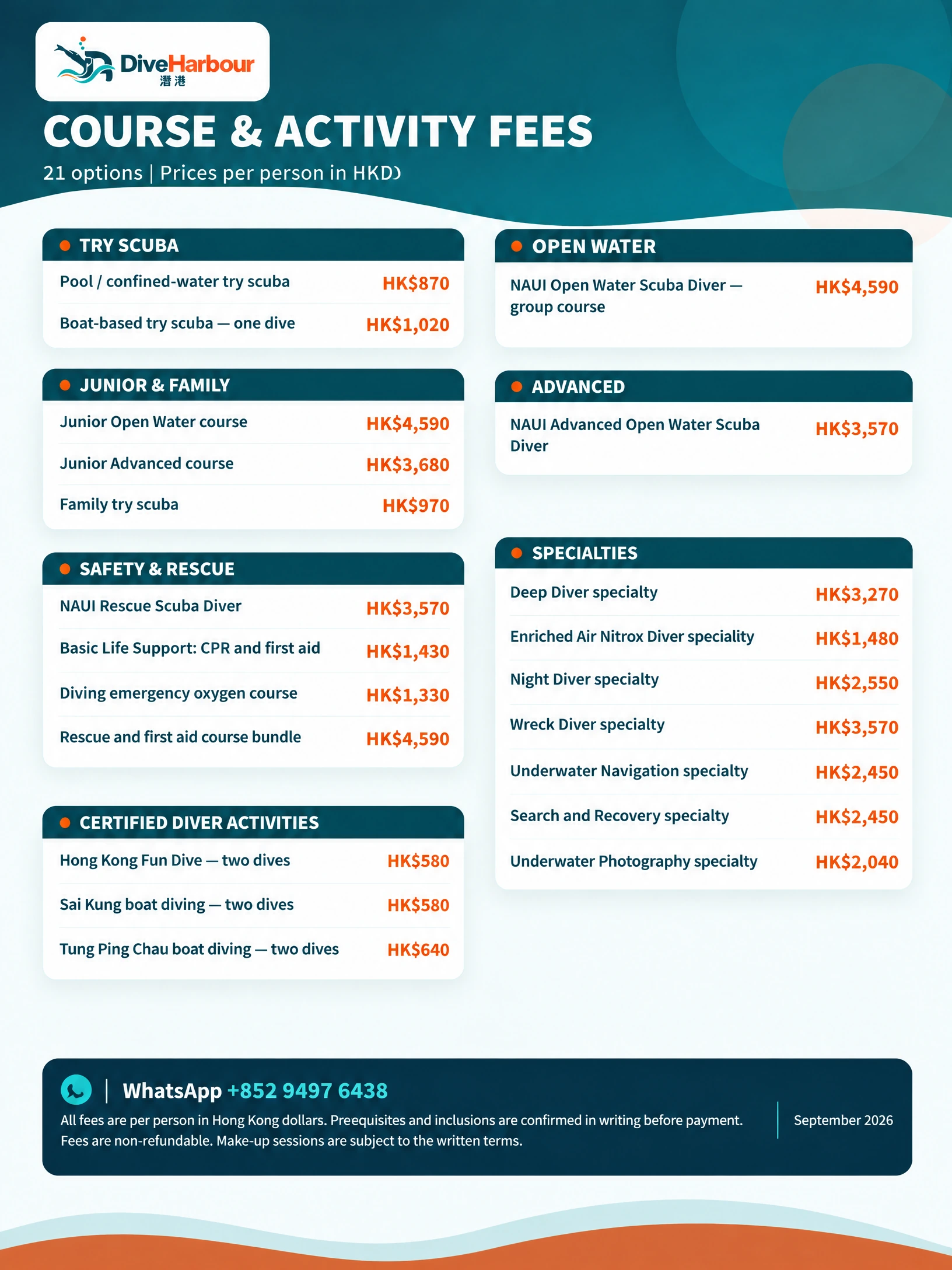
English price list for 21 DiveHarbour courses and activities, with fees per person in Hong Kong dollars
Tap the price list to view it at full size.

Plan your next dive

Course fees, clearly set out

Compare our published course and activity fees before choosing your next step. All prices are per person in Hong Kong dollars.

Before you book, we confirm prerequisites, materials, certification, equipment, venue and boat arrangements in writing. Ask us about fees for courses not listed here.

All fees are non-refundable. Make-up sessions are subject to the written terms.

Read all course fees
DiveHarbour course and activity fees per person in Hong Kong dollars
Course / activityPer person
Pool / confined-water try scubaHK$870
Boat-based try scuba — one diveHK$1,020
NAUI Open Water Scuba Diver — group courseHK$4,590
Junior Open Water courseHK$4,590
Junior Advanced courseHK$3,680
Family try scubaHK$970
NAUI Advanced Open Water Scuba DiverHK$3,570
NAUI Rescue Scuba DiverHK$3,570
Basic Life Support: CPR and first aidHK$1,430
Diving emergency oxygen courseHK$1,330
Rescue and first aid course bundleHK$4,590
Deep Diver specialtyHK$3,270
Enriched Air Nitrox Diver specialtyHK$1,480
Night Diver specialtyHK$2,550
Wreck Diver specialtyHK$3,570
Underwater Navigation specialtyHK$2,450
Search and Recovery specialtyHK$2,450
Underwater Photography specialtyHK$2,040
Hong Kong Fun Dive — two divesHK$580
Sai Kung boat diving — two divesHK$580
Tung Ping Chau boat diving — two divesHK$640