Pre-event hair record: a clear brief for coastal events
A useful pre-event hair record is a repeatable communication file, not a diagnosis. Use the same light, distance, angles, and neutral notes each time. Add the event date, outfit, desired silhouette, and firm limits, then ask a qualified provider what can be discussed. Keep any health concern and any water-activity decision with the appropriate qualified authority.
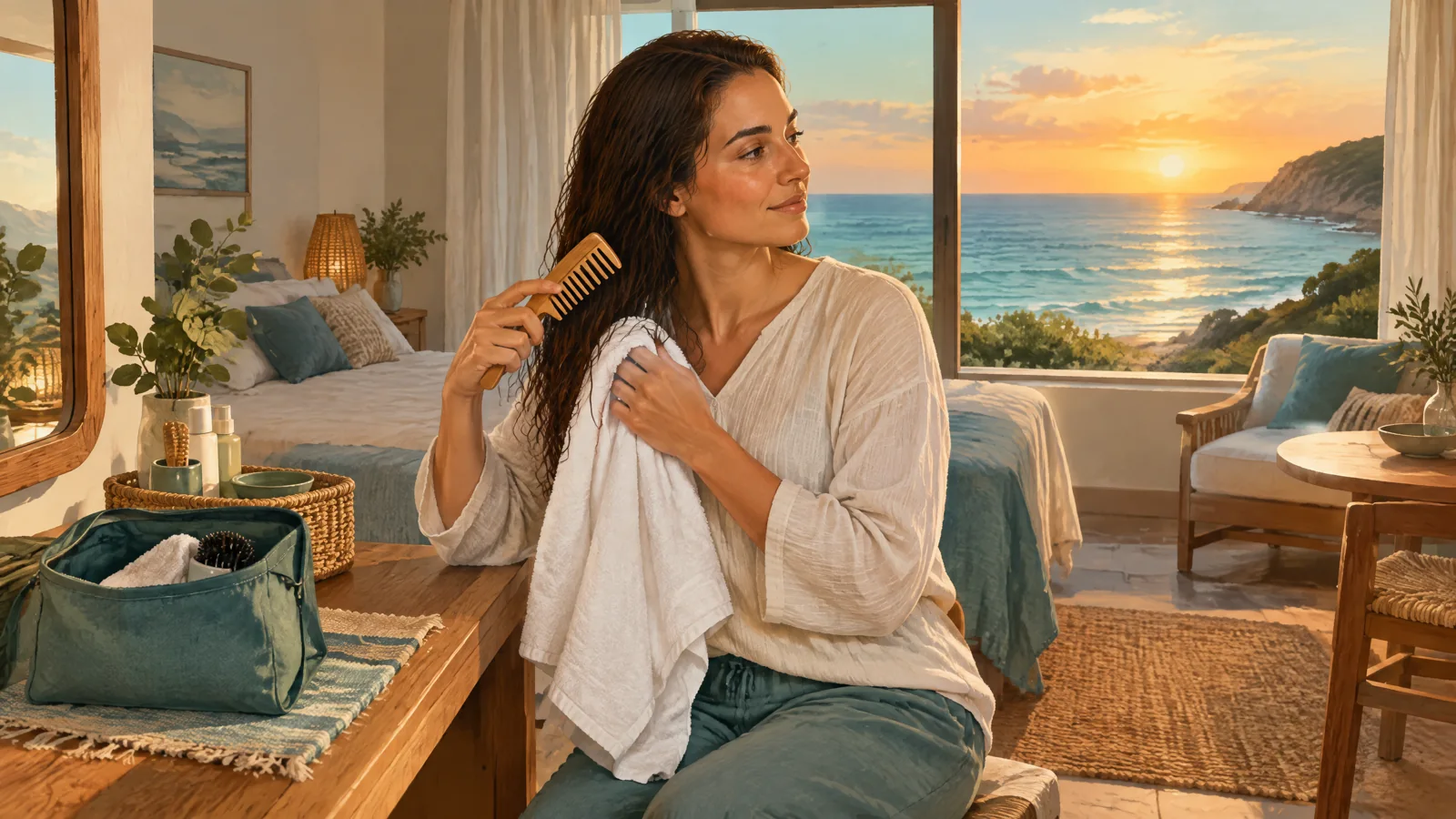
Illustration · Concept illustration of a private event hair briefing; not a DT HUB real shop, medical setting, product, client, student, or before-and-after result.
Instructor qualifications
One clear teaching conversation from first breath to next step
DiveHarbour brings together scuba teaching, swimming, lifesaving and water-rescue experience so you can ask practical questions before choosing a course.
PADI teaching backgroundTeaching experience across recognised scuba learning pathways.
SSI teaching backgroundClear explanations when you are comparing agency routes.
NAUI teaching backgroundA practical, standards-aware approach to learning and progression.
Swimming foundationWater confidence and calm, step-by-step practice matter.
Lifesaving experienceSurface awareness and prevention stay part of the conversation.
Pool rescue experienceControlled practice can build confidence before open water.
Beach rescue experienceLocal water context informs sensible preparation.
Kayak rescue experienceA wider water-safety perspective supports good judgement.
PWC rescue experienceAsk about the right learning route for your experience and goals.
Brand relationship: DiveHarbour and DT HUB share the same owner.
DiveHarbour and DT HUB are operated by the same owner. DT HUB links here are external service and product information references, not independent third-party recommendations, medical-effect claims, or water-activity safety endorsements. DiveHarbour handles scuba and shore activities; DT HUB salon, hairpiece, academy, and hair-growth services require separate enquiries.
A useful fact to keep in mind
The American Academy of Dermatology says a dermatologist will ask how long hair loss has been present and whether it came on quickly, then examine the scalp and other affected areas. [1]
Use one repeatable photo setup: indirect daylight, clean lens, no filter, and the same front, side, and back views.
Write observable notes with dates instead of diagnosing a cause from a picture.
Record the event, clothing, movement, privacy needs, and non-negotiable limits before discussing a service.
Treat health concerns and water-activity suitability as separate decisions requiring the relevant qualified authority.
Start here
Why a pre-event hair record beats a casual selfie
A pre-event hair record separates observation from interpretation
A coastal event creates a deceptively difficult briefing problem. Open shade, bright water, wind, a different camera distance, and a new parting can make the same hair look unlike yesterday’s photograph. Begin with a record that answers only what another person can compare: when it was taken, where the light came from, how the hair was arranged, and what changed since the previous entry. The aim is a shared reference, not a verdict about your hair.
The American Academy of Dermatology says a qualified dermatologist will ask how long hair loss has been present and whether it appeared quickly, then examine the scalp and other relevant areas. [1] Your file can therefore make the conversation clearer by preserving dates and neutral observations. It cannot replace an examination. If you are simply checking where to ask about an event look, a page such as kwun tong hair salon is only a service-information starting point; confirm scope, availability, and fit directly with the provider rather than treating it as independent advice.
Guide · 02
Lock the camera conditions before you capture anything
Consistency matters more than a dramatic before-and-after image
Choose a repeatable setup before taking the first image. Stand in the same room or sheltered outdoor spot, face the same direction, keep the camera at the same height, and use the same distance. Use a clean lens and ordinary camera mode. Avoid filters, portrait blur, colour changes, and strong backlight. If your event is beside the sea, add one separate context image in the actual type of light you care about, but do not mix it into the comparison set.
Take a front view, both side views, and a back view when privacy and framing allow. Keep hair in the ordinary state you want to discuss, and add a second set only when a tied, parted, or styled version is relevant. A simple note such as “left side tucked behind ear, indirect daylight, 6 November” is more useful than a caption such as “looks thinner”.
If the question is a cut or shape rather than a health concern, a service page such as haircut kwun tong may help you identify what to ask about, but it does not turn an image into a diagnosis.
Swipe the table to compare all columns.
A repeatable photo set for a coastal event brief
Record item
What to capture
Why it helps
Date and context
Date, light direction, indoor or outdoor setting, and whether hair is freshly washed or arranged
Makes later comparisons less dependent on memory
Core views
Front, left side, right side, and back at the same height and distance
Shows silhouette and parting without relying on one flattering angle
Event reference
Neckline, headwear, camera distance, and the look you will actually discuss
Connects the hair question to the coastal setting rather than an isolated selfie
Privacy note
Who may view the file and whether a provider may retain copies
Keeps sharing proportionate to the purpose
Illustration · Concept illustration of comparing light contexts; not a DT HUB real shop, medical setting, product, client, student, or before-and-after result.
Guide · 03
Describe the event, not an imagined result
Use the pre-event hair record to define the brief
A photo becomes more useful when it is paired with the situation it must serve. Write the event date, the first public moment, the last realistic reset point, the neckline or headwear, whether photographs are close or wide, and how much adjustment you are willing to make during the day. Note whether you need an appearance that can be lightly re-arranged on land, or whether you will move between indoor and outdoor scenes. Do not write that a style will withstand water, equipment, or weather unless the relevant provider has specifically confirmed the separate question.
Use two columns in your notes: “I would like to discuss” and “I do not want assumed”. The first might mention visible length, a parting, a fringe, a colour family, or how much of the face should remain open. The second might state no filter, no major length change, no chemical service before the event, or no sharing of images without permission. A page labelled men's haircut kwun tong is not a recommendation for a particular person; it is simply an example of a service category to verify against your own brief.
A practical capture sequence keeps the record manageable and prevents a photo folder from becoming a guessing exercise.
Save the date and event context before taking photographs.
Capture repeatable front, side, and back views.
Add one close detail only when it answers a specific question.
Write what you observe without naming a cause.
Mark questions that require a provider or qualified medical authority.
Guide · 04
Turn observations into questions
Keep appearance planning and health decisions in different lanes
A good record does not attempt to explain every visible difference. It records the location, timing, texture, or styling condition you noticed and leaves interpretation to the appropriate professional. For example, “more scalp visible at the crown in overhead light on 4 November” is a recordable observation; “the sea caused this” is an unverified conclusion. Include recent changes you already know about, such as a new product or a different way of tying the hair, but do not infer that one caused the other.
For an appearance conversation, ask what information the provider needs, what parts of the requested look are within the stated service scope, which assumptions affect the plan, and what alternatives exist if a limit cannot be met. A women's haircut kwun tong page can be a prompt to ask about a cut category, but it is not a personal suitability assessment. Keep your questions specific enough to answer and open enough that the provider can correct your assumptions.
Paperwork has the same separation problem. A diver medical questionnaire vs physician clearance form comparison is useful only as a reminder that an activity form and a clinician’s assessment serve different purposes. A hair photo file is neither of those documents. If you have pain, redness, sudden patchy loss, or another worrying change, stop treating the record as a styling brief and seek qualified medical assessment.
Illustration · Concept illustration of an appearance-change decision; not a DT HUB real shop, medical setting, product, client, student, or before-and-after result.
Guide · 05
Use a decision table before you ask for a service
When a pre-event hair record is ready for a provider
Before sending anything, check that each image has a date and a plain-language context. Remove duplicates that show the same angle, and keep a private original folder separate from anything you may share. Then turn the record into a short request with one main decision. “Can this outline work with this neckline?” is easier to answer than a long collage with several unrelated goals. The provider may still need an in-person look or other information, so write down what remains unconfirmed.
If colour is part of the conversation, describe the light in which you want to judge it and the amount of variation you can accept. Do not promise that a colour will resist sun, salt, chlorine, or repeated washing. The hair colour kwun tong page may help you identify a service label to ask about, while the actual scope, materials, timing, and suitability must be confirmed by the provider. Avoid using a photograph as proof that a future result is guaranteed.
For a coastal plan, keep one final line called “activity decision”. It should state which parts are ordinary shore styling and which parts involve entering water, wearing protective equipment, or relying on another person’s safety process. A how to compare dive insurance with a medical declaration guide illustrates why documents with different purposes should not be substituted for one another. Your hair record can support a conversation, but it cannot clear anyone for an activity.
Swipe the table to compare all columns.
Decision gates before sending the record
Question
Evidence to keep
Next action
Is the change visible or only a camera effect?
Repeatable views plus a plain description of the light
Retake under the same conditions before drawing a conclusion
Is this an appearance request or a health concern?
Event goal in one note and any worrying observation in another
Ask a styling provider about appearance; seek medical assessment for concern
Does water or equipment enter the plan?
A separate activity line with no assumed protection or clearance
Ask the relevant activity provider or qualified authority
What remains unknown?
A short list of scope, timing, privacy, and alternative questions
Send only the focused questions and record the reply
Guide · 06
Protect privacy and keep an exit route
A calm record leaves room to change the plan
Hair photographs can reveal more than the intended hairstyle. Keep the original files in a private folder, decide who may view them, and remove background details that disclose your home, workplace, or travel plan. If another person takes the photographs, agree whether they may retain them. When sending a selection, use descriptive filenames such as “2026-11-06-front-indirect-daylight” rather than emotional labels. A short record is easier to update, correct, and withdraw than a large album shared without a clear purpose.
Build a shore-only alternative before the event so that a styling question does not become pressure to enter the water. A hairpiece, product, or hairstyle is an appearance choice; it is not automatically waterproof, secure in water, compatible with a mask or other equipment, or evidence that an activity is suitable. Do not add glue, tie-ons, or equipment modifications on the assumption that they solve those separate issues. When suitability is uncertain, keep the plan on land and ask the relevant activity provider or qualified medical authority.
The NHS advises seeing a GP if hair loss is worrying and advises finding out what may be causing it before considering a commercial hair clinic. [2] That is a useful boundary for this record: document what you see, preserve the dates, and ask for the right kind of assessment instead of diagnosing yourself from an image. If the concern affects an event, you can still discuss a neutral appearance plan separately while keeping health decisions with the appropriate care team.
Illustration · Concept illustration of a communication toolkit; not a DT HUB real shop, medical setting, product, client, student, or before-and-after result.
A sensible next step
Take the question with you
Before your next coastal event, create one dated folder, capture the same four views in consistent light, and write one appearance goal plus one list of limits. Bring only the focused questions that remain. Treat the record as a communication aid, not a diagnosis, a promised result, or permission for water activity.
For scuba, shore, or other water activities, contact DiveHarbour through its activity information and follow the relevant safety and medical process. For salon, hairpiece, academy, or hair-growth questions, contact DT HUB separately and confirm its current scope, privacy terms, timing, and any applicable charges directly. This article does not promise an appointment, product, outcome, or activity clearance.
Questions to ask
Common questions
Should I use a filter to make the hair easier to see?
No. Keep the comparison set in ordinary camera mode with consistent light and distance. If you want a more dramatic editorial image, save it separately and label it as a context image rather than mixing it with the record.
How many photographs belong in a pre-event hair record?
Start with four core views: front, left side, right side, and back. Add one close detail only when it answers a specific question. A small, dated set is easier to compare and share responsibly than a large album.
Can a salon page tell me whether a hair concern is medical?
No. A service page can help you identify what appearance question to ask, but it is not an examination or diagnosis. If you are worried about hair loss or a scalp change, seek qualified medical assessment.
Does a good hair record mean I can use the style for diving?
No. Hair appearance planning, product handling, equipment compatibility, and individual activity suitability are separate questions. Keep an uncertain plan on shore and ask the relevant activity provider or qualified medical authority.
The AAD page states that diagnosis begins with questions about how long hair loss has been present and whether it came on quickly, followed by examination of the scalp, nails, and other areas with hair loss.
Coastal life and image planning · Updated 2026-11-06
Hair-Loss Timeline for Coastal Plans and Better Consultations
Build a hair-loss timeline with dated notes, consistent photos, and clear questions before a consultation. Keep appearance plans and dive choices separate.
Coastal life and image planning · Updated 2026-11-06
Medical-salon boundary: a coastal hair decision guide
Read this medical-salon boundary guide to separate appearance choices, neutral consultation notes, and medical or diving clearance before a coastal day.
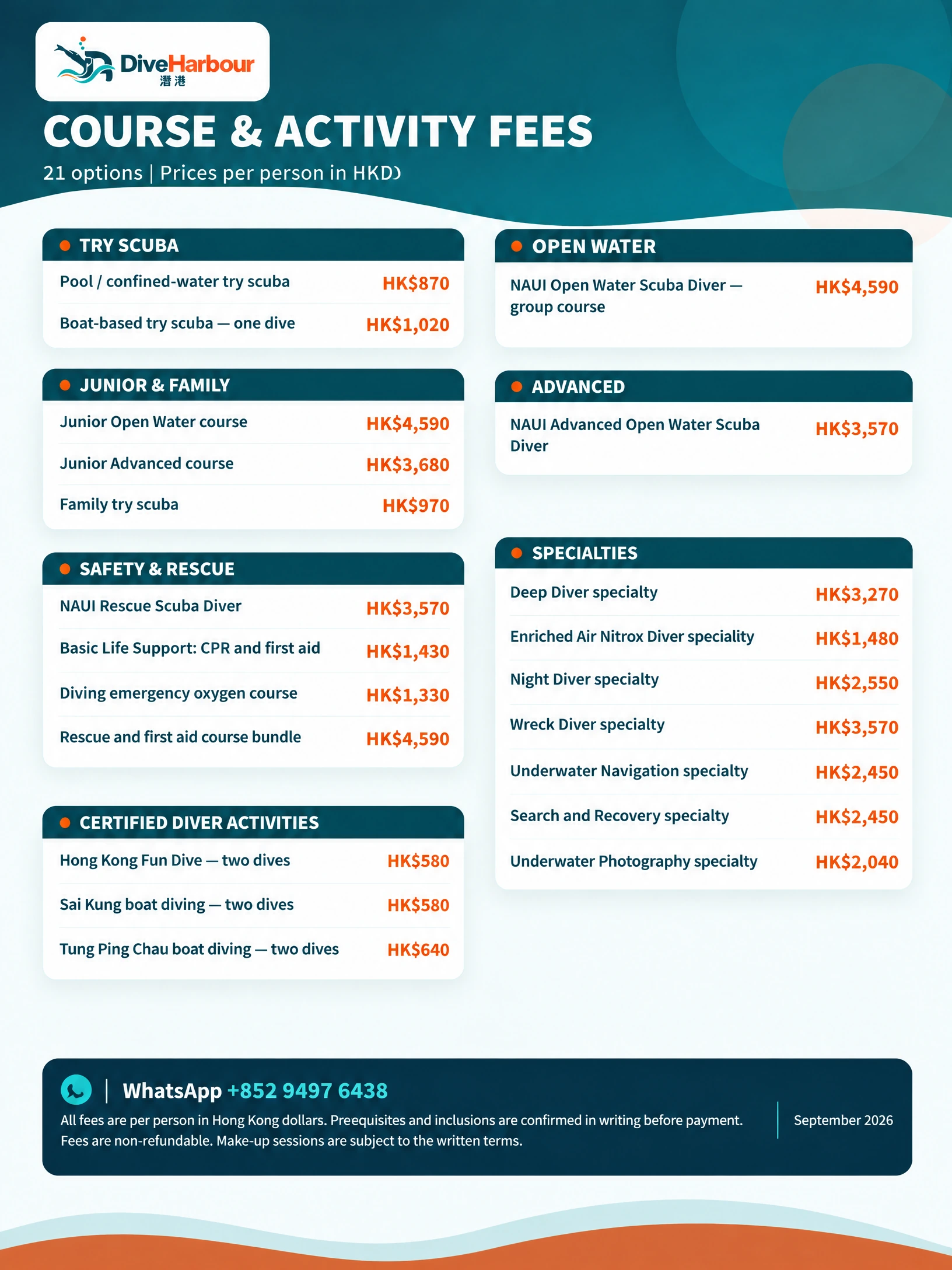
Compare our published course and activity fees before choosing your next step. All prices are per person in Hong Kong dollars.
Before you book, we confirm prerequisites, materials, certification, equipment, venue and boat arrangements in writing. Ask us about fees for courses not listed here.
Read the Sai Kung diving Hong Kong guide to learn about the setting, then explore the Sai Kung scuba diving course page. Certified divers can use our Hong Kong fun dive guide to check experience requirements and activity arrangements. Locations remain subject to weather and sea conditions.
Explore the responsibilities and entry requirements in our Divemaster course Hong Kong guide, then review the scuba instructor course Hong Kong route. Professional training differs from recreational progression, so confirm experience requirements and assessment arrangements first.