

Hong Kong coral diving no-touch guidelines
Keep fins, hands and equipment clear of coral
Coral is a living community, not a scenic surface to hold while you adjust a mask. A brief fin tap can break branches, abrade tissue or stir sediment over nearby colonies. The safest default is simple: look, do not touch. Before entering the water, check that your tank, gauges, camera straps and dangling clips are secured. Once submerged, keep your hands together or lightly folded when you are not using them, and use small, controlled fin movements rather than pushing off the reef.
Neutral buoyancy is a skill you can actively manage, not a one-time equipment setting. Notice whether your cylinder becomes lighter during the dive, whether your breathing changes when you become excited, and whether your trim leaves your fins below your body. Ask your buddy or guide to point out a safe sandy area for a short buoyancy check. If you start sinking, pause, breathe normally and add only the adjustment your training and equipment procedures call for; do not reach for coral or a rock to stop yourself.
The same rule applies to equipment. A second-stage hose, pressure gauge or camera housing can swing behind you when you turn. Slow your body before turning, scan your space and keep a comfortable buffer around the reef. If visibility drops, increase distance rather than searching by touch. Never kneel, stand or brace on a coral head, even if it looks sturdy. AFCD specifically tells divers and swimmers not to stand on fragile corals at Hoi Ha Wan Marine Park and asks visitors to follow the Marine Parks Visitors Code and the coral-site code.
Site sensitivity varies. Some locations have living coral close to the entry route, while others have sand channels, moorings or rocky patches that are better for regrouping. Follow the local briefing instead of assuming that a familiar technique is suitable everywhere. For a first local outing, compare the approach and current expectations for Hong Kong outlying-islands diving and ask what areas are deliberately kept clear of fins or anchors.
A useful pre-dive agreement is a three-part call: stop, point, and move. If one diver sees a camera strap, fin or silty kick approaching coral, signal early; the other diver stops, identifies the obstacle and backs into open water. This protects the habitat without grabbing a person or startling wildlife. It also makes the group quieter and more predictable, which improves awareness for everyone.
- Secure every dangling item before descent and re-check it after the first few minutes.
- Use sandy or open-water space for buoyancy adjustments, regrouping and equipment checks.
- If contact happens accidentally, move away gently; do not touch the damaged area or try to repair it.

Responsible underwater photography at Hong Kong island dive sites
Compose calmly without chasing or disturbing marine life
A responsible photograph starts before you approach the subject. Set exposure, focus, strobes and wrist lanyards in open water or on the boat. Decide whether the shot is worth changing your position; no image is worth a fin strike, a handhold or a cloud of sediment. When you see a fish, nudibranch or coral scene, stop at a distance, stabilise your breathing and let the subject’s behaviour guide the encounter.
Keep a clear escape route behind and beside you. Do not wedge your knees into the bottom to hold a composition, and do not use coral as a camera rest. If the subject turns away, let it go rather than following it around a colony or into a crevice. Avoid blocking another diver’s view: take a few frames, then yield the space. A calm photographer often gets a more natural image because animals are not responding to repeated pursuit.
Good buoyancy also improves image quality. A level, streamlined body reduces accidental contact and keeps suspended particles out of the frame. Use gentle fin strokes away from the reef and avoid rapid arm movements. If a current moves you, widen your distance and follow your guide’s plan rather than grabbing a fixed object. Never move an animal, clear living growth for a cleaner background, feed wildlife, or place a prop in the scene. These actions change behaviour and can harm a habitat that other divers came to observe.
For photographers learning local conditions, learn scuba diving on Hong Kong Island can be a useful starting point for discussing buoyancy, trim and site etiquette before adding a camera. A refresher is sensible if you have not dived recently: practise hovering, turning and stopping without a camera first, then add the housing only when the basic movement feels automatic.
Share the final image with context rather than claiming a precise species or location you cannot verify. A caption such as ‘illustrative coral scene from a Hong Kong dive’ is more honest than an overconfident identification. If you notice coral stress, litter or a damaged mooring, tell the guide or operator after the dive and record the location only if doing so is safe and useful.
- Prepare camera controls before approaching living habitat.
- Leave space to turn, retreat and allow another diver to pass.
- Never touch, reposition, feed, chase or surround marine life for a photograph.

Plan a lower-impact dive in Hong Kong
Brief your buddy and follow local site requirements
Planning begins with the site, not the camera. Ask where coral is concentrated, where the group will descend, how the boat will approach, and which areas are off-limits. Hoi Ha Wan Marine Park covers about 260 hectares, so a map, briefing and clear meeting point matter even in a sheltered bay. Marine-park boundaries and visitor requirements are not interchangeable with rules at a shore site outside the park; check the current local instructions for the exact area.
Use a short buddy briefing that covers four decisions: who leads, where the safe regrouping space is, what signal means ‘move away from coral’, and what to do if visibility or current changes. Agree that either diver can end a photo stop without debate. If you are shore diving, review entry and exit routes, tidal or wave conditions and whether a crowded shallows area makes a different site more considerate. For route ideas and access questions, see Sai Kung shore diving and discuss the day’s conditions with the local team.
Follow the guide, boat crew and marine-park signage even when a map or social post suggests a different route. Some activities may require permission, designated access or special care around moorings and protected habitat. Do not anchor on coral or ask a skipper to approach a fragile patch simply for a better drop point. On a boat outing, Hong Kong boat diving planning should include the boat’s briefing, entry order, surface-interval arrangements and a plan for keeping fins and cameras controlled on descent.
- Check the exact site boundary, access method and current visitor code before the day.
- Choose a route with open-water regrouping points rather than improvising over coral.
- Treat a guide’s ‘no-go’ instruction as part of the conservation plan, not a suggestion.

Choose a reef-friendly dive format
Match the plan to your control, experience and conditions
The most sustainable format is the one that lets you remain in control without crowding habitat. A new diver may benefit from a calm, supervised setting where buoyancy and fin technique can be corrected before visiting a coral site. A certified diver returning after a long break may need a refresher and a conservative route rather than an ambitious photographic objective. An experienced photographer still needs to adapt to visibility, current, group size and the guide’s access limits.
When comparing beginner-friendly dive sites Sai Kung, ask practical questions rather than relying on a label: Is there a sandy area for skills? How exposed is the entry? Where does the group pause? What is the expected visibility? A site that is beautiful but cramped, surge-prone or too busy may create more contact risk than a less dramatic site with space to hover.

A simple decision checklist for divers and photographers
Pause before contact becomes damage
Use this sequence whenever you approach a coral scene: stop your forward movement, check depth and trim, scan your fins and hoses, confirm a clear retreat, then compose. If any answer is uncertain, back away and reset in open water. This pause is especially valuable when surge, low visibility or excitement makes your body position less predictable.
After the dive, inspect your gear for loose clips and note what caused any near miss. A short debrief can improve the next outing: perhaps the camera lanyard needs shortening, the route needs a wider turn, or the group needs more space between photographers. Conservation is built from these small operational choices, not from a single perfect photograph.
- Stop before reaching for support.
- Reset in open water when trim, visibility or current changes.
- Share near misses constructively so the next briefing is more specific.

Respectful diving is the best local welcome
Leave the site calmer than you found it
Hong Kong’s coral areas reward patience: a slow observer notices texture, colour, small animals and relationships that a rushed diver misses. Your group can help by keeping noise and movement low, giving wildlife room, and accepting that conditions may change the route or cancel a photo stop. The goal is not to collect proof of proximity; it is to return without adding pressure to a living place.
Before booking, explain your experience, camera setup and conservation priorities. Ask how the team handles site briefings, group spacing and changing conditions. Then arrive ready to follow the plan. That combination of honest preparation and flexible behaviour is the practical meaning of no-touch diving in Hong Kong.
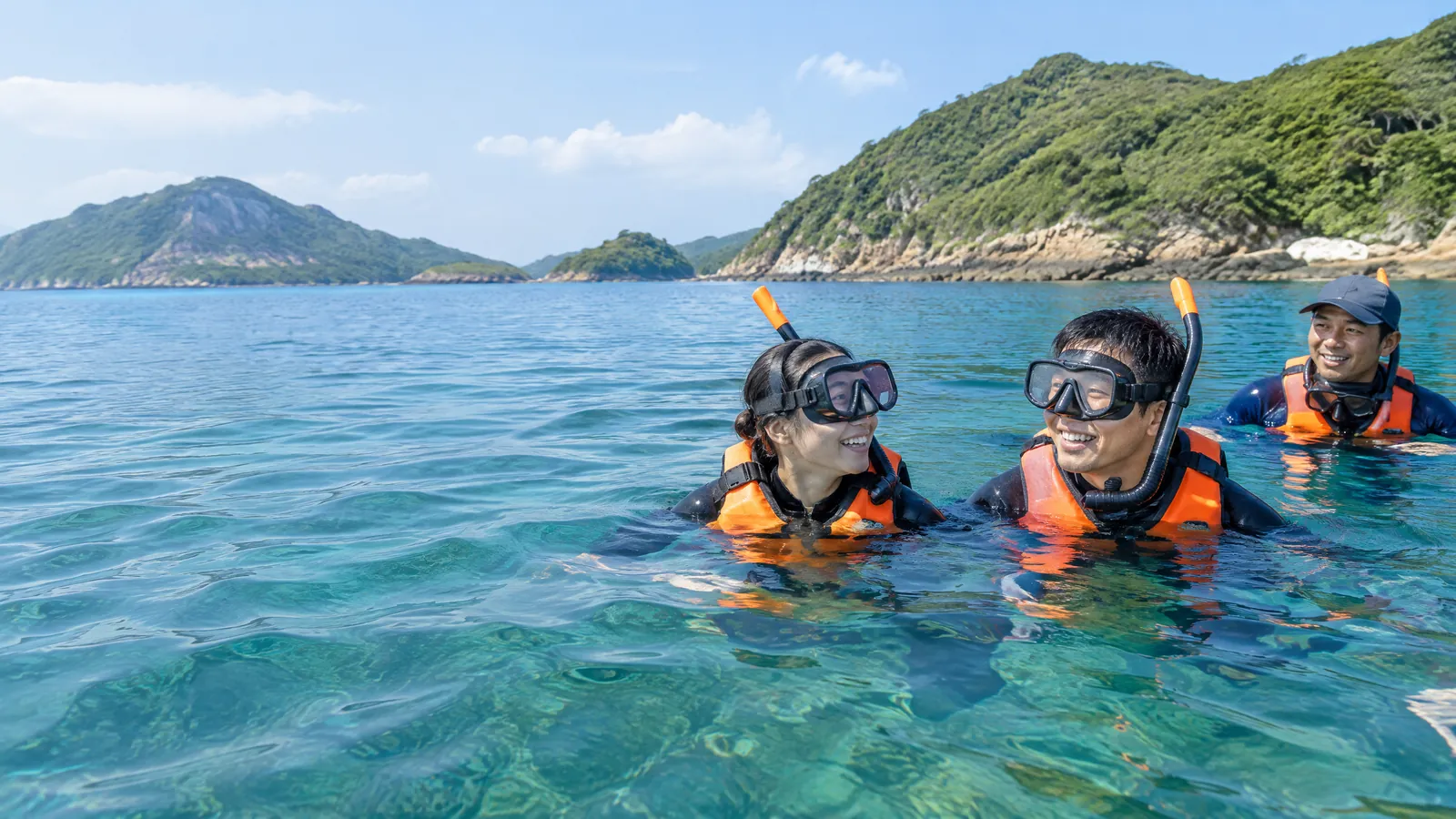
Compare lower-impact ways to plan a Hong Kong coral dive
| Option | Best for | Check |
|---|---|---|
| Supervised calm-water practice | New or returning divers building buoyancy | Open space for trim and no-contact skills |
| Shore dive with a clear route | Confident divers who can manage entry and exit | Tide, surge, access and sandy regrouping points |
| Boat dive with guide briefing | Groups visiting a defined coral site | Mooring rules, descent plan and group spacing |
| Photography-focused session | Divers already stable without a camera | Escape route, time limits and no wildlife manipulation |
Hong Kong coral diving no-touch guidelines — common questions
Why should divers avoid touching coral in Hong Kong?Toggle answer
Coral can be damaged by contact from hands, fins or equipment, even when it appears hard. Touching may also disturb attached marine life. Careful buoyancy, slow fin movements and appropriate distance help protect the reef and reduce avoidable disturbance during a dive.
How can I take underwater photographs without harming a reef?Toggle answer
Set up your camera before approaching the subject, maintain neutral buoyancy and leave enough space to turn or move away without contact. Do not hold coral, reposition animals or chase wildlife. A guide briefing can clarify site conditions and any local requirements before entering the water.
What should I do if my fin accidentally touches coral?Toggle answer
Move away gently and stabilise yourself in open water; do not touch the coral to inspect or repair it. Tell the guide after the dive if there may be damage, then review your trim, weighting, camera setup or route so the near miss is less likely to recur.
Do marine-park requirements apply to every Hong Kong dive site?Toggle answer
No. Requirements depend on the exact location and its designation. Check the current local briefing, signage and official guidance for the site you will visit. In a marine park, follow the Marine Parks Visitors Code and the relevant coral-site code, as well as your guide’s directions.
Are dive or photography fees refundable if conditions change?Toggle answer
Fees are non-refundable unless the written booking terms say otherwise. Make-up sessions or a new date are available only where those written terms permit them; never assume a guaranteed reschedule. Confirm weather, transport, equipment and cancellation conditions before payment.
Take the question with you
Make your next Hong Kong coral dive a calm observation rather than a close-contact challenge: secure your gear, practise neutral buoyancy, brief your buddy, keep a retreat route and accept the site’s limits. If you want to discuss a suitable shore, boat or photography approach, message DiveHarbour with your certification level, recent diving experience and camera setup so the team can help you plan a considerate next step.
Sources worth checking
- AFCD: Hoi Ha Wan Marine Park
AFCD states that Hoi Ha Wan Marine Park covers about 260 hectares, instructs divers and swimmers not to stand on fragile corals, and directs visitors to follow the Marine Parks Visitors Code and coral-site code.
- AFCD: Marine Park Visitor Service
AFCD provides marine-park visitor activity and restriction information, reinforcing that site-specific requirements should be checked before entering the water.
Useful next reads for your plan
If you are still comparing routes, these related pages give you practical questions to bring into your next conversation with an instructor.
Put your plan into practice
Useful planning guides
Responsible Dive Day Checklist for Hong Kong
Use this responsible dive day checklist worksheet to compare practical options, check key decision points, and confirm current details with DiveHarbour.
responsible dive day checklist
