

A useful fact to keep in mind
The Agriculture, Fisheries and Conservation Department says Tung Ping Chau Marine Park was designated in November 2001 and occupies about 270 hectares.
Check the sourceShore dive versus boat dive packing list Hong Kong
What changes between beach entry and boat travel
The most useful way to pack is to separate dive equipment from travel and access items. On a shore dive, you may walk from a vehicle or changing point to the water, so every extra item becomes something to carry over uneven ground. On a boat, the entry may be simpler, but your bag shares limited deck space, the journey adds spray and sun, and loose belongings can become a nuisance. Pack for the complete outing rather than only the minutes underwater.
For a shore entry, start with footwear that is secure on wet rocks or a slipway, a towel, drinking water, sun protection and a small bag for wet kit. Bring a change of clothes if you expect to travel home in damp swimwear. A boat trip still benefits from those basics, but replace bulky luggage with one soft, clearly labelled bag and a small dry pouch for phone, wallet, identity document and medication. Never assume the boat has a safe place for valuables.
The site and your experience also matter. A confident diver carrying personal equipment may choose a compact mesh bag; a newer diver may need more room for a light layer, comfort items and a checklist. If you are deciding between routes, read how to choose a beginner dive site with mild currents in Hong Kong before buying specialist accessories. Packing cannot compensate for a site that is unsuitable for your training, fitness or the day's conditions.
A useful rule is to keep anything essential to your wellbeing on your person or in your personal bag, while confirming what the operator supplies. Ask whether tanks, weights, exposure suit, BCD, regulator, mask and fins are included; do not duplicate heavy gear unnecessarily. Your own well-fitting mask, prescription solution, computer or surface marker may be worth bringing, but only if you already know how to use it and can secure it properly.
- Shore priority: stable footwear, manageable carries and a dry place for the return journey.
- Boat priority: compact storage, spray protection, sun cover and a spare warm layer.
- Both: water, medication, identification, a towel and confirmation of supplied equipment.

What to pack for a Tung Ping Chau dive boat trip
Keep your personal kit dry, compact and easy to find
For what to pack for a Tung Ping Chau dive boat trip, begin with the practical journey details: meeting point, boarding time, estimated return, mobile contact and the operator's weather plan. Save these offline because reception may be inconsistent. Put a screenshot of the meeting instructions in your phone and write the emergency contact on paper inside your dry pouch. If you are joining a group, add a name tag to your bag so similar black gear bags do not get mixed up.
Tung Ping Chau is a protected setting, not simply a backdrop for a dive. The Agriculture, Fisheries and Conservation Department says the Tung Ping Chau Marine Park was designated in November 2001 and occupies about 270 hectares. The Agriculture, Fisheries and Conservation Department says Tung Ping Chau Marine Park was designated in November 2001 and occupies about 270 hectares. That figure is a useful reminder to leave room for responsible behaviour: pack a reusable bottle, carry every wrapper home, and avoid collecting shells, coral or rocks. Observe the briefing and keep equipment, fins and hands away from the seabed and marine life.
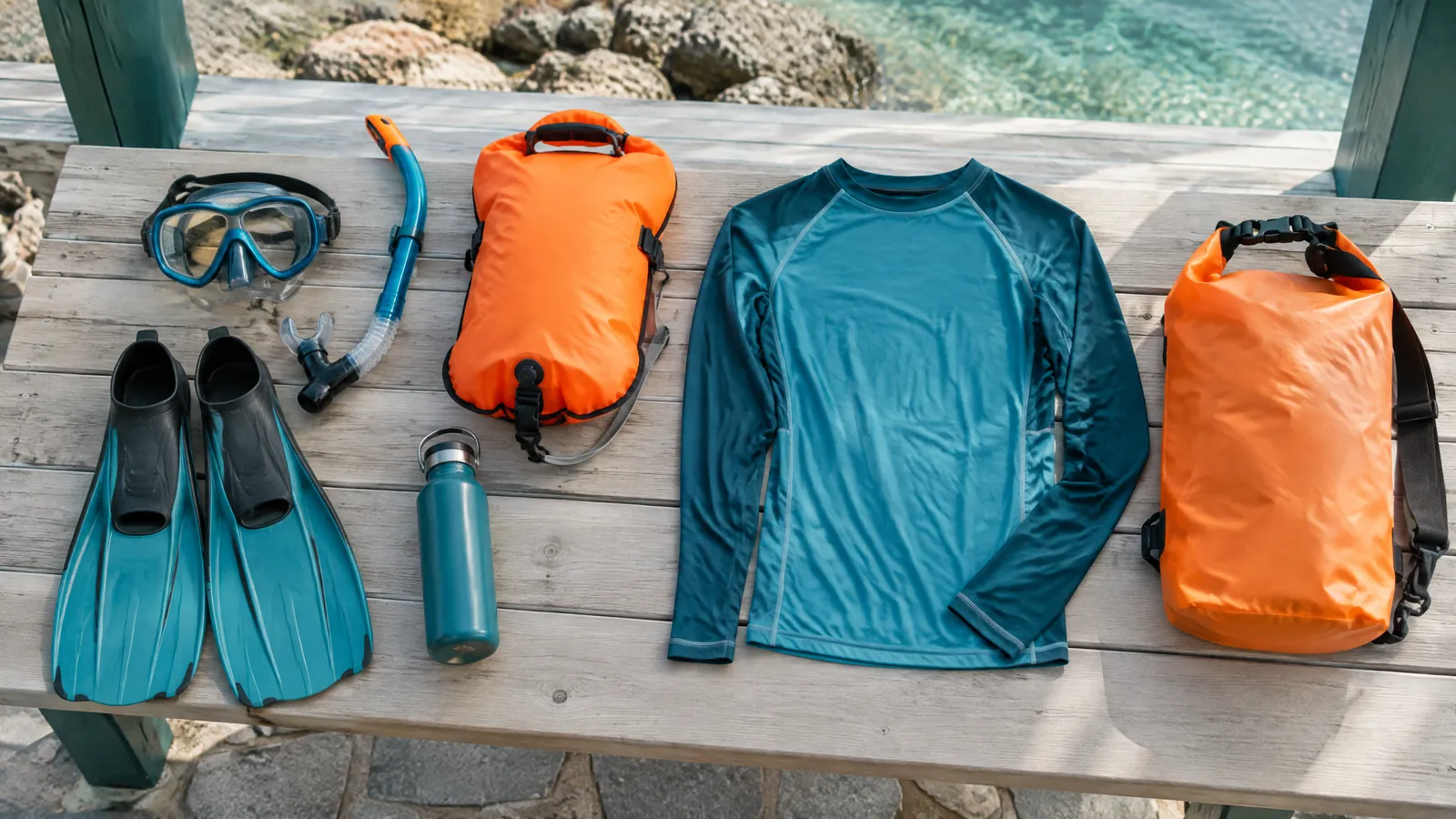
Your boat-day personal kit can be divided into three pouches. The first is a dry pouch for phone, wallet, keys, identity document and medication. The second is a comfort pouch for sunscreen, lip balm, sunglasses, hat, water and a light windproof layer. The third is a wet pouch for swimsuit, towel and a plastic-free solution such as a sealable waterproof bag that you will take home and empty. Keeping categories separate makes the return trip faster and protects electronics from a wet towel.
Do not bring valuables that you do not need, glass containers, loose jewellery or a large hard suitcase. A dry bag is useful, but it is not automatically a guaranteed waterproof locker: close it correctly and keep it where the crew directs. Bring snacks that can tolerate heat and movement, but check whether the operator or vessel has restrictions. If you are prone to seasickness, discuss suitable options with a pharmacist or clinician in advance and follow the product directions; do not wait until boarding to experiment.
- Offline essentials: meeting point, contact number, return plan and weather arrangement.
- Three-pouch system: dry valuables, comfort items, and wet clothing.
- Conservation-minded extras: reusable bottle and a bag for taking all rubbish home.

Before leaving for a Hong Kong dive
Check the meeting details, weather and equipment plan
The evening before, compare the booking message with your route. Confirm the exact pier or shore meeting point rather than relying on the place name alone, allow time for transport delays, and check whether parking, changing space or a toilet is available. On a boat day, ask when late arrivals can no longer board. On a shore day, ask where equipment is collected and how far it must be carried. These questions prevent packing decisions from being based on an imaginary layout.
Check the marine forecast and the operator's final go/no-go message. Wind, rain, visibility, swell and current can change what is comfortable even when a calendar date looks ideal. Do not pressure a crew to depart because you have already travelled. If the plan changes, keep your dry pouch and medication with you, and ask what happens to equipment collection, transport and booking terms. A revised site may require different footwear or a lighter personal load.
Make a simple equipment conversation before you leave: what is supplied, what is sized on site, what must be brought personally, and what is charged separately. If you are considering a Tung Ping Chau diving trip, confirm the planned route, number of dives, tank configuration and whether there is a surface interval on the vessel. The trip page may help you frame questions, but the current operator confirmation controls the day's practical arrangements.
Finally, tell the organiser about relevant experience, recent diving, comfort in current or boat entries, and any health concern that may affect participation. Do not self-diagnose or conceal a problem to keep a booking. General packing advice is not medical clearance; seek individual clinical advice when appropriate. A calm, honest equipment and ability check is more valuable than a new gadget.
- Route check: exact meeting point, boarding cut-off, transport and facilities.
- Condition check: forecast, operator decision, alternate plan and personal comfort.
- Equipment check: supplied items, personal items, sizing, extras and current costs.

A practical packing sequence for dive day
Pack by the moment you will need each item
Pack the night before, then run a second check just before leaving. Put the items needed before boarding at the top: phone, booking message, identity document, water and sun protection. Keep your mask case and any personal dive computer protected but accessible. Put wet-changing items together rather than scattering them through the bag. This sequence reduces rummaging on a crowded deck and helps you notice what is missing before the vehicle departs.
For a shore dive, test the weight of the packed bag by walking a short distance in the footwear you plan to use. If the route includes rocks, stairs or a beach, a compact load is kinder to your balance and leaves one hand available for stability. For a boat dive, use soft bags that can be tucked under a bench or in a designated area. Follow crew instructions about where tanks, fins and personal bags go; an orderly deck is a safety feature, not merely good manners.
After the dive, rinse or stow equipment only where directed, keep wet items contained, and check the area around your seat before disembarking. A brightly coloured tag or strip of tape can identify your bag without adding bulk. Before travelling home, drink water, change into dry clothing if possible and keep your phone in the dry pouch until you are well away from spray.

Choosing the right trip format
Match the packing burden to your group and experience
A shore dive can suit someone who values a simpler journey and does not mind an access walk. A boat dive can open a wider choice of sites and reduce the need to carry equipment along a shoreline, but it adds boarding, sea travel and shared-space considerations. Neither is automatically easier. Consider your confidence entering and exiting water, tolerance of boat motion, ability to carry a bag, and how much time you want to spend travelling compared with diving.
If you are comparing a group departure with a private booking, how many people for a private dive boat charter in Hong Kong is useful for thinking about space and coordination. A smaller group may make personal storage and communication simpler, while a larger group can require earlier arrival and clearer labelling. Ask about the actual vessel, storage arrangement and boarding process rather than inferring them from the word “private”.
For a broader overview of routes, Hong Kong boat diving can help you distinguish a day plan from a packing plan. You can also review Tung Ping Chau diving for site context before you confirm. Use the following quick comparison before you confirm:
After packing: a calm final check
Leave space for changing conditions and good conservation
A good final check is short enough to use every time. Ask: can I identify my bag, keep my valuables dry, access my medication, and carry everything without losing balance? Have I confirmed what is supplied and what happens if weather changes? If any answer is no, fix that before leaving. Avoid adding equipment simply because another diver carries it; familiarity and fit matter more than a long list.
Respect the destination by using established access points, following crew and park guidance, and taking every item home. Never touch coral or feed wildlife for a photograph. The AFCD description of Tung Ping Chau highlights its rich coral communities and other marine life, so a thoughtful packing list should support neutral buoyancy, secure equipment and minimal contact. The best souvenir is a safe return with the site no less healthy than you found it.
If you remain unsure, message the operator with a photo of your packed personal kit and ask what can be left behind. Confirm the booking, price inclusions, cancellation terms and equipment plan in writing. That small conversation is often more useful than buying another dry bag.

Shore and boat packing priorities at a glance
| Option | Best for | Check |
|---|---|---|
| Shore dive | Divers comfortable with an access walk | Footwear, compact load, changing and wet-kit plan |
| Shared dive boat | Those wanting boat access to selected sites | Meeting point, spray protection, storage and boarding time |
| Private or small-group boat | Groups wanting simpler coordination | Actual vessel space, group size, route and weather terms |
| Tung Ping Chau day trip | Divers planning a longer island outing | Operator confirmation, marine-park care, travel snacks and dry pouch |
Shore dive versus boat dive packing list Hong Kong — common questions
What is different about packing for a shore dive and a boat dive in Hong Kong?Toggle answer
A shore dive usually means carrying equipment over an entry route, so compact packing and suitable footwear matter. A boat dive adds travel comfort: protect valuables from spray, bring sun protection and a light layer, and keep personal items secured rather than loose on deck.
What should I confirm before a Tung Ping Chau boat dive?Toggle answer
Confirm the meeting point, departure details, weather arrangements and which diving equipment is available or expected. Pack only personal essentials you can manage safely, and ask the operator about site-specific access, storage and timing considerations before travelling.
Do I need to bring my own full set of scuba equipment?Toggle answer
Not necessarily. Ask what the current booking includes, including tanks, weights, exposure suit, BCD, regulator, mask and fins. Bring personal items that fit well or that you already use confidently, and confirm any rental or equipment charges in writing before departure.
What happens if the weather changes after I have packed?Toggle answer
Follow the operator's final decision and do not pressure a crew to depart. Ask how cancellation, an alternate site or a new date is handled under the written booking terms. Fees are non-refundable unless the applicable written terms say otherwise; make-up sessions or rescheduling are available only where those written terms permit them, with no guaranteed replacement date.
Can I leave valuables on the dive boat?Toggle answer
Bring only what you need, place essential valuables in a labelled dry pouch, and follow the crew's storage instructions. A dry bag protects against spray but is not a guaranteed locker, so do not bring irreplaceable jewellery, large amounts of cash or unnecessary electronics.
Take the question with you
Pack for the access route, the journey and the return home—not only the underwater portion. Confirm the meeting point, conditions, supplied equipment and written booking terms, then keep your personal kit compact, dry and easy to identify. For a Tung Ping Chau plan, allow the marine-park setting to shape your choices: secure equipment, carry reusable essentials and leave nothing behind. If you share your experience level and proposed route with the operator, you can refine this list before travel.
Sources worth checking
- Tung Ping Chau Marine Park — Agriculture, Fisheries and Conservation Department
The AFCD states that Tung Ping Chau Marine Park was designated in November 2001 and occupies about 270 hectares; it also describes rich coral communities and other marine life.
- Tung Ping Chau — Hong Kong Government
The Hong Kong Government visitor page identifies the waters around Tung Ping Chau as the Tung Ping Chau Marine Park and notes coral biodiversity.
Useful next reads for your plan
If you are still comparing routes, these related pages give you practical questions to bring into your next conversation with an instructor.
Put your plan into practice
Useful planning guides
Hong Kong shore dive logistics: a practical day plan
Use this Hong Kong shore dive logistics worksheet to compare practical options, check key decision points, and confirm current details with DiveHarbour.
Hong Kong shore dive logistics
