SAFE LEARNING · HAPPY EXPLORING
DiveHarbour

DiveHarbour · Practical guide

Neckline hair brief for a Waterfront Evening Event

A useful neckline hair brief begins with the outfit, then records the jewellery, preferred hair volume, makeup boundaries, and the camera views that matter. Treat every service label as a prompt for questions, not a promise. Test the look in ordinary reference photos, confirm scope and timing with the chosen provider, and keep any water activity decision separate from shore-dinner styling.

By DiveHarbour8 min read
Ask about diving courses or coastal trip planning Read the guide
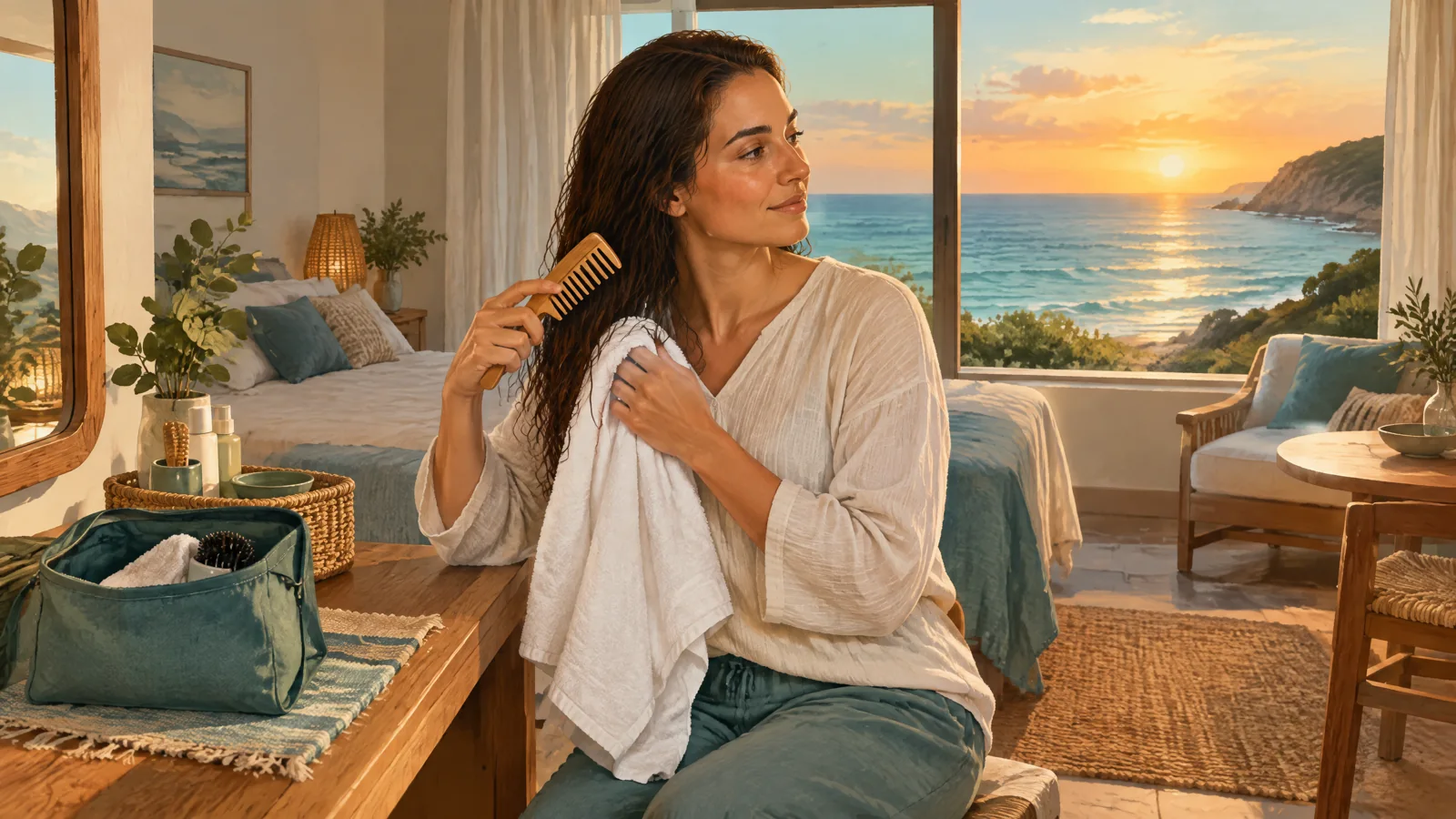
neckline hair brief notes beside a waterfront evening outfit, concept illustration
Illustration · Concept illustration of organising an outfit-led consultation brief; not a real DT HUB store, medical setting, product, client, student, or before-and-after result.

Instructor qualifications

One clear teaching conversation from first breath to next step

DiveHarbour brings together scuba teaching, swimming, lifesaving and water-rescue experience so you can ask practical questions before choosing a course.

  • PADI teaching backgroundTeaching experience across recognised scuba learning pathways.
  • SSI teaching backgroundClear explanations when you are comparing agency routes.
  • NAUI teaching backgroundA practical, standards-aware approach to learning and progression.
  • Swimming foundationWater confidence and calm, step-by-step practice matter.
  • Lifesaving experienceSurface awareness and prevention stay part of the conversation.
  • Pool rescue experienceControlled practice can build confidence before open water.
  • Beach rescue experienceLocal water context informs sensible preparation.
  • Kayak rescue experienceA wider water-safety perspective supports good judgement.
  • PWC rescue experienceAsk about the right learning route for your experience and goals.

Brand relationship: DiveHarbour and DT HUB share the same owner.

DiveHarbour and DT HUB are operated by the same owner. DT HUB links in this article are references to external service and product information, not independent third-party recommendations, medical-effect claims, or endorsements of water-activity safety. DiveHarbour handles diving and coastal activities; DT HUB salon, hairpiece, academy, and hair-growth services must be checked with the relevant provider separately.

A useful fact to keep in mind

Proportion describes the spatial or size relationship of parts to one another and to the whole garment or ensemble, so a useful brief should relate the neckline, accessories, and hair outline to the complete outfit.

Check the source
Key takeaways

Four points to carry forward

  • Photograph the full outfit, neckline, jewellery, and intended setting before asking for a look.
  • State what should be most visible and what must stay restrained, including hair volume and makeup boundaries.
  • Ask the provider to confirm scope, timing assumptions, changes, and any separate charges before agreeing.
  • Keep the dinner look, product handling, and any boat or water activity as separate decisions.
Start here

Neckline hair brief: start with the outfit

Turn the waterfront dinner look into a readable brief

Begin with the garment you will actually wear, not a saved hairstyle. Photograph the front, side, and back of the outfit in neutral light. Note whether the neckline is high, open, asymmetric, draped, or sharply structured, then mark the part you want hair to reveal. This is more useful than saying only “elegant” or “natural”. Clothing design treats proportion as the relationship between parts and the whole garment or ensemble, so the brief should describe how neckline, hair, and accessories need to sit together. [1]

If your first idea is described with a menu label such as korean perm hong kong, keep the label as a question rather than a final answer. Ask what the provider means by the term, which parts of the look it covers, and whether the service is suitable for your current hair and event plan. A label cannot tell the provider how much neck, shoulder, earring, or fabric detail you want visible.

A strong opening sentence is: “I want the neckline and earrings to remain visible, with movement at the back, and I can accept only a short shore-side reset before dinner.”
Guide · 02

Read the neckline as a line, not a trend

Describe what the camera should notice first

Use plain visual language before naming a hairstyle. Say whether you want the eye to travel down a central opening, across a broad shoulder line, around a curved edge, or toward one asymmetric detail. Then decide what should carry emphasis: the face, necklace, neckline, sleeve, or the overall silhouette. Balance and emphasis are design tools, not rules about which shape is universally flattering; your brief should record your preference and the garment’s structure. [1]

A provider may describe a similar result with a term such as japanese perm hong kong. Ask how that wording relates to your outfit-led request, what preparation is assumed, and whether the proposed finish changes the amount of hair around the collar or shoulder. If you have more than one event, identify the evening that matters most instead of asking for a vague look that must suit every setting.

Swipe the table to compare all columns.

Outfit-led briefing grid for a waterfront dinner
What to recordUseful descriptionWhy it mattersQuestion to ask
NecklineHigh, open, curved, square, draped, or asymmetricSets the visible line around the neck and shouldersWhich areas should remain uncovered?
JewelleryPiece, length, shine, movement, and side to showAdds emphasis near the face and collarCan the hair touch or cover it?
Hair outlineFront, side, back, volume, texture, and movement toleranceShows how the look should relate to the garmentWhat can be adjusted if the outfit changes?
Makeup boundaryPreferred finish, colours, sensitivities, and exclusionsPrevents a broad mood word from hiding a firm limitWhat is in scope and what needs another specialist?
Write one priority and one restraint: “Show the square neckline” plus “do not cover the pendant with front volume.”
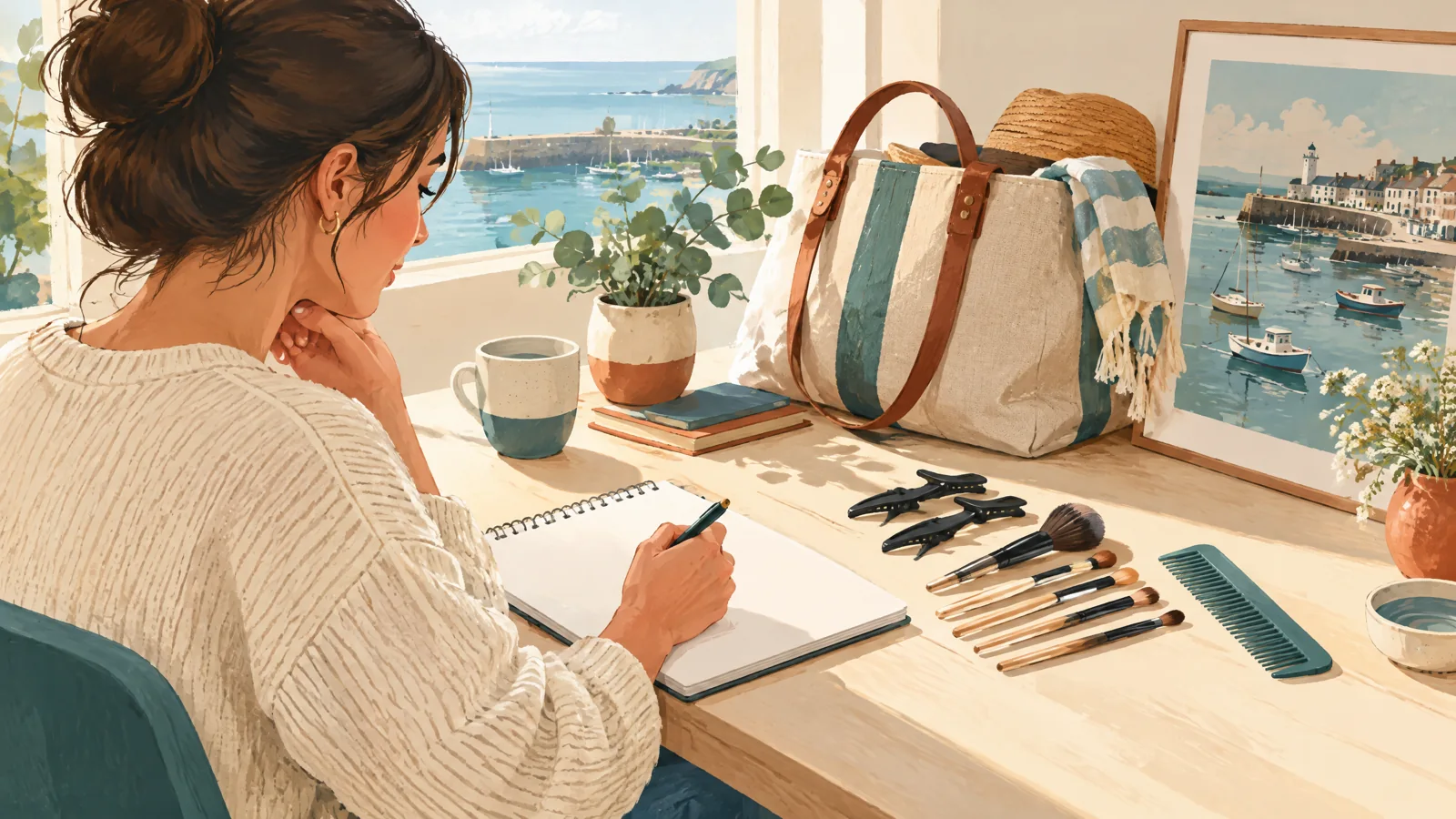
Planning neckline, jewellery, and colour references for a coastal dinner, concept illustration
Illustration · Concept illustration of comparing clothing and accessory references; not a real DT HUB store, medical setting, product, client, student, or before-and-after result.
Guide · 03

Coordinate jewellery, hair volume, and makeup limits

A neckline hair brief that includes real limits

Jewellery changes the amount of visual information around the neck. Send a photo of the actual earrings and necklace, or state that they are still undecided. Explain whether hair may touch the jewellery, whether one ear should remain clear, and whether you prefer a smooth outline or visible texture. If a menu uses a term such as mens perm hong kong, do not assume the label answers those questions; describe the desired outline first and ask how the provider would interpret the term for your hair and clothing.

Makeup boundaries deserve the same clarity. Record products, colours, finishes, or techniques you do not want, along with anything that must remain comfortable for the whole dinner. You can ask for a restrained, defined, or low-contrast result without asking for a promised effect. Keep the request about appearance and communication. It is not a diagnosis, a treatment plan, or a reason to infer what your scalp or hair needs.

  • Jewellery: list what must be visible, covered, or left out.
  • Hair: state the preferred front outline, side exposure, and back volume.
  • Makeup: note finishes, colours, sensitivities, and techniques to avoid.
  • Clothing: identify straps, collars, drape, fastenings, or fabric that cannot be disturbed.
  • Reset: say whether you can make a small shore-side adjustment before photographs or dinner.
Limits are not awkward extras. They help a provider distinguish a genuine preference from a detail that still needs clarification.
Guide · 04

Use camera angles to test the brief

Reference photos should show decisions, not just inspiration

A reference set should include the views you expect at the waterfront. Ask for one eye-level frame, one three-quarter view, and one wider image showing the neckline and setting. University of Florida IFAS defines eye-level, low-angle, and high-angle shots as different camera positions, and explains that framing and the rule of thirds change where attention falls in the image. [2] You do not need to copy every technique; simply tell the provider which view should guide the front outline and which view should show the whole outfit.

If short hair is part of the plan, a phrase such as short hair perm hong kong still needs an image brief beside it. Show the hair from the side and back, keep the camera distance similar across reference photos, and say whether the horizon or the person is the priority. Avoid heavily filtered images because they hide line, texture, and the actual relationship between hair and clothing.

Swipe the table to compare all columns.

Reference-photo checklist for testing the brief
ViewShow in frameDecision it testsLabel to use
Eye levelFace, neckline, and jewelleryWhether the front outline keeps the intended priorityFront and neckline
Three-quarterEar, side hair, shoulder, and pendantHow volume and accessories meet at the sideThree-quarter and earrings
Wider viewFull outfit, horizon, and surrounding lightWhether the overall silhouette still reads as plannedFull outfit and waterfront
Back or sideBack shape, fastenings, and fabric movementWhat guests may see while you turn or walkBack outline
For a simple photo pack, use three labelled files: “front and neckline”, “three-quarter and earrings”, and “full outfit and waterfront”.
Testing a hair outline from several camera views before a shore dinner, concept illustration
Illustration · Concept illustration of checking a look from multiple views; not a real DT HUB store, medical setting, product, client, student, or before-and-after result.
Guide · 05

Ask for scope before you ask for a look

Turn preferences into questions a provider can answer

Send the brief before you commit to a service. If you are comparing information under a heading such as perm price hong kong, ask what the quoted scope assumes rather than treating a headline as a complete plan. Check whether consultation, wash or preparation, styling, changes, extra length, and event-day adjustments are separate. Ask what information the provider needs from you and which parts of the result remain subject to an in-person assessment.

A practical message can be short but specific: “The dinner is on a waterfront terrace. The boat neckline and drop earrings must stay visible. I prefer controlled movement at the back, no heavy front fringe, and a low-contrast makeup finish. Here are three reference views. Please confirm what you can cover, what you need to assess, the preparation expected, and what may change if the outfit or timing changes.” This gives the provider something answerable without asking for a guaranteed result or invented appointment availability.

  • What part of the request is included in the service being discussed?
  • Which preparation, hair length, or existing condition needs checking first?
  • What changes can be considered if the neckline or jewellery is altered?
  • What timing assumptions should be confirmed for the event day?
  • Which questions should be answered by another provider rather than guessed?
Keep the written brief and the provider’s reply together. If an important limit is missing from the reply, ask again before making the plan.
Guide · 06

Keep the evening look separate from water plans

A polished brief ends with a clear shore boundary

A styling consultation answers an appearance question; it does not decide whether a product, hairstyle, or hairpiece is suitable for entering water or using safety equipment. If someone suggests ion straightening hong kong, treat that as a service label to clarify with the provider, not as a claim about humidity, seawater, chlorine, or secure wear. Product handling, equipment compatibility, and personal activity decisions are separate questions. If they are not confirmed, keep the styled plan on shore.

If the waterfront plan includes a boat-based activity, keep that itinerary question with the activity provider. The Hong Kong boat diving page is a place to review DiveHarbour’s own activity information, not evidence about hair, makeup, or equipment compatibility. Do not make the styling brief carry an activity decision it cannot answer.

Likewise, confirm logistics separately rather than assuming a salon visit and a coastal activity use the same meeting point. DiveHarbour’s Hong Kong scuba course meeting point information concerns its own course arrangements. It does not confirm a styling provider’s address, travel time, opening hours, availability, or suitability for a particular person.

The final brief should therefore have two clear endings. First: the outfit, hair, jewellery, makeup, photographs, and provider questions for the evening. Second: a separate activity checklist handled by the relevant activity provider, with any personal health or participation questions confirmed by the appropriate qualified professional. That separation makes the dinner plan clearer without turning appearance advice into safety clearance.

If a styling detail and an activity detail conflict, pause the styling assumption and ask each relevant provider its own question.
Separating shore styling notes from activity planning, concept illustration
Illustration · Concept illustration of keeping event styling and coastal activity questions separate; not a real DT HUB store, medical setting, product, client, student, or before-and-after result.
A sensible next step

Take the question with you

A good neckline hair brief is a small decision document, not a mood word. Photograph the real outfit, name the visual priority, record jewellery and makeup limits, add consistent camera views, and ask the provider to confirm scope and assumptions. Keep every water or boat question outside that appearance brief.

For the waterfront dinner, send the finished brief to the relevant styling provider and request clear answers about scope, preparation, timing assumptions, and changes. DiveHarbour can answer questions about its own diving and coastal activities separately; DT HUB service, product, academy, and hair-growth information must be checked with DT HUB directly and is not a DiveHarbour activity or medical recommendation.

Questions to ask

Common questions

What should a neckline hair brief include first?

Start with the actual outfit and record the neckline, jewellery, preferred hair outline, makeup boundaries, photo views, event setting, and the amount of resetting you can accept. Then turn each preference into a question for the relevant provider.

Should I choose a named perm or styling category before sending references?

No. A named category can be a useful starting label, but it does not explain how much neck, shoulder, jewellery, or fabric detail you want visible. Send the outfit-led brief first and ask the provider how its wording applies to your request.

How many photos are useful for this kind of consultation?

Three consistent views are a practical start: front and neckline, three-quarter and jewellery, and a wider full-outfit view. Add a side or back image when the outline or fastenings matter. Avoid filters that hide texture and colour.

Can this styling brief confirm whether I can go into the water afterward?

No. Appearance planning, product handling, equipment compatibility, and personal activity decisions are separate. Ask the relevant activity provider and any appropriate qualified professional, and keep the plan on shore until those questions are confirmed.

Further reading

Official sources worth checking

  • [1] Design Principles for Clothing and Textiles

    The full Utah State University Extension page identifies proportion as the spatial or size relationship of all parts of a design to each other and the whole garment or ensemble, and says details such as collars and accessories should be in proportion to the overall garment size.

  • [2] Digital Photography Composition Techniques

    The full University of Florida IFAS page defines eye-level, low-angle, and high-angle shots and explains that the rule of thirds divides an image into nine parts, placing key subject elements near line intersections rather than automatically in the centre.

Continue exploring

Keep comparing practical questions before you choose a course, activity or preparation step.

Coastal life and image planning · Updated 2026-11-06

Shore styling tool choice: build a compact shore-day kit

Use shore styling tool choice to sort essential tools, power limits, cleaning needs, and backup options before a coastal day. Read the practical guide.

shore styling tool choice

Coastal life and image planning · Updated 2026-11-06

Event hair timeline: a calm coastal plan | DiveHarbour

Plan an event hair timeline for a wedding, graduation shoot, or coastal dinner with trial feedback, travel buffers, and clear questions to ask. Read on.

event hair timeline

Coastal life and image planning · Updated 2026-11-06

Wind curl goal: a practical coastal styling brief | DiveHarbour

Build a wind curl goal for coastal days by describing wind, silhouette, outfit, and reset time. Read the practical brief before asking a styling provider.

wind curl goal
Your next step

Ask about diving courses or coastal trip planning

Message DiveHarbour on WhatsApp to discuss diving courses or coastal trip planning, along with your experience and preferred dates.

Ask about diving courses or coastal trip planning
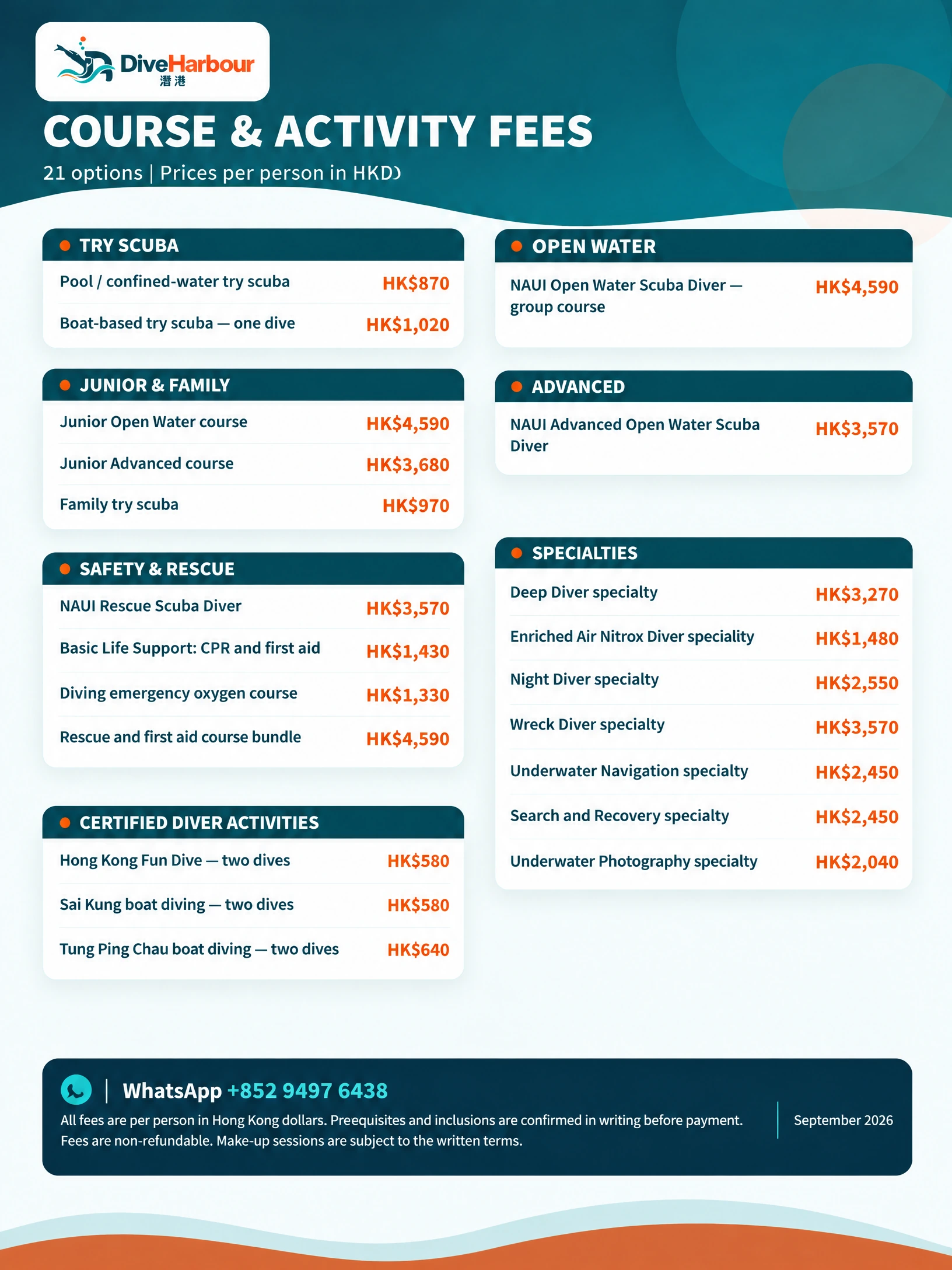
English price list for 21 DiveHarbour courses and activities, with fees per person in Hong Kong dollars
Tap the price list to view it at full size.

Plan your next dive

Course fees, clearly set out

Compare our published course and activity fees before choosing your next step. All prices are per person in Hong Kong dollars.

Before you book, we confirm prerequisites, materials, certification, equipment, venue and boat arrangements in writing. Ask us about fees for courses not listed here.

All fees are non-refundable. Make-up sessions are subject to the written terms.

Read all course fees
DiveHarbour course and activity fees per person in Hong Kong dollars
Course / activityPer person
Pool / confined-water try scubaHK$870
Boat-based try scuba — one diveHK$1,020
NAUI Open Water Scuba Diver — group courseHK$4,590
Junior Open Water courseHK$4,590
Junior Advanced courseHK$3,680
Family try scubaHK$970
NAUI Advanced Open Water Scuba DiverHK$3,570
NAUI Rescue Scuba DiverHK$3,570
Basic Life Support: CPR and first aidHK$1,430
Diving emergency oxygen courseHK$1,330
Rescue and first aid course bundleHK$4,590
Deep Diver specialtyHK$3,270
Enriched Air Nitrox Diver specialtyHK$1,480
Night Diver specialtyHK$2,550
Wreck Diver specialtyHK$3,570
Underwater Navigation specialtyHK$2,450
Search and Recovery specialtyHK$2,450
Underwater Photography specialtyHK$2,040
Hong Kong Fun Dive — two divesHK$580
Sai Kung boat diving — two divesHK$580
Tung Ping Chau boat diving — two divesHK$640