

SAFE LEARNING · HAPPY EXPLORING
DiveHarbour

DiveHarbour · Practical guide

Coastal men's wave styling: choose a practical wet-hair brief

For coastal men's wave styling, choose the shape by what happens after water, rinsing, wind and limited drying time. Wavy movement suits a flexible reset, a middle part needs a clear parting routine, and down-versus-fade decisions belong to side control rather than seawater resistance. Bring a wet-hair photo, describe your rinse access and ask a salon to assess your hair before any chemical service.

By DiveHarbour9 min read
Ask about diving courses or coastal trip planning Read the guide
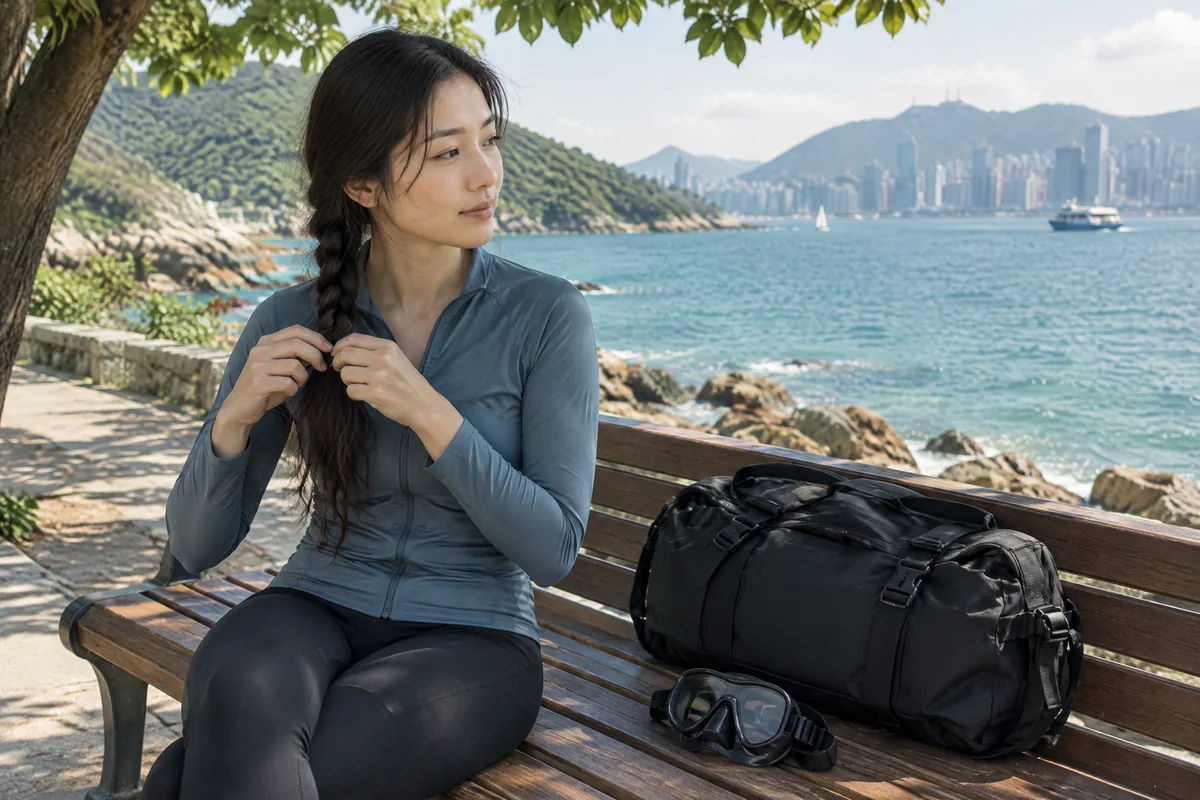
Coastal men's wave styling preparation before a wet-weather activity
Illustration · a traveller preparing hair for a coastal day; this is a situational example, not a Vit So salon or client photograph.

Instructor qualifications

One clear teaching conversation from first breath to next step

DiveHarbour brings together scuba teaching, swimming, lifesaving and water-rescue experience so you can ask practical questions before choosing a course.

  • PADI teaching backgroundTeaching experience across recognised scuba learning pathways.
  • SSI teaching backgroundClear explanations when you are comparing agency routes.
  • NAUI teaching backgroundA practical, standards-aware approach to learning and progression.
  • Swimming foundationWater confidence and calm, step-by-step practice matter.
  • Lifesaving experienceSurface awareness and prevention stay part of the conversation.
  • Pool rescue experienceControlled practice can build confidence before open water.
  • Beach rescue experienceLocal water context informs sensible preparation.
  • Kayak rescue experienceA wider water-safety perspective supports good judgement.
  • PWC rescue experienceAsk about the right learning route for your experience and goals.

Brand relationship: DiveHarbour and Vit So share the same owner.

This guide was prepared by DiveHarbour. The Vit So links provide external hair-service information for readers to review and question; they are not a diving-safety, medical, service-effectiveness or professional-endorsement guarantee.

A useful fact to keep in mind

The American Academy of Dermatology advises rinsing hair immediately after swimming, then using swimmers’ shampoo and deep conditioner for pool exposure.

Check the source
Key takeaways

Four points to carry forward

  • Describe your post-swim rinse, drying time and headwear before naming a haircut or perm.
  • Choose wavy movement when you can accept a looser reset; choose a middle part only if you can recreate the part while damp.
  • Treat down perm versus fade as a side-control and upkeep decision, not as protection from seawater.
  • Use a freshwater rinse, gentle drying and a UV-aware shore routine, then ask for an individual hair assessment.
Start here

Coastal men's wave styling starts with a wet-hair brief

The coastal men's wave styling test is what happens after rinsing

A coastal style should be judged at the moment you leave the water, not only in a dry salon photograph. Write down whether you swim, dive, snorkel or sit beside the sea, then note your headwear, rinse access and next activity. If a dive day is part of the plan, check Hong Kong diving water temperature separately from your hair brief. Water conditions affect clothing and comfort decisions; they do not decide which cut or chemical service suits your hair.

Start with three snapshots: your hair dry, damp after a freshwater rinse, and air-dried without styling. These reveal whether the wave expands, falls flat, separates at the part or exposes the sides. Add the time you realistically have before dinner or transport. A style that looks good only after a long blow-dry may be the wrong brief for a shore day, even when the shape itself is attractive.

The useful request is not ‘make it beach-proof’. Ask for a shape that can be reset after water and still look intentional when the hair is partly dry. Mention previous colour, bleach, perm or straightening work. A professional can then decide what needs individual assessment, what can be achieved by cutting, and what aftercare questions matter for your hair history.

  • Record water activity, headwear and how often the hair gets wet.
  • Bring dry, damp and air-dried photos taken in similar lighting.
  • State your available drying time before the next coastal activity.
  • List recent colour, bleach, perm or straightening work without guessing its effect.
Guide · 02

Compare movement before you compare service names

A coastal men's wave styling brief should describe movement and parting

Wavy movement is a useful starting point when you want texture that can loosen after rinsing. The important question is how much change you can accept between a defined finish and an air-dried finish. Say whether you want a soft bend, visible texture or a stronger wave. If you are researching a wavy perm for men, use the consultation to discuss your current hair, daily styling and water routine rather than assuming the service gives seawater resistance.

A middle part asks for a different kind of discipline. It depends on where the hair separates, how the front falls when damp and whether you can guide it back into place without repeatedly pulling it. A wave can support movement around the part, but the desired result is still a shape discussion. Take a photo showing your natural part and another showing the direction you usually brush after a rinse.

Downsize the choice to a reset you will actually repeat. If you like movement but dislike product, ask about a cut that leaves room for a loose dry finish. If you want a deliberate centre line, ask how much length is needed at the front and what happens when the hair is wet. The best brief makes the trade-off visible before any appointment is confirmed.

  • Choose the amount of wave you can accept when the hair is not fully dry.
  • Show your natural part rather than relying on a reference image alone.
  • Ask whether the front needs extra length to fall into the intended direction.
  • Decide whether your reset uses fingers, a comb, a dryer, product or none of these.
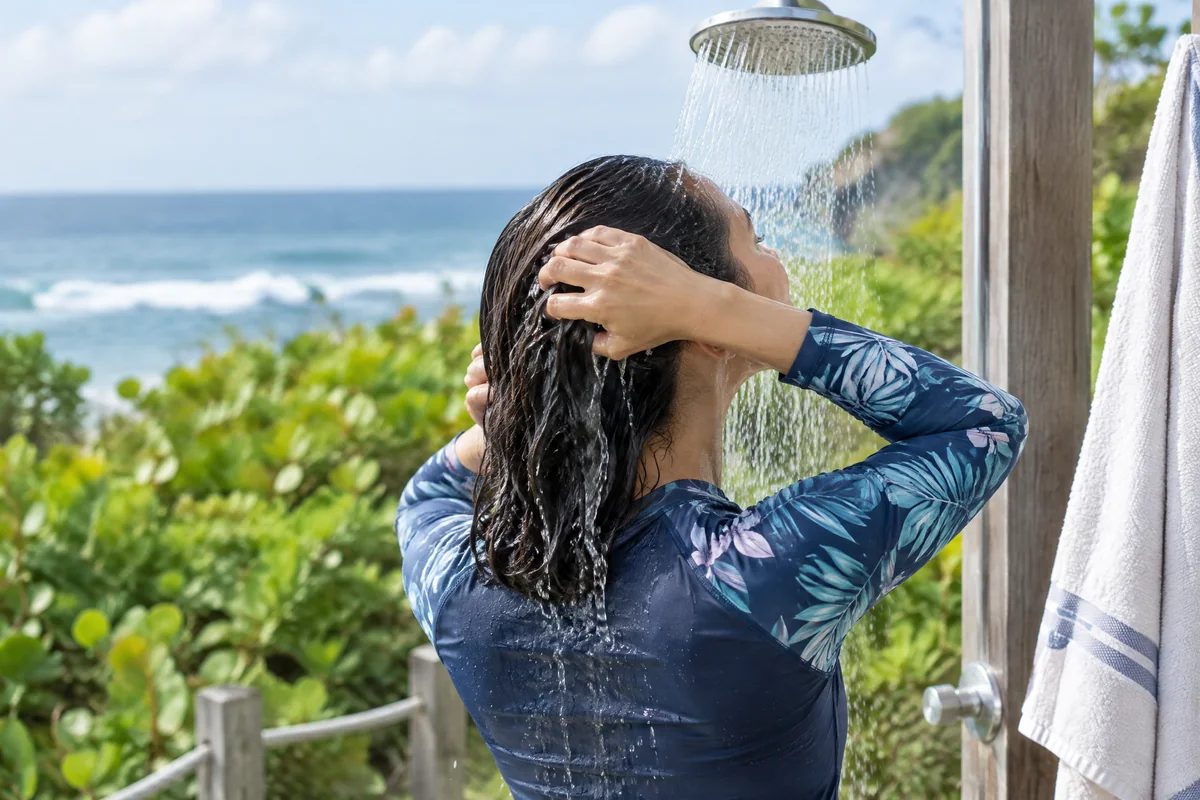
Freshwater rinse as part of a coastal wet-hair reset
Illustration · a post-swim freshwater rinse; it does not show a treatment result or a real customer.
Guide · 03

Make the middle part a repeatable reset

Parting, wind and wet roots matter more than a perfect dry photo

For a middle part, describe the first ten minutes after rinsing. Do you towel-dry, let the hair air-dry, or use a compact dryer? Does wind push the front across the face? Does headwear flatten the crown? These details help frame a practical middle-part request. If you are comparing a middle part perm, ask what parting direction, front length and home routine should be assessed for your current hair.

A useful test is to make the part while the hair is damp, then leave it alone until it is mostly dry. Notice where the front naturally returns and whether the sides collapse into the face. This is not a treatment test or a prediction of a salon result. It is simply a way to explain your starting pattern and the amount of intervention you are willing to do each day.

Plan the part around the whole coastal day. On a cooler or windier outing, your headwear and drying layer may matter more than the original cut. On a warm shore visit, sweat and repeated rinsing may change the feel again. Review best time to dive in Hong Kong for the activity context, then keep the hair conversation focused on drying, parting and upkeep.

  • Test your part on damp hair and note where the front falls without force.
  • Describe how wind, sweat and headwear alter the front and crown.
  • Ask how much daily guidance the intended part needs after a rinse.
  • Keep activity timing and hair-service questions separate when planning the day.

Swipe the table to compare all columns.

Wet-hair decision matrix for the top and front
DirectionWhat to describeWet-hair questionUseful evidence
Loose waveDesired bend and textureHow much can the wave loosen?Air-dried and damp photos
Middle partParting line and front directionCan the part be rebuilt while damp?Natural-part photo and routine
Controlled sidesTemple, side and crown outlineWhere does bulk return after rinsing?Side profile after a rinse
Guide · 04

Down perm versus fade: decide how you want the sides to reset

Down perm versus fade is a side-control choice, not a water-protection claim

Sides often determine whether a wet style feels controlled or bulky. A down direction and a fade approach solve different visual questions, so compare the outline after rinsing rather than asking which one is ‘better’. If you are weighing down perm vs fade, ask how the sides are expected to sit when damp, how much length remains, and what upkeep the chosen direction involves.

A fade changes the cut line and removes length at selected areas. A down perm discussion concerns the direction and behaviour of existing hair, which still requires an individual assessment. Neither description should be used as a promise that the hair will withstand sea water, wind or repeated wetting. Rinsing and gentle drying remain part of the coastal routine whichever outline you choose.

Bring a side-profile photo, a front photo and a picture of the hair after your normal rinse. Point to the area that bothers you: temple bulk, a lifted side, a heavy fringe or a crown that will not settle. This gives the stylist a concrete shape problem to assess and keeps the consultation separate from unsupported claims about durability.

  • Mark the exact side area that feels bulky, lifted or hard to reset.
  • Compare the wet outline, not only the dry outline in a reference image.
  • Ask what length remains and how often the outline needs reassessment.
  • Do not treat either a down direction or a fade as seawater protection.
Planning a consultation for wet-hair movement and side control
Illustration · an unbranded consultation-planning scene, not a Vit So shop or a professional assessment.
Guide · 05

Build a rinse-and-reset routine that fits the shore

Protect the routine first, then refine the coastal men's wave styling shape

The American Academy of Dermatology advises rinsing hair immediately after swimming and describes washing with a swimmers’ shampoo followed by a deep conditioner for pool exposure [1]. For a coastal traveller, the practical lesson is to make freshwater access part of the plan and avoid leaving wet, exposed hair as an accidental styling method. Do not treat that guidance as proof of a specific result for seawater or a chemical service.

Dry with a soft towel by pressing rather than aggressively rubbing, then return the hair to its intended direction while it is still manageable. If you use product, bring the same small amount you normally tolerate and avoid adding several new products on the trip. Your aim is a repeatable reset, not a stronger promise. If the scalp feels persistently irritated or painful, seek appropriate medical advice rather than treating a salon service as healthcare.

Coastal planning also includes sun exposure. The EPA recommends checking the UV Index, seeking shade, using protective clothing and wearing a wide-brimmed hat; its guide notes that water can reflect UV radiation [2]. Apply that advice to exposed skin and eyes. For hair, use practical coverage such as a hat when comfortable, while keeping the styling brief honest about what the haircut or treatment can and cannot do.

  • Pack a freshwater rinse plan before deciding how to restyle.
  • Press out water gently and guide the part or sides before they dry fully.
  • Keep the trip routine familiar instead of testing several new products at once.
  • Check the UV Index and use shade, clothing or a suitable hat for exposed areas.

Swipe the table to compare all columns.

Side-control comparison for a coastal reset
Choice to discussMain decisionQuestion to askReset focus
Down directionHow existing side hair sitsWhat happens when the sides are damp?Guide the sides before drying
FadeWhere length is removedWhich outline remains between cuts?Rinse, dry and accept the cut line
Keep more lengthFlexibility versus bulkWhere will the hair lift or spread?Use the simplest repeatable routine
Guide · 06

Turn the comparison into a clear salon consultation

A short brief makes coastal men's wave styling easier to assess

Bring the three photos, your activity pattern and a sentence that states the priority. For example: ‘I want movement at the top, a centre part when dry, and sides that look orderly after a freshwater rinse. I usually have limited drying time.’ This is more useful than showing one polished image and leaving the wet-hair problem unstated. Ask the salon to explain what is a cut decision, what is a styling step and what needs individual assessment.

Vit So Hair Stylist’s public information lists one documented address at 252 Hollywood Road, Sheung Wan, Hong Kong. Treat the linked service pages as information to review, then ask directly about consultation scope, current hair condition, aftercare and appointment details. Do not infer language availability, pricing, same-day capacity or treatment suitability from an English page or a style name.

Before you commit, repeat the brief in your own words and write down the home reset. Confirm how to describe your recent chemical history and whether the proposed service needs a separate assessment. This keeps the decision practical: choose the shape you can maintain after water, then decide whether the service discussion fits your hair and schedule.

  • Bring dry, damp and side-profile photos plus one realistic reference image.
  • State your rinse access, drying time, headwear and next activity.
  • Ask which parts are cutting, styling or an individually assessed chemical service.
  • Confirm aftercare questions, service scope and appointment details directly.
Shore-side hair styling after a rinse and practical reset
Illustration · a shore-side styling situation; it is not a first-hand test or a promised outcome.
A sensible next step

Take the question with you

Choose the shape by its wet-hair reset: flexible wave, deliberate part, or a side outline you can guide without a long routine. Take your photos and activity details to a salon, ask what needs individual assessment, and keep water care separate from claims about treatment durability.

Questions to ask

Common questions

Is a wavy perm automatically better for a coastal trip?

No. Compare the wave you can reset after rinsing, your drying time and your hair history. Ask for an individual assessment before any chemical service.

Does a middle part stay in place after swimming?

There is no universal guarantee. Test how your natural part behaves while damp and ask how to guide the front after a freshwater rinse.

Should I choose a down perm or a fade for wet sides?

Treat it as a side-control and upkeep decision. Compare the damp outline, remaining length and reset routine rather than seawater resistance.

What should I do first after a coastal swim?

Plan a freshwater rinse, press out water gently and reset the part or sides before drying. For pool exposure, follow relevant professional aftercare guidance.

Further reading

Official sources worth checking

  • [1] Must-try summer hair care

    The American Academy of Dermatology advises rinsing hair immediately after swimming and then washing and conditioning for pool exposure; it also discusses sun-related hair damage and protective coverage.

  • [2] A Guide to the UV Index

    The EPA guide recommends checking the UV Index and using shade, clothing and hats for protection; it notes that water can reflect UV radiation.

Continue exploring

Keep comparing practical questions before you choose a course, activity or preparation step.

Coastal life and hair care · Updated 2026-11-06

Women's post-swim haircut shape: choose the right length

Compare a trim, layers and a bob after swimming. Use this women's post-swim haircut shape guide, then ask the right salon questions before booking.

women's post-swim haircut shape
Coastal life and hair care · Updated 2026-11-06

Men's shore-day haircut routine: reset after a swim

Plan a men's shore-day haircut routine after swimming. Read the wash, dry and restyle brief, then ask your salon the right questions.

men's shore-day haircut routine

Coastal life and hair care · Updated 2026-11-06

Men's swim-after colour plan: schedule a clear consult

Use this men's swim-after colour plan to record swim exposure, past treatments and travel dates. Read the checklist and plan a clear consult.

men's swim-after colour plan
Your next step

Ask about diving courses or coastal trip planning

Message DiveHarbour on WhatsApp to discuss diving courses or coastal trip planning, along with your experience and preferred dates.

Ask about diving courses or coastal trip planning
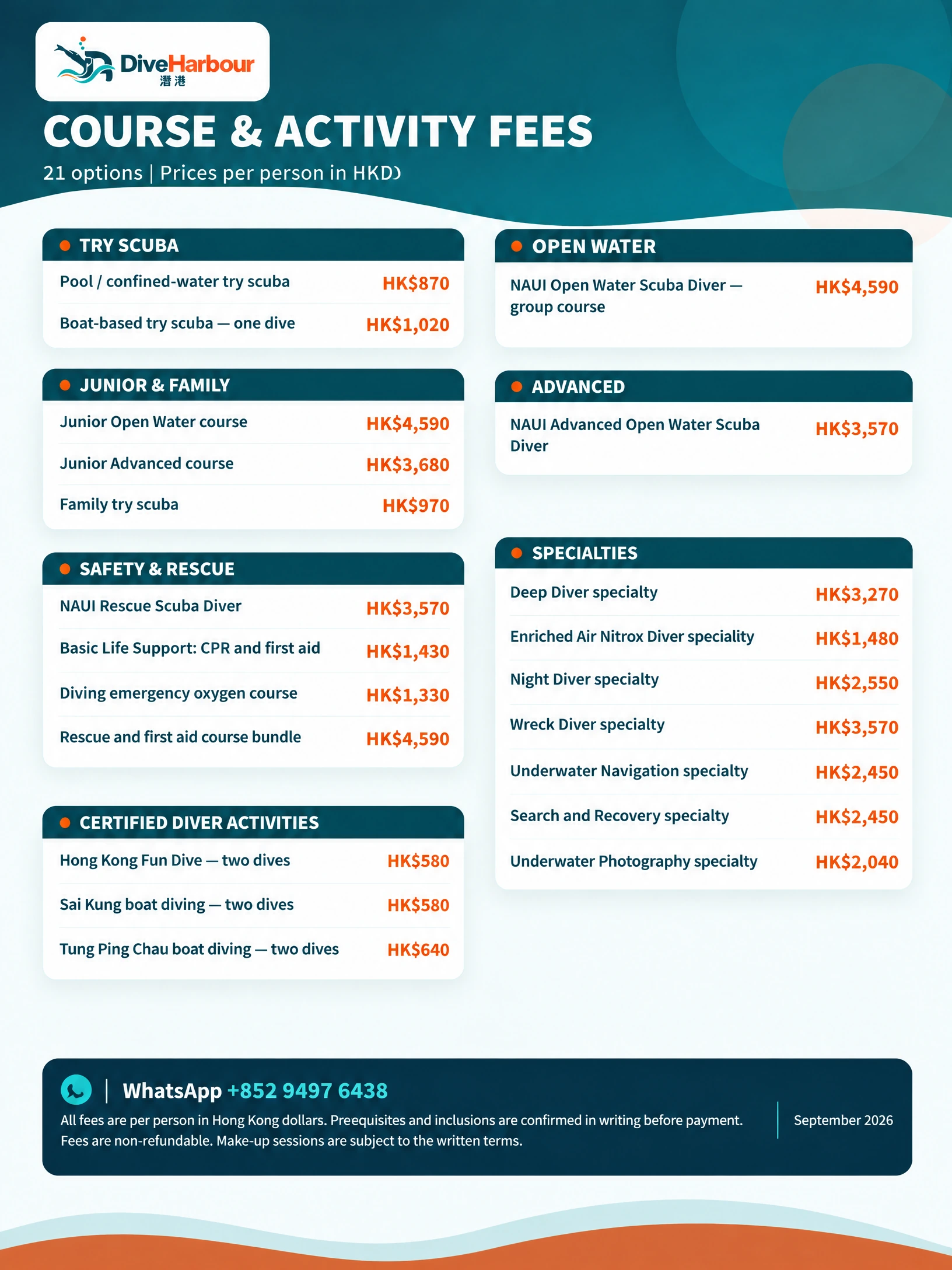
English price list for 21 DiveHarbour courses and activities, with fees per person in Hong Kong dollars
Tap the price list to view it at full size.

Plan your next dive

Course fees, clearly set out

Compare our published course and activity fees before choosing your next step. All prices are per person in Hong Kong dollars.

Before you book, we confirm prerequisites, materials, certification, equipment, venue and boat arrangements in writing. Ask us about fees for courses not listed here.

All fees are non-refundable. Make-up sessions are subject to the written terms.

Read all course fees
DiveHarbour course and activity fees per person in Hong Kong dollars
Course / activityPer person
Pool / confined-water try scubaHK$870
Boat-based try scuba — one diveHK$1,020
NAUI Open Water Scuba Diver — group courseHK$4,590
Junior Open Water courseHK$4,590
Junior Advanced courseHK$3,680
Family try scubaHK$970
NAUI Advanced Open Water Scuba DiverHK$3,570
NAUI Rescue Scuba DiverHK$3,570
Basic Life Support: CPR and first aidHK$1,430
Diving emergency oxygen courseHK$1,330
Rescue and first aid course bundleHK$4,590
Deep Diver specialtyHK$3,270
Enriched Air Nitrox Diver specialtyHK$1,480
Night Diver specialtyHK$2,550
Wreck Diver specialtyHK$3,570
Underwater Navigation specialtyHK$2,450
Search and Recovery specialtyHK$2,450
Underwater Photography specialtyHK$2,040
Hong Kong Fun Dive — two divesHK$580
Sai Kung boat diving — two divesHK$580
Tung Ping Chau boat diving — two divesHK$640