

A useful fact to keep in mind
The official EFR instructor-course information states that candidates must be at least 18 years old and have completed CPR and first-aid training within the previous 24 months, unless they are practising medical professionals.
Check the sourceChoosing a CPR and first aid instructor course Hong Kong
What the instructor pathway is designed to cover
Instructor training is a change of role: you are preparing to help other people learn, practise and retain lifesaving skills. A good pathway therefore goes beyond demonstrating compressions or naming the parts of an AED. It should show you how to explain a skill clearly, set up a safe practice activity, observe performance, give useful feedback and recognise when a learner needs more support. Those teaching habits matter whether your future students are divers, office colleagues, sports-club members or members of the public.
The course title alone does not tell you the whole scope. Ask which organisation owns the curriculum, which learner courses an instructor may teach, how cards or certificates are issued, and whether any workplace or local programme requires an additional module. Emergency First Response (EFR), for example, describes its instructor pathway as preparing people to teach Primary Care (CPR), Secondary Care (First Aid), Care for Children and CPR & AED courses; region-specific workplace courses may require further training. That distinction helps you avoid paying for a qualification that does not fit your intended audience.
If you are still building your responder foundation, start with a learner pathway such as the EFR CPR and first-aid course Hong Kong. It is useful to separate learning a response from learning to teach a response. The former builds personal capability; the latter adds lesson planning, assessment and facilitation responsibilities. A conversation about your recent practice and intended teaching context is more useful than choosing by the shortest course title.
- Identify the issuing organisation and the exact courses included in the instructor scope.
- Check whether your intended employer, club or workplace accepts that organisation's instructor status.
- Plan to teach only within the curriculum and authority you have actually been awarded.

EFR Instructor course Hong Kong: prerequisites and teaching focus
Confirming prior training and course-specific requirements
The official EFR instructor-course information states that candidates must be at least 18 years old and have completed CPR and first-aid training within the previous 24 months, unless they are practising medical professionals. This is a current EFR requirement, not a universal rule for every first-aid instructor programme in Hong Kong. Confirm the current version with the relevant provider before booking, especially if your certificate is from another agency or your professional registration has changed.
A recent certificate is only one part of suitability. You should be comfortable communicating in the language your learners use, willing to practise explanations aloud and able to respond calmly when a learner makes a mistake. You may also need to show that your own CPR, first-aid and AED skills remain current. If your training is outside the EFR system, ask whether a crossover or bridging route exists rather than assuming equivalence.
The EFR course description highlights independent study, classroom sessions and practical teaching assignments. It also covers learning objectives, performance-based training, student motivation, knowledge evaluation, hands-on skills practice and scenario-based learning. In practical terms, expect to prepare short presentations, demonstrate techniques, coach a learner through repetition and explain why an action matters. You are learning to create a controlled learning environment, not to improvise medical treatment.
For the responder foundation itself, compare the Emergency First Response course Hong Kong route with the First aid and CPR course Hong Kong. The right choice depends on the organisation you want to teach for, the currency of your certificate and the outcomes your target students need. Do not let a familiar acronym replace a check of the syllabus.
- Bring your certificate dates, issuing organisation and any medical-professional credentials to the enquiry.
- Ask how knowledge reviews, teaching presentations, practical assessment and instructor registration are handled.
- Confirm the language, class format and equipment available for skills practice before enrolment.

Planning a first aid instructor course Hong Kong
Discussing suitability, scope and the next enquiry step
A realistic planning conversation starts with the people you hope to teach. A dive professional may want CPR and first aid content for students and boat crews; a school, gym or office may need a workplace-oriented programme; a community volunteer may want a broad public-safety role. Each setting changes the examples, equipment, class size and documentation you should discuss. Tell the provider the audience, venue, language and approximate teaching frequency rather than simply asking for a certificate.
Use how to prepare for a first aid instructor course as a practical checklist before contacting a course team. Gather your current certificates, note any gaps in recent practice, and write down the learner outcomes you want to deliver. A short teaching sample can also reveal whether you need help with pacing, terminology or demonstration technique. Preparation is not about sounding like a clinician; it is about making your learning needs visible.
DiveHarbour's lead coach has teaching experience across PADI, SSI and NAUI, alongside swimming, lifesaving, pool, beach, kayak and personal-watercraft rescue qualifications. That background can help you think through water-sports scenarios and instructor habits, while the issuing organisation remains responsible for its own curriculum and recognition. It does not replace the organisation's prerequisites, local requirements or a healthcare professional's advice about your personal fitness.
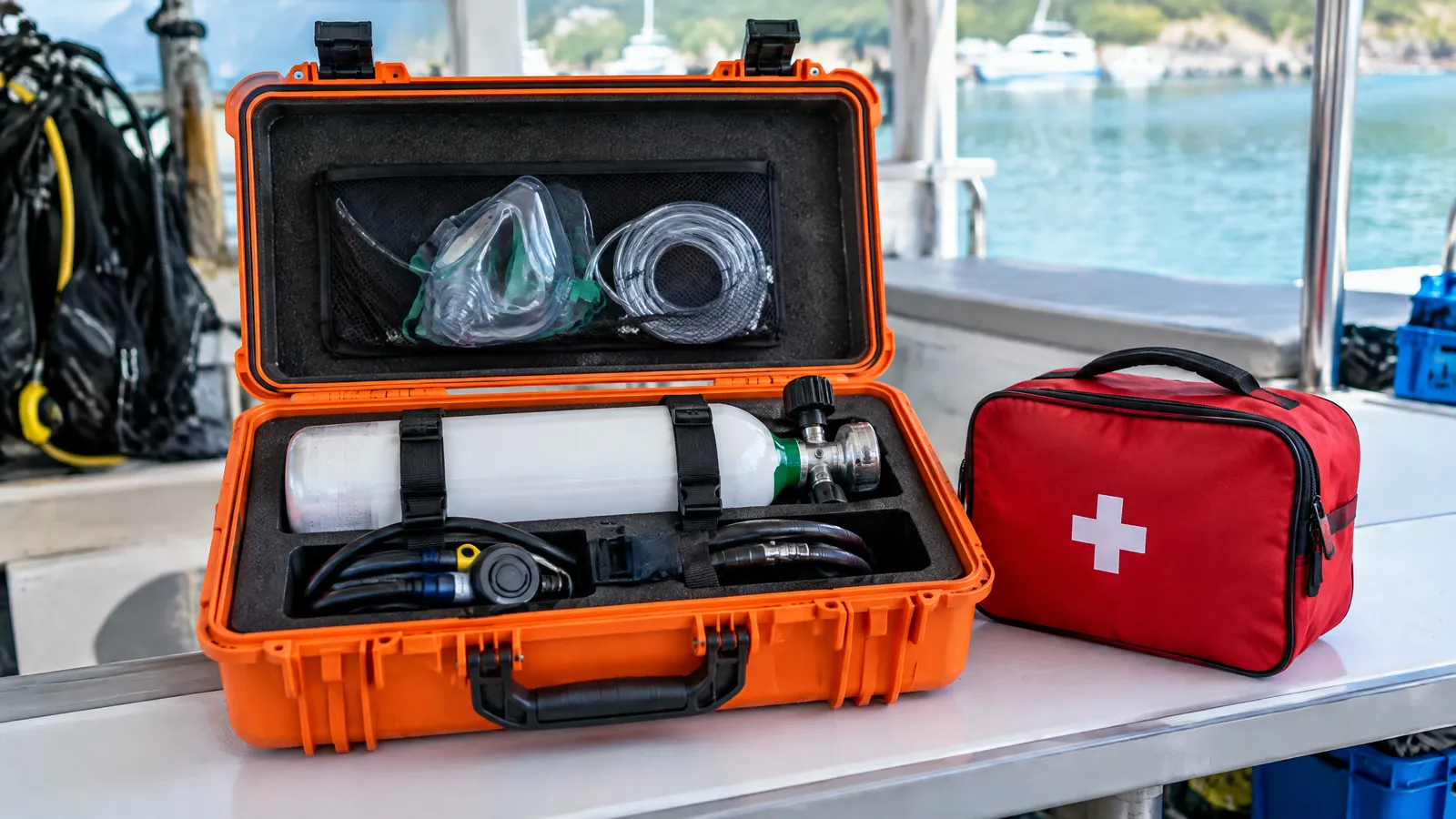
Where the pathway includes emergency oxygen or broader responder content, review the first aid course Hong Kong option as a separate decision. Ask what is included, what is assessed and what certificate is issued. Course fees, materials, registration and any later renewal costs should be stated in writing; do not infer them from a learner-course price or from another agency's fee schedule.
- Describe your intended learners and teaching venue in the first message to the provider.
- Request the current prerequisites, syllabus, assessment method, materials and issuing process in writing.
- Keep a personal practice plan so your teaching remains grounded in accurate, current skills.
What you will practise as an instructor
From demonstration to learner feedback
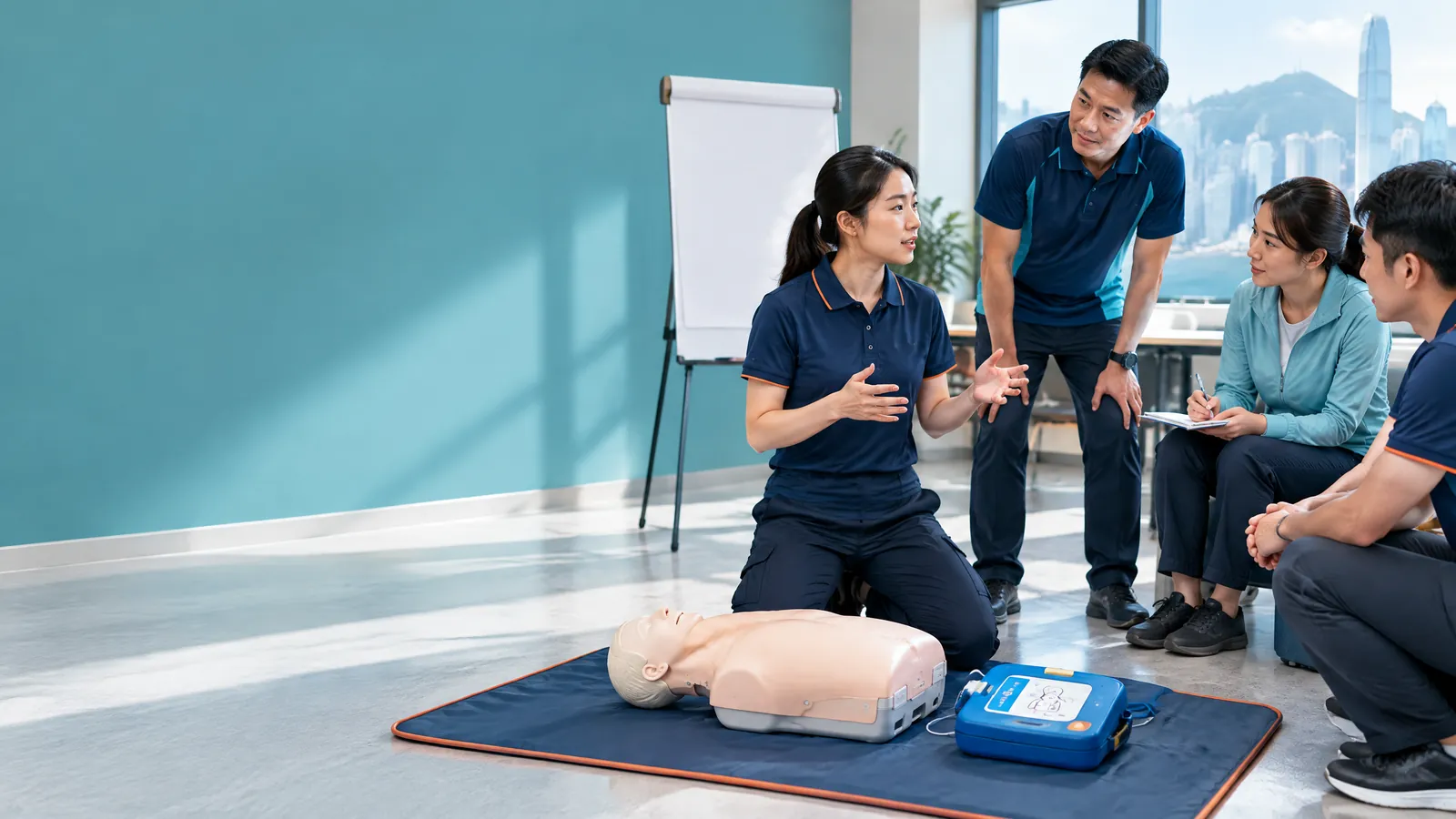
Instructor-level practice should make each teaching decision observable. You may rehearse a concise explanation, demonstrate a skill at a pace learners can follow, then invite practice while you watch for the performance points defined by the curriculum. Feedback should be specific and respectful: identify what was done well, correct the next priority and give the learner another opportunity. A busy room is not an excuse to skip checks; safe teaching depends on supervision, clear boundaries and appropriate equipment.
Scenario work adds judgement without turning the class into a dramatic performance. Learners need to understand how to assess a situation, seek help, use the skills they were taught and communicate with responding services according to the course material. As an instructor, you facilitate the scenario, keep it within safe training limits and debrief the decisions. Never present classroom practice as a substitute for emergency services or personalised medical advice.
You should also practise inclusive teaching. Some learners may be anxious, have limited English, or need an adapted explanation or demonstration. Agree suitable accommodations with the provider, use plain language and check understanding without embarrassing anyone. If a learner cannot safely perform a required skill, follow the organisation's assessment policy rather than privately lowering the standard or promising a certificate.

Compare instructor-training routes before booking
A practical decision table
There is no single best route for every candidate. The table below gives you a starting comparison; the final scope, price, prerequisites and recognition must come from the issuing organisation and the written course terms.

Safety, recognition and responsible teaching
Know what an instructor certificate does and does not mean
An instructor credential supports teaching within a defined programme; it is not a blanket licence to teach every first-aid, diving or workplace course. Employers, venues, insurers and regulators may apply additional conditions. Ask who may issue completion cards, whether instructor status must be renewed, and what quality-assurance or affiliation rules apply. Keep records of your own training and follow the latest organisation materials rather than relying on an old slide deck.
For health and safety, use the course's approved procedures and call local emergency services when a real incident occurs. The Hong Kong Government's first-aid guidance says to call 999 immediately in a medical emergency, so include that local escalation point in your lesson planning without presenting classroom practice as a substitute for emergency services. Do not force a learner to perform a skill, diagnose a condition or give treatment beyond the taught scope. If you have a health concern that could affect participation, discuss it confidentially with the provider and seek clinician advice where appropriate. Good instructor preparation includes knowing when to stop, escalate and refer.
Before you enrol, ask for written terms covering deposits, included materials, certification or registration charges, venue arrangements and cancellation. Fees are non-refundable unless the written terms say otherwise; make-up sessions are available only where the written terms permit them, and no particular reschedule date is guaranteed. Clear terms protect both sides and let you compare courses honestly.
Compare three common planning routes before choosing instructor training
| Route | Best for | Check before booking |
|---|---|---|
| EFR instructor pathway | Candidates seeking EFR teaching scope for CPR, first aid and related listed courses | Current CPR/first-aid currency, age or professional prerequisite, assessment and EFR recognition |
| Agency crossover or equivalent route | Existing instructors or responders trained under another recognised system | Whether crossover is offered, which certificates are accepted and what extra modules apply |
| Workplace or specialist first-aid programme | People teaching in a defined employer, school, club or industry setting | Employer or regulator acceptance, additional workplace content, renewal and quality assurance |
First Aid Instructor Training in Hong Kong — common questions
Is this the same as taking a learner first-aid or CPR course?Toggle answer
No. Instructor training prepares suitable candidates to teach approved first-aid or CPR content; it is not the same as attending a learner course. The exact prerequisites, assessment and teaching scope depend on the relevant training organisation and should be confirmed before enrolment.
Can an EFR Instructor qualification be used for any teaching job?Toggle answer
Not automatically. Acceptance depends on the employer, programme owner and local requirements. An instructor pathway may support teaching within its authorised scope, but it does not by itself confirm regulator recognition, employment, certification-centre status or permission to teach every course.
Do I need a medical background to enter an EFR instructor course?Toggle answer
Not necessarily. EFR's official instructor information lists an age-and-recent-training route as well as an alternative for practising medical professionals. Other organisations can set different rules, so provide your certificate history and ask the course provider to confirm eligibility.
What should I send when asking about suitability?Toggle answer
Share your age range, current CPR and first-aid certificate dates, issuing organisation, any relevant instructor or medical credentials, intended learners, preferred language and teaching setting. This lets the provider check scope and prerequisites without guessing.
Are fees refundable or can I automatically move to another date?Toggle answer
Fees are non-refundable unless the written terms expressly provide otherwise. Make-up sessions are available only where those written terms permit them, and a particular replacement date is not guaranteed. Read the cancellation, transfer and absence clauses before paying.
Take the question with you
The best next step is to message DiveHarbour with your current CPR or first-aid certificate details, intended teaching audience and preferred EFR or other agency scope. Ask for the current prerequisites, assessment format, written fees and recognition conditions, then compare the answer with your practical teaching goal. A careful check now helps you enter the right instructor pathway with realistic expectations and a safer plan for your future learners.
Sources worth checking
- Emergency First Response Instructor Course
The official EFR page says the instructor course develops instructional abilities through independent study, classroom sessions and practical teaching assignments; entry requires age 18 plus CPR and first-aid training within the past 24 months, or practising medical-professional status.
- GovHK: First Aid
Hong Kong Government guidance describes first aid as immediate care and advises calling the emergency hotline at 999 immediately for an ambulance in a medical emergency.
Useful next reads for your plan
If you are still comparing routes, these related pages give you practical questions to bring into your next conversation with an instructor.
Put your plan into practice
Useful planning guides
Dive first aid renewal path: from refresher to instructor track
Use this dive first aid renewal path worksheet to compare practical options, check key decision points, and confirm current details with DiveHarbour.
dive first aid renewal path
