

A useful fact to keep in mind
The Hong Kong Government advises divers to be at least 10 years old, swim 200 metres and maintain buoyancy for 10 minutes without swimming aids before diving.
Check the sourceDive guide and first aid instructor skills explained
Guiding certified divers is different from teaching first aid
The phrase dive guide and first aid instructor skills can sound like one professional package, but it describes two related lines of responsibility. A guide supports divers who already hold the relevant certification: preparing a site briefing, checking that the plan fits the group, supervising an appropriate dive and helping people make calm decisions. The guide does not silently upgrade a diver’s qualification or authorise activities beyond the guide’s own training and agency scope.
A first aid instructor, by contrast, teaches a defined provider-level programme. The work includes explaining a response sequence, demonstrating skills, observing learners, correcting technique and checking understanding. NAUI describes its First Aid Instructor as a formal leadership designation rather than a certification, recognising members who meet prerequisites and complete a workshop to teach provider-level NAUI First Aid courses powered by DAN. That is a useful distinction: teaching first aid is a real leadership responsibility, but it is not the same as teaching open-water, rescue or professional scuba courses.
The shared foundation is human performance under pressure. Both roles need clear briefings, active listening, honest limits, respectful feedback and the ability to notice when a participant is confused, tired or outside the plan. The difference is the learning outcome. A guide helps a qualified diver participate safely in a particular environment; an instructor helps a learner acquire and demonstrate a structured set of skills. Keep those outcomes separate when comparing courses or describing your experience.
- Guide focus: site assessment, dive planning, group awareness, navigation cues and supervision of certified divers.
- First-aid instructor focus: lesson structure, demonstration quality, learner practice, assessment and referral to professional medical care.
- Shared habit: explain the plan, invite questions, monitor changing conditions and stop when the situation is no longer appropriate.

Building sound guiding, rescue and communication ability
Experience and judgement matter as much as certificates
Start with a skills audit instead of collecting titles. Review your logbook for varied conditions, not only the number of dives: visibility, current, boat procedures, shore entries, buoyancy, navigation and how recently you practised rescue skills. Then ask whether you can explain the reason behind a decision. A future guide should be able to say what information changed the plan, who was briefed and what would trigger a turn-around or cancellation.
Rescue ability is more than remembering a sequence in a calm class. It includes prevention, early recognition and communication. Practise giving a concise pre-dive briefing, agreeing on lost-buddy and low-air actions, identifying the nearest exit or pickup point and checking that everyone understands the signals. In an incident, stay within your training, raise the alarm early and coordinate with the boat crew or emergency services rather than improvising advanced medical treatment.
First-aid teaching adds a second layer: you must make a learner feel safe enough to practise while still maintaining standards. Use plain language, demonstrate once at a sensible pace, break the task into observable steps, then let the learner perform it. Feedback should be specific—what was seen, what effect it had, and what to try next. Avoid presenting a course card as permission to diagnose or treat beyond the programme. First aid is a bridge until professional emergency medical care is available, not a replacement for it.
The Hong Kong Government advises divers to be at least 10 years old, swim 200 metres and maintain buoyancy for 10 minutes without swimming aids before diving. This local guidance is useful context for assessing your own readiness, but it is not a universal prerequisite for every agency or professional programme; always check the current standard that governs the course you are considering.
- Keep a short debrief after each dive: what matched the plan, what changed, and what you would brief differently next time.
- Refresh CPR and first aid with a recognised provider and track expiry dates; a lapsed card can affect professional prerequisites.
- Practise teaching on land with a timer and a willing partner before leading a real learner session.

Choosing a sensible professional development pathway
Check agency scope and current prerequisites with an instructor
There is no single ladder called ‘dive guide and first aid instructor’. Your route depends on the agency, the work you want to do and the evidence you can honestly provide. Read the current course standard, identify every prerequisite, and ask the instructor how each assessment relates to the role you hope to perform. If you have another agency’s certification, ask whether it is accepted as an equivalent and what documents are required; do not assume that a similar-sounding card transfers automatically.
For example, the PADI Divemaster application lists Advanced Open Water Diver, Rescue Diver and Emergency First Response Primary and Secondary Care (or qualifying certifications from another organisation), and the form records verification of 60 logged dives. That is an agency-specific application requirement, not a rule that applies to every guide programme. NAUI’s First Aid Instructor page separately specifies a minimum age of 18 and a workshop-based leadership designation. These examples show why comparing only course names can produce an unsafe or unrealistic plan.
If your immediate goal is to support teaching rather than lead independently, begin by developing teaching skills to practise before a scuba instructor course. Someone aiming at a leadership qualification can compare the NAUI Assistant Instructor route with the PADI Assistant Instructor course Hong Kong, then discuss which scope matches their experience. These are decisions to review with a qualified instructor, not promises of employment or automatic progression.
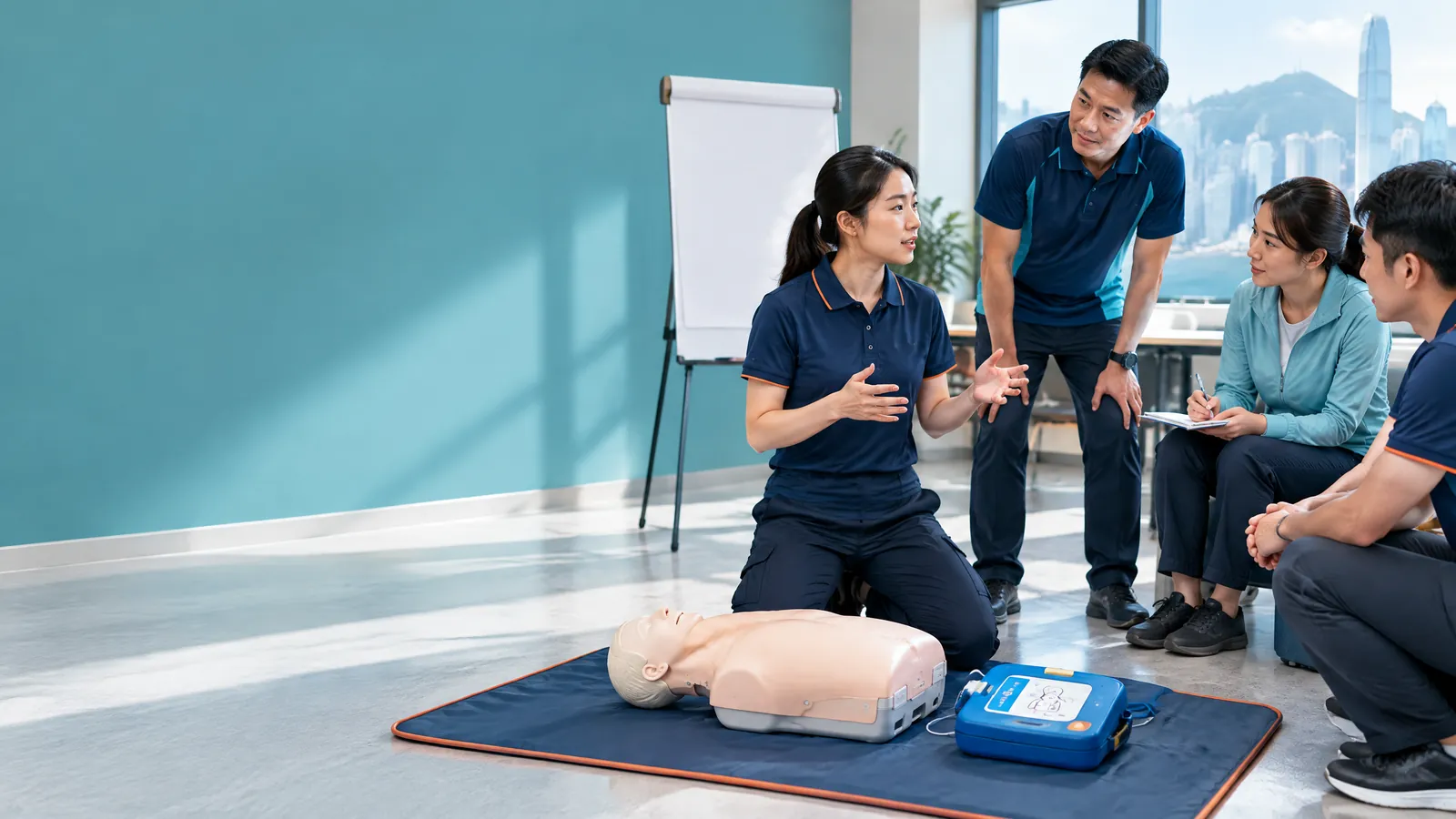
Comparing guide and assistant roles in Hong Kong
Choose the next assessment that closes a real skills gap
A useful pathway is built around the next responsibility you can safely demonstrate. If you need more experience leading certified divers, review the SSI Dive Guide course Hong Kong information and ask about site assessment, briefing practice, supervision and local operating procedures. If you are ready to explore an instructor-track role, the scuba instructor course Hong Kong page is a starting point for discussing agency prerequisites and teaching assessments.
Use the comparison below as a conversation guide, not as a substitute for the current agency standard. The ‘best next step’ may be a refresher, a rescue assessment, supervised guiding practice or a first-aid teaching workshop rather than the most advanced-looking title. A good instructor should be comfortable explaining what is assessed, what is outside scope and what evidence you will leave with.

A practical preparation checklist
Turn experience into evidence an instructor can evaluate
Bring your certification cards, logbook, first-aid records and a short statement of your goal to an initial consultation. Note the dates of your last dives, rescue practice and CPR session. If you have guided friends informally, describe what you actually did—briefing, navigation, buddy checks or surface coordination—without calling it professional guiding. Honest detail helps an instructor identify the safest bridge to formal assessment.
Before booking, ask five direct questions: Which agency standard applies? Which prerequisites must be current? How many supervised practice opportunities are included? What happens if weather or water conditions prevent a session? Which costs, equipment, boat arrangements and certification fees are included? Ask for written terms as well. A professional conversation should make the boundaries clearer, not pressure you to book immediately.
Prepare your communication as carefully as your water skills. Try a two-minute site briefing that covers the objective, route, depth or environmental limits, buddy plan, signals, turnaround point and emergency response. Then invite someone to challenge one assumption. For first-aid teaching, practise explaining when to call emergency services and how to hand over information. Never use online text as medical clearance; if a health concern could affect diving, discuss it with an appropriate doctor.
- Bring: logbook, agency cards, current first-aid evidence, recent experience and questions about scope.
- Observe: whether the instructor explains assessment criteria and gives constructive, specific feedback.
- Decide: only after you understand prerequisites, supervision, included arrangements and written booking terms.

Safety, ethics and realistic next steps
Build trust by knowing when not to lead
A strong guide is not the person who always continues. Hong Kong’s official diving advice emphasises diving within your limits, following the dive plan, diving with a companion and paying attention to qualified dive guides. Weather, visibility, current, equipment condition and a diver’s changing comfort can all justify modifying the plan. The ethical response is to explain the decision without embarrassment and prioritise a safe return.
The same principle applies in a first-aid classroom. Keep training realistic, protect privacy, use equipment as intended and refer medical questions beyond the course scope to healthcare professionals. Do not promise that a qualification guarantees a job, a particular number of dives or authority under another agency. If a learner cannot demonstrate a skill to the required standard, record the gap and arrange further practice or assessment according to the provider’s terms.
A sensible next step is a structured conversation: share your current evidence, choose one immediate skills gap, confirm the governing agency standard, and agree what supervised practice would look like. DiveHarbour can help you review that professional pathway, while the final decision should rest on current written requirements, your instructor’s assessment and your own honest readiness.

Which development focus fits your next professional conversation?
| Development focus | Best for | Check before booking |
|---|---|---|
| Guiding certified divers | Divers who need stronger briefing, site-planning and group-supervision practice | Agency scope, logged experience, rescue currency and supervised guiding opportunities |
| Assistant-instructor pathway | Divers who want structured teaching practice before an instructor-level assessment | Prerequisites, teaching demonstrations, evaluation criteria and accepted cross-agency cards |
| First-aid instructor pathway | Leaders who want to teach an authorised first-aid provider programme | Designation versus certification, workshop prerequisites, renewal and exact programme scope |
| Refresher or rescue development | Experienced divers whose confidence or emergency skills need rebuilding | Recent practice, medical considerations, realistic conditions and instructor supervision |
Dive guide and first aid instructor skills: what they involve — common questions
Does a first aid instructor qualification make someone a dive instructor?Toggle answer
No. First aid instructor training covers delivery of an authorised first-aid programme, while scuba-instructor training has separate agency standards for teaching diving. The two skill sets can complement each other, but one does not automatically replace the other.
What should I check before pursuing dive guide training in Hong Kong?Toggle answer
Review the agency’s current prerequisites, your logged diving and rescue experience, and the exact scope of the qualification. Ask a qualified instructor how the training develops briefing, site-assessment, supervision and emergency-response judgement rather than relying on the course title alone.
Is the PADI 60-dive figure required for every dive guide course?Toggle answer
No. The 60 logged dives figure appears on the PADI Divemaster application as an agency-specific verification requirement. Other agencies may use different prerequisites, so confirm the current standard and whether qualifying non-PADI certifications are accepted.
Can I reserve a course and move it to any later date if conditions change?Toggle answer
Do not assume that. Fees are non-refundable, and make-up sessions are available only where the written booking terms permit them; no date or reschedule is guaranteed. Ask for the applicable weather, cancellation and make-up policy before paying.
Should I get medical clearance before developing these skills?Toggle answer
If you have a health condition, recent illness, injury or concern that could affect diving, seek advice from an appropriate doctor. General online guidance cannot provide personal clearance, and a first-aid qualification does not replace a medical assessment.
Take the question with you
Your next step is not necessarily the highest-level course. Send a concise summary of your certifications, recent dives, rescue and first-aid currency, and the kind of guiding or teaching responsibility you want to explore. Use that conversation to confirm the agency standard, identify one practical gap and agree on a supervised way to close it before booking. Clear scope, honest evidence and calm judgement are the most transferable dive guide and first aid instructor skills.
Sources worth checking
- Useful Tips on Diving — The Government of the Hong Kong Special Administrative Region
The page states that divers should be at least 10 years old, swim 200 metres and maintain buoyancy for 10 minutes without swimming aids, while noting that agency and medical requirements should be checked appropriately.
- First Aid Instructor — NAUI
NAUI describes the First Aid Instructor as a formal leadership designation, says successful candidates may teach provider-level NAUI First Aid courses powered by DAN, and lists a minimum age of 18.
- Divemaster Application — PADI
The application lists Advanced Open Water, Rescue and CPR/First Aid prerequisites and includes instructor verification that the applicant has logged 60 dives.
Useful next reads for your plan
If you are still comparing routes, these related pages give you practical questions to bring into your next conversation with an instructor.
Put your plan into practice
Useful planning guides
Assistant Instructor Guide Route in Hong Kong
Use this assistant instructor guide route worksheet to compare practical options, check key decision points, and confirm current details with DiveHarbour.
assistant instructor guide route
