

A useful fact to keep in mind
AFCD describes Hoi Ha Wan Marine Park as designated in July 1996 and covering about 260 hectares.
Check the sourceHoi Ha Wan diving
A calm Hong Kong dive-site overview
Hoi Ha Wan is a sheltered bay on the northern side of Sai Kung West Country Park, and its protected setting makes it an appealing choice for divers who want a quieter, nature-led outing rather than a promise of dramatic conditions. AFCD describes the marine park as one of Hong Kong’s first marine parks, designated in July 1996, and covering about 260 hectares. Those figures are useful context, but they do not predict what you will see on a particular tide, weather window or dive. AFCD describes Hoi Ha Wan Marine Park as designated in July 1996 and covering about 260 hectares.
The area is known for coral communities, mangroves and associated marine life. A Hong Kong Government visitor guide notes over 60 stony coral species and more than 120 species of coral-associated fish; treat those as an ecological overview, not a wildlife guarantee. The considerate diver’s objective is to move slowly, keep good buoyancy, avoid contact and leave the site as it was found. A calm pace often gives you more time to notice small reef life anyway.
Your starting point matters. A certified diver with recent local experience may prefer a straightforward guided fun dive, while somebody returning after a long break may benefit from a refresher before choosing a sheltered site. If you are still deciding whether to train, a Sai Kung scuba diving course can help you build skills before treating Hoi Ha Wan as a recreational destination. New divers should not assume that a protected bay removes the need for supervision, proper weighting, buddy checks or a conservative turn-around plan.
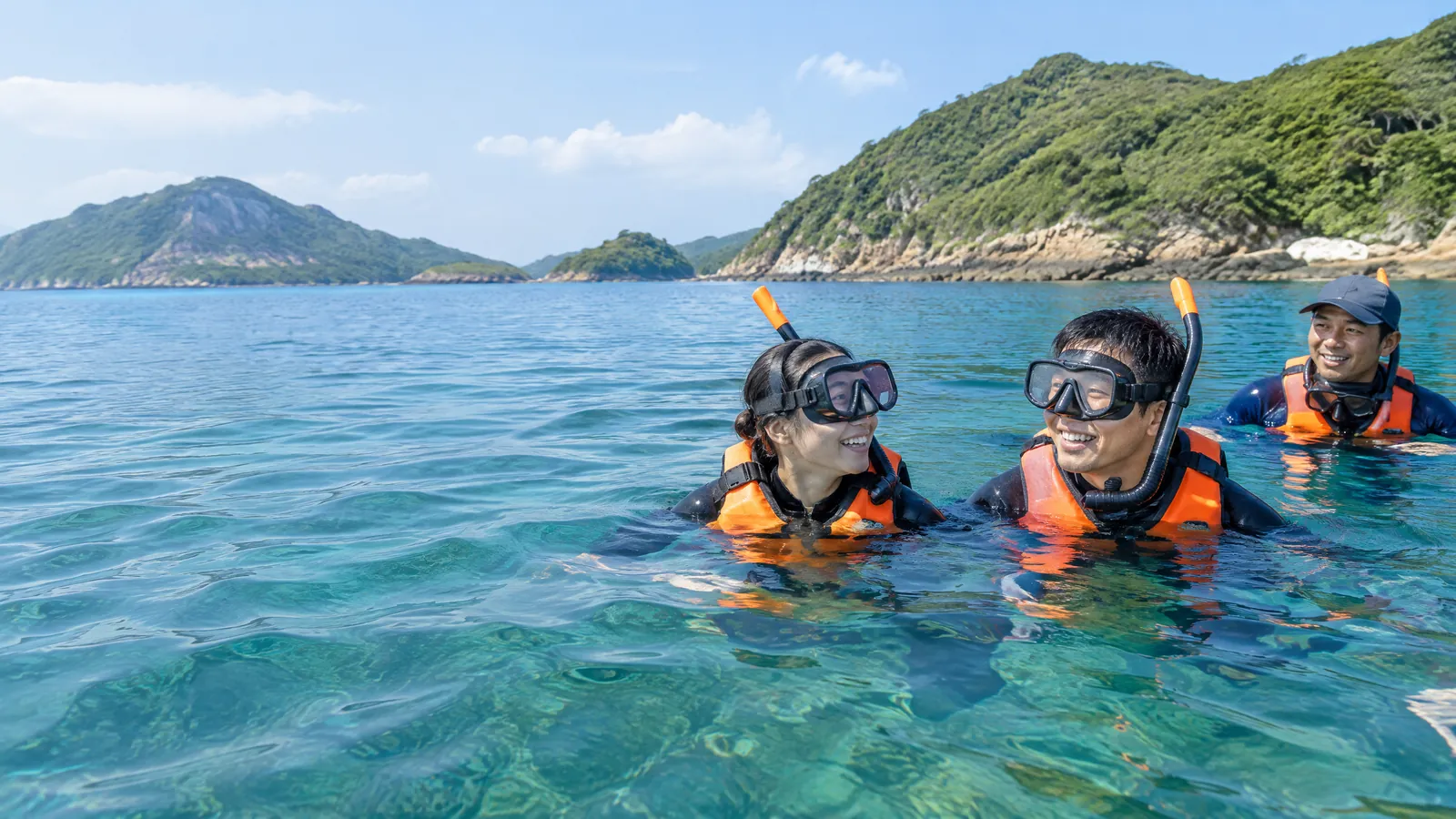
Hoi Ha Wan also works well as a shared day out when expectations are clear. One person may be diving while another joins a suitable surface activity or explores the village and coastal scenery. Confirm what everyone is actually booking, because a dive trip is not automatically a sightseeing cruise, and transport, entry point, equipment and water time can vary. Ask about the meeting point and return route before committing to a date.
- Bring proof of certification where relevant, recent-dive information and any medical details your operator requests.
- Expect the final plan to depend on weather, sea state, visibility, tides, access and the dive professional’s assessment.
- Never use a coral-rich site as a reason to touch, stand on or collect marine life.

Hoi Ha Wan Marine Park diving rules
Protecting the marine park while you dive
Hoi Ha Wan Marine Park diving rules are not a formality to skim after booking. AFCD specifically says divers and swimmers must not stand on fragile corals and should follow the Marine Parks Visitors Code as well as the Code for SCUBA divers and skin divers visiting coral sites. Read the current official guidance before departure, then listen to the briefing on the day: local instructions may cover the exact mooring, entry, route, boat movement and areas to avoid.
Good practice begins before you enter the water. Secure gauges, cameras, torches and loose straps so they cannot drag across the reef. Check that your weighting and buoyancy are comfortable in the equipment you are using, and agree on a simple buddy communication plan. If you are not yet confident hovering, tell the guide honestly; a slower route, additional supervision or a different format is more responsible than trying to follow a group while repeatedly finning into the bottom.
Underwater, keep fins and hands clear of the substrate, do not chase animals, do not feed fish and do not remove shells, coral or other natural material. Avoid stirring sediment, which can reduce visibility and stress nearby organisms. Photography is welcome only when it does not become contact, pursuit or obstruction. A good image is never worth damaging a living colony or separating a diver from their buddy.
Rules and access arrangements can change. Check the official Hoi Ha Wan page and any current notices rather than relying on an old social post, a map screenshot or a friend’s previous trip. If you are travelling by public transport, allow time for the final connection and for changing conditions; the Government’s visitor information recommends checking HKeMobility and notes that transport and attraction information may change.
- Keep hands, knees, fins and equipment off fragile coral.
- Follow the Marine Parks Visitors Code, the coral-site diving code and your operator’s site briefing.
- Treat wildlife sightings as a privilege, never as something an operator can promise.

Planning a responsible Hoi Ha Wan dive
Choose the right format and ask about conditions
There is no single best way to arrange Hoi Ha Wan diving. The right choice combines your experience with the day’s logistics. A boat entry can make sense when the planned site is offshore or when a group needs a coordinated drop, while a shore entry may suit a qualified diver who is comfortable with the approach, exit and equipment movement. Compare the route, surface support, water time, included equipment and contingency plan rather than choosing by the word ‘easy’ alone.
For a boat-based plan, ask about the departure point, boarding time, sea conditions, cylinder and weight arrangements, buddy allocation, surface cover and what happens if the site is unsuitable. A Hoi Ha Wan boat dive page is a useful place to compare the format, but the final itinerary still needs confirmation. For a shore-based plan, ask about the walking distance, entry surface, changing facilities, exit route, carrying requirements and whether the tide affects the approach. The Hoi Ha Wan shore diving from the beach option should be assessed against your actual comfort, not just a photograph of the beach.
Use your recent diving honestly. Certification is a baseline, not a guarantee that a particular entry, current or visibility will feel comfortable. If you have not dived for a while, say so and ask whether a refresher or a more sheltered practice session is sensible. If you are visiting from another district, you may also compare the area with Tung Ping Chau diving before fixing your expectations around one site.
- Ask what is included: guide, cylinders, weights, equipment, boat, transport and any site fees.
- Confirm cancellation, weather and alternative-site arrangements in writing.
- Pack sun protection, water, a light layer, identification and only the camera equipment you can control safely.
Who should choose Hoi Ha Wan, and when?
Match the site to your readiness
Hoi Ha Wan may suit certified divers looking for a Hong Kong marine-park setting, families planning a mixed coastal day, or visitors who value careful observation over a guaranteed checklist of animals. It is less suitable to treat the site as an unsupervised first attempt, a place to test unfamiliar equipment or a backup plan after ignoring weather warnings. Children and first-time participants need an age-appropriate programme, close supervision and clear confirmation of the activity they are joining.
If you are not certified, ask about training rather than booking a normal fun dive. People based on Hong Kong Island can start by reviewing how to learn scuba diving on Hong Kong Island, then choose an open-water pathway that includes the required theory, confined-water practice and supervised sea sessions. A qualified professional can discuss health declarations and whether you should seek personal medical advice; never hide a relevant condition to secure a booking.
A good pre-dive conversation covers your last dive, maximum recent depth, comfort in waves, mask and regulator confidence, allergies or medication concerns, and whether you can calmly complete the planned entry and exit. If the answer is uncertain, the responsible next step may be a pool session, a refresher, a different site or postponement. That is not a failed holiday plan; it is how you keep the day enjoyable and leave room for better diving later.

What to confirm before travelling
A simple checklist for a smoother day
Once you have chosen a format, request a concise written confirmation. It should state the meeting point, arrival time, expected water activity, equipment included, certification or supervision requirement, estimated return time and the contact method for delays. Ask whether the operator will confirm the site on the day and what happens if marine conditions, access or safety considerations make the original plan unsuitable. Avoid booking on the assumption that a named site guarantees a particular reef, depth or visibility.
Build a realistic travel buffer. Hoi Ha is not a location to reach at the last minute with a full equipment bag and no route plan. Check the latest transport information, allow for connections and keep your phone charged. If you are carrying personal equipment, label it and bring only what you can transport comfortably. A small dry bag for documents and a separate bag for wet items can make the return journey much easier.
After the dive, rinse and pack equipment according to the operator’s instructions, record anything unusual while it is fresh in your mind and hydrate before travelling home. Do not drive if you are not fit to do so after diving; follow the dive professional’s post-dive guidance and seek medical help for concerning symptoms. The purpose of careful planning is not to make a nature day feel bureaucratic. It gives you more attention for the bay, the reef and your buddy.
- Confirm the exact meeting point rather than only the district name.
- Ask what changes if the original site, boat or entry cannot be used.
- Save the official marine-park page and the operator’s phone number offline.

Compare your Hoi Ha Wan options
Choose clarity over guesswork
Use the comparison below as a conversation starter, not as a promise that every format is available on every date. The most useful enquiry explains who is diving, their certification and recent experience, preferred transport, equipment needs and whether the group wants a guided experience or a training pathway. DiveHarbour can then help you ask the practical questions before you make a decision.

Hoi Ha Wan planning formats at a glance
| Option | Best for | Check before booking |
|---|---|---|
| Guided boat dive | Certified divers who want coordinated access and surface support | Departure point, sea conditions, included cylinders and alternative site |
| Shore entry | Experienced divers comfortable with the approach and exit | Walking distance, tide, equipment carrying and exit conditions |
| Training or refresher | New or returning divers who need skills practice | Prerequisites, supervision, water sessions and certification pathway |
Hoi Ha Wan diving: site guide and rules — common questions
Is Hoi Ha Wan suitable for every diver?Toggle answer
No. Suitability depends on certification, recent experience, comfort in local conditions, health disclosures and the planned entry. A qualified dive professional can discuss whether a guided boat, shore or training format is appropriate on the day.
Where can I check the Hoi Ha Wan Marine Park diving rules?Toggle answer
Start with the current AFCD Hoi Ha Wan Marine Park page and its linked Marine Parks Visitors Code and coral-site diving code. Confirm practical access and operating arrangements with your dive operator as rules, notices and transport information can change.
Can I touch coral or stand on the bottom for a photograph?Toggle answer
No. AFCD specifically says divers and swimmers must not stand on fragile corals. Keep hands, knees, fins and equipment clear, maintain buoyancy and let wildlife remain undisturbed.
Are dive fees refundable, and can I automatically reschedule?Toggle answer
Fees are non-refundable unless the written booking terms say otherwise. Make-up sessions or a new date are available only where the written terms permit them; do not assume weather, illness or a missed meeting automatically creates a guaranteed reschedule. Ask for the cancellation and alternative-site policy before paying.
Take the question with you
Hoi Ha Wan is most rewarding when the plan respects both your readiness and the marine park. Check the latest official rules, choose boat, shore or training support that matches your experience, and confirm the meeting point, inclusions, conditions and written booking terms. When you enquire, share your recent diving background and what kind of day you want; DiveHarbour can help you turn that information into a realistic next step without promising a particular animal, visibility or site outcome.
Sources worth checking
- Agriculture, Fisheries and Conservation Department: Hoi Ha Wan Marine Park
AFCD states that Hoi Ha Wan Marine Park was designated in July 1996, covers about 260 hectares, and requires divers and swimmers not to stand on fragile corals while following the Marine Parks Visitors Code and coral-site diving code.
- GovHK: Hoi Ha Wan Marine Park
The Hong Kong Government visitor guide describes over 60 stony coral species and more than 120 species of coral-associated fish in Hoi Ha Wan Marine Park, while warning that transport information is subject to change.
Useful next reads for your plan
If you are still comparing routes, these related pages give you practical questions to bring into your next conversation with an instructor.
Put your plan into practice
Useful planning guides
Responsible Dive Day Checklist for Hong Kong
Use this responsible dive day checklist worksheet to compare practical options, check key decision points, and confirm current details with DiveHarbour.
responsible dive day checklist
