SAFE LEARNING · HAPPY EXPLORING
DiveHarbour

DiveHarbour · Practical guide

Dive Travel Clearance Planning for Hong Kong Divers

Dive travel clearance planning connects your last dive, next flight, medical follow-up and insurance evidence. Record the profile and flight time, then apply the appropriate surface interval. Never fly with possible decompression-illness symptoms. If treatment or a health change is involved, obtain advice from a qualified dive-medicine physician before returning to the water. Use the tables below to create a practical travel file.

By DiveHarbour9 min read
Ask about a course Read the guide
Illustration for dive travel clearance planning after scuba diving
Illustration · planning a safe handover from diving to travel.

Instructor qualifications

One clear teaching conversation from first breath to next step

DiveHarbour brings together scuba teaching, swimming, lifesaving and water-rescue experience so you can ask practical questions before choosing a course.

  • PADI teaching backgroundTeaching experience across recognised scuba learning pathways.
  • SSI teaching backgroundClear explanations when you are comparing agency routes.
  • NAUI teaching backgroundA practical, standards-aware approach to learning and progression.
  • Swimming foundationWater confidence and calm, step-by-step practice matter.
  • Lifesaving experienceSurface awareness and prevention stay part of the conversation.
  • Pool rescue experienceControlled practice can build confidence before open water.
  • Beach rescue experienceLocal water context informs sensible preparation.
  • Kayak rescue experienceA wider water-safety perspective supports good judgement.
  • PWC rescue experienceAsk about the right learning route for your experience and goals.

A useful fact to keep in mind

CDC reference: wait at least 12 hours after a single no-decompression dive, at least 18 hours after multiple dives or multiple days, and 24–48 hours after a dive requiring decompression stops before altitude exposure.

Check the source
Start here

What does dive travel clearance planning need to coordinate?

A dive travel clearance planning file starts with one handover

A travel clearance plan coordinates four decisions. When can you travel after diving? What should you do if symptoms appear? Does a clinician need to review you? Which policy or emergency service responds? Treating these questions separately creates gaps. A flight buffer does not clear a diver who feels unwell, and an insurance certificate does not replace medical advice.

Begin with a timeline. Record the date and time you surfaced from every dive in the previous 48 hours. Add depth, bottom time, ascent concerns, breathing gas, surface intervals, exertion and any symptom onset. Then record your flight departure, any high-altitude land travel and the date you expect to dive again. This information gives an instructor, physician or assistance team something usable.

The CDC Yellow Book advises travellers to consider chronic conditions, recent health changes, injuries, surgery and medication. Review these issues before a dive trip. Its advice is useful for Hong Kong departures as well as overseas holidays. A new illness, pregnancy, operation or medication change can alter the right next step. That remains true even when the planned dive profile looks ordinary. Review the CDC Yellow Book scuba-diving guidance with a qualified clinician when relevant.

  • Record every recent dive, symptom, flight and planned return dive.
  • Separate an operational schedule decision from a medical clearance decision.
  • Save your certification, medical documents, policy wording and emergency contacts together.

Swipe the table to compare all columns.

The four handoffs in a dive-travel clearance file
HandoffEvidence to collectDecision ownerDo not assume
Dive to flightLast-surfacing times, profiles and flight timeDiver plus operatorA calculator is medical clearance
Symptom to careOnset, progression, first aid and dive historyEmergency service or dive physicianImprovement means the risk has ended
Treatment to returnDischarge notes, tests and residual symptomsQualified physicianA waiting period alone clears everyone
Incident to paymentPolicy schedule, exclusions and assistance numberInsurer or assistance teamTravel insurance automatically covers diving
Illustration of a dive team briefing before travel and emergency planning
Illustration · briefing the team on the dive and travel file.
Guide · 02

How should you set a post-dive flight buffer?

Use the profile, then add room for uncertainty

For an asymptomatic diver, the CDC lists at least 12 hours after a single no-decompression dive. It lists at least 18 hours after multiple dives or multiple days of diving. After a dive requiring decompression stops, it lists 24 to 48 hours. These intervals reduce risk but do not eliminate it. They concern altitude exposure above 610 metres, including most commercial aircraft cabins.

Count the interval from the last time you surfaced. Do not count from the end of a boat trip or hotel arrival. A late second dive can move the buffer into the next day. Build in transport delays, possible weather changes and access to medical care. If the schedule allows only the minimum, ask whether a later flight is wiser.

For the detailed explanation, read flying after repetitive scuba dives surface interval. Ask how many hours should I wait to fly after scuba diving after classifying your dive profile. No single number suits every dive. Repetitive, multi-day, decompression and technical profiles need greater caution.

  • Use the last surfacing time as the start of the interval.
  • Classify the exposure as single, repetitive, multi-day or decompression diving.
  • Add margin for transport, weather and access to medical care.

Swipe the table to compare all columns.

Illustrative flight-buffer worksheet
Last dive patternMinimum reference intervalTravel-file actionFlight decision
One no-decompression diveAt least 12 hoursWrite the surfacing time and cabin departureBook later if the margin is tight
Several dives or several diving daysAt least 18 hoursUse the final dive, not the first diveProtect a full overnight buffer where possible
Decompression-stop dive24–48 hoursAsk the operator and dive physician about the profileDo not treat 18 hours as sufficient
Any possible DCI symptomNo fixed self-clearance intervalContact emergency or dive-medicine supportDo not fly until evaluated
Guide · 03

What should you do if symptoms appear after diving?

Stop the travel sequence before trying to explain the symptom away

Unusual fatigue, itching, joint pain, dizziness, ringing in the ears, numbness or weakness can be signs of decompression illness. Shortness of breath, a mottled rash, confusion or trouble walking can also be warning signs. These symptoms can have other causes. Do not self-diagnose a mild symptom as harmless, especially after a dive or when it worsens.

DAN explains that symptoms may appear soon after surfacing. Delayed onset can also occur, particularly when air travel follows diving. If a symptom is present, do not board a flight to see whether cabin altitude changes it. Contact local emergency services for severe or neurological signs. Seek a medical facility and dive-medicine advice for persistent or unexplained symptoms.

The DAN decompression-illness guidance recommends early oxygen first aid within your training. It also says symptoms can return after seeming to improve. Do not let temporary relief cancel evaluation. Give responders a clear account of all dives in the preceding 48 hours. Include symptom timing, progression and any oxygen or other first aid.

  • Stop diving and do not fly with possible decompression-illness symptoms.
  • Call emergency services for collapse, breathing difficulty or neurological change.
  • Use oxygen only as trained while arranging professional care.
Illustration of a guide planning flight buffers and medical follow-up
Illustration · coordinating flight timing and follow-up questions.
Guide · 04

When is medical follow-up or return clearance needed?

A return-to-dive decision belongs to a physician, not a calendar reminder

After an assessment or treatment, ask the clinician what has been diagnosed, what remains uncertain and which activities are restricted. Save discharge notes, chamber treatment records, imaging or neurological findings and the exact follow-up date. If a report uses a term you do not understand, ask for a plain-language explanation. Do that before booking another dive or flight.

DAN gives conservative recreational guidance after decompression illness. A minimum of two weeks may be considered for pain-only DCI without neurological symptoms. Six weeks may be considered after minor neurological symptoms. Severe neurological symptoms or residual symptoms require a different decision. These are not automatic permissions. DAN says a physician should be consulted before returning to diving.

For routine review, use how often should divers have a medical check-up in Hong Kong. Use it for planning, not for responding to an incident. A routine check-up does not replace an urgent assessment after symptoms. It can help identify a chronic condition, fitness change or medication question before a remote dive trip.

When a doctor needs a structured diving history, keep the diver medical physician's evaluation form with your travel papers. Take the form, dive log and treatment record to the appointment. Ask the physician to state any depth, gas, exertion, supervision or time restrictions in writing. Give those limits to the operator so the team can apply them accurately.

  • Keep treatment and follow-up records in the same travel file.
  • Ask the physician to write practical limits, not only a general approval.
  • Give the operator the relevant clearance before the next dive.
Guide · 05

How should you check insurance and emergency cover?

Match the policy wording to the actual dive and the way help is arranged

Travel insurance and dive accident insurance solve different problems. Travel cover may address cancellation, baggage, delay and general medical expenses. A dive-specific policy may address a diving accident, ambulance transport, hyperbaric treatment or evacuation. Do not infer coverage from a product name. Read the policy schedule, definitions, exclusions, depth limit, certification requirement and claims process before departure.

Start with the comparison dive accident insurance versus travel insurance, then check the wording for your destination and nationality. DAN notes that some travel plans require an additional purchase for diving. They may require a particular certification or divemaster. They may also exclude dives deeper than 30 metres. Those are examples, not universal Hong Kong terms, so your own policy controls.

For an incident plan, review dive accident insurance emergency evacuation coverage and ask who must authorise transport. Save the assistance number in your phone and on paper. Confirm whether the insurer pays the chamber directly. Ask whether, when practicable, you must contact its assistance team before treatment. Check whether follow-up treatment after returning to Hong Kong is included.

Also ask does travel insurance cover decompression sickness before you rely on a travel policy. The answer depends on activity wording, depth, certification, medical exclusions, disclosure and benefit limits. The Hong Kong Consumer Council warns that travel policies can differ substantially in benefit limits and restrictions. It advises checking high-risk-activity coverage before purchase.

  • Check diving, depth, certification, medical and pre-existing-condition wording.
  • Confirm whether evacuation and chamber care need prior authorisation.
  • Save policy numbers and assistance contacts offline.
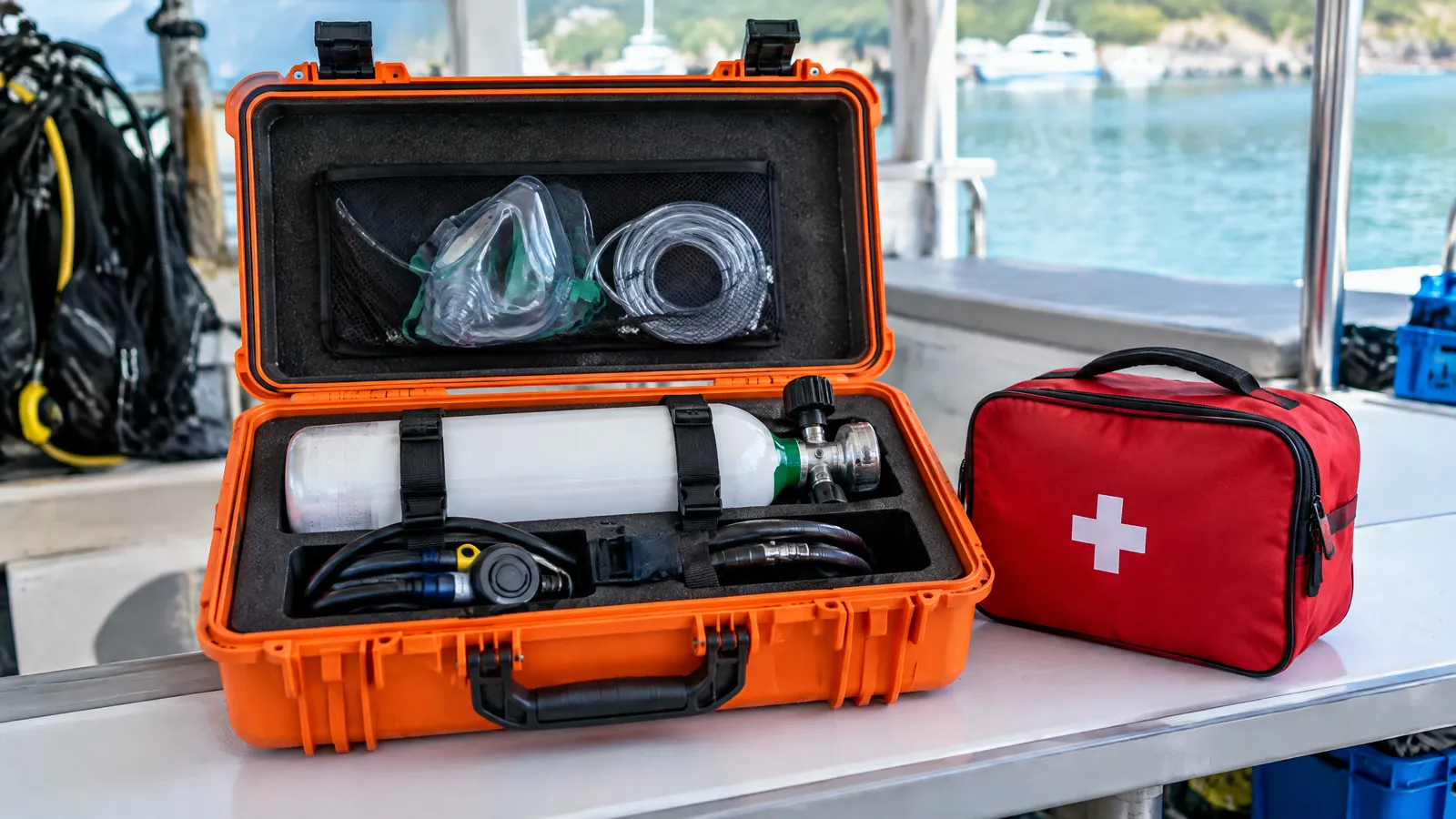
Illustration of emergency oxygen equipment for a dive-travel response plan
Illustration · emergency oxygen equipment in a response plan.
Guide · 06

How do you complete a dive-travel clearance handover?

Use a go, change or stop decision for each stage

Twenty-four hours before departure, compare the actual itinerary with the file. Has the last dive changed? Is the flight earlier? Did a symptom appear? Has a doctor added a restriction? Did the operator change the site or boat? A changed fact reopens the decision. Do not protect a holiday plan by quietly carrying an old answer into a new situation.

At the airport or transfer point, keep the dive computer, log, clearance note, insurance card and emergency contacts accessible. If you feel unwell, tell the airline or travel companion and seek medical help. Do not use a non-refundable ticket as a reason to suppress information. If you are symptom-free and within the appropriate interval, continue to observe your health. Do not assume the journey is risk-free.

Before the return dive, give the instructor the relevant medical and dive history. Confirm the site, depth, gas, supervision, equipment and exit plan. A gradual, familiar plan may be more sensible than immediately repeating the most demanding profile. If a physician has specified limits, ask the instructor to repeat them back so the whole team understands them.

For a current Hong Kong arrangement, message DiveHarbour on WhatsApp at https://wa.me/85294976438. Include your last-dive time, flight time, certification, recent symptoms or treatment, preferred date and questions about insurance or supervision. Dates, locations, availability and inclusions must be confirmed directly. Fees are non-refundable unless written booking terms state otherwise, and a replacement date is not automatic.


  • Recheck the last dive and itinerary against the original plan.
  • Carry documents where they can be reached without internet access.
  • Tell the receiving instructor about clearance limits and recent changes.
A sensible next step

Take the question with you

Good dive travel clearance planning is a documented handover, not one surface-interval number. Record the profile, protect the flight buffer, stop for symptoms, obtain medical advice after an incident and compare insurance wording. Give the operator current facts and written restrictions. If nobody clearly owns the fitness, treatment or evacuation decision, pause first.

Questions to ask

Common questions

Is 18 hours always enough before flying after scuba diving?

No. CDC guidance uses at least 18 hours after multiple dives or multiple days of diving, but recommends 24–48 hours after a dive requiring decompression stops. Longer intervals reduce risk. Any symptom requires medical evaluation rather than a self-calculated wait.

Can I fly if a mild symptom disappeared after a dive?

Do not assume that temporary improvement makes flying appropriate. Contact emergency services for severe or neurological signs and seek qualified dive-medicine advice for unexplained or persistent symptoms. A diagnosis of decompression illness generally needs appropriate treatment before altitude exposure.

Does a doctor’s clearance guarantee that my next dive is suitable?

No. A physician assesses medical fitness and may set limits. The instructor and operator still assess the site, conditions, supervision, equipment and training plan. Follow both the written medical restrictions and the operator’s current safety decision.

Should I buy travel insurance or dive accident insurance?

They can cover different risks. Compare the actual wording for diving, depth, certification, evacuation, chamber care, medical exclusions and follow-up treatment. Do not rely on the policy name or assume ordinary travel insurance includes every dive-related expense.

What should I send in a Hong Kong dive-travel enquiry?

Send your certification, recent dive dates and profile, flight timing, preferred dive date, group size, relevant health or treatment question, equipment needs and policy questions. Ask which documents, supervision and written terms apply before paying.

Further reading

Official sources worth checking

Continue exploring

Keep comparing practical questions before you choose a course, activity or preparation step.

Health & Safety · Updated 2026-09-26

Scuba Diving Insurance in Hong Kong: What to Check

Answers on “do I need scuba diving insurance in Hong Kong”, “does travel insurance cover scuba diving in Hong Kong” and “what does scuba accident insurance cover”, with practical policy questions to check before diving.

do I need scuba diving insurance in Hong Kong

Health & Safety · Updated 2026-09-26

Diver medical questionnaire vs physician clearance form

Understand diver medical questionnaire vs physician clearance form differences and how to complete a scuba diving medical questionnaire safely, with physician-led guidance.

diver medical questionnaire vs physician clearance form

Health & Safety · Updated 2026-09-26

Scuba insurance and decompression sickness: what to check

Does scuba insurance cover decompression sickness? Compare what scuba diving course insurance Hong Kong policies may include, exclusions to check and how to ask before diving.

does scuba insurance cover decompression sickness
Your next step

Ask about diving courses

Message DiveHarbour on WhatsApp at https://wa.me/85294976438 with your dive dates, flight timing, certification, health questions and preferred Hong Kong training or dive plan.

Ask about diving courses
English price list for 21 DiveHarbour courses and activities, with fees per person in Hong Kong dollars
Tap the price list to view it at full size.

Plan your next dive

Course fees, clearly set out

Compare our published course and activity fees before choosing your next step. All prices are per person in Hong Kong dollars.

Before you book, we confirm prerequisites, materials, certification, equipment, venue and boat arrangements in writing. Ask us about fees for courses not listed here.

All fees are non-refundable. Make-up sessions are subject to the written terms.

Read all course fees
DiveHarbour course and activity fees per person in Hong Kong dollars
Course / activityPer person
Pool / confined-water try scubaHK$870
Boat-based try scuba — one diveHK$1,020
NAUI Open Water Scuba Diver — group courseHK$4,590
Junior Open Water courseHK$4,590
Junior Advanced courseHK$3,680
Family try scubaHK$970
NAUI Advanced Open Water Scuba DiverHK$3,570
NAUI Rescue Scuba DiverHK$3,570
Basic Life Support: CPR and first aidHK$1,430
Diving emergency oxygen courseHK$1,330
Rescue and first aid course bundleHK$4,590
Deep Diver specialtyHK$3,270
Enriched Air Nitrox Diver specialtyHK$1,480
Night Diver specialtyHK$2,550
Wreck Diver specialtyHK$3,570
Underwater Navigation specialtyHK$2,450
Search and Recovery specialtyHK$2,450
Underwater Photography specialtyHK$2,040
Hong Kong Fun Dive — two divesHK$580
Sai Kung boat diving — two divesHK$580
Tung Ping Chau boat diving — two divesHK$640